
Mitchel Stuffers
Assistant Editor at CIGH Exeter & PhD Candidate in History, University of Exeter
From three Sahel states exiting the International Criminal Court (ICC) to new figures on the victims of Dutch slavery, here are this week’s top picks in imperial and global history.
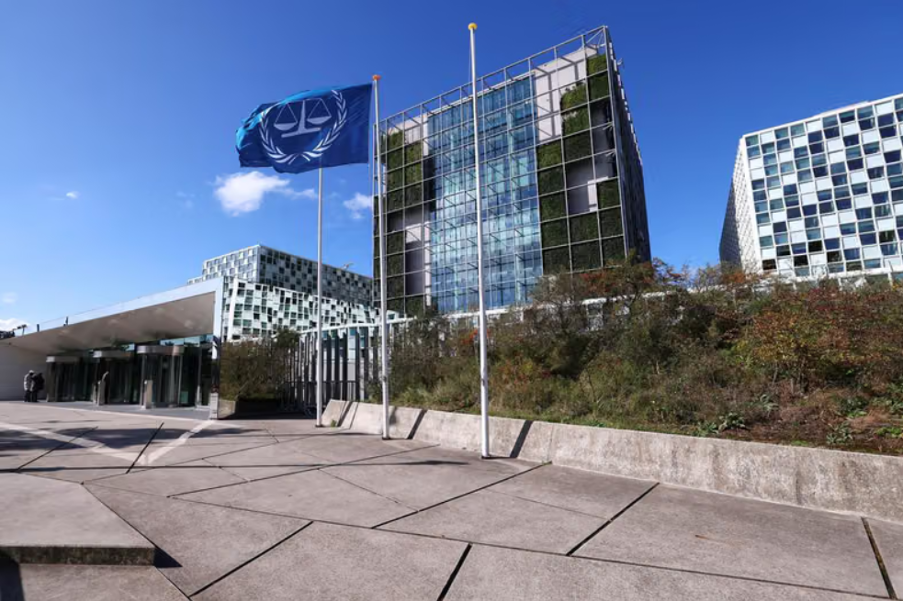
Junta-led Burkina Faso, Mali and Niger begin exit from the International Criminal Court, deepening break with Western institution
Adekunle Agbetiloye
Business Insider – Africa
Burkina Faso, Mali and Niger have officially begun the year-long legal process of withdrawing from the International Criminal Court (ICC), marking another significant step in the three military-led governments’ effort to distance themselves from Western-backed international institutions. The court is the world’s permanent war crimes tribunal, which prosecutes individuals accused of genocide, crimes against humanity, war crimes and the crime of aggression when national courts are unwilling or unable to act.
The ICC confirmed on Wednesday that the three Sahel nations had submitted formal notifications to withdraw from the Rome Statute—the treaty that established the Hague-based court and governs its jurisdiction over genocide, crimes against humanity, war crimes and the crime of aggression. Under Article 127 of the Rome Statute, a withdrawal becomes effective one year after the court receives formal notice. [Continue reading]
Niger criminalises same-sex intimacy for the first time in its history
James Aldworth
Human Dignity Trust
Neighbouring francophone countries under military rule, Burkina Faso and Mali, also recently criminalised homosexuality. The West African nation of Niger has enacted a law criminalising consensual same-sex intimacy for the first time in its history.
The new Penal Code of Niger is understood to introduce a provision criminalising ‘indecent or unnatural acts’ and ‘sexual relations with a person of the same sex’, though the Code is not yet publicly available. It is also understood to contain other wide-ranging provisions such as criminalising ‘LGBTQIA+ practices’ and involvement in organisations ‘for homosexuals or LGBTQIA+’. Imprisonment terms are up to 20 years and are accompanied by heavy fines. [Continue reading]
America at 250: the Britons who supported the War of Independence
Tom Cutterham
Conversation
The American revolution was not a straightforward contest between colonists and mother country, despite what the Declaration of Independence said about dissolving the bonds between one people and another. There were, of course, loyalists in America who refused to join the rebel cause. And in Britain, there were many who took the side of the revolution.
Just like in the colonies themselves, people’s choice of allegiance was sometimes a matter of self-interest. Merchants and manufacturers, whose livelihoods depended on trade with America, were some of the most vocal opponents of the British government’s aggressive policies in the 1760s and 1770s. When fighting broke out in 1775, they organised petitions calling for peace and reconciliation. But the revolution was also a question of principle – a struggle over the nature and limits of freedom – and plenty of British people treated it that way too. In fact, since the 1760s, the American colonists’ dispute with the government had been closely tied to questions about corruption, oligarchy and executive tyranny in Britain itself. [Continue reading]
After 200 years in ruin: Greece unveils complete restoration of Parthenon’s western pediment
Miriam Sela-Eitam
Jerusalem Post
Visitors to the Parthenon will finally be able to view the monument’s complete western pediment for the first time in approximately 220 years, since before the founding of the modern Greek state. The external scaffolding hiding the Parthenon’s western face was taken down in early June following the completion of the monument’s back wall, a little under a year since the temporary removal of the scaffolding in September and October of 2025.
Restoration of the site, spearheaded by the Acropolis Restoration Service (YSMA) and the Committee for the Conservation of the Acropolis Monuments (ESMA), began in 1983 and later intensified throughout the 2000s. Two orthostats – vertical stone plaque in Mediterranean antique architecture – were placed against the back wall of the monument by YSMA to return the wall to its former stature. [Continue reading]
At least 3.3m people were victims of Dutch enslavement, research claims
Natricia Duncan
Guardian
At least 3.3 million people were enslaved in the Netherlands during the transatlantic slave trade, research claims – more than five times the 600,000 figure widely used in history books and cited in apologies by the king and politicians. King Willem-Alexander referred to the more than 600,000 people who were brought from Africa on Dutch ships to be sold as enslaved people when he apologised three years ago for the role of the Netherlands in the transatlantic slave trade. In 2022 the then prime minister, Mark Rutte, cited the figure when he apologised for “the past actions of the Dutch state”.
But according to a book by the Dutch investigative journalist Leendert van der Valk, that widely accepted figure is a gross underestimation of how many victims of Dutch enslavement there were, with the correct number being between 3.3 and 5.3 million people. Van der Valk said the 600,000 figure did not take into account all the places where the Dutch colonised or enslaved people, the full period of the country’s involvement, or include many who were born into enslavement. It also did not account for Indigenous people whom the Dutch met in some of the countries they colonised and later enslaved. [Continue reading]


You must be logged in to post a comment.