China’s New Silk Road: Central Asia and the Imperial Legacy of the Great Game

The Lion Eyes the Bear. Punch cartoon from 1878 by John Tenniel reflecting Anglo-Russian paranoia in Central Asia.

Tom Harper
University of Surrey

In the vein of its rich history in Central Asia, China’s quest for economic development has seen it return to the region that was once spanned by the Silk Route. While Central Asia has served as the cross roads between Eastern and Western civilisation for centuries, it also once provided the chessboard upon which the Great Powers of the past had battled each other for land and influence. In sum it is one of the most strategic regions of the world, whether it be the Great Game of the nineteenth century or the superpower conflict of the 1980s.

In line with the power politics of the past, the region has seen a new Great Game where today’s strongest nations compete for the region’s natural resources.[1]  With the close of the twentieth century, Central Asia re-entered the spotlight as a result of the War on Terror and, more recently, China’s Belt and Road Initiative (一带一路). In light of these developments, the imperial struggles of the past two centuries take on a new importance, as they continue to influence the perceptions of China’s return to the region. These perceptions, real or imagined, have fuelled the struggles of the Great Powers in the region and China’s involvement is simply the latest chapter in a centuries long struggle. Continue reading “China’s New Silk Road: Central Asia and the Imperial Legacy of the Great Game”

This Week’s Top Picks in Imperial & Global History

Olga Lehmann, 1943

Marc-William Palen
History Department, University of Exeter
Follow on Twitter @MWPalen

From inside Britain’s secret underground Cold War city to why we need international history, here are this week’s top picks in imperial and global history. Continue reading “This Week’s Top Picks in Imperial & Global History”

Arguing about Empire: The Dreyfus Affair and the Fashoda Crisis, 1898

We are delighted to announce a new online collaboration with our colleagues in the Department of History at the University of Texas at Austin. Not Even Past and the Imperial & Global Forum will be cross-posting articles, sharing podcasts, and sponsoring discussions of historical publications and events. We are launching our joint initiative this month with a blog, cross-posted from Not Even Past, based on a new book by Exeter’s own Martin Thomas and Richard Toye, Arguing About Empire: Imperial Rhetoric in Britain and France.

Martin Thomas and Richard Toye

“At the present moment it is impossible to open a newspaper without finding an account of war, disturbance, the fear of war, diplomatic changes achieved or in prospect, in every quarter of the world,” noted an advertisement in The Times on May 20, 1898. “Under these circumstances it is absolutely essential for anyone who desires to follow the course of events to possess a thoroughly good atlas.” One of the selling points of the atlas in question – that published by The Times itself – was that it would allow its owner to follow “most minute details of the campaign on the Atbara, Fashoda, Uganda, the Italian-Abyssinian conflict &c.” The name Atbara would already have been quite familiar to readers, as the British had recently had a battle triumph there as part of the ongoing reconquest of the Sudan. Continue reading “Arguing about Empire: The Dreyfus Affair and the Fashoda Crisis, 1898”

Amanda Nettelbeck (Adelaide) on creating Aboriginal subjects of the Crown in colonial Australia – this Wed., May 3

Protection, conciliation and coercion: creating Aboriginal subjects of the Crown in colonial Australia

Centre for Imperial and Global History Seminar Series

When: Wed. May 3, 4:30pm

Where: Amory 115, University of Exeter

Amanda Nettelbeck
University of Adelaide

Recent scholarship has seen a spike of interest in the politics of colonial humanitarianism and its various expressions around the British Empire from the late 18th century onwards. In particular, the project of Aboriginal ‘protection’ that had its formal heyday between the mid-1830s and the mid-1850s has received renewed focus as one of the most important means through which nineteenth-century strategies of humane governance were put into operation. Once conventionally regarded as a relatively short-lived Colonial Office agenda to extend justice and rights to indigenous people, the mid nineteenth-century project of protection has more recently been reconsidered in terms of its role to help secure the Crown’s practical jurisdiction in unruly colonies, and its motivations to create indigenous people’s colonial subjectivity. Continue reading “Amanda Nettelbeck (Adelaide) on creating Aboriginal subjects of the Crown in colonial Australia – this Wed., May 3”

This Week’s Top Picks in Imperial & Global History

Marc-William Palen
History Department, University of Exeter
Follow on Twitter @MWPalen

From rethinking Cold War Burma to Brexit and the World Wars, here are this week’s top picks in imperial and global history. Continue reading “This Week’s Top Picks in Imperial & Global History”

CFP: Understanding Insurgencies (1920-2000)

AMNESTY TO COUNTER INSURGENCY:

GLOBAL COMPARISONS FROM THE COLONIAL CONTEXT, 1920-2000

Workshop

Global History & Culture Centre, University of Warwick

14-15 June 2018

This workshop is part of a Leverhulme Trust Research Network on Understanding Insurgencies: Resonances from the Colonial Past.  Led by the University of Exeter’s Centre for War, State and Society, other collaborators in this international network are the University of Warwick, University of Oxford, the Centre National de la Recherche Scientifique (CNRS) Paris, University of Glasgow, Universite de Québec à Montréal, and KITLV Institute Leiden. The network is funded by the Leverhulme Trust to stage a series of workshops and conferences over a three-year period, (commencing June 2016), and leading to publications.

The theme of this sixth workshop in the Understanding Insurgencies series is ‘Amnesty to Counter Insurgency’. The intention is to examine the manner in which amnesties have been used to bring about temporary cease-fires during counter-insurgency campaigns, to induce surrenders or the ending of hostilities that will bring conflict to an end, or as a means of engaging political discourse in order to generate a negotiated peace. We invite presentations that give detailed consideration to individual case studies during the twentieth century, but would also welcome papers which take a comparative approach and those that look at the principles and pit-falls that lie behind amnesty settlements, including papers that consider the political consequences of amnesties – where these may be contested as well as where they are accepted. Continue reading “CFP: Understanding Insurgencies (1920-2000)”

This Week’s Top Picks in Imperial & Global History

Marc-William Palen
History Department, University of Exeter
Follow on Twitter @MWPalen

From when America bombs countries to save them to why the French presidential candidates are arguing about their colonial history, here are this week’s top picks in imperial and global history. Continue reading “This Week’s Top Picks in Imperial & Global History”

We’re Hiring! Lecturer in Digital History

Job title Lecturer in Digital History (Education & Research)

Job reference P57178

Date posted 11/04/2017

Application closing date 15/05/2017

Location Exeter

Salary The starting salary will be from £33,943 per annum within the Grade F band (£33,943 – £38,183).

Package Generous holiday allowances, flexible working, pension scheme and relocation package (if applicable).

Job category/type Academic

Job description

College of Humanities – Department of History

The University of Exeter is a Russell Group university that combines world-class research with very high levels of student satisfaction. Exeter has over 21,000 students from more than 130 different countries and is in the top 1% of universities in the world with 98% of its research rated as being of international quality. Our research focuses on some of the most fundamental issues facing humankind today.

The post of Lecturer in Digital History will contribute to extending the research profile of History at Exeter, particularly in areas related or complementary to Digital History and the Digital Humanities more generally. This permanent, full time post is available from 1st September 2017.  Continue reading “We’re Hiring! Lecturer in Digital History”

This Week’s Top Picks in Imperial & Global History

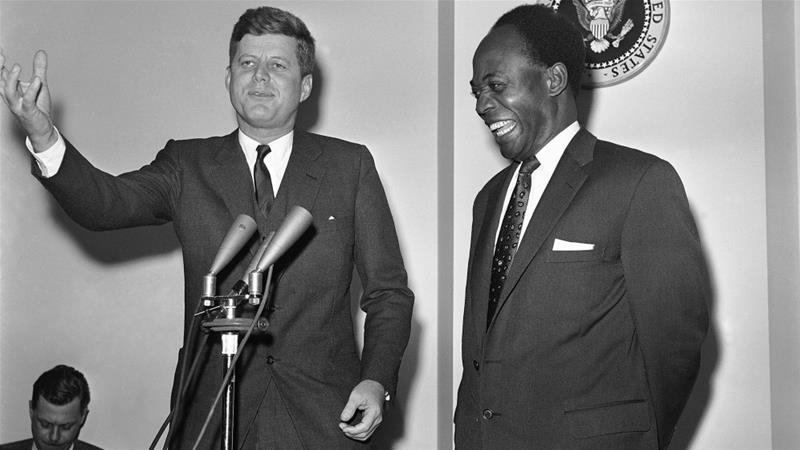
Ghana’s first post-independence president, Kwame Nkrumah, was overthrown in a US-backed military coup in 1966 [AP]

Marc-William Palen
History Department, University of Exeter
Follow on Twitter @MWPalen

From neocolonialism in Africa to when humanitarianism became imperialism, here are this week’s top picks in imperial and global history. Continue reading “This Week’s Top Picks in Imperial & Global History”

Teaching and Learning War

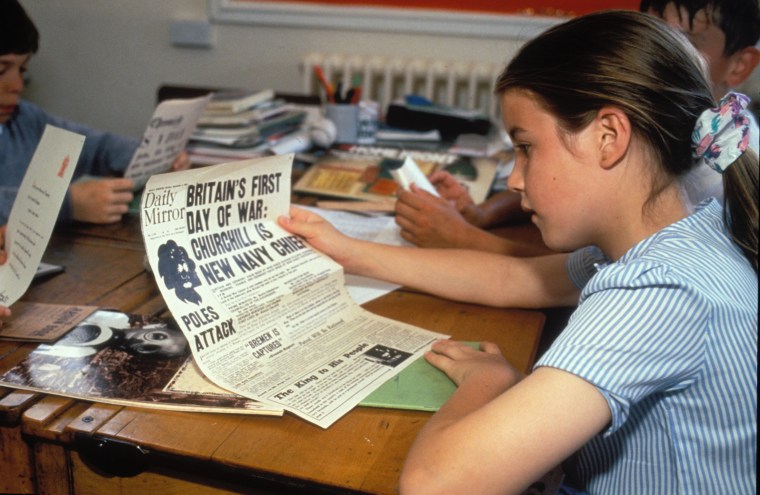
History studies at primary school Pupils studying Second World War by reading old newspaper UK

Catriona Pennell
University of Exeter

The AHRC has recently funded the Teaching and Learning War research network, which brings together EU and international researchers and educationalists, from a range of academic disciplines and professional backgrounds (including schools, museums, archives and heritage organisations), to explore young people’s engagement with and receptivity to the cultural memory messages of the two world wars from an international comparative perspective. At the centenary of WW1 in the UK, Australia, Canada, and New Zealand young people find themselves front and centre of both state-sponsored and community-level commemorations. As the two world wars fade from living memory, young people across the Commonwealth have been singled out as those who will be carrying the memory of the war forward. Early indications suggest similar emphasis will be placed on young people in the 80th and 90thanniversaries of WW2. Continue reading “Teaching and Learning War”

Revisiting the 1917 Stockholm Peace Conference: Indian Nationalism, International Socialism, and Anti-Imperialism

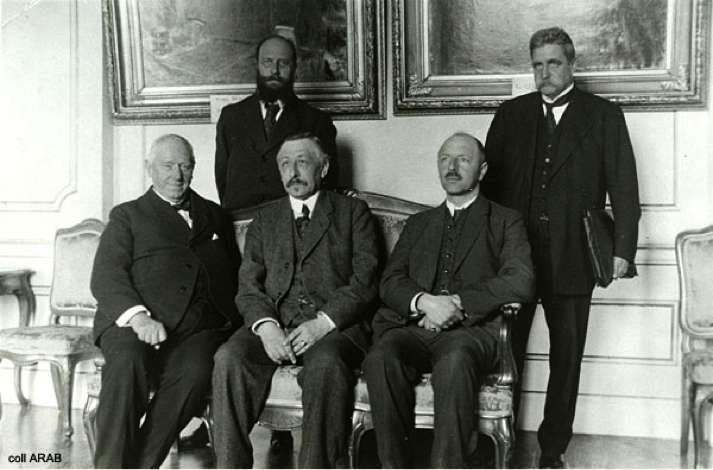
Group portrait of the Dutch-Scandinavian Committee: van Kol, Troelstra, Albarda (sitting, l-r), Stauning, Branting (standing, l-r)

Ole Birk Laursen
The Open University

As we mark the centenaries of the Russian revolutions (1917) and the end of the First World War (1918), we should remember how these events are connected through the abandoned Stockholm Peace Conference and, given their anti-imperialist narratives, how they impacted the colonial world. Despite the attendance of Indians, Egyptians, Persians and Turks in Stockholm, the scant historical inquiries into this might-have-been moment tend to neglect how such anti-imperial ambitions were tied to world peace.[1] Continue reading “Revisiting the 1917 Stockholm Peace Conference: Indian Nationalism, International Socialism, and Anti-Imperialism”

This Week’s Top Picks in Imperial & Global History

Marc-William Palen
History Department, University of Exeter
Follow on Twitter @MWPalen

From democratizing foreign policy to who is an American citizen, here are this week’s top picks in imperial and global history. Continue reading “This Week’s Top Picks in Imperial & Global History”

This Week’s Top Picks in Imperial & Global History

Marc-William Palen
History Department, University of Exeter
Follow on Twitter @MWPalen

From Brexit reinforcing Britain’s imperial amnesia to what nationalism looks like, here are this week’s top picks in imperial and global history. Continue reading “This Week’s Top Picks in Imperial & Global History”

We’re Hiring! Postdoctoral Research Fellow in Digital Humanities

exeter logo

Job title: Postdoctoral Research Fellow in Digital Humanities

Job reference: P55843

Date posted: 24/03/2017

Application closing date: 27/04/2017

Location: Exeter

Salary: The starting salary will be from £33,943 within the Grade F band (£33,943 – £38,183).

Package: Generous holiday allowances, flexible working, pension scheme and relocation package (if applicable).

Job category/type: Research

Job description

College of Humanities

This permanent, full time post is available from 1st July 2017.

The University of Exeter is a Russell Group university that combines world-class research with very high levels of student satisfaction. Exeter has over 21,000 students from more than 130 different countries and is in the top 1% of universities in the world with 98% of its research rated as being of international quality. Our research focuses on some of the most fundamental issues facing humankind today. Continue reading “We’re Hiring! Postdoctoral Research Fellow in Digital Humanities”

We’re Hiring! Professor in Digital Humanities

Professor in Digital Humanities

Job reference: P56392

Date posted: 24/03/2017

Application closing date: 27/04/2017

Location: Exeter

Salary: Competitive salary reflecting qualifications and experience.

Package: Generous holiday allowances, flexible working, pension scheme and relocation package (if applicable).

Job category/type: Academic

Job description

College of Humanities

This full time, permanent post is available from 1st September 2017.

The University of Exeter is a Russell Group university that combines world-class research with very high levels of student satisfaction. Exeter has over 21,000 students from more than 130 different countries and is in the top 1% of universities in the world with 98% of its research rated as being of international quality. Our research focuses on some of the most fundamental issues facing humankind today. Continue reading “We’re Hiring! Professor in Digital Humanities”