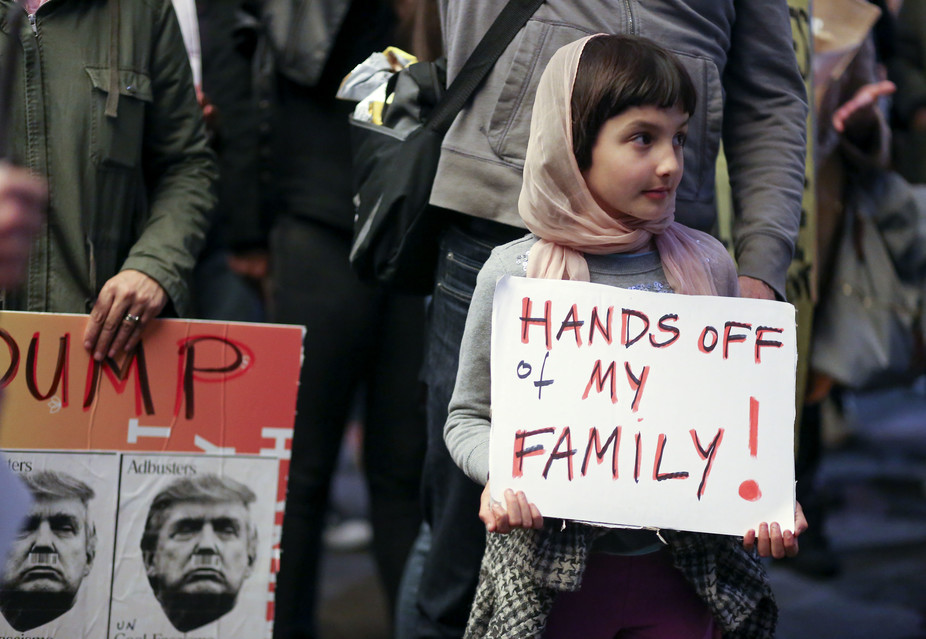
Children have long been unfairly hit by US presidential executive orders

Children bear the brunt. EPA/Eugene Garcia

Rachel Pistol
University of Exeter

Around 75 years ago, in February 1942, US President Franklin Delano Roosevelt signed Executive Order 9066, which led to the forced relocation and internment of more than 110,000 individuals of Japanese ancestry. The majority of them were American citizens, and a large proportion were children.

But unlike President Trump’s 2017 executive order to halt immigration and ban refugees from American soil, Roosevelt’s sweeping political move did not provoke any protest or dissent. Both presidents had mentioned the notion of “national security’ in their orders, and both decrees were said to be aimed at specific national groups. So is President Trump merely copying the policy of one of his more popular predecessors?

From the moment the US entered World War II in late 1941, all “enemy aliens” living in America – German, Austrian, Italian, and Japanese – were subject to restrictions on their freedom. These included the imposition of curfews and a ban on owning radios. So the real significance of EO9066, as it is known, was that it authorised the detention not just of enemy aliens, but also of American citizens. In theory, any American citizen could be relocated by order of the military. Continue reading “Children have long been unfairly hit by US presidential executive orders”

Apply by April 17 for an International PhD Student Award @ExeterCIGH

exeter logo

The deadline (April 17) is fast approaching to apply for an international PhD student award, through which you can become a crucial part of the Centre for Imperial and Global History.

We offer internationally-recognised supervision with geographical coverage from staff across African, Asian (including Chinese), Middle Eastern, North American, Latin American, European, Imperial, and Global history from early-modern to contemporary eras. We have strong inter-disciplinary links with colleagues across the humanities and social sciences at Exeter, particularly with the Centre for War, State and Society and the Institute of Arab and Islamic Studies. The Centre has particular research interests in:

  • Globalisation’s past and present
  • Comparative empires and transnationalism
  • Humanitarianism, development and human rights
  • Law and colonialism
  • Political economy and the imperial state
  • Europe, decolonisation and the legacies of empire
  • The impact of armed conflict on society
  • Colonial warfare and counterinsurgency

Continue reading “Apply by April 17 for an International PhD Student Award @ExeterCIGH”

This Week’s Top Picks in Imperial & Global History

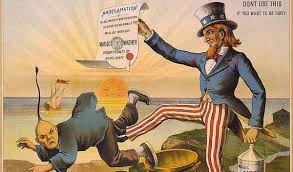
A soap advertisement from the 1880s, sub-titled 'The Chinese Must Go' Credit: Library of Congress
A soap advertisement from the 1880s, sub-titled ‘The Chinese Must Go’ Credit: Library of Congress

Marc-William Palen
History Department, University of Exeter
Follow on Twitter @MWPalen

From historicizing Trump’s immigration ban to the not-so-special Anglo-American relationship, here are this week’s top picks in imperial and global history.

Continue reading “This Week’s Top Picks in Imperial & Global History”

Re-thinking “Open-Door Imperialism”

Nicole M. Phelps
University of Vermont

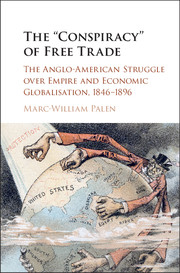
Review of Marc-William Palen. The “Conspiracy” of Free Trade: The Anglo-American Struggle over Empire and Economic Globalisation, 1846-1896. Cambridge: Cambridge University Press, 2016. 331 pp. $99.99 (hardcover).

[For full review and citation, see: Nicole M. Phelps, “Re-thinking ‘Open-Door Imperialism,'” Diplomatic History 41 (Jan. 2017): 211-214.]

conspiracy of free trade coverStill basing your Gilded Age foreign policy lecture—perhaps reduced now to just a PowerPoint slide—on the quest for markets a la William Appleman Williams’s The Tragedy of American Diplomacy and Walter LaFeber’s The New Empire?1 Marc-William Palen convincingly argues that it is time for a change. According to Palen, lumping all the Gilded Age administrations from Grant to McKinley into proponents of an undifferentiated “Open Door imperialism” misses essential differences between the Democratic Grover Cleveland administrations and those of the Republicans and, more importantly, falsely paints free traders as imperialists and obscures the protectionist, closed door bent of the actual imperialists. By focusing our attention on the debate over tariffs waged by Cobdenite free traders and Listian economic nationalists—protectionists—from the early days of the Republican Party through McKinley’s election in 1896, Palen offers important contributions to our understanding of imperialism, the development of American political parties, and Anglo-American relations. In so doing, he smooths out the story of nineteenth-century U.S. foreign policy, which often skips abruptly from the end of the Civil War to the start of the Spanish-American War. Continue reading “Re-thinking “Open-Door Imperialism””

Republican Imperialism vs. Puerto Rican Democracy – A Long History

51st-state

Marc-William Palen
History Department, University of Exeter
Follow on Twitter @MWPalen

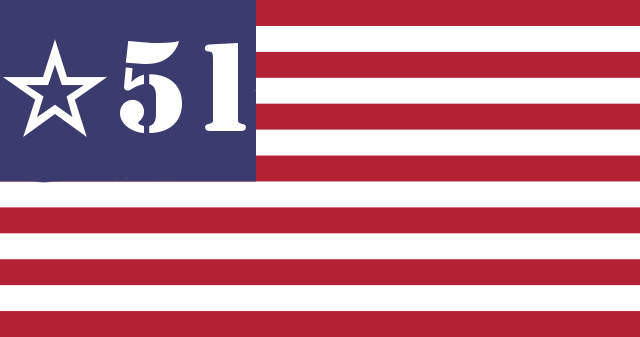
Puerto Rico has a new governor, Ricardo Rosselló – and he’s committed to making Puerto Rico the 51st US state.

Stemming from Rosselló’s election on a pro-statehood platform, the Puerto Rican Senate has now approved a bill that calls for holding a referendum on June 11, where citizens will be given a stark choice to either (1) become the 51st US state or (2) declare independence.

Governor Rosselló quickly gave the referendum bill his support in anti-colonial language:  “Colonialism is not an option for Puerto Rico. It’s a civil rights issue … The time will come in which the United States has to respond to the demands of 3.5 million citizens seeking an absolute democracy.”

Puerto Rico held a similar vote in 2012, when a slim majority voted in favor of statehood. But nothing happened. Why not? Because a Republican-controlled Congress stood in the way of Puerto Rican democracy: 21st-century American imperialism on display. Continue reading “Republican Imperialism vs. Puerto Rican Democracy – A Long History”

This Week’s Top Picks in Imperial & Global History

UC San Diego Library

Marc-William Palen
History Department, University of Exeter
Follow on Twitter @MWPalen

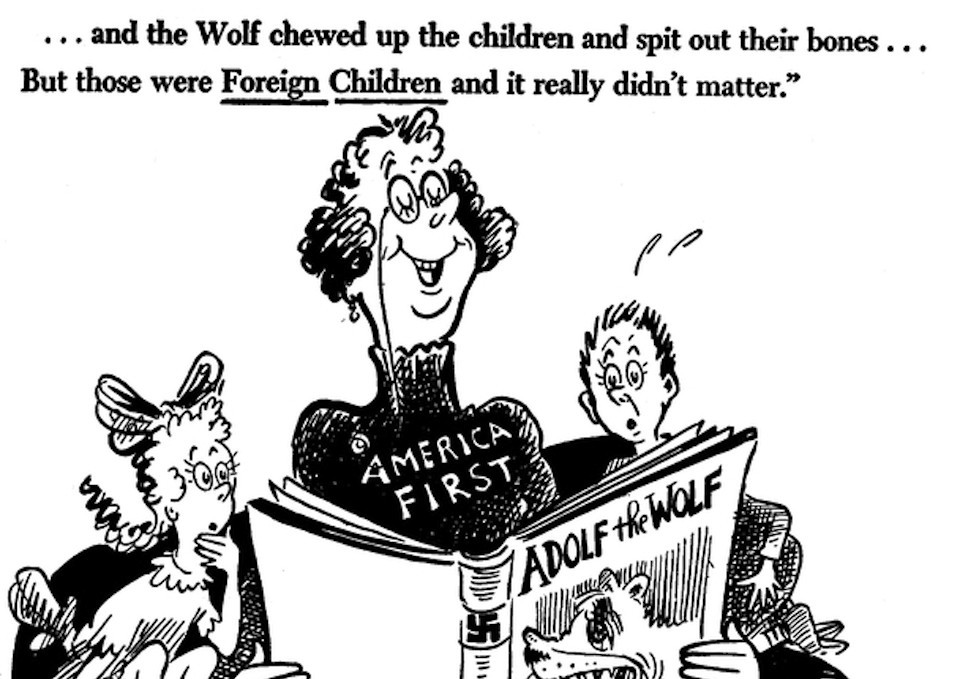
From C. L. R. James’s anti-colonialism to the relevance of Dr. Seuss, here are this week’s top picks in imperial and global history. Continue reading “This Week’s Top Picks in Imperial & Global History”

100 Years After the Balfour Declaration – Revisiting Sir Herbert Samuel’s Legacy

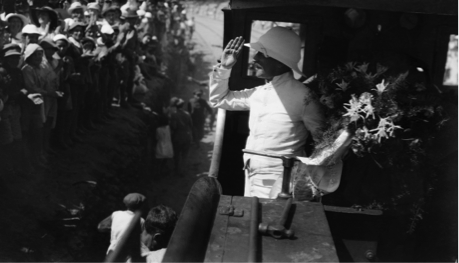
Sir Herbert Samuel inaugurating the Jaffa-Jerusalem railway, 5 Oct 1920 (Prints and photographs division of the Library of Congress, Washington, D.C.)

Charlotte Kelsted
University of Exeter

Speaking before the UN General Assembly last year, Palestinian President Mahmoud Abbas requested that the British government offer an apology for its 1917 Balfour Declaration supporting a Jewish homeland in Palestine. ‘We ask Great Britain, as we approach 100 years since this infamous declaration, to draw the necessary lessons and to bear its historic, legal, political, material and moral responsibility for the consequences of this declaration, including an apology to the Palestinian people for the catastrophes, misery and injustice this declaration created and to act to rectify these disasters and remedy its consequences, including by the recognition of the state of Palestine,’ Abbas said. ‘This is the least Great Britain can do.’

Abbas’s demand for an apology is far from the only one. Just last November, for example, Liberal Democrat peer Baroness Jenny Tonge hosted the launch of the Palestinian Return Centre initiative to get the UK government to recognize its role in ‘almost a century of Palestinian suffering.’ 100 years on, the Balfour Declaration’s legacy remains a controversial part of the present day – so, too, is the legacy of the first High Commissioner to the Palestine Mandate, Herbert Samuel. Continue reading “100 Years After the Balfour Declaration – Revisiting Sir Herbert Samuel’s Legacy”

This Week’s Top Picks in Imperial & Global History

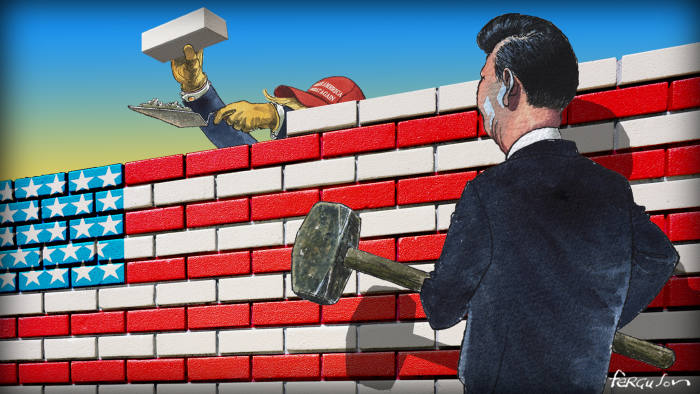
wall

Marc-William Palen
History Department, University of Exeter
Follow on Twitter @MWPalen

From Brexit’s reopening the wounds of empire to the imperial origins of Australia Day, here are this week’s top picks in imperial and global history.

Continue reading “This Week’s Top Picks in Imperial & Global History”

Call For Papers: Empires and Nations, Beyond the British Case


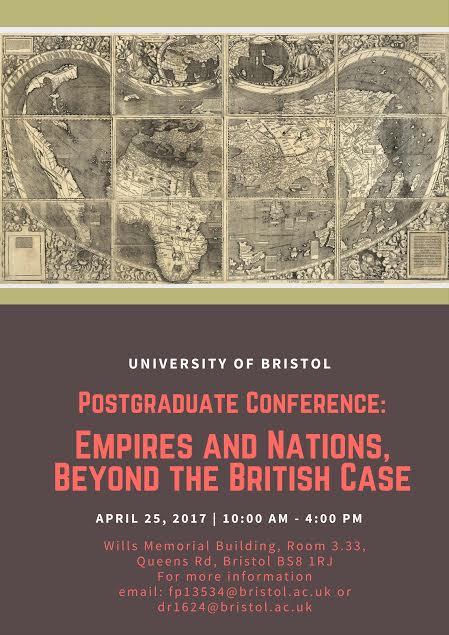
empires-and-nations-beyond-the-british-case-copy

Fernando J. Padilla
University of Exeter/University of Bristol

CALL FOR PAPERS

CONFERENCE “EMPIRES AND NATIONS, BEYOND THE BRITISH CASE

UNIVERSITY OF BRISTOL

25th April 2017

This one-day postgraduate conference “Empires and Nations: Beyond the British Case” will be held on 25th April 2017 at the University of Bristol’s Wills Memorial Building. It aims to provide a friendly and constructive environment for scholarly debate. The conference is open to MA, MPhil, and PhD researchers.

The goal of the conference is to bring together postgraduate researchers working on any topic related to the main theme of imperialism, preferably beyond the British case. Due to the logical dominance of the British imperial past within the broader field of Imperial, Colonial, Postcolonial, and Global History studies in the UK, the aim of this conference is precisely to focus on other imperial and postcolonial experiences, European as well as non-European, of the 19th and 20th centuries. By focusing the conference on cases other than the British, we aim to foster debate with a broader and more inclusive approach to the complex imperial past and colonial legacies of modern societies. Thus, we strongly encourage the participation of researchers looking at European as well as non-European imperial experiences. Continue reading “Call For Papers: Empires and Nations, Beyond the British Case”

This Week’s Top Picks in Imperial & Global History

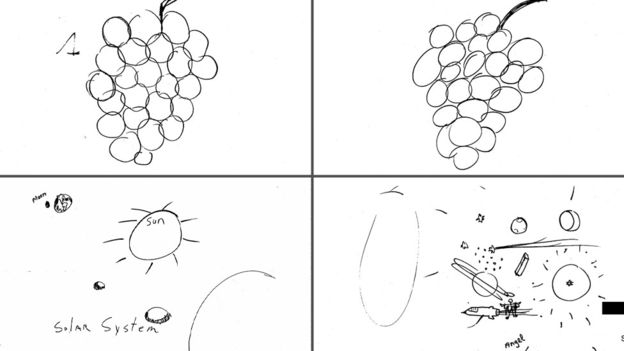
One set of digitized documents from the CIA details results of psychic tests on Uri Geller, where he attempted to copy drawings made by researchers from within a sealed room.
One set of newly accessible documents from the CIA details results of psychic tests on Uri Geller, where he attempted to copy drawings made by researchers from within a sealed room.

Marc-William Palen
History Department, University of Exeter
Follow on Twitter @MWPalen

From reviving fantasies of Britain’s imperial past to saying goodbye to the American Century, here are this week’s top picks in imperial and global history. Continue reading “This Week’s Top Picks in Imperial & Global History”

We’re Hiring! Lecturer in Global and Imperial History

exeter logo

The University of Exeter is a Russell Group university that combines world-class research with very high levels of student satisfaction. Exeter has over 21,000 students from more than 130 different countries and is in the top 1% of universities in the world with 98% of its research rated as being of international quality. Our research focuses on some of the most fundamental issues facing humankind today.

The post of Lecturer in Global and Imperial History will contribute to extending the research profile of History at Exeter, particularly in areas related or complementary to the transnational history of imperialism, globalization, and decolonization since 1750. This full time post is available from 1st September 2017 to 31st August 2020 in the College Humanities on a fixed term basis. Continue reading “We’re Hiring! Lecturer in Global and Imperial History”

This Week’s Top Picks in Imperial & Global History

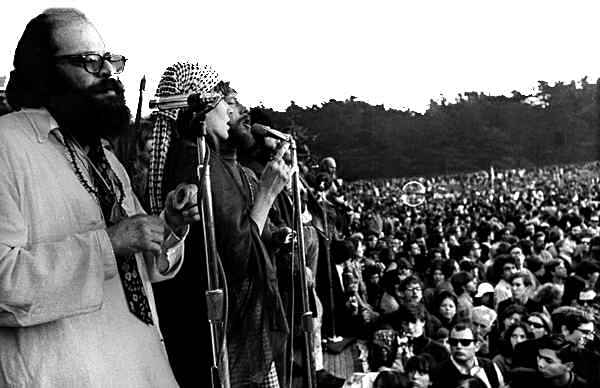
Human Be-In-A Gathering of the Tribes, Golden Gate Park, San Francisco, 14 January 1967.

Marc-William Palen
History Department, University of Exeter
Follow on Twitter @MWPalen

From decolonizing Obama to moving beyond liberal internationalism, here are this week’s top picks in imperial and global history. Continue reading “This Week’s Top Picks in Imperial & Global History”

Rewriting Dutch colonial histories – Final response

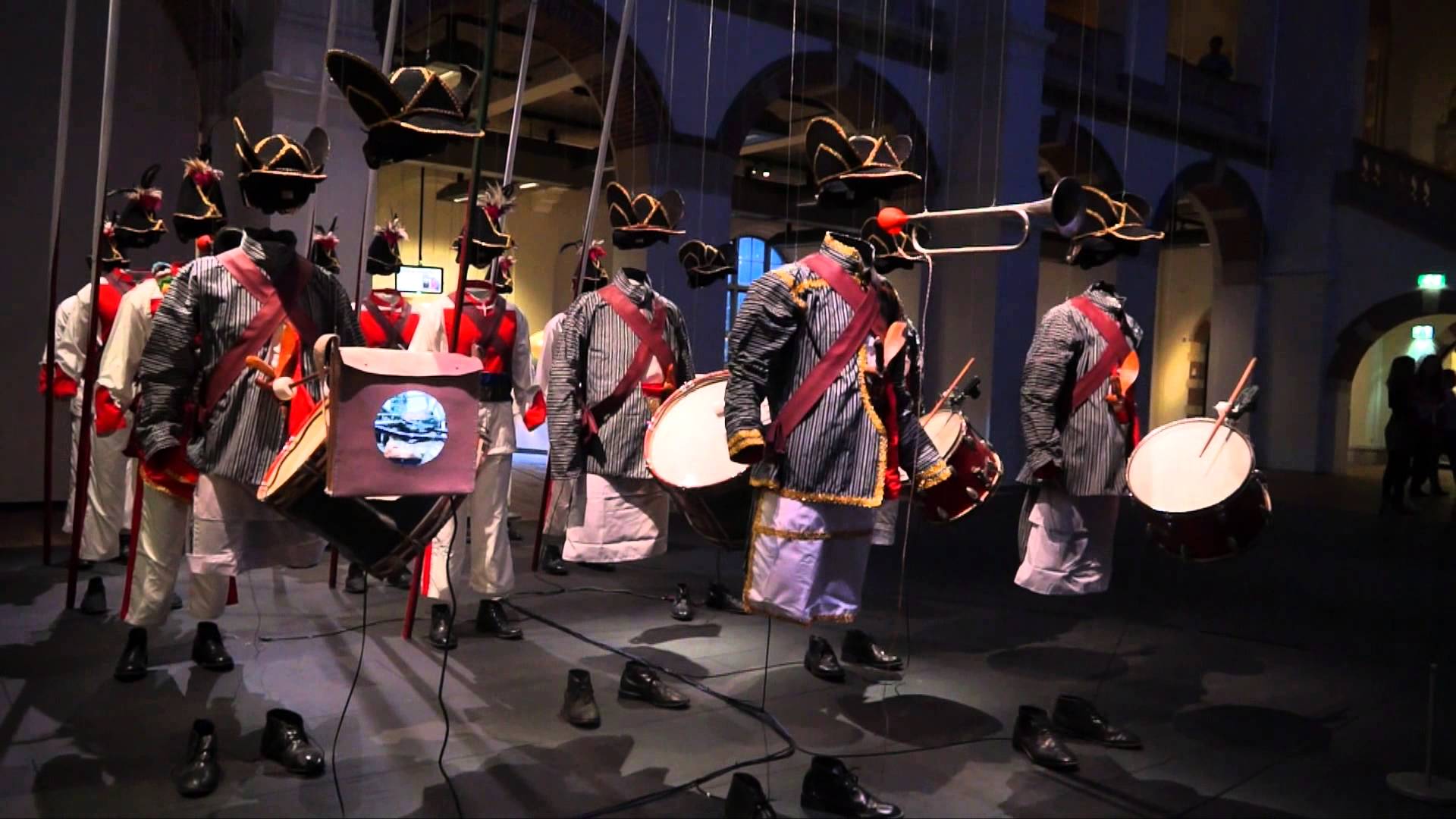
"Java, War of Ghosts" by Jompet Kuswidananto, 2009. Collection of Leo Sih, installation at Tropenmuseum "Grand Parade" (2014-15).
“Java, War of Ghosts” by Jompet Kuswidananto, 2009. Collection of Leo Sih, installation at Tropenmuseum “Grand Parade” (2014-15).

Sadiah Boonstra and Caroline Drieënhuizen

Before the holidays we read Paul Doolan’s response to our post with great interest. We appreciate the time and effort Mr Doolan took to reply to our post as we think a fruitful debate will progress knowledge. With this writing we give a final reaction to Mr Doolan and if it is not for knowledge progression, it will at least get Dr Sadiah Boonstra’s name spelled correctly.

In his response Doolan claims that our critique was based on a misreading and that he was referring to a specific period of time, namely 1945-1949, but that we “prefer to talk about something else”. However, in our view this period cannot be separated from the larger framework of colonialism as political, social, cultural and economic structures of domination. And this is exactly what Dutch historians and others have been trying to deconstruct over the past decades as set out in our previous response. We therefore uphold our argument against Doolan’s representation of a Dutch historical “guild” based in Leiden. Instead of calling on “outsiders”, as Doolan suggests, we favor collaborative methods to uncover the depth, multilayeredness and reach of colonialism.  Continue reading “Rewriting Dutch colonial histories – Final response”

This Week’s Top Picks in Imperial & Global History

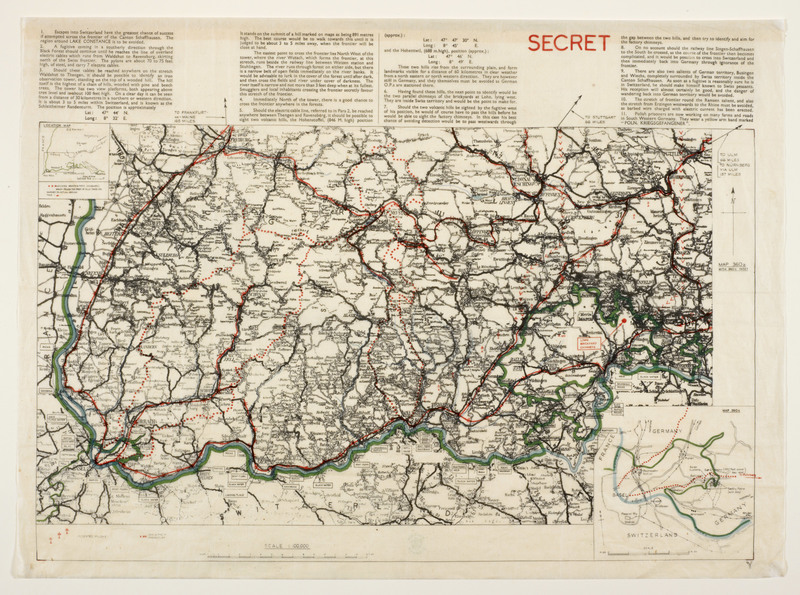
A silk map of the German/Swiss border, featuring detailed escape instructions and clearly designated “SECRET.” BRITISH LIBRARY/PUBLIC DOMAIN

Marc-William Palen
History Department, University of Exeter
Follow on Twitter @MWPalen

From how refugees have the power to change society to how millions of secret silk maps helped POWs escape captivity, here are this week’s top picks in imperial and global history.  Continue reading “This Week’s Top Picks in Imperial & Global History”

Imperial & Global History Sessions at #AHA17

Splash Screen Logo

Marc-William Palen
History Department, University of Exeter
Follow on Twitter @MWPalen

I’ve just arrived in warm, sunny Denver for the 2017 American Historical Association Meeting, and now face the difficult decision concerning which sessions to attend. So I thought it might it might be helpful to compile the sessions relating to imperial and global history, to make my decision (and possibly yours) a bit easier. The list is based on titles only, so please feel free to include in the comments section any pertinent sessions that I may have missed. Continue reading “Imperial & Global History Sessions at #AHA17”