Call for Applications for Global Humanitarianism Research Academy – Deadline 31 December 2015

Drs Fabian Klose, Johannes Paulmann, and Andrew Thompson are pleased to announce that the Call for Applications for the second Global Humanitarianism Research Academy (GHRA) 2016 is now open, with a deadline of 31 December 2015.

GHRA

Call for Applications:

Global Humanitarianism | Research Academy

International Research Academy on the History of Global Humanitarianism

Academy Leaders:                    

Fabian Klose (Leibniz Institute of European History Mainz)

Johannes Paulmann (Leibniz Institute of European History Mainz)

Andrew Thompson (University of Exeter)

in co-operation with the International Committee of the Red Cross (Geneva) and with support by the German Historical Institute London

Venues:                     University of Exeter, UK & Archives of the International Committee of the Red Cross, Geneva

Dates:                                          10-22 July 2016

Deadline:                                   31 December 2015

Screen Shot 2015-09-28 at 11.21.43

The international Global Humanitarianism | Research Academy (GHRA) offers research training to advanced PhD candidates and early postdocs. It combines academic sessions at the Imperial and Global History Centre at the University of Exeter and the Leibniz Institute of European History in Mainz with archival sessions at the Archives of the International Committee of the Red Cross in Geneva. The Research Academy addresses early career researchers who are working in the related fields of humanitarianism, international humanitarian law, peace and conflict studies as well as human rights covering the period from the 18th to the 20th century. It supports scholarship on the ideas and practices of humanitarianism in the context of international, imperial and global history thus advancing our understanding of global governance in humanitarian crises of the present. Continue reading “Call for Applications for Global Humanitarianism Research Academy – Deadline 31 December 2015”

This Week’s Top Picks in Imperial & Global History

_85630803_elephant_detail976

Marc-William Palen
History Department, University of Exeter
Follow on Twitter @MWPalen

From global struggles for racial justice to remembering the Iran-Iraq War, here are this week’s top picks in imperial and global history. Continue reading “This Week’s Top Picks in Imperial & Global History”

Imagining Markets: Conceptions of Empire/Commonwealth, Europe and China in Britain’s economic future since the 1870s

Senate House

2nd workshop, London, September 2015- report

Senate House has featured in many guises from being the supposed model for the Ministry of Truth in George Orwell’s 1984 to Bertie Wooster’s New York apartment block in the TV adaptation of Jeeves and Wooster. This month it played host to the second of three academic workshops connected to the AHRC Imagining Markets network led by David Thackeray, Andrew Thompson and Richard Toye from the University of Exeter. You can read more about the project at www.imaginingmarkets.com.

We began by discussing how the idea of economic imagination can shape our understandings of political economy, and how this cultural idea has various facets (imaginings of economic utopias/ dystopias; entrepreneurship; the imagining of status and aspiration). Papers focused on how a variety of actors shaped ideas of the economic future and interconnected through networks at the level of government and the ‘official mind’; business groups; cultural organisations; advertisers; and civil society. Continue reading “Imagining Markets: Conceptions of Empire/Commonwealth, Europe and China in Britain’s economic future since the 1870s”

This Week’s Top Picks in Imperial & Global History

Japanese Americans play baseball at a WWII internment camp. Ansel Adams, "Baseball," 1943. Courtesy of Photographic Travelling Exhibitions.
Japanese Americans play baseball at a WWII internment camp. Ansel Adams, “Baseball,” 1943. Courtesy of Photographic Travelling Exhibitions.

Marc-William Palen
History Department, University of Exeter
Follow on Twitter @MWPalen

From the last outposts of the British Empire to the declassification of a trove of top-secret CIA documents, here are this week’s top picks in imperial and global history.

Continue reading “This Week’s Top Picks in Imperial & Global History”

Tonight (12pm EST, 5pm GMT) Watch Live Streaming ICRC Debate on the History of Humanitarianism with Director Thompson

ICRC (1)

Cross-posted from the International Committee of the Red Cross, where the debate will be streamed live

This livestreamed public event, to be held on 16 September from 18:00 to 19:30, will gather internationally recognized historians, academics and senior humanitarian practitioners to discuss the doctrine of humanitarian principles in critical historical perspective. It will be the public segment of a two-day historical symposium jointly organized by the UK Arts and Humanities Research Council, theUniversity of Exeter and the ICRC. The event is inscribed in the Research and debate cycle on principles guiding humanitarian action.

The year 2015 represents a major anniversary for the Red Cross Red Crescent Movement: 50 years ago, its “Fundamental Principles” have been proclaimed at its XXth International Conference  in Vienna. The aim of this conference is to reflect on how these principles have influenced – and been influenced by − the broader humanitarian sector. What can be learnt about the Principles from the rich history of the Red Cross and Red Crescent Movement and the wider humanitarian sector, that may in turn provide insights into current realities and act as a guide for the future?

The panelists will discuss the relevance, influence and challenges of the humanitarian principles in three different historical periods: (1) From the Birth of Humanitarianism to the World Wars (c. 1860-1945), (2) Decolonisation and the Cold War (1945-1989) and (3) The Era of “Liberal Interventionism” (1990’s-today). Continue reading “Tonight (12pm EST, 5pm GMT) Watch Live Streaming ICRC Debate on the History of Humanitarianism with Director Thompson”

Digital Research Tips for Dissertations in Imperial & Global History

Image from Journal of a Residence in the Burmhan Empire, and more particularly at the Court of Amarapoorah [Edited by H. C. M. Cox.], p. 328. Courtesy of the British Library.
Image from Journal of a Residence in the Burmhan Empire, and more particularly at the Court of Amarapoorah [Edited by H. C. M. Cox.], p. 328. Courtesy of the British Library on flickr.

Marc-William Palen
History Department, University of Exeter
Follow on Twitter @MWPalen

It is that time of year again. The semester begins; students scramble to find digital archives for research papers; supervisors seek to steer them in the right direction. In contrast to a decade ago, online archival options are now overwhelming. To help wade through the sea of digital archives, over the past couple of years we have offered some suggestions for digital research in imperial and global history, included below. Any other new digital archives that those researching topics in imperial and global history might find useful?
Continue reading “Digital Research Tips for Dissertations in Imperial & Global History”

This Week’s Top Picks in Imperial & Global History

Aftermath of the Wall Street explosion in 1920. Source: Getty
Aftermath of the Wall Street explosion in 1920. Getty

Marc-William Palen
History Department, University of Exeter
Follow on Twitter @MWPalen

From bombing Wall Street to rewriting the history of the Second World War, here are this week’s top picks in imperial and global history. Continue reading “This Week’s Top Picks in Imperial & Global History”

This Week’s Top Picks in Imperial & Global History

“De negro é española sale mulato” (A Black Man and a Spanish Woman Produce a Mulatto). Pintura de castas, ca. 1780.

Marc-William Palen
History Department, University of Exeter
Follow on Twitter @MWPalen

From the ‘imperialist’ Second World War to purchasing whiteness in colonial Latin America, here are this week’s top picks in imperial and global history. Continue reading “This Week’s Top Picks in Imperial & Global History”

Empire: The Controversies of British Imperialism – Free Online Course

MOOC pic

Exeter’s Centre for Imperial and Global History is once again launching its free online course, which starts September 14.

The British Empire was the largest empire ever seen. It ruled over a quarter of the world’s population and paved the way for today’s global economy. But British imperialism isn’t without controversy, and it continues to cause enormous disagreement among historians today.This free online course will help you understand why.

Over six weeks, we’ll explore the British Empire through six themes – money, violence, race, religion, gender and sex, and propaganda. You’ll get to hear the stories of the fascinating individuals who contributed to both its rise and fall. Continue reading “Empire: The Controversies of British Imperialism – Free Online Course”

This Week’s Top Picks in Imperial & Global History

Mapping the 1821 US-Mexico border. David Taylor and Marcos Ramirez ERRE
Mapping the 1821 US-Mexican border. David Taylor and Marcos Ramirez ERRE

Marc-William Palen
History Department, University of Exeter
Follow on Twitter @MWPalen

From how colonialism shaped music to retracing the 1821 US-Mexican border, here are this week’s top picks in imperial and global history. Continue reading “This Week’s Top Picks in Imperial & Global History”

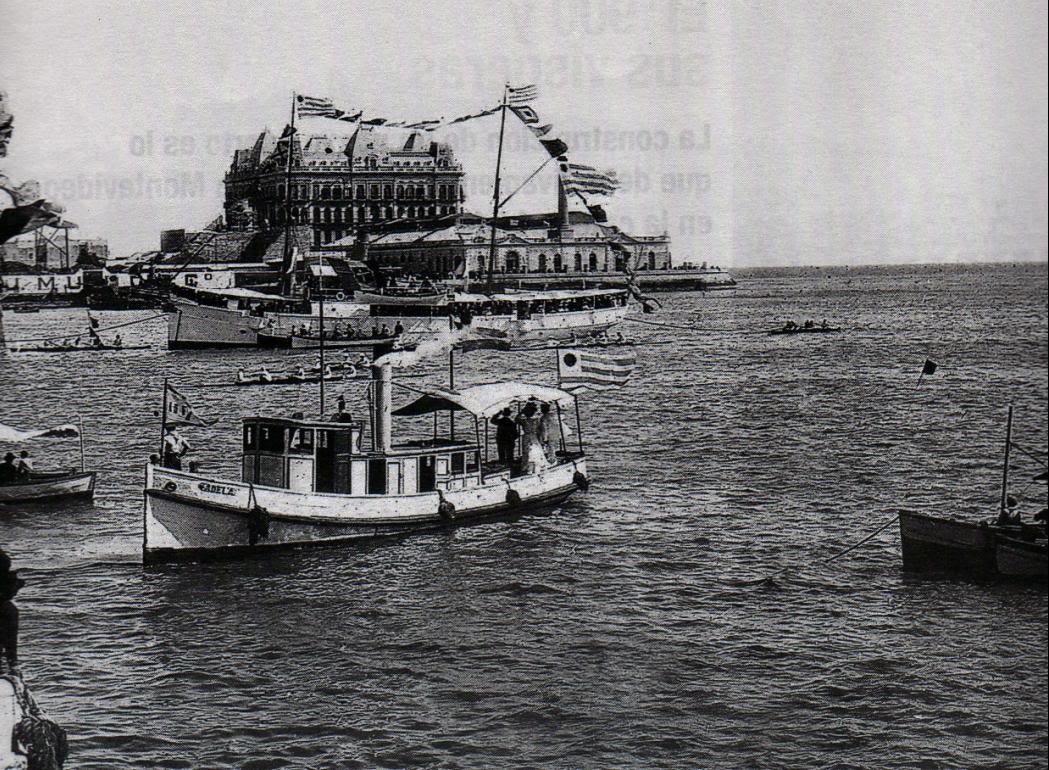
For Fear of ‘Turning Native’: British Colonialism in Uruguay

PRIZE GIVING. Victoria Hall 1909. Second Prize Giving ceremony of the new school. The theatre was a gift of the British colony in Uruguay to Victoria on her Diamond Jubilee, but was inaugurated long after she had passed away. Constantly in financial problems it was always a problem for the community.
PRIZE GIVING. Victoria Hall 1909. Second Prize Giving ceremony of the new school. The theatre was a gift of the British colony in Uruguay to Victoria on her Diamond Jubilee, but was inaugurated long after she had passed away. Constantly in financial problems, it was always a problem for the community.

Alvaro Cuenca
Montevideo, Uruguay

Uruguay was never really considered part of the formal British Empire,[1] but it is commonly used as the typical illustration of Britain’s informal empire. Most studies on the relationship between Great Britain and Uruguay during the 19th century are economic and political.[2] Missing are the social and cultural responses of the British colonists to what they perceived as an alien and dangerous environment.

The British colony in Uruguay was never more than 2000 strong, but during its apogee, between the last decade of the 19th century and the first decade of the 20th, the colony certainly wielded enormous economic power. This small group of British subjects became immersed in the local population: the native criollos, who, although they were all third- of fourth-generation descendants of European origin, were nonetheless considered culturally inferior. The British leaders of the colony in Uruguay defined the classic cultural and social strategies to combat and defeat the most profound fear of the Late Victorian period: turning native. Continue reading “For Fear of ‘Turning Native’: British Colonialism in Uruguay”

This Week’s Top Picks in Imperial & Global History

silk-road1-1024x528

Marc-William Palen
History Department, University of Exeter
Follow on Twitter @MWPalen

From a new history of the world to the forgotten soldiers of the Second World War, here are this week’s top picks in imperial and global history. Continue reading “This Week’s Top Picks in Imperial & Global History”

This Week’s Top Picks in Imperial & Global History

3-league-of-nations-cartoon-granger

Marc-William Palen
History Department, University of Exeter
Follow on Twitter @MWPalen

From the memory of Soviet famine to how a Sioux chief was buried in Dresden, here are this week’s top picks in imperial and global history. Continue reading “This Week’s Top Picks in Imperial & Global History”

The Jameson Raid and the ‘Cheap Extension of Empire’

Empire makers and breakers' - Vanity Fair illustration of the House of Commons inquiry into the Jameson Raid, Nov. 1897. Sir William Harcourt (second from right) sought to use the Raid to attack the position of Cecil Rhodes (centre).
Empire makers and breakers’ – Vanity Fair illustration of the House of Commons inquiry into the Jameson Raid, Nov. 1897. Sir William Harcourt (second from right) sought to use the Raid to attack the position of Cecil Rhodes (centre).

Simon Mackley
History Department, University of Exeter
Follow on Twitter @SimonMackley

What was the nature of British imperial expansion? Did British imperialism constitute a form of globalisation? These were the questions put to the participants at the opening of the 2015 International PhD Forum at Peking University on 10th July, which Simon attended as part of a delegation from the University of Exeter, along with postgraduates from PKU and the University of Durham. Drawing on his wider doctoral research into the British Liberal Party and the South African question in late-Victorian and Edwardian Britain, Simon seeks to tackle the first question by analysing the Liberal critique of the British South Africa Company following the Jameson Raid of 1895, and the form of imperialism it was alleged to represent.

The end of 1895 had seen British South African Company (BSAC) forces, under the direction of Cecil Rhodes, launch an attempted invasion and coup against the South African Republic. The action, which became known as the Jameson Raid, was a total failure, but the political fallout in Britain was immense, with a particular focus on the relationship between the Chartered Company and the conspiracy. In seeking to further our understandings of the nature of British imperial expansion, the Jameson Raid might seem like an odd choice of focus by comparison with other episodes in Imperial South African history; although an important precursor to the South African War of 1899-1902, the Raid itself provided no territorial gains for the Empire, and indeed arguably weakened the British position in the region. However, an analysis of the political controversy generated by the Raid in Britain, and particularly the public rhetoric deployed by political actors, provides real insight into how the expansion of the Empire and the forces of imperialism operated as political issues within late-Victorian Britain. Continue reading “The Jameson Raid and the ‘Cheap Extension of Empire’”

This Week’s Top Picks in Imperial & Global History

Japanese nationalist manga artist Kobayashi Yoshinori  depicts children being shocked by the exhibits at Peace Osaka.
Japanese nationalist manga artist Kobayashi Yoshinori depicts children being shocked by the exhibits at Peace Osaka. Asia-Pacific Journal.

Marc-William Palen
History Department, University of Exeter
Follow on Twitter @MWPalen

From the Cuban Revolution that almost wasn’t to the Sushi Craze of 1905, here are this week’s top picks in imperial and global history. Continue reading “This Week’s Top Picks in Imperial & Global History”