Deadlier than the male: The imperial designs of Le Guin, McCaffrey, and May

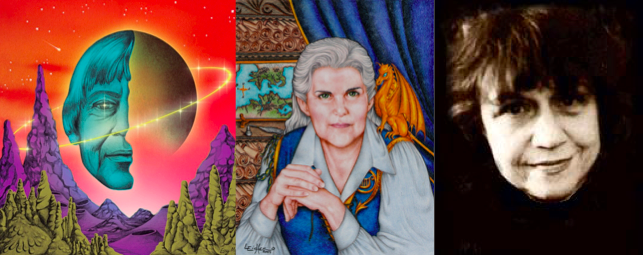
Ursula K. Le Guin (left, illustration by Essy May), Anne McCaffrey (middle, illustration by Linda Eicher), Julian May (right).

This post is the third in a roundtable co-edited by Marc-William Palen and Rachel Herrmann on science fiction and imperial history. You can read our call for posts here, and the other posts in the series here and here. Posts will run twice a week until the second week in July. We look forward to hearing your thoughts!

Tris Kerslake
Central Queensland University

For as long as the concept has existed, the struggle for empire has been seen as the most masculine of endeavours; strategic conflict, war and bloodshed on an industrial scale was not, apparently, for the ladies.

Of course, this attitude originated in the patriarchal headspace that considered women to be most useful as producers and nurturers of the next generation of soldiers, rather than as soldiers in their own right.

This mindset has never really been shaken off and wanders on even today in the realm of science fiction (SF), despite the best efforts of Black Widow in the latest DC marvel escapade (Infinity War, 2018). Publishers routinely advise women SF/Fantasy authors such as K. A. Stewart (Second Olympus, 2015), Rob Thurman (Everwar, 2016), and K. J. Taylor (The Last Guard, 2016) to avoid adopting a feminine authorial name as male readers tend not to read female writers of SF.

This is a shame for several reasons, not least of which being that any male readers who think this way are missing out on some of the best pulse-thumping action involving the violent ending of worlds, the annihilation of aggressive alien species and the unleashing of unspeakable doomsday weapons.

Imperialism flourishes in all its forms in SF and the spread of empire has formed the crux of stories written by the most respected names in the SF genre, not all of them men. To illustrate this point, I shall examine, in brief, a unique imperial concept from each of three past and much-lauded SF authors, all of whom shared the XX chromosome: Ursula K. Le Guin (1929-2018), Anne McCaffrey (1926-2011), and Julian May (1931-2017). Continue reading “Deadlier than the male: The imperial designs of Le Guin, McCaffrey, and May”

Is Theresa May the Next Harold Wilson?

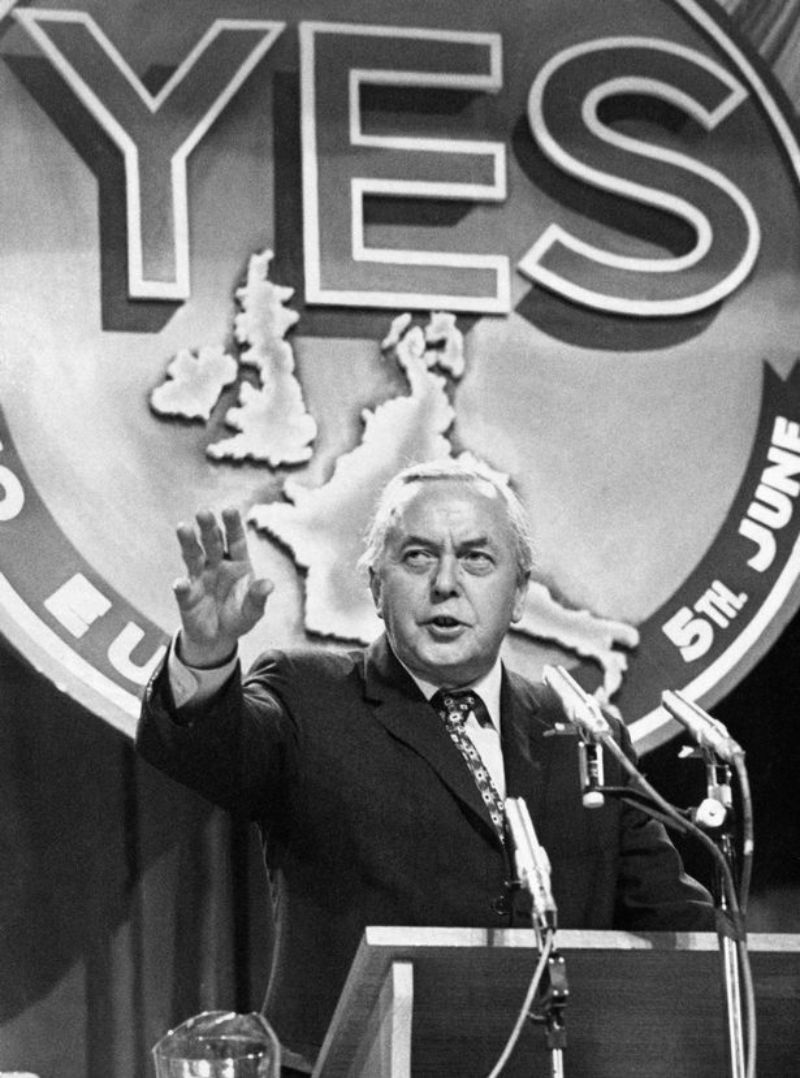
Harold Wilson campaigned for a Yes vote in 1975, despite achieving office on a Eurosceptic manifesto the year before.

Josh Hockley-Still
University of Exeter

The Windrush scandal and the subsequent resignation of yet another Cabinet Minister, Amber Rudd, means that Theresa May’s continued occupancy of No. 10 Downing Street appears ever more insecure. Her political obituary has already been written on multiple occasions, and yet she continues to survive.

Has there ever been a British Prime Minister who has displayed such resilience when their odds of political survival looked so bleak?

Yes. His name is Harold Wilson.

These days Wilson is more commonly compared to David Cameron, as in 2016 when Cameron attempted without success to follow Wilson’s playbook on how to win a European referendum. However, in political style and temperament Wilson has far more in common with May than Cameron.

So what are the similarities between Wilson and May, and what does this mean for British politics? Continue reading “Is Theresa May the Next Harold Wilson?”

This Week’s Top Picks in Imperial & Global History

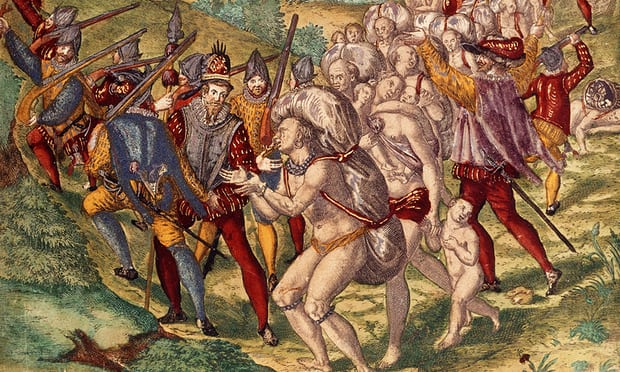
Europeans such as the Spanish explorers shown here brought germs, as well as slavery, to the Americas. Photograph: Rex

Marc-William Palen
History Department, University of Exeter
Follow on Twitter @MWPalen

From what happens when a bad-tempered, distractable doofus runs an empire to how our colonial past altered the ecobalance of an entire planet, here are this week’s top picks in imperial and global history. Continue reading “This Week’s Top Picks in Imperial & Global History”

“To boldly go!”: Adventure and Empire in Star Trek

This post is the second in a roundtable co-edited by Marc-William Palen and Rachel Herrmann on science fiction and imperial history. You can read our call for posts here, and the first post in the series here. Posts will run twice a week until the second week in July. We look forward to hearing your thoughts!

E. Leigh McKagen
Virginia Tech

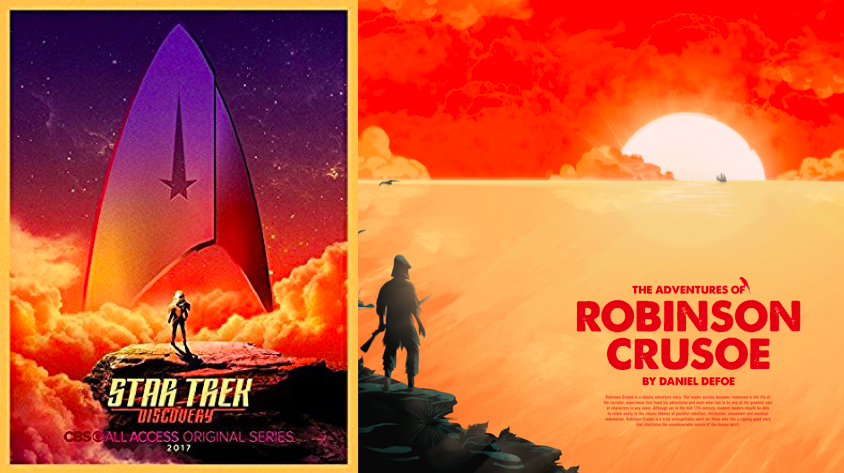
All iterations of the classic American science fiction television show Star Trek present space as a place for exploration and discovery accessible as the result of superior technology. Through the codependence on adventure and technology, Star Trek reinforces an empire that exists without features of conquest seen in much historical imperialism. The narrative of empire in Star Trek is rooted in historical imperial power relations that continue into the present, and are projected far into the future. I would suggest that the links between adventure narratives, technology, empire, and Star Trek demonstrate how one of the most popular American SF TV shows reinforces and perpetuates imperial power structures through the emphasis on discovery and exploration.

Star Trek was created by Gene Roddenberry in 1966, and the original series details the adventures of Captain Kirk (William Shatner) and his crew aboard the USS Enterprise. After three years on the air, the show sparked a movie franchise and was later revised on television with Captain Picard (Patrick Stewart) at the helm of the Enterprise in The Next Generation (1987-1994). Although Roddenberry passed away in 1991, the series has continued in various iterations, including Deep Space Nine (1993-1999), Voyager (1995-2001), Enterprise (2001-2005), and most recently, a series of rebooted films and Discovery (2017-present).

Despite the many versions of the story, the show remains true to Roddenberry’s original interest in exploration and adventure, as outlined in the opening credits of TOS and TNG: “To explore strange new worlds. To seek out new life, and new civilizations. To boldly go where no one has gone before!”[1] This goal of exploration links the Star Trek universe to the genre of adventure narratives, which Martin Green traces to the publication of Daniel Defoe’s classic Robinson Crusoe in 1719.[2] In Dreams of Adventure, Deeds of Empire (1980), Green links the origin of the novel with adventure narratives and the spread of English imperialism, beginning with the 1707 union of England and Scotland.[3] Predating Edward Said’s notable exploration of the “imagination of empire” woven into British novels of the eighteenth and nineteenth centuries, Green argues that “adventure is the energizing myth of empire.”[4] Specifically, Green explores a capitalist adventure narrative that strengthens the expansion of the British Empire in a subtle manner through a civilizing mission disguised through adventure and discovery. Building on narratives that predate official British imperialism, Victorian and Edwardian adventure novels popularized and reinforced the sense of excitement and discovery utilized by English explorers as a vital component to imperial expansion in the traditional “Age of Imperialism.” Continue reading ““To boldly go!”: Adventure and Empire in Star Trek”

Conference Programme – Britain & the World (June 21-23, University of Exeter)

Reed Hall
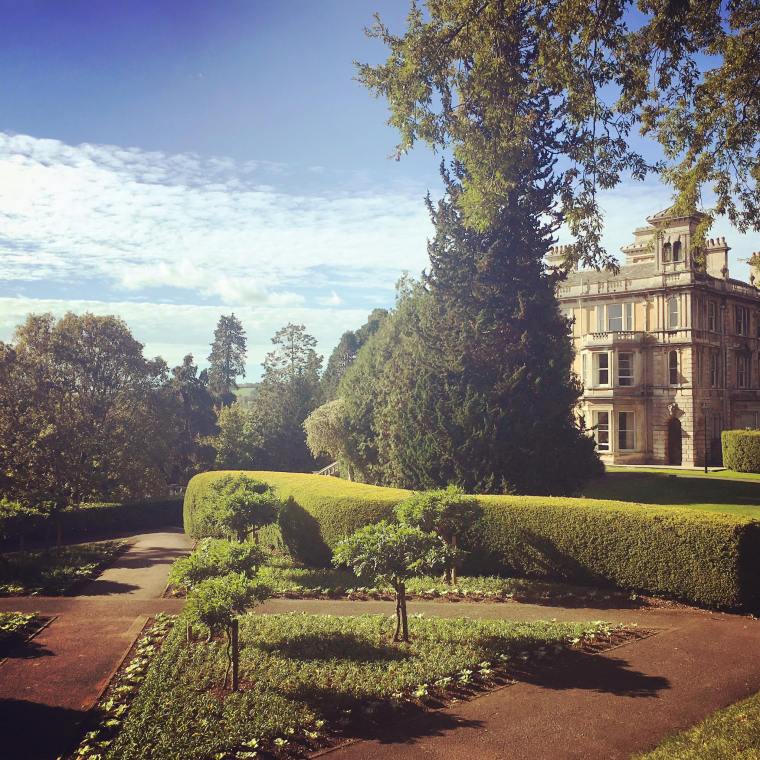
Reed Hall, University of Exeter, where the 2018 conference will be held.

From June 21-23, 2018, the Centre for Imperial & Global History is hosting the Britain & the World Conference at Reed Hall. Professor Martin Thomas (University of Exeter) is giving the keynote, and Professor Audrey Horning (William and Mary) the plenary. Please find the programme below.

Wednesday Icebreaker: 7:30- @ The Imperial

THURSDAY 21 JUNE

8:45- 10:15am

  1. Humanitarian Mission and British Imperialism Ibrahim Ahmed

Chair: Ben Holmes, University of Exeter, UK

“‘Where Britain’s power is felt mankind should feel her mercy too’: The ‘mercy’ of

empire in the long nineteenth century,” James Gregory, University of Plymouth, UK

“Reforming the poor, a charitable enterprise of colonization? Protestant missions in

Ireland in the nineteenth century,” Karina Bénazech Wendling, EPHE-PSL University

Paris and GSRL-CNRS, France

“Bringing Light to the Heart of Darkness: Transnational Human Rights and the Congo

Reform Association,” Dean Clay, Liverpool John Moores University, UK

  1. Negotiating (Im)mobilities: Travelling British and Indian Women in the British Empire Margaret Hewitt

Chair: Lisa Berry-Waite, University of Exeter, UK

“Consolidating Power and Advancing Causes: Annie Besant’s Strategic Mobility across the Empire,” Catherine E. Hoyser, University of Saint Joseph, US

“Travelling the Empire and Crafting Careers: Maud MacCarthy and an Imperial Network of Art at the turn of the 20th century,” Louise Blakeney Williams, Central Connecticut State University, US

“Translating (Im)Mobilities in Migrations: Cases of Indian Travelling Ayahs in Britain (1890-1940),” Arunima Datta, National University of Singapore, Singapore

  1. British Relations with Central and Eastern Europe, 1900-1930         Garden

Chair: Daniel Steinbach, University of Exeter, UK

“‘What Shall Become of the Orphaned Congregations?’: The Expulsion of German Missionaries from British India during the First World War,” Sharon Arnoult, Midwestern State University, US

“‘The crimson trail of Britain across the world’: German representations of British Imperialism around the First World War,” Mads Bomholt Nielsen, University of Copenhagen, Denmark

“R. W. Seton-Watson and the Yugoslavs, 1906-1921: The Limits and Contradictions of British Liberal Internationalism?,” Samuel Foster, University of East Anglia, UK

  1. Towards a System of Nations Upper Lounge

Chair: Marc-William Palen, University of Exeter, UK

“The economics of Edwardian imperial preference: what can New Zealand reveal?,”

Brian Varian, Swansea University, UK

“Forging imperial bonds in the pursuit of global unity: ‘Abdu’l-Bahá and the British government in Palestine,” Diane Robinson-Dunn, University of Detroit Mercy, US

“From Ottawa to Geneva: The British World of trade and the League of Nations,

c.1918-39,” David Thackeray, University of Exeter, UK

  1. Imperial Discourses Walter Daw

Chair: Richard Toye, University of Exeter, UK

“The World and Britain: The British Empire as Model for American and German imperialism,” Julio Decker, University of Bristol, UK

“The classical world, the civic space, and the concept of civilisation in British international thought, 1919-39,” Liam Stowell, University of Manchester, UK

Continue reading “Conference Programme – Britain & the World (June 21-23, University of Exeter)”

Colonising the Verse: Genre, Imperialism and Frontier Violence in Firefly and Serenity

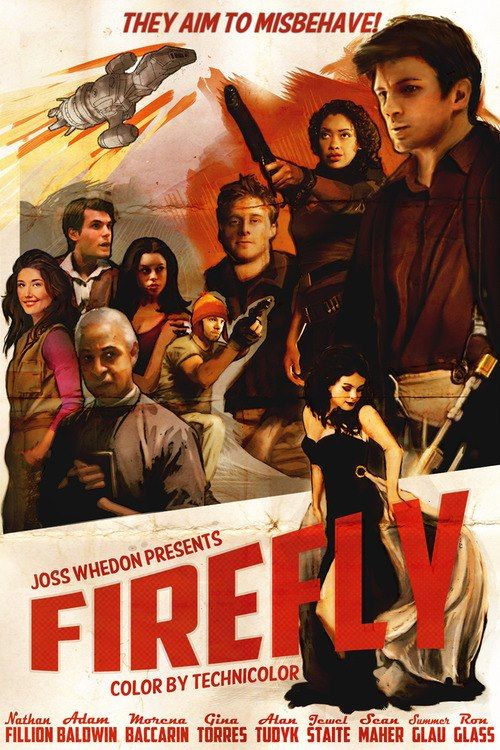
“They Aim to Misbehave”. Painted by Danielle “Elle” Babin-Sather, 2013. https://www.patreon.com/Babsl

This post is the first in a roundtable co-edited by Marc-William Palen and Rachel Herrmann on science fiction and imperial history. You can read our call for posts here. Posts will run twice a week between now and the second week in July. We look forward to hearing your thoughts on these posts!

Joel Barnes
University of Melbourne

Five hundred years in the future, humanity has left earth and expanded into a new solar system. New planets have been terraformed and colonised. Life at the centre of this system is luxurious, sophisticated, civilised. On the outer fringes, existence is more precarious, eking out a living a more dangerous game. This is the world of Joss Whedon’s regrettably short-lived television series Firefly (2002) and its feature film follow-up Serenity (2005). Both follow the rag-tag crew of the spaceship Serenity, led by captain Mal Reynolds (Nathan Fillion), as they struggle to make ends meet by means legal and otherwise on the rough outer edges of this fictional universe, known in the show’s jargon as “the Verse.”

The Verse is cast in the mode of not one but two genres—the space opera and the western—that dramatise life on the frontier, and much of its humour and interest lies in the productive tension between their respective visions of that setting. According to Whedon, Firefly’s genesis lay in his reading of The Killer Angels (1974), Michael Shaara’s historical novel about the Battle of Gettysburg. He afterwards became “obsessed with the idea of life on the frontier, and that of course [made him] think of the Millennium Falcon.”[1] In imagining the space opera as an adapted western that shifted nineteenth-century imperial tropes into an extraterrestrial future, Whedon was merely making explicit long-standing undercurrents within the genre. (Gene Roddenberry’s working title for Star Trek—a constant intertextual counterpoint in Firefly—had been Wagon Train to the Stars.[2] Its trademark incantation of “space, the final frontier” was not incidental.) Continue reading “Colonising the Verse: Genre, Imperialism and Frontier Violence in Firefly and Serenity

Fourth GHRA, 09-20 July 2018

Cross-posted from Humanitarianism and Human Rights

In about a month the fourth Global Humanitarianism Research Academy (GHRA) will meet for one week of academic training at the University of Exeter before continuing with archival research at the ICRC Archives in Geneva. The Research Academy addresses early career researchers who are working in the related fields of humanitarianism, international humanitarian law, peace and conflict studies as well as human rights covering the period from the 18th to the 20th century. It supports scholarship on the ideas and practices of humanitarianism in the context of international, imperial and global history thus advancing our understanding of global governance in humanitarian crises of the present.


The GHRA received a huge amount of applications from an extremely talented group of scholars from more than twenty-one different countries around the world. The selection committee considered each proposal carefully and has selected these participants for the GHRA 2018: Continue reading “Fourth GHRA, 09-20 July 2018”

This Week’s Top Picks in Imperial & Global History

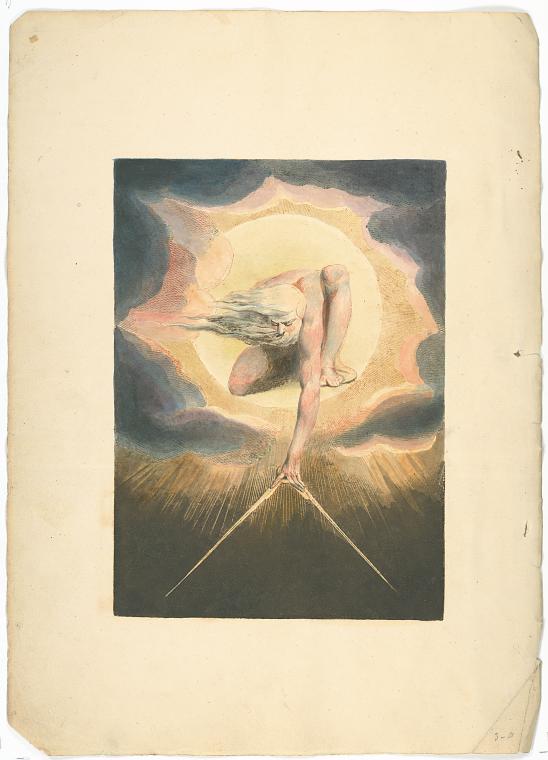
William Blake. Europe, [Frontispiece]. 1794. New York Public Library.

Marc-William Palen
History Department, University of Exeter
Follow on Twitter @MWPalen

From runaway slaves to the Bentham papers, a special digital archival edition of this week’s top picks in imperial and global history. Continue reading “This Week’s Top Picks in Imperial & Global History”

Winston Churchill, France and Europe


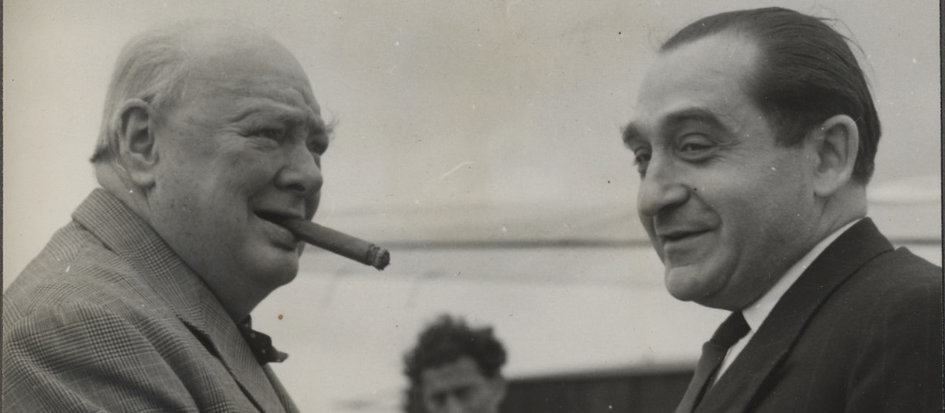
Centre Director Richard Toye recently discussed how Churchill has been utilized within the Brexit debate, and Churchill’s relationship with Europe – you can listen through the links below.

Cross-posted from France in the UK

A special Franco-British conversation about leading figures of our shared history.

Historians Richard Toye and Christian Destremau examine Winston Churchill’s relationship to France and Europe, and the different narratives that have been built since.

As part of The Fabric of Citizenship seminar series.

Podcasts

You can now listen to this special evening thanks to Culturethèque.

Tristan Mendès France on his grandfather Pierre Mendès France

Richard Toye explores Winston Churchill’s relationship to France and Europe

Christian Destremau explores Winston Churchill’s relationship to France and Europe

Exploring Commonwealth Myths

Stuart Mole
University of Exeter

April 2018 saw unaccustomed media coverage of the Commonwealth. At the beginning of the month, the  XXI Commonwealth Games opened on Australia’s Gold Coast.  There were an equal tally of medals won by male and female athletes and the integration of able and Paralympic athletes was striking. Though far from being a global Games, world records tumbled. Unusually, politics has featured, with English diving champion, Tom Daley, urging changes to the archaic and oppressive laws which deny equal rights on LBGT issues in many Commonwealth countries.

A few days after the Games’ closing ceremony, the biennial intergovernmental summit convened in London (the first such gathering in the UK for over twenty years). The high turnout of Heads of Government was less an indicator of the organisation’s contemporary vitality and more a sign that the Queen’s offer of Buckingham Palace and Windsor Castle for significant parts of the summit had proved particularly attractive to Commonwealth leaders and their spouses. At the end of the week, the Commonwealth’s presidents and prime ministers dutifully agreed that Prince Charles would succeed his mother as the organisation’s next Head – though no vacancy is currently in the offing.

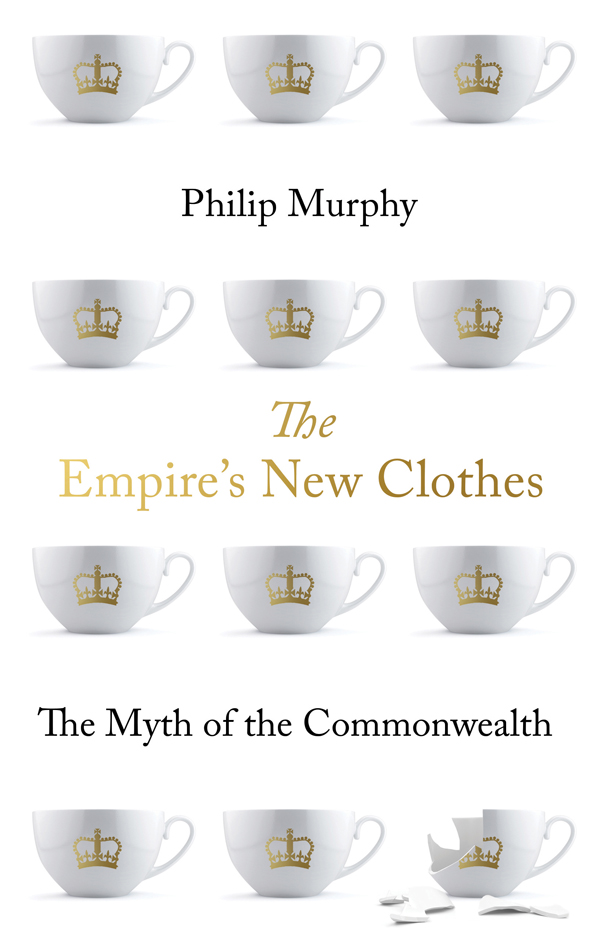
Murphy-Empires-New-Clothes-webAmong this calculated pomp and splendour came publication of Professor Philip Murphy’s latest book: The Emperor’s New Clothes: the Myth of the Commonwealth  (2018, C. Hurst & Co, London).  Murphy is a distinguished historian and Director of the Institute for Commonwealth Studies at the University of London. As a Commonwealth sceptic, why he should have taken on his current role is one that even he struggles to explain. There was no gap year spent cycling across Malawi, no father in colonial service in Malaya. His childhood was spent in Hull and “overseas” was summer holidays on the Isle of Man. Continue reading “Exploring Commonwealth Myths”

CfP: Criminalising Violent Pasts: Multiple Roots and Forgotten Pathways 1950s-2010s (London South Bank University, 15-16 November 2018)

Over the last half century, discourses and practices connected to the idea that violent or dictatorial pasts should be marked as criminal have proliferated. A variety of actors – from victims groups to social movements, to expert groups such as lawyers, museums specialists and even economists – have contributed to the emergence and circulation of the notion that political violence could only be overcome through its criminalization in courts, lustration procedures, history writing, activism or memorial sites. Produced across different fields of action and expertise, this assumption has become dominant in the political and judicial sphere at a global level and has permeated many political cultures and everyday life practices. Even where decriminalisation (amnesties, pardons, closure of archives) prevailed, debates worked within the set of assumptions about the past established through this globally expanding paradigm.

Despite its dominance, we still lack a truly international history of its roots. This is in part because modern day practices of criminalisation often play down their own historicity. Coming of age at the so-called ‘end of history’, their promoters came to see their application as a natural end point in the achievement of human rights, democracy or good governance. When histories are offered, they too often provide a rather linear narrative that links these developments to – mainly Western – political processes established to address the legacies of Nazism after World War Two. Such accounts have also commonly resisted incorporation into broader frameworks supplied, for example, by histories of globalization, neoliberalism or postcolonialism. Only recently have a few authors sought to make sense of the emergence of the modern criminalisation paradigm in new ways, connecting it, for example, to the rise of the homo economicusand a concomitant individualistic approach to human rights.

This conference seeks to explore the history of the (often forgotten) pathways and contested visions through which the criminalization paradigm developed. This conference welcomes contributions that explore the emergence of multiple, potentially competitive visions of criminal pasts. Taking as its starting point the moment of an acceleration of decolonisation, globalisation and de-Stalinisation in the 1950s, we encourage papers that explore the variety of actors, activisms and political projects that lay behind the global expansion of such ideas. Human rights organisations, international legal associations, post-colonial and Communist states, all variously developed the idea of overcoming criminal pasts as they sought, to legitimate new political projects, reconceptualise the relationship between the individual and the state, or seek collective or socio-economic justice for past wrongs. We welcome papers that, for example, address the complexity and interplay of these ideas in different arenas and seek to connect these phenomena to wider literatures. We are also wary of easy teleologies, and are as interested in the histories of the marginalization of some visions, as in the growing dominance of others.

Papers might address the following topics: Continue reading “CfP: Criminalising Violent Pasts: Multiple Roots and Forgotten Pathways 1950s-2010s (London South Bank University, 15-16 November 2018)”

The ICRC and Switzerland 1919-1939: a “special relationship” examined

Basel, 8 May 2016, the World Red Cross Day and Henry Dunant’s birthday. Copyright: Thomas Brückner

Thomas Brückner

Switzerland is uniquely positioned as host of the International Committee of the Red Cross (ICRC). Swiss neutrality, Swiss humanitarian policy, and the Swiss flag are often associated with the Red Cross. As a result, a special relationship has developed between the country and the international humanitarian organization. My book, Hilfe schenken. Die Beziehung zwischen dem Internationalen Komitee vom Roten Kreuz und der Schweiz (NZZ Libro 2017), critically explores this relationship during the period between the two World Wars (1919-1939) using sources from the ICRC archives, the Federal Archives of Switzerland, and a wide range of publications and private archives in Switzerland.

At first sight, the interwar years were a calm period for the special relationship. Looking closer, however, exposes how the relationship between the ICRC and Switzerland changed and strengthened during this time, foreshadowing criticisms during Second World War that the axis between Bern and Geneva had become too close to guarantee truly neutral and independent humanitarian aid. Continue reading “The ICRC and Switzerland 1919-1939: a “special relationship” examined”

This Week’s Top Picks in Imperial & Global History

Black Dwarf, May 1970.

Marc-William Palen
History Department, University of Exeter
Follow on Twitter @MWPalen

From rethinking the ‘colonial’ in Colonial America to decolonising human rights, here are this week’s top picks in imperial and global history. Continue reading “This Week’s Top Picks in Imperial & Global History”

What does the 1964 General Election tell us about immigration debates today?

Emil Sokolov
University of Exeter

The promises that politicians have made and continue to make about immigration have been a source of great controversy in modern British policymaking ever since the end of the Second World War. The most recent example of this is the Windrush scandal, the deportation of people of West Indian origins. About 550,000 people came into Britain from the West Indies between 1948 and 1973 to work in Britain’s labour-starved economy. However, according to census data quoted by the Guardian, more than 21,000 of those people currently have neither a British passport nor a passport from the country where they were born, placing them in the crosshairs of the Home Office’s ‘Hostile Environment’ immigration policy. Windrush’s scale and effects might be most visible today, but the causes behind this controversy originated in the 1950s and early 1960s when the boundaries between Britain and its former colonies first began to change.

Issues of immigration and race were noticeably introduced into British post-war politics after the Conservative Party passed the Commonwealth Immigrants Act in 1962. The MP for Louth, Sir Cyril Osborne, who was infamous for his extreme views on immigration, managed to convince the Conservative leadership of the need for control in the early 1960s. Despite intense opposition from Labour, Conservative moderates chose to support the new legislation. Instead of regulating the arrival of Commonwealth citizens, the Act did not tighten control on migrants from the colonies who came to re-join their families, leading to ‘Britain’s Racist election,’ as a recent BBC documentary termed it, in 1964.

Looking in greater detail at 1964 general election addresses casts new light both on Labour’s early resistance against populist demands and the emergence of the Tory far right. Likewise, the often underlooked constituency of Southall demonstrates the wide gap between Conservative and Labour attitudes towards immigration and the various ways in which candidates made use of their election addresses. Most importantly, many of the harmful ideas and misconceptions about immigration that emerged in 1964 are resurfacing today, which makes the 1964 election crucial for understanding current immigration debates. Continue reading “What does the 1964 General Election tell us about immigration debates today?”

This Week’s Top Picks in Imperial & Global History

An 1883 advertisement for land in western Canada.

Marc-William Palen
History Department, University of Exeter
Follow on Twitter @MWPalen

From Australia’s ‘1968’ to the globalization of American racial exclusion, here are this week’s top picks in imperial and global history. Continue reading “This Week’s Top Picks in Imperial & Global History”