Forum Interview – An African Volk: The Apartheid Regime and Its Search for Survival

african-volk

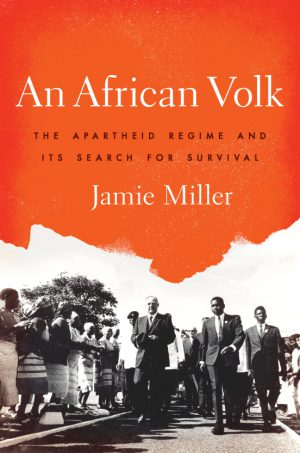
Dr. Jamie Miller’s new book, An African Volk: The Apartheid Regime and Its Search for Survival (Oxford University Press, 2016), is an ambitious new international history of 1970s apartheid South Africa. In it, he makes sense of the many domestic and foreign political, economic, and ideological forces at work in South Africa at the time: decolonization and European imperialism; economic development and cultural globalization; nationalism and anti-communism; Afrikanerdom and African nationalism; white supremacy and postcolonial rights agendas; local politics and the Cold War in the global south. Based on newly declassified documents and oral histories in multiple languages on three continents, Miller gets inside the “official mind” of South Africa’s apartheid regime in Pretoria and uncovers the ways in which these myriad forces found their complements and contradictions.

Miller, having earned his doctorate from the University of Cambridge in November 2013, has been a Fox Predoctoral International Fellow at Yale University, a Visiting Assistant Professor at Quinnipiac University, and a Postdoctoral Fellow at both Cornell and Pittsburgh Universities. He has published articles in the Journal of African History, the Journal of Cold War Studies, and Cold War History. His work has also appeared in the London Review of Books and the Imperial & Global Forum, among others. You can follow him on Twitter @JamieMiller85.

Here is the Forum interview with Dr. Jamie Miller. Continue reading “Forum Interview – An African Volk: The Apartheid Regime and Its Search for Survival”

Call for Applications: Global Humanitarianism Research Academy 2017

Drs Fabian Klose, Johannes Paulmann, and Andrew Thompson are pleased to announce that the Call for Applications for the third Global Humanitarianism Research Academy (GHRA) 2017 is now open, with a deadline of 31 December 2016.

cropped-header_prov1.jpg

Global Humanitarianism | Research Academy

International Research Academy on the History of Global Humanitarianism

Academy Leaders:   

Fabian Klose, Leibniz Institute of European History Mainz

Johannes Paulmann, Leibniz Institute of European History Mainz

Andrew Thompson, University of Exeter

in co-operation with the International Committee of the Red Cross (Geneva)

and with support by the German Historical Institute London

Venues:                     

Leibniz Institute of European History, Mainz &

Archives of the International Committee of the Red Cross Geneva

Dates:                         10-21 July 2017

Deadline:                    31 December 2016

Information at:          http://ghra.ieg-mainz.de/

ExeterIEGICRCghil

The international Global Humanitarianism | Research Academy (GHRA) offers research training to PhD candidates and early postdocs. It combines academic sessions at the Leibniz Institute of European History in Mainz and the Imperial and Global History Centre at the University of Exeter with archival sessions at the Archives of the International Committee of the Red Cross in Geneva. The Research Academy addresses early career researchers who are working in the related fields of humanitarianism, international humanitarian law, peace and conflict studies as well as human rights covering the period from the 18th to the 20th century. It supports scholarship on the ideas and practices of humanitarianism in the context of international, imperial and global history thus advancing our understanding of global governance in humanitarian crises of the present. Continue reading “Call for Applications: Global Humanitarianism Research Academy 2017”

This Week’s Top Picks in Imperial & Global History

alice
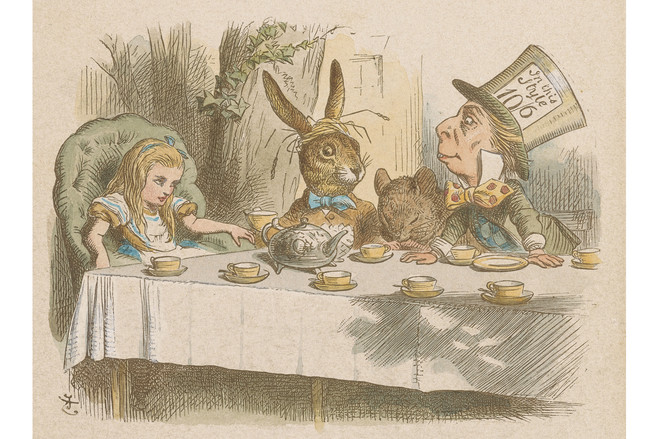
The Mad Tea Party, 1885, Hand-colored proof. Morgan Library & Museum.

Marc-William Palen
History Department, University of Exeter
Follow on Twitter @MWPalen

From imprisoning ‘bad’ historians to Alice in a world of wonderlands, here are this week’s top picks in imperial and global history. Continue reading “This Week’s Top Picks in Imperial & Global History”

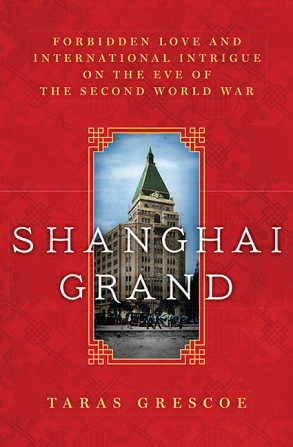
Shanghai Grand: Forbidden Love and International Intrigue in a Doomed World

Review of Taras Grescoe, Shanghai Grand: Forbidden Love and International Intrigue in a Doomed World (St. Martin’s Press, June 2016; HarperCollins Canada, May 2016).

Nigel Collett
Cross-posted from Asian Review of Books

Shanghai GrandOf all human societies of which we have knowledge, Shanghai in the late 1930s perhaps comes closest to the sci-fi dystopias beloved of Hollywood, societies in which the gilded, sophisticated inhabitants of a fabulous city live surrounded but cut off from wasted badlands, served by an abject underclass living as far from the light of day as it does from the consciousness of its masters. For inside the self-policed boundaries of Shanghai’s International Settlement and its French Concession lay both one of the greatest concentrations of wealth on the face of the planet and some of the most sordid scenes of human misery.

The taipans of British, American, French, Japanese and other stock who controlled and owned the wealth of Shanghai lived hedonistic lives of truly decadent luxury. For the wealthy, life was sweet, as Noël Coward, who passed through in 1930 and wrote Private Lives while laid up with influenza in a suite in the Cathay Hotel, remembered. “I entered the social whirl of Shanghai with zest,” he wrote. Continue reading “Shanghai Grand: Forbidden Love and International Intrigue in a Doomed World”

This Week’s Top Picks in Imperial & Global History

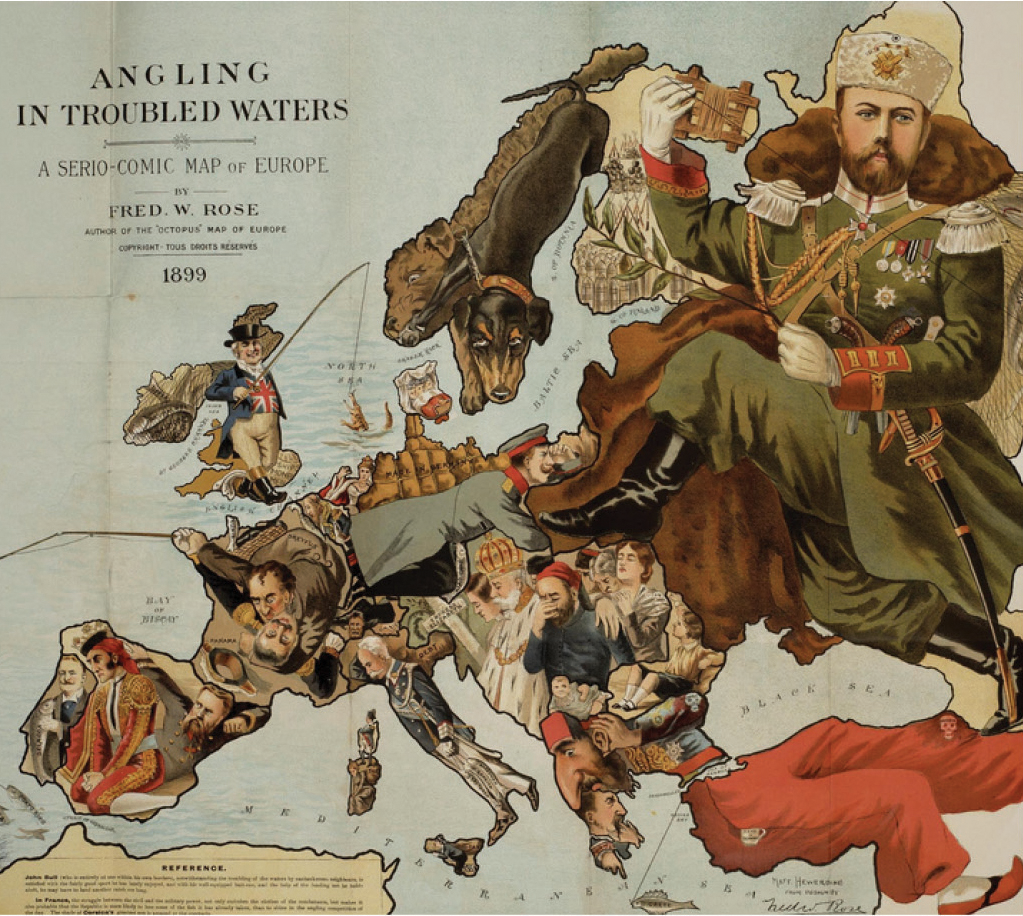
One of many maps portraying impending inter-imperialist apocalypse, via
One of many maps portraying impending inter-imperialist apocalypse, via Charnel- House.

Marc-William Palen
History Department, University of Exeter
Follow on Twitter @MWPalen

From teaching indigenous studies to Hong Kong’s forgotten independence movement, here are this week’s top picks in imperial and global history.

Continue reading “This Week’s Top Picks in Imperial & Global History”

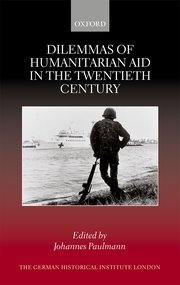
Dilemmas of Humanitarian Aid in the Twentieth Century

Review of Johannes Paulmann (ed.) Dilemmas of Humanitarian Aid in the Twentieth Century. London: Oxford University Press, 2016. 460 pp. £75 (hardback), ISBN: 9780198778974

Ben Holmes
History Department, University of Exeter

Dilemmas HumanitarianismDilemmas of Humanitarian Aid in the Twentieth Century (2016), edited by Johannes Paulmann (Director of the Leibniz Institute of European History and Professor of Modern History at the University of Mainz), exemplifies the burgeoning field of the history of humanitarianism. In providing historical context to a sector that is often stuck in the ‘perpetual present’, the volume shares a common purpose with a fast-growing body of literature.[1] Specifically, the volume examines 150 years of history to demonstrate that the technical and ethical crises central to modern humanitarianism – such as competition between aid organisations, the tendency of aid to ‘do more harm than good’, and the manipulation of aid by political actors – are not unique to the twenty first century. They have, in fact, ‘been inherent in humanitarian practice for more than a century’ [3].[2] Continue reading “Dilemmas of Humanitarian Aid in the Twentieth Century”

This Week’s Top Picks in Imperial & Global History

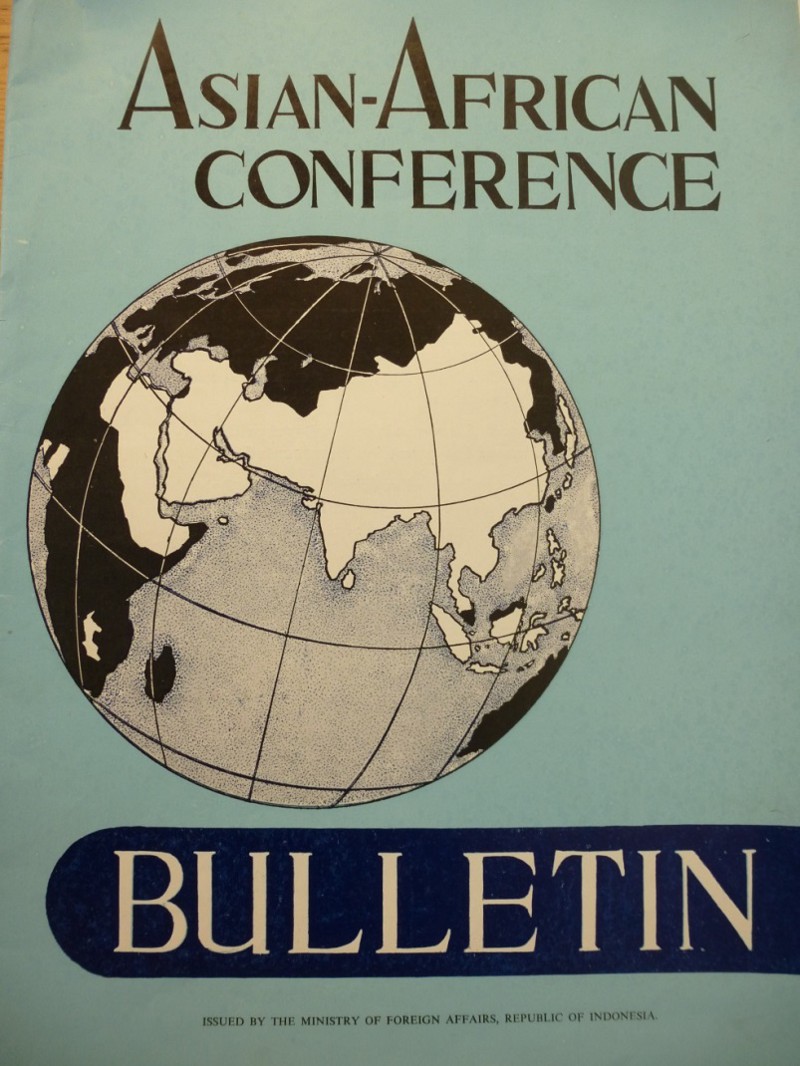
Copy of the Asian-African Conference Bulletin held at the Foreign Affairs Archives in Belgium. The Indonesian government produced a Bulletin on the Bandung Conference, intended to bolster its prestige, 1955.

Marc-William Palen
History Department, University of Exeter
Follow on Twitter @MWPalen

From Christian imperialism to 1945’s forgotten heroes of Paris, here are this week’s top picks in imperial and global history. Continue reading “This Week’s Top Picks in Imperial & Global History”

Selling Empire: India in the Making of Britain and America


Adam Nadeau
University of New Brunswick

Review of Jonathan Eacott, Selling Empire: India in the Making of Britain and America, 1600–1830. Chapel Hill: University of North Carolina Press, 2016. $45.00 (Cloth).

JacketJonathan Eacott’s Selling Empire: India in the Making of Britain and America, 1600– 1830 (2016) reinforces two important historiographical points. One is that, contrary to David Armitage’s insistence that ‘the emergence of the concept of the “British Empire” . . . was long drawn out, and only achieved by the late seventeenth century at the earliest’,[1] the English polity that later incorporated the kingdoms of Scotland and Ireland was consciously imperial as early as the late sixteenth century. The second is that Britain’s imperial efforts were, from the start, transoceanic in nature. On the latter point, Selling Empire breaks with the older historiographical trend of distinguishing between a ‘first’ and ‘second’ British Empire delineated by a late eighteenth-century ‘swing to the east’.[2] Instead, Eacott asks readers to consider ‘America the India’ as well as ‘India the place’, for it was the idea of India that ‘fostered, propelled, and supported English and British imperial expansion and power in America’ (1–3). Rather than ‘separate “worlds” of empire’, Eacott sees ‘the British empire in the world’ (7), an important shift in perspective that, along with other recent studies of the peripheries of Britain’s American empire,[3] will continue to push scholars of early modern British imperialism nearer towards contemporary interdisciplinary debates surrounding notions of indigeneity and the legacies of settler colonialism.[4] Continue reading “Selling Empire: India in the Making of Britain and America”

This Week’s Top Picks in Imperial & Global History

elkins

Marc-William Palen
History Department, University of Exeter
Follow on Twitter @MWPalen

From uncovering the brutal truth about the British Empire to the false economic promise of global governance, here are this week’s top picks in imperial and global history. Continue reading “This Week’s Top Picks in Imperial & Global History”

When Protectionism Dominated American Politics

“Cleveland Will Have a Walk-Over.” Republican magazine Judge depicts Grover Cleveland balancing precariously on a fraying rope, holding a balancing pole labeled “Free Trade Policy” and carrying the Democratic Party donkey and John Bull on his back. John Bull’s back pocket is stuffed with “Cobden Club Free Trade Tracts.” Judge, 25 Aug. 1888.
“Cleveland Will Have a Walk-Over.” Republican magazine Judge depicts Grover Cleveland balancing precariously on a fraying rope, holding a balancing pole labeled “Free Trade Policy” and carrying the Democratic Party donkey and John Bull, a common representation of Britain,  on his back. John Bull’s back pocket is stuffed with “Free Trade Tracts.” Judge, 25 Aug. 1888.

Marc-William Palen
History Department, University of Exeter
Follow on Twitter @MWPalen

Cross-posted from The Globalist Magazine

How the 1888 elections decided the protectionist course of U.S. economic expansion for decades to come.

For most people alive today, Republicans have been the advocates of a free trade strategy for the United States, while the Democrats usually have sat on the fence.

The emergence of Donald Trump brings back the memory of when it was the other way around – when Republicans vehemently opposed open trade relations with the world, while Democrats advocated for free trade.

Era when Democrats were pro-free trade

The year was 1888, the tail end of Grover Cleveland’s first administration (1885-89). He was the only Democrat to hold the U.S. presidency in the half-century since the Civil War. And because of his actions, it was the tariff question that overshadowed all other economic issues that year.

The “Great Debate” of 1888 over U.S. trade policy arose after Cleveland, in his December 1887 annual message to Congress, had voiced his support for freer trade.

Cleveland’s free-trade message created political waves, both at home and upon the shores of Great Britain. Continue reading “When Protectionism Dominated American Politics”

This Week’s Top Picks in Imperial & Global History

soviet_wrench_man

Marc-William Palen
History Department, University of Exeter
Follow on Twitter @MWPalen

From ending the world’s weirdest border dispute to Russia’s strange world of Soviet nostalgia, here are this week’s top picks in imperial and global history. Continue reading “This Week’s Top Picks in Imperial & Global History”

Brexit and food prices: the legacy of the Hungry Forties

Screen Shot 2016-08-11 at 12.28.01 PM

Cross-posted from History & Policy

Places are limited and RSVP is essential. Please book your place here.

Plenty of attention is being paid to the political and constitutional effects of Brexit, but what will its economic impact be on life’s most basic commodities? How did food prices inform the debate in the weeks and months leading up to the referendum, and how have they informed debate in the past? How have the spectres of want and hunger been invoked over the last century and a half in political contexts, and are we paying them enough attention now?

Debating these questions will be five historians and policy makers with combined expertise covering the period since the 1840s, the “Hungry Forties,” which live in political memory as the UK’s last serious sustained period of food poverty. The discussion is aimed at policy makers and practitioners working in the area of food poverty and food security, and aims to show how lessons from the past can inform decision-making today. Continue reading “Brexit and food prices: the legacy of the Hungry Forties”

This Week’s Top Picks in Imperial & Global History

The Commune as Seen by Jacques Tardi (“Le cri du peuple”), 2002.

Marc-William Palen
History Department, University of Exeter
Follow on Twitter @MWPalen

From when Nazis held mass rallies in Madison Square Garden to colonial-era bear migrations, here are this week’s top picks in imperial and global history. Continue reading “This Week’s Top Picks in Imperial & Global History”

Himmler’s Newly Discovered Diaries in Historical Context

Himmler diaries

Nicholas Terry
History Department, University of Exeter

Cross-posted from Holocaust Controversies

British tabloids like The Sun, Daily Star, Daily Express and Daily Mail are currently agog at the news that Himmler’s diaries have been discovered in Russia, having learned that their German equivalent Bild is serialising excerpts (behind a paywall) of a remarkable discovery by German and Russian historians in the Russian archives.

So far, only Sven Felix Kellerhoff, the history editor at Die Welt, has offered properly grown-up commentary and avoided falling into the trap of over-sensationalising the find. Most of the British tabloids, by contrast, have evidently misread the text of the story in Bild and are now passing on a number of confusions. Continue reading “Himmler’s Newly Discovered Diaries in Historical Context”

This Week’s Top Picks in Imperial & Global History

French armed forces suppress an uprising in colonial-era Algeria. Photograph: Loomis Dean/Time & Life Pictures/Getty Image

Marc-William Palen
History Department, University of Exeter
Follow on Twitter @MWPalen

From the unlikely origins of Russia’s Manifest Destiny to the street food that powered the British Empire, here are this week’s top picks in imperial and global history. Continue reading “This Week’s Top Picks in Imperial & Global History”