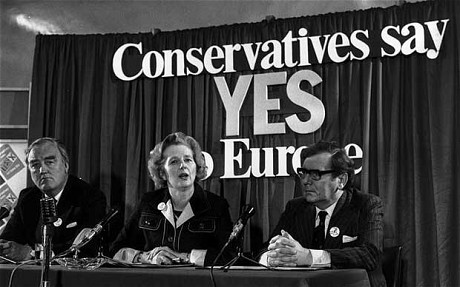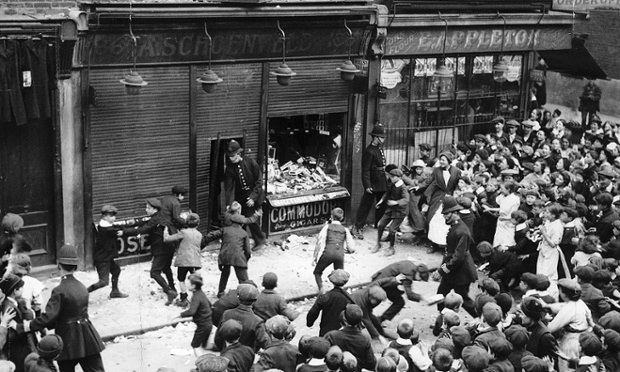
Margaret Thatcher, William Whitelaw and Peter Kirk, at a referendum conference. June 1975. Photo: Keystone/Getty Images
Richard Toye and David Thackeray University of Exeter
Forty years ago today Britain went to the polls to decide a crucial question: would the country remain in the European Economic Community (EEC)? It had only joined the EEC, the EU forerunner organisation, two years previously, and this was the first UK-wide referendum. When the votes were counted the results were emphatic. The nation had voted ‘yes’ to Europe by a two to one margin. The Labour Prime Minister Harold Wilson hailed the result, noting that no one in Britain or the wider world could be in doubt about its meaning. Margaret Thatcher, the recently-chosen Tory leader, observed that the ‘massive “Yes” vote could not have come about without a massive Conservative “Yes”.’ Today, as the British people prepare for a new European plebiscite, what lessons can be learned from the experience of 1975? Continue reading “In Wilson’s Shadow: Why the 1975 Europe Referendum Still Matters”→
During the early stages of the recent election campaign, Tony Blair emerged to deliver a speech in support of the Labour party’s European policy and to declare that he was backing Ed Miliband “100%”. The decision to make use of his predecessor in this way cannot have been easy for Miliband, as Blair remains potentially toxic, not least to many in the party itself, but doubtless he could not risk offering a rebuff. Blair’s motivation remains more obscure: previously he had done little to conceal his dislike of Miliband’s political approach, and he probably feels more than a little vindicated by Labour’s defeat. Certainly, a lot of people would reject with a laugh the idea that he said what he did because he genuinely believed it. Continue reading “Richard Toye Reviews Blair Inc: The Man Behind the Mask for the Guardian”→
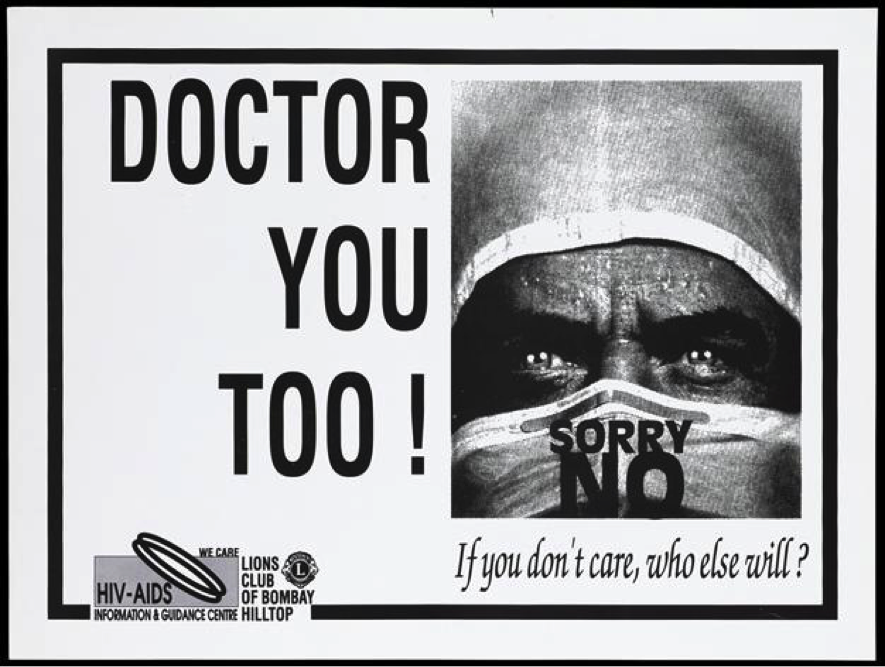
AIDS poster, Bombay Hilltop Lions Club (a voluntary community needs and humanitarian organization) and the HIV/AIDS Information and Guidance Centre of Bombay, c. 1996. The inset shows a doctor wearing a mask saying “Sorry no”, highlighting the issue of physicians refusing to treat AIDS patients for moral reasons or fear of infection.
Meg Kanazawa University of Exeter
How do narratives of national AIDS epidemics draw from global discourses of health and development? In my own study of AIDS reportage in Indian medical journals, I argue that in the early years of the disease crisis, doctors initially made sense of the social and cultural dimensions of AIDS as it existed in India locally, through episodes of their individual interactions with HIV positive patients. They also gathered information on AIDS in a variety of cross-cultural settings to translate to an Indian context. However, as the epidemic progressed, the story of AIDS in India became increasingly politicized. Particularly around 1998, doctors began to critically engage with debates concerning the politics of unequal access to standard treatments in developing countries. Thus, by tracing the narrative of AIDS in Indian medical journals, we can see the moment of transition when the ‘global became problematic’.[1]
In the early years of the epidemic, doctors focused on episodic local cases relating to a variety of medical ethics issues. Articles focused on problems such as the appropriate attitudes of medical professionals when delivering diagnoses, whether HIV status should be determined in an arranged marriage, and how to obtain consent for collecting blood samples. Typically, the particulars of an AIDS related incident or news story in Delhi, Chennai or Pune is reported, then analyzed for what it illuminates about the medical profession and the delivery of healthcare in India. Because of the nature of transmission and the social stigmas particular to India associated with it, AIDS was treated as a prism, which revealed the shortcomings of medical care. Continue reading “Framing Disease in Development: From Local to Global Narratives”→
France outside of its traditional sphere of African influence (19th-21st centuries)
Sciences Po, Paris, Centre d’Histoire, Friday 20 November 2015
The study of France’s policy in Africa has frequently focused on the interactions with its (former) Empire, the “pré-carré”. This has given rise to a narrative of uniqueness and exceptionality, whilst simultaneously contributing to critiques of France as a “neo-colonial” actor in Africa. However, a growing body of new scholarly research suggest that the time is now ripe for a reassessment of this restrictive vision.
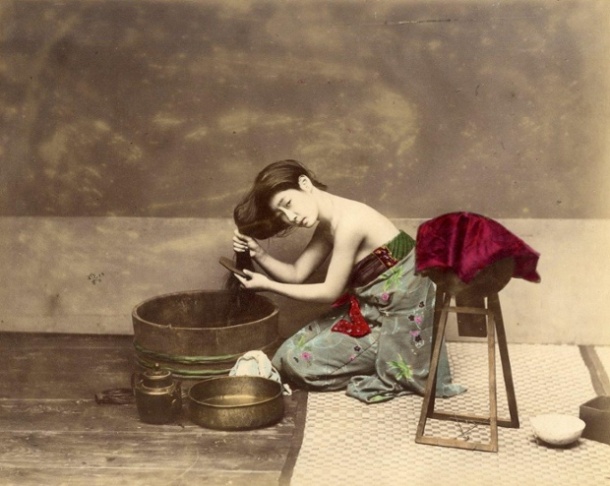
Samurai and Courtesans colour photos from 1865. Felice Beato was one of the first people to photograph the far east – and he made life bloom with colour. See his rare hand-coloured shots of Edo-era Japan here and at the London Photograph Fair, 23 & 24 May 2015.
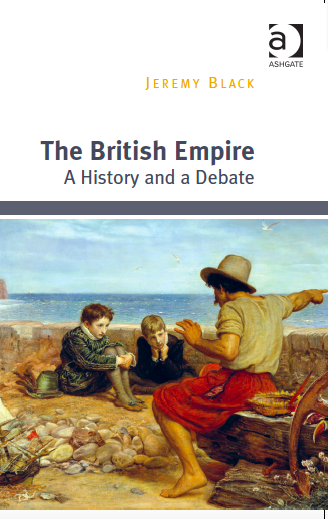
How should historians tackle the controversial topic of imperialism? To what extent is it permissible to pass moral judgements on the actions of people in the past who had very different sets of values than we hold today? In his forthcoming book TheBritish Empire: A History and A Debate, Professor Jeremy Black notes that the rights and wrongs, strengths and weaknesses of empire are a major topic in global history, and deservedly so.Focusing on the most prominent and wide-ranging empire in world history, the British empire, Black provides not only a history of that empire, but also a perspective from which to consider the issues of its strengths and weaknesses, and rights and wrongs. In short, this is history both of the past, and of the present-day discussion of the past, that recognizes that discussion over historical empires is in part a reflection of the consideration of contemporary states.
In this video, I interview Professor Black about his findings.
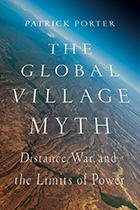
The Global Village Myth takes aim at Globalism, or the idea of the ‘death of distance’ in the world of conflict. And it takes aim at the dangerous policies it tends towards. I argue that even in a supposedly ‘globalised’ world, distance matters.
Does technology kill distance? So often we hear it. The cumulative message of our news cycle, of debate about foreign and defence policy, is the fear that the global spread of ideas, capital, weapons and people makes our world ever more dangerous. Continue reading “The Global Village Myth”→
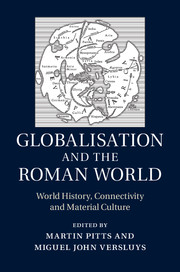
Exeter’s Centre for Imperial and Global History is delighted to host an interdisciplinary roundtable on Martin Pitts (University of Exeter) and Miguel John Versluys’s (Leiden University) recent edited volume, Globalisation and the Roman World(Cambridge University Press). The book makes the provocative case for understanding the ancient Roman world as one of the earliest examples of globalisation. Their study challenges that of many Roman historians and archaeologists who feel that the word globalisation is inappropriate to use when discussing the ancient world. With Pitts and Versluys’s book as a starting point, the roundtable participants – ancient historians, archaeologists, sociologists, and modern historians – will discuss how the controversial study of globalisation’s ancient origins might reshape and redirect the interdisciplinary field of globalisation studies. Chaired by Centre Director Andrew Thompson, the roundtable participants are:
Martin Pitts (Exeter, Classics and Ancient History)
Professor Elena Isayev (Exeter, Classics and Ancient History)
Professor David Inglis (Exeter, Sociology)
Robert Fletcher (Exeter, History)
Marc-William Palen (Exeter, History)
When: Tuesday, 26 May 2015
Time: 3-4.30pm
Where: Amory 128 (University of Exeter, Streatham Campus)
On a balmy Sunday evening in March 1838, a colorful conclave of English, Parsee, American, and Hong merchants crowded the resplendent grand hall of the New English factory in Canton in a sort of town meeting to hear Chief Superintendent and Plenipotentiary of Britain’s China trade, Charles Eliot. Eliot was there to announce Britain’s response to the arrival of Imperial Commissioner Lin Zexu, who had arrived days earlier with a commission to eliminate the opium trade, his sweeping proclamation demanding they deliver “every particle of opium” to him for destruction. It was addressed to “the Barbarians of every nation.” Recognizing the sprinkling of Americans in the hall, Eliot expressed his delight for their tacit cooperation, and assured them, too, of the protection of the British government. Proclaiming what everyone already knew, that two American warships, the imposing USS John Adams and the Columbia, were expected imminently, he hoped that he could count on their assistance. “Yes, you may,” someone shouted back. All in all, it was “a very pretty speech,” American merchant Robert Bennet Forbes observed.[1]
More than a pretty speech, Eliot’s words recognized an important aspect of imperial and global history – Eliot understood that the sinews that connected the British Empire were more than ships plying trade routes, colonial administrators issuing edicts from imposing fortresses, or agents collecting taxes from impoverished farmers. They were also strengthened by informal ties of commerce, gentility and affinity that bound, albeit loosely, communities of global expatriates. In subtle but significant ways, the empire of the 1830s was already an informal phenomenon, connected by the citizens of the world whose residencies in colonial outposts created webs of support.
Apollinariya Yakubova, who refused to marry Lenin, was discovered in London by a Russian historian. Photograph: State Archive of the Russian Federation. Courtesy of the Guardian.
Even as Red Cross and Red Crescent societies around the world mark the 50th anniversary of the adoption of the movement’s Fundamental Principles, there is a palpable sense that they are at risk. Threatened not only by the resurgence of state sovereignty and proliferation of non-state armed groups, the very universality of the principles may be in question. As the twenty-first century draws on, are the principles of ‘impartiality’, ‘neutrality’ and ‘independence’ still fit for purpose as Western influence wanes and the nature of conflict itself rapidly evolves?
The Red Cross’ principles have marinated in a century and a half of humanitarian history. That history matters. The past helps us to understand how different types of threat to humanitarian principles have emerged from different types of conflict and geopolitical environments. History also sheds light on how, despite such obstacles, the principles came to acquire the public prominence and moral authority they currently possess.
As polling day looms it seems certain that Britain is heading for another hung parliament, raising the prospect of a minority government or another coalition.
The resulting administration may well be more unstable than the current Conservative-Lib Dem government; things will certainly be messy to some degree. For those accustomed to the idea of living under a two-party system, in which Labour alternates with the Tories as the political pendulum swings, this is all very disconcerting.
But the story of another coalition, one formed a hundred years ago this month, casts things in a different light. It was the chaos of May 1915 that laid the groundwork for much of our modern political order; and our expectations about how party politics operates are to a considerable degree the legacy of the era of Asquith and Lloyd George.
The events of a century ago were of enormous significance for both the course and conduct of the First World War and for the political future of Britain. They resulted in the fall of Britain’s last solely Liberal government and its replacement by a coalition that included Conservatives and a small number of Labour figures. Continue reading “Like a Century Ago, This Election May Change Things for Decades”→
You must be logged in to post a comment.