Imagining Markets workshop Report, Exeter, April 2015

Reed Hall1

David Thackeray
University of Exeter

Cross-Posted from Imagining Markets

A chilly start at Reed Hall, Exeter!

We were delighted to welcome Imagining Markets network participants to Exeter for our first event last week. This is the first of a series of three academic workshops, with subsequent events to be held in London and Cambridge over the next year, exploring various facets of Britain’s economic culture and its relationship with key markets.

Paul Young opened proceedings with a paper exploring how the growth of the refrigerated meat and beef stock industries led to new understandings of the South American environment in Victorian literature such as the eco-romance The Purple Land and in advertising, where the Uruguay-based Leibig’s company had to compete with the imperial populism of Bovril.

Alan Booth introduced a new project exploring the development of the Rowntree business lectures, which emerged after World War I in a context of growing global economic competition to British business, and interest in new American methods of industrial psychology and management consultancy.
Continue reading “Imagining Markets workshop Report, Exeter, April 2015”

H-Diplo Review of “The Imperialism of Economic Nationalism”

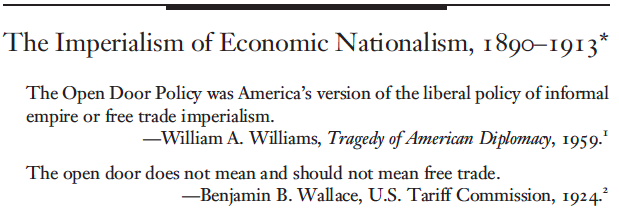
Screen Shot 2015-04-19 at 13.10.00

Marc-William Palen.  “The Imperialism of Economic Nationalism, 1890-1913.”  Diplomatic History 39:1 (January 2015):  157-185.  DOI:  10.1093/dh/dht135.  http://dx.doi.org/10.1093/dh/dht135

Cross-posted from H-Diplo

Reviewed by David Sim, University College London

The Obama administration’s engagement with the Cuban government has led politicians and pundits of all stripes to reflect on the relationship between commerce and politics and, in so doing, to reanimate the concept of ‘the open door.’ Marc-William Palen, a Lecturer in Imperial History at the University of Exeter, argues that this concept has been misunderstood and misapplied by historians of American foreign relations from the 1960s to the present.  Building on his work on the global impact of the highly protectionist McKinley Tariff of 1890, Palen sets out to rethink the characterisation of American power at the end of the nineteenth century by outlining what he describes as the “imperialism of economic nationalism,” as distinct from the “imperialism of free trade” (163).1

What is striking, he suggests, is not the American commitment to liberalised trade and the free movement of goods, people and capital, but rather the tenacity with which a band of influential Republican statesmen married their commitment to a high tariff to a programme of reciprocity and, ultimately, to an imperial foreign policy in the late nineteenth century. Convinced of the maturity of American industry but anxious that the U.S. domestic market had become saturated, these statesmen sought a solution in what Palen calls “an expansive closed door,” as administration after administration “coercively enforced a policy of closed colonial markets in Hawaii, the Philippines, Puerto Rico, and Cuba.” (163).

Palen opens this sharp article with a smart pair of quotations. The first is from William Appleman Williams, arguably the single most influential historian of American foreign policy in the second half of the twentieth century. “The Open Door Policy,” he writes, “was America’s version of the liberal policy of informal empire or free trade imperialism” (157). The second person quoted is Benjamin B. Wallace, long-time member of the U.S. Tariff Commission, who would not have recognised Williams’s characterisation. “The open door does not and should not mean free trade,” he bluntly stated in March 1924 (157). These two interpretations offer a neat frame for Palen’s study, and highlight a basic but important historiographical insight that informs the article. Historians have long noted the protectionist credentials of the late-nineteenth-century Republican Party, yet the analytical purchase of ‘free trade imperialism,’ formulated in the context of British imperial history by John Gallagher and Ronald Robinson and imported to American historiography by Williams and others, has endured.2  Why have so many insightful historians persisted with such an obviously ill-fitting concept?

Continue reading “H-Diplo Review of “The Imperialism of Economic Nationalism””

This Week’s Top Picks in Imperial & Global History

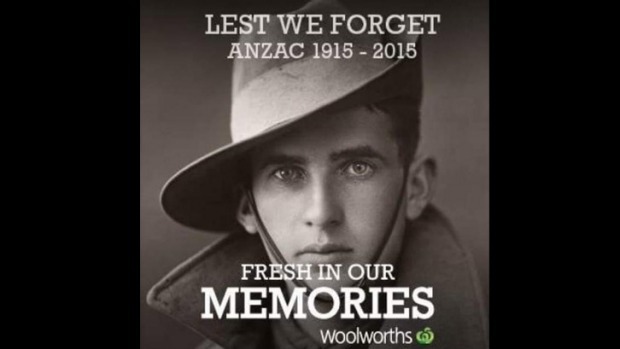
ANZAC
Woolworths’ controversial ANZAC Day campaign poster.

Marc-William Palen
History Department, University of Exeter
Follow on Twitter @MWPalen

From Lincoln’s forgotten post-war black colonization scheme to misremembering the First World War, here are this week’s top picks in imperial and global history. Continue reading “This Week’s Top Picks in Imperial & Global History”

These Dangerous Women: Filming the 1915 Women’s Peace Congress

WILPF

Charlotte Bill
Producer and Project Manager, Clapham Film Unit

“My sister needs a film”, my contact said to me in a Community Resource basement on Brixton Hill.

“What’s the story?”

“These women in 1915 got together to try to stop World War 1. They travelled right across war torn Europe. They even had to travel by fishing boat at one point – the ferries weren’t running. They were from warring and neutral nations. The organisation they set up is still running today and my sister is part of it. “

I knew at once it was a great story that had to be told on its centenary. I went to Petts Wood Quaker Meeting House to meet my contact’s sister, Sheila Triggs. She was at a meeting of the Orpington branch of the Women’s International League for Peace and Freedom (WILPF), the organisation set up in 1915 and still going today. I showed the group my previous work and offered to help raise the funding to engage members of the organisation and outside volunteers to make a documentary, touring exhibition, booklet and set of oral history recordings.

The Heritage Lottery Fund was immediately interested in the project and I got together with the WILPF History Group to write a successful bid. Helen Kay and Katrina Gass from WILPF History Group had already spent years researching the early members of their organisation and they put together a list of women who had been granted passports to attend the International Women’s Congress at the Hague in 1915.

The 1915 Women’s Peace Congress and the Origins of the WILPF

In 1915 women all over Europe were trying to get the vote. They had formed an international women’s suffrage alliance (IWSA) and felt they had a lot in common with other women regardless of national boundaries. When the war broke out, the international meeting planned for 1915 in Berlin couldn’t take place.  Continue reading “These Dangerous Women: Filming the 1915 Women’s Peace Congress”

This Week’s Top Picks in Imperial & Global History

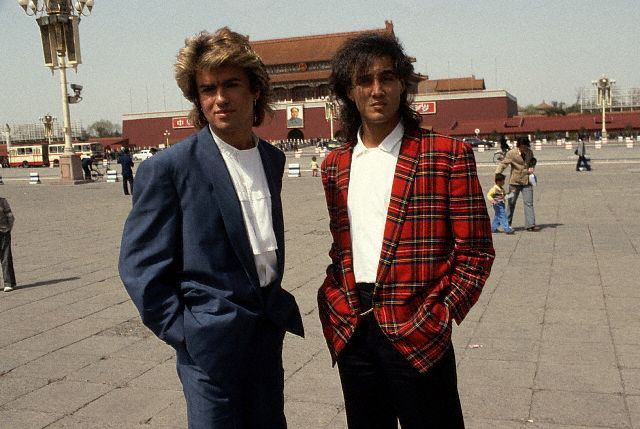
George Michael and Andrew Ridgeley

Marc-William Palen
History Department, University of Exeter
Follow on Twitter @MWPalen

From walking the streets of 16th-century Seville to when China woke up to Wham! Here are this week’s top picks in imperial and global history. Continue reading “This Week’s Top Picks in Imperial & Global History”

Sonny Ramphal’s Global Life

Ramphal3

Stuart Mole
Mr. Mole is a PhD Student at the University of Exeter. He was Special Assistant to the Secretary-General (1984-1990), Director of the Secretary-General’s Office (1990-2000), and Director General of the Royal Commonwealth Society (2000-2009).

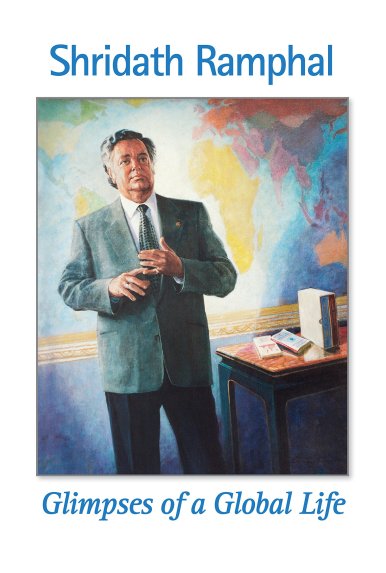
Nowadays, Sir Shridath ‘Sonny’ Ramphal – lawyer and international diplomat – is well settled into retirement, though still a giant figure in his native Caribbean and still able to stir the memories of older generations who remember his boundless activism on the world stage.

From 1975 to 1990 he was the longest-serving Secretary-General of the Commonwealth of Nations, and for six of those years I was lucky enough to be his Special Assistant. It was an exhilarating time, now given new immediacy by the recent publication of his memoir Glimpses of a Global Life (2014).

This weighty and enthralling record demonstrates a contribution to international affairs which was multi-faceted and never less than exceptional. He served on a string of international commissions, including Brandt, on development and the North-South divide; Bruntland, pioneering the notion of sustainable development; and Palme, on peace and international security. There were other issues where his intellectual leadership and courage stood out. He was among the first to warn Africa and the world of HIV/AIDS – and among the first to speak of sea-level rise and climate change, many decades before such talk became common currency.

But perhaps he is best remembered for his titanic struggle against racism in Southern Africa – in the eventual vanquishing of white minority rule in Rhodesia and, more than a decade later, in helping bring to an end apartheid in South Africa. Continue reading “Sonny Ramphal’s Global Life”

This Week’s Top Picks in Imperial & Global History

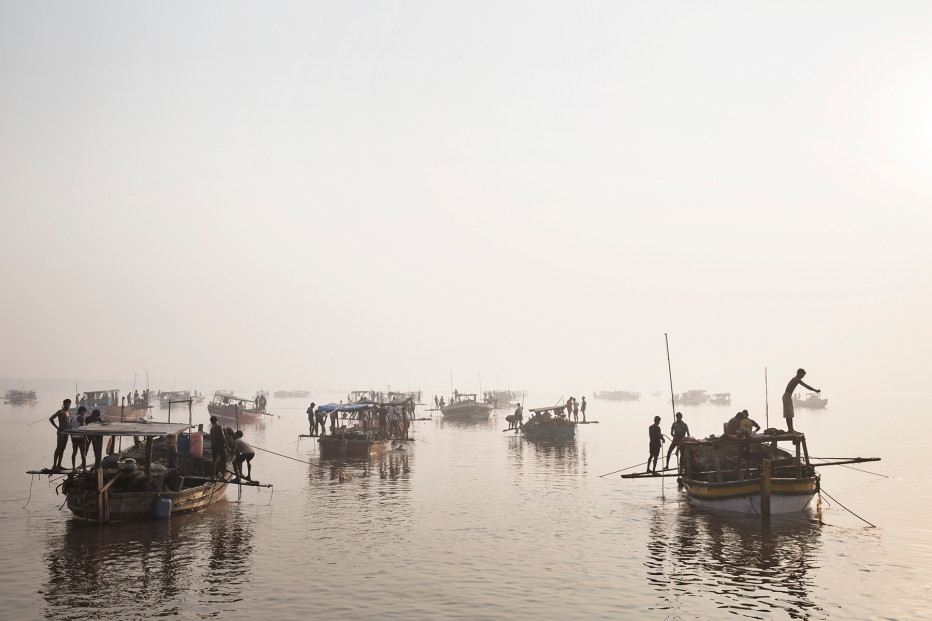
Sand mining boats work illegally on the Thane River near Nagla Bunder Village in Maharashtra, India, March 20, 2013. Photo by Adam Ferguson for WIRED

Marc-William Palen
History Department, University of Exeter
Follow on Twitter @MWPalen

From the global war for sand to Russia’s Scramble for Africa, here are this week’s top picks in imperial and global history. Continue reading “This Week’s Top Picks in Imperial & Global History”

The Untold History of Presidential Libraries

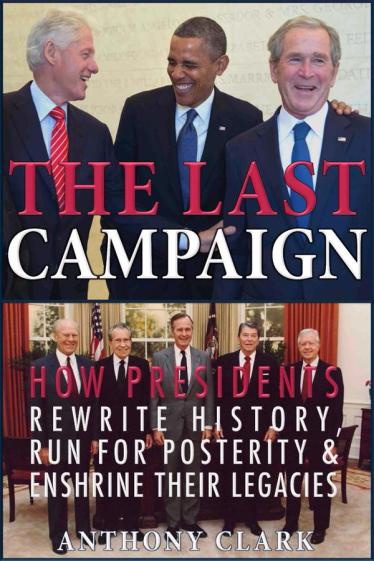
last campaign

anthony clarkAnthony Clark is a former speechwriter, committee professional staffer, and legislative director in the U.S. House of Representatives. In the 111th Congress he directed hearings and investigations of the National Archives and presidential libraries for the House Committee on Oversight & Government Reform. His new book The Last Campaign: How Presidents Rewrite History, Run for Posterity and Enshrine Their Legacies was published this month [available on Amazon]. Professor Richard Toye [RT] recently interviewed Clark [AC] about how the presidential library system is influenced by power and politics.

RT: This book has taken you years to research and write. It’s clearly a labour of love. But some people would think that presidential libraries are rather a dry subject. What is it about them that you find so interesting?

AC: I began the book believing I would write a simple history of the presidential library system. But as I discovered more and more about the politics that drive the libraries, and inappropriately was kept from seeing hundreds of thousands of the National Archives’ own records about them, I began to change the focus of the book.

The system has strayed from its original purpose: to preserve presidential records and make them available to the public. The libraries have become taxpayer-funded legacy factories, and arms of the national political parties – particularly the Republican Party.

Modern presidential libraries open about four years after presidents leave office, but the papers of their presidencies will not be opened for 100 or more years. History is being locked up for a century due to conscious choices that Congress and National Archives officials have made and continue to make about our priorities, our budgets, and the sensitivities of powerful people.

The politics are fascinating: the site selection process, and what factors make for a winning bid; how they are funded, both with hundreds of millions of private dollars, and a billion dollars of taxes each decade; the exhibits that spin or ignore controversies; the political events, such as presidential primary debates and “debut” speeches by aspiring candidates; and the complex mechanisms that work to keep records – the core mission – closed, and unavailable for a century or more.

RT: You mention site choice, which is clearly fundamental. There has been a lot of speculation recently about where Barack Obama’s library will be located. What are the factors that influence a library’s location? Continue reading “The Untold History of Presidential Libraries”

This Week’s Top Picks in Imperial & Global History

NZ_flag1

Marc-William Palen
History Department, University of Exeter
Follow on Twitter @MWPalen

From the hidden history of African decolonization to erasing New Zealand’s indigene symbols, here are this week’s top picks in imperial and global history. Continue reading “This Week’s Top Picks in Imperial & Global History”

12 Digital Research Suggestions for Dissertations on the History of Modern Britain & the British Empire

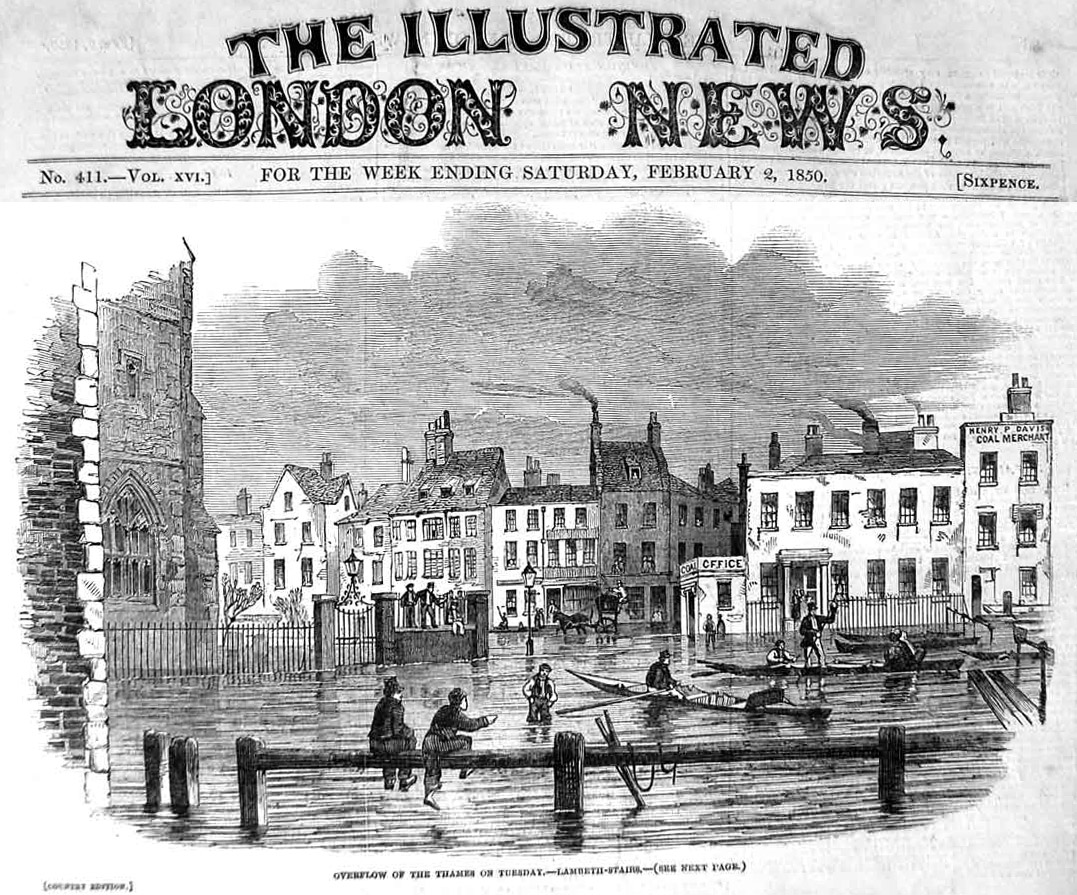
Illustrated London News

David Thackeray, Marc Palen and Richard Toye
University of Exeter
 

As 3rd-year students scramble to finish their dissertations and as 2nd-year students begin formulating topics for their own, it’s worth noting the dramatic expansion in the availability of sources for the study of modern British and British imperial history in recent years.

Many of these sources are free to use. However, it is often hard to keep track of what materials are now available. What follows is a short guide (which is by no means comprehensive) but gives an introduction to some of the most important sources and may be of particular use to students planning dissertations, as well as other researchers. Please feel free to add your own suggestions in the ‘comments’ section.

  1. Mass Observation was a social investigation organisation set up in the 1930s that produced a range of social surveys about British life until its disbandment in the late 1940s. This website provides online access to a range of data held in the Mass Observation archive at the University of Sussex and is invaluable for social historians. Dr. Lucy Robinson has also produced the excellent Observing the 80s website, which holds material compiled following the modern revival of Mass Observation, as well as oral history recordings from the British Library.

Continue reading “12 Digital Research Suggestions for Dissertations on the History of Modern Britain & the British Empire”

This Week’s Top Picks in Imperial & Global History

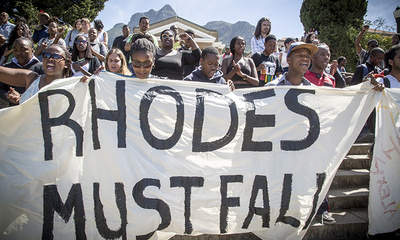
University of Cape Town (UCT) students demand the removal of a statue of Cecil John Rhodes.

Marc-William Palen
History Department, University of Exeter
Follow on Twitter @MWPalen

From toppling the memory of Cecil Rhodes to searching for Che in Gaza, here are this week’s top picks in imperial and global history. Continue reading “This Week’s Top Picks in Imperial & Global History”

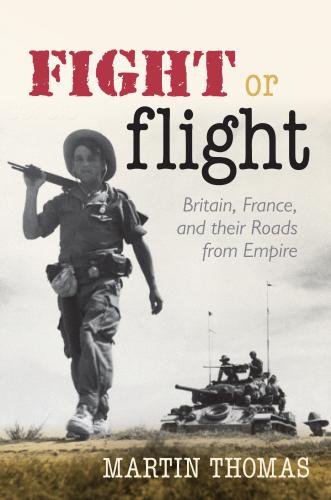
Roundtable Review of Martin Thomas’s ‘Fight or Flight’

Thomas Fight or Flight

Roundtable Review, cross-posted from H-Diplo

Martin Thomas.  Fight or Flight: Britain, France, and their Roads from EmpireOxford:  Oxford University Press, 2014.  ISBN:  978-0-19-969827-1 (hardback, £25.00).

URL:  http://www.tiny.cc/Roundtable-XVI-20

Contents

Introduction by Christopher Goscha, Université du Québec à Montréal

One thought alone preoccupies the submerged mind of Empire: how not to end, how not to die, how to prolong its era. By day it pursues its enemies. It is cunning and ruthless, it sends its bloodhounds everywhere. By night it feeds on images of disaster: the sack of cites, the rape of populations, pyramids of bones, acres of desolation.

-J.M. Coetzee, Waiting for the Barbarians[1]

In his Nobel prize-winning novel, Waiting for the Barbarians, J.M. Coetzee masterfully describes how the agents and members of empire struggle incessantly against the imperial state’s demise by creating a constant state of fear against barbarian attack. It is not enough to rule. The imperial state needs an enemy. It then marches the army into the borderlands to attack the nomads before they can descend upon the empire. The deployment of the army, the use of torture, and the suspension of rule of law are necessary evils. The preservation of civilization and of the white race depends on it. Empire simply cannot fathom its own end. And yet, throughout his novel, Coetzee has his borderland administrator remind us that all empires must one day perish. Imperial time, the Magistrate whispers ever so seditiously in our unsuspecting ears, is not universal: “We have been here more than a hundred years, we have reclaimed land from the desert and built irrigation works and planted fields and built solid homes and put a wall around our town, but they still think of us as visitors, transients.” Driven almost mad by the failed military campaign against the barbarians he has come to admire, the Magistrate finally admits that he “wanted to live outside the history that Empire imposes on its subjects, even its lost subjects. I never wished it for the barbarians that they should have the history of Empire laid upon them.”[2] Our tortured colonial administrator had dared to imagine decolonization from the inside.

In the comparative study under review here, Fight or Flight, the talented and prolific British historian Martin Thomas provides an in-depth account of how and why the French and the British tried to hold on to their empires against all odds but in the end had to let go. Sometimes, Thomas tells us, the colonizers chose to cut their losses and get out in order to focus on other parts of the empire. It was a question of preservation. On other occasions, Thomas counters, they went to war to hold on to their prize possessions. In both cases, it –what we now call decolonization – was a messy, complicated, unpredictable, and terribly bloody business. There was no roadmap for ending empires because, at least in the immediate wake of World War II, neither the French nor the British decision-makers could fathom that imperial time was perhaps not universal.[3]

Nor could they imagine that the ‘barbarians’ were thinking of historical time in different terms and were willing to fight to force that change upon their colonizers. While Thomas’s comparison turns on the French and British imperial endgames, he successfully weaves in the stories of the Africans and Asians. For many colonial nationalists, Thomas reminds us, decolonization did not magically begin in the wake of World War II; but emerged in many colonial minds as the only response to failed reformist promises. Nicholas White is right to suggest that Thomas is on to something big by suggesting that the colonial crisis that coalesced in the 1930s was as important as anything that came after ‘1945.’ Some chose communism, like Ho Chi Minh, the future father of Vietnam, and Thomas shows how that pre-WWII communist connection would differentiate the French war of decolonization in Indochina from other ‘fight experiences’ in French Algeria and British Malaya. Continue reading “Roundtable Review of Martin Thomas’s ‘Fight or Flight’”

Join Us! New Lectureship @ExeterCIGH in Imperial/Global History

ExeterCombining world class research with very high levels of student satisfaction we are a member of the Russell Group and now have over 19,000 students. In the 2014 Research Excellence Framework (REF) Exeter was ranked 16th nationally with 98% of its research rated as being of international quality. We are ranked 7th in The Times andSunday Times Good University Guide league table, 10th in The Complete University Guide and 12th in the Guardian University Guide.

The full time, permanent post of Lecturer in Imperial or Global History will extend the research profile of these subjects within the Centre for Imperial & Global History in the History department at Exeter in relation to the history of European empires, including colonial Africa, Asia, the Middle East and Latin America . The post will require the candidate to contribute to teaching at undergraduate and postgraduate level of a range of courses including team-taught modules HIH1420 Understanding the Modern World and HIH2002 Uses of the Past, and contribute to the MA programme, and supervision of independent work at levels 2, 3 and MA level. The candidate may also devise a Level 2 Option Module and a Level 3 Special Subject. Continue reading “Join Us! New Lectureship @ExeterCIGH in Imperial/Global History”

Fully-Aware Imperialists

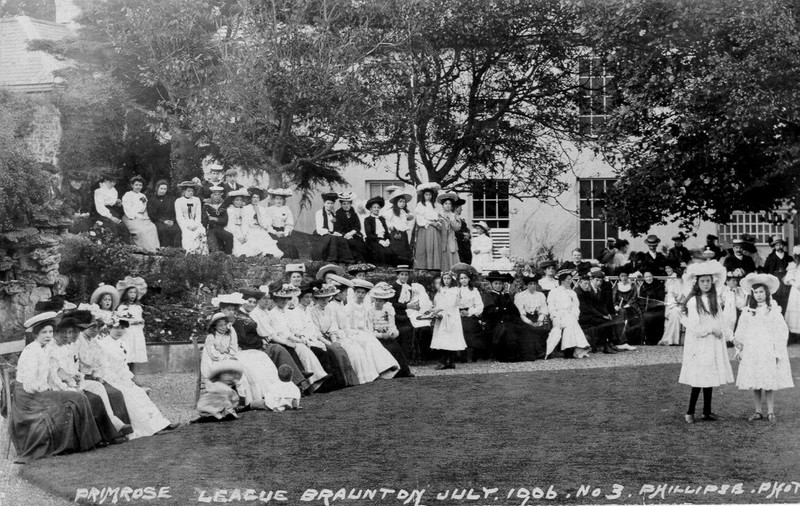
Primrose League Fete, St. Brannocks House, 1906, Braunton; Photographer: Philips; 1906; 413

Claude Scott

In his 2004 book The Absent-minded Imperialists, Bernard Porter argues that there was little sustained general interest about the British Empire in British domestic society. The supply of products from the Empire to Britain and references to imperial matters in British cultural activities did not mean that society was steeped in the Empire, he suggests. His book is one side of the argument between “minimalists” and “maximalists”, the protagonists in the historiographical debate about the magnitude of the effect of Empire on society in Britain.

The protagonists of minimalism and maximalism, although taking strongly opposing views, have in common a desire to answer the question: how widespread was awareness of the Empire in British society? This question quickly leads to two more: How might this be done? And is it possible to quantify imperial awareness? The seed of a mechanism for answering these questions can be found in Porter’s book in which he lists some of the “imperial associations that mushroomed” in Britain at the end on the nineteenth century and the beginning of the twentieth.[1] By examining a wide range of imperial groups and their memberships, I have been able to estimate the extent of imperial activism, identify the aspects of Empire activists cared about, and examine the class structure of groups’ memberships.[2] Continue reading “Fully-Aware Imperialists”

This Week’s Top Picks in Imperial & Global History

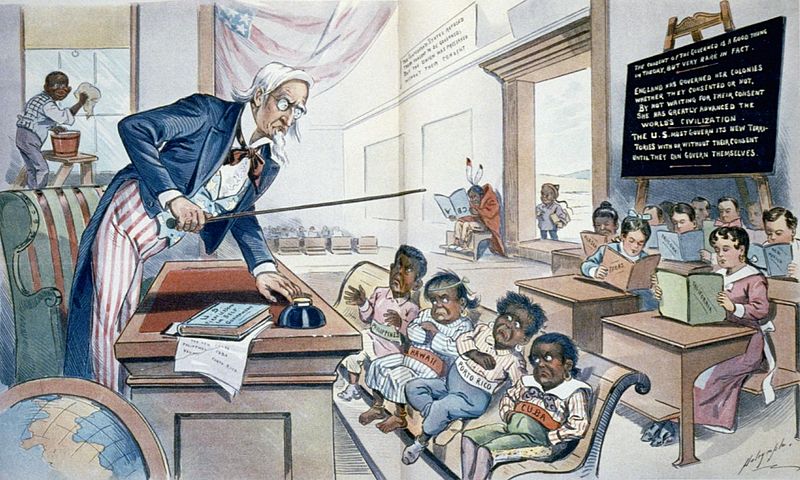
us empire insular

Marc-William Palen
History Department, University of Exeter
Follow on Twitter @MWPalen

From 17th-Century Lessons for US-Iranian relations, to the great escape that changed Africa’s future, here are this week’s top picks in imperial and global history. Continue reading “This Week’s Top Picks in Imperial & Global History”