Imagining Markets: Conceptions of Empire/Commonwealth, Europe and China in Britain’s economic future since the 1870s

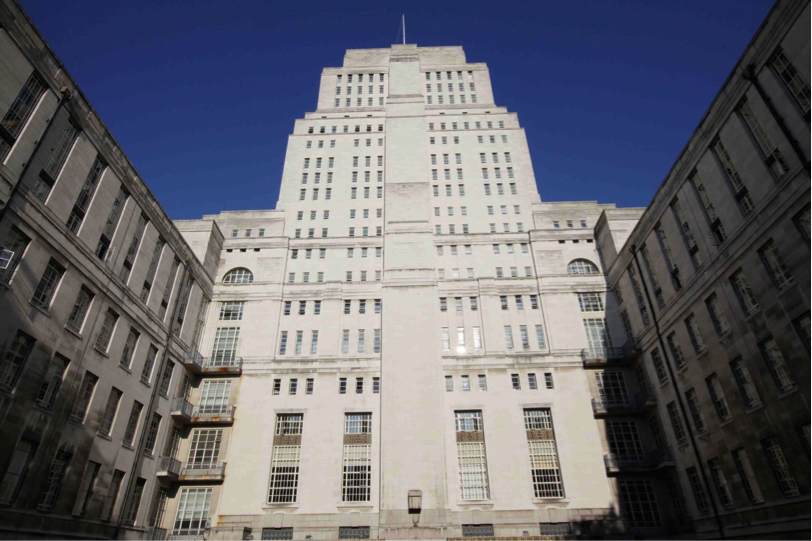
Senate House

2nd workshop, London, September 2015- report

Senate House has featured in many guises from being the supposed model for the Ministry of Truth in George Orwell’s 1984 to Bertie Wooster’s New York apartment block in the TV adaptation of Jeeves and Wooster. This month it played host to the second of three academic workshops connected to the AHRC Imagining Markets network led by David Thackeray, Andrew Thompson and Richard Toye from the University of Exeter. You can read more about the project at www.imaginingmarkets.com.

We began by discussing how the idea of economic imagination can shape our understandings of political economy, and how this cultural idea has various facets (imaginings of economic utopias/ dystopias; entrepreneurship; the imagining of status and aspiration). Papers focused on how a variety of actors shaped ideas of the economic future and interconnected through networks at the level of government and the ‘official mind’; business groups; cultural organisations; advertisers; and civil society. Continue reading “Imagining Markets: Conceptions of Empire/Commonwealth, Europe and China in Britain’s economic future since the 1870s”

Digital Research Tips for Dissertations in Imperial & Global History

Image from Journal of a Residence in the Burmhan Empire, and more particularly at the Court of Amarapoorah [Edited by H. C. M. Cox.], p. 328. Courtesy of the British Library.
Image from Journal of a Residence in the Burmhan Empire, and more particularly at the Court of Amarapoorah [Edited by H. C. M. Cox.], p. 328. Courtesy of the British Library on flickr.

Marc-William Palen
History Department, University of Exeter
Follow on Twitter @MWPalen

It is that time of year again. The semester begins; students scramble to find digital archives for research papers; supervisors seek to steer them in the right direction. In contrast to a decade ago, online archival options are now overwhelming. To help wade through the sea of digital archives, over the past couple of years we have offered some suggestions for digital research in imperial and global history, included below. Any other new digital archives that those researching topics in imperial and global history might find useful?
Continue reading “Digital Research Tips for Dissertations in Imperial & Global History”

In Wilson’s Shadow: Why the 1975 Europe Referendum Still Matters

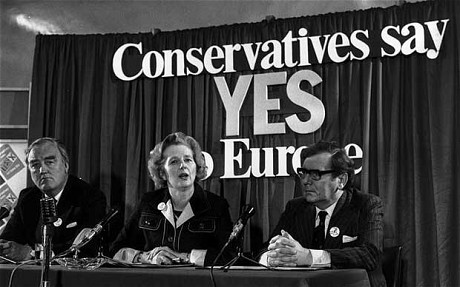
Margaret Thatcher,  William Whitelaw and Peter Kirk, at a referendum conference. June 1975. Photo: Keystone/Getty Images
Margaret Thatcher, William Whitelaw and Peter Kirk, at a referendum conference. June 1975. Photo: Keystone/Getty Images

Richard Toye and David Thackeray
University of Exeter

Forty years ago today Britain went to the polls to decide a crucial question: would the country remain in the European Economic Community (EEC)? It had only joined the EEC, the EU forerunner organisation, two years previously, and this was the first UK-wide referendum. When the votes were counted the results were emphatic. The nation had voted ‘yes’ to Europe by a two to one margin. The Labour Prime Minister Harold Wilson hailed the result, noting that no one in Britain or the wider world could be in doubt about its meaning. Margaret Thatcher, the recently-chosen Tory leader, observed that the ‘massive “Yes” vote could not have come about without a massive Conservative “Yes”.’ Today, as the British people prepare for a new European plebiscite, what lessons can be learned from the experience of 1975? Continue reading “In Wilson’s Shadow: Why the 1975 Europe Referendum Still Matters”

Imagining Markets workshop Report, Exeter, April 2015

Reed Hall1

David Thackeray
University of Exeter

Cross-Posted from Imagining Markets

A chilly start at Reed Hall, Exeter!

We were delighted to welcome Imagining Markets network participants to Exeter for our first event last week. This is the first of a series of three academic workshops, with subsequent events to be held in London and Cambridge over the next year, exploring various facets of Britain’s economic culture and its relationship with key markets.

Paul Young opened proceedings with a paper exploring how the growth of the refrigerated meat and beef stock industries led to new understandings of the South American environment in Victorian literature such as the eco-romance The Purple Land and in advertising, where the Uruguay-based Leibig’s company had to compete with the imperial populism of Bovril.

Alan Booth introduced a new project exploring the development of the Rowntree business lectures, which emerged after World War I in a context of growing global economic competition to British business, and interest in new American methods of industrial psychology and management consultancy.
Continue reading “Imagining Markets workshop Report, Exeter, April 2015”

12 Digital Research Suggestions for Dissertations on the History of Modern Britain & the British Empire

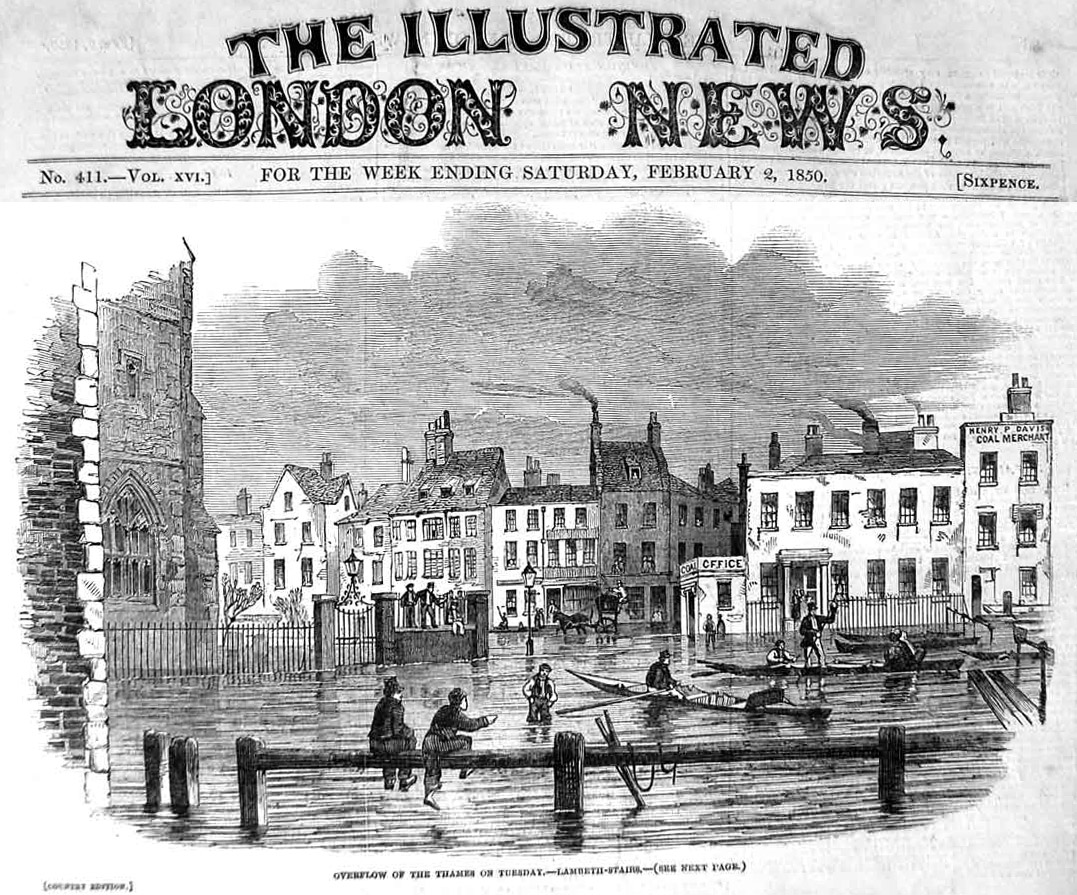
Illustrated London News

David Thackeray, Marc Palen and Richard Toye
University of Exeter
 

As 3rd-year students scramble to finish their dissertations and as 2nd-year students begin formulating topics for their own, it’s worth noting the dramatic expansion in the availability of sources for the study of modern British and British imperial history in recent years.

Many of these sources are free to use. However, it is often hard to keep track of what materials are now available. What follows is a short guide (which is by no means comprehensive) but gives an introduction to some of the most important sources and may be of particular use to students planning dissertations, as well as other researchers. Please feel free to add your own suggestions in the ‘comments’ section.

  1. Mass Observation was a social investigation organisation set up in the 1930s that produced a range of social surveys about British life until its disbandment in the late 1940s. This website provides online access to a range of data held in the Mass Observation archive at the University of Sussex and is invaluable for social historians. Dr. Lucy Robinson has also produced the excellent Observing the 80s website, which holds material compiled following the modern revival of Mass Observation, as well as oral history recordings from the British Library.

Continue reading “12 Digital Research Suggestions for Dissertations on the History of Modern Britain & the British Empire”

Film Archives and the Future of Imperial History

Thackeray 1

David Thackeray
History Department, University of Exeter
Follow on Twitter @d_thackeray

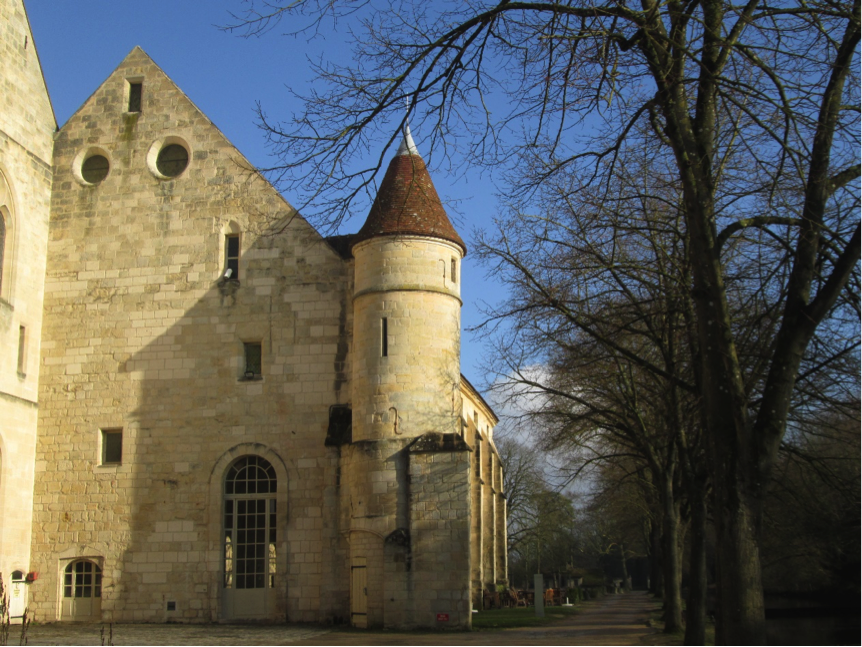
Last month I had the pleasure of participating in a joint workshop staged by the AHRC Care for the Future and Labex: Passes Dans le Present research clusters at the Royaumont Foundation near Paris. The two days showcased a range of projects assessing how study of the past can inform contemporary and future policy-making and cultural debates- from the use of colonial heroes in modern Africa, to how digitisation is reshaping understanding of museums, and the links between modern and historical anti-slavery movements.

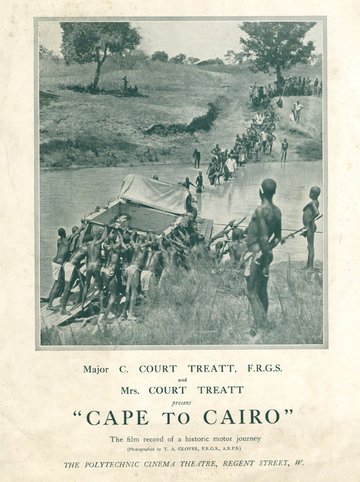
My own focus was on the challenges facing film archives and how this affects the future of imperial history. For the historian of imperial trade networks – film provides a fascinating, and in many ways under-used resource. Continue reading “Film Archives and the Future of Imperial History”

Announcing a New Website: ‘Imagining Markets’

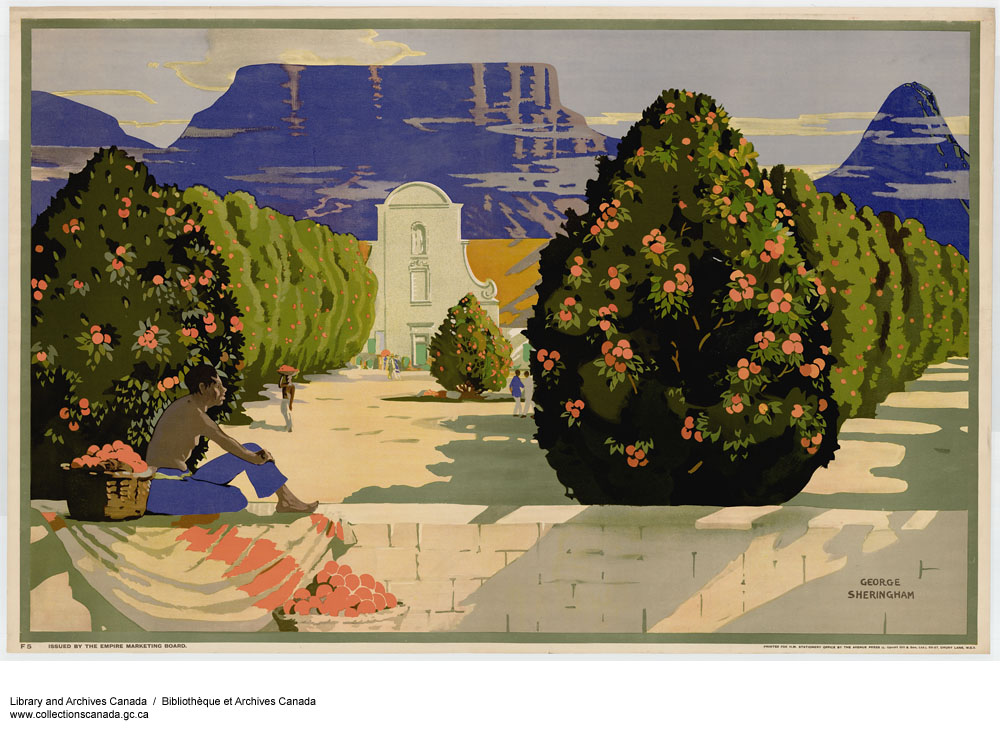
South African Oranges (Empire Marketing Board Poster), Library and Archives Canada.

Interested in the historical intersection of trade, culture, and empire? A new website, Imaginingmarkets.com, provides information on two AHRC projects which are being hosted by the University of Exeter’s History Department: ‘Imagining Markets: Conceptions of Europe, Empire/Commonwealth and China in Britain’s economic future since 1900’ (AHRC network, 2014-16) established by David Thackeray, Andrew Thompson and Richard Toye, and David Thackeray’s AHRC Research Leadership Fellowship ‘Backing Britain: Imagining a nation’s economic future since 1900’ (2014-15).

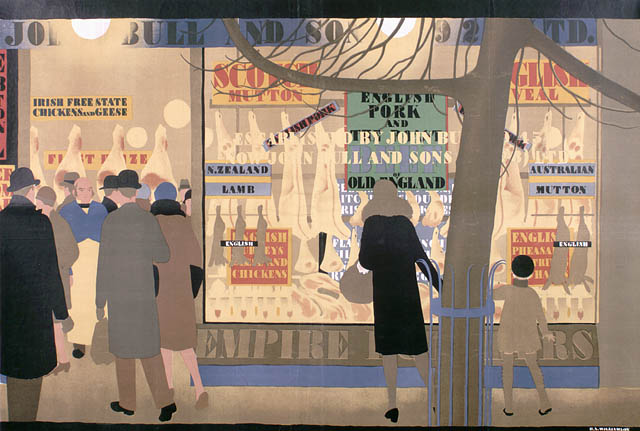
Woman Shopping at John Bull and Sons (British Empire Marketing Board, 1928), Library and Archives Canada.

Both projects are united by an interest in connecting historical and contemporary ways of thinking about Britain’s future global economic orientation, and involve a range of activities staged with project partners from the fields of public policy and heritage. Readers can subscribe to get updates on the projects. There will also be a blog to discuss issues connected with the research themes.

British Soft Power in South Asia: Historicizing Deglobalization

british_empire_board_game_box

David Thackeray
History Department, University of Exeter
Follow on Twitter @d_thackeray

Cross-posted from History & Policy

Many of the core debates in UK politics today concern the nation’s future trade: the question of Scottish independence, devolution of political power to the regions, and a potential referendum on EU membership. Exploring the history of British trade identities can provide important insights into how we got here and the potential choices for policy makers. As historian Jim Tomlinson has argued, the twentieth century witnessed a gradual process of the ‘partial de-globalisation’ of British regions, with the declining influence of manufacturing and the growth of a more atomised service-sector economy. The discontents this has caused, exacerbated by the recent worldwide economic downturn, have been seized upon by parties such as the SNP and UKIP. Continue reading “British Soft Power in South Asia: Historicizing Deglobalization”

The Global Challenges of Digital Newspapers

newspaper

David Thackeray
History Department, University of Exeter
Follow on Twitter @d_thackeray

Among the most frustrating experiences of my PhD were days spent scouring local newspapers at the ramshackle (and now closed) British Library Newspaper Reading Room at Colindale, and the inexplicably dark microfilm room at Cambridge University Library. Spending a few weeks working at the latter in the winter would provide good training for life at an Antarctic research base. With these experiences in mind I have been surprised at how large a part newspapers have played in my current research on the history of British trade identities in the UK and wider Empire/Commonwealth.

Recent years have seen a worldwide explosion in access to digitised newspapers, which obviously opens up a range of exciting new opportunities to researchers in imperial and global history. Having never previously conducted research in Australian archives, I was able to access thousands of articles from the National Library of Australia from the comfort of my home, significantly shaping both my post-doctoral funding application and the issues I was to explore in the archive itself. Yet the ever-growing range of newspaper material available also offers significant challenges to how we do research and train our students. Continue reading “The Global Challenges of Digital Newspapers”

Imperial History and Documentary Culture at the Bill Douglas Cinema Museum

David Thackeray, Angela Banks, Kelly Cave, Jessica Deters, Caroline Menu, Daniel Scherer, Xiaohan Wang, and Henrik Zimmermann
International Summer School 2014, University of Exeter

Cross-Posted from the Bill Douglas Cinema Museum

bill douglas 1In July 2014 the University of Exeter ran its second annual summer school connected to Imperial and Global History: Britain and the making of the modern world with students from Canada, China, India, the Netherlands, Switzerland, and the USA. In this blog post students reflect on their experience working with Dr. David Thackeray from the History Department to explore archives connected to imperial history and documentary culture from the Bill Douglas Cinema Museum at the University of Exeter. The museum is home to one of the largest collections of material on the moving image in Britain, with a collection of over 75,000 items. The class was split into three groups and given a variety of film and visual culture sources to explore, then asked to record their reactions to those they found of most interest. Continue reading “Imperial History and Documentary Culture at the Bill Douglas Cinema Museum”

Imagining Britain’s Global Markets

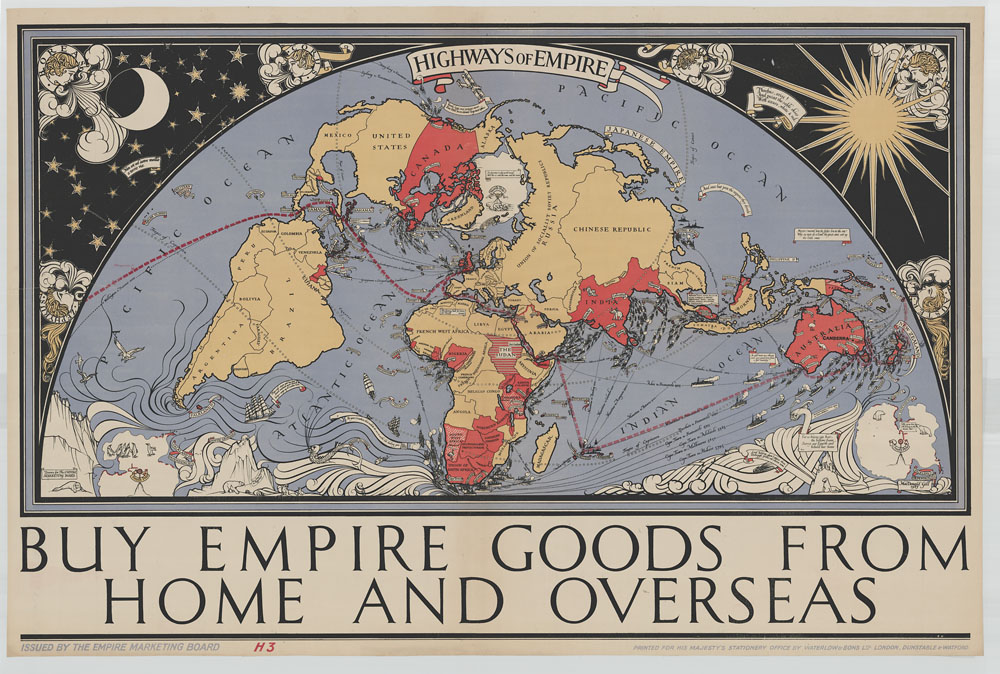
A 1927 pictoral map with all the dominions and trade routes. British Empire Marketing Board.   (Library and Archives Canada, Acc. No. 1983-27-382 Copyright expired.)
A 1927 pictoral map with all the dominions and trade routes. British Empire Marketing Board.
Library and Archives Canada, Acc. No. 1983-27-382 Copyright expired.

The History Department at the University of Exeter has recently received funding from the AHRC to support an international research network: ‘Imagining Markets: Conceptions of Empire/Commonwealth, Europe and China in Britain’s economic future since the 1870s’. The network led by David Thackeray, Richard Toye and Andrew Thompson aims to provide a bridge between historical and contemporary ways of thinking about Britain’s future global economic orientation, bringing together scholars working in the fields of Imperial, European and Asian studies, and scholars from cultural studies and economic studies, which have become increasingly separated branches of enquiry calling for reintegration.

Continue reading “Imagining Britain’s Global Markets”

Boycotting Apartheid: the Global Politics of ‘Fair Trade’

Free Nelson MandelaDavid Thackeray

As  a  child  there  were  few  experiences  I  looked  forward  to  more  than  a  trip  up  to  London  with  my  father  to  visit  Hamleys  toy  store  in  the  run-up  to  Christmas.  Rather  unusually  perhaps,  these  visits  to  the  capital  were  also  occasionally  marked  by  a  stop  at  South  Africa  House  to  see  the  Anti-Apartheid  picket  of  the  embassy,  organised  to  call  for  the  release  of  ANC  leader  Nelson  Mandela.  We  had  moved  to  the  UK  from  New  Zealand  a  few  years  beforehand,  and  Dad  would  always  use  such  occasions  to  regale  me  with  proud  memories  of  the  protests  which  greeted  South  Africa’s  notorious  rugby  tour  in  1981.  When  the  Springboks  came  to  our  home  city  of  Hamilton,  a  key  centre  of  Maori  culture,  crowd  protests  led  to  the  abandonment  of  a  test  against  the  All  Blacks.  Another  game  became  a  farce  when  flour  bombs  and  leaflets  were  scattered  over  the  pitch  from  a  light  aeroplane. Continue reading “Boycotting Apartheid: the Global Politics of ‘Fair Trade’”

Buying British Across the World

David Thackeray

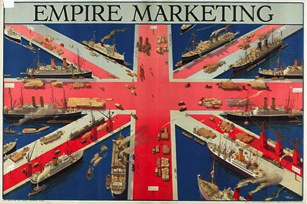
An Empire Marketing Board poster from the late 1920s

This autumn I spoke at several universities in Australia and New Zealand on the subject of the various shopping weeks that were launched to promote Empire trade during the 1920s and 1930s. The story of the Empire Marketing Board’s efforts to develop the idea of ‘Buying Empire’ in inter-war Britain is well known, and its posters still appear regularly on the covers of books written about imperial culture (and also currently featured as the background to this blog!). What is less well known is that the same cause was taken up with enthusiasm by a variety of organisations in the Dominions, and arguably achieved greater and more lasting prominence there than it did in Britain.

At the same time, it quickly became clear to me that the archives in England and Australasia were telling different stories. Politicians and businessmen in Wellington and Melbourne may have conceived themselves to be members of a ‘British’ trade community, but their understanding of what the future of the Empire as an economic unit should be often differed from their counterparts in London. Continue reading “Buying British Across the World”