Exeter History Society’s The Historian on the First World War

Arthur der Weduwen & Andrew Eckert
Editors of The Historian, 2013-2014
Historian vol 3

The Imperial & Global Forum is delighted to draw your attention to the most recent volume of the University of Exeter’s excellent student History Society journal The Historian, this one focusing largely upon the First World War.

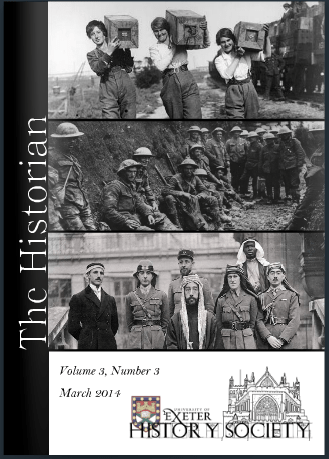
[From the Editors] We are very pleased to welcome you to the third issue of the third volume of The Historian, the University of Exeter’s History Society Journal. As you may have judged from the cover, this edition largely focuses on the First World War and its centenary, which has dominated the news over the past months. This is the first time that The Historian runs with a specific theme; something we hope will continue in the future. This edition also features several articles unrelated to the First World War, as The Historian remains a journal to which any student can contribute on any topic of historical interest.

Continue reading “Exeter History Society’s The Historian on the First World War”

The Recall of the Legions: A New Perspective on the Anglo-German Naval Rivalry

 David Morgan-Owen
navalWWIVisiting Research Fellow, National Museum of the Royal Navy

British naval policy in the First World War era has become a topic of considerable debate in the last two decades. One of the key issues with which historians have grappled has been the question of the relative importance assigned to home and imperial defence by contemporary politicians and defence planners. Continue reading “The Recall of the Legions: A New Perspective on the Anglo-German Naval Rivalry”

Echoes of Britain’s Wartime Past: Gove’s Timeless Rhetoric of Justice and Liberty

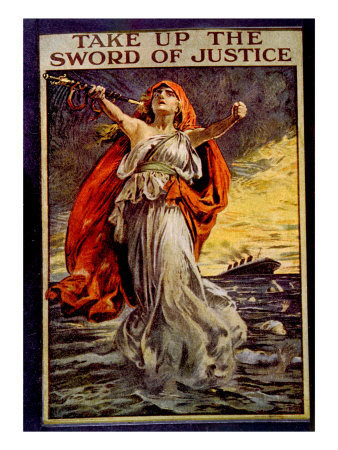
world-war-i-british-war-poster-regarding-the-sinking-of-the-lusitania-1915

Simon Mackley

Michael Gove’s recent assault, in the form of an article in the Daily Mail, alleges that the myths of the First World War continue to be perpetuated by an unholy alliance of left-wing academics and television sit-coms. The Education Secretary accused his ideological opponents of failing to recognise that the conflict was a ‘just war’, fought in defence of ‘Britain’s special tradition of liberty’. Since the piece went to press, the myriad problems inherent in Gove’s characterisation have been dissected at great length – including an excellent assessment by Marc-William Palen in this very blog. Yet while we might take particular exception to the tone and context of the Education Secretary’s position, such attempts to deploy the rhetoric of justice and liberty in defence of conflict are nothing new. Indeed, from my own research on the Liberal Party and the outbreak of the 1899-1902 South African War, I would suggest that Gove is merely rehashing the language and rhetoric of pro-war Liberals at the turn of the century. Continue reading “Echoes of Britain’s Wartime Past: Gove’s Timeless Rhetoric of Justice and Liberty”

This Week’s Top Picks in Imperial & Global History

seeger-pete-774-lMarc-William Palen

Another big week in imperial and global history has passed. Here are some of the centre staff’s top stories:

*Miranda Carter points out in the Guardian that the one-time bestselling British imperial adventure stories of Kipling, Stevenson, and Haggard have been almost forgotten — dangerous evidence that Britons are ignoring their imperial past:

It is a mistake to neglect our colonial past. We should not want to become like Japan, a nation that deliberately chose to forget the shame of the second world war. Japan has never apologised in the same way as Germany for its actions during the war, and has often seen itself as the victim of the conflict rather than the aggressor. In Britain, we haven’t truly processed our colonial history, and we should remind ourselves of it. One way cultures remember and digest the past is through stories, which is why the best of these colonial adventure stories deserve to be reread, in all their awkward ambivalence. . . . It is also why British writers should . . . tell stories that will illuminate parts of the colonial experience, particularly for an increasingly uninformed domestic audience. Postcolonialism throws up difficulties for western writers, but it can also open up new routes into stories about it.

*The nomination of The Act of Killing for an Oscar has put Indonesia’s bloody past into the forefront, connecting the anti-communist killings of the late 1960s with today’s modern-day gangsters and paramilitaries. Continue reading “This Week’s Top Picks in Imperial & Global History”

Fighting the Myths of the First World War

Television - BBC - Blackadder Goes Forth - Rowan Atkinson and Tony Robinson - London
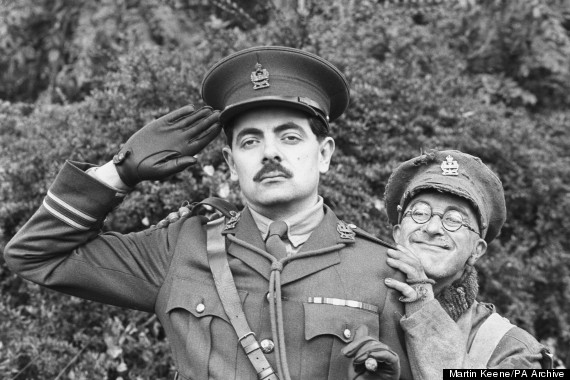
Rowan Atkinson as Cpt. Edmund Blackadder (left). Tony Robinson as Private Baldrick (right).

Marc-William Palen

Did you miss this weekend’s intellectual battle over the myths of the First World War? Here are the highlights.

Round 1, Gove v. Evans

Late last week, Education Secretary Michael Gove fired off the year’s opening salvo in the pages of the Daily Mail in ‘Why Does the Left Insist on Belittling True British Heroes?’ As the title suggests (and now with support from Stephen Pollard in the Express and UKIP’s Nigel Farage in the Independent), Gove attempts to situate the debate as a Left v. Right political issue (for which Professor Gary Sheffield has taken him to task). Continue reading “Fighting the Myths of the First World War”