The British Way in Trade Policy in global perspective: from the Corn Laws to ‘Global Britain’ (History & Policy, London, Feb. 6)

Marc-William Palen
University of Exeter

History & Policy’s Global Economics and History Forum is hosting a timely event in early February. Please be sure to register (link below) if you wish to attend.


The British Way in Trade Policy in global perspective: from the Corn Laws to ‘Global Britain’

When: Tuesday, Feb. 6, 2024, 17:00 pm – 19:30 pm

Where: Room G7, Ground Floor, Senate House, Malet Street, London WC1E 7HU

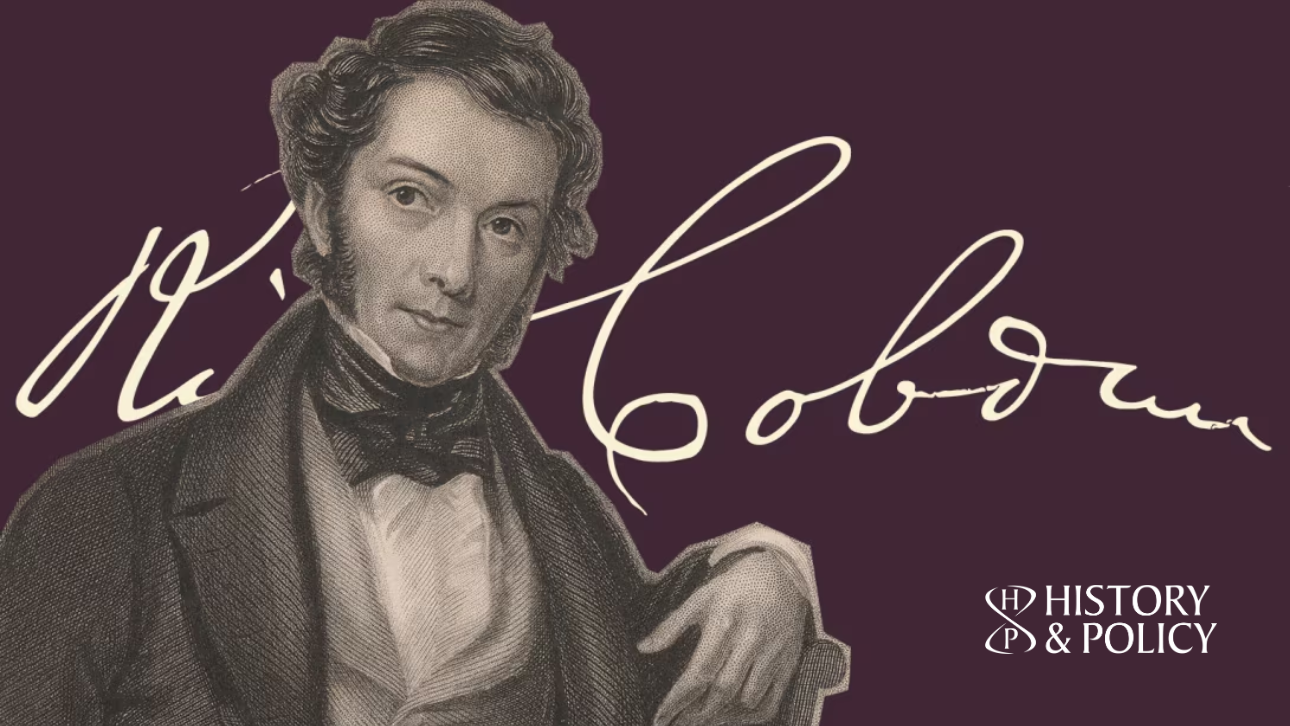
This workshop is designed broadly to come within the ambit of the AHRC-funded Letters of Richard Cobden Online project and will draw from those letters in order to enhance our understanding of British trade policy in its formative period. For not only was Richard Cobden (1804-65) central to establishing unilateral free trade in Britain through the Repeal of the Corn Laws in 1846 but in 1859-60 undertook the laborious negotiation of the first Britain free trade agreement, the Anglo-French commercial treaty of 1860. His letters also deal prominently with the expansion of British trade in India, Japan, and China, while having visited the United States twice, he was also an important contributor to, and commentator on, Anglo-American relations. He was also central to the liberal internationalist tradition linking trade, interdependence, and peace.    

British free trade in the mid-nineteenth century remains a benchmark frequently cited in current trade discussions (e.g. Liz Truss, Times Red Box ed. 9 June 2020; Rishi Sunak, 31 Mar. 2023 ‘we are at heart an open and free-trading nation’), and it is to this contemporary discussion that the proposed workshop/ seminar is intended to contribute. The recent Australian Free Agreement was widely hailed as a return to British free trade policy, the such treaty since Britain joined Europe in 1973, and hence ‘the first trade deal to be signed by the UK as an independent free-trading nation in nearly half a century’ (Lord Younger, HL 11 July 2022). However, latest debate on the subsequent Comprehensive and Progressive Agreement for a Trans-Pacific Trade Partnership (House of Lords 21 Nov. 2023) has also focused on the lack of a published government trade strategy. The potential Labour approach to trade policy also remains to be defined. This workshop/seminar is therefore designed to provide a concrete analysis of British commercial policy between the repeal of the Corn Laws in 1846 (also referred to in the July 2022 debate) and joining Europe in 1973 with a view to informing current thinking on trade policy and the tradition to which, after an ‘European interlude’, it is the successor. To this end, the ‘British ‘way’ in trade policy will be contrasted with American, Chinese, and European ways in trade policy. This seminar is designed to bring together historians, policymakers, politicians, and members of think-tanks and interested academics and members of the public.  

Confirmed speakers include:

  • Professor Anthony Howe, University of East Anglia, author inter alia of Free Trade and Liberal England, 1846-1946 (1998); currently researching Free Trade: an international history from Adam Smith to the WTO.  
  • Professor Douglas Irwin, Dartmouth College, author of Clashing over Commerce: A History of US Trade Policy (2017)
  • Prof David Thackeray, University of Exeter, author of Forging a British World of Trade: Culture, Ethnicity, and Market in the Empire-Commonwealth (2019)
  • Dr Marc Palen, University of Exeter (Global Economics and History Forum), author of The “Conspiracy” of Free Trade: The Anglo-American Struggle over Empire and Globalisation, 1846-1896 (2016) and Pax Economica: Left-Wing Visions of a Free Trade World (forthcoming, 2024) 
  • Professor Piers Ludlow, London School of Economics, author, inter alia, of Roy Jenkins and the European Commission Presidency, 1976-1980: at the heart of Europe (2016).
  • Professor Elizabeth Ingleson, London School of Economics, author of the forthcoming Made in China: When US – China Interests Converged to Transform Global Trade (Harvard, 2024).
Click here to register

Brexit, Food Prices, and History

workhouse

Marc-William Palen
History Department, University of Exeter
Follow on Twitter @MWPalen

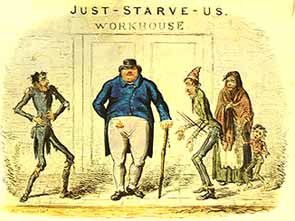
In case you missed it,  rumors of the May government’s plan to stockpile food supplies have finally gotten people talking about what Brexit will mean for food prices. As dedicated readers of the Forum know, I’ve been trying to draw attention to this important issue ever since the referendum vote.

Two years ago, I organized and chaired a roundtable, “Brexit and Food Prices: The Legacy of the Hungry Forties,” as part of our Global Economics & History Forum at History & Policy. The panelists were Prof. Anthony Howe (East Anglia); Geoff Tansey (Food Systems Academy); Dr. Lindsay Aqui (Queen Mary); and Prof. Sarah Richardson (Warwick).

Professor Anthony Howe (East Anglia) – The Hungry Forties and the Rise of Free Trade England

Dr Sarah Richardson (Warwick) – Food is a Feminist Issue: the legacy of the hungry forties and women’s rights in England

Dr Lindsay Aqui (Queen Mary) – Butter, Bacon and the British Housewife: Food Prices and the 1975 Referendum

Geoff Tansey (Curator, Food Systems Academy; Chair, Fabian Commission on Food and Poverty) – Food: policy, (in)security, poverty, inequality, power, control & Brexit

You can  listen to the podcast recording of the roundtable below: Continue reading “Brexit, Food Prices, and History”

New directions in the history of imperial and global networks

New directions in the history of imperial and global networks

An ECR workshop at the University of Exeter, in collaboration with the History & Policy Global Economics and History Forum. 23 June, Reed Hall, Exeter (12-5pm)

Following the Brexit vote and the election of Donald Trump on a protectionist programme much debate has focused on the future of economic, political and humanitarian networks and the apparent challenges to globalisation present today. This, in turn, has stimulated interest in earlier histories of imperial and global networks. In Britain, for example, there has been a great deal of discussion of the potential value of reviving historical trade links with the Commonwealth, a move which has pejoratively been referred to as ‘Empire 2.0’ by its critics.

As well as showcasing new research in the history of imperial and global networks this workshop will include a seminar on training in public engagement, focused on addressing public audiences and policy-makers, led by History & Policy. We invite papers from early career researchers on any aspects of the history of imperial and/or global networks since c.1800. ECRs are defined as postgraduate students or those within ten years of the award of their PhDs. Topics may include (but are not limited to): Continue reading “New directions in the history of imperial and global networks”

Commonwealth Trade after Brexit: historical reflections

Update: Due to unforeseen circumstances, this event has been postponed (TBA).

Commonwealth Trade after Brexit: historical reflections

History & Policy‘s Global Economics and History Forum

TBA

Event Details

Based on historical experiences, what economic opportunities might the Commonwealth of Nations offer a post-Brexit Britain?

As the UK seeks a new place in the global economy post-Brexit, the Commonwealth of Nations is often touted as a possible alternative. In a week in which Commonwealth leaders meet the Commonwealth Trade Conference, historians, policy makers and other experts meet to consider the potential of Commonwealth economic relations in historical perspective.

CHAIR: Dr Marc-William Palen, Lecturer, University of Exeter and Co-director, Global Economics and History Forum (History & Policy)

SPEAKERS:

Tim Hewish, Director of Policy & Research, The Royal Commonwealth Society and Co-Founder, Commonwealth Exchange

Dr Surender Munjal, Director, James E. Lynch India and South Asia Business Centre, University of Leeds

Dr Andrew Dilley, Senior Lecturer, University of Aberdeen and Co-director, Global Economics and History Forum (History & Policy)


Do you have questions about Commonwealth Trade after Brexit: historical reflections? Contact History & Policy

Update: Due to unforeseen circumstances, this event has been postponed (TBA).

Brexit and food prices: the legacy of the Hungry Forties

Screen Shot 2016-08-11 at 12.28.01 PM

Cross-posted from History & Policy

Places are limited and RSVP is essential. Please book your place here.

Plenty of attention is being paid to the political and constitutional effects of Brexit, but what will its economic impact be on life’s most basic commodities? How did food prices inform the debate in the weeks and months leading up to the referendum, and how have they informed debate in the past? How have the spectres of want and hunger been invoked over the last century and a half in political contexts, and are we paying them enough attention now?

Debating these questions will be five historians and policy makers with combined expertise covering the period since the 1840s, the “Hungry Forties,” which live in political memory as the UK’s last serious sustained period of food poverty. The discussion is aimed at policy makers and practitioners working in the area of food poverty and food security, and aims to show how lessons from the past can inform decision-making today. Continue reading “Brexit and food prices: the legacy of the Hungry Forties”