

Marc-William Palen
History Department, University of Exeter
Follow on Twitter @MWPalen
Marc-William Palen
History Department, University of Exeter
Follow on Twitter @MWPalen

Marc-William Palen
History Department, University of Exeter
Follow on Twitter @MWPalen
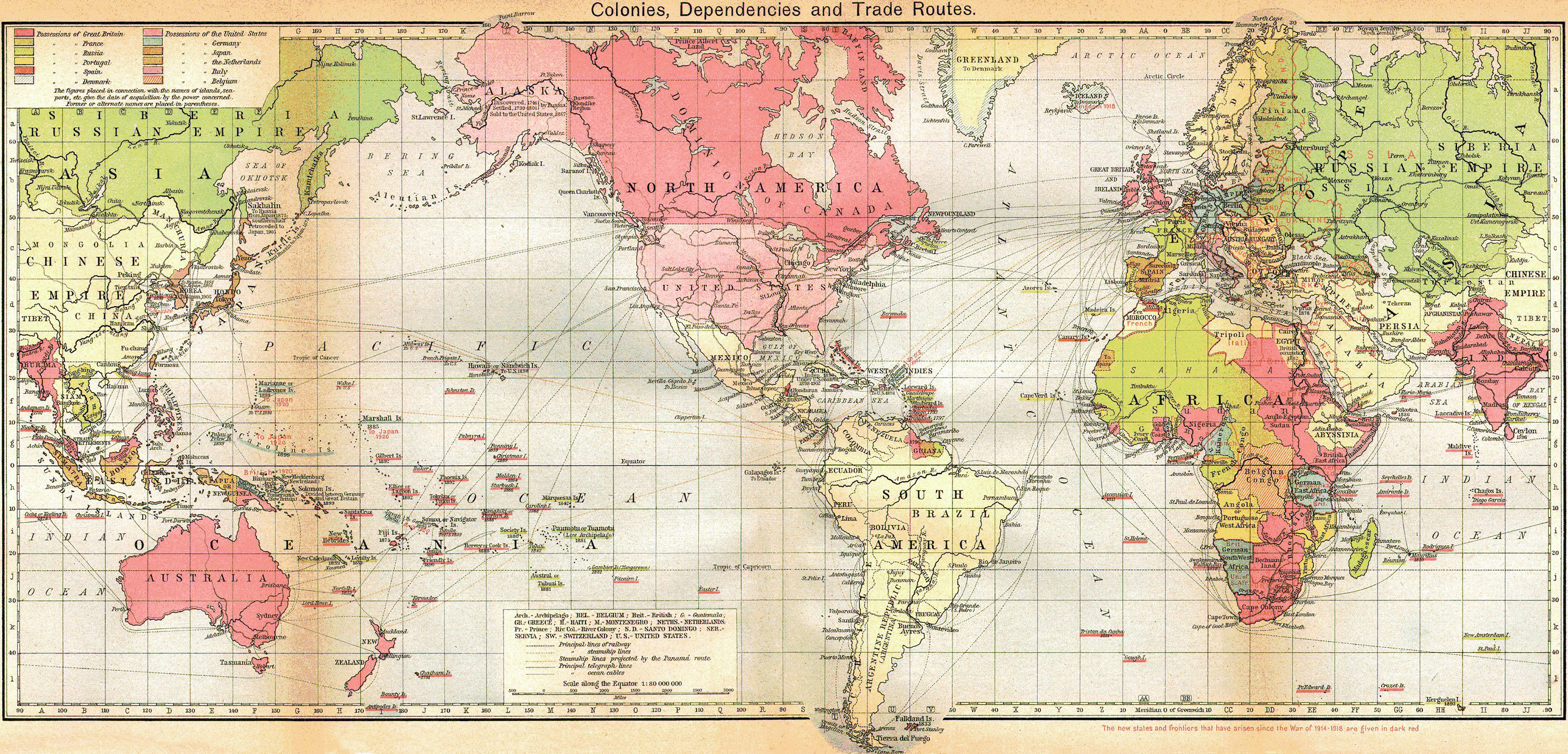
Based on historical experiences, what economic opportunities might the Commonwealth of Nations offer a post-Brexit Britain?
As the UK seeks a new place in the global economy post-Brexit, the Commonwealth of Nations is often touted as a possible alternative. In a week in which Commonwealth leaders meet the Commonwealth Trade Conference, historians, policy makers and other experts meet to consider the potential of Commonwealth economic relations in historical perspective.
CHAIR: Dr Marc-William Palen, Lecturer, University of Exeter and Co-director, Global Economics and History Forum (History & Policy)
SPEAKERS:
Tim Hewish, Director of Policy & Research, The Royal Commonwealth Society and Co-Founder, Commonwealth Exchange
Dr Surender Munjal, Director, James E. Lynch India and South Asia Business Centre, University of Leeds
Dr Andrew Dilley, Senior Lecturer, University of Aberdeen and Co-director, Global Economics and History Forum (History & Policy)

Marc-William Palen
History Department, University of Exeter
Follow on Twitter @MWPalen
Marc-William Palen
History Department, University of Exeter
Follow on Twitter @MWPalen
Continue reading “This Week’s Top Picks in Imperial & Global History”
Marc-William Palen
History Department, University of Exeter
Follow on Twitter @MWPalen
Marc-William Palen
History Department, University of Exeter
Follow on Twitter @MWPalen
Continue reading “This Week’s Top Picks in Imperial & Global History”
Nicole M. Phelps
University of Vermont
Review of Marc-William Palen. The “Conspiracy” of Free Trade: The Anglo-American Struggle over Empire and Economic Globalisation, 1846-1896. Cambridge: Cambridge University Press, 2016. 331 pp. $99.99 (hardcover).
[For full review and citation, see: Nicole M. Phelps, “Re-thinking ‘Open-Door Imperialism,'” Diplomatic History 41 (Jan. 2017): 211-214.]
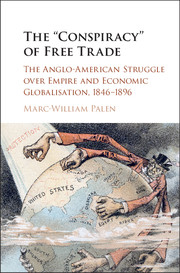 Still basing your Gilded Age foreign policy lecture—perhaps reduced now to just a PowerPoint slide—on the quest for markets a la William Appleman Williams’s The Tragedy of American Diplomacy and Walter LaFeber’s The New Empire?1 Marc-William Palen convincingly argues that it is time for a change. According to Palen, lumping all the Gilded Age administrations from Grant to McKinley into proponents of an undifferentiated “Open Door imperialism” misses essential differences between the Democratic Grover Cleveland administrations and those of the Republicans and, more importantly, falsely paints free traders as imperialists and obscures the protectionist, closed door bent of the actual imperialists. By focusing our attention on the debate over tariffs waged by Cobdenite free traders and Listian economic nationalists—protectionists—from the early days of the Republican Party through McKinley’s election in 1896, Palen offers important contributions to our understanding of imperialism, the development of American political parties, and Anglo-American relations. In so doing, he smooths out the story of nineteenth-century U.S. foreign policy, which often skips abruptly from the end of the Civil War to the start of the Spanish-American War. Continue reading “Re-thinking “Open-Door Imperialism””
Marc-William Palen
History Department, University of Exeter
Follow on Twitter @MWPalen
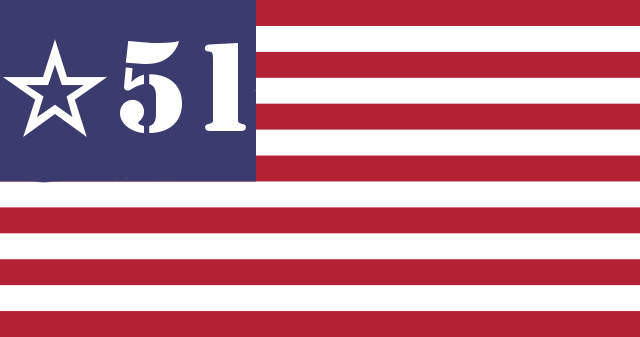
Puerto Rico has a new governor, Ricardo Rosselló – and he’s committed to making Puerto Rico the 51st US state.
Stemming from Rosselló’s election on a pro-statehood platform, the Puerto Rican Senate has now approved a bill that calls for holding a referendum on June 11, where citizens will be given a stark choice to either (1) become the 51st US state or (2) declare independence.
Governor Rosselló quickly gave the referendum bill his support in anti-colonial language: “Colonialism is not an option for Puerto Rico. It’s a civil rights issue … The time will come in which the United States has to respond to the demands of 3.5 million citizens seeking an absolute democracy.”
Puerto Rico held a similar vote in 2012, when a slim majority voted in favor of statehood. But nothing happened. Why not? Because a Republican-controlled Congress stood in the way of Puerto Rican democracy: 21st-century American imperialism on display. Continue reading “Republican Imperialism vs. Puerto Rican Democracy – A Long History”
Marc-William Palen
History Department, University of Exeter
Follow on Twitter @MWPalen

Marc-William Palen
History Department, University of Exeter
Follow on Twitter @MWPalen
Continue reading “This Week’s Top Picks in Imperial & Global History”
Marc-William Palen
History Department, University of Exeter
Follow on Twitter @MWPalen
Marc-William Palen
History Department, University of Exeter
Follow on Twitter @MWPalen
Marc-William Palen
History Department, University of Exeter
Follow on Twitter @MWPalen
Marc-William Palen
History Department, University of Exeter
Follow on Twitter @MWPalen
I’ve just arrived in warm, sunny Denver for the 2017 American Historical Association Meeting, and now face the difficult decision concerning which sessions to attend. So I thought it might it might be helpful to compile the sessions relating to imperial and global history, to make my decision (and possibly yours) a bit easier. The list is based on titles only, so please feel free to include in the comments section any pertinent sessions that I may have missed. Continue reading “Imperial & Global History Sessions at #AHA17”
 Imperial & Global Forum
You must be logged in to post a comment.