
Marc-William Palen
History Department, University of Exeter
Marc-William Palen
History Department, University of Exeter
Marc-William Palen
History Department, University of Exeter
Marc-William Palen
History Department, University of Exeter
Marc-William Palen
History Department, University of Exeter
Follow on Twitter/X @MWPalen
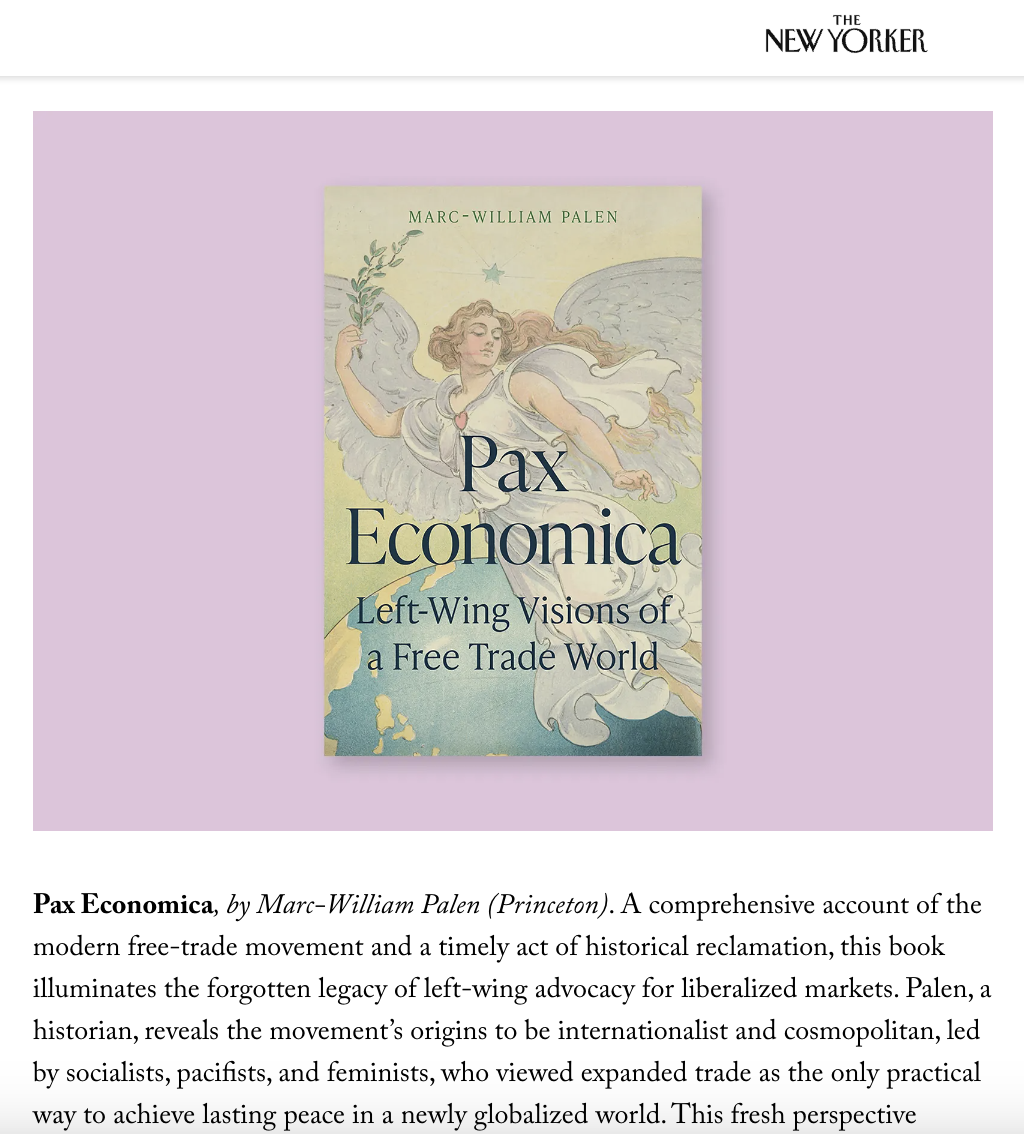
It’s been a whirlwind since Pax Economica was published in the USA in late February, and hopefully more to come after today, the official publication day for the UK/Europe.
I am truly grateful for all the support, endorsements, and reviews that Pax Economica has already received from across the political spectrum, including making the New Yorker’s “Best Books” 2024 list.
In case Forum readers are interested, included below are details regarding some upcoming book events for April and early June, including the UK book launch on Wed, April 24 (5pm) hosted by the Rothermere American Institute at the University of Oxford.
Also, I am based in Venice, Italy, until early June, so for any interested Italian subscribers to the Forum, please just get in touch via email. I’d be delighted to visit and discuss the book.
Continue reading “Pax Economica – UK Publication Day, In the News & Upcoming Book Events”
Marc-William Palen
History Department, University of Exeter
Follow on Twitter/X @MWPalen

Marc-William Palen
History Department, University of Exeter
Follow on Twitter/X @MWPalen

Wed. 24 April, 17:00
Rothermere American Institute, 1a South Parks Road, OX1 3UB
Open to the public
Today, free trade is often associated with right-wing free marketeers. In Pax Economica, historian Marc-William Palen shows that free trade and globalisation in fact have roots in nineteenth-century left-wing politics. In this counterhistory of an idea, Palen explores how, beginning in the 1840s, left-wing globalists became the leaders of the peace and anti-imperialist movements of their age. By the early twentieth century, an unlikely alliance of liberal radicals, socialist internationalists, feminists, and Christians envisioned free trade as essential for a prosperous and peaceful world order. Of course, this vision was at odds with the era’s strong predilections for nationalism, protectionism, geopolitical conflict, and colonial expansion. Palen reveals how, for some of its most radical left-wing adherents, free trade represented a hard-nosed critique of imperialism, militarism, and war.
Continue reading “RAI Book Launch – ‘Pax Economica: Left-Wing Visions of a Free Trade World’ – Wed. 24 April”
Marc-William Palen
History Department, University of Exeter
Follow on Twitter/X @MWPalen
Marc-William Palen
History Department, University of Exeter
Follow on Twitter/X @MWPalen

Marc-William Palen
History Department, University of Exeter
Richard Toye and Marc-William Palen
University of Exeter
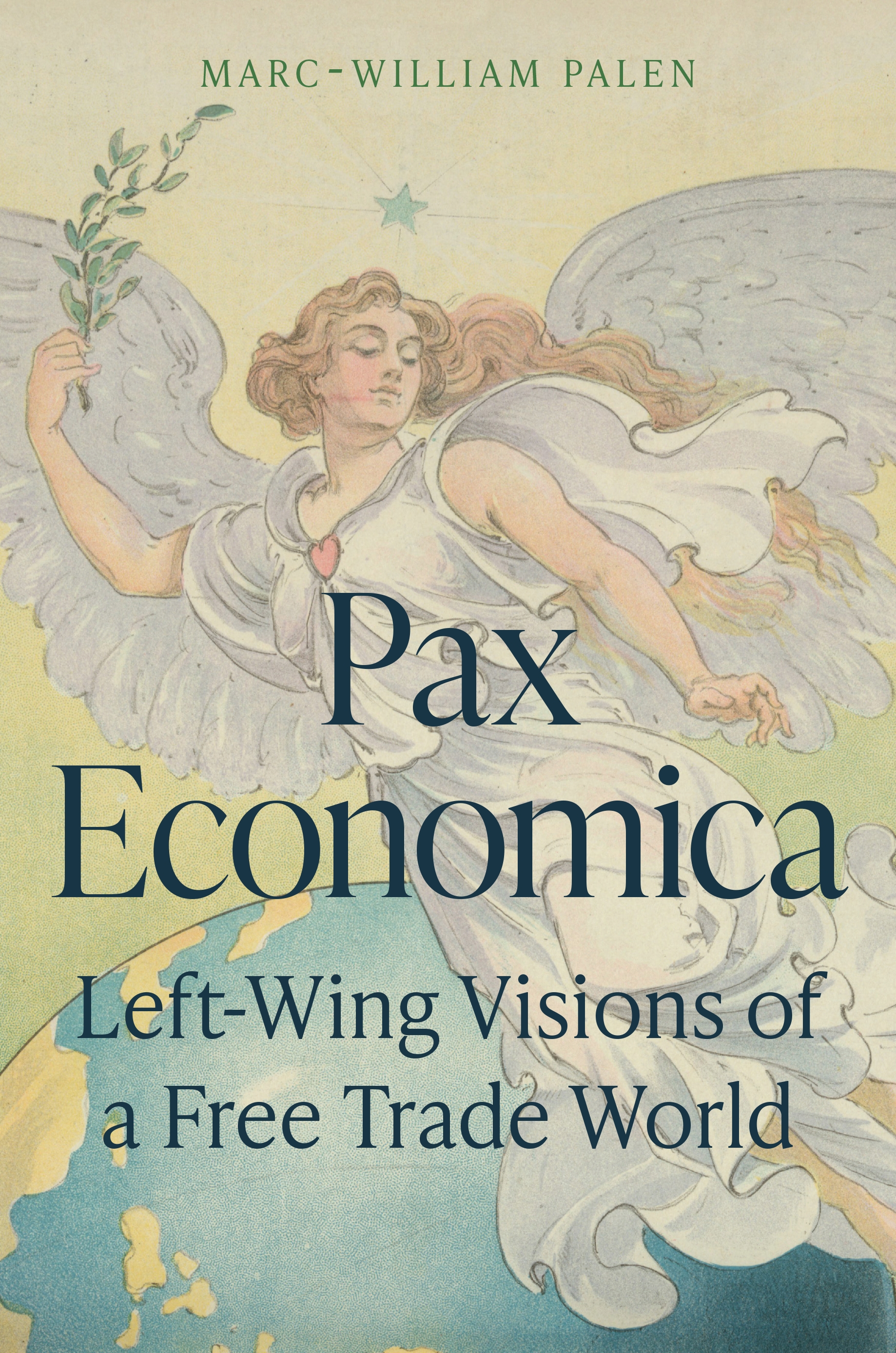
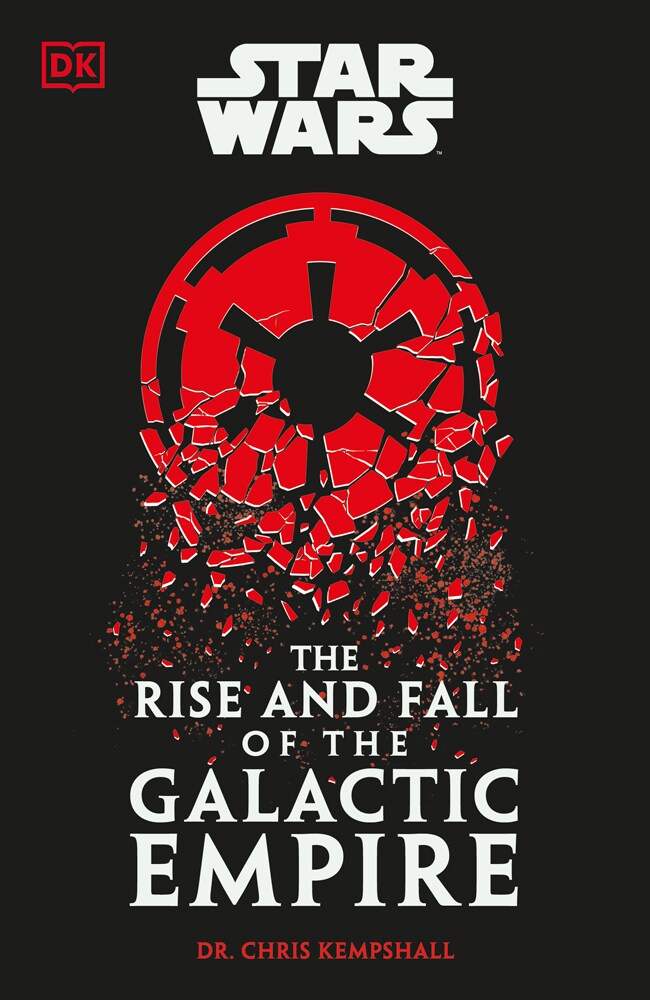
In this episode of the Talking Empire series, Professor Richard Toye sat down with Marc-William Palen to discuss his new book Pax Economica: Left-Wing Visions of a Free Trade World (Princeton University Press, 2024). Pax Economica recovers the radical left-wing origins of free trade and globalization.
Through a wide-ranging discussion – from Gershwin musicals, to Norman Angell, to cheap food, and neoliberalism – Palen discusses with Toye the ways in which the book’s actors strike a stark contrast to today’s common association of free trade with right-wing free marketeers. Pax Economica‘s counterhistory of an idea traces how – beginning in the mid-19th century – liberal radicals, socialist internationalists, feminists, and Christians joined left-wing forces to undermine imperialism and war.
Through networks crisscrossing the British, American, Spanish, German, Dutch, Belgian, Italian, Russian, French, and Japanese empires, these left-wing globalists condemned the economic nationalist turn to high tariffs and government subsidies among the industrializing empires after 1870. They argued that the extreme protectionism and trade wars of the rival Euro-American empires created the monopolies, trusts, geopolitical conflict, and colonial expansion that followed, culminating in two world wars.
Their envisaged left-wing free trade order – what they called their “pax economica” – instead promised peace, prosperity, democracy, and decolonization, to be maintained through supranational governance via the League of Nations, the United Nations, and the World Trade Organizaiton. The book’s findings offer timely lessons for our increasingly economic nationalist and war-torn world.
Click here for further details and to purchase a copy.
Marc-William Palen
History Department, University of Exeter

Marc-William Palen
History Department, University of Exeter

Marc-William Palen
University of Exeter
Marc-William Palen
University of Exeter
History & Policy’s Global Economics and History Forum is hosting a timely event in early February. Please be sure to register (link below) if you wish to attend.
When: Tuesday, Feb. 6, 2024, 17:00 pm – 19:30 pm
Where: Room G7, Ground Floor, Senate House, Malet Street, London WC1E 7HU
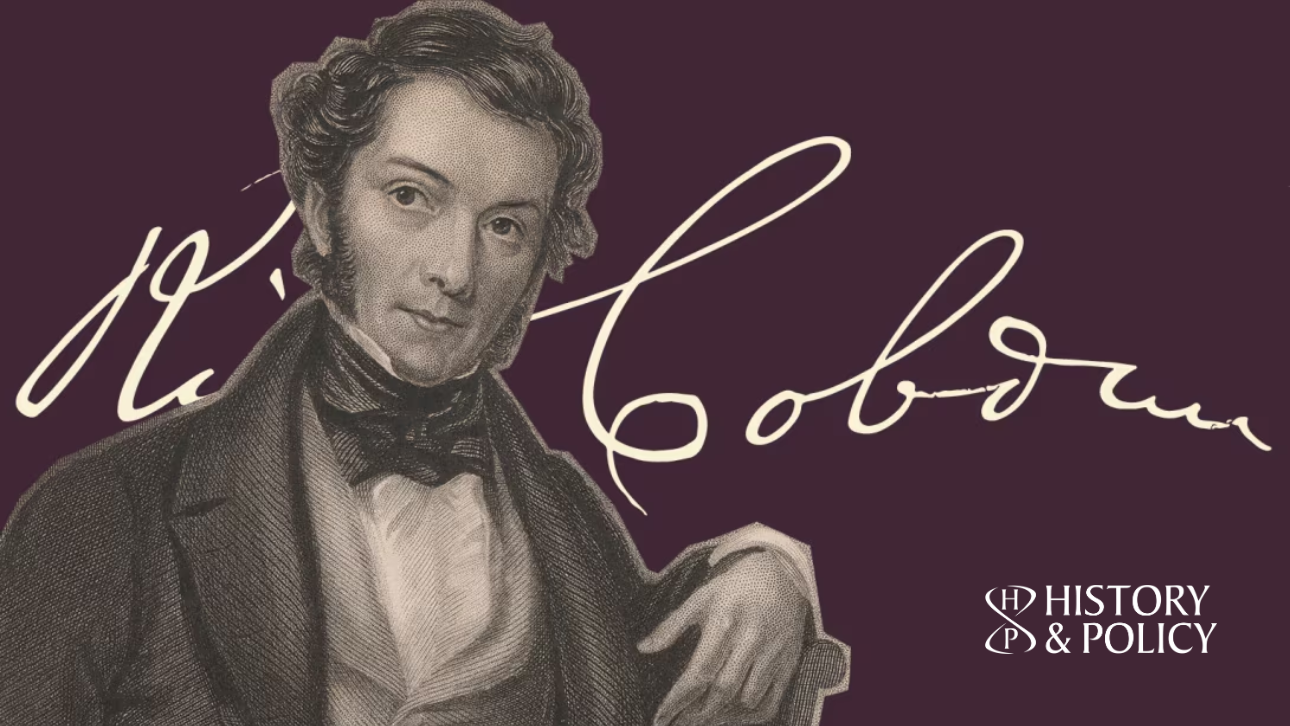
This workshop is designed broadly to come within the ambit of the AHRC-funded Letters of Richard Cobden Online project and will draw from those letters in order to enhance our understanding of British trade policy in its formative period. For not only was Richard Cobden (1804-65) central to establishing unilateral free trade in Britain through the Repeal of the Corn Laws in 1846 but in 1859-60 undertook the laborious negotiation of the first Britain free trade agreement, the Anglo-French commercial treaty of 1860. His letters also deal prominently with the expansion of British trade in India, Japan, and China, while having visited the United States twice, he was also an important contributor to, and commentator on, Anglo-American relations. He was also central to the liberal internationalist tradition linking trade, interdependence, and peace.
British free trade in the mid-nineteenth century remains a benchmark frequently cited in current trade discussions (e.g. Liz Truss, Times Red Box ed. 9 June 2020; Rishi Sunak, 31 Mar. 2023 ‘we are at heart an open and free-trading nation’), and it is to this contemporary discussion that the proposed workshop/ seminar is intended to contribute. The recent Australian Free Agreement was widely hailed as a return to British free trade policy, the such treaty since Britain joined Europe in 1973, and hence ‘the first trade deal to be signed by the UK as an independent free-trading nation in nearly half a century’ (Lord Younger, HL 11 July 2022). However, latest debate on the subsequent Comprehensive and Progressive Agreement for a Trans-Pacific Trade Partnership (House of Lords 21 Nov. 2023) has also focused on the lack of a published government trade strategy. The potential Labour approach to trade policy also remains to be defined. This workshop/seminar is therefore designed to provide a concrete analysis of British commercial policy between the repeal of the Corn Laws in 1846 (also referred to in the July 2022 debate) and joining Europe in 1973 with a view to informing current thinking on trade policy and the tradition to which, after an ‘European interlude’, it is the successor. To this end, the ‘British ‘way’ in trade policy will be contrasted with American, Chinese, and European ways in trade policy. This seminar is designed to bring together historians, policymakers, politicians, and members of think-tanks and interested academics and members of the public.
Confirmed speakers include:
 Imperial & Global Forum
You must be logged in to post a comment.