
Marc-William Palen
History Department, University of Exeter
Follow on Twitter @MWPalen
Marc-William Palen
History Department, University of Exeter
Follow on Twitter @MWPalen
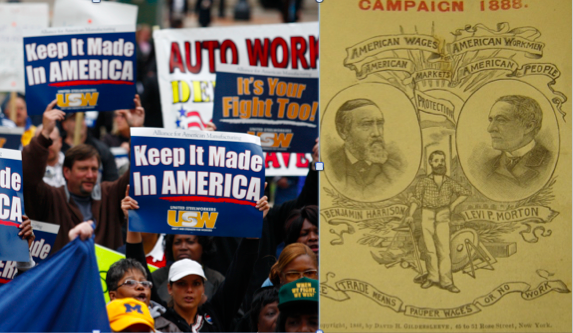
Featuring Marc-William Palen (Exeter), Helen Milner (Princeton), Bill Galston (Brookings Institution), Carla Hills (former US trade representative), David Auter (MIT), David Taylor (Pennsylvania Manufacturers’ Association), Bruce Springsteen, and Ferris Bueller, Edward Stourton examines America’s long history of resistance to free trade, and asks why it has again become such a potent political force in a new documentary for BBC Radio 4. Continue reading “Donald Trump and the History of American Protectionism: A New Documentary”
Marc-William Palen
History Department, University of Exeter
Follow on Twitter @MWPalen
Marc-William Palen
History Department, University of Exeter
Follow on Twitter @MWPalen

Marc-William Palen
History Department, University of Exeter
Follow on Twitter @MWPalen
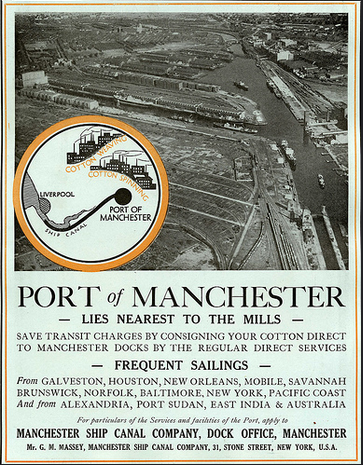
An advert for the canal, for the US market, c. 1930, from the Manchester Libraries, Information and Archives, Manchester City Council
Marc-William Palen
History Department, University of Exeter
Follow on Twitter @MWPalen
Marc-William Palen
History Department, University of Exeter
Follow on Twitter @MWPalen
Clinton Sandvick
Daily History
Cross-posted from Daily History
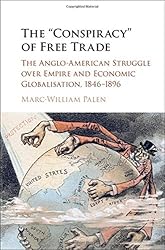 Marc-William Palen’s new book The ‘Conspiracy’ of Free Trade: The Anglo-American Struggle over Empire and Economic Globalisation, 1846-1896
Palen is a historian at the University of Exeter. He has written extensively on globalization and free trade for the New York Times, the Australian, The Conversation, Globalist Magazine, History News Network and many others. Palen has recently published two outstanding articles (‘Free trade is once again tearing apart the Republican Party‘ and ‘Trump’s anti-trade tirades recall GOP’s protectionist past‘) explaining how Donald Trump’s economic policies echo previous GOP stances on free trade. He is also the current editor for Imperial & Global Forum. You can follow Palen on Twitter at @MWPalen.
Here is the interview with Marc-William Palen.
If someone asked you to quickly summarize your book, what would be your 2-minute elevator version?
Briefly, The “Conspiracy” of Free Trade provides a new interpretation of Anglo-American imperialism and economic integration from the mid to late 19th century. The issue of free trade dominated the era’s political scene like no other. But whereas Britain turned to free trade as a national policy and ideology by mid-century, the United States turned to economic nationalism. The book thus argues that Anglo-American economic globalization was driven by this political and ideological conflict between free trade and economic nationalism from the 1840s onward.
Continue reading “Daily History Q&A: The “Conspiracy” of Free Trade”
Marc-William Palen
History Department, University of Exeter
Follow on Twitter @MWPalen

Marc-William Palen
History Department, University of Exeter
Follow on Twitter @MWPalen
Continue reading “This Week’s Top Picks in Imperial & Global History”

Marc-William Palen
History Department, University of Exeter
Follow on Twitter @MWPalen

Marc-William Palen
History Department, University of Exeter
Follow on Twitter @MWPalen

Marc-William Palen
History Department, University of Exeter
Follow on Twitter @MWPalen
From 1970s colonialism in Lisbon to saving digital archives, here are this week’s top picks in imperial and global history.
Continue reading “This Week’s Top Picks in Imperial & Global History”
Marc-William Palen
History Department, University of Exeter
Follow on Twitter @MWPalen
Living as we do in an era where many of the world’s political elites commonly support free trade initiatives, it is perhaps difficult to imagine that the global economy looked very different in the late 19th century. Aside from the notable case of Free Trade England, most nations in the latter half of the 19th century sought safety from the gales of modern global market competition behind ever higher tariff walls, buttressed with government subsidies to domestic industries and imperial expansion. The United States was the exemplar of this global turn to economic nationalism and empire.
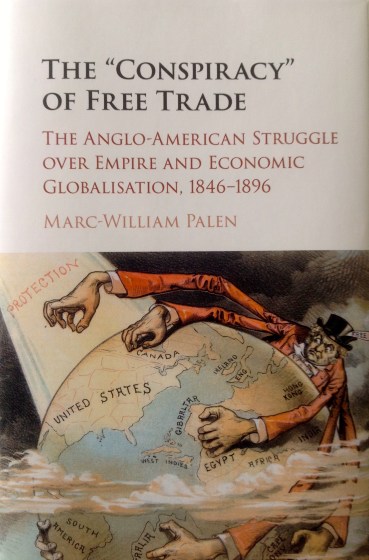
In the wake of the Second World War, the United States would become the leading proponent of free trade. But for nearly a century before, American foreign trade policy was dominated by extreme economic nationalism. What brought about this pronounced ideological, political, and economic about face? How did it affect Anglo-American imperialism? What were the repercussions for the global capitalist order? In answering these questions, my new book, The “Conspiracy” of Free Trade (Cambridge University Press, 2016), offers the first detailed account of the controversial Anglo-American struggle over empire and economic globalization in the mid to late 19th century. Continue reading “The “Conspiracy” of Free Trade”
Marc-William Palen
History Department, University of Exeter
Follow on Twitter @MWPalen
 Imperial & Global Forum
You must be logged in to post a comment.