
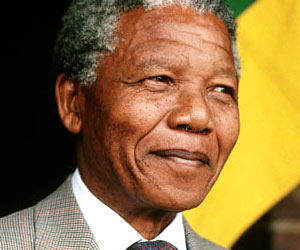
The sad news of the death of Nelson Mandela has led many commentators to reflect on how he will be remembered. His reputation is now, and has been for many years, almost uniquely positive. So it should be, and let’s hope it will remain that way. Let this not, however, be at the expense of historical complexity. Here are some points which historians should bear in mind when reflecting on Mandela’s career and on his evolution from freedom fighter to world statesman. Continue reading “How Should Historians Consider Nelson Mandela?”
Tag: Richard Toye
The New York Times and Boston Globe Rave about ‘The Roar of the Lion’
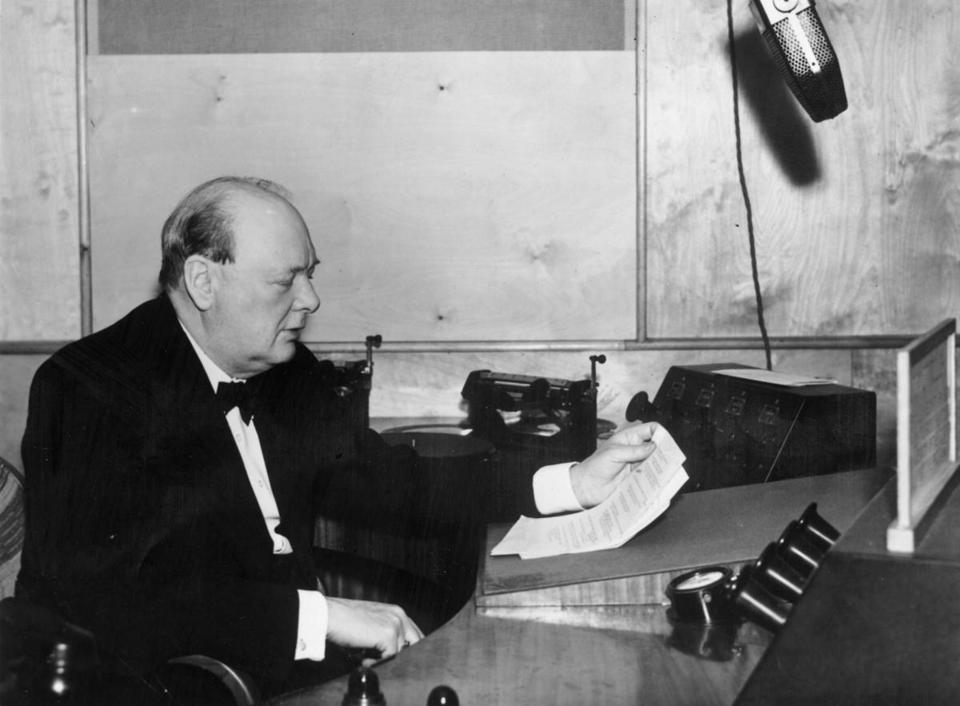
In case you missed it, the newest book by the Centre’s own Professor Richard Toye, The Roar of the Lion: The Untold Story of Churchill’s Wartime Speeches (2013), has been featured in the New York Times and the Boston Globe this past week, the most recent in a flurry of high-level reviews, which include the Financial Times and the Daily Mail.
The New York Times concludes that what Toye ‘has found deeply complicates, and in many cases utterly destroys,’ Churchill’s ‘popular image of 1940’: Continue reading “The New York Times and Boston Globe Rave about ‘The Roar of the Lion’”
Is Doctor Who an Anti-Imperialist?

We have been tackling some weighty subjects in the Forum this past week. In particular, the pros and cons of global history. A lighter approach to imperial and global history seemed in order. And who better to do so than an alien traveler of time and space like the Doctor?
Last Saturday witnessed the much anticipated 50th anniversary episode of the series. I had thought that my 3D glasses were enough to hide my attendance at its theatrical debut. But the cat, as they say, is out of the bag. It appears that I have failed miserably in keeping my secret Doctor Who obsession, well, a secret.
Today, one of my students sent me a link to a great article in the New Statesman. It explores the liberal contradictions of the intrepid Doctor, much as the Centre’s Professor Richard Toye did with Winston Churchill and empire last week. The author of the New Statesman article, Andrew Harrison, sets the ideologically confusing intergalactic stage thusly: Continue reading “Is Doctor Who an Anti-Imperialist?”
Talking Empire: The Gallagher-Robinson Controversy
The Centre for Imperial and Global History is pleased to announce its new ‘Talking Empire’ podcast series. Hosted by Professor Richard Toye, Centre academics are developing a series of podcasts on controversies in global and imperial history, which are available to listen to for free on this page.
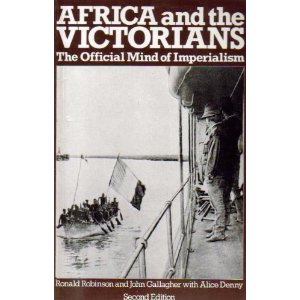 With this first installment, Centre Director Andrew Thompson discusses the longstanding debates surrounding the work of Jack Gallagher and Ronald Robinson. In their path-breaking 1953 Economic History Review article, ‘The Imperialism of Free Trade’, Gallagher and Robinson suggested that the so-called ‘New Imperialism’ of the late nineteenth century was not new at all. They argued instead that imperial historians had previously missed Britain’s informal imperial expansion following its adoption of free trade policies c. 1850. The authors expanded further upon their informal imperial findings with Africa and the Victorians: The Official Mind of Imperialism (1961).
Listen to the three installments of Andrew Thompson discussing the controversial legacy of Gallagher and Robinson: Continue reading “Talking Empire: The Gallagher-Robinson Controversy”
Winston Churchill – Liberal Imperialist?
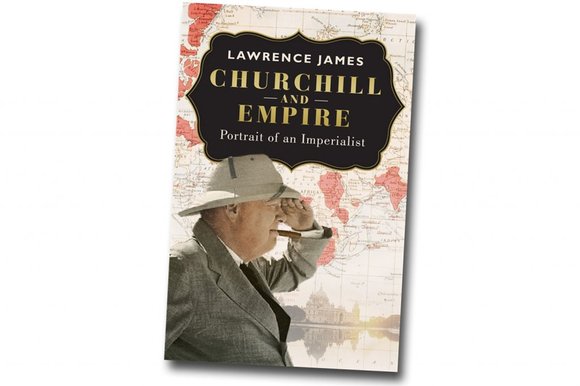 In the introduction to his new book Churchill and Empire, Lawrence James refers to Winston Churchill’s ‘essentially liberal imperialism’. James does not really explain what he means by this, but his comment is intriguing. Previously, in a Daily Mail article, he decried the ‘hand-wringing and breast-beating’ of modern-day critics of Empire, or, as he describes them, the ‘tribunes of political correctness’. From this, one would not think that he is someone who would in general view ‘liberal’ as a term of praise; yet his use of it in this instance is clearly not intended as a criticism of Churchill. Rather, one deduces, he sees ‘liberal’ in this particular context as a synonym for ‘moderate’ or perhaps ‘humane’. If that is indeed what he means – in other words, that if Churchill was a liberal imperialist then his imperialism must have been benign – the equation is highly problematic. Continue reading “Winston Churchill – Liberal Imperialist?”
 Imperial & Global Forum
You must be logged in to post a comment.