CFP: ‘The Local and the Global’, University of Exeter, 7 March 2015

Lori Lee Oates
History Department, University of Exeter
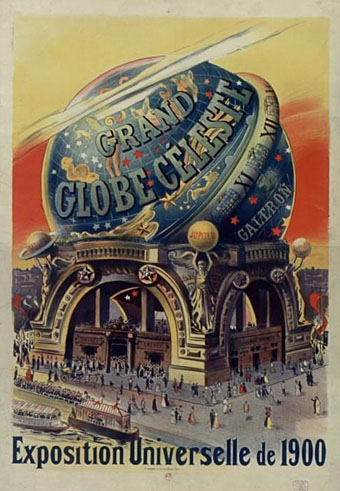
globe celeste

The Local and the Global

ASMCF- SSFH PG Study Day, University of Exeter

Saturday March 7th 2015

Call For Papers

Keynote Speaker: Dr Claire Eldridge (Southampton)

Planned Professional Development Sessions: archival research; social media for academia; publishing journal articles; the Viva; and from PhD to monograph.

Deadline for Submissions: 9 January 2015

‘Tout le Monde à Paris’, proclaimed a poster for the 1900 Exposition Universelle. The world on your doorstep; the global meets the local through a cultural conduit. A century later, and with the World Wide Web in your pocket, the global has never been more connected to the local. Conceptually these terms are antonymous: the local is specific, on a small scale, and often suggests civic or regional affiliations to a place; the global is universal, world-wide, and lacks definitive spatial rooting. Yet considering the local and the global as opposites may belie the potential impact that they can have upon one another.  Continue reading “CFP: ‘The Local and the Global’, University of Exeter, 7 March 2015”
Empire: The Controversies of British Imperialism

MOOC pic

Exeter’s Centre for Imperial and Global History launches a new, free online course.

We are delighted to announce that, starting in January 2015, we will be running a Massive Open Online Course (MOOC) on the history of the British Empire.

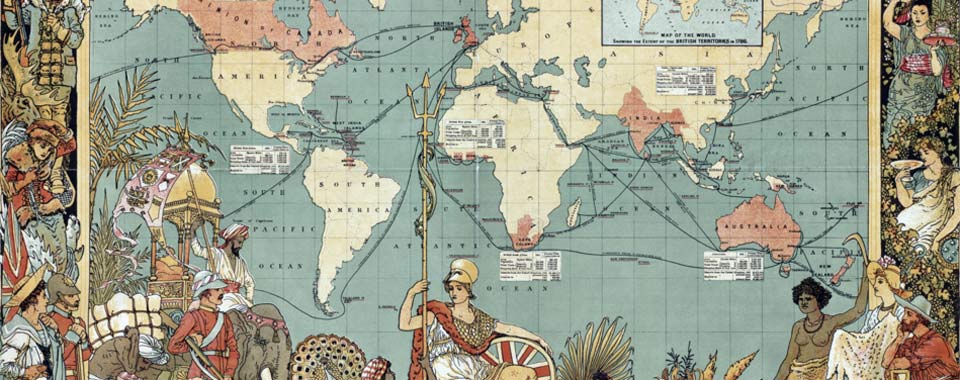
The British Empire was the largest empire ever seen. It ruled over a quarter of the world’s population and paved the way for today’s global economy. But British imperialism isn’t without controversy, and it continues to cause enormous disagreement among historians today.This free online course will help you understand why.

Continue reading “Empire: The Controversies of British Imperialism”

Colonial Counterinsurgency in Comparative Perspective, Sept. 18-19

Gareth Curless and Martin Thomas
Centre for War, State, and Society, University of Exeter

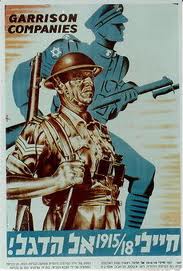
Palestine police poster (1)Online registration is now open for a two-day conference, ‘Colonial Counterinsurgency in Comparative Perspective’, to be held on 18 and 19 September 2014, the University of Exeter.

The recent conflicts in Afghanistan and Iraq have prompted renewed interest in Britain’s colonial experience of rebellion and state breakdown, while current French interventions in Mali and the Central African Republic have stirred controversy over French military actions in former colonial dependencies, promoting accusations of ‘imperialist humanitarianism’. Yet, in spite of increasing interest in the history of counterinsurgency and empire, we lack comparative studies of colonial responses to armed insurrection, civil disorder, anti-colonial paramilitaries and other irregular forces. The aim of the conference is to address this imbalance by drawing on examples from the British, Dutch, French, and Portuguese empires, as well as case studies from China and Southern Africa. Continue reading “Colonial Counterinsurgency in Comparative Perspective, Sept. 18-19”

Two Exeter History Lectureships: Deadline Approaching

ExeterThe History Department at the University of Exeter has two lectureships available. The result of the 2008 Research Assessment Exercise confirms Exeter’s position as one of the UK’s leading research-intensive universities. Almost 90% of our research is at internationally recognised levels and every single subject submitted included world-leading (4*) research. When adjusted for the 95% of staff submitted, Exeter ranks among the top 15 in the UK for research out of 159 higher education institutions. The Times Higher Education described Exeter as ‘a rising star among research-intensive institutions’.

Please note: The closing date for completed applications is Thursday 31st July 2014. Continue reading “Two Exeter History Lectureships: Deadline Approaching”

Centre In Focus

With pleasure, we see that the Centre for Imperial & Global History has been made the In Focus Feature story by the University’s Research & KT (@UofE_Research).

Cross-posted from In Focus

Centre in focus

Centre for Imperial and Global History

Understanding how the modern world was shaped by its past is a goal of the University of Exeter’s Centre for Imperial and Global History (CIGH).

Launched in late 2013, the Centre aims to show how much of the world’s history was created by empires, to reposition the histories of those empires in a wider global context, and gain insight into the causes and consequences of globalisation.

It does this through researching topics including the histories of humanitarianism and human rights, law and colonialism, regions in a global context, and the relationship between globalisation’s past and present.   Continue reading “Centre In Focus”

Prelude to Intervention: French Wars in Africa, Part I

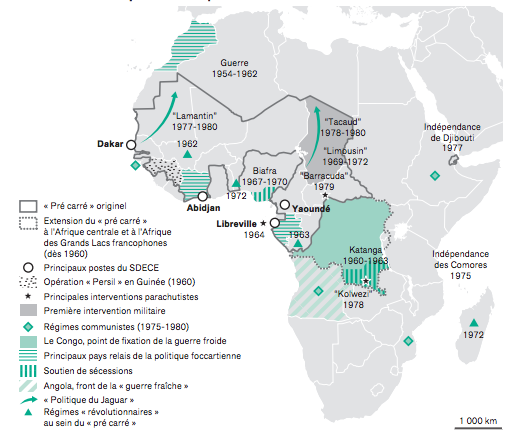
Map: "French geopolitics in Africa and Foccart's legacy" (1960-1991), from Bat's article in Afrique Contemporaine.
Map: “French geopolitics in Africa and Foccart’s legacy” (1960-1991), from Bat’s article in Afrique Contemporaine.

Jean-Pierre Bat
Research Associate, Centre for War, State and Society
Author of Le syndrome Foccart (2012)

In the first of his two-part Forum essay, Dr. Bat illuminates the distinct colonial and post-colonial history that helps explain current French military policy in Africa (1950s-present).

Today, the French Parliament will vote on the country’s present military engagement in the Central African Républic (CAR). Why? Because it remains a (poorly understood) constitutional requirement that any French military intervention overseas be approved by the National Assembly after every four months. Moreover, even if President Nicholas Sarkozy and his successor, François Hollande, have sought to republicanize France’s wars in Africa – dressing them in the clothes of democratic legitimacy and UN approval – the locations and priorities underpinning those interventions speak to a post-colonial inheritance dating back to the 1950s and the era of ‘Mr. Africa’, Jacques Foccart. Continue reading “Prelude to Intervention: French Wars in Africa, Part I”

CFP: Entangled Transitions: Between Eastern and Southern Europe 1960s-2014

James Mark

In under two decades, authoritarian political systems collapsed across Europe – in the south of the continent in the 1970s, and then in the east between 1989 and 1991. Although much work has been done on these processes in each region, and comparative work carried out on post-authoritarian transitions and memories, there has yet to be any sustained scholarship that examines the ‘entangledness’ of these processes in the context of broader European and global processes of the late Cold War and its aftermath. Taking a longue durée approach, this conference will explore these inter-relationships between the 1960s and the present day. 2014 marks the 25th anniversary of the fall of state socialism and the 40th anniversary of the beginning of the transition from dictatorship on the Iberian Peninsula and in Greece: an ideal time to consider the relationship between these processes that have been central to modern European history. Continue reading “CFP: Entangled Transitions: Between Eastern and Southern Europe 1960s-2014”

Echoes of Britain’s Wartime Past: Gove’s Timeless Rhetoric of Justice and Liberty

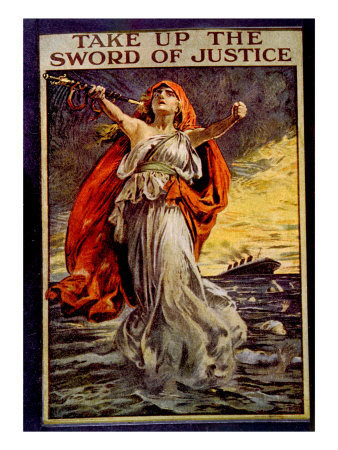
world-war-i-british-war-poster-regarding-the-sinking-of-the-lusitania-1915

Simon Mackley

Michael Gove’s recent assault, in the form of an article in the Daily Mail, alleges that the myths of the First World War continue to be perpetuated by an unholy alliance of left-wing academics and television sit-coms. The Education Secretary accused his ideological opponents of failing to recognise that the conflict was a ‘just war’, fought in defence of ‘Britain’s special tradition of liberty’. Since the piece went to press, the myriad problems inherent in Gove’s characterisation have been dissected at great length – including an excellent assessment by Marc-William Palen in this very blog. Yet while we might take particular exception to the tone and context of the Education Secretary’s position, such attempts to deploy the rhetoric of justice and liberty in defence of conflict are nothing new. Indeed, from my own research on the Liberal Party and the outbreak of the 1899-1902 South African War, I would suggest that Gove is merely rehashing the language and rhetoric of pro-war Liberals at the turn of the century. Continue reading “Echoes of Britain’s Wartime Past: Gove’s Timeless Rhetoric of Justice and Liberty”

Considering a History PhD at Exeter? Registration Open till Monday for the PhD funding Open Day

Want to do a PhD in history at the University of Exeter?

There is still time.

Prospective applicants who are eligible for funding can register for our Open Day in Bristol on Wednesday 22 January 2014. The aim of the Open Day is for you to learn more about the research opportunities and supervisory expertise offered in the SWW DTP. The deadline for registering is 12.00 midday Monday 13 January 2014. Continue reading “Considering a History PhD at Exeter? Registration Open till Monday for the PhD funding Open Day”

New Digital Resource: The British Empire’s Judicial Committee of the Privy Council

Nandini Chatterjee

Royal_Arms_of_the_United_Kingdom_(Privy_Council)
Royal Arms of the Privy Council

International Law and Legal Pluralism, British Style

In 2008, the then Archbishop of Canterbury Dr. Rowan Williams courted controversy. He stated that recognition of certain aspects of Islamic law, Shari‘a, was essential for Britain in the interest of community cohesion. ‘As a matter of fact’, he said, ‘certain provisions of sharia are already recognised in our society and under our law’. The erudite archbishop was referring primarily to religious principles being valid bases for conscientious objections, and alternative marital dispute resolution methods. But had he chosen to use historical material, Dr. Williams would have had far more to go on.

And that is where my new digital archive project would have come in most handy to the archbishop. Shari‘a – alongside Hindu, Buddhist, Chinese, Jewish, and African customary laws – has indeed been part of the British legal system for a very long time. It has been administered by the final court of appeal for the British Empire, the Judicial Committee of the Privy Council. This tribunal, which sat in London, was originally an expression of royal prerogative. Then, in 1833, it was given its modern form. Between then and 1998, it has heard around 9,000 appeals from all over the British Empire. Continue reading “New Digital Resource: The British Empire’s Judicial Committee of the Privy Council”

Reminder: ‘Postwar Decolonisation and its Impact in Europe’ Conference, Dec. 2-3 at the University of Exeter

Don’t miss our fast-approaching ‘Postwar Decolonisation and its Impact in Europe’ Conference, to be held next Monday and Tuesday at the University of Exeter (December 2-3, 2013). Continue reading “Reminder: ‘Postwar Decolonisation and its Impact in Europe’ Conference, Dec. 2-3 at the University of Exeter”

Registration Open for ‘Postwar Decolonisation and Its Impact in Europe’, Exeter, December 2-3 2013

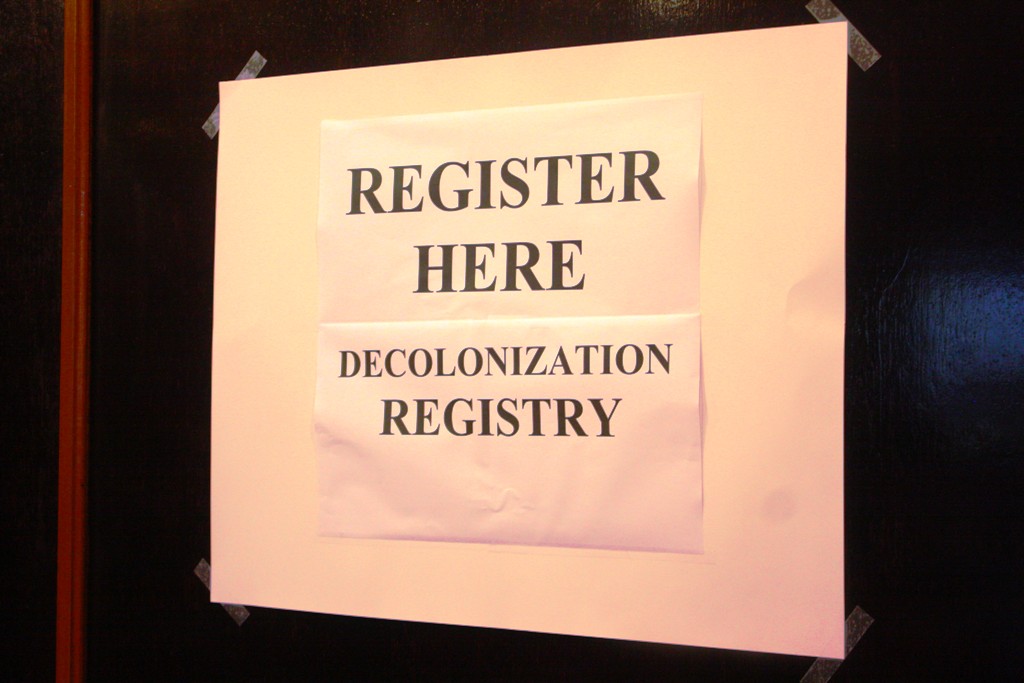
The Centre for Imperial and Global History is delighted to announce that registration is open for the fast-approaching ‘Postwar decolonizationregistryDecolonisation and its Impact in Europe’ Conference, to be held at the University of Exeter, December 2-3, 2013.

The unravelling of European empires was foundational to the making of the modern world. An old imperial order was swept away, and a new age of nation states rapidly replaced it. Whilst decolonisation played a fundamental role in the shaping of post-war world, its repercussions for Europe itself, and its legacies in a host of political, social and cultural spheres, are still relatively little examined.This conference will examine how the global dynamics of decolonisation had an impact not only on the ‘western core’ of the continent, but also in state socialist eastern Europe, and in southern Europe, which have been hitherto little considered in this light. Continue reading “Registration Open for ‘Postwar Decolonisation and Its Impact in Europe’, Exeter, December 2-3 2013”

Welcome to the Imperial & Global Forum

Globus_book-shelf_hgAndrew Thompson
Centre Director

It is a pleasure to welcome you to the Imperial & Global Forum, the blog of the Centre for Imperial and Global History at the History Department, University of Exeter. In it, contributors will tackle the controversies of empire and globalization, past and present. So please be sure to follow along, join in the discussion, and give us feedback on the blog, on Twitter, and on Facebook.

We are one of the largest UK research groups working on the history of modern empires and their importance for understanding the making of our contemporary world. If you go to our Centre website you will find more details about the range of staff involved, the variety of countries they study, and the work they have recently published. You will also be able to learn more of some of the major collaborative projects that are supported by the Centre, the particular colleagues who are involved in them, and the impact they are having within and beyond the academic world. Continue reading “Welcome to the Imperial & Global Forum”