
Mitchel Stuffers
Assistant Editor at CIGH Exeter & PhD Candidate in History, University of Exeter
Mitchel Stuffers
Assistant Editor at CIGH Exeter & PhD Candidate in History, University of Exeter
Dr Lori Lee Oates
Memorial University
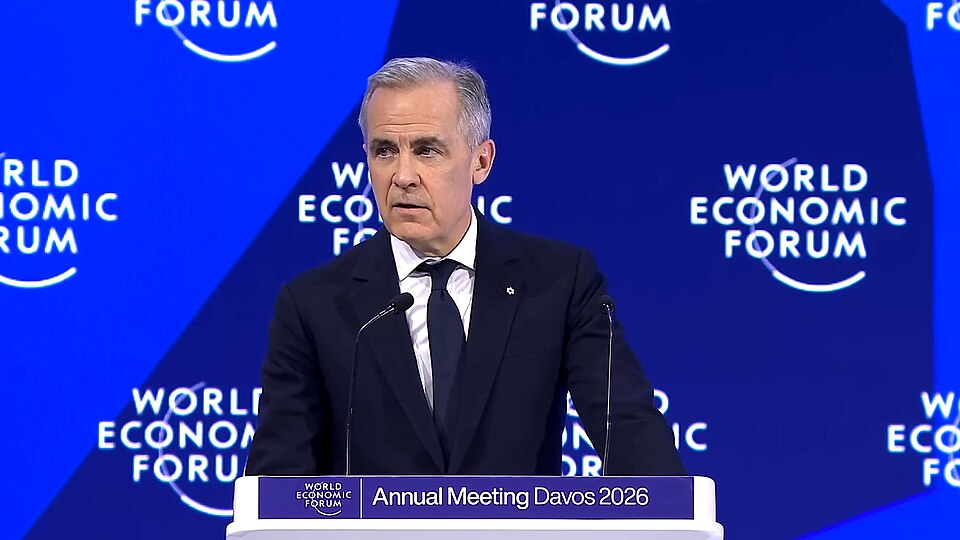
On January 20 of this year, Canadian Prime Minister Mark Carney gave a speech at the World Economic Forum in Davos, in which he claimed that, “we are in the midst of a rupture. Not a transition.” This speech is said to have “sent shockwaves through the international community” by New York Times journalist and podcaster Ezra Klein. Carney was arguably the first member of the western alliance to seriously acknowledge the current problems with the hegemony of the United States in present day geopolitics. However, what Carney calls a rupture is arguably just the latest stage in a larger transition that scholars have been warning about for at least the last decade.[1]
This transition, scholars would argue, is rooted in weaknesses that have long existed in the geopolitical order. Some of these problems were embedded in the systems that emerged at the end of the Second World War, and some are part of the colonial systems that built the modern world. For example, historian Jamie Martin has effectively argued in The Meddlers (2022) that the international financial systems such as the World Bank and International Monetary Fund have infringed on the sovereignty of many states that have required their services, and that this is rooted in approaches that were developed in the early twentieth century. The problems with these systems have become more obvious and exacerbated in recent decades. Furthermore, this geopolitical order has become ever more dysfunctional, and the problems are far broader than the increasingly dangerous U.S. hegemony that Carney described in Davos.
In the now-famous speech Carney argued that “we knew that the story of the rules-based international order was partially false. That the strongest would exempt themselves when convenient.” He maintained that states have been going along to ensure their safety, as integration becomes an increasing threat in the contemporary period. He called on middle powers to act in concert so that together we can build an order that is once again based on values, rather than bowing to U.S. hegemony. Certainly, Carney has pursued new transnational relationships since the Davos speech with European powers, China, and now India. However, his short time as Canadian Prime Minister has also been marked by ignoring breaks with international law on the part of the U.S. He has even actively supported them at times.
Since coming to office on March 14, 2025, Carney’s foreign policy seems quite at odds with the values-based order of middle powers he proposed. He has notably been silent about, and even at times supported, U.S. imperial actions. His government said nothing as the U.S. bombed speed boats in international waters. When the U.S. kidnapped the president of Venezuela, Carney called this “welcome news” on January 6, 2026, at a media availability in Paris. Carney was again silent as the United States sanctioned a Canadian judge of the International Criminal Court over an investigation into Israel’s war against Gaza. Most recently, he offered Canadian support for the U.S. attack on Iran. However, his Foreign Affairs Minister Anita Anaud has since said that Canada “will not be participating in the war.”
Commentators, including some scholars, often make the mistake of focusing on Donald Trump and Carney, as the powerful national leaders who are driving geopolitics. However, as global and imperial historians we should be aware that the forces of geopolitics do not change direction overnight and events that seem like ruptures are often decades in the making. Such occurrences are moved forward by the ever-changing structures of globalization and the shifts in both local and global relationships that are often driven by technological change. There are many smaller transitions that lead up a truly global shift.
Continue reading “Mark Carney’s “rupture” of the international order is actually a transition – but to what?”
Mitchel Stuffers
Assistant Editor at CIGH Exeter & PhD Candidate in History, University of Exeter
Mitchel Stuffers
Assistant Editor at CIGH Exeter & PhD Candidate in History, University of Exeter
Mitchel Stuffers
Assistant Editor at CIGH Exeter & PhD Candidate in History, University of Exeter
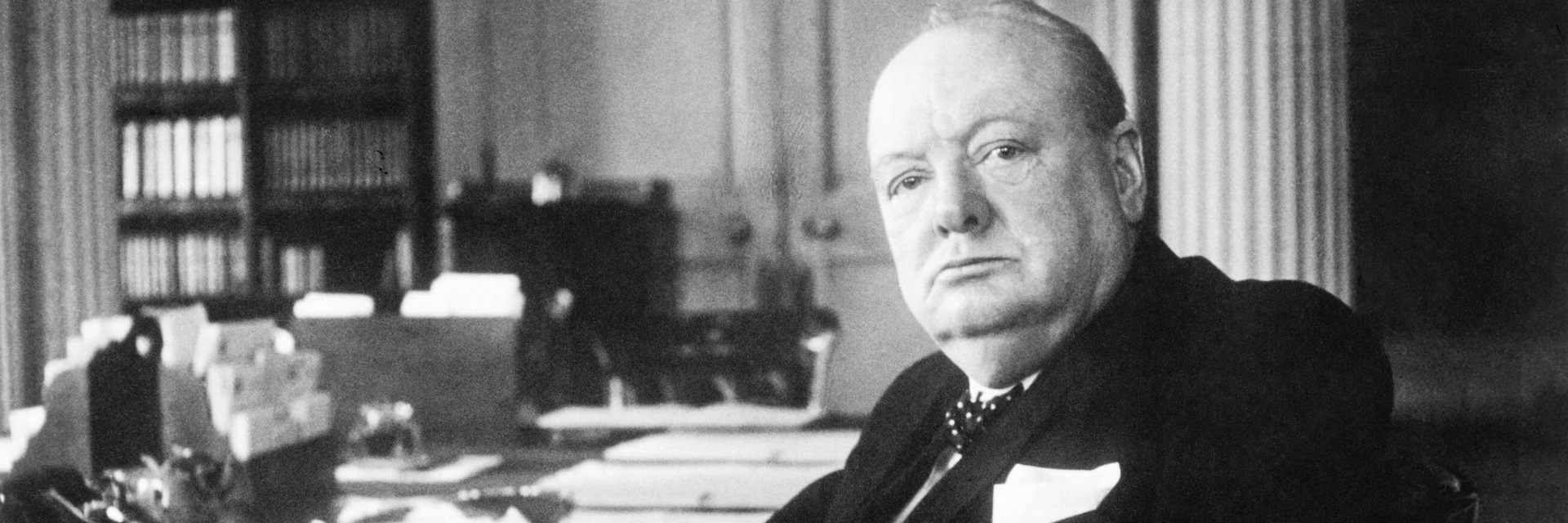
Richard Toye, University of Exeter
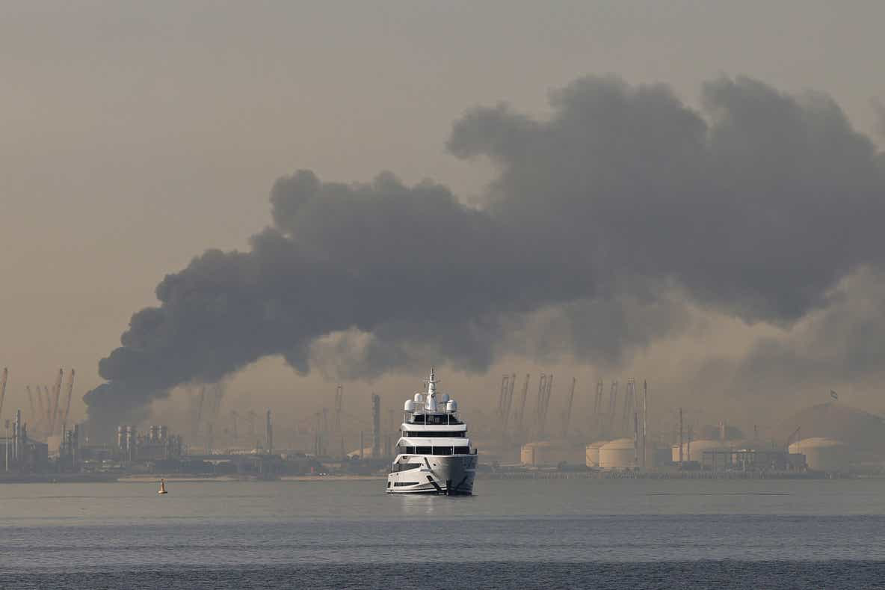
When Donald Trump criticised Keir Starmer for failing to sufficiently support American and Israeli operations against Iran, he did so with a historical flourish. “This is not Winston Churchill that we’re dealing with,” he complained.
The implication was clear: Churchill would have stood shoulder to shoulder with Washington in a confrontation with Tehran. The remark invites an obvious question: what would Churchill have made of war with Iran?
The answer is not as straightforward as Trump’s comparison suggests. Churchill’s record shows a mixture of hawkish rhetoric, strategic caution and a constant concern with maintaining Anglo-American unity. Far from embodying a simple instinct for confrontation, he tended to see war and diplomacy as inextricably linked.
Continue reading “What would Winston Churchill make of war with Iran?”
Mitchel Stuffers
Assistant Editor at CIGH Exeter & PhD Candidate in History, University of Exeter
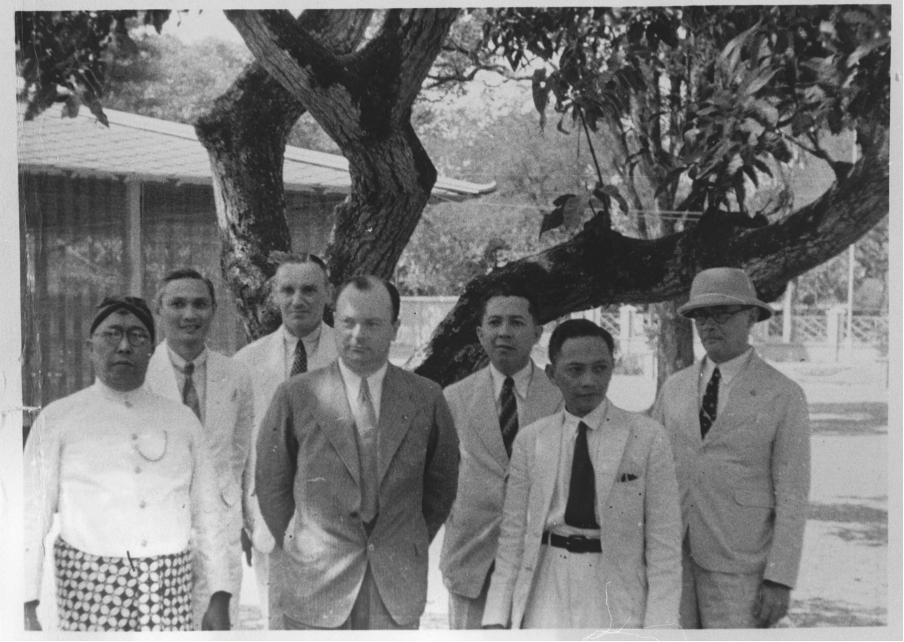
Mitchel Stuffers, PhD Candidate in History, University of Exeter & Assistant Editor at CIGH Exeter
Anton Adriaan Mussert, the leader of the Dutch fascist National Socialist Movement(Nationaal-Socialistische Beweging, NSB), took a 2-month trip to the Dutch East Indies (now Indonesia) in 1935. While there, he agreed to an interview by the colony’s nationalist newspaper Pemandangan, wherein Mussert, remarkably, sought to sell the empire to its anticolonial-leaning readership.
I uncovered the interview while researching my PhD, which integrates imperial & colonial studies and comparative fascist studies by examining how organisations like the Dutch National Socialist Movement(NSB) built, justified, and executed their visions of fascist international worldbuilding. It also draws on Holocaust & Genocide Studies and Intellectual History to gain a more holistic overview of its origins and aims.
Over the last year and a half, I engaged with materials not only from the Netherlands but also pieces from some of its former colonies, like Indonesia, to engage with those inquiries.
Dutch colonial rule over Indonesia, especially before the outbreak of World War Two, was of enough interest to the NSB that its leader had decided to visit it and create an inter-imperial branch to operate from it. The NSB’s efforts to establish a foothold in the colony have led to various arguments among historians. Some claim that Mussert sought to use the Dutch East Indies as a steady stream of funds, and that the Indonesian NSB operated as a mere extension of the motherland’s metropolitan interests.[1] Another scholar reasoned that the NSB had held an “inclusive culturalist notion” of pan-imperial cooperation in its outlook on the colonies, whereby the organisation at large was genuinely impacted, until ethnonationalist chauvinism eventually ended it.[2] The existence of an interview wherein Anton Mussert was transcribed into Indonesian, rather than Dutch, thereby sways us to lean towards the latter hypothesis and examine its peculiarities, wherein an appeal to the colony may reveal its pre-war PR strategies.
Examinations on the NSB more broadly start with insightful works such as those by Edwin Klijn and Robin te Slaa, which, when discussing the NSB’s colonial & imperial aspects, argue that the urge for Lebensraum (Living space) was essentially nullified for the Dutch fascists due to the presence of the colonies before World War Two.[3] More recent historiography includes Tessel Pollman,[4] Jennifer Foray,[5] Geraldien von Frijtag Drabbe Künzel,[6] and Nathaniël Kunkeler.[7] However, it was a note in an older work, from 1968, that led to this short article. Simon L van der Wal briefly mentioned the existence of an interview with the NSB’s Leader, Anton Adriaan Mussert, by a leading Indonesian newspaper;[8] one with anti-colonial, pro-independence leanings.[9] The existence of this interview thereby challenges the way we understand the outreach of ultranationalist groupings to their non-white audiences. It moves us to ask how inter-imperial organisations like the NSB appealed to the wider sphere of colonised subjects, beyond the organisation’s perceived exclusivist dimensions, as has widely been the case in popular memory in the Netherlands following the NSB’s downfall.
Continue reading “How a Dutch Fascist Marketed the Empire in Pemandangan: Mussert’s Indonesian Interview”
Mitchel Stuffers
Assistant Editor at CIGH Exeter & PhD Candidate in History, University of Exeter

Mitchel Stuffers
Assistant Editor at CIGH Exeter & PhD Candidate in History, University of Exeter
Mitchel Stuffers
Assistant Editor at CIGH Exeter & PhD Candidate in History, University of Exeter

Mitchel Stuffers
Assistant Editor at CIGH Exeter & PhD Candidate in History, University of Exeter
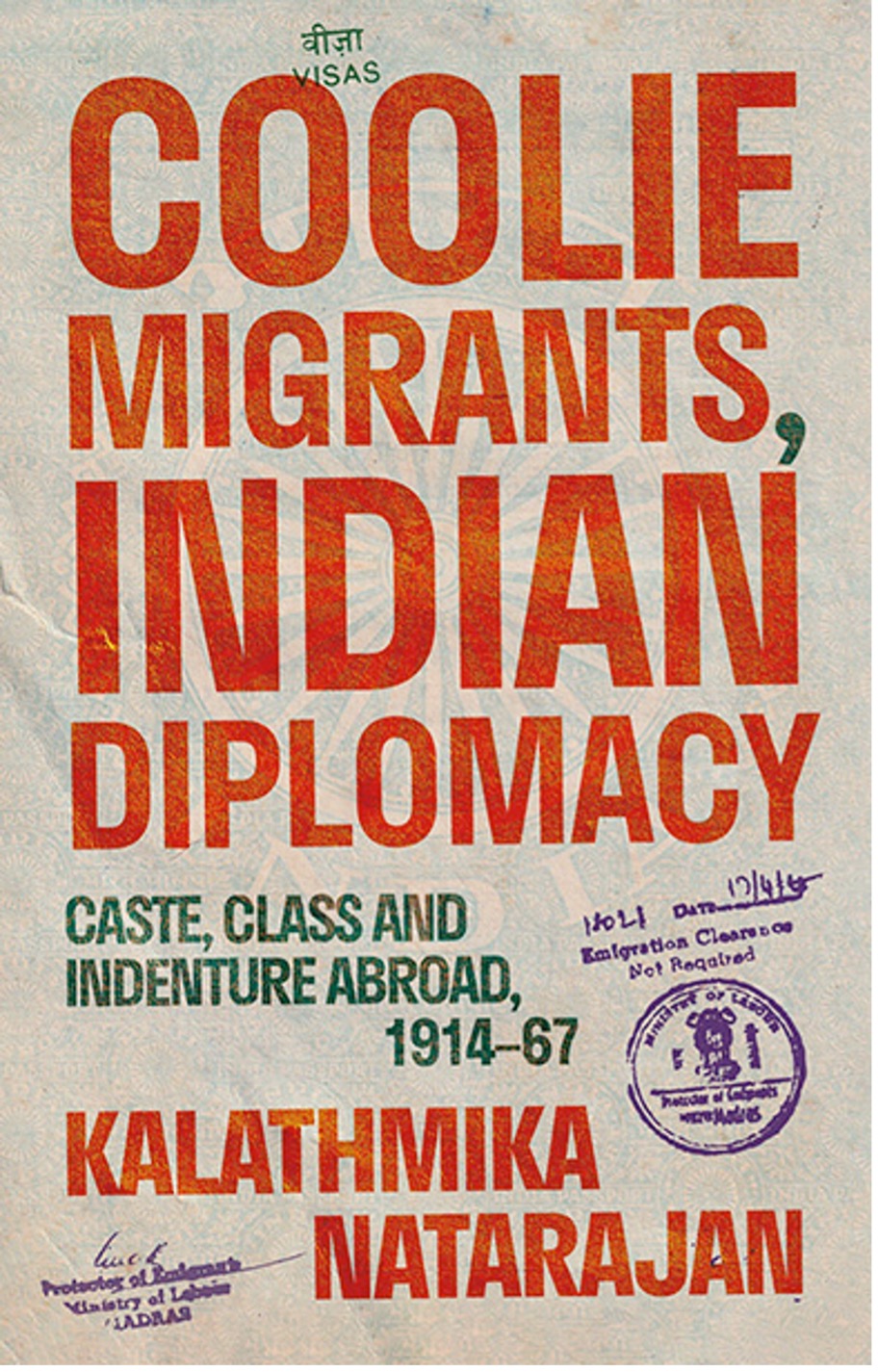

Dr Kalathmika Natarajan, a Lecturer in Modern South Asian History at the University of Exeter, recently sat down for a Forum interview to discuss her exciting new book, Coolie Migrants, Indian Diplomacy: Caste, Class, and Indenture Abroad, 1914-67 (London: Hurst, 2025 and New York: Oxford University Press, 2026). Dr Natarajan’s CIGH book launch is Wed. Jan. 28 from 3:30-5pm. Click here for further details of the book launch.
This book began as a PhD thesis at the University of Copenhagen in 2015 – it started off as a doctoral thesis focused on postcolonial ties between Britain and India but thankfully evolved into a larger project that explored the ways in which migration shaped Indian diplomatic history. I wanted to go beyond the overwhelming focus on high politics in this field by drawing on the critical, postcolonial turn in new diplomatic history. This took me to a whole host of archives that made it abundantly clear how Indian diplomacy was irrevocably shaped by the histories and legacies of indenture and labour migration – most evident in the anxieties of caste elites over the figure of the ‘coolie’ migrant. Such a framework helped centre caste as an essential category that shaped Indian imaginations of the international realm and those best suited to traverse it. This also enabled me to write a bottom-up history about how labour migrants shaped diplomacy, rather than simply being recipients and ‘problems’ of diplomacy.
Continue reading “Coolie Migrants, Indian Diplomacy: A CIGH book interview with Dr Kalathmika Natarajan”
Mitchel Stuffers
Assistant Editor at CIGH Exeter & PhD Candidate in History, University of Exeter
Neville Morley, University of Exeter
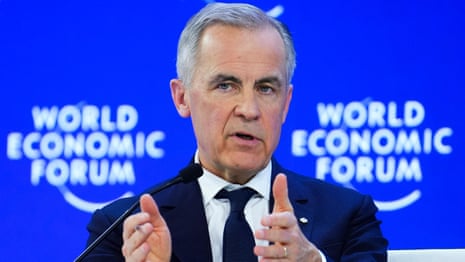
In his speech to this year’s World Economic Forum at Davos, Canadian prime minister Mark Carney mourned the demise of international cooperation by evoking an authority from ancient Greece.
“It seems that every day we’re reminded that we live in an era of great power rivalry, that the rules-based order is fading, that the strong can do what they can, and the weak must suffer what they must. And this aphorism of Thucydides is presented as inevitable, as the natural logic of international relations reasserting itself.”
Journalists and academics from Denmark, Greece and the United States have quoted the same line from the ancient Greek historian when discussing Donald Trump’s demand for Greenland. It is cited as inspiration for his adviser Stephen Miller’s aggressive foreign policy approach, not least towards Venezuela.
In blogs and social media, the fate of Gaza and Russia’s invasion of Ukraine have been interpreted through the same frame. It’s clearly difficult to contemplate today’s world and not react as W.H. Auden did to the collapse of the old order in 1939: “Exiled Thucydides knew.”
The paradox of the “strong do what they can” line is that it’s understood in radically different ways. On the one hand, it’s presented as a description of the true nature of the world (against naive liberals) and as a normative statement (the weak should submit).
On the other hand, it’s seen as an image of the dark authoritarian past we hoped was behind us, and as a condemnation of unfettered power. All these interpretations claim the authority of Thucydides.
That is a powerful imprimatur.
Thucydides’ insistence on the importance of seeking out the truth about the past, rather than accepting any old story, grounded his claim that such inquiry would help readers understand present and future events.
As a result, in the modern era he has been praised both as the forerunner of critical scientific historiography and as a pioneering political theorist. The absence of anything much resembling theoretical rules in his text has not stopped people from claiming to identify them.
The strong/weak quote is a key example. It comes from the Melian dialogue from Thucydides’ History of the Peloponnesian War. In 416BC, an Athenian force arrived at the neutral island of Melos and demanded its surrender. The Melian leaders asked to negotiate, and Thucydides presents a fictional reconstruction of the subsequent exchange.
The quote comes from the beginning, when the Athenians stipulated that they would not claim any right to seize Melos, other than the power to do so, and conversely would not listen to any arguments from principle. “Questions of justice apply only to those equal in power,” they stated bluntly. “Otherwise, such things as are possible, the superior exact and the weak give up.”
Within modern international relations theory, this is sometimes interpreted as the first statement of the realist school of thought.
Scholars like John Mearsheimer claim that Thucydides identified the basic principle of realist theory that, in an “anarchic” world, international law applies only if it’s in powerful states’ strategic interest, and otherwise might makes right. The fate of the Melians, utterly destroyed after they foolishly decided to resist, reinforces the lesson.
But these are the words of characters in Thucydides’ narrative, not of Thucydides himself. We cannot simply assume that Thucydides believed that “might makes right” is the true nature of the world, or that he intended his readers to draw that conclusion.
The Athenians themselves may not have believed it, since their goal was to intimidate the Melians into surrendering without a fight. More importantly, Thucydides and his readers knew all about the disastrous Athenian expedition to Sicily the following year, which showed the serious practical limits to the “want, take, have” mentality.
So, we shouldn’t take this as a realist theoretical proposition. But if Thucydides intended instead simply to depict imperialist arrogance, teach “pride comes before a fall”, or explore how Athenian attitudes led to catastrophic miscalculation, he could have composed a single speech.
His choice of dialogue shows that things are more complicated, and not just about Athens. He is equally interested in the psychology of the “weak”, the Melians’ combination of pleading, bargaining, wishful thinking and defiance, and their ultimate refusal to accept the Athenian argument.
This doesn’t mean that the Melian arguments are correct, even if we sympathise with them more. Their thinking can be equally problematic. Perhaps they have a point in suggesting that if they give in immediately, they lose all hope, “but if we resist you then there is still hope we may not be destroyed”.
Their belief that the gods will help them “because we are righteous men defending ourselves against aggression”, however, is naive at best. The willingness of the ruling clique to sacrifice the whole city to preserve their own position must be questioned.
The back and forth of dialogue highlights conflicting world views and values, and should prompt us to consider our own position. What is the place of justice in an anarchic world? Is it right to put sovereignty above people’s lives? How does it feel to be strong or weak?
It’s worthwhile engaging with the whole episode, not just isolated lines – or even trying to find your own way through the debate to a less bad outcome.
The English political philosopher Thomas Hobbes, introducing his classic 1629 translation, noted that Thucydides never offered rules or lessons but was nevertheless “the most politic historiographer that ever writ”. Modern readers have too often taken isolated quotes out of context, assumed that they represent the author’s own views and claimed them as timeless laws. Hobbes saw Thucydides as presenting complex situations that we need to puzzle out.
It’s remarkable that an author famed for his depth and complexity gets reduced to soundbites. But the contradictions in how those soundbites are interpreted – the way that Thucydides presents us with a powerful and controversial idea but doesn’t tell us what to think about it – should send us back to the original.
Neville Morley, Professor in Classics, Ancient History, Religion, and Theology, University of Exeter
This article is republished from The Conversation under a Creative Commons license. Read the original article.
 Imperial & Global Forum
You must be logged in to post a comment.