Ike, Brad & Monty: Memoirs and Britain’s Postwar Decline

Dan Weavers
University of Exeter

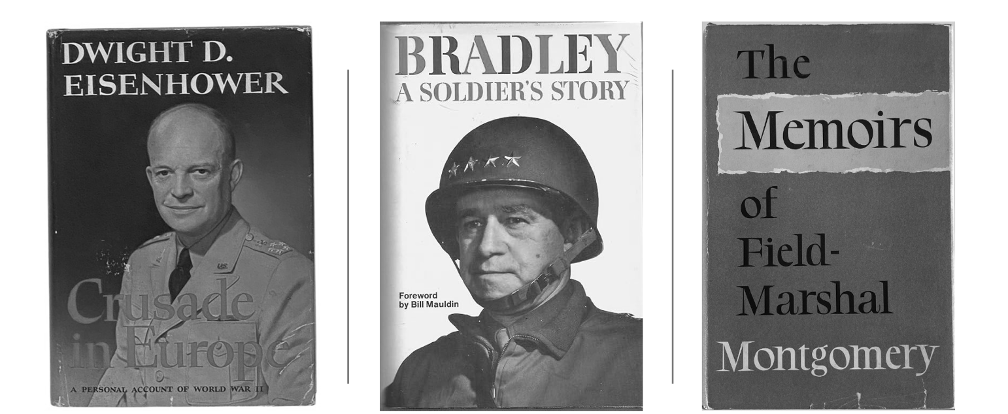
In 1948, US General Dwight D. Eisenhower published his memoir of the Second World War, Crusade in Europe, starting a war of words between American and British allies. Eisenhower’s criticism of Field Marshal Bernard Montgomery in particular produced a wave of indignation in a weakened and declining Britain, whose policymakers were hoping to exchange the moral capital earned from contribution to victory in the war against Nazism to reestablish their global standing and maintain the Empire and Commonwealth.

The symbolic capital of “Monty” was a key source of moral capital for the nation: to insult Monty was to insult Britain. The situation was compounded by the publication of US General Omar Bradley’s A Soldier’s Story in 1951, which presented an escalation in these criticism of Britain’s favourite soldier, just as both countries were once again fighting alongside each other in Korea. Therefore, Eisenhower’s and Bradley’s words were deemed by some in the UK as potentially harmful to the Anglo-American Special Relationship, whilst Britain was desperate for continued American support for British postwar revival.

Britain’s fall from the top rank was reviled not just by the political figures of the day, but also the British military men of the war. Montgomery was not only possessed of vast egotism and self-centredness which fuelled his rage at his former American colleague’s books; he was “always alert to the diminution of British power and influence, and the shrinking of the British Empire distressed him.”[1] He waited until 1958 to publish the vengeful Memoirs, in the aftermath of now President Eisenhower’s repudiation of the British over Suez. As Niall Barr has stated, the “claims and counter-claims” of their memoirs “had the effect of placing in the spotlight the personalities and relationship of Eisenhower and Montgomery almost to the exclusion of every other issue.”[2]

A dedicated study of the commander memoirs of World War II has not yet been made, an indication of how historians have largely discarded them as biased, distorted and unreliable.[3] Frances Houghton’s The Veteran’s Tale (2018) expertly examines the memoirs of the common British soldier but is not a study that encompasses commander books. When viewed through the prism of the Cold War, rather than the Second World War, a whole new perspective of these memoirs can be viewed. Therefore, whilst memoirs have often been dismissed as being of very little value historically, those of the Second World War commanders in fact offer a fascinating window into British postwar imperial anxieties.

Continue reading “Ike, Brad & Monty: Memoirs and Britain’s Postwar Decline”
What would Winston Churchill make of war with Iran?

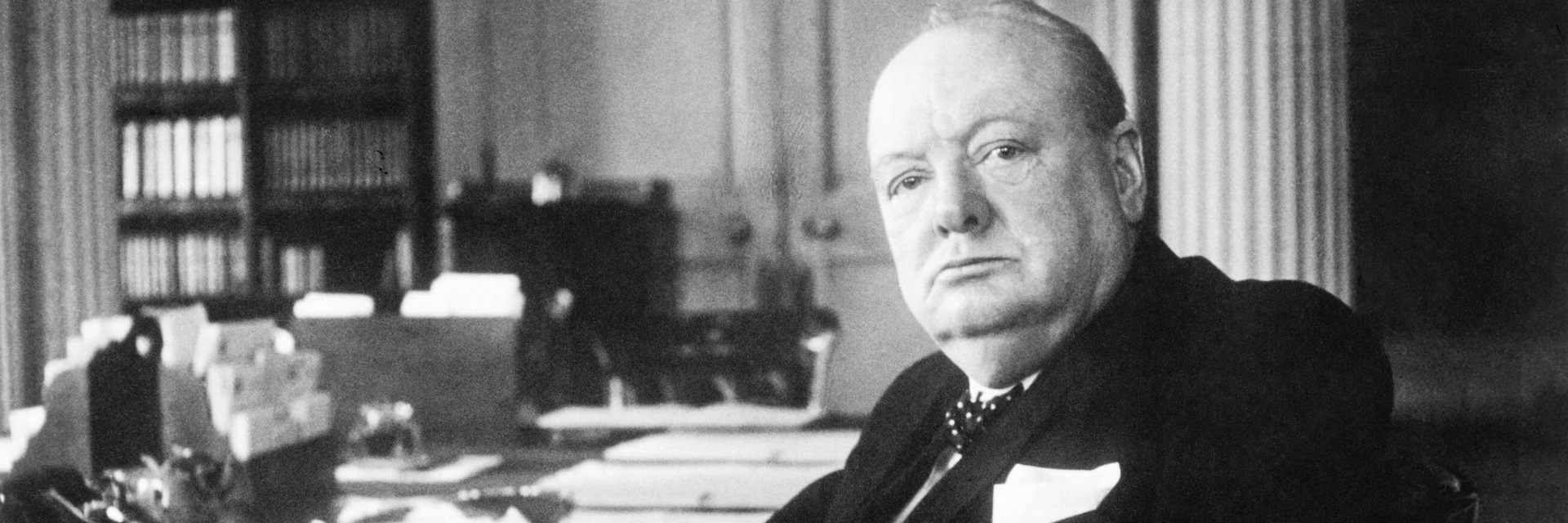
Donald Trump has said Keir Starmer is no Winston Churchill. Alamy/piemags/archive/military

Richard Toye, University of Exeter

When Donald Trump criticised Keir Starmer for failing to sufficiently support American and Israeli operations against Iran, he did so with a historical flourish. “This is not Winston Churchill that we’re dealing with,” he complained.

The implication was clear: Churchill would have stood shoulder to shoulder with Washington in a confrontation with Tehran. The remark invites an obvious question: what would Churchill have made of war with Iran?

The answer is not as straightforward as Trump’s comparison suggests. Churchill’s record shows a mixture of hawkish rhetoric, strategic caution and a constant concern with maintaining Anglo-American unity. Far from embodying a simple instinct for confrontation, he tended to see war and diplomacy as inextricably linked.

Continue reading “What would Winston Churchill make of war with Iran?”

An American Woman in the British House of Commons

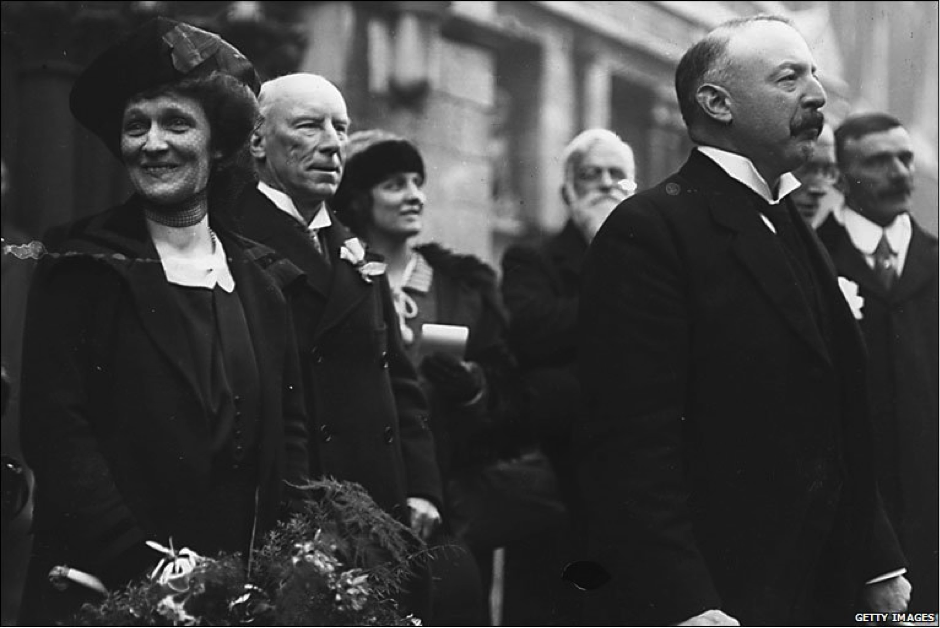
The poll declaration for Plymouth Sutton in 1919 (source: Getty Images)

‘Born in Virginia, elected to be in the British House of Commons, I had a sense of gratitude and obligation to the two branches of the Anglo-Saxon peoples’[1]

Lisa Berry-Waite
University of Exeter

This year marks the centenary of Nancy Astor’s election to British Parliament, becoming the first woman MP to take her seat in the House of Commons. The landmark occasion is being commemorated with the Astor 100 campaign to celebrate Astor’s achievements and legacy, as well as to shine a spotlight on women in politics today. Astor’s political career spanned almost three decades; looking back at her career in 1956, she referred to herself as an ‘ardent feminist’ and continuously campaigned on women’s issues.[2]

Known for her wit and outspoken nature, Astor was elected as MP for Plymouth Sutton in a by-election in 1919 for the Conservative Party. She was persuaded to stand by her husband Waldorf Astor, who previously held the seat, when he was elevated to the House of Lords following the death of his father. Nancy Astor the pioneering politician has attracted attention from historians and the media alike, but few discuss in detail her American nationality and the influence it had on her British life and politics. Continue reading “An American Woman in the British House of Commons”

On the Trail of the Presidents

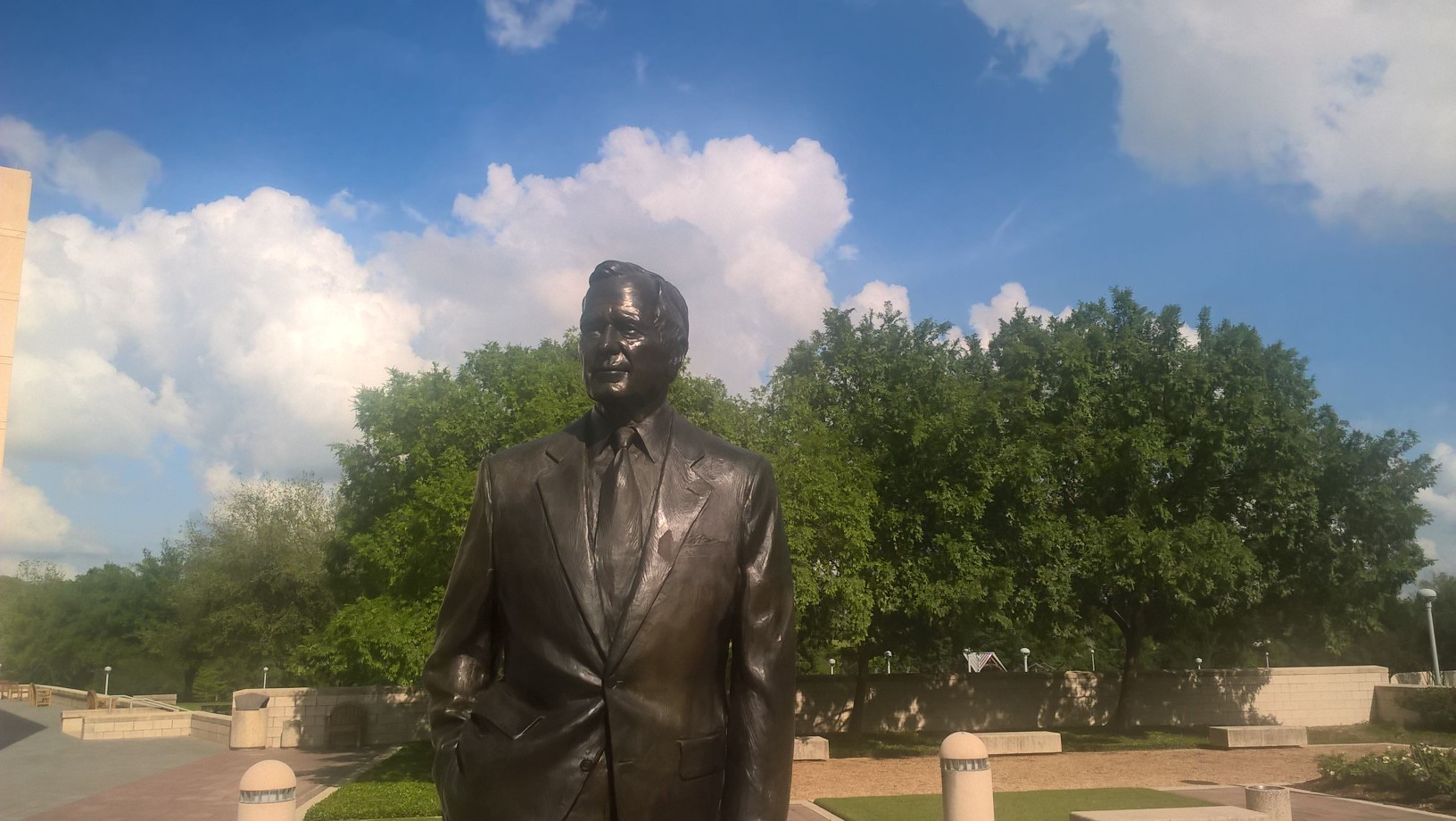
George H. W. Bush statue, College Station, TX.

Richard Toye and Mark Wickham-Jones

One of the distinctive features of American politics in comparison to the UK is the establishment of Presidential Libraries and Museums. Franklin D. Roosevelt started the trend with the creation of a library at his home at Hyde Park, New York in the early 1940s. Since then, every president has had such an institution, administered by the National Archives and Records Administration, and one was created retrospectively for Herbert Hoover. Texas is particularly well-served, because it has three presidential libraries: those of Lyndon B. Johnson, George H.W. Bush, and George W. Bush.  

This April we explored Texas’s presidential libraries and museums, looking at available archival material (relating especially to Anglo-American relations, and Space policy) and assessing the interpretation that each offers of the record of the president concerned. We started at Dallas, with George Bush Junior’s library, located at Southern Methodist University, then moved on to LBJ at the University of Austin, Texas, and are currently writing this blog in College Station, home to the library of Bush Senior. Continue reading “On the Trail of the Presidents”