When is colonialism a genocide? The case of Indigenous women and girls in Canada

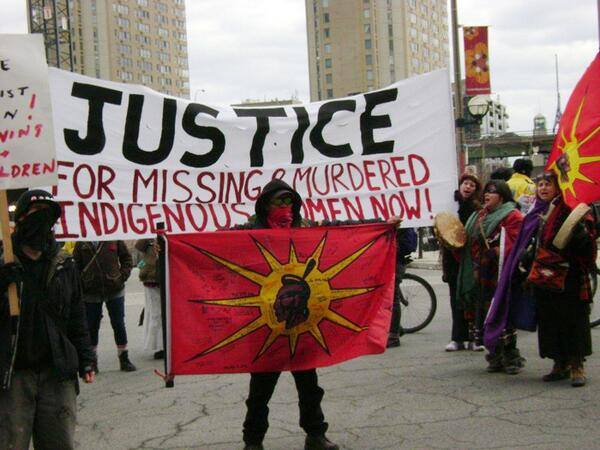
Activists seeking justice for missing and murdered Indigenous women (MMIW) march down Toronto streets, 22 March 2018.

Lori Lee Oates

Canada’s treatment of Indigenous persons by white settlers and contemporary government institutions are issues that have increasingly come to the forefront of late. They are at the heart of questions around how we should govern in the modern world. These institutions were not built by Indigenous persons, and Canadians are increasingly recognizing that our government has often contributed to the poor health, safety, and economic outcomes experienced by Indigenous persons.

The Missing and Murdered Indigenous Women and Girls (MMIWG) inquiry in Canada recently sparked a debate over whether Indigenous persons in the country have suffered, and continue to suffer, from genocide. The inquiry came about in response to years of lobbying by Indigenous women, and was the fulfillment of a campaign promise on the part of the Trudeau government. The final report was released on 3 June, entitled Reclaiming Power and Place. Continue reading “When is colonialism a genocide? The case of Indigenous women and girls in Canada”

Cold War Triangle: How Scientists in East and West Tamed HIV

Renilde Loeckx. Cold War Triangle: How Scientists in East and West Tamed HIV. Leuven: Leuven University Press, 2017. 192 pp. $29.50 (paper), ISBN 978-946270113-7.

Reviewed by Dora Vargha (University of Exeter) Published on H-Diplo (February, 2019) Commissioned by Seth Offenbach (Bronx Community College, The City University of New York)

Cross-posted from H-Diplo

Printable Version: http://www.h-net.org/reviews/showpdf.php?id=53143

Renilde Loeckx’s Cold War Triangle tells the story of an international scientific collaboration across the iron curtain that led to the development of HIV blockbuster drugs such as Viread and Truvada. It is as much a story of Cold War collaboration among scientists, as a story of collaboration between scientific institutions and pharmaceutical companies. In her introduction, Loeckx, a former ambassador of Belgium, sets out to bridge diplomacy and science to tell the story of Antonín Holy and Erik Le Clercq: the collaboration of a Czechoslovak and Belgian scientist with the American pharmaceutical company Gilead Sciences. As Loeckx writes, the book is “about the human face of science, how scientists from three different cultures collaborated to create the complex drugs that saved millions of lives” (p. 15). Continue reading “Cold War Triangle: How Scientists in East and West Tamed HIV”

This Week’s Top Picks in Imperial & Global History

Marc-William Palen
History Department, University of Exeter
Follow on Twitter @MWPalen

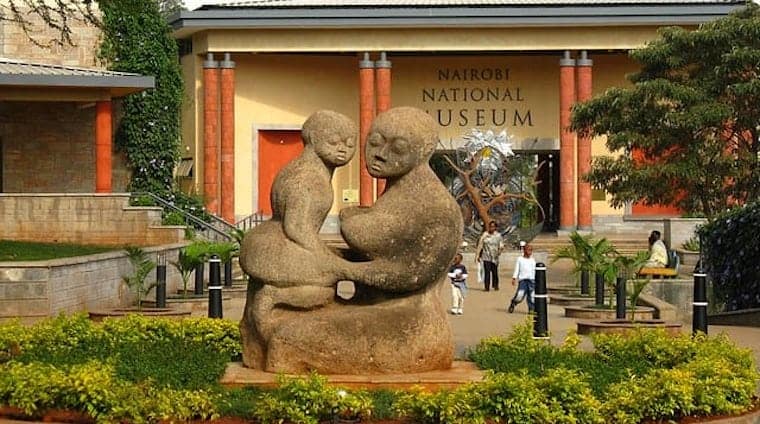
From tracing Kenya’s plundered cultural artefacts to calling U.S. detention centers “concentration camps,” here are this week’s top picks in imperial and global history. Continue reading “This Week’s Top Picks in Imperial & Global History”

Apartheid’s Secrets and Lies

Stuart Mole
University of Exeter

If the first casualty of war is truth, the last act of a tyrannical regime is to attempt to expunge all evidence of its crimes. In 1992, with apartheid’s end in sight, South Africa’s President, FW De Klerk, authorised the destruction by the National Intelligence Agency of 44 tonnes of incriminating material[1]. This was incinerated at night at a location outside Pretoria. Vast amounts of other sensitive records have also disappeared, in what Verne Harris has called a “large-scale and systematic sanitisation of official memory”.[2] But Hennie Van Vuuren and his team of researchers from the not-for-profit organisation ‘Open Secrets’ have been driven by the firm belief that apartheid’s secrets must be exposed, and that truth will out. Over five years of meticulous research they have examined around 2 million documents in over two dozen archives across the world. In South Africa itself, through fifty freedom of information requests, they were able to access recently de-classified papers in eight government departments.

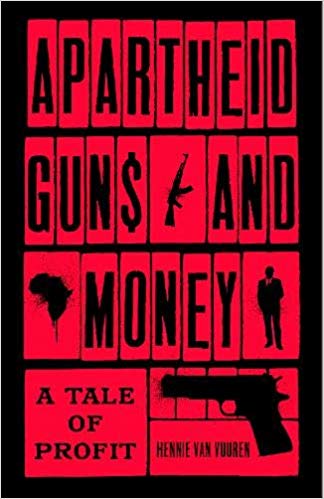
The result is a 600-page blockbuster, now available in the UK (Apartheid, Guns and Money: A Tale of Profit, London C. Hurst & Co 2018). With a focus on the last fifteen years of apartheid, the author argues that the apartheid regime went to increasingly covert and illegal lengths to defend its position in the face of international sanctions and growing unrest in the townships and on its borders. A war economy was built, and around one-third of the state budget was spent on security and the military (though the scale of the expenditure was concealed). Externally, a network of political, business, intelligence and criminal links were constructed in over fifty countries so that South Africa could evade the oil and arms embargo, launder money and circumvent sanctions. Those nations accused of giving succour to the regime are not only those of the West – such as the USA, France and the UK – but, surprisingly, countries such as East Germany, Russia and China who proclaimed their support for the liberation movements. In the case of China, van Vuuren’s remarkable accusation is that while ostensibly backing the Pan-Africanist Congress and, later, the African National Congress, the People’s Republic supplied arms to the South African regime throughout the 1980s (while also continuing to arm its liberation partners). Continue reading “Apartheid’s Secrets and Lies”

Seeking Thomas Howard in Rotherham: local groundings for a global life

Julia Leikin
University of Exeter

Cross-posted from Historical Transactions

In the last weekend of April, as part of the program for Professor Elena Smilianskaia, a visiting fellow at the University of Exeter, Dr Julia Leikin, British Academy Postdoctoral Fellow, organized a trip to the town of Rotherham in South Yorkshire, to find out more about Thomas Howard, the third Earl of Effingham (1746-1791). In this post, Julia Leikin recounts the surprising results of the trip.

Howard is, on the surface, an elusive figure. Despite his military and political stature, and a wide range of eccentricities, Howard did not leave behind a substantial archive for historians to exploit. He does have a short entry on Wikipedia, but there is no biography nor even an entry in the Oxford Dictionary of National Biography to document his military career, his support of the American colonies in the American Revolution, and his short-lived governorship of Jamaica. Neither is he named among Eton College’s notable alumni.

But Thomas Howard is one of the notable figures who appears in my and Prof Smilianskaia’s forthcoming annotated translation of Rear-Admiral John Elphinstone’s Russian Faith, Honour & Courage Displayed in a Faithful Narrative of the Russian Expedition by Sea in the Years 1769 & 1770. Elphinstone offers a rare, first-hand account of the Russian voyage around the continent of Europe to the Eastern Mediterranean and offers a new perspective of his skirmishes with Ottoman forces, including the famous Battle of Çeşme (1770), alongside caustic descriptions of its participants. (This characterization does not extend to Thomas Howard, for whom Elphinstone was full of admiration.) Continue reading “Seeking Thomas Howard in Rotherham: local groundings for a global life”

This Week’s Top Picks in Imperial & Global History

Marc-William Palen
History Department, University of Exeter
Follow on Twitter @MWPalen

From globalization’s wrong turn to watching the end of the world, here are this week’s top picks in imperial and global history. Continue reading “This Week’s Top Picks in Imperial & Global History”

Confronting Catastrophe: International Disaster Assistance and Twentieth Century U.S. Foreign Relations – A Talk by Prof. Julia Irwin (4 July)

We are delighted to welcome Professor Julia Irwin (University of South Florida), who will be at the University of Exeter on a Visiting International Academic Fellowship on July 4. During her visit, she has kindly offered to give a lecture entitled ‘Confronting Catastrophe: International Disaster Assistance and Twentieth Century U.S. Foreign Relations.’ Her talk is in association with Exeter’s Centre for Imperial and Global History, the Centre for the Study of War, State and Society, and the Centre for Medical History.

When: Thursday, 4 July, 3-4:30pm

Where: Laver LT3 (University of Exeter, Streatham Campus)

Abstract: Prof. Irwin’s talk examines the history and politics of U.S. foreign disaster assistance in the 20th century. More specifically, she considers the ways that the U.S. government, military, and private organizations have historically responded to major natural disasters abroad, and critically analyses the political implications and diplomatic significance of these humanitarian efforts.

Bio: Prof. Irwin is Associate Chair in the History Department at the University of South Florida. Her research focuses on the place of humanitarianism and foreign assistance in 20th century U.S. foreign relations and international history. Her first book, Making the World Safe: The American Red Cross and a Nation’s Humanitarian Awakening (Oxford University Press, 2013), is a history of U.S. relief efforts for foreign civilians in the era of the First World War, exploring both the diplomatic and the cultural significance of humanitarian aid in these years. Her work has appeared in The Journal of American History, The American Historian, Diplomatic History, First World War Studies, The Bulletin of the History of Medicine, The Journal of the Gilded Age and Progressive Era, Moving the Social, History of Education Quarterly, and Nursing History Review. She was also the senior editor of the Oxford Research Encyclopedia in American History (2014-16). She is now writing a second book, Catastrophic Diplomacy: A History of U.S. Responses to Global Natural Disasters, which analyzes how U.S. State Department agencies, branches of the U.S. military, American charities and relief organizations, and the American public have responded to foreign disasters caused by tropical storms, earthquakes, floods, and other natural hazards throughout the twentieth century.

Arthur H. Adams and the problem with settler colonial studies

Arthur H. Adams

Helen Bones
Western Sydney University

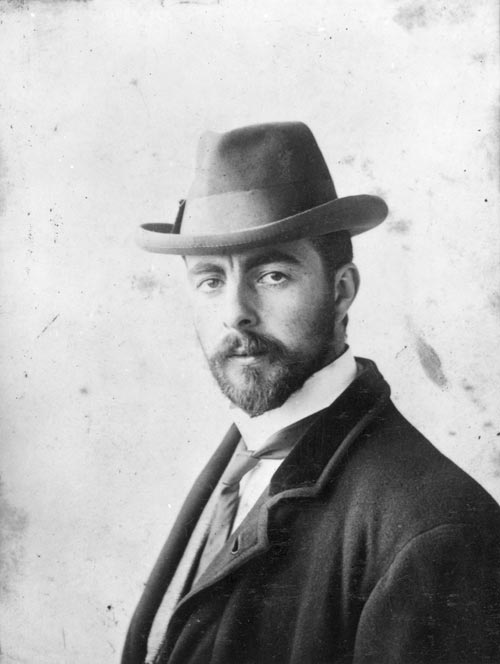
A 1936 obituary for the poet and novelist Arthur H. Adams begins with the words ‘Arthur H Adams has died an Australian’. This statement reflects a primary preoccupation with Adams for critics. Adams’s legacy as a well-respected writer of the early twentieth century and one-time editor of one of Australia’s most influential literary publications, the Bulletin’s ‘Red Page’, is clouded by the ‘problem’ of his multiple allegiances: to New Zealand, to the United Kingdom, to Australia, and to the British Empire. Adams was born and raised in New Zealand, spent time in China and the United Kingdom, and then spent the last 30 years of his life living in Sydney. A poem he wrote at the age of 18 upon moving to Australia for the first time declared: ‘My heart is hot with discontent / I hate this haggard continent’.[1] These lines are often quoted as evidence of his persistent ambivalence to his place of residence. Because the response to Adams has largely revolved around attempts to reconcile him with imagined notions of national constructions (was he a New Zealander or an Australian?), the realities of the interlinked colonial world he inhabited and wrote about have been obscured or ignored. Continue reading “Arthur H. Adams and the problem with settler colonial studies”

This Week’s Top Picks in Imperial & Global History

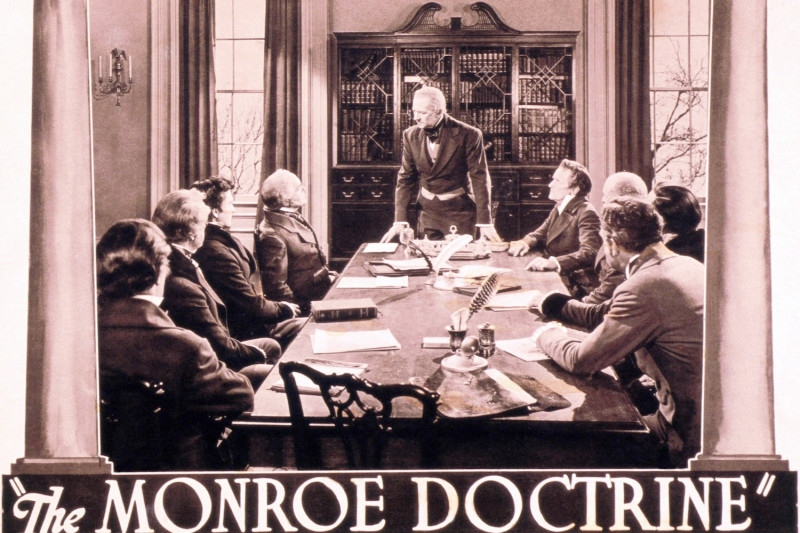
The Monroe Doctrine, lobbycard, Charles Waldron as James Monroe (standing), 1939. (Photo by LMPC via Getty Images)

Marc-William Palen
History Department, University of Exeter
Follow on Twitter @MWPalen

From making the military-intellectual complex to making sense of grand strategy, here are this week’s top picks in imperial and global history. Continue reading “This Week’s Top Picks in Imperial & Global History”

Job Klaxon: Lecturer in Colonial/Post-Colonial History

Location: Penryn
Salary: £35,211 up to £39,609 on Grade F, depending on qualifications and experience.
Hours: Full Time
Contract Type: Permanent

The full time permanent post is available from 1 September 2019 in the College of Humanities, Penryn campus, Cornwall.

Summary of the role/position

We are seeking to appoint a new Lecturer with a particular focus on colonial/post-colonial history. You will have expertise in an aspect of the global history of colonialism/postcolonialism. We particularly encourage applicants whose research or teaching may have a transnational, comparative and non-elite component, preferably with expertise in Asia, Africa or South America. The ability to engage critically with postcolonial heritage contexts may also be an advantage. Continue reading “Job Klaxon: Lecturer in Colonial/Post-Colonial History”

This Week’s Top Picks in Imperial & Global History

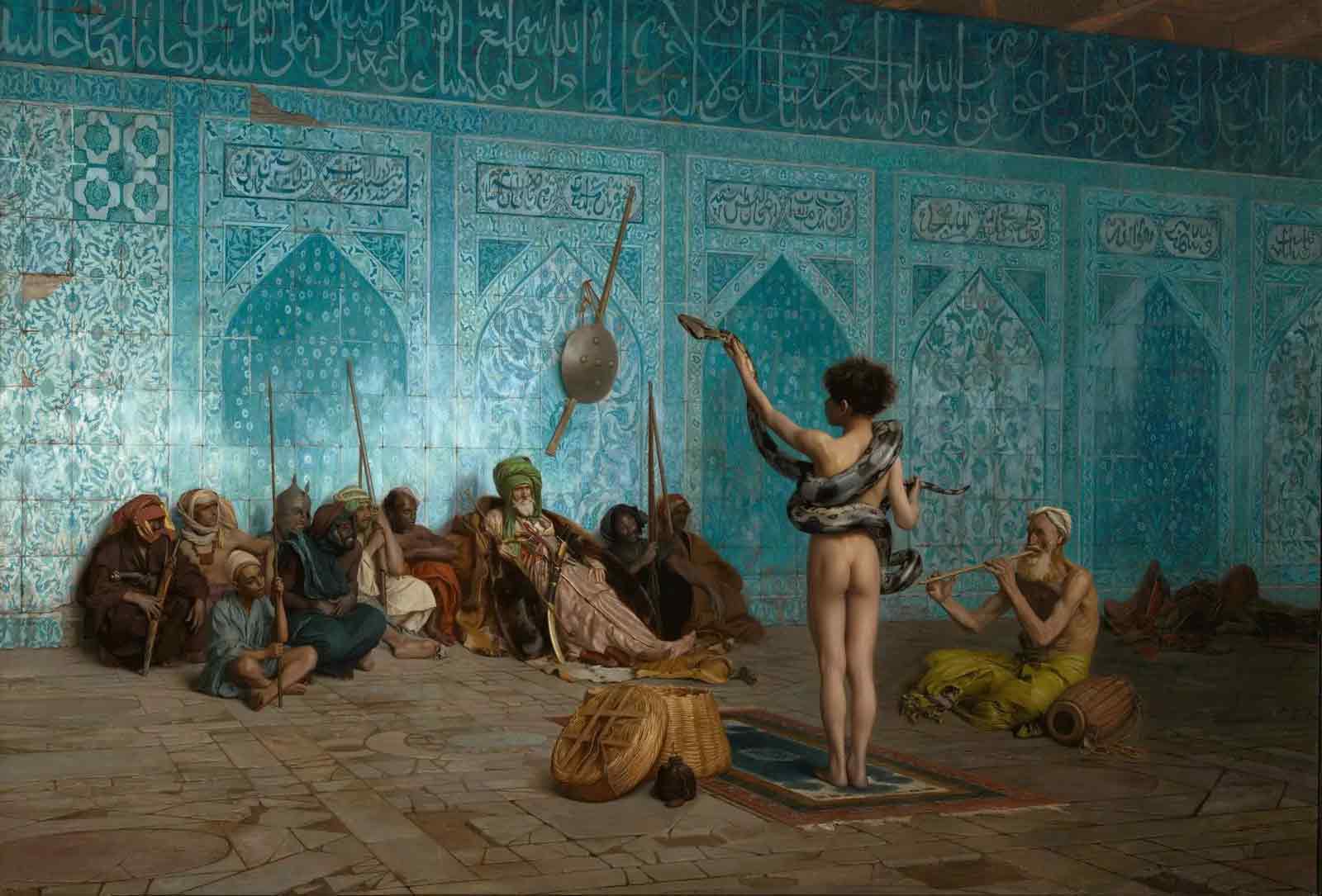
Jean-Léon Gérôme: The Snake Charmer, 1870.

Marc-William Palen
History Department, University of Exeter
Follow on Twitter @MWPalen

From five myths about globalization in the American Midwest to Orientalism then and now, here are this week’s top picks in imperial and global history. Continue reading “This Week’s Top Picks in Imperial & Global History”

Upcoming @socialismglobal Conference: Historicizing “Whiteness” in Eastern Europe and Russia (Bucharest, June 25-26)

Historicizing “Whiteness” in Eastern Europe and Russia

Venue:   Institute for Political Research, Spiru Haret street no 8, Bucharest, zip-code 010175

Date: 25-26 June 2019

Over the last decade, issues of migration both out of and into Eastern Europe have brought questions of “whiteness” and its “defence” into the public language of the region. Populists of different political stripes have presented their countries as protectors of traditional European whiteness against a multicultural West. This is in fact quite an unusual phenomenon: race in general and whiteness in particular have for the most part been hidden discourses, absent from mainstream political or cultural thinking about the area itself. At those moments when race did come to the fore, it was often externalised as a phenomenon which adhered only to the western and/or the capitalist imperialist other.

Yet, as some have argued, whiteness has been fundamental to Eastern European history and even the very conception of the region since the 19th century. Anikó Imre referred to Eastern European nationalisms ‘unspoken insistence on their whiteness’. Some have posited a regional identity based on the in-between-ness born of a fragile or frustrated whiteness: such an identity might be allied with the privileged whiteness produced by European imperialism and the global colour line to which it gave rise, whilst also being ambivalent towards, or sometimes excluded from, the projects and institutions from which the power of whiteness has stemmed. While critical theories of race and whiteness emphasise the idea that, in Charles W. Mills’s words, ‘white supremacy was global’, eastern Europeans’ ability to fully exploit being racialised as white has arguably been more conditional, as a result of the peripheralisation of the region itself.  Yet it was visits to Eastern Europe that prompted W.E.B. Du Bois to redefine his thinking about race. He observed ethnic relations in the region and understood that race problems were not only about colour.

Despite the growing number of critical histories of whiteness both on a regional and global level, there has been little academic engagement with such questions in the study of Eastern Europe, the Russian Empire and the USSR. This workshop seeks to explore the role that whiteness has played in the articulation of identities from a historical perspective – roughly from an age of high European imperialism in the mid-19th century until the present. We encourage contributions which explore the multiple conceptualisations of whiteness in national spaces, intercultural transfers and transnational impacts across the region, whether this be Central Europe, South- or North-Eastern Europe, Russia or what is now the “post-Soviet space”. Continue reading “Upcoming @socialismglobal Conference: Historicizing “Whiteness” in Eastern Europe and Russia (Bucharest, June 25-26)”

Trump’s Legitimization of White Nationalism Harkens Back to the KKK’s “Invisible Empire” of the 1920s

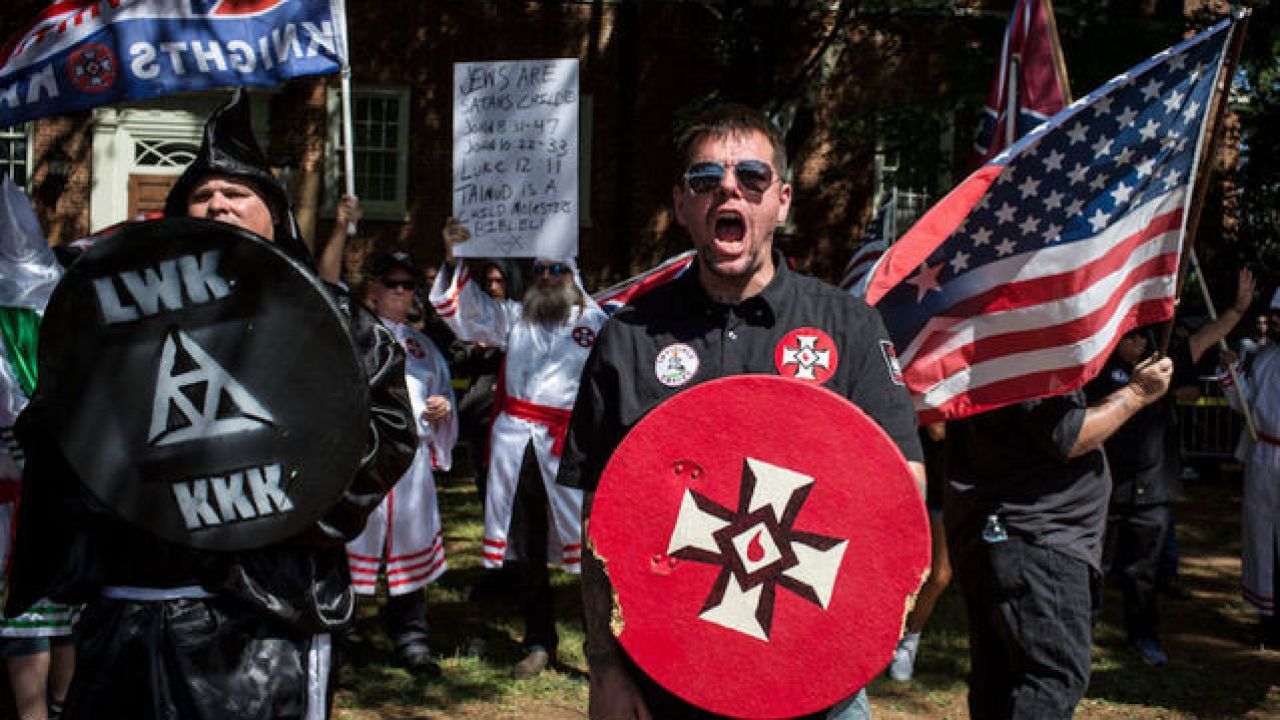
Ku Klux Klan protesters at the “Unite the Right” white nationalist rally, July 8, 2017 in Charlottesville, Virginia. (Photo by Chet Strange/Getty Images)

Miguel Hernández
University of Exeter

Earlier this month, President Donald J. Trump lent further credence to various figures in far-right politics by retweeting the complaints of prominent far-right activists recently  banned from social media platforms. In late April, he also doubled down on remarks he originally made in the wake of the 2017 Unite the Right rally in Charlottesville, Virginia, which left one counter-protester dead and many others wounded, after which he infamously stated “You also had some very fine people on both sides.” These are of course, just the latest instances in a long line of Trump’s support for American white nationalism, from his prominent role in the “Birther” movement during the Obama years, to his lukewarm condemnation of David Duke’s endorsement of his campaign in 2016, to his references as president that “people from shithole countries” in Africa and the Caribbean should be kept from immigrating to the US, that Haitians “all have AIDS,” and defending his earlier claims that Latin American men were a bunch of drug traffickers and rapists. As these examples highlight, the President’s career and the media’s coverage of his election and tenure in office have often provided oxygen, publicity, and legitimacy for once discredited white nationalists and other far-right activists that seek to re-establish themselves as respectable and mainstream under their preferred label of the “alt-right.”

Unsurprisingly, there is little new about the American far-right’s contemporary campaigns to court the media and edge their way into public discourse. In the 1970s, neo-Nazi and former Grand Wizard of the Ku Klux Klan David Duke earned notoriety and found moderate success by reviving and re-branding the KKK to appeal to different audiences. In public, Duke disavowed violence and tried to present his group as a peaceful civil rights group for white Americans. The Klan’s ranks were opened up to Catholics, once reviled because of their supposed allegiance to the un-American Papacy, while women were welcomed as new soldiers in this white supremacist “Invisible Empire.” Nonetheless, David Duke’s publicity stunts, such as the infamous “border patrols” where the Grand Wizard posed for cameras in California while on guard for illegal crossings, often attracted more reporters than supporters. He ultimately failed to transform the Klan into the publically respectable group that could influence mainstream institutions and gain electoral victories. Duke now distances himself from his past leadership of the Klan, and like others in the contemporary far-right movement, seeks to avoid any association with the infamous terrorist group. Continue reading “Trump’s Legitimization of White Nationalism Harkens Back to the KKK’s “Invisible Empire” of the 1920s”

This Week’s Top Picks in Imperial & Global History

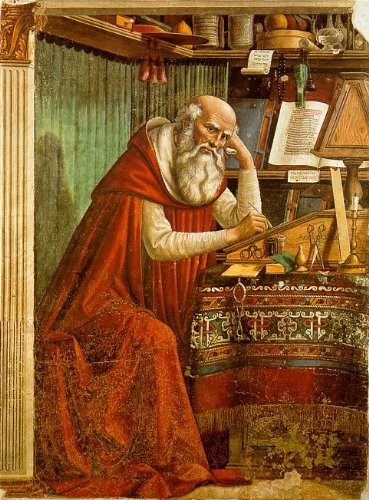
St Jerome in His Study, painted by Domenico Ghirlandaio in 1480, shows signs of global trade (Picture: Public domain via Wikipedia)

Marc-William Palen
History Department, University of Exeter
Follow on Twitter @MWPalen

From uncovering clues of Renaissance-era globalization to how an anti-totalitarian militant discovered ultranationalism, here are this week’s top picks in imperial and global history. Continue reading “This Week’s Top Picks in Imperial & Global History”

Rethinking Empire and Ethnic Diversity in East-Central Europe

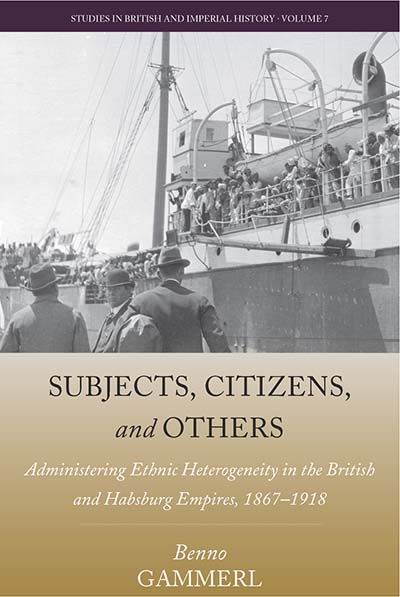
Benno Gammerl. Subjects, Citizens and Others: Administering Ethnic Heterogeneity in the British and Habsburg Empires, 1867-1918, trans by J.W. Neuheiser, Berghahn, Oxford 2018. 92£/978-1-78533-709-3.

Reviewed by George Giannakopoulos (Durham University)

In the summer of 1906, a young Scottish historian embarked on an eight-week journey across the Hungarian end of the Habsburg Empire. Travelling from Vienna to Bratislava and Budapest, and from Cluj to Zagreb and Fiume, Robert W. Seton-Watson prided himself for being among the first foreign observers interested in the national and ethnic diversity in the region. Seton-Watson’s sojourn launched a lasting crusade against the forced assimilation of non-Hungarian populations living under Hungarian jurisdiction which has come to be known as the policies of “Magyarization”. His writings fractured the Victorian edifice of Hungarian liberalism and laid the foundation for the academic study of the Slavonic world in Britain under the auspices of the School of Slavonic Studies in London.

Reacting to Seton-Watson’s polemic, Hungarian liberals drew parallels between Hungary and Britain. They argued that Hungary’s “Magyarization” policy did not differ from similar processes of national homogenisation enforced across the British Empire. Both imperial states, the argument run, included culturally and ethnically heterogeneous populations and made space for cultural autonomy to the extent that freedoms offered did not fracture the unity of the state, the raison d’état. Such an assertion irked the Scottish historian. In his view, Britain and Austria-Hungary were not on the same plane; the long history of liberty and toleration in the British Isles did not measure up to the Magyar policies of “tyranny” and forced assimilation. There was an insurmountable geographical and mental barrier separating an empire of liberty and toleration from a monarchy which had partly fallen under the spell of oriental despotism. Continue reading “Rethinking Empire and Ethnic Diversity in East-Central Europe”