
Marc-William Palen
History Department, University of Exeter
Follow on Twitter @MWPalen
Marc-William Palen
History Department, University of Exeter
Follow on Twitter @MWPalen

Marc-William Palen
University of Exeter
The following is an excerpt from my chapter, “The Open Door Empire,” in the newly published A Companion to U.S. Foreign Relations: Colonial Era to the Present, ed. by Christopher Dietrich (2 Vos., Wiley-Blackwell, 2020), Vol. 1: 271-287.
Secretary of State John Hay enunciated President William McKinley’s Open Door policy with a series of two “Open Door Notes,” the first in 1899 and the second in 1900. In them, Hay outlined the Republican administration’s desire for equal access to markets currently beyond the country’s economic purview, particularly the European-controlled markets of China. The Open Door Empire as a theoretical mode of analysis, however, would not take shape until the 1930s. By the 1970s, the Open Door imperial thesis – that by the late nineteenth century a bipartisan consensus had arisen in support of prying open the world’s markets for the benefit of US trade and investment through a liberal imperial policy of free trade — would become the dominant historical framework for understanding US imperial economic expansion from the country’s founding to the Vietnam War, a position of prominence that it still maintains today. And yet the historical frame of the Open Door Empire has not remained static. It has undergone a great deal of revision and criticism. Changes within both the global economy and the historical profession have redefined the Open Door’s scale and scope over the course of its long and rich historiographical journey.
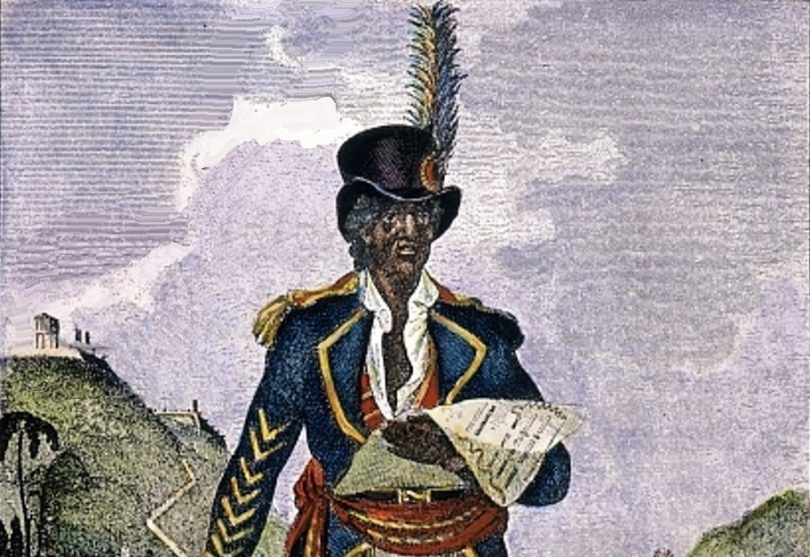
The theory of the Open Door Empire went through its most sizeable transformation between its unveiling in the 1930s and its radical New Left reformation beginning in the late 1950s. Charles Beard, the most influential of Progressive scholars, was the first to popularize a working theory of the Open Door Empire as an analytical concept (Borning 1962; Nore 1983; Hofstadter 1968, 167-346; Berg 1957; Braeman 1981; Schmunk 1957; Strout 1958). Beard’s Open Door Empire made its contentious debut in the early 1930s with the publication of his twin works The Idea of National Interest (1934) and The Open Door at Home (1934). For Beard, the Open Door arose amid great politico-ideological conflict over American foreign policy that pitted US free traders against their protectionist rivals. Owing to the subsequent neo-Marxist rise of the New Left’s “Wisconsin School” of foreign relations history (so named because of its origins within the history department at the University of Wisconsin-Madison), Beard’s conflict-oriented interpretation of the Open Door Empire was thereafter reconfigured into one of bipartisan consensus (Kennedy 1975; Bacevich 2002; Craig 2001; Brands 1998). The Wisconsin School’s radical reworking of Beard’s Open Door thesis from the 1950s to the 1970s, begun with the publication of W. A. Williams’s The Tragedy of American Diplomacy (1959), has since established itself as the new economic orthodoxy in its uncovering of America’s formal and informal Open Door Empire. Continue reading “Charles Beard and the Open Door Empire”
Tom Harper
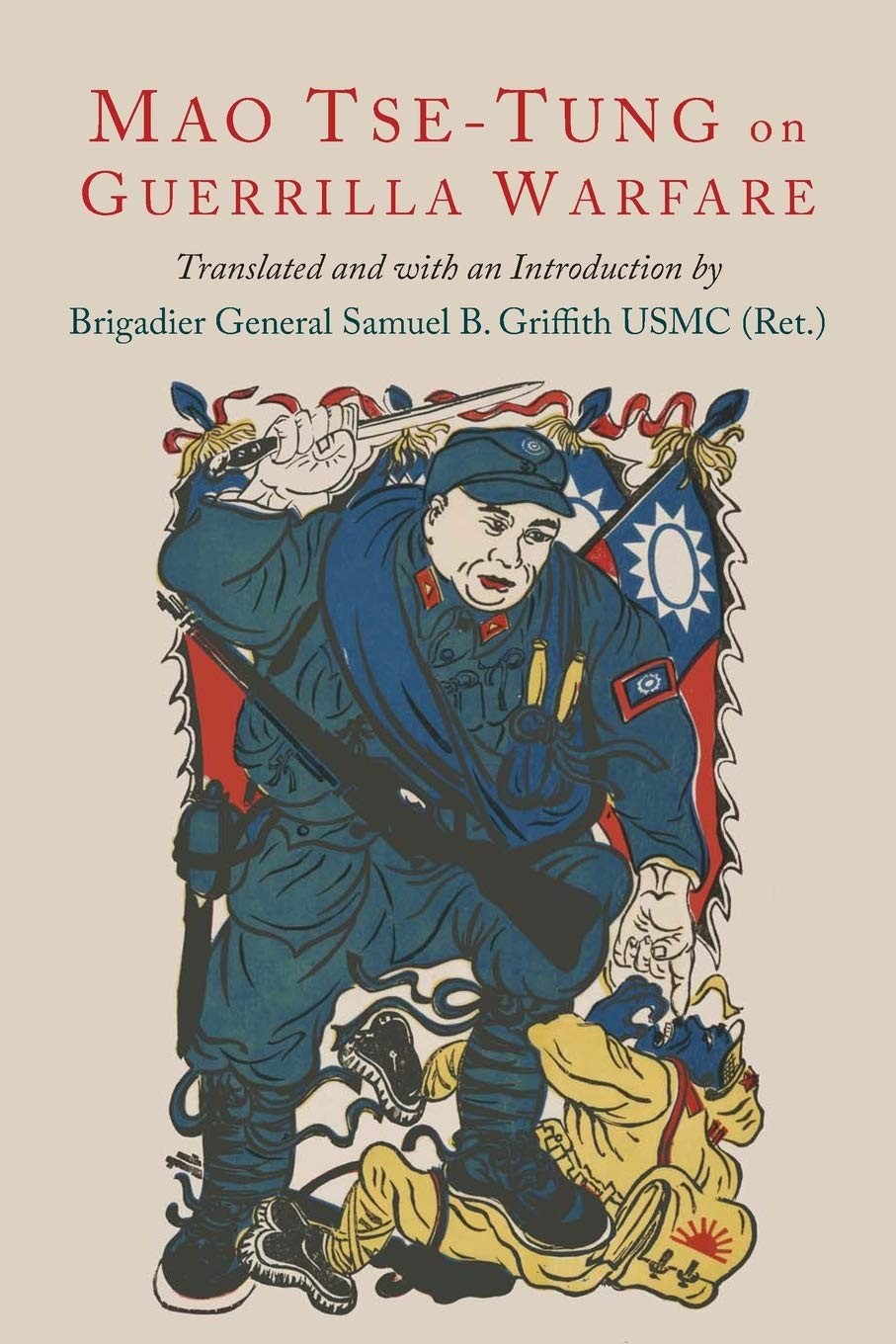
1935 was not a good year for Mao Zedong’s Chinese Communist Party (CCP). Having almost been wiped out by the encirclement campaigns waged by the Chinese Nationalists (KMT) of Chiang Kai Shek and barely surviving the Long March to Shaanxi Province, one could be forgiven for thinking that the days of Chinese communism were numbered. Even fewer could have predicted that nearly fourteen years later, Mao, with his nationalist foes now vanquished to the island of Formosa, would be standing in Tiananmen Square declaring the founding of the People’s Republic of China.
Much of the reversal of the CCP’s fortunes can be attributed to the ideology and strategies formulated by Mao and his German educated strategist, Zhu De, which combined Marx’s theories on communist revolution with traditional Chinese texts such as The Water Margin and Sun Tzu’s The Art of War to a context far removed from Marx’s prognosis for revolution. [2] These ideas would form a significant part of China’s contribution to the post-colonial world and influenced both guerrilla movements across the globe and the counter insurgency planners that sought to defeat them. These strategies also would influence the thinking behind Chinese foreign policy during and after the Cold War. Continue reading “The Post-Colonial People’s War: The Legacy of Maoism”
Iacopo Adda
Global Studies Institute, University of Geneva
On 4 December 1675 (14 December in the Gregorian calendar), gunshots were fired into the air from the fortress of Nerchinsk. A conspicuous group of Cossacks had been approaching the fortress and they immediately answered the salute. It was a signal for the arrival of a special traveller, who had been sent by Tsar Alexis I to lead a Russian embassy to the court of the Chinese Emperor. This special envoy was the Moldavian literary man Nicolae Milescu Spătaru, known in Russia as Nikolai Spatharii or Spafarii, who had taken up service as a diplomat of the Tsar a few years before.[1]
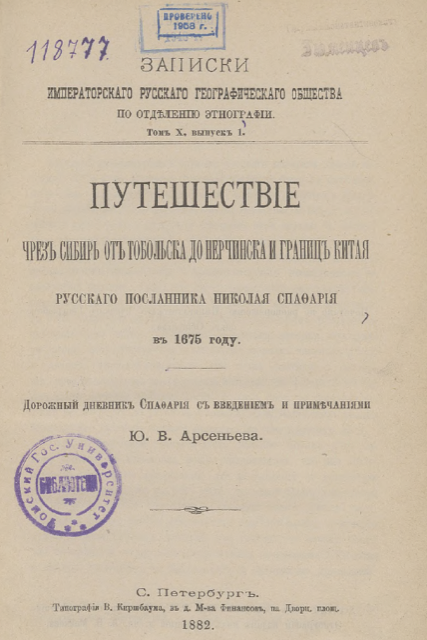
Spătaru was not the first envoy whom Moscow had sent to Beijing to discuss the settlement of the border between Russia and China, but he was the first to take the internal Siberian route from Moscow to China. He was also the first to provide the tsarist court with a fairly detailed, though sometimes imprecise, description of the geography of the Russian imperial possessions east of the Urals, which was published as Journey through Siberia from Tobol’sk to Nerchinsk and the Chinese Border (see photo above). However, scientific exploration was not the primary goal of the expedition.[3] As the Cossacks had only recently pushed down to the Amur valley, the border situation was unstable, but the Russians hoped to secure both a good strategic position on the Amur and a stable trade route to China. This would have meant reopening a sort of Russian-branded Silk Road, almost 300 years after the collapse of the one that had accompanied the pax mongolica between the 13th and 14th centuries. Continue reading “Memory Erasure of Trans-Imperial History in the City of Nerchinsk”
Marc-William Palen
History Department, University of Exeter
Follow on Twitter @MWPalen
Marc-William Palen
History Department, University of Exeter
Follow on Twitter @MWPalen
Marc-William Palen
History Department, University of Exeter
Follow on Twitter @MWPalen
Marc-William Palen
History Department, University of Exeter
Follow on Twitter @MWPalen
Alice Finden
SOAS, University of London
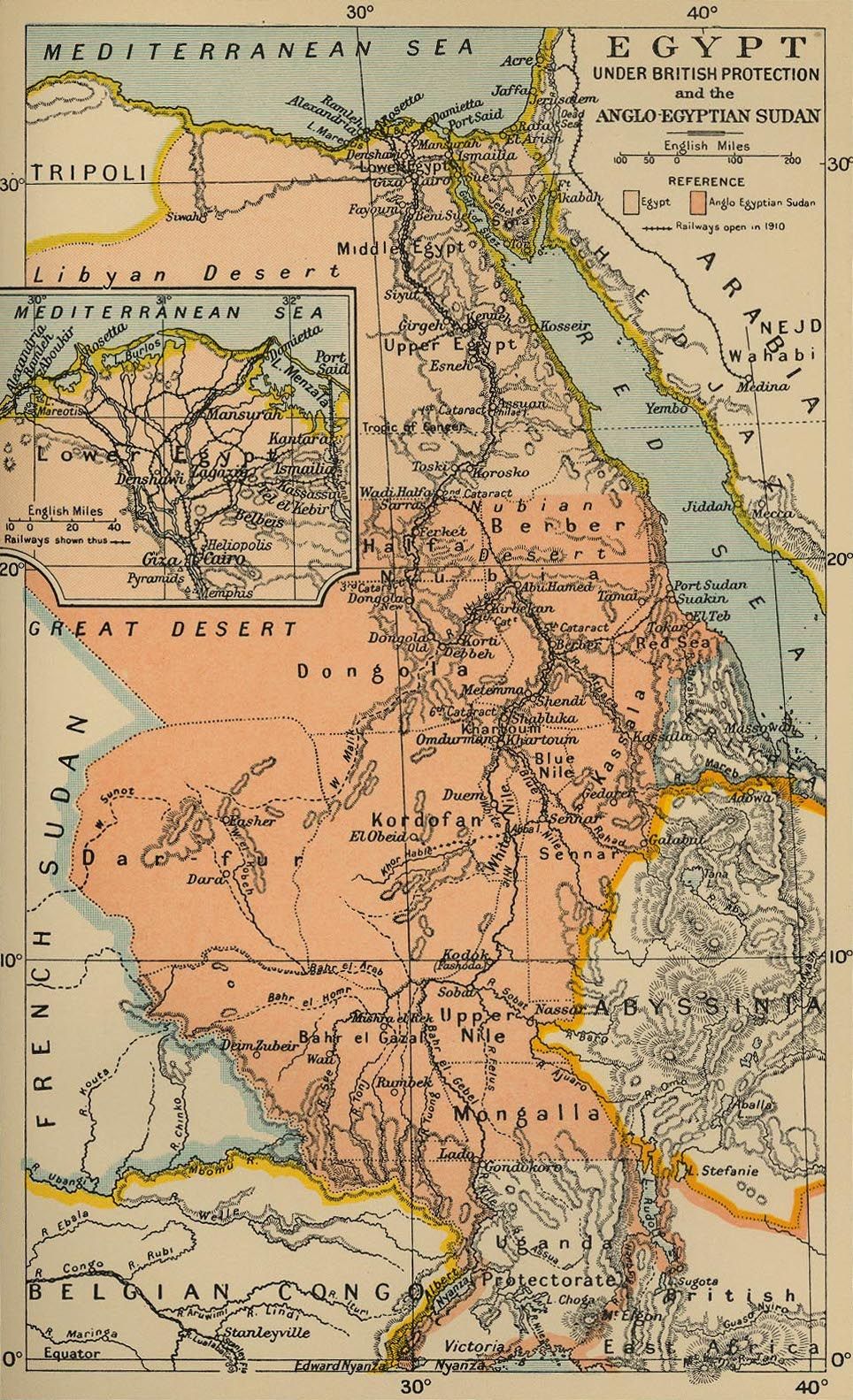
I have reluctantly forborne to point out that during the war when Egypt was a Protectorate the Home Office used to treat Egyptians as alien extremists.
– Sir Robert Allason Furness, Oriental Secretary in Egypt, 1922 [1]
12 February 2020 marks the five-year anniversary of the UK Counter-Terrorism and Security Act 2015. The bill – one in a series of acts passed since the Terrorism Act 2000 – was described as giving the UK ‘some of the toughest powers in the world to tackle the increasing threat from international terrorism.’ At the time it was condemned for providing the police with powers that were consequently exercised in an ‘overly-broad, discriminatory and ineffective manner.’
The Act introduced PREVENT, which places a statutory duty on public bodies to work with the police and local authorities to help prevent ‘vulnerable’ people from being drawn into terrorism. As reports and cases have shown, PREVENT works on a racialised and arbitrary logic which results in Muslim communities being suspected. In 2018 for example, a six-year-old child was referred to PREVENT for comments he had learned from the television programme ‘Horrible Histories’. The process caused great distress for the whole family. Wide powers such as these have been attributed in part to the definition of terrorism in the UK Terrorism Act 2000 being ‘one of the broadest in the world.’
The elasticity of the terms ‘terrorism’ and ‘extremism’ of course did not appear with 9/11 or 7/7. Rather, they have a long historical use by imperial states justifying violence against anti-colonial resistance. Cases of British martial law and blacklisting in Egypt in the years surrounding the First World War illustrate the historical racialised and wide-reaching constructions of ‘extremism’ and ‘terrorism’ underpinning contemporary British counter-terrorism legislation. Continue reading “From martial law to counter-terrorism law: lessons from British colonialism in Egypt”
Marc-William Palen
History Department, University of Exeter
Follow on Twitter @MWPalen
We at the Forum are delighted to draw your attention to the magazine Jacobin, which has just published an interview with Prof. James Mark about the new book 1989: A Global History of Eastern Europe, co-authored with Exeter colleagues Bogdan Iacob, Tobias Rupprecht, and Ljubica Spaskovska. Here is the introduction:
On the thirtieth anniversary of the fall of the Berlin Wall, commemorations of the “end of communism” proved rather muted. The Washington Post lamented the dismantling of the democratic institutions so hard-won in 1989, accusing Hungary’s far-right premier Viktor Orbán of antics that would make his communist predecessors “blush.” Writing in the Guardian, liberal historian Timothy Garton-Ash also felt that the “dictators [are] coming back,” but insisted the “spirit of 1989” could resist the spread of so-called “illiberal democracy.”
Both readings conform to a commonplace understanding of what happened in central-eastern Europe after 1989 — a wave of democratic mobilization, cruelly beaten down by new Moscow-aligned autocrats who do not want to embrace “Western values.” This perception has been fueled by the public declarations of many leaders in the “Visegrád” countries (Poland, Hungary, Czech Republic, Slovakia) who have insisted on the preservation of their Christian and national culture as against “globalism” and multiculturalism. Continue reading “Jacobin interview with Prof. James Mark: When Eastern Europe Left the World Behind”

Emma Hart
University of St Andrews
With Boris Johnson hailing parliament’s vote towards Britain leaving the EU on January 31, there is a general consensus among the country’s leaders that there will be an intimate trading relationship with the US after Brexit. But whenever the question of a deal comes up in the media, there is usually much talk of stumbling blocks.
There is the war of words between UK chancellor Sajid Javid and US treasury secretary Steven Mnuchin over a digital tax on American companies in the UK, for instance. Or fears that the NHS will be sold off to US healthcare giants.
Much is also written about the difficulty the UK faces in steering a course between its EU neighbours and the overwhelming political might of Washington. For example, will the UK have to abandon the Iran nuclear deal to win free-trade concessions from America?
In light of the “special relationship”, you might wonder how these trade negotiations can be so testy before they are even underway. As my recent book suggests, the conflict may well lie in the historic trading relationship between the two countries. Much as Britain and America are “two nations divided by a common language”, they are also divided by their understanding of trade. To comprehend this, you have to go back to the American Revolution and beyond. Continue reading “America has a unique 300 year old view of free trade – UK must recognise this to strike a deal”
Marc-William Palen
History Department, University of Exeter
Follow on Twitter @MWPalen

Marc-William Palen
History Department, University of Exeter
Follow on Twitter @MWPalen
Dr. Saphia Arezki, Associate researcher (IREMAM and CHERPA ,Aix-en-Provence)
When: 4-5:30pm, Wed. Jan. 22, 2020
Where: Queens building MR2+3, Streatham Campus, University of Exeter
Abstract
Having completed a thesis on the role of Algerian officers in the construction of a national army between 1954 and 1991, the focus of my postdoctoral research shifted to the 1990s in Algeria. Over the course of this decade, nearly 150,000 Algerians died, and the 1990s have come to be known as Algeria’s “black decade”. The precise nature of what took place remains a matter of debate. Was it a civil war? A war against civilians? Was it a fight against terrorism? While the term civil war is discussed but far from agreed upon, this broad descriptor perhaps best describes the reality that the country went through during the decade in question. The jurist Mouloud Boumghar justifies the use of this terminology in a way that seems convincing: “The term ‘war’ is used here in a non-legal sense of armed struggle between social and/or political groups with a goal of imposing by force a determined will on the adversary. It is described as civilian in order to mark its character as a non-international war between an established government and an insurrectional movement that challenges the former for the power of the state”[1]. Political scientists Adam Baczko and Gilles Dorronsoro propose a definition of civil war “as the coexistence on the same national territory of different social orders maintaining a violent relationship”[2] which is relevant in the Algerian context. Continue reading “Investigating the history of the 1990s in Algeria through the issue of repression – a talk by Dr Saphia Arezki”


You must be logged in to post a comment.