
Marc-William Palen
History Department, University of Exeter
Follow on Twitter @MWPalen
Marc-William Palen
History Department, University of Exeter
Follow on Twitter @MWPalen
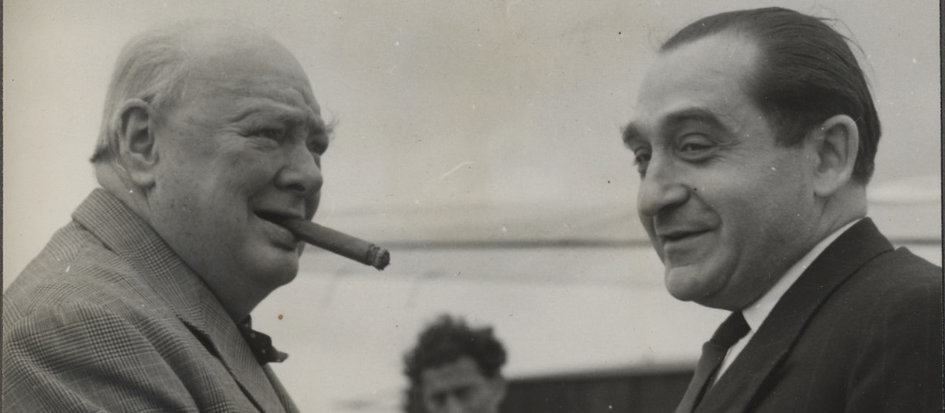
Centre Director Richard Toye recently discussed how Churchill has been utilized within the Brexit debate, and Churchill’s relationship with Europe – you can listen through the links below.
Cross-posted from France in the UK
A special Franco-British conversation about leading figures of our shared history.
Historians Richard Toye and Christian Destremau examine Winston Churchill’s relationship to France and Europe, and the different narratives that have been built since.
As part of The Fabric of Citizenship seminar series.
Podcasts
You can now listen to this special evening thanks to Culturethèque.
Tristan Mendès France on his grandfather Pierre Mendès France
Richard Toye explores Winston Churchill’s relationship to France and Europe
Christian Destremau explores Winston Churchill’s relationship to France and Europe
Stuart Mole
University of Exeter
April 2018 saw unaccustomed media coverage of the Commonwealth. At the beginning of the month, the XXI Commonwealth Games opened on Australia’s Gold Coast. There were an equal tally of medals won by male and female athletes and the integration of able and Paralympic athletes was striking. Though far from being a global Games, world records tumbled. Unusually, politics has featured, with English diving champion, Tom Daley, urging changes to the archaic and oppressive laws which deny equal rights on LBGT issues in many Commonwealth countries.
A few days after the Games’ closing ceremony, the biennial intergovernmental summit convened in London (the first such gathering in the UK for over twenty years). The high turnout of Heads of Government was less an indicator of the organisation’s contemporary vitality and more a sign that the Queen’s offer of Buckingham Palace and Windsor Castle for significant parts of the summit had proved particularly attractive to Commonwealth leaders and their spouses. At the end of the week, the Commonwealth’s presidents and prime ministers dutifully agreed that Prince Charles would succeed his mother as the organisation’s next Head – though no vacancy is currently in the offing.
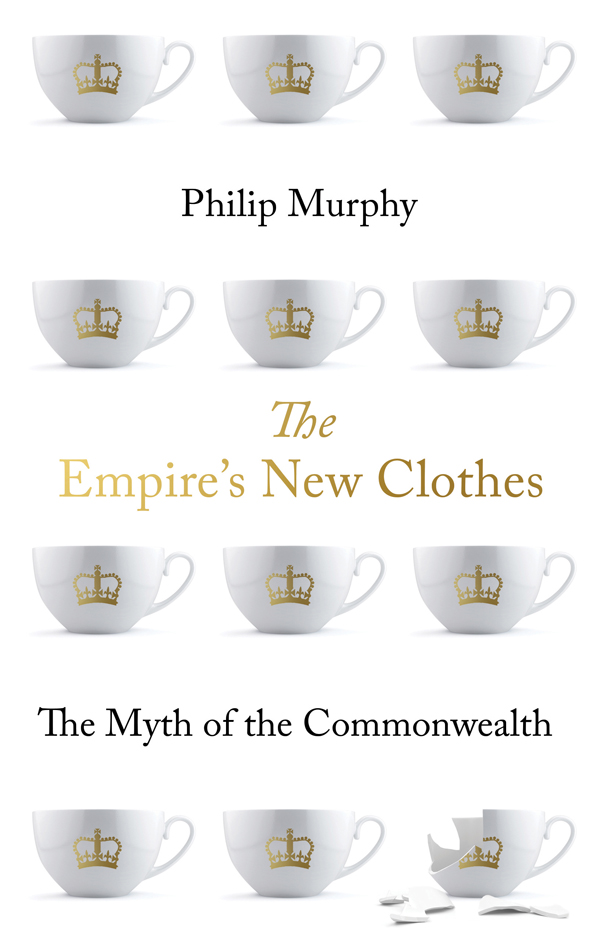 Among this calculated pomp and splendour came publication of Professor Philip Murphy’s latest book: The Emperor’s New Clothes: the Myth of the Commonwealth (2018, C. Hurst & Co, London). Murphy is a distinguished historian and Director of the Institute for Commonwealth Studies at the University of London. As a Commonwealth sceptic, why he should have taken on his current role is one that even he struggles to explain. There was no gap year spent cycling across Malawi, no father in colonial service in Malaya. His childhood was spent in Hull and “overseas” was summer holidays on the Isle of Man. Continue reading “Exploring Commonwealth Myths”

Over the last half century, discourses and practices connected to the idea that violent or dictatorial pasts should be marked as criminal have proliferated. A variety of actors – from victims groups to social movements, to expert groups such as lawyers, museums specialists and even economists – have contributed to the emergence and circulation of the notion that political violence could only be overcome through its criminalization in courts, lustration procedures, history writing, activism or memorial sites. Produced across different fields of action and expertise, this assumption has become dominant in the political and judicial sphere at a global level and has permeated many political cultures and everyday life practices. Even where decriminalisation (amnesties, pardons, closure of archives) prevailed, debates worked within the set of assumptions about the past established through this globally expanding paradigm.
Despite its dominance, we still lack a truly international history of its roots. This is in part because modern day practices of criminalisation often play down their own historicity. Coming of age at the so-called ‘end of history’, their promoters came to see their application as a natural end point in the achievement of human rights, democracy or good governance. When histories are offered, they too often provide a rather linear narrative that links these developments to – mainly Western – political processes established to address the legacies of Nazism after World War Two. Such accounts have also commonly resisted incorporation into broader frameworks supplied, for example, by histories of globalization, neoliberalism or postcolonialism. Only recently have a few authors sought to make sense of the emergence of the modern criminalisation paradigm in new ways, connecting it, for example, to the rise of the homo economicusand a concomitant individualistic approach to human rights.
This conference seeks to explore the history of the (often forgotten) pathways and contested visions through which the criminalization paradigm developed. This conference welcomes contributions that explore the emergence of multiple, potentially competitive visions of criminal pasts. Taking as its starting point the moment of an acceleration of decolonisation, globalisation and de-Stalinisation in the 1950s, we encourage papers that explore the variety of actors, activisms and political projects that lay behind the global expansion of such ideas. Human rights organisations, international legal associations, post-colonial and Communist states, all variously developed the idea of overcoming criminal pasts as they sought, to legitimate new political projects, reconceptualise the relationship between the individual and the state, or seek collective or socio-economic justice for past wrongs. We welcome papers that, for example, address the complexity and interplay of these ideas in different arenas and seek to connect these phenomena to wider literatures. We are also wary of easy teleologies, and are as interested in the histories of the marginalization of some visions, as in the growing dominance of others.
Papers might address the following topics: Continue reading “CfP: Criminalising Violent Pasts: Multiple Roots and Forgotten Pathways 1950s-2010s (London South Bank University, 15-16 November 2018)”
Thomas Brückner
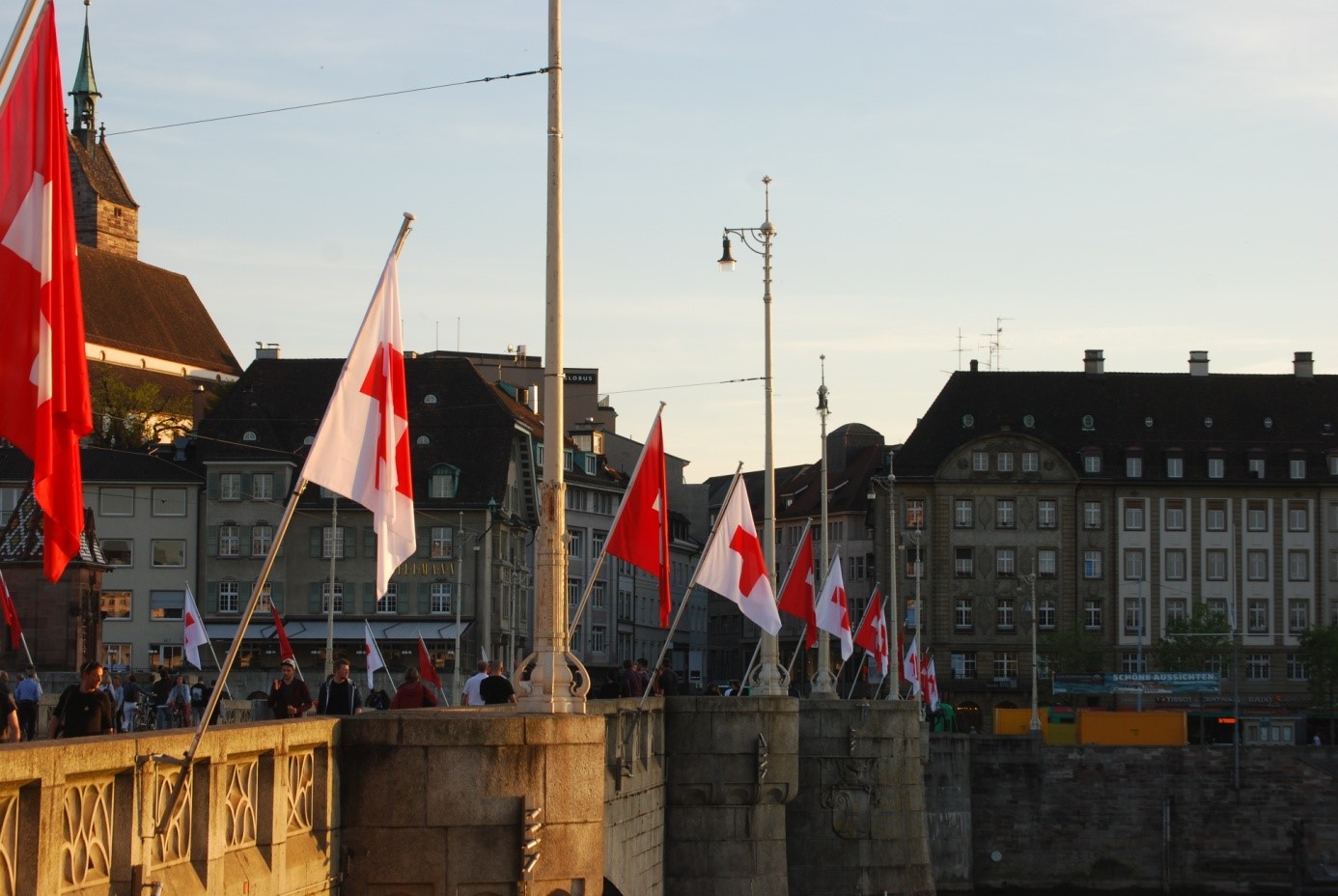
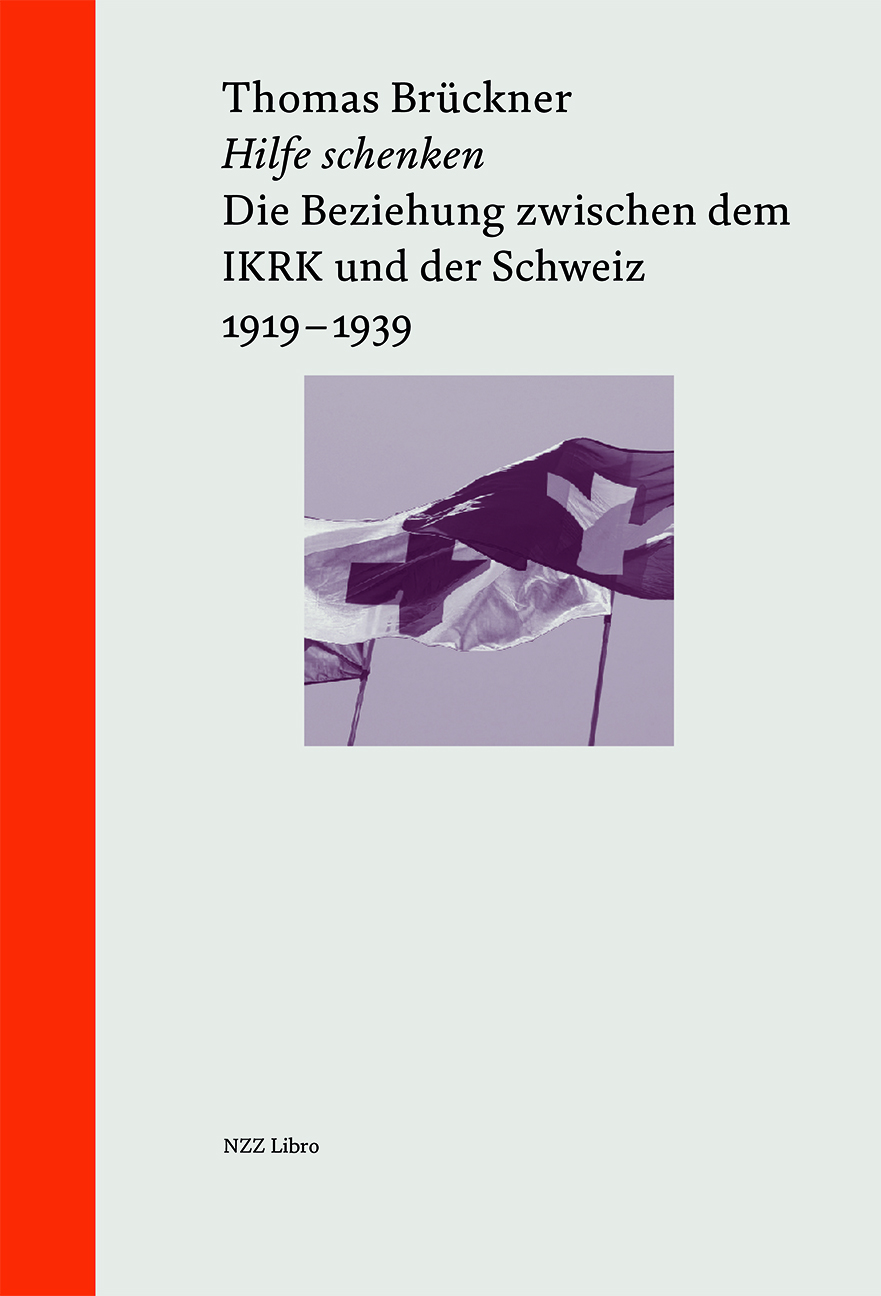 Switzerland is uniquely positioned as host of the International Committee of the Red Cross (ICRC). Swiss neutrality, Swiss humanitarian policy, and the Swiss flag are often associated with the Red Cross. As a result, a special relationship has developed between the country and the international humanitarian organization. My book, Hilfe schenken. Die Beziehung zwischen dem Internationalen Komitee vom Roten Kreuz und der Schweiz (NZZ Libro 2017), critically explores this relationship during the period between the two World Wars (1919-1939) using sources from the ICRC archives, the Federal Archives of Switzerland, and a wide range of publications and private archives in Switzerland.
At first sight, the interwar years were a calm period for the special relationship. Looking closer, however, exposes how the relationship between the ICRC and Switzerland changed and strengthened during this time, foreshadowing criticisms during Second World War that the axis between Bern and Geneva had become too close to guarantee truly neutral and independent humanitarian aid. Continue reading “The ICRC and Switzerland 1919-1939: a “special relationship” examined”
Marc-William Palen
History Department, University of Exeter
Follow on Twitter @MWPalen

Emil Sokolov
University of Exeter
The promises that politicians have made and continue to make about immigration have been a source of great controversy in modern British policymaking ever since the end of the Second World War. The most recent example of this is the Windrush scandal, the deportation of people of West Indian origins. About 550,000 people came into Britain from the West Indies between 1948 and 1973 to work in Britain’s labour-starved economy. However, according to census data quoted by the Guardian, more than 21,000 of those people currently have neither a British passport nor a passport from the country where they were born, placing them in the crosshairs of the Home Office’s ‘Hostile Environment’ immigration policy. Windrush’s scale and effects might be most visible today, but the causes behind this controversy originated in the 1950s and early 1960s when the boundaries between Britain and its former colonies first began to change.
Issues of immigration and race were noticeably introduced into British post-war politics after the Conservative Party passed the Commonwealth Immigrants Act in 1962. The MP for Louth, Sir Cyril Osborne, who was infamous for his extreme views on immigration, managed to convince the Conservative leadership of the need for control in the early 1960s. Despite intense opposition from Labour, Conservative moderates chose to support the new legislation. Instead of regulating the arrival of Commonwealth citizens, the Act did not tighten control on migrants from the colonies who came to re-join their families, leading to ‘Britain’s Racist election,’ as a recent BBC documentary termed it, in 1964.
Looking in greater detail at 1964 general election addresses casts new light both on Labour’s early resistance against populist demands and the emergence of the Tory far right. Likewise, the often underlooked constituency of Southall demonstrates the wide gap between Conservative and Labour attitudes towards immigration and the various ways in which candidates made use of their election addresses. Most importantly, many of the harmful ideas and misconceptions about immigration that emerged in 1964 are resurfacing today, which makes the 1964 election crucial for understanding current immigration debates. Continue reading “What does the 1964 General Election tell us about immigration debates today?”
Marc-William Palen
History Department, University of Exeter
Follow on Twitter @MWPalen
Job details |
|
| Job title: Lecturer E&R in History
Job reference: P62459 Date posted: 11/05/2018 Application closing date: 08/06/2018 Location: Cornwall Salary: The starting salary will be from £34,520 within the Grade F band (£34,520 – £38,833). Package: Generous holiday allowances, flexible working, pension scheme and relocation package (if applicable). Job category/type: Academic Job description The above full time post is available from 1st September 2018 on a permanent basis. However, we do have the ability to consider a start date of 1st January 2019 for the right candidate. The role The post of Lecturer in History will contribute to extending the research profile of the Department of Humanities at the University of Exeter’s Penryn Campus in Cornwall, particularly in areas related or complementary to European History since 1500. The post will include responsibility for conducting your own programme of research in any field of continental European history, broadly interpreted, in any period since 1500. You will develop grant applications to support this research programme. In addition to established approaches to European history we also welcome applications that interpret ‘European’ broadly in terms of either focus, geography, or method. You will have clear plans to develop an exciting teaching provision of research-led modules that will challenge students and clearly make a distinctive contribution to the existing history programme at Penryn. You will also contribute to joint delivery of level one courses, supervise dissertations and tutor students, and contribute to postgraduate programmes as appropriate. You will also be expected to make a contribution to departmental administration. Continue reading “New Job! History Lectureship at the University of Exeter” |
Marc-William Palen
History Department, University of Exeter
Follow on Twitter @MWPalen
Marc-William Palen
History Department, University of Exeter
Follow on Twitter @MWPalen

Andrea Franc
University of Basel
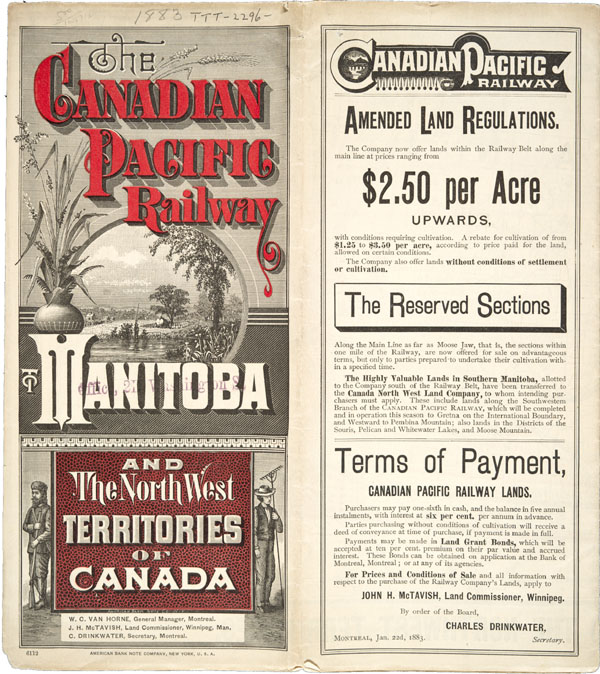
When thinking about today’s phenomenon of ‘fair trade’, it immediately brings to mind coffee with the ‘fair trade’ tag, nowadays seemingly found in just about every supermarket. But if we go back to fair trade’s origins in 1968, these same coffee smallholders were nowhere to be found in the burgeoning movement’s founding document, the Haslemere Declaration. So how did we get to where we are today? Continue reading “What ‘fair trade’ was originally about: The Haslemere Declaration of 1968”
Marc-William Palen
History Department, University of Exeter
Follow on Twitter @MWPalen

Dora Vargha
University of Exeter
Archival practices rarely make headlines. Databases are sexy, archives less so – at least for most people. Whenever we do read about archives, it’s almost exclusively in the context of something disappearing. Apparently, we never know a good thing until it’s gone.
Most recently, it transpired that the Home Office apparently destroyed Windrush landing cards eight years ago. These, it now seems, were crucial documents in establishing the legal status of Caribbean-born residents who arrived in the 1950s and 1960s. The question of exactly who is to take the blame for this action remains under debate.
This is not the first time the government has had to admit to this kind of practice. A few months ago the Foreign Office admitted to its role in key documents “disappearing” from the National Archives. Among them were papers on the colonial administration of Palestine, the Falklands, Northern Ireland’s Troubles and a score of other sensitive issues.
It’s unclear why the landing cards were destroyed. The Home Office says the decision was taken on data protection grounds and that does seem to be a valid argument. Of course, that argument, too, can be, and frequently is, abused. Continue reading “Windrush scandal: a historian on why destroying archives is never a good idea”
Catherine Baker
University of Hull
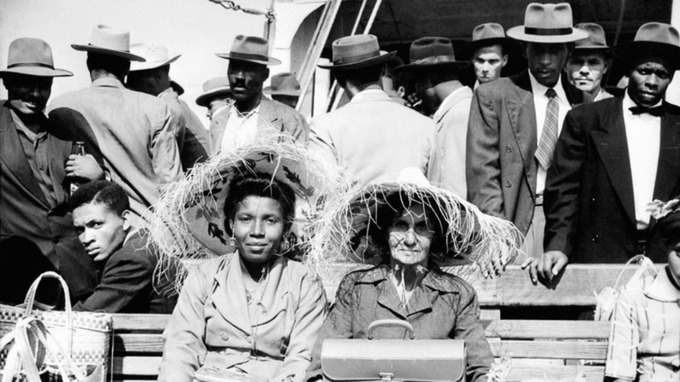
Six years ago, in 2012, the dramatised arrival of the ‘Windrush Generation’ provided many British viewers with one of the most moving moments in the opening ceremony of the London Olympic Games. The dozens of black Londoners and the giant model of the Empire Windrush, which had docked at Tilbury in June 1948, entering the stadium during the ceremony’s historical pageant stood for the hundreds of thousands of black Britons who had migrated from the Caribbean to Britain, which was then still their imperial metropole, between 1948 and 1962.
The moment when the ‘Windrush Generation’ joined the pageant’s chaotic whirl of characters drawn from modern British social and cultural history symbolised, for millions of its viewers (if not those people of colour with more reason to be suspicious of British promises), a Britain finally inclusive enough to have made the post-Windrush black presence as integral a part of its national story as Remembrance or Brunel. Today, however, members of this same symbolic generation have been threatened with deportation – and some have already been deported – because they have been unable to prove their immigration status despite living in Britain for more than fifty years. The Daily Mirror’s Brian Reade was far from alone in wondering where it had all gone wrong since 2012.
What kind of British government would deport the children of the Empire Windrush? Not the openly fascist regime that the National Front took to the streets for in the 1970s, or that Alan Moore imagined taking control of a near-future Britain in his 1988 comic V for Vendetta (written at the height of the Thatcher years). Rather, as most of the British public only realised after the revelations of the Guardian’s Amelia Gentleman connecting dozens of individual stories into a chilling pattern, the answer lies with the Conservative government of Theresa May. Continue reading “Where did it all go wrong? The Windrush myth after London 2012”
 Imperial & Global Forum
You must be logged in to post a comment.