
Professor Amanda Nettelbeck (University of Adelaide) recently came to speak at the Centre for Imperial and Global History seminar, and Centre Director Richard Toye interviewed her about her research about Australian colonial violence.
Author: CIGH Exeter
The Imperial and Global Forum is the blog of the Centre for Imperial and Global History at the History Department, University of Exeter. The Centre brings together the strong research expertise of the University's eminent imperial historians. It comprises of one of the largest groups of imperial and global historians currently working in the UK. Our blog offers a dynamic exploration of imperial history. Please also visit our homepage at http://humanities.exeter.ac.uk/history/research/centres/imperialandglobal/
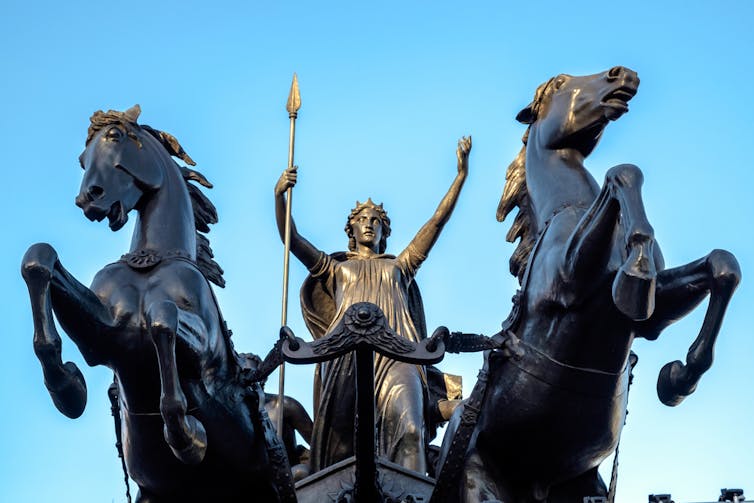
Theresa May has been told to ‘find her inner Boudica’ – here’s why that’s a terrible idea
Martha Vandrei, University of Exeter
The figure of Boudica, queen of the Iceni, is surprisingly resilient. Since the Renaissance, she has turned up in public discourse pretty consistently in Britain, from celebrations of the defeat of the Spanish Armada to the imperialist triumphalism of the late Victorian era. Over this long period, Boudica has come in for criticism, as well as for lionisation. The latest example of the latter is Nick Timothy’s recent article in The Sun, encouraging his former boss, Theresa May, to “find her inner Boudicca [sic]”, in negotiations with the EU.
Of course, the facts of Boudica’s bloody and ultimately disastrous first century rebellion against the Roman occupiers of Britain – as the New Statesman rightly pointed out – make a comparison with the UK’s current prime minister problematic at best. Timothy’s way of dealing with these inconvenient facts was to dismiss them in his article as mere “details”. Continue reading “Theresa May has been told to ‘find her inner Boudica’ – here’s why that’s a terrible idea”
Call for Papers: Ex Historia
Ex Historia is now accepting articles and book reviews for our 2019 volume. Original articles should be between 4000 and 8000 words, including footnotes and bibliography. Book reviews should be between 500 and 1000 words. Review articles (addressing three or four books which share a common theme) can be between 2000 and 4000 words. Please refer to MRHA Style Guide for style requirements and use British spellings in all cases except for direct quotations which use alternative spellings. Continue reading “Call for Papers: Ex Historia”
This Week’s Top Picks in Imperial & Global History
Marc-William Palen
History Department, University of Exeter
Follow on Twitter @MWPalen
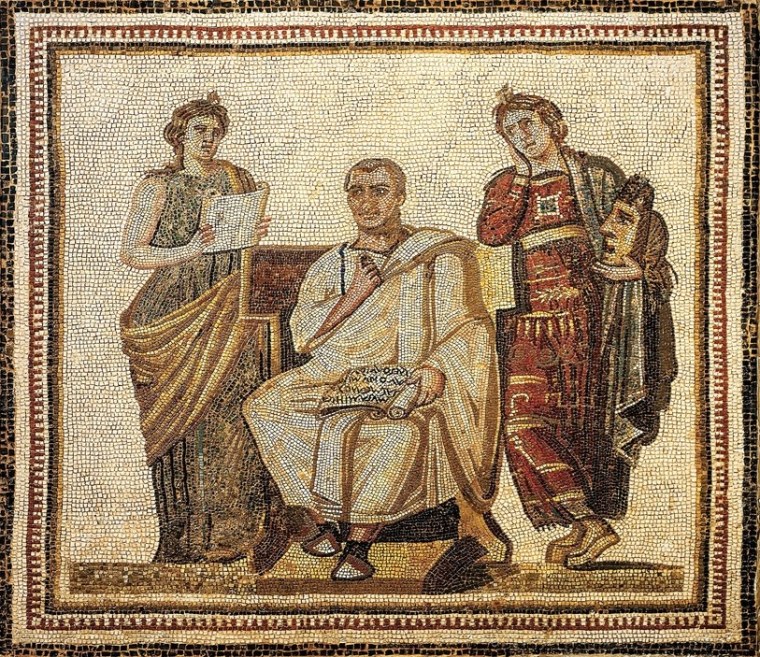
From Hitler’s many American friends to rethinking the End of History, here are this week’s top picks in imperial and global history. Continue reading “This Week’s Top Picks in Imperial & Global History”
Call for Applications: 2019 Global Humanitarianism Research Academy
Call for Applications: Global Humanitarianism Research Academy
International Research Academy on the History of Global Humanitarianism
Academy Leaders: Fabian Klose (Leibniz Institute of European History Mainz)
Johannes Paulmann (Leibniz Institute of European History Mainz)
Andrew Thompson (University of Exeter)
in co-operation with the International Committee of the Red Cross (Geneva)
Venues: Leibniz Institute of European History Mainz & Archives of the International Committee of the Red Cross, Geneva
Dates: 8-19 July 2019
Deadline: 31 December 2018
Information at: http://ghra.ieg-mainz.de/, http://hhr.hypotheses.org/ and https://imperialglobalexeter.com/
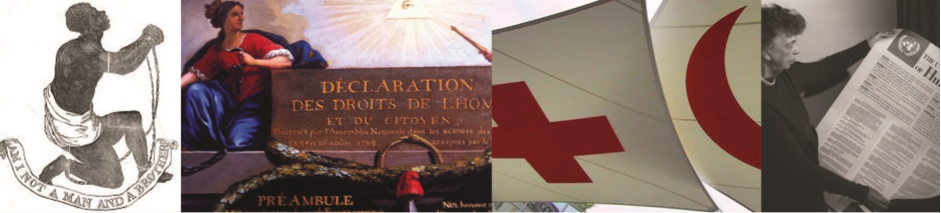
The international Global Humanitarianism Research Academy (GHRA) offers research training to PhD candidates and early postdocs. It combines academic sessions at the Imperial and Global History Centre at the University of Exeter and the Leibniz Institute of European History in Mainz with archival sessions at the Archives of the International Committee of the Red Cross in Geneva. The Research Academy is for early career researchers who are working in the related fields of humanitarianism, international humanitarian law, peace and conflict studies, human rights covering the period from the 18th to the 20th century as well as the institutional history of the ICRC and the development of its fundamental principles. It supports scholarship on the ideas and practices of humanitarianism in the context of international, imperial and global history thus advancing our understanding of global governance in humanitarian crises of the present.
In July 2019, the Global Humanitarianism Research Academy will first meet for one week in Mainz for academic sessions of lectures, class meetings and discussions, including study time (the academic meetings rotate annually between Mainz and Exeter; in the previous year this meeting took place in Exeter). PhD students will have the chance to sharpen the methodological and theoretical focus of their thesis through an intense exchange with peers, postdocs, and established scholars working in the same or related field of humanitarianism. The postdocs will benefit from discussing their research design and publication strategy with established scholars. Continue reading “Call for Applications: 2019 Global Humanitarianism Research Academy”
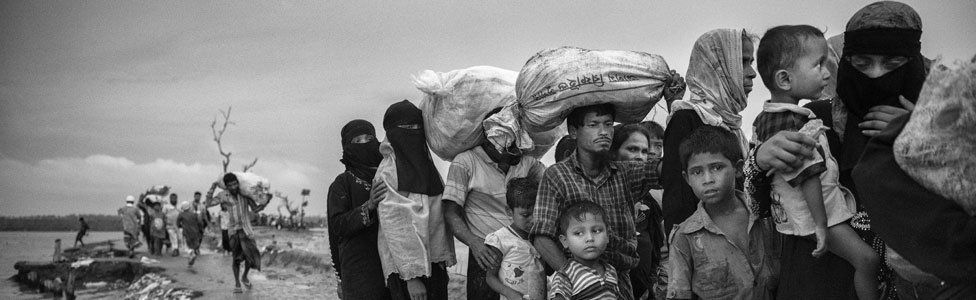
There is hope for Rohingya refugees fleeing genocide – so long as history doesn’t repeat itself
Issy Sawkins
University of Exeter
The United Nations has finally called for the investigation and prosecution of Myanmar’s top military command for crimes of genocide against the Rohingya Muslim population of the Rakhine State.[1] The brutality of the military reached its peak during the ‘clearance operations’ of August 2017, since which 750,000 Rohingya refugees have fled to neighbouring Bangladesh.
A 400-page report was published by the United Nations on September 17 2018, the result of a year-long investigation into the well-planned killing and rape of Rohingya women and girls, and the burning and looting of their homes.[2] It is the first time that such specific atrocities have been documented for which blame is directly apportioned to the highest level of Myanmar’s military.[3]
Whilst the report indicates a step in the right direction regarding the prosecution of the perpetrators, it fails to address the issue of the displaced Rohingya community. In particular, what is the international community doing to help these victims of genocide?
The 750,000 Rohingya refugees have sought shelter at the camps and makeshift settlements set up in Bangladesh specifically to cater for the refugees. The main refugee camp is located at Kutupalong, located in North-East Bangladesh, but the constant stream of refugees has resulted in several additional camps being built in the surrounding countryside.[4]
Whilst the international community is providing aid to these refugees, predominantly in the form of food supplies and vaccinations against deadly diseases, Bangladesh, by offering them refuge in these camps, is providing the most substantial help. And unfortunately, a lack of global response to refugees of genocide does indeed have a historical precedent, one that leaves little room for optimism. Continue reading “There is hope for Rohingya refugees fleeing genocide – so long as history doesn’t repeat itself”
This Week’s Top Picks in Imperial & Global History
Marc-William Palen
History Department, University of Exeter
Follow on Twitter @MWPalen
From why some Italian-Americans defend Columbus Day to the global voice of Eric Hobsbawm, here are this week’s top picks in imperial and global history. Continue reading “This Week’s Top Picks in Imperial & Global History”
New Postdoc Position with Exeter History

Job title: Postdoctoral Research Associate
Job reference: P64462
Date posted: 10/10/2018
Application closing date: 07/11/2018
Location: Exeter
Salary: The starting salary will be from £29,515 up to £34,189 on Grade E, depending on qualifications and experience.
Package: Generous holiday allowances, flexible working, pension scheme and relocation package (if applicable).
Job category/type: Academic
Job description
The above full-time post is available from December 1st 2018 until 30th November 2019 on a fixed-term basis.
The University of Exeter is a Russell Group university in the top 200 of universities worldwide. We combine world-class teaching with world-class research, and have achieved a Gold rating in the Teaching Excellence Framework Award 2017. We have over 22,000 students and 4600 staff from 180 different countries and have been rated the WhatUni2017 International Student Choice. Our research focuses on some of the most fundamental issues facing humankind today, with 98% of our research rated as being of international quality in the 2014 Research Excellence Framework. Ween courage proactive engagement with industry, business and community partners to enhance the impact of research and education and improve the employ ability of our students.
The post
The College wishes to recruit a Postdoctoral Research Associate to support the work of the project PI Prof Maria Fusaro. The successful candidate will work under her supervision and that of Dr Guido Rossi (University of Edinburgh), one of the senior fellows of the project Average-Transaction Costs and Risk Management during the First Globalization (Sixteenth-Eighteenth Centuries).This European Research Council funded project focuses on the historical analysis of institutions and their impact on economic development through the investigation of a legal instrument – general average(GA) – which underpins maritime trade by redistributing damages’ costs across all interested parties. Continue reading “New Postdoc Position with Exeter History”
Reflections on two weeks of humanitarianism, historiography, research, and collaboration… and the creation of lasting friendships
Ryan W. Heyden
McMaster University
Cross-posted from Care for the Future
As historians have engaged in a widespread and heated discussion about the history of human rights and its relationship to contemporary political and social developments around the world, many have also turned to humanitarianism. With new and protracted conflicts raging in the Middle East and other parts of the world, and with the growing number of natural disasters caused by a rapidly changing climate, humanitarian workers and organizations are busier than ever before. And yet, the scholarly literature on humanitarianism and the labours of humanitarian workers since the 1700s was, until the last decade or so, focussed mainly on humanitarian aid delivered to various sites of conflict after the end of the Cold War. Political scientists were the primary researchers pushing this field of humanitarian studies. Thankfully, historians have joined this scholarly discussion, adding a much-needed historical perspective. Historians at all levels are trying to understand the origins and development of humanitarianism, asking many vital questions: what has mobilized empathy for those suffering during war; how has humanitarianism been used and abused by the West in its effort to colonize the Global South; how can we understand the often-fraught gender and power dynamics involved in humanitarian campaigns and in the administration of aid; and, what is the relationship between humanitarianism and human rights? Scholars are also historicizing humanitarian institutions – like the International Committee of the Red Cross (ICRC), Oxfam, Médecins Sans Frontières, CARE, and older institutions that tried foster “humanitarian sensibilities” like religious groups (missionaries) and the abolitionist movement – and asking how they fit into this budding historical narrative?
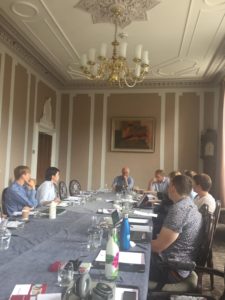 This rather brief outline of the field and its vital questions are merely a sampling of the work being done by historians around the world. It is also a snap shot of some of the themes I took away from this year’s iteration of the Global Humanitarianism Research Academy. In July 2018, I had the privilege of travelling to the University of Exeter in the UK and the International Committee of the Red Cross (ICRC) Public Archive and Library in Geneva, Switzerland with the generous support of Care for the Future, the Leibniz Institute for European History, the German Historical Institute in London, and the ICRC. During my two-week intensive workshop and archival work, I had the pleasure of meeting and exchanging views with established scholars, newly-minted PhDs, and fellow PhD Candidates. I learned a lot during what can only be called a two-week academic adventure! While I could probably write ad nauseum about what I learned, my archival finds, and the people I met, I want to draw attention to a few lessons. Continue reading “Reflections on two weeks of humanitarianism, historiography, research, and collaboration… and the creation of lasting friendships”
This Week’s Top Picks in Imperial & Global History
Marc-William Palen
History Department, University of Exeter
Follow on Twitter @MWPalen
From sexuality in the Mughal Era to the original Belt and Road, here are this week’s top picks in imperial and global history.
Continue reading “This Week’s Top Picks in Imperial & Global History”
Call for Papers – Britain and the World Conference 2019
 Our good friends at Britain and the World have announced their Call for Papers for the 2019 Britain and the World Conference, Kansas City, April 2019. Further details below…
After our annual conference in Exeter in June 2018, Britain and the World returns to the US: Thursday 11 to Saturday 13 April at the Marriott Country Club Plaza, Kansas City, MO.
As always, the conference is concerned with interactions within the ‘British world’ from the beginning of the seventeenth century to the present and will highlight the importance of transnational perspectives. Continue reading “Call for Papers – Britain and the World Conference 2019”
Did the British Empire depend on separating parents and children?
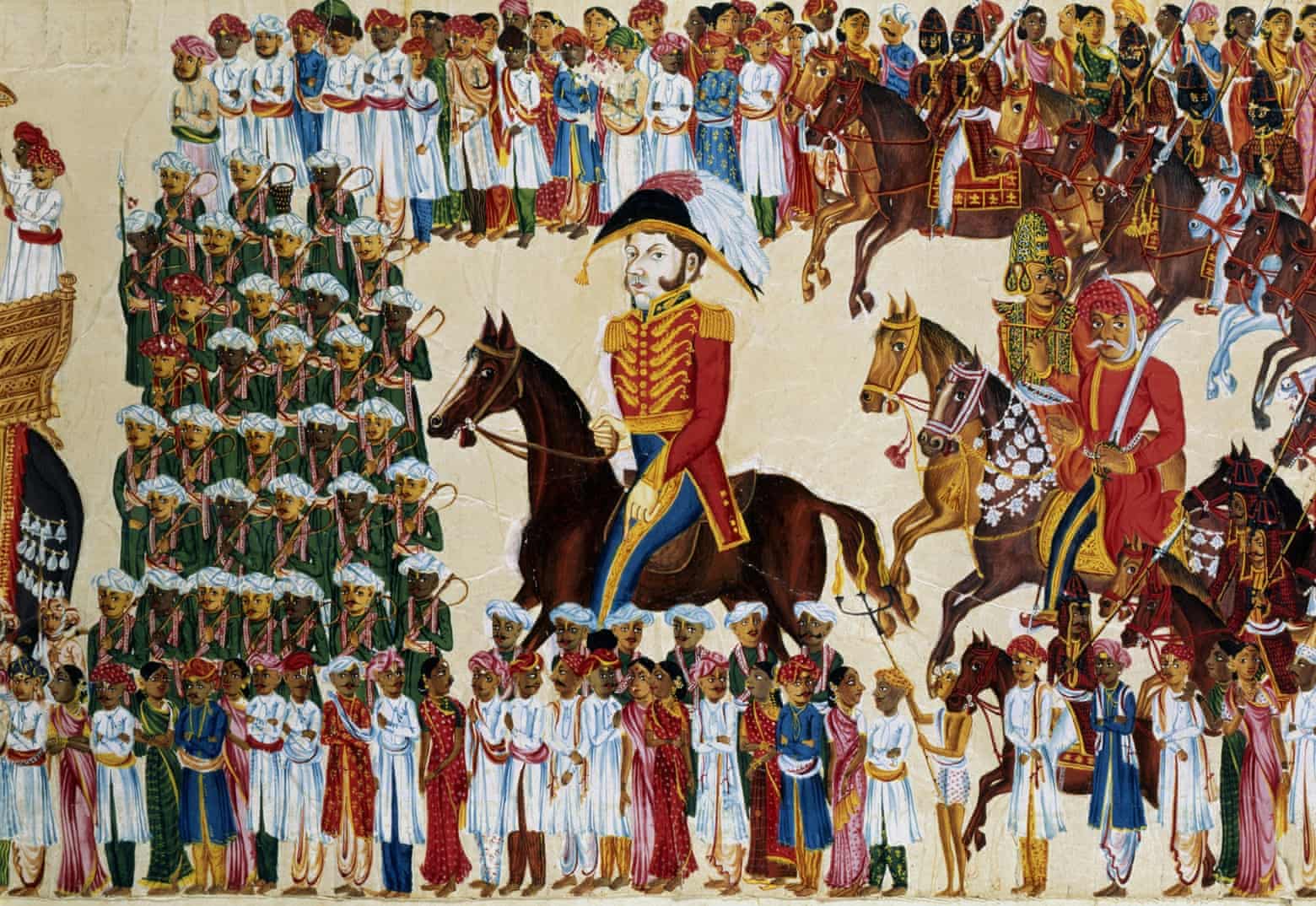
An East India Company Grandee (via Getty Images)
Sumit Guha
University of Texas at Austin
Cross-posted from Not Even Past
Empires ancient and modern are large, hierarchical organizations, structurally founded on deep inequalities of risk and reward. The British Empire in Asia was no exception. At the front lines of imperial power were, all too often, common men (and some women) who were tricked, cozened, misled, coerced, and whipped into serving as the cannon-fodder of Empire. The temptation to desert was often present and the thought of mutiny cannot have been absent. These plebeian men were ‘kept in line’ men of status who served as commercial agents and military officers. But even among them, kickbacks and commissions were omnipresent and could grow into serious leakages of revenue or foment major acts of treason. Furthermore the wholesale desertion of a dynasty by its elite subjects was not unknown. In Britain in both 1660 and 1688, the political establishment and key army units deserted their established government to side with an invader sponsored by a foreign power. We could multiply such examples.
Transoceanic empires built by corporations like the British and Dutch East India Companies faced even greater problems because they lacked the sacred aura that surrounded kings and helped maintain nominal loyalties. It took nearly half a year for an inquiry or command to reach a functionary in Asia and it took many more months before a report or an excuse would come back. The military, commercial, or political situation could change dramatically in the interim. Many readers will be aware, for example, that the British and Americans continued to fight for six weeks in 1815 after the peace treaty was signed between the two powers. One of these peace-time battles cemented Andrew Jackson’s reputation and propelled him to the presidency. Asia was much further away and across more dangerous waters. Continue reading “Did the British Empire depend on separating parents and children?”
This Week’s Top Picks in Imperial & Global History
Marc-William Palen
History Department, University of Exeter
Follow on Twitter @MWPalen
From the return of the European far right to a trip to Tolstoy Farm, here are this week’s top picks in imperial and global history. Continue reading “This Week’s Top Picks in Imperial & Global History”
Interview with Prof. Saul Dubow – ‘Bordering on Brexit: Global Britain and the Embers of Empire’ Conference
The ‘Bordering on Brexit: Global Britain and the Embers of Empire‘ Conference was held last weekend at Garrison Library, Gibraltar. Professor Richard Toye, Director of Exeter’s Centre for Imperial and Global History, interviews Prof. Saul Dubow (Cambridge) on the links between South African politics, imperial history, and Brexit.
Interview with Dr. Olivette Otele – ‘Bordering on Brexit: Global Britain and the Embers of Empire’ Conference
The ‘Bordering on Brexit: Global Britain and the Embers of Empire‘ Conference was held last weekend at Garrison Library, Gibraltar. Professor Richard Toye, Director of Exeter’s Centre for Imperial and Global History, interviews Dr. Olivette Otele (Bath Spa) on the question of contested and controversial history and memorialisation in Bristol.


You must be logged in to post a comment.