

Marc-William Palen
History Department, University of Exeter
Follow on Twitter @MWPalen
Marc-William Palen
History Department, University of Exeter
Follow on Twitter @MWPalen
Marc-William Palen
History Department, University of Exeter
Follow on Twitter @MWPalen
Paul Doolan
Zurich International School and the University of Konstanz
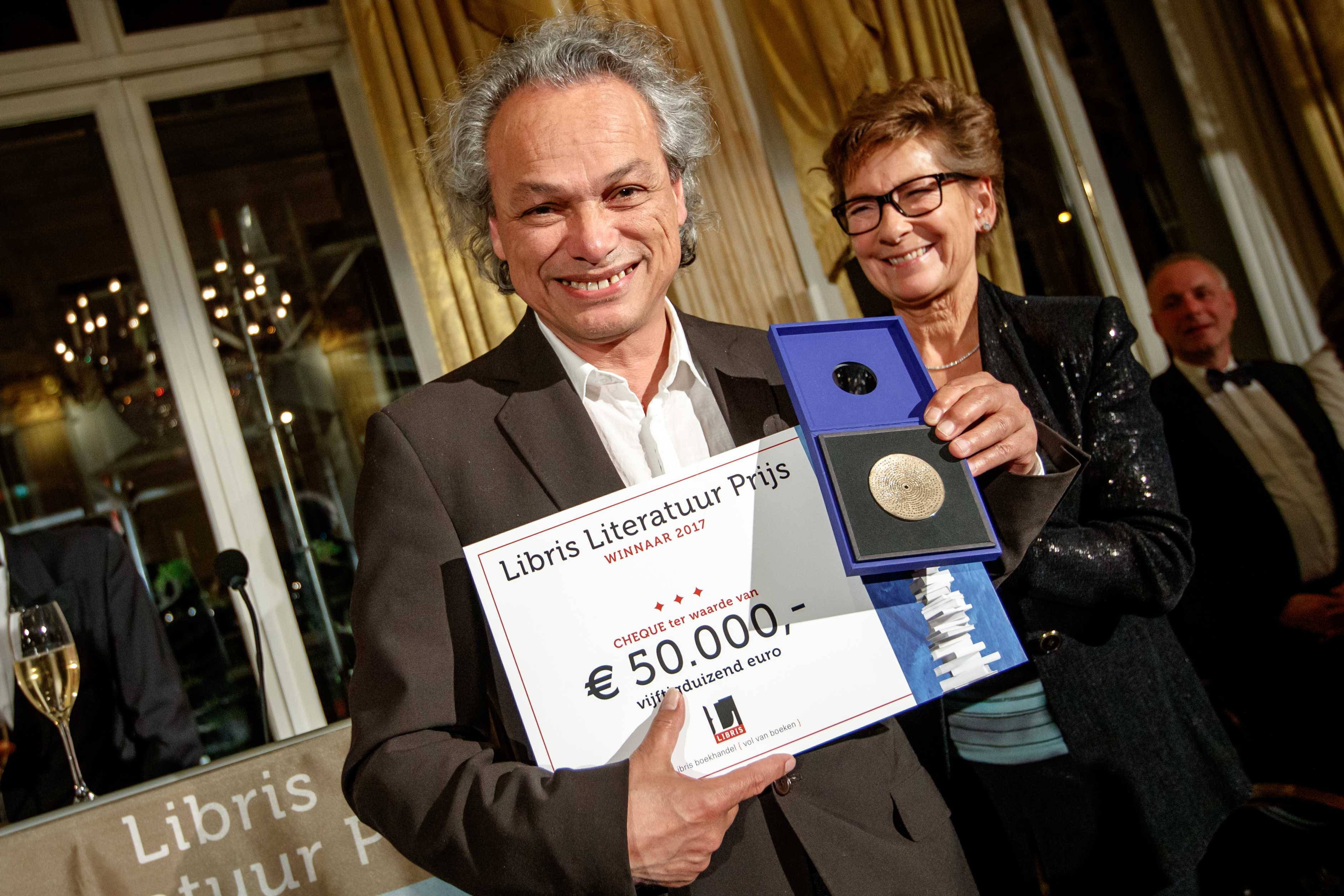
On May 8th the jury of the Libris Literature Prize announced in Amsterdam and live on television that they had unanimously chosen Alfred Birney as winner of the best Dutch language novel of 2016, for his novel De Tolk van Java [The Interpreter from Java]. According to the jury, Birney has “cast a new light upon a poisonous period of our history“. The book is a relentlessly violent postmemory novel and a searing indictment of not only Dutch colonial brutality, but also the willingness of a society to forget or unremember the uncomfortable parts of the nation’s past. Birney’s work forms a corrective to many historical myths regarding the decolonization of the Dutch East Indies.
In recent years we have seen Dutch courts finding the Dutch state guilty of massacring hundreds of civilians in Indonesia during the Indonesian War of Liberation (1945-1949). In 2016 Remy Limpach’s historical thesis, that the Dutch political and military leadership at the time had been responsible for the use of structural violence that amounted to war crimes, was well received in both the popular press as well as among academics. Last month’s decision of the jury of the Libris Literature Prize marks another milestone in the Dutch coming to terms with their past by working through the trauma of decolonization. Continue reading “Remembering Dutch Decolonization through Historical Fiction”
Marc-William Palen
History Department, University of Exeter
Follow on Twitter @MWPalen
A Talk by
Professor Philippa Levine
When: Wed., 21 June 2017, 3-4:30pm, with a wine reception to follow
Where: Reed Hall, Ibrahim Ahmed Room, University of Exeter
Exeter’s Sexual Knowledge Cultures Seminar series, in conjunction with the Centre for Imperial and Global History and Global Engagement and Development, is delighted to welcome Professor Philippa Levine (University of Texas at Austin) to Exeter to speak on “Slavery and the Aesthetics of Abjection”.
There will be tea, coffee and cake, and a wine reception following the paper. All are very welcome!
 Abstract: Humanitarian photographers have long known the value of a well-shot picture, one that induces pathos and opens wallets for charitable causes. Yet they tread a careful line to ensure that their images produce empathy or at least sorrow rather than revulsion. Artists and photographers learn (and sometimes challenge) the boundaries that separate acceptable from objectionable images, and one figure that has constantly been at issue is the naked body. The visual representations of enslavement invoked an aesthetics of abjection in stark contrast to the nudity portrayed in high art as the pinnacle of human worth. Drawing on images of the unclothed body in particular, this talk explores the iconography of slavery as a historical example of how aesthetic choices can serve widely differing purposes even before the advent of photography.
Philippa Levine is the Mary Helen Thompson Centennial Professor in the Humanities and the Co-Director of the Program in British Studies at the University of Texas at Austin. She is the co-editor of The Oxford Handbook of the History of Eugenics and she has published extensively on nineteenth- and twentieth-century British and British Empire history, as well as on science, sexuality, and medicine.
Daniel Foliard
Paris Ouest University
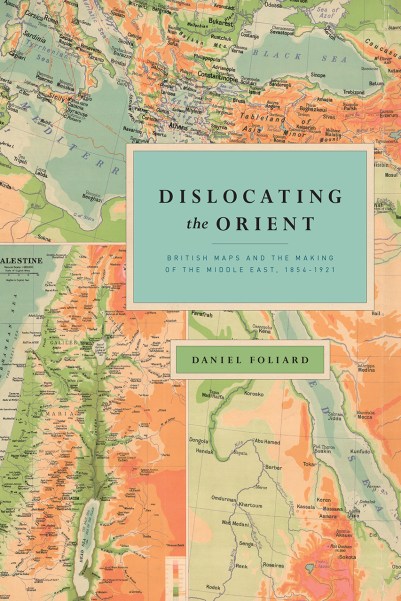
It took some time in 1852 to convince the Imam of the Great Mosque of Al-Nuri in Mosul, but James Felix Jones eventually got the permission he needed to climb up the stairs of the famous “hunchback” minaret. It was from this vantage point that Jones, an Indian army surveyor and officer, started to take measurements. He established the leaning minaret’s longitude and latitude, one of the first fixed points from which it became possible to triangulate the plain of Al-Iraq and to begin an accurate mapping of the area with mixed results (fig.1).
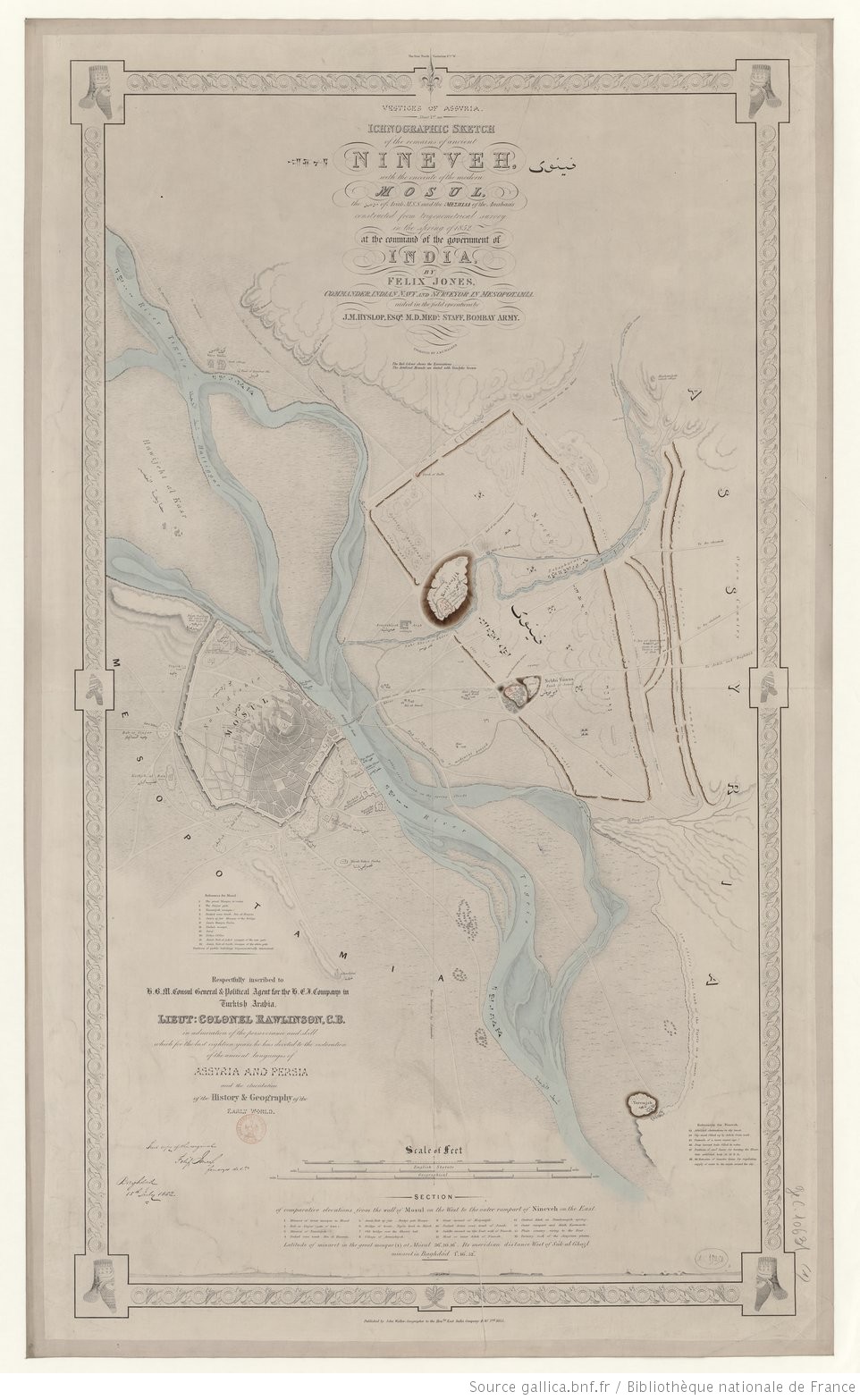
In the early 1850s, Mesopotamia stood in the middle of the overland route to India and, surprisingly, no reliable map of this territory existed until Jones published an account in 1855.[1] Austen Henry Layard’s discovery of Nineveh in the mid-1840s and Francis R. Chesney’s exploration of the Tigris and the Euphrates a decade before had helped placing the area from a European standpoint, but, all in all, many in France or Britain failed to grasp the geography of the Ottoman province. Some of Jones’s original maps were even lost in India and his pioneering work partly forgotten: a testimony to the disorderly nature of Western knowledge in the area. Continue reading “Of Maps and Empire: Charting an Evasive East”
Ljubica Spaskovska
University of Exeter
‘As a regular reader of NME I feel insulted by the way you write about Yugoslavia in your issues of May 3 and May 17′, wrote a New Musical Express reader from Zagreb in 1975.
In your ‘Teazers’ column you worry about »How will the Communist Bloc take to British pub rock when Kilburn And The High Roads tour Yugoslavia and Poland in August.« Now try to get this: Yugoslavia does not belong to any bloc, so you better don’t try to make jokes about something that may be irrelevant to you, but is of principal meaning for Yugoslav people […] This is not fair toward your Yugoslav readers and many other rock fans in our country. The same singles, albums, groups and singers that top the Pop Polls in Britain are very popular in Yugoslavia, too.[1]
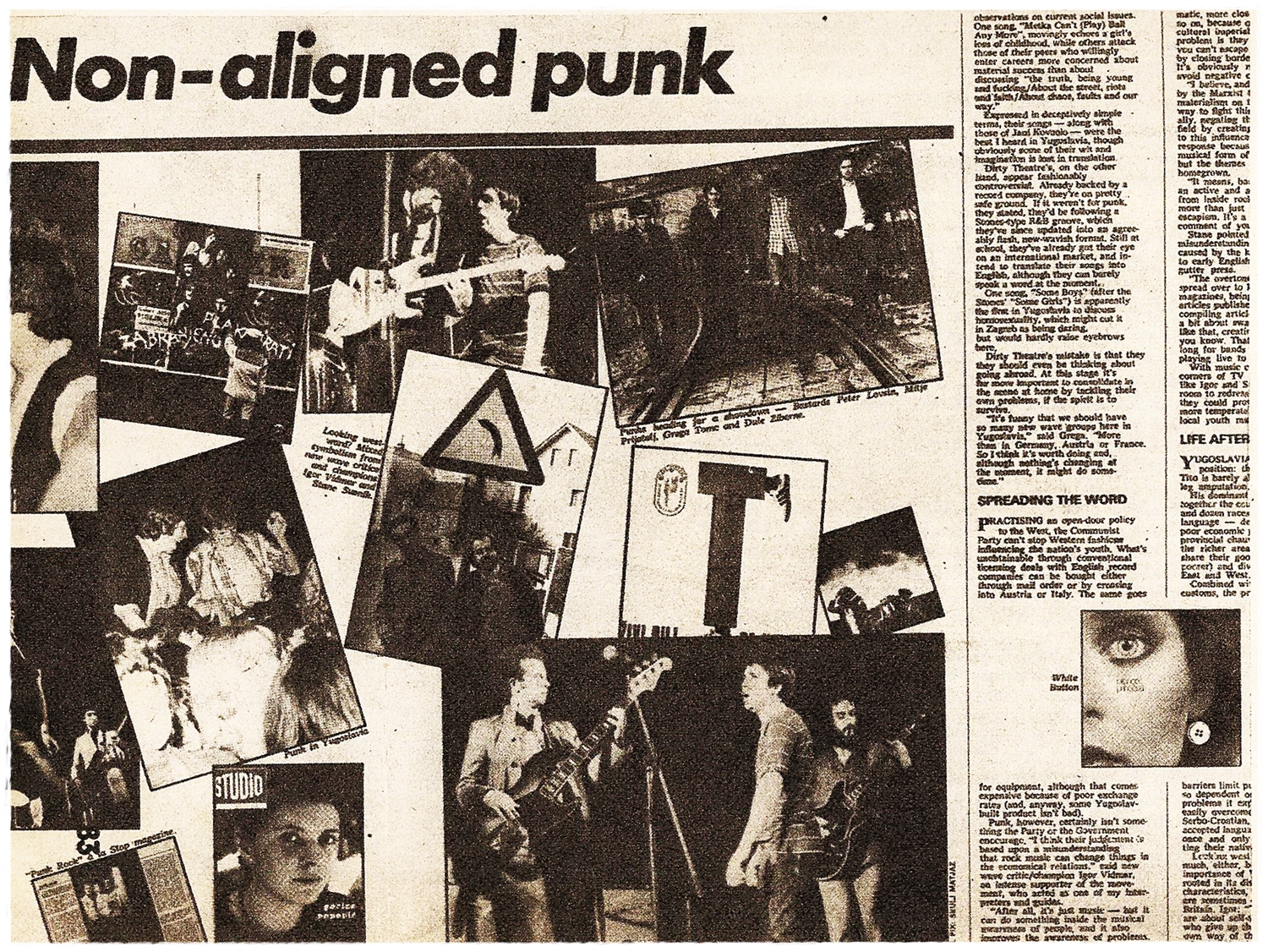
Similarly a Tomaz Domicelj from Ljubljana complained in a 1978 issue of Melody Maker that he was ‘fed up with reading again and again about Yugoslavia being behind the Iron Curtain. We are, if anything, on the border of that Curtain, which MM staff and other British people involved in the music business should know by now. Remember 1948, when we told Stalin off? If not, ask some historians about that.’[2] Two years later, Melody Maker columnist Chris Bohn visited Yugoslavia, a visit that he summarised in a two-page article entitled ‘Non-aligned punk’.[3]
The geopolitical positioning of Yugoslavia had a significant impact on the way the youth conceptualised and articulated their self-identification and sense of belonging in wider global terms. It also enabled the development of a burgeoning youth culture. Continue reading “Non-Aligned Punk: The Last Yugoslav Generation”
Marc-William Palen
History Department, University of Exeter
Follow on Twitter @MWPalen
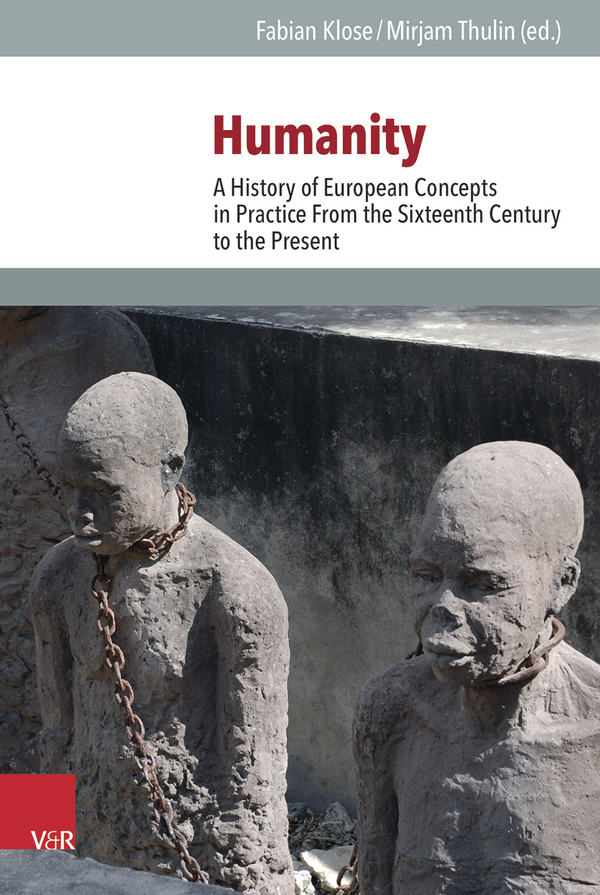
Fabian Klose and Mirjam Thulin (eds.), Humanity: A History of European Concepts in Practice From the Sixteenth Century to the Present. Göttingen: Vandenhoeck & Ruprecht, 2016. 324 pp. £75 (hardback), ISBN: 9783525101452
Reviewed by Ben Holmes (University of Exeter)
What does it mean to belong to the human race? Does this belonging bring with it particular rights as well as responsibilities? What does it mean to act with humanity? These are some of the big questions lying at the heart of a new edited collection from Fabian Klose and Mirjam Thulin, Humanity: A History of European Concepts in Practice From the Sixteenth Century to the Present (2016). Based on a 2015 conference at the Leibniz Institute in Mainz, the book, as the title suggests, is not a purely conceptual history of the term ‘humanity’.[1] Rather it looks to discover ‘the concrete implications of theoretical discourses on the concept of humanity’ [page 18]. In other words, how did ideas of ‘humanity’ guide European practices in areas like humanism, imperialism, international law, humanitarianism, and human rights?[2] The editors argue that despite the implied timeless, universal nature of the term, humanity is both a changing, dynamic concept, and has been prone to create divisions as much as it promotes commonality. Although the volume is a study of European conceptions of humanity, the contributions are transnational, displaying how conceptions of humanity were practiced in Europe and in the continent’s interactions with the wider world over the course of five-hundred years. Continue reading “What Does it Mean to Act with Humanity?”
Marc-William Palen
History Department, University of Exeter
Follow on Twitter @MWPalen
Gareth Curless
University of Exeter
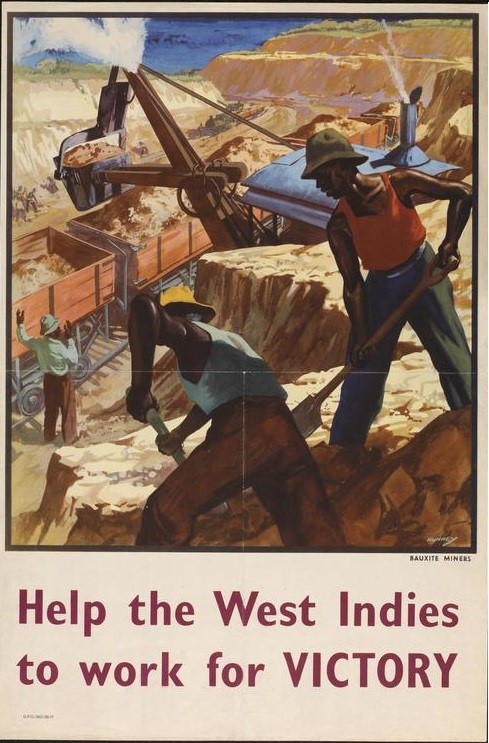
Labour historians have been particularly attuned to the global turn. Over the last decade labour historians have become not only more global in their outlook, but they have also begun to pay greater attention to subjects that speak to contemporary concerns associated with globalization. This has given rise to a number of studies considering a diverse array of subjects, including ‘global’ occupations, forms of free and unfree labour migration, and the global dimensions of working-class formation. The benefits of this global approach are immeasurable. Among other things it has highlighted the importance of studying labour in globalized sectors over the longue durée; it has brought into question the teleological assumption that labour movements inevitably develop a national character; and it has underscored the point that working-class formation was driven by processes that occurred across territorial borders.
The danger with global approaches, however, is that they can flatten and homogenize the experience of labour, emphasizing connection over disconnection, and privileging subaltern agency, co-operation, and mobility over class-, gender-, and race-based hierarchies of power. These issues are particularly pertinent to colonial contexts. Racialised labour recruitment practices, punitive and draconian labour legislation, and the deployment of state violence in response to worker protest all served to accentuate differences and inhibit collective action. Put simply, the task for labour historians is to focus not only the ‘free’ movement of labour and the associated flow of ideas, discourses, and practices across territorial borders but to investigate the role of coercion and state regulation in facilitating and restricting such movements.
For the second European Labour History Network conference, the co-ordinators of the Imperial Labour History group welcome proposals for twenty-minute papers. Potential topics include but are not limited to: Continue reading “Call for Papers: Imperial Labour History and the Global Turn”
Marc-William Palen
History Department, University of Exeter
Follow on Twitter @MWPalen

Tom Harper
University of Surrey
In the vein of its rich history in Central Asia, China’s quest for economic development has seen it return to the region that was once spanned by the Silk Route. While Central Asia has served as the cross roads between Eastern and Western civilisation for centuries, it also once provided the chessboard upon which the Great Powers of the past had battled each other for land and influence. In sum it is one of the most strategic regions of the world, whether it be the Great Game of the nineteenth century or the superpower conflict of the 1980s.
In line with the power politics of the past, the region has seen a new Great Game where today’s strongest nations compete for the region’s natural resources.[1] With the close of the twentieth century, Central Asia re-entered the spotlight as a result of the War on Terror and, more recently, China’s Belt and Road Initiative (一带一路). In light of these developments, the imperial struggles of the past two centuries take on a new importance, as they continue to influence the perceptions of China’s return to the region. These perceptions, real or imagined, have fuelled the struggles of the Great Powers in the region and China’s involvement is simply the latest chapter in a centuries long struggle. Continue reading “China’s New Silk Road: Central Asia and the Imperial Legacy of the Great Game”
Marc-William Palen
History Department, University of Exeter
Follow on Twitter @MWPalen

We are delighted to announce a new online collaboration with our colleagues in the Department of History at the University of Texas at Austin. Not Even Past and the Imperial & Global Forum will be cross-posting articles, sharing podcasts, and sponsoring discussions of historical publications and events. We are launching our joint initiative this month with a blog, cross-posted from Not Even Past, based on a new book by Exeter’s own Martin Thomas and Richard Toye, Arguing About Empire: Imperial Rhetoric in Britain and France.
Martin Thomas and Richard Toye
“At the present moment it is impossible to open a newspaper without finding an account of war, disturbance, the fear of war, diplomatic changes achieved or in prospect, in every quarter of the world,” noted an advertisement in The Times on May 20, 1898. “Under these circumstances it is absolutely essential for anyone who desires to follow the course of events to possess a thoroughly good atlas.” One of the selling points of the atlas in question – that published by The Times itself – was that it would allow its owner to follow “most minute details of the campaign on the Atbara, Fashoda, Uganda, the Italian-Abyssinian conflict &c.” The name Atbara would already have been quite familiar to readers, as the British had recently had a battle triumph there as part of the ongoing reconquest of the Sudan. Continue reading “Arguing about Empire: The Dreyfus Affair and the Fashoda Crisis, 1898”
 Imperial & Global Forum
You must be logged in to post a comment.