
Mitchel Stuffers
Assistant Editor at CIGH Exeter & PhD Candidate in History, University of Exeter
Mitchel Stuffers
Assistant Editor at CIGH Exeter & PhD Candidate in History, University of Exeter
Mitchel Stuffers
Assistant Editor at CIGH Exeter & PhD Candidate in History, University of Exeter
Mitchel Stuffers
Assistant Editor at CIGH Exeter & PhD Candidate in History, University of Exeter
Matthew Hurst
University of York
Inside The National Archives (TNA) is a glass box. A reader entering this special area of the reading room must don blue plastic gloves, then locate their requested items from inside a box. Once the reader has finished, they must wipe down surfaces and anything they touched, tick a form to indicate they have finished, reseal the item inside its box and return it to the shelf. Amongst the series that must be handled in this way, due to possible insecticide contamination, is the infamous FCO 141.[1]
In 2011, the British Government was forced to admit a secret. It had for decades been holding onto tens of thousands of files created by former colonial administrations that had been shipped to London on the eve of British withdrawal from their colonies. These records were subsequently released to TNA, where they formed FCO 141. A windfall for those interested in the colonies to which they pertained, the series also inspired research into how records were handled towards the end of the British Empire. Although colonial officials had considerable volition over how they affected withdrawal, a shared commitment to protecting the legacy of the Empire meant that many treated the files they had created in similar ways. As such, recent research has revealed that outgoing officials often destroyed or doctored countless files in an effort to uphold the Empire’s glorious image: a project that became known as ‘Operation Legacy’.[2]
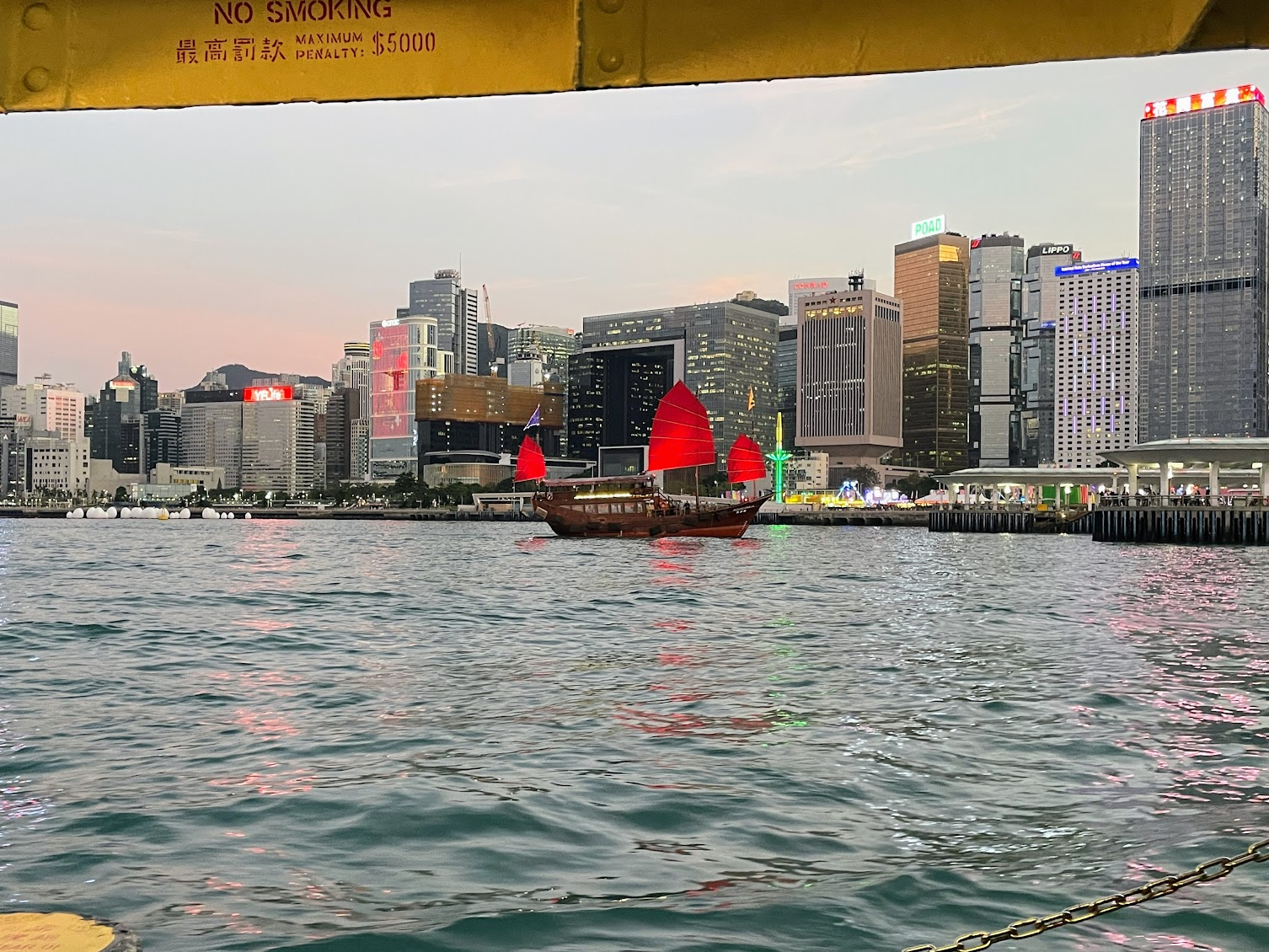
One former British colony has, however, remained absent from the literature: Hong Kong. In a recent paper, I addressed this gap by piecing together the past, present and future of colonial records that were moved from Hong Kong to the UK.[3] In this post, I summarise the main findings of my paper by comparing the Hong Kong case with that of other British colonies and arguing that the handling of Hong Kong colonial government records was unique and largely escaped Operation Legacy.
Continue reading “Destroying and Doctoring the Empire’s Past: Comparing Hong Kong with Other British Colonies”
Mitchel Stuffers
Assistant Editor at CIGH Exeter & PhD Candidate in History, University of Exeter
Mitchel Stuffers
Assistant Editor at CIGH Exeter & PhD Candidate in History, University of Exeter
All seminars take place on Wednesdays 3.30pm-5.00pm in person in Amory B310 unless otherwise noted, with the option to join remotely. Reminders, links, and abstracts will be sent a week in advance of each seminar to the CIGH mailing list. To be added, please email Chris and Beccy at c.w.sandal-wilson@exeter.ac.uk and r.williams2@exeter.ac.uk.
WEDNESDAY 1 OCTOBER [Week 2] Welcome (Back) Social
Join us in the Amory Senior Common Room for an informal gathering to mark the start of the academic year, welcome new researchers, and catch up with old friends.
WEDNESDAY 8 OCTOBER [Week 3] Parting Gifts of Empire: Book Talk
Join us for a talk by Esmat Elhalby (Toronto) around his forthcoming book, Parting Gifts of Empire: Palestine and India at the Dawn of Decolonisation. This event is co-hosted with South Asia Centre and the European Centre for Palestine Studies. NB: This event will take place 2.30-4.30pm in Lecture Theatre B, Streatham Court.
WEDNESDAY 22 OCTOBER [Week 5] Legacies of Devon Slavery Connections
At this event, members of the Legacies of Devon Slavery Connections Group will be sharing the work that they have been doing to explore Devon’s local connections to slavery, and their insights into sources and archives for doing this kind of research.
WEDNESDAY 5 NOVEMBER [Week 7] Meet our visiting researchers!
Join us to learn more about the exciting research our visiting doctoral and post-doctoral research colleagues are doing here at Exeter. Saloni Verma and Nazlı Songulen will present on their ongoing projects.
WEDNESDAY 3 DECEMBER [Week 11] The Bonds of Freedom: Book Talk
Join us to hear Jake Subryan Richards (LSE) speak about his new book, The Bonds of Freedom, which tells the forgotten story of people seized from slave ships by maritime patrols, “liberated”, then forced into bonded labour between 1807 and 1880. NB: This event will take place in Amory C417.
WEDNESDAY 10 DECEMBER [Week 12] Postgraduate Research Symposium
As always, we’ll see out the term on a high note: join us as post-graduate researchers working on Imperial and Global History at Exeter share their work in progress.
Berizzi Mariachiara[1], Boam Olivia[2], Fourie Nicholas Charles[3], Pizarro Jacinto Laura[4], Yücel Dinç Fatma[5]
‘Linguistic Landscapes‘, Venice International University Summer School 2025
Faculty: Kurt Feyaerts, KU Leuven (Coordinator); Richard Toye, University of Exeter (Coordinator); Matteo Basso, Iuav University of Venice; Geert Brône, KU Leuven; Claire Holleran, University of Exeter; Eliana Maestri, University of Exeter; Michela Maguolo, Iuav, University of Venice; Paul Sambre, KU Leuven
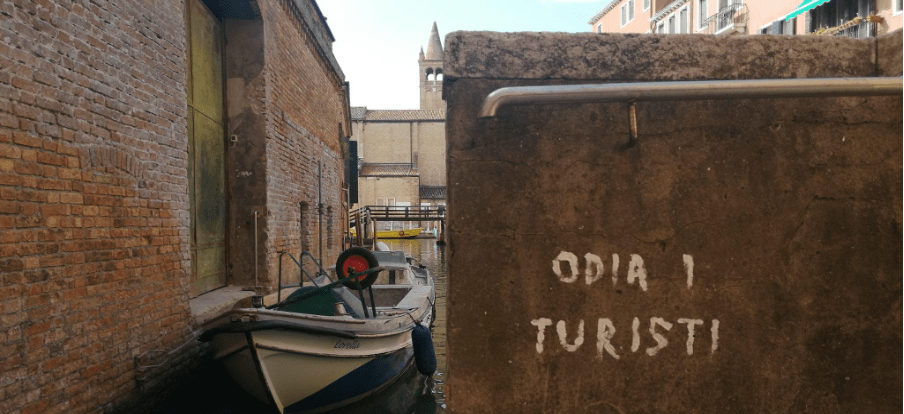
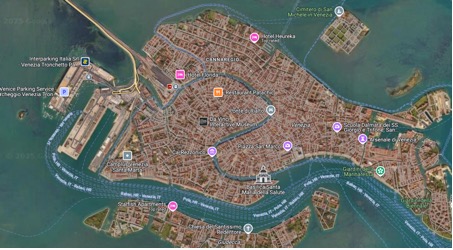
In Santa Marta, a quiet Venetian district, the city itself becomes a text: walls, streets, and public spaces speak through signs, graffiti, and infrastructures that reveal five interwoven themes: Anti-tourism, Transport & Mobility, Multilingualism & Symbolic Resistance, Government & Authority, and Prison as an Edge. From anti-tourism sentiments to the symbolic tensions of incarceration, our investigation examines how language, infrastructure, and public space interact to shape meaning and mobility. As shown in Figure 1, which provides a satellite view of Venice highlighting key landmarks and mobility nodes, our study is grounded in the spatial reality of the city. We begin by analysing local resistance to mass tourism, then move through the spatial logic of transport hubs like Piazzale Roma. We further consider multilingualism and graffiti as forms of symbolic resistance, explore the role of governance in shaping visibility and authority, and finally, interpret the Santa Maria Maggiore prison as both a physical and discursive edge.
Shagnick Bhattacharya
University of Exeter
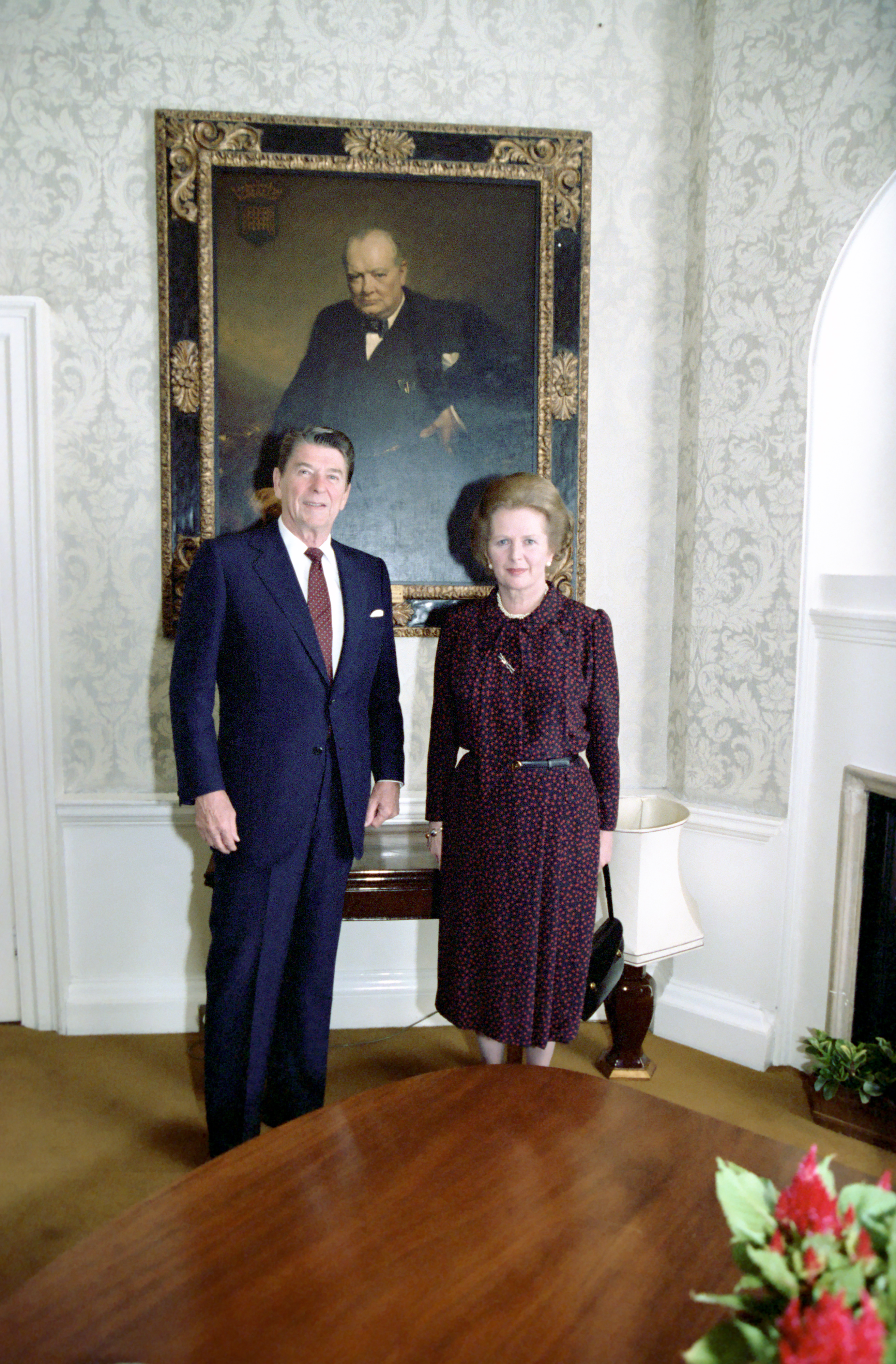
This article proposes that there were nuances and limits to Cold War-era British Prime Ministers’ use and abuse of the country’s imperial past to influence policy, shape national identity, and navigate international relations. That Prime Ministers’ use of public speeches to further their political agendas should receive greater academic attention was first proposed by Richard Toye[1] over a decade ago, and has currently taken the shape of an active research project[2] focussing specifically upon imperial rhetoric (titled ‘Talking Empire’—not to be confused with the CIGH’s podcast series!) led by Christian Damm Pedersen at the Syddansk Universitet, having recently received funding from the Carlsberg foundation.
Using contemporary newspaper reports from across Britain as sources, my intervention here will be on two counts: firstly, by showing how Margaret Thatcher used the legacy and memory of Churchill in her rhetoric as a surrogate for referring to the imperial past (rather than directly mentioning the Empire in the first place) in order to publicly talk about her desired economic policies; secondly, by noting how any rhetorical premiership’s reliance on the imperial past could also be turned against the premier by their political opposition (and not even necessarily by anti-imperialists) in an attempt to strip it of its usefulness as a political resource for the former.
Continue reading “‘This country had a great empire’: The Nuances and Limits of the Rhetorical Premiership in Using the Imperial Past”Beatrice Gervasi, Katarzyna Jonkisz, Meng Hao, Sabeth Malfliet, and George Ellis
Students of ‘Linguistic Landscapes‘, Venice International University Summer School 2025
Faculty: Kurt Feyaerts, KU Leuven (Coordinator); Richard Toye, University of Exeter (Coordinator); Matteo Basso, Iuav University of Venice; Geert Brône, KU Leuven; Claire Holleran, University of Exeter; Eliana Maestri, University of Exeter; Michela Maguolo, Iuav, University of Venice; Paul Sambre, KU Leuven
Our case study of Venice for the ‘Linguistic landscapes: signs and symbols’ summer school was centred around the storied neighbourhood of Santa Maria Formosa. This area boasts a historic Basilica, the Fondazione Querini Stampalia library and a new art installation of 2 lions and 2 lionesses which is intended to promote public interaction with art and celebrate Venetian pride. In short, this area offers a lot culturally and historically. This is strongly evident when walking down the side streets. During our first excursion, our group got the immediate sense that this was a residential area that had developed a strong tourist population due to its historical significance and geographic location (en route to the Rialta bridge).
We were fortunate in the sense that this region of Venice was not a particularly large one, being measured at 0.0072km^2. However, this did not mean that our investigations were without challenge. The geography of this area (a seeming thoroughfare for tourist populations) led to difficulties in photo collation. This combined with the high-content-per-area (a total of 73 relevant primary photos) and the labyrinthine streets led to our group having an abundance of data and difficulties delimiting our data set and research question. To overcome this, we adopted a thematic approach which split our data set into three relevant points for discussion: action flows, multilingualism and polyfunctionality. We then used relevant semiotic and anthropological studies (for example Landry and Bourhis 1997, Scollon and Scollon, 2003) to dissect the data set and apply a linguistic landscapes lens with the end goal of finding out whether Santa Maria Formosa is a healthily functioning neighbourhood or another victim of the increasing globalization faced all over the western world.
Continue reading “Striking a balance between residents and tourists? The Linguistic Landscape of Santa Maria Formos”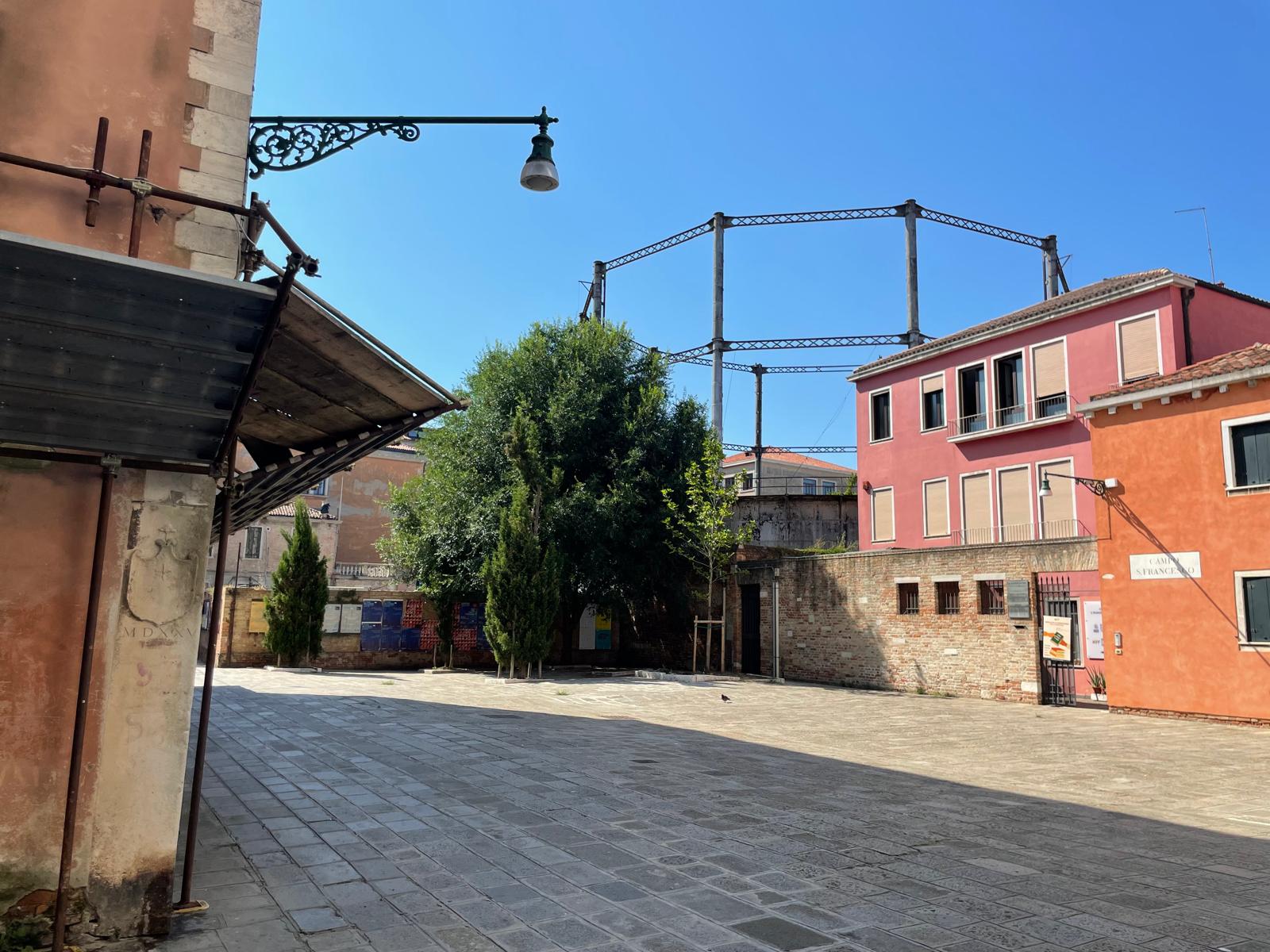
Hualing Zhai[1], Quinten Heymans[2], Bartolomeo Perazzoli[3], Sophie Paynter[4], Alice Wadsworth[5]
Students of ‘Linguistic Landscapes‘, Venice International University Summer School 2025
Faculty: Kurt Feyaerts, KU Leuven (Coordinator); Richard Toye, University of Exeter (Coordinator); Matteo Basso, Iuav University of Venice; Geert Brône, KU Leuven; Claire Holleran, University of Exeter; Eliana Maestri, University of Exeter; Michela Maguolo, Iuav, University of Venice; Paul Sambre, KU Leuven
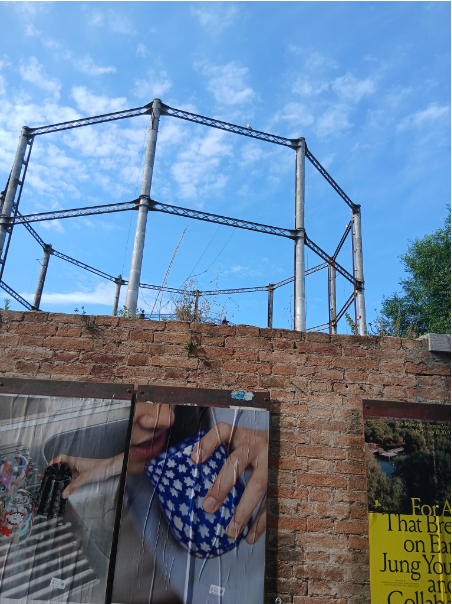
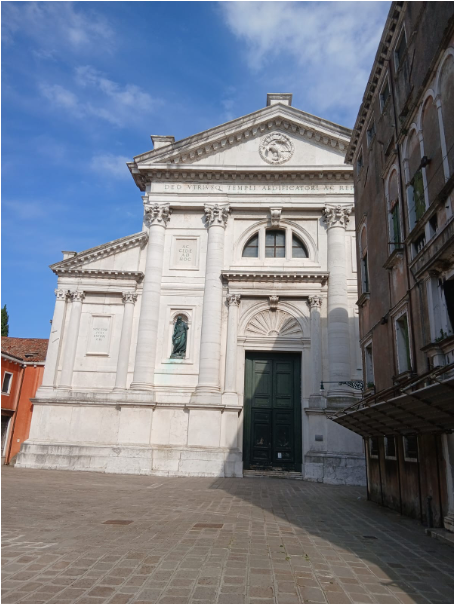
San Francesco della Vigna (later also SFdV), located on the northeastern edge of Venice, presents a sharp contrast to the city’s typical romantic image. The area may feel, in some ways, stuck in time, with the campo (the Venetian equivalent of a piazza) overlooked by a large gasholder (image 3) on one side, and the beautiful if somewhat imperious 16th-century church of San Francesco della Vigna (image 4). Our group, as part of the 2025 VIU Linguistic Landscapes summer school, explored this working-class neighbourhood focusing on the themes of presence and absence. At first, the area seems quiet and almost forgotten, with few signs of life such as shops, cafés, or passersby. However, through exploring the linguistic and semiotic landscapes and the soundscape of the area, we found a quietly strong local identity to be bubbling away beneath the seemingly barren surface.
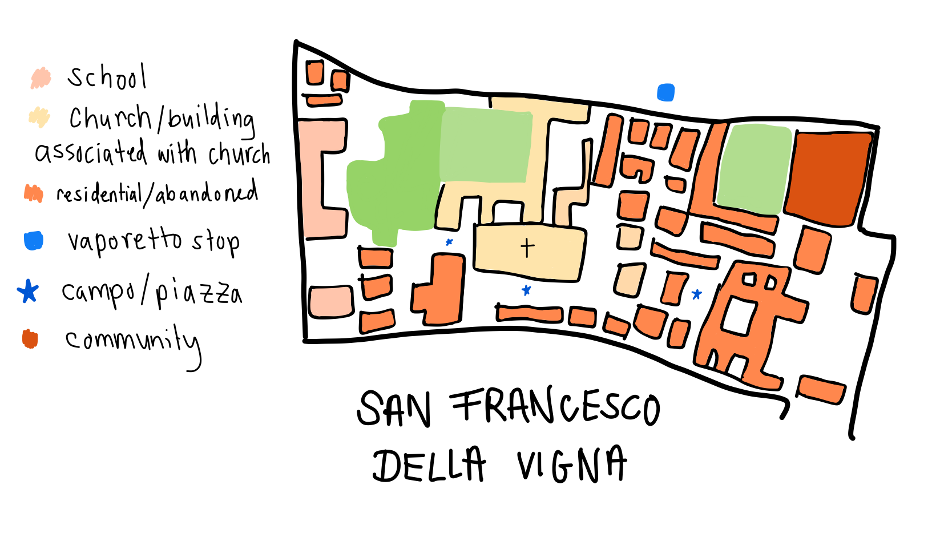
We were lucky enough to explore every inch of the isola, and the walls were deep in conversation with the neighbourhood and with each other. So perhaps this work, and any work of mapping out a linguistic landscape, can be considered a kind of ethical ‘eavesdropping’. We observed- and listened- from outside but we were also able to conduct a few interviews as part of our research. Interviews with residents highlighted ongoing gentrification and local feelings of resistance. One construction worker noted that scaffolding usually indicates Airbnb renovations, reflecting economic and demographic changes.
Continue reading “Venice in absentia: A linguistic landscape of San Francesco della Vigna”Marc-William Palen
University of Exeter
Cross-posted from the Transimperial History Blog
Beginning around 1870, the protectionist US Empire sparked a global economic nationalist movement that spread like wildfire across the imperial world order. Late-nineteenth-century expansionists within the Republican Party got things started in the 1860s when they enshrined what was then known as the “American System” of protectionism — high protective tariffs coupled with subsidies for domestic industries and internal improvements — as official US imperial economic policy. By 1900, American System advocates within the GOP carved out a protectionist colonial US empire to insulate itself from the real and perceived imperial machinations of the more industrially advanced British, who had unilaterally embraced a policy of free trade in the 1840s.[1] As I explore in my new book, Pax Economica: Left-Wing Visions of a Free Trade World (Princeton University Press, 2024), the late-nineteenth-century US Empire’s combination of economic nationalism, industrialization, and continental conquest made the American System the preferred model for Britain’s imperial rivals.[2] One unintended consequence of this protectionist transformation of the imperial order was also that the American System helped inspire anticolonial nationalists within the remit of the British Empire where free trade had been forced upon them, most notably Ireland, India, and China.
Continue reading “The Anti-Imperialism of Economic Nationalism: Transimperial Protectionist Networks in Anticolonial Ireland, India, and China”Martin Thomas and Anne van Mourik
NIOD Rewind
Did European colonialism truly end in the 20th century, as we often assume? In this episode Anne van Mourik (NIOD) speaks with Martin Thomas (Exeter University) about his book The End of Empires and a World Remade: A Global History of Decolonization (Princeton University Press). He argues that decolonization was not just the transfer of power from colonizers to the colonized, but a global, often violent process that forged new alliances, reshaped international connections, and left behind enduring colonial legacies. In this episode we ask: How to rethink decolonization? If empires were so powerful, military, politically, economically, why and how did they collapse? And how is colonial violence different than violence in non-imperial spaces?

Adam Nadeau
Among the more poignant observations made during the early days of overhaul of the United States federal government by President Donald Trump, his former senior advisor Elon Musk, and the Department of Government Efficiency (DOGE) were a series of essays from Mike Brock’s Substack, Notes from the Circus. A former executive at Block Inc. who was involved in, among other things, building Cash App, Brock combines his insight into the world of big tech with his longstanding interest in philosophy to provide commentary on the current state of American democracy.[1] In one particularly illuminating post, Brock traces DOGE’s intellectual origins in part to a school of thought in Silicon Valley which holds that recent innovations in technology have rendered liberal democracy obsolete and that it is inevitable that Western democratic systems of government are to be superseded by digitally mediated, algorithmically optimized, corporatist technocratic autocracies.[2]
One might certainly agree with Brock that the pairing of corporate-technocratic power with the emergence of more advanced artificial intelligence threatens qualitatively unprecedented levels of social control and the attendant erasure of deliberative democratic processes.[3] However, it’s important to note that the blending of corporate entities and American political institutions is hardly a novelty of the twenty-first century. The fusion of private interest and civil governmental structures, particularly executive office, has been an integral part of the American political experiment dating back to the colonial and revolutionary periods, when private ventures backed by civil officeholders were the primary mechanisms for expanding colonial settlement, often with devastating effects on North American Indigenous populations.
Brock is correct to identify colonial opposition to the concentration of corporate power and state authority in the British East India Company (EIC) as one of the causal factors in the American Revolution.[4] However, his analysis misses the critical element that American revolutionary leaders were so strongly opposed to EIC activities in the thirteen colonies specifically because the Company represented a concentration of corporate power and state authority that was external to the colonies: the Tea Act of 1773 enforced a Company monopoly on tea in America that was meant to undersell tea on the colonial black market.[5]
Continue reading “Private Interest and Civil Governance in Colonial and Revolutionary Era America”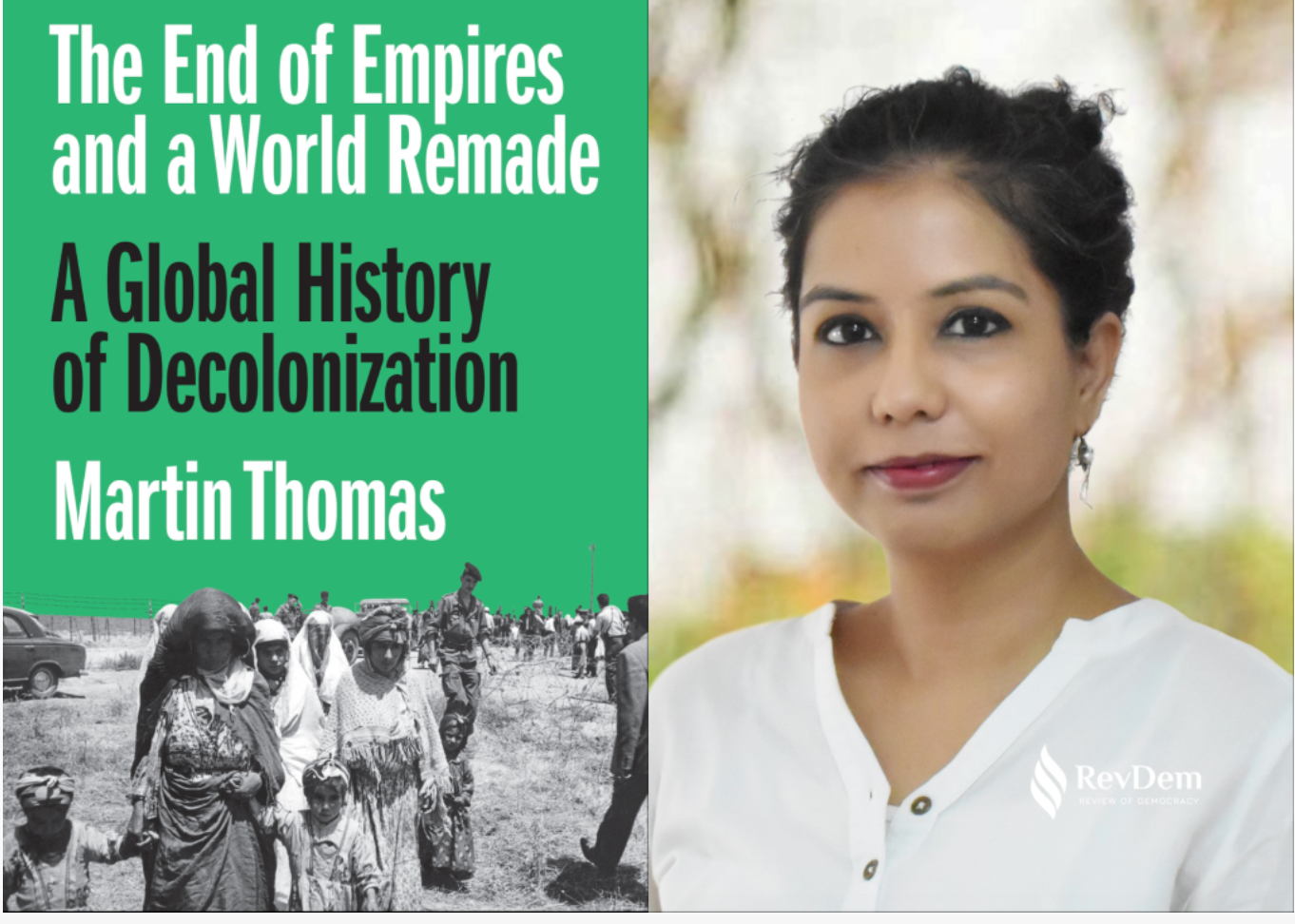
Dr. Anubha Anushree
Editor at the Review of Democracy
Cross-posted from the Review of Democracy
Dr. Anubha Anushree reviews Martin Thomas’s The End of Empires and the World Remade: A Global History of Decolonization, Princeton University Press, NJ, March 2024, 608 pages.
The title of Martin Thomas’s The End of Empires and a World Remade: A Global History of Decolonization signals the ambitious and unconventional nature of his now widely acclaimed project. From the outset, Thomas frames decolonization not simply as a linear dismantling of empires, but as a complex and often contradictory process—one that simultaneously disintegrated old hierarchies and gave rise to new, and sometimes equally exclusionary, national orders. His emphasis on decolonization as a reintegrative force highlights how the collapse of imperial structures often yielded unstable, improvised formations of authority and belonging. The process was deeply entangled with the rise of nationalism and the promise of democracy—two forces that could be emancipatory but also repressive, generative yet limiting. Offering a global history of decolonization is no small task—it requires navigating this terrain of ambivalence, where the struggle for freedom often reproduced new forms of domination, and where the language of democracy could both expand and foreclose political possibilities.
What distinguishes Thomas’s book is precisely this encyclopaedic ambition to capture decolonization in its mutating forms across various parts of the world. Spanning a vast geographical terrain and the turbulent decades between the 1940s and 1990s, the book begins with a striking anecdote: the celebration of Kenyan independence in Nairobi on December 11, 1963. Seen through the eyes of Labour MP Barbara Castle, a vocal advocate for Kenyan independence in the British Parliament, the scene encapsulates the contradictions of decolonization. A regimental band plays Auld Lang Syne, evoking the solemn grace of British ceremonial tradition, even as Castle herself arrives late, scrambling over a fence and tearing her dress in the process. This chaotic juxtaposition—the orchestrated rituals of empire alongside the messy reality of postcolonial transition—mirrors the broader argument of the book: decolonization was not simply the rejection of colonial rule but an unpredictable leap into nation-building, improvisation, and disorder.
Thomas’s study interrogates these contradictions by expanding the definition of decolonization. It is not merely, as he writes, “the concession of national self-determination to sovereign peoples” (13), but also a generative force that “energized different ideas of belonging and transnational connections” (4).
Continue reading “Unfinished Revolutions: Decolonization and Democracy in a Globalizing World” Imperial & Global Forum
You must be logged in to post a comment.