Rhian Keyse recommends this book as essential reading for scholars and practitioners engaging in work to analyse and intervene in gender-based violence on the African continent and elsewhere.
Forced marriage in sub-Saharan Africa is a source of much international debate, especially with recent legal and policy attention to the role of such practices in conflict situations. Well-reported instances such as the abduction of the ‘Chibok girls’ from their school in north-eastern Nigeria in 2014have prompted considerable attention from the popular media and policy advocates alike. Yet, as Annie Bunting, Benjamin Lawrance and Richard Roberts argue in the introduction to Marriage by Force?, ‘the spectacular hides the mundane’, and popular debates tend to oversimplify the complex range of practices referred to as ‘forced marriage’ (p.2). Based on a 2013 conference at the Rochester Institute of Technology, this book brings together anthropologists, legal scholars, historians, and practitioners, to begin to correct these reductive common narratives. Continue reading “Marriage by Force?: Contestation over Consent and Coercion in Africa”→
Salary: The starting salary will be from GBP 28,936 within the Grade E band (GBP 26,495 – GBP 33,518), depending on qualifications and experience.PackageGenerous holiday allowances, flexible working, pension scheme and relocation package (if applicable).
Job category/type: Academic
Job description
College of Humanities
This part time post is available from 1st November 2017 on a fixed term basis for 1 year.
The post
The College wishes to recruit a Postdoctoral Research Associate to support the work of Dr. Rebecca Williams. This part time (60% FTE) Academy of Medical Sciences funded post is available from 1st November 2017 to 31st October 2018. The successful applicant will work on the project ‘Population Control and the Emergency in India: The Shah Commission Regained.’ Continue reading “Call for Applications: Postdoctoral Research Associate”→
The 70th anniversary of the end of Britain’s Empire in India and the birth of the post-colonial states of India and Pakistan have led to a renewed interest in the portrayal of this distant and under-explored past in British arts and the media.
It does not always make for good history. In the stories told on film, radio and television – from the film Viceroy’s House, to BBC One’s My Family, Partition and Me: India 1947 and Radio 4’s Partition Voices – complexity and context are downplayed in favour of “British” stories of colonialism, anti-colonial movements and partition violence.
History is to be communicated through genealogies of the great and the good – of news correspondents, movie directors and radio presenters introducing the audience to their unknown and often unremarkable forebears. The social histories touched upon are never fully communicable because of the desire to avoid reflecting upon the wider political and cultural contexts in which these individuals lived and breathed. Continue reading “No dogs, no Indians: 70 years after partition, the legacy of British colonialism endures”→
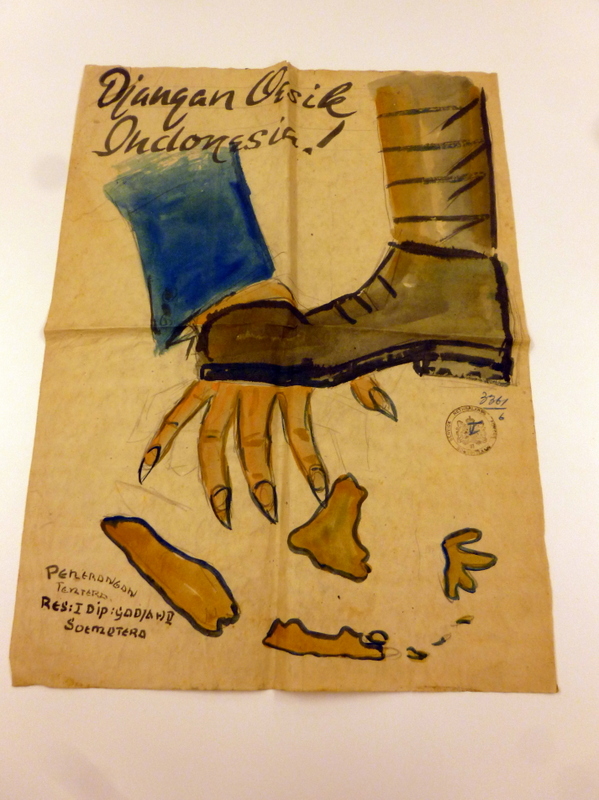
Unknown artist, Indonesian propaganda poster, Sumatra May 1947. From the archive of the NEFIS (Dutch intelligence service), courtesy of Nationaal Archief
Christiaan Harinck, Nico van Horn, and Bart Luttikhuis
Seventy years after the fact, the decolonization war in Indonesia still does not occupy an appropriate position in Dutch public memory. The absence of Indonesian victims in Dutch memory culture makes this painfully obvious: until now, no one has ever even attempted to calculate the Indonesian death toll of this war. Christiaan Harinck, Nico van Horn, and Bart Luttikhuis provide a first attempt, counting 97,421 Indonesian casualties in Dutch military sources – most likely the lower limit rather than a final estimate of the actual death toll.
The Indonesian decolonization war of 1945-1949 has re-entered Dutch public consciousness in recent years. For many decades, the war had only a very cursory presence in Dutch public memory – even though it is one of the largest military operations the country was ever involved in. But in the wake of a number of successful court cases in which Indonesian victims (aided by Dutch activists) forced the Dutch state to pay compensation, Dutch media and politicians over the last decade have gradually started talking about this war again. This has culminated (for now) in the announcement of an extensive government-funded research project. The war in Indonesia is also starting to make more frequent appearances in Dutch popular culture, with the novel Tolk van Java by Alfred Birney recently winning the prestigious Libris prize, and an action movie by popular director Jim Taihuttu announced, which is to be set in the context of the brutal Dutch counterinsurgency campaign in South Sulawesi.
Among all this new interest for the war in Indonesia, the principal focus has been the extent to which Dutch forces committed atrocities against Indonesian civilians and combatants. That atrocities such as summary executions, torture, widespread arson, etc., were a structural part of Dutch military practice has been well documented. But surprisingly, despite all this attention upon Dutch atrocities, the Indonesian victims remain hidden. Dutch historiography and Dutch public memory continue to enjoy a highly Eurocentric view on the war in Indonesia. More than ever before, the black chapters of Dutch history can now be discussed. But still, the public debate is highly inward-looking. The main interest is in ‘our’ atrocities in the colonies, in ‘our’ guilt and what ‘we’ should now do about it. Meanwhile the other, the Indonesian, is still no more than an extra on the stage of Dutch history, lacking a face or and autonomous historical agency. Nowhere is this absence of Indonesian faces more obvious than in the absence of Indonesian victims from Dutch memory culture. We haven’t even had a reliable estimate of Indonesian casualties during the decolonization war – until now. Continue reading “Do the Indonesians count? Calculating the number of Indonesian victims during the Dutch-Indonesian decolonization war, 1945-1949”→
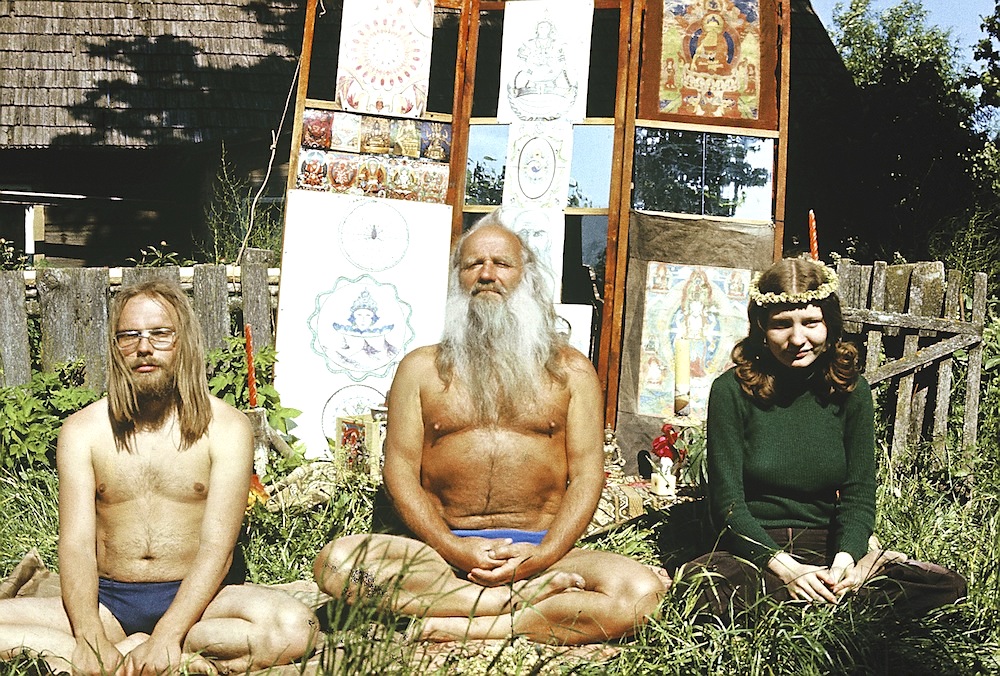
Mihkel Ram Tamm (centre), Estonian philosopher and expert on Sanskrit, yoga and meditation, became a guru for many hippies in Soviet Estonia and elsewhere in the USSR. This photo appears in the documentary film Soviet Hippies, directed by Terje Toomistu. Photo: Courtesy of Vladimir Wiedemann.
Jennifer Grove and Kate Fisher University of Exeter
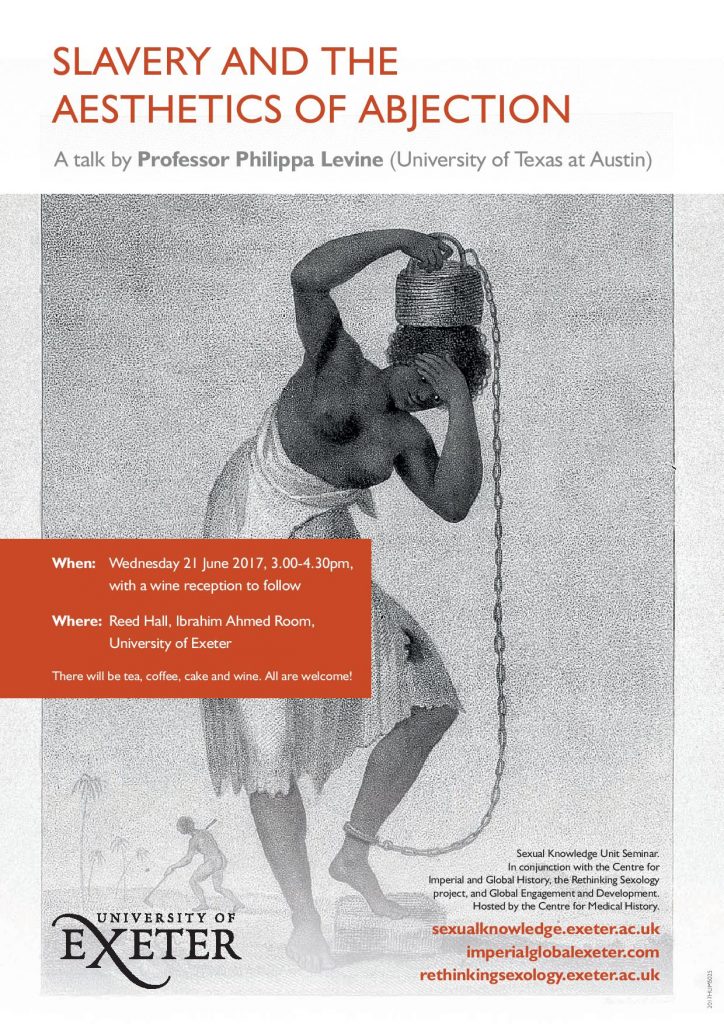
Last month we were joined at Exeter by Professor Philippa Levine from the University of Texas at Austin who spoke to us on “Slavery and the Aesthetics of Abjection”. This was a seminar organised by the Centre for Imperial and Global History and the Sexual Knowledge Unit, with support from Global Engagement and Development.
Philippa, who is currently the Walter Prescott Webb Chair of History and Ideas at UT Austin, will be known to many for her wide-ranging work on the nineteenth and twentieth century history of imperialism, gender, sexuality, prostitution, medicine, eugenics and the professionalization of the study of the past. Her new project which she discussed with us is exploring the eighteenth and nineteenth century history of nakedness. In this paper she focused on nakedness in images of slaves and slavery, drawing particularly on the visual record of enslavement. For Levine such images draw on what she terms an aesthetics of ‘abjection’, and she charted the various visual markers of marginality and loss. Continue reading “Podcast – Slavery and the Aesthetics of Abjection – Philippa Levine”→
Fees: Participation in the workshop is free, but spaces are limited, so prior enrolment is essential. There are no funds available for supporting travel or subsistence needs of participants.
Content: The principal aim of the workshop is to train potential teachers of Exeter Foreign Language Centre’s new Hindi-Urdu programme, which will begin in October 2017, subject to sufficient enrolment. We are aiming to develop a curriculum capable of teaching Hindi and Urdu together, that is, one language in two scripts. This is unique in the UK, but successfully trialled in the USA, most eminently byUT Austin’s Hindi-Urdu Flagship programme. As such, teachers of both or either language are very welcome to attend the workshop, which will include multiple sessions dedicated to developing teaching materials – text, videos, audio material, customised lesson plans, assessment tools and also mock teaching sessions. A range of classroom situations and student demographics will be taken into consideration, ranging from weekend classes for children in the community to university students. Actual sessions will depend on the stated interests of the participants, subject to the overall aims of the workshop.
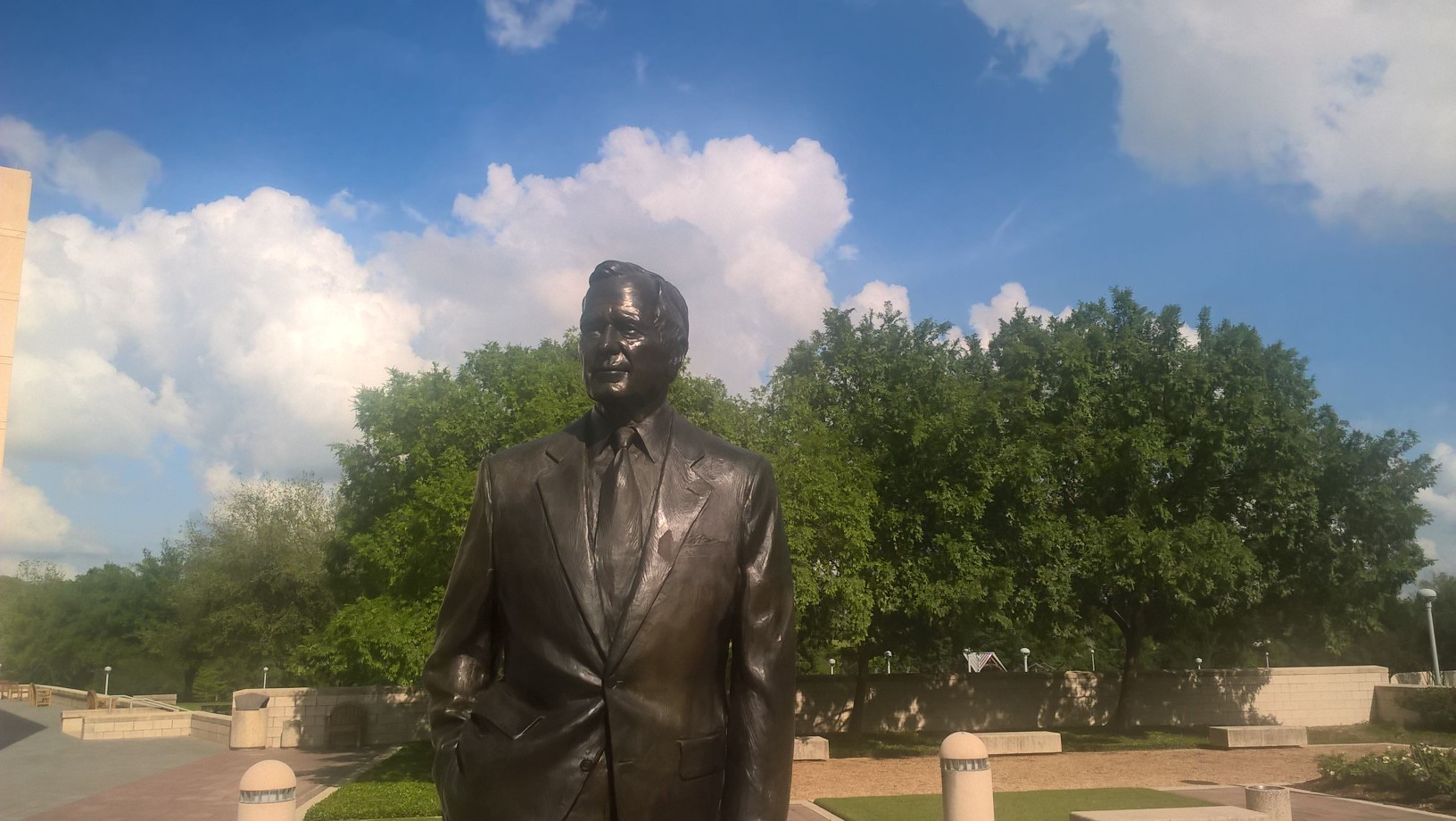
One of the distinctive features of American politics in comparison to the UK is the establishment of Presidential Libraries and Museums. Franklin D. Roosevelt started the trend with the creation of a library at his home at Hyde Park, New York in the early 1940s. Since then, every president has had such an institution, administered by the National Archives and Records Administration, and one was created retrospectively for Herbert Hoover. Texas is particularly well-served, because it has three presidential libraries: those of Lyndon B. Johnson, George H.W. Bush, and George W. Bush.
This April we explored Texas’s presidential libraries and museums, looking at available archival material (relating especially to Anglo-American relations, and Space policy) and assessing the interpretation that each offers of the record of the president concerned. We started at Dallas, with George Bush Junior’s library, located at Southern Methodist University, then moved on to LBJ at the University of Austin, Texas, and are currently writing this blog in College Station, home to the library of Bush Senior. Continue reading “On the Trail of the Presidents”→
1917 was a key year in a crucial decade. This was a decade of change, or, rather, transformation; of the destruction of what became old orders; and of the replacement of existing currents and practices.
From the perspective of 2017, possibly the most important changes of the decade came in 1910-11: alongside revolutionary crises in Mexico, Cuba, and Haiti was the crisis and overthrow of the Manchu dynasty in China. There had been a series of such crises in China before, of course notably with the Ming in the 1640s, and the Mongols in the 1360s. What made the crisis of the 1910s different, however, was the replacement of a dynasty by a republic and the difficulty, for the new system, of establishing its legitimacy. Indeed, China atomised, so that, by 1925, it was divided between a large number of independent polities, most of which were under the thumb of warlords and expressions of their power. China’s fragmentation made it vulnerable to Japanese invasion and, ultimately, to a destructive civil war and communist revolution in 1949. Continue reading “1917: The Year of the Century”→





 Imperial & Global Forum
You must be logged in to post a comment.