Centre Interview: Fairfax-Cholmeley on the French Revolution, Print Culture, and the Terror

Inside the revolutionary committee
Anon., ‘Inside the revolutionary committee. Final scene’ (c.1794). An idealized version of local events during the Thermidorian Reaction against the Terror. The inner circle around the table are members of a local ‘revolutionary committee’, disheveled, drunk and (in one case) foreign.

In this centre interview, Professor Richard Toye and Dr. Alex Fairfax-Cholmeley (University of Exeter) discuss the French Revolution, print culture, and the Terror.

Q1. [Toye] You’re currently working on print culture during the French revolutionary era. It’s well known that this was a period that saw an extraordinary explosion in the publication of pamphlets and newspapers. But who was producing them, and why?

[Fairfax-Cholmeley] It is true that the Revolution saw a remarkable rise in the quantity and variety (but not necessarily the quality!) of printed material available to the French population. In the late 1780s, a creaking system of censorship broke up completely in the face of the huge excitement generated by the call for the first Estates-General (the French equivalent of Parliament) since 1614. From 1789 onwards, many Revolutionaries would draw a close association between freedom of the press and the wider political and social liberties the Revolution was supposed to be securing. The printing press therefore always had a certain revolutionary cachet that encouraged its use – especially in Paris.

Who exactly was producing pamphlets, newspapers and other printed material (broadsides, petitions, plays…the list is endless) clearly varies a great deal. The Revolutionary press attracted ambitious members of the political elite, for obvious reasons, but overall production involved a much broader constituency. For example, part of my PhD research focused on the use of print by victims of repression during the Terror of 1793-1794 as a tactic to extricate themselves from any number of sticky situations, and also to restore their revolutionary standing afterwards. Just as the Terror targeted men and women from right across the social spectrum, so the petitions, legal briefs, letters and other material printed in response were not just authored by a narrow elite. My current British Academy postdoctoral fellowship was partly inspired by this research. I am investigating the activities of surviving victims of the Terror in the next phase of the French Revolution (1794-1799), including their use of print to mount public campaigns against those they alleged to have been their former oppressors. You also see those accused of being former Terrorists printing their own defences in return. Continue reading “Centre Interview: Fairfax-Cholmeley on the French Revolution, Print Culture, and the Terror”

This Week’s Top Picks in Imperial & Global History

Album_cover_shoot_for_Aladdin_Sane_1973_Photograph_by_Brian_Duffy__Duffy_Archive
Album cover shoot for Aladdin Sane, 1973. Photography by Brian Duffy.

Marc-William Palen
History Department, University of Exeter
Follow on Twitter @MWPalen

From how the Cold War shaped David Bowie to lessons from Japanese Canadian internment, here are this week’s top picks in imperial and global history. Continue reading “This Week’s Top Picks in Imperial & Global History”

Centre Profile: The British Scholar Society (@britishscholar)

British Scholar

For scholars of the the British Empire and the British World, the Centre for Imperial & Global History would like to draw your attention to our good friends at the British Scholar Society.

The British Scholar Society is a global organization of historians and political scientists examining Britain’s interactions with the wider world from the seventeenth century to the present day. Aiming to better understand Britain’s place in global history, the society  seeks to foster international intellectual exchange about this theme.

Their interest is not limited to Britain’s political relations with other countries, but includes the economic, social and cultural aspects of its international relationships as well. One important focus is the study of the British Empire and the Commonwealth of Nations. Among the activities of The British Scholar Society are

  • the organization of an annual scholarly conference (The ‘Britain and the World Conference’), held alternately in Britain and the USA
  • Britain and the Worldthe publication of the biannual Britain and the World Journal with Edinburgh University Press
  • the publication of a book series with Palgrave Macmillan
  • the running of a website (britishscholar.org), providing regular updates about the society’s activities, recent publications in the field of British, imperial and global history, book reviews, essays on Britain’s international history, and much more
  • the organization of a lecture series in Britain and continental Europe

Continue reading “Centre Profile: The British Scholar Society (@britishscholar)”

Imperial History and Film Culture

three roads to tomorrow (1958)
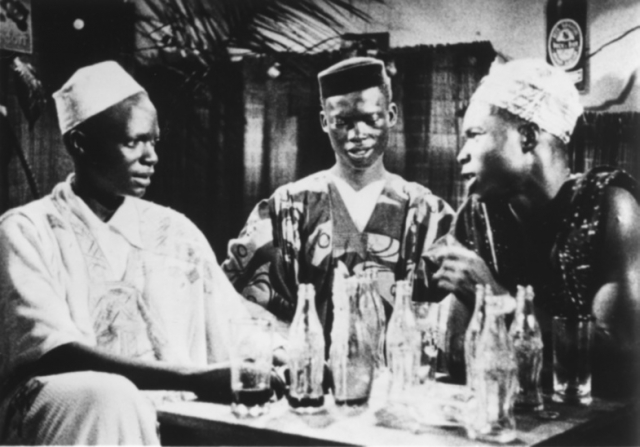
Screenshot from the BP-sponsored Nigerian documentary ‘Three Roads to Tomorrow’ (1958), available for viewing at the Colonial Film Project.

David Thackeray
University of Exeter

What value do film culture sources have for historians of imperial history and how do we locate them? Readers of this forum (or at least those based in the UK) are likely to be familiar with the AHRC Colonial Film project but many key sources for the study of imperial film remain obscure to those outside film studies circles.

Media History Digital Library is perhaps the most useful resource for considering the culture of world cinema-going in the colonial era. Building on the resources of the Museum of Modern Art in New York and a host of other collections, this site offers a range of film magazines from across the world as well as key pieces of government legislation.

Cinema St. Andrews provides access to various digitised resources, including a full run of the Colonial Film Unit’s magazine Colonial Cinema. Continue reading “Imperial History and Film Culture”

This Week’s Top Picks in Imperial & Global History

Poster of First-World-War French colonial troops. Courtesy of Asia-Pacific Journal.

Marc-William Palen
History Department, University of Exeter
Follow on Twitter @MWPalen

From 3-D printers undoing the destruction of ISIS to the endangered archives of Freetown, here are this week’s top picks in imperial and global history. Continue reading “This Week’s Top Picks in Imperial & Global History”

The Costs of Empire: Native Americans and the Origins of the Stamp Act


mastersofempire_021915_B Cover[1][1]

Michael A. McDonnell
University of Sydney
Follow on Twitter @HstyMattersSyd

This month, 250 years ago, the British Parliament in London met to consider the vehement colonial response to the hated Stamp Act. The tax had been introduced in 1764 to raise revenue from the colonies in North America. But as most Americans know, colonial protests forced Parliament to back down, and in doing so, set off the fuse that would eventually ignite the American Revolution. Yet few Americans know why this legislation was passed in the first place.

In part, it was to recover some of the tremendous costs of Britain’s imperial wars. In 1763, Britain emerged victorious from the Seven Years’ War, a conflict that began on the frontiers of its North American colonies but which quickly became global in scope. Britain bested its rival France in India, the Caribbean, and North America, but only after pouring hundreds of thousands of pounds into its navy and army.

Though the war had been tremendously costly, it quickly led to another imperial war that gets less attention – this time with Native Americans – in a conflict we often now call “Pontiac’s War.” At the end of the Seven Years’ War, Native Americans insisted the British had only conquered the French, and not them. But British military officers, with their confidence brimming from their previous successes, acted imperiously and ignored native claims to sovereignty and their land. Continue reading “The Costs of Empire: Native Americans and the Origins of the Stamp Act”

The Myth of American Isolationism – A Centre Talk by Prof. Kristin Hoganson – This Wed.

The Heartland Myth Revisited

American Isolationism as Seen through the Most Local of Places

The Centre for Imperial & Global History is delighted to announce

a talk by

Professor Kristin Hoganson
Harmsworth Visiting Professor of American History
Oxford University

kristinhoganson

When: Wed. Jan. 13, 4-5:30 pm

Where: Amory 239AB, University of Exeter

Abstract: This talk reconsiders the myth of American isolationism by tackling some of the place-based assumptions upon which it rests.  In opposition to those who have pinned the isolationist label to the rural Midwest, Hoganson explores hidden histories of connection that stitched this seemingly most local of places to the wider world in the seemingly most local of times — the long nineteenth century.  Though attention to such topics as indigenous diasporas, bioprospecting, animal breeding, consular representation, meterological congresses, scientific agriculture, Malthusian discourse, and international students, this paper brings multiple forms of alliance politics to light.  In so doing, it makes a case for a different kind of local history and a different sense of region, attuned not only to affiliative impulses but also to the exclusionary politics of empire.

Kristin Hoganson is Professor of History and Professor of Gender and Women’s Studies at the University of Illinois at Urbana-Champaign, and the 2015-16 Harmsworth Visiting Professor of American History at Oxford University. Her research interests lie in placing the United States in world context, cultures of U.S. imperialism, and women’s and gender history. She is the author of Fighting for American Manhood: How Gender Politics Provoked the Spanish-American and Philippine-American Wars (Yale UP, 1998) and Consumers’ Imperium: The Global Production of American Domesticity, 1865-1920 (UNC Press, 2007). Her current research focuses on the local history of the U.S. heartland: Once Upon a Place: The U.S. Heartland Between Security and Empire (Penguin Press, forthcoming).

This Week’s Top Picks in Imperial & Global History

Galata Bridge
A bustling Galata Bridge in late-nineteenth-century Istanbul. Image courtesy of the Global Urban History Blog.

Marc-William Palen
History Department, University of Exeter
Follow on Twitter @MWPalen

From rush hour in Ottoman Istanbul to the opening of new Vichy French archives, here are this week’s top picks in imperial and global history.

Continue reading “This Week’s Top Picks in Imperial & Global History”

Conquerors: How Portugal Seized the Indian Ocean and Forged the First Global Empire

Crowley Conquerors

Conquerors: How Portugal Seized the Indian Ocean and Forged the First Global Empire by Roger Crowley (Faber & Faber, September 2015; RandomHouse, December 2015)

Reviewed by Jame DiBiasio 

 Cross-posted from Asian Review of Books

“Had there been more of the world,” wrote Luís de Camões of the Portuguese explorers, they “would have discovered it.” That’s a line from Roger Crowley’s fantastic new narrative history, The Conquerors: How Portugal Seized the Indian Ocean and Forged the First Global Empire.

Crowley is out to reset the primacy of Columbus and the Spanish discovery of the Americas that resides in contemporary Western society. The age of exploration was a European endeavor but particularly an Iberian one. The Portuguese explorers were the ones who did the bulk of the discovering. Moreover, as Crowley relates, Portuguese swashbuckling penetrated the heart of Asian commerce and achieved a stunning dominance there. The Portuguese, within a matter of years, had created the first Western-dominated world empire since Alexander the Great. Their achievement was Act One in the saga of the rise of the West – and what a bloody, thrilling and unlikely victory it was. Continue reading “Conquerors: How Portugal Seized the Indian Ocean and Forged the First Global Empire”

CFP: Britain and the World Conference 2016 – Deadline Jan. 4

Conference 2016

Call for Papers: Britain and the World Conference 2016

Cross-posted from British Scholar Society

23-5 June, Senate House, University of London

Deadline for Submissions:  Monday, 4 January 2016

Notifications as to Inclusion:  Friday, 22 January 2016

This is the call for papers for the ninth annual Britain and the World Conference, which will be in London in June 2016. Paper and panel proposals should focus on Britain’s interactions with the world from the beginning of the seventeenth century to the present.  Established scholars, scholars at the beginning of their careers, and graduate students are all equally welcome to apply and present at the conference.

The keynote speaker is Professor Catherine Hall (University College London), and the three plenary speakers are Professor Stephen Conway (University College London), Professor Margaret Hunt (Uppsala University), and Professor Philip Murphy (Institute of Commonwealth Studies).

The Britain and the World Conference is always a very sociable conference, and the 2016 conference will be no different, with the Conference Icebreaker on the Thursday evening, the Dinner Party on the Friday evening, and a post-conference night out in Soho beginning on the Saturday evening.

Continue reading “CFP: Britain and the World Conference 2016 – Deadline Jan. 4”

1. The Colonial Origins of the Greek Bailout

Editor’s Note: In the weeks leading up to the new year, please help us celebrate 2015 at the Imperial & Global Forum by checking out the past year’s 10 most popular posts.

1. The Colonial Origins of the Greek Bailout

not merkel's colony

Jamie Martin
Harvard University
Follow on Twitter @jamiemartin2

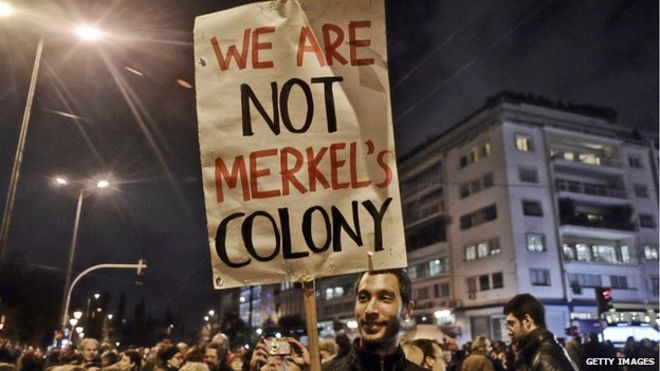
When news broke two weeks ago of the harsh terms of a new bailout for Greece, many questioned whether the country still qualified as a sovereign state. “Debt colony,” a term long used by Syriza and its supporters, was suddenly everywhere in the press. Even the Financial Times used the language of empire: “a bailout on the terms set out in Brussels,” as a 13 July editorial put it, “risks turning the relationship with Greece into one akin to that between a colonial overlord and its vassal.”

Suggestions like these have invited historical comparison. One parallel that’s been mentioned is that of Egypt during the late nineteenth century. In 1876, as a heavily indebted Egypt approached bankruptcy, the Khedive Ismail Pasha agreed to the creation of an international commission, staffed by Europeans, with oversight of the Egyptian budget and control over certain sources of public revenue. This arrangement, designed to ensure the timely servicing of foreign debts, opened a new and extended period of intensified European intervention in Egypt – the Caisse de la Dette Publique was not abolished until 1940. [continue reading]

2. Debunking the Civil War Tariff Myth

Editor’s Note: In the weeks leading up to the new year, please help us celebrate 2015 at the Imperial & Global Forum by checking out the past year’s 10 most popular posts.

2. Debunking the Civil War Tariff Myth

tornintwo

Marc-William Palen
History Department, University of Exeter
Follow on Twitter @MWPalen

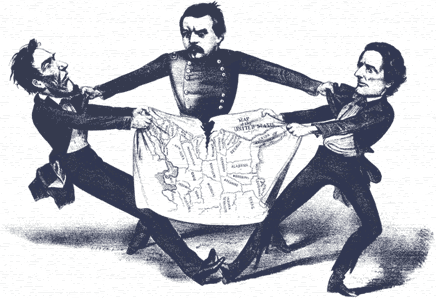
The outbreak of the American Civil War is now more than 150 years past. All the while, the question of what caused the conflict continues to spark disagreement, this despite a longstanding consensus among specialists that slavery – a cultural, political, ideological, and economic institution that permeated (and divided) mid-19th-century American society – was the primary cause of the war. One of the most egregious of the so-called Lost Cause narratives instead suggests that it was not slavery, but a protective tariff that sparked the Civil War.

On 2 March 1861, the Morrill Tariff was signed into law by outgoing Democratic President James Buchanan to protect northern infant industries. A pernicious lie quickly formed around the tariff’s passage, a lie suggesting that somehow this tariff had caused the US Civil War. By ignoring slavery’s central role in precipitating secession and Civil War, this tariff myth has survived in the United States for more than a century and a half – and needs to be debunked once and for all.

In trying to make their case but lacking adequate evidence for the 1860-61 period, “Lost Cause” advocates instead commonly hark back to the previously important role that another protective tariff had played in the 1832 Nullification Crisis. They then (mistakenly) assume the political scenario to have been the same three decades later – that southern secession from 1860-61 was but a replay of the divisive tariff politics of some thirty years before. From this faulty leap of logic, the argument then follows that the Republican Party’s legislative efforts on behalf of the Morrill Tariff from 1860 until its March 1861 passage became the primary reason for southern secession – and thus for causing the Civil War. [continue reading]

3. On Empire and Anachronism

Editor’s Note: In the weeks leading up to the new year, please help us celebrate 2015 at the Imperial & Global Forum by checking out the past year’s 10 most popular posts.

3. On Empire and Anachronism

anachronismRICHARD TOYE
HISTORY DEPARTMENT, UNIVERSITY OF EXETER

FOLLOW ON TWITTER @RICHARDTOYE

Our free online course Empire: The Controversies of Imperialism has now been running two weeks; between them, the participants have already made thousands of comments, often arguing their respective points of view quite vigorously. One persistent theme of debate is the degree to which it is possible to pass judgements on the actions of people in the past, who were operating on the basis of standards that are different from those held today. This is an important and difficult issue for historians in general, although the contentious topic of ‘Empire’ seems to throw it into particular relief. Everyone can agree that we shouldn’t reach assessments that are anachronistic; it is much harder to reach agreement on what constitutes anachronism. [continue reading]

4. 12 Digital Research Suggestions for Dissertations on the History of Modern Britain & the British Empire

Editor’s Note: In the weeks leading up to the new year, please help us celebrate 2015 at the Imperial & Global Forum by checking out the past year’s 10 most popular posts.

4. 12 Digital Research Suggestions for Dissertations on the History of Modern Britain & the British Empire

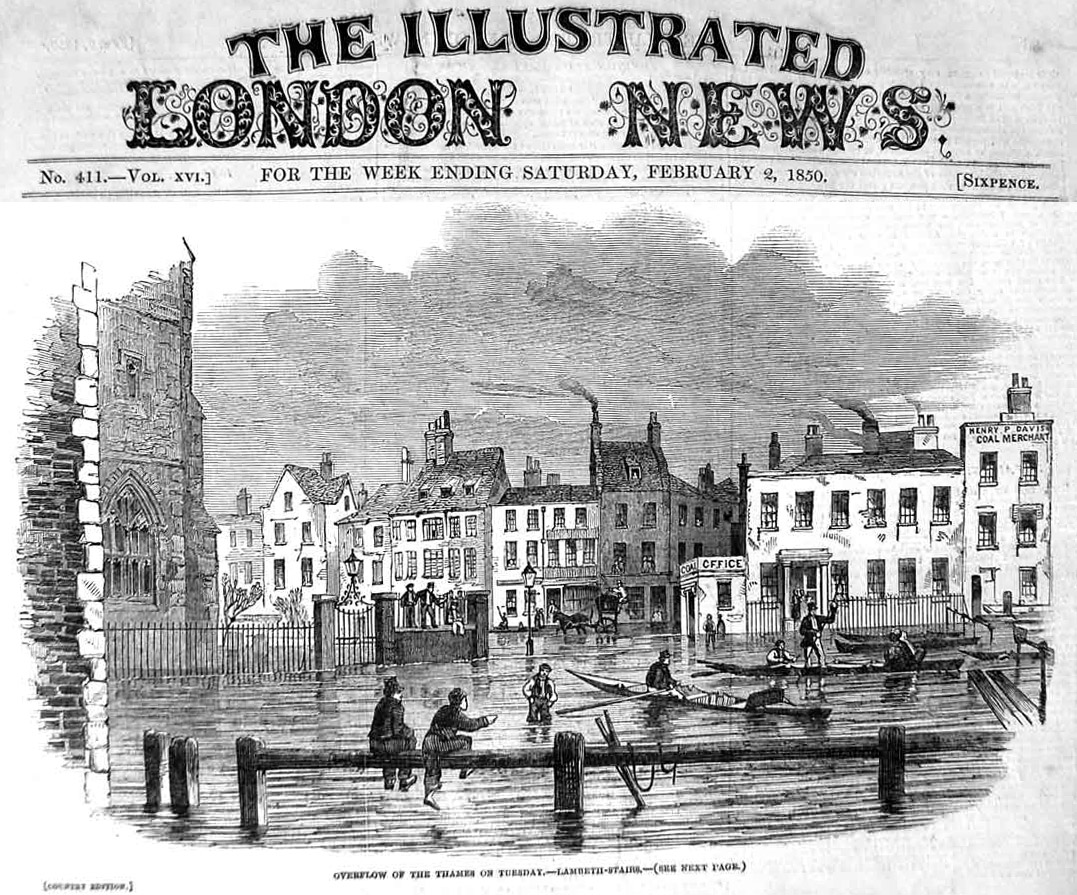
Illustrated London News

David Thackeray, Marc Palen, and Richard Toye
University of Exeter
 

As 3rd-year students scramble to finish their dissertations and as 2nd-year students begin formulating topics for their own, it’s worth noting the dramatic expansion in the availability of sources for the study of modern British and British imperial history in recent years.

Many of these sources are free to use. However, it is often hard to keep track of what materials are now available. What follows is a short guide (which is by no means comprehensive) but gives an introduction to some of the most important sources and may be of particular use to students planning dissertations, as well as other researchers. Please feel free to add your own suggestions in the ‘comments’ section. [continue reading]

5. What is Global Intellectual History – If It Should Exist At All?

Editor’s Note: In the weeks leading up to the new year, please help us celebrate 2015 at the Imperial & Global Forum by checking out the past year’s 10 most popular posts.

5. What is Global Intellectual History – If It Should Exist At All?

Moyn Global-Intellectual-History

Samuel Moyn
Harvard University

Andrew Sartori
New York University

In his bestselling recent novel, The Thousand Autumns of Jacob de Zoet, David Mitchell provides a vignette of global intellectual history, as he imagines it took place in the last years of the eighteenth century at Dejima, the manmade island in Nagasaki’s harbor and the sole contact point between Japan and “the West” for more than two hundred years.

In Mitchell’s portrait, however, the intended isolation of the country that Dejima is supposed to secure is not working perfectly. The novel begins with the title character’s success in smuggling in a contrabandBible. He has help in doing so, thanks to the connivance of a young Japanese translator, Ogawa, with whom he strikes up a nervous friendship.

When the two first meet, instead of calling de Zoet on his illegal smuggling, the Japanese translator asks him about another book in his chest, “book of Mr. … Adamu Sumissu.” Jacob de Zoet replies: “Adam Smith?” It turns out that he is carrying a Dutch translation of Smith’s 1776 Wealth of Nations, a copy of which Ogawa had borrowed from someone else four years before. But he had had to return it to its owner in the midst of translating it. Now he has a new copy at hand, and can finish the job.

The presence of Smith at the outset of the novel seems right, for it reminds the reader of the history of capitalism that Smith portrayed, one of whose effects was the creation of new global relationships, such as those Mitchell imagines in his depiction of Dutch commerce. [continue reading]