Are you thinking of beginning a postgraduate research career, but uncertain of how to begin? On 11 November at 16.00 GMT experts from the University of Exeter will be sharing their guidance and answering your questions about how to develop a successful Ph.D. application in the Humanities.
Themes to be covered include:
How do I know if a Ph.D. is for me? What are the qualities required and what career paths can it lead to?
What is distinctive about a UK Ph.D. in contrast with postgraduate study in other countries, and how does the supervision system operate?
What are the keys to a successful research proposal, and how do expectations differ across disciplines?
How can I identify a university with a strong research culture, and how should I go about locating and contacting prospective supervisors?
Once I have embarked on a Ph.D., what kinds of training and career guidance can I expect to receive?
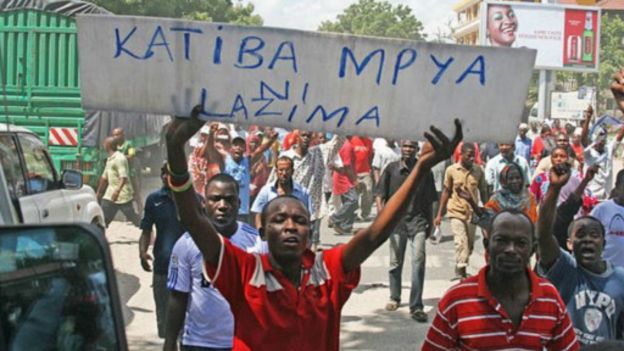
On Sunday, October 25th, Tanzania goes to the polls. This year’s parliamentary and presidential elections appear to be the most closely contested since multiparty democracy returned to the country in 1992. President Jakaya Kikwete will stand down after finishing the second of two five year terms in office. Kikwete’s Chama Cha Mapinduzi – ‘Party of the Revolution’, or CCM – now faces unprecedented competition from an increasingly self-confident opposition coalition. Much of the campaign has consisted of wars-of-words and the making of extravagant promises which any winner would find difficult keeping. Scrape beneath the mudslinging, however, and some central issues emerge. Among them is the question of Zanzibar – a problem rooted in the years of decolonisation in East Africa.
On 12 January 1964, the government of Zanzibar was overthrown in a violent revolution. The island archipelago, which lay a short distance off the coast of mainland Tanganyika, had become independent from Britain just a month beforehand. The ruling Sultan was forced into exile and a new regime under the Afro-Shirazi Party (ASP) took power. Zanzibar’s position at the centre of Indian Ocean trading networks had created a concentrated cosmopolitanism on the islands – a melting pot of competing identities and interests, which spilled over into bloodshed. In the aftermath of the revolution, thousands of Zanzibaris were killed in a wave of violence grounded in long-standing ethnoracial tensions on the islands.
Seen from beyond Zanzibar’s shores, however, the prevailing winds in 1964 were not the monsoon breeze of the spice trade, but the icier fronts of the Cold War. As Jonathon Glassman has shown, during the final years of colonial rule, known locally the zama za siasa (‘time of politics’), Zanzibari politics became superheated with the language of superpower rivalry, the American neoimperialist threat, and the revolutionary dictums of Marxism.[1] Though the revolution was not a communist seizure of power, it was given this veneer by the presence in the new regime of far-left politicians with connections to Beijing and Moscow. Afflicted by Cold War paranoia, Britain, the United States, and other Western states delayed recognising the new ASP government headed by Abeid Karume, fearing the emergence of a ‘Cuba in Africa’. This vacuum was exploited by China, the Soviet Union, and East Germany, which showered Zanzibar with aid and entrenched their influence on the islands. Continue reading “Zanzibar’s Past, Tanzania’s Future: From the 1964 Revolution to the 2015 Elections”→
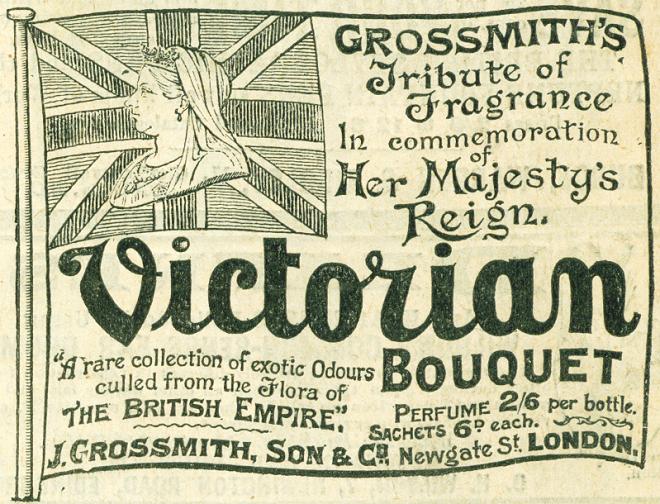
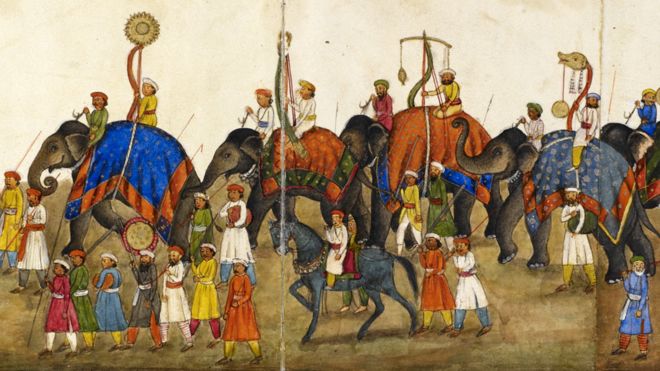
Featuring Andrew Thompson, Bernard Porter, and Stephen Howe, this film focuses on the curious absence of Empire – or what might be called an imperial perspective – in mid-Victorian Britain. The first part explores other powerful ideas of Britain that compete with and at times overshadow the idea of Britain as an imperial nation. The second examines the extent to which these national ideas – imperial or otherwise – reverberated with the wider population.
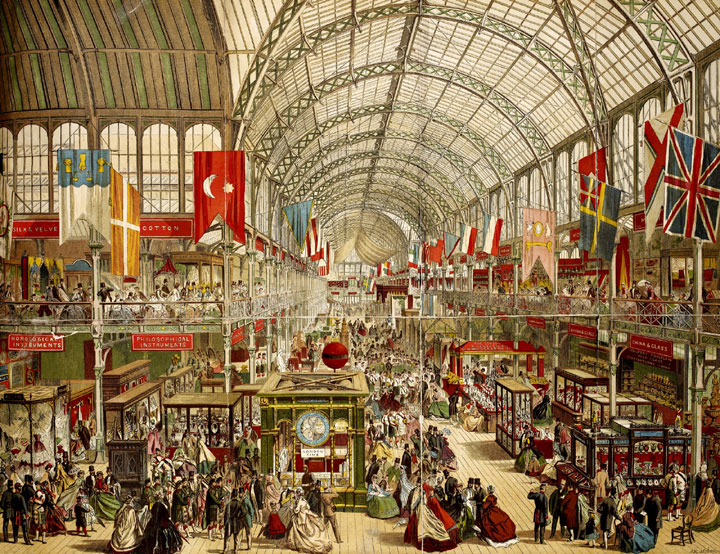
Following on from – and inspired by – Hume’s History of England, nineteenth-century historians set great store by the country’s domestic progress. The central British story was a political narrative; its main characters those great men who had been at the heart of the nation’s affairs. The violence and ongoing instability unleashed by the revolution in France – in my opinion – also played a part in strengthening this tradition. The British political system, now newly reformed, had, it seemed, managed to steer a steady course between the extremes of tyrannical monarchy and anarchic democracy. Continue reading “Ruling the Waves – Episode 3 – ‘The Workshop of The World’”→
The Centre for Imperial and Global History offers internationally-recognised supervision with geographical coverage from 30 staff across African, Asian (including Chinese), Middle Eastern, North American, Latin American, European, Imperial, and Global history from early-modern to contemporary eras. We have strong inter-disciplinary links with colleagues across the humanities and social sciences at Exeter, particularly with the Centre for War, State and Society and the Institute of Arab and Islamic Studies. The Centre has particular research interests in:
The title for this film was adapted from a chapter title in Bernard Porter’s Absent Minded Imperialists (as you may know Prof. Porter’s book was – and still is – the subject of quite considerable debate, and I will return to this in a later section). Following Prof. Porter’s lead, I have in this chapter examined the relationship of different social groups to empire – and how their socio-economic status back home shaped their interaction with empire.
Class, a word out of favour with today’s sociologists, although a broad term, is still a useful categorisation from which to explore the British relationship to Empire. Attitudes formed within a certain social milieu at home were very often carried outward into empire and had considerable influence over how individuals interpreted this new space and their place within it.
But I would also want to stress, that although it might be a powerful factor in shaping them, social class didn’t automatically define or limit attitudes towards empire. People from the within the same social group could have conflicting attitudes towards the spread of capitalism, technology, or even the Christian faith. When Britons came into contact with Empire there was no simple uniformity of imperial experience.
Did the settler on the Canadian prairies share the same worldview as the opium trader, or the plantation owner, or the shipping magnate? What about settlers who came to the cities looking not for land but for work? What about the factory worker whose mill processed Indian cotton? Were they motivated by the same things? Did they share the same ideology or set of principles? Continue reading “Ruling the Waves – Episode 2 – ‘Imperialists and Others’”→
Jeremi Suri University of Texas at Austin suri@austin.utexas.edu
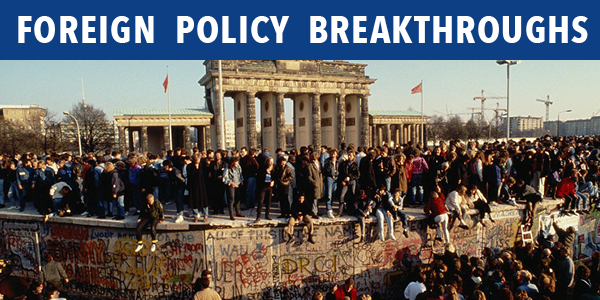
Contemporary foreign policy is faster and more destructive than ever before.
It is dominated by high technology weapons, non-traditional soldiers, vast movements of money, and targeted transmissions of images and ideas. For more than a decade, experts have debated the relative influence of “hard” and “soft” power, but in reality the actions of the most powerful international actors have become more forceful than ever before since the Second World War. With the United States fighting wars in Afghanistan and Iraq, the Russians invading Crimea, China building islands in international waters, and the Islamic State terrorizing occupied territories, it is hard to deny that muscle-flexing is the main medium of political communication in the world today.
Unlike in the Cold War, when the bipolar relations between the United States and the Soviet Union enforced self-limiting rules for international conduct, today the law of the jungle is the guiding principle of globalization. The strong feel free to take what they can. They fear that if they do not act forcefully, someone else will seize what is most valuable in a hyper-competitive international system. Our world has fewer big wars, but we are still always at war. Continue reading “War and Diplomacy in an Age of Extremes”→
There seems to be a tendency for some public figures and media commentators to make sweeping assertions about how ‘the Empire’ did this or that to ‘the British’, as if both could somehow be easily defined and the relationship neatly described.
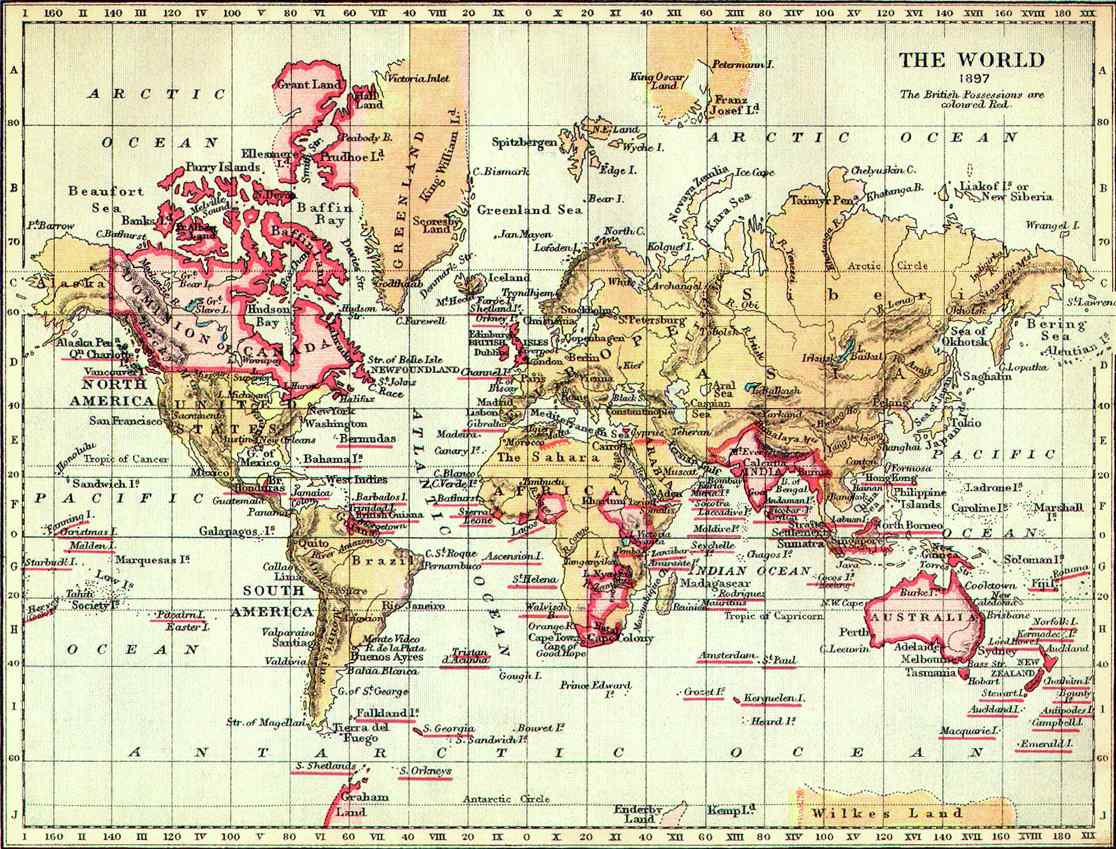
A central theme of these films – perhaps the central theme – is that the relationship between domestic society and Empire was always a complex one, and that this complexity was the result of the diverse nature of Britain’s overseas territory on the one hand, and the diversity of British society on the other.
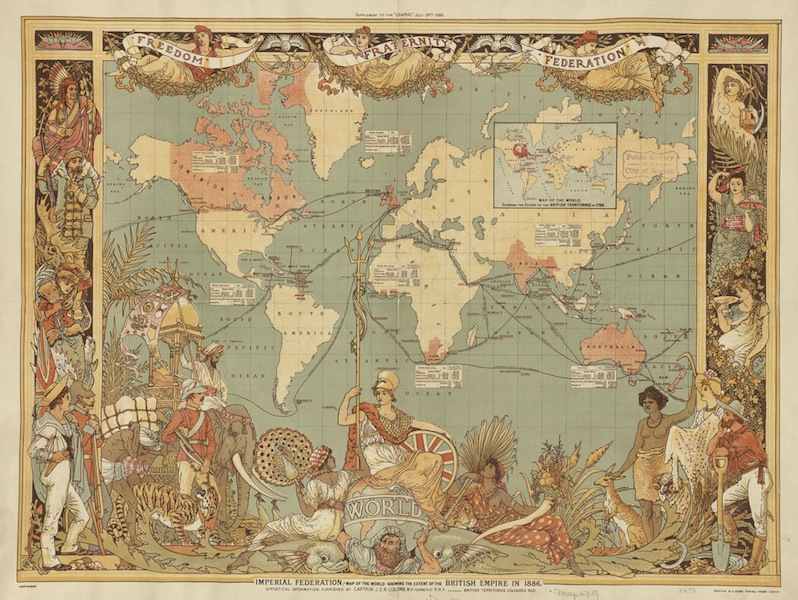
This first chapter tries to make some sense of the former, that ‘patchwork quilt’ of colonies, protectorates, dominions and so on, that made up the British Empire. The different types of territory, the tremendous variety in the way in which the different parts of it were governed, all made – and still make – the Empire very difficult to understand as some kind of conceptual whole. Continue reading “Ruling the Waves – Episode 1 – ‘An Expanding Empire’”→
Drs Fabian Klose, Johannes Paulmann, and Andrew Thompson are pleased to announce that the Call for Applications for the second Global Humanitarianism Research Academy (GHRA) 2016 is now open, with a deadline of 31 December 2015.
Call for Applications:
Global Humanitarianism | Research Academy
International Research Academy on the History of Global Humanitarianism
Academy Leaders:
Fabian Klose (Leibniz Institute of European History Mainz)
Johannes Paulmann (Leibniz Institute of European History Mainz)
Andrew Thompson (University of Exeter)
in co-operation with the International Committee of the Red Cross (Geneva) and with support by the German Historical Institute London
Venues: University of Exeter, UK & Archives of the International Committee of the Red Cross, Geneva
Dates: 10-22 July 2016
Deadline: 31 December 2015
The international Global Humanitarianism | Research Academy(GHRA) offers research training to advanced PhD candidates and early postdocs. It combines academic sessions at the Imperial and Global History Centre at the University of Exeter and the Leibniz Institute of European History in Mainz with archival sessions at the Archives of the International Committee of the Red Cross in Geneva. The Research Academy addresses early career researchers who are working in the related fields of humanitarianism, international humanitarian law, peace and conflict studies as well as human rights covering the period from the 18th to the 20th century. It supports scholarship on the ideas and practices of humanitarianism in the context of international, imperial and global history thus advancing our understanding of global governance in humanitarian crises of the present. Continue reading “Call for Applications for Global Humanitarianism Research Academy – Deadline 31 December 2015”→
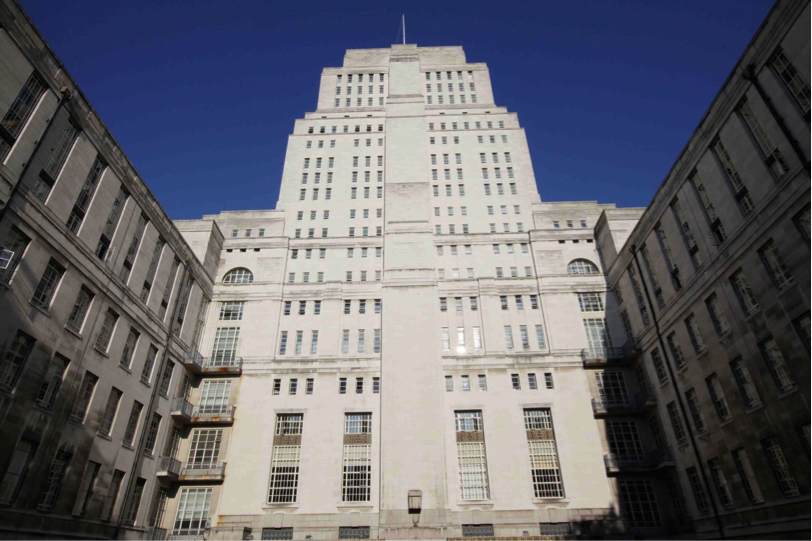
Senate House has featured in many guises from being the supposed model for the Ministry of Truth in George Orwell’s 1984 to Bertie Wooster’s New York apartment block in the TV adaptation of Jeeves and Wooster. This month it played host to the second of three academic workshops connected to the AHRC Imagining Markets network led by David Thackeray, Andrew Thompson and Richard Toye from the University of Exeter. You can read more about the project at www.imaginingmarkets.com.
We began by discussing how the idea of economic imagination can shape our understandings of political economy, and how this cultural idea has various facets (imaginings of economic utopias/ dystopias; entrepreneurship; the imagining of status and aspiration). Papers focused on how a variety of actors shaped ideas of the economic future and interconnected through networks at the level of government and the ‘official mind’; business groups; cultural organisations; advertisers; and civil society. Continue reading “Imagining Markets: Conceptions of Empire/Commonwealth, Europe and China in Britain’s economic future since the 1870s”→
From the last outposts of the British Empire to the declassification of a trove of top-secret CIA documents, here are this week’s top picks in imperial and global history.
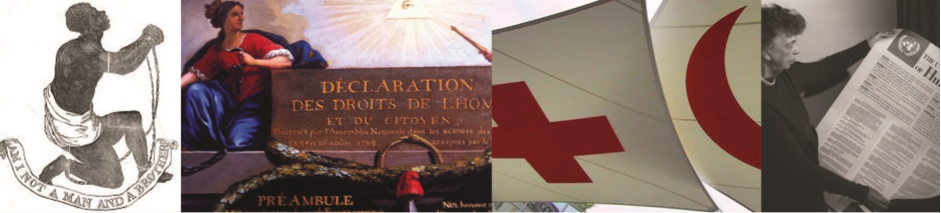
The year 2015 represents a major anniversary for the Red Cross Red Crescent Movement: 50 years ago, its “Fundamental Principles” have been proclaimed at its XXth International Conference in Vienna. The aim of this conference is to reflect on how these principles have influenced – and been influenced by − the broader humanitarian sector. What can be learnt about the Principles from the rich history of the Red Cross and Red Crescent Movement and the wider humanitarian sector, that may in turn provide insights into current realities and act as a guide for the future?


 Are you thinking of beginning a postgraduate research career, but uncertain of how to begin? On 11 November at 16.00 GMT experts from the University of Exeter will be sharing their guidance and answering your questions about how to develop a successful Ph.D. application in the Humanities.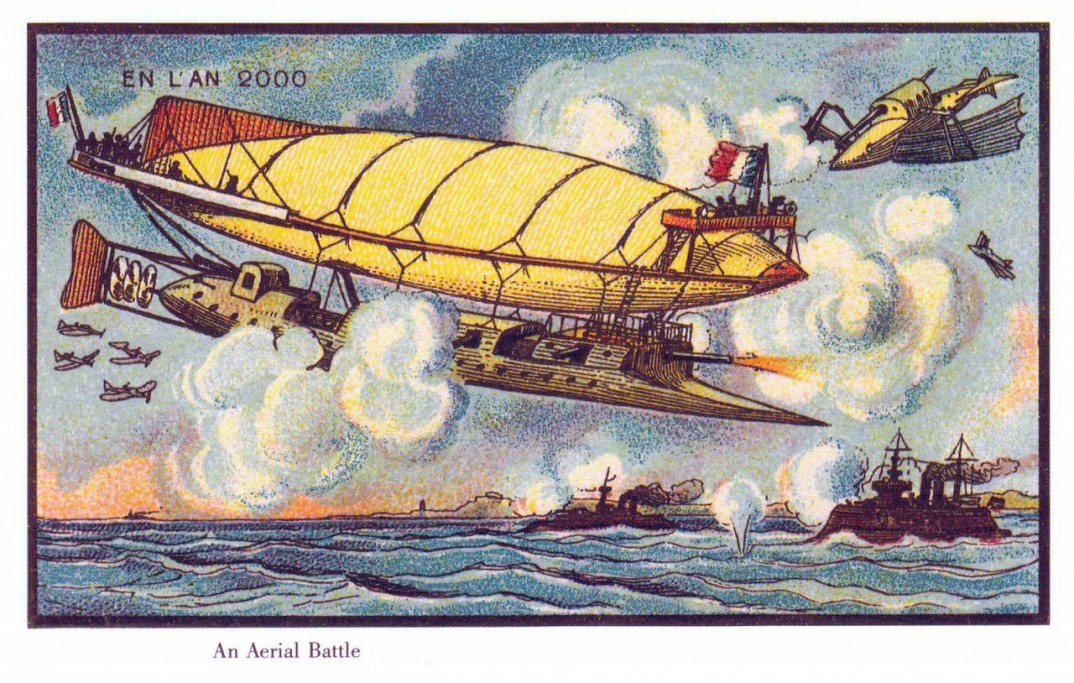

 Imperial & Global Forum
You must be logged in to post a comment.