
Marc-William Palen
History Department, University of Exeter
Follow on Twitter @MWPalen
Marc-William Palen
History Department, University of Exeter
Follow on Twitter @MWPalen
Venue: Institute for Political Research, Spiru Haret street no 8, Bucharest, zip-code 010175
Date: 25-26 June 2019
Over the last decade, issues of migration both out of and into Eastern Europe have brought questions of “whiteness” and its “defence” into the public language of the region. Populists of different political stripes have presented their countries as protectors of traditional European whiteness against a multicultural West. This is in fact quite an unusual phenomenon: race in general and whiteness in particular have for the most part been hidden discourses, absent from mainstream political or cultural thinking about the area itself. At those moments when race did come to the fore, it was often externalised as a phenomenon which adhered only to the western and/or the capitalist imperialist other.
Yet, as some have argued, whiteness has been fundamental to Eastern European history and even the very conception of the region since the 19th century. Anikó Imre referred to Eastern European nationalisms ‘unspoken insistence on their whiteness’. Some have posited a regional identity based on the in-between-ness born of a fragile or frustrated whiteness: such an identity might be allied with the privileged whiteness produced by European imperialism and the global colour line to which it gave rise, whilst also being ambivalent towards, or sometimes excluded from, the projects and institutions from which the power of whiteness has stemmed. While critical theories of race and whiteness emphasise the idea that, in Charles W. Mills’s words, ‘white supremacy was global’, eastern Europeans’ ability to fully exploit being racialised as white has arguably been more conditional, as a result of the peripheralisation of the region itself. Yet it was visits to Eastern Europe that prompted W.E.B. Du Bois to redefine his thinking about race. He observed ethnic relations in the region and understood that race problems were not only about colour.
Despite the growing number of critical histories of whiteness both on a regional and global level, there has been little academic engagement with such questions in the study of Eastern Europe, the Russian Empire and the USSR. This workshop seeks to explore the role that whiteness has played in the articulation of identities from a historical perspective – roughly from an age of high European imperialism in the mid-19th century until the present. We encourage contributions which explore the multiple conceptualisations of whiteness in national spaces, intercultural transfers and transnational impacts across the region, whether this be Central Europe, South- or North-Eastern Europe, Russia or what is now the “post-Soviet space”. Continue reading “Upcoming @socialismglobal Conference: Historicizing “Whiteness” in Eastern Europe and Russia (Bucharest, June 25-26)”
Miguel Hernández
University of Exeter
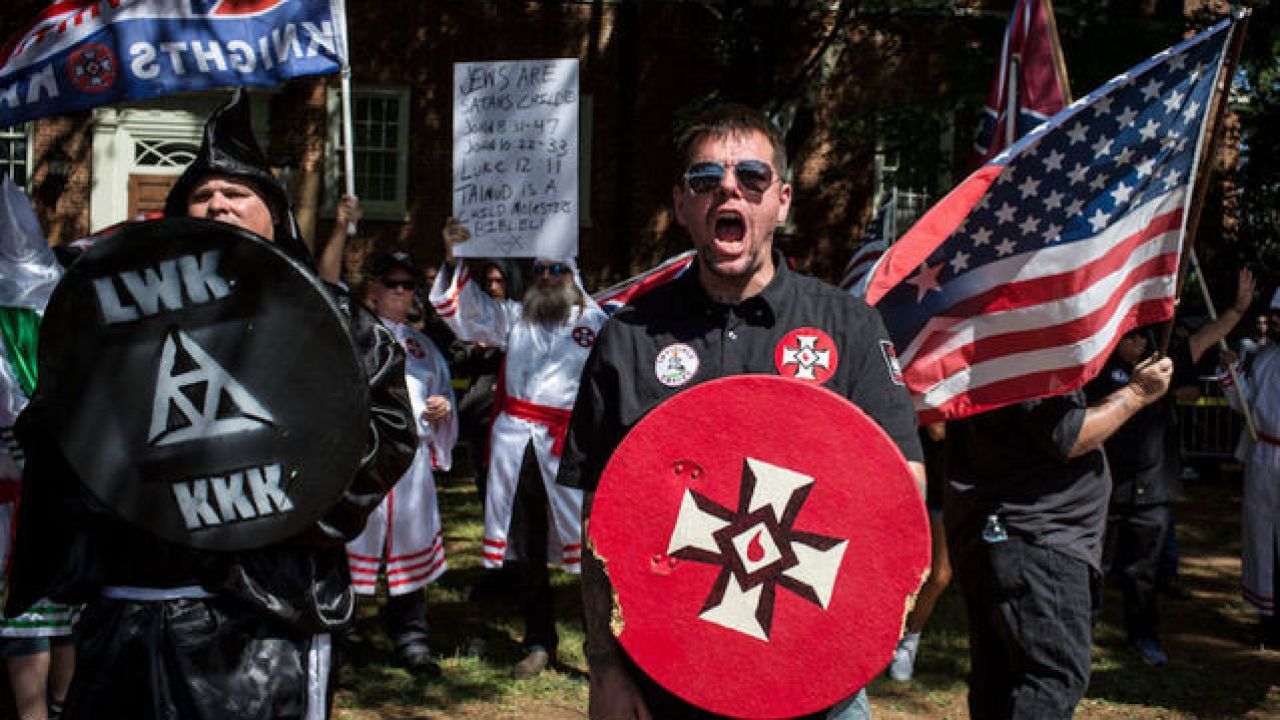
Earlier this month, President Donald J. Trump lent further credence to various figures in far-right politics by retweeting the complaints of prominent far-right activists recently banned from social media platforms. In late April, he also doubled down on remarks he originally made in the wake of the 2017 Unite the Right rally in Charlottesville, Virginia, which left one counter-protester dead and many others wounded, after which he infamously stated “You also had some very fine people on both sides.” These are of course, just the latest instances in a long line of Trump’s support for American white nationalism, from his prominent role in the “Birther” movement during the Obama years, to his lukewarm condemnation of David Duke’s endorsement of his campaign in 2016, to his references as president that “people from shithole countries” in Africa and the Caribbean should be kept from immigrating to the US, that Haitians “all have AIDS,” and defending his earlier claims that Latin American men were a bunch of drug traffickers and rapists. As these examples highlight, the President’s career and the media’s coverage of his election and tenure in office have often provided oxygen, publicity, and legitimacy for once discredited white nationalists and other far-right activists that seek to re-establish themselves as respectable and mainstream under their preferred label of the “alt-right.”
Unsurprisingly, there is little new about the American far-right’s contemporary campaigns to court the media and edge their way into public discourse. In the 1970s, neo-Nazi and former Grand Wizard of the Ku Klux Klan David Duke earned notoriety and found moderate success by reviving and re-branding the KKK to appeal to different audiences. In public, Duke disavowed violence and tried to present his group as a peaceful civil rights group for white Americans. The Klan’s ranks were opened up to Catholics, once reviled because of their supposed allegiance to the un-American Papacy, while women were welcomed as new soldiers in this white supremacist “Invisible Empire.” Nonetheless, David Duke’s publicity stunts, such as the infamous “border patrols” where the Grand Wizard posed for cameras in California while on guard for illegal crossings, often attracted more reporters than supporters. He ultimately failed to transform the Klan into the publically respectable group that could influence mainstream institutions and gain electoral victories. Duke now distances himself from his past leadership of the Klan, and like others in the contemporary far-right movement, seeks to avoid any association with the infamous terrorist group. Continue reading “Trump’s Legitimization of White Nationalism Harkens Back to the KKK’s “Invisible Empire” of the 1920s”
Marc-William Palen
History Department, University of Exeter
Follow on Twitter @MWPalen
Benno Gammerl. Subjects, Citizens and Others: Administering Ethnic Heterogeneity in the British and Habsburg Empires, 1867-1918, trans by J.W. Neuheiser, Berghahn, Oxford 2018. 92£/978-1-78533-709-3.
Reviewed by George Giannakopoulos (Durham University)
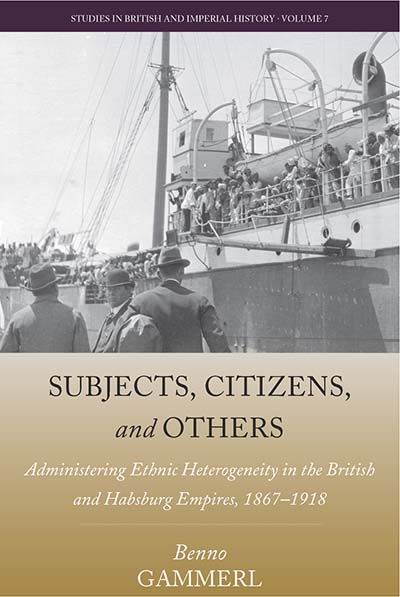 In the summer of 1906, a young Scottish historian embarked on an eight-week journey across the Hungarian end of the Habsburg Empire. Travelling from Vienna to Bratislava and Budapest, and from Cluj to Zagreb and Fiume, Robert W. Seton-Watson prided himself for being among the first foreign observers interested in the national and ethnic diversity in the region. Seton-Watson’s sojourn launched a lasting crusade against the forced assimilation of non-Hungarian populations living under Hungarian jurisdiction which has come to be known as the policies of “Magyarization”. His writings fractured the Victorian edifice of Hungarian liberalism and laid the foundation for the academic study of the Slavonic world in Britain under the auspices of the School of Slavonic Studies in London.
Reacting to Seton-Watson’s polemic, Hungarian liberals drew parallels between Hungary and Britain. They argued that Hungary’s “Magyarization” policy did not differ from similar processes of national homogenisation enforced across the British Empire. Both imperial states, the argument run, included culturally and ethnically heterogeneous populations and made space for cultural autonomy to the extent that freedoms offered did not fracture the unity of the state, the raison d’état. Such an assertion irked the Scottish historian. In his view, Britain and Austria-Hungary were not on the same plane; the long history of liberty and toleration in the British Isles did not measure up to the Magyar policies of “tyranny” and forced assimilation. There was an insurmountable geographical and mental barrier separating an empire of liberty and toleration from a monarchy which had partly fallen under the spell of oriental despotism. Continue reading “Rethinking Empire and Ethnic Diversity in East-Central Europe”
Marc-William Palen
History Department, University of Exeter
Follow on Twitter @MWPalen
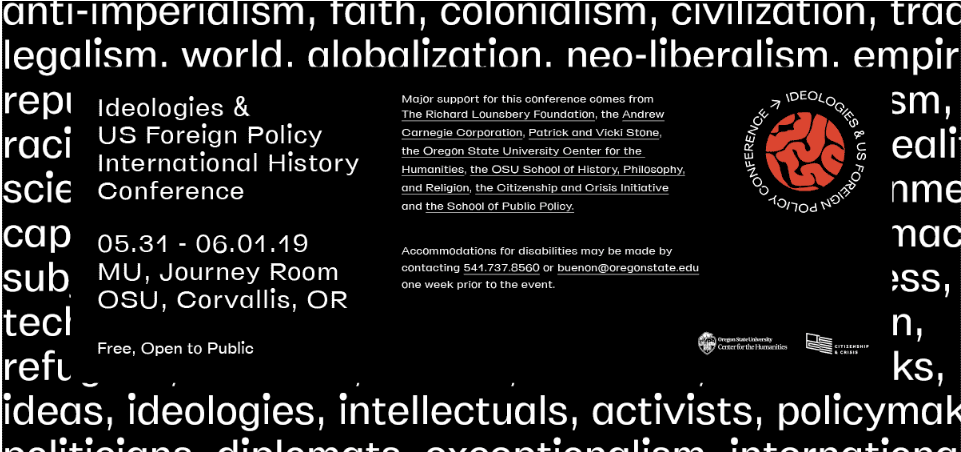
Imperial & Global Forum readers on the U.S. West Coast and Pacific North West might be interested in the following upcoming conference that I am very much looking forward to – the “Ideologies and U.S. Foreign Policy” International History Conference.
Co-organized by Christopher McKnight Nichols, Danielle Holtz, and David Milne, the conference at Oregon State University as a project is intended to bring international scholars together to investigate the profound ideas that have led to the production of U.S. foreign policies. The co-organizers are motivated by the notion that contemporary ideas about the sources and mechanisms of power need to be reconsidered with the lessons of history in mind, particularly regarding the relationship between domestic and international policy.
The events related to the conference are free and open to the public (with on-site registration) and will include public forums, scholarly panels, and a keynote address by James Lindsay (Council on Foreign Affairs), all confronting crucial issues in U.S. foreign policy, in both historical and contemporary contexts. Contributors from around the world, representing a diversity of approaches to the study of foreign policy, will explore the central ideas and ideologies as well as people and groups that have shaped U.S. involvement with the world. Panelists will engage with large public audiences in Corvallis and Portland over the course of several days. C-SPAN and History News Network also are expected to be covering the conference.
The program is as follows: Continue reading “Ideologies and U.S. Foreign Policy International History Conference (May 31-June 1 @OregonState)”
Paul Doolan
University of Konstanz
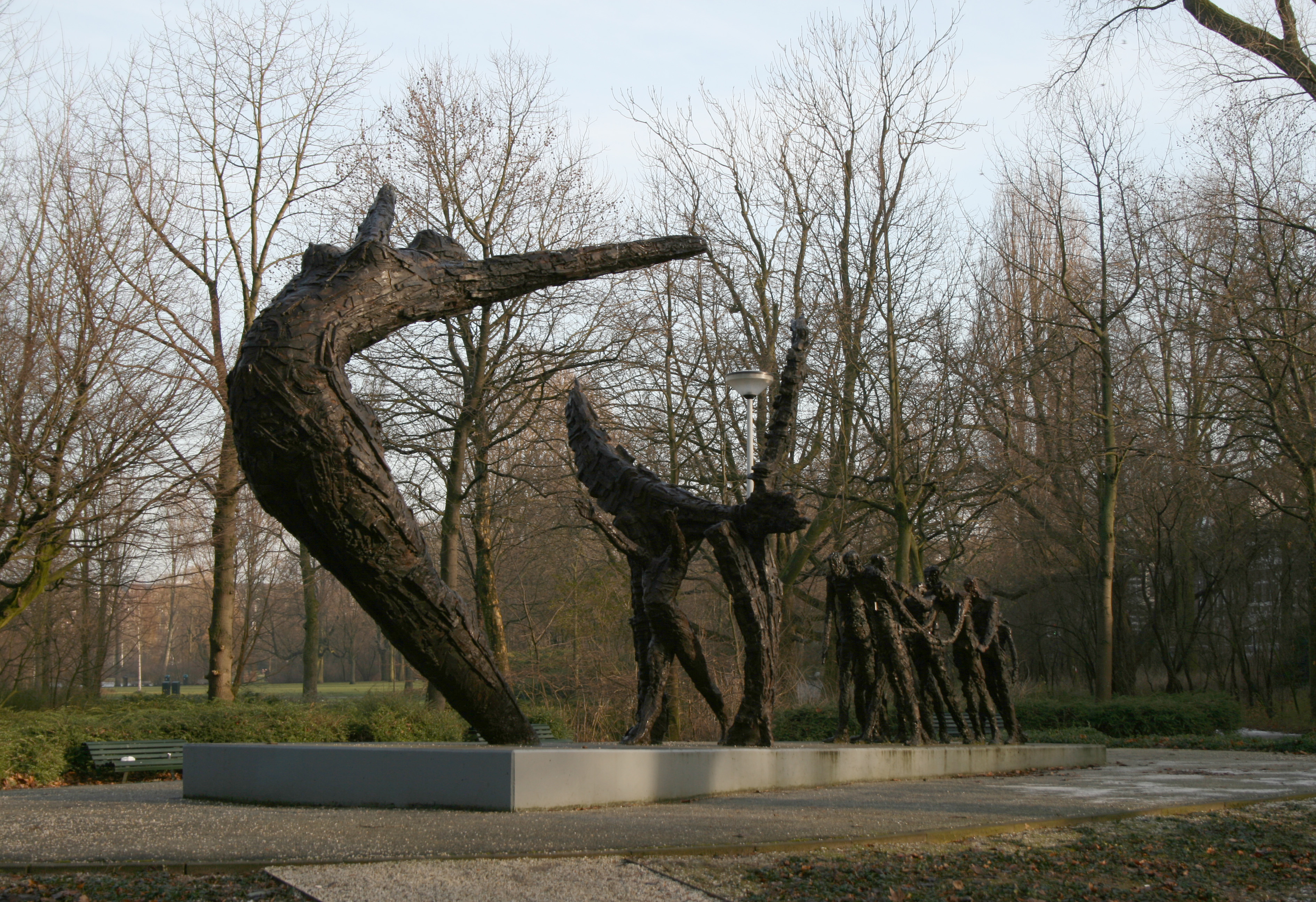
The 17th-century Dutch Republic made significant contributions to our understanding of world geography, the biological and physical sciences, mathematics, economics, international law, and the visual arts. Yet this Golden Age had a dark underbelly – the Dutch participation in colonialism and the transatlantic slave trade. In the estimate of the Trans-Atlantic Slave Trade Database, of the 12,521,337 Africans transported, 554,336 were brought to the Americas on Dutch ships.
Activist historians, many working from outside academia, persist in pushing the hidden history of Dutch slavery to the fore. Ewald Vanvugt’s Roofstaat (2016) is an 800-page indictment of the Dutch “Robber State.” In White Innocence (2016), Gloria Wekker accuses Dutch academia of turning away from the sordid episodes of Dutch history. Anousha Nzume argues that the majority white population long for an unproblematic history that is “gezellig” or cosy, but as soon as they are confronted with the fact of race they fall back on a defensive position of white fragility. Rosmarijn Hoefte, newly appointed Professor of the History of Suriname from 1873, admits that the Dutch lag far behind their international colleagues in the study of colonialism and slavery. Some historical figures formerly considered national heroes have now been exposed as leaders in the slave trade. Recent controversies have focused on the renaming of streets and the removal of statues of these fallen heroes. Continue reading “Pride, Shame, and White Fragility in Dutch Colonial History”

Marc-William Palen
History Department, University of Exeter
Follow on Twitter @MWPalen
 Professor Bernhard Rieger (University of Leiden) will be at the University of Exeter on a Visiting International Academic Fellowship between 13 and 18 May. As part of his visit, he has kindly offered to give a lecture entitled ‘Making Society Work Again: Workfare in Transatlantic Context Since the Sixties.’
Drinks and nibbles will be provided. All welcome.
When/where: Tuesday 14 May from 16.30 in Laver 218 (Streatham Campus).
Abstract: Social policies to combat poverty and unemployment in Western societies have changed fundamentally since the 1960s. While policy makers had once regarded the poor and jobless as victims of structural disadvantages beyond an individual’s control, a swelling chorus argued from the 1980s on that material deprivation and rising unemployment were caused by “cultures of poverty” whose norms and values predisposed benefit recipients against regular work, thereby inflating welfare costs. In response, politicians have replaced firm entitlements to benefit payments with “workfare” regimes that link temporary welfare assistance to expectations of a speedy (re-)integration into the world of work. Focussing on the United States, Britain and Germany, this lecture assesses the rise of workfare concepts since the Sixties as well as their social and individual impact.

Tobias Rupprecht
University of Exeter
Follow on Twitter @Tobepastpresent
Augusto Pinochet was an avid global traveller throughout the 1990s. A potent symbol of Cold War anti-Soviet authoritarianism and market radicalism, the former military ruler of Chile usually made a great stir during his trips across Latin America, East Asia, Southern Africa, continental Europe, and to the United Kingdom. In a recent article in Global Society, I assess the public reactions, political debates, and legal consequences that Pinochet’s appearances caused. Scholars of Pinochet’s international perception have for the most part focussed on his criminal reputation among human rights activists and the victims of military rule in Chile. Yet, many pro-market reformers and anti-Communists in countries transitioning from socialism to capitalism did not see Pinochet as a criminal dictator of the Cold War. Margaret Thatcher also had a soft spot for him. For them, his economically successful ‘Chilean model’ had become a source of legitimacy for an authoritarian path of modernisation. Continue reading “How Pinochet turned Chile into a globally admired model of authoritarian capitalism”
EXHIBITION LAUNCH Thu 9 May 2019, 18:00
Institute of Arab and Islamic Studies
University of Exeter
Stocker Rd
Exeter EX4 4ND
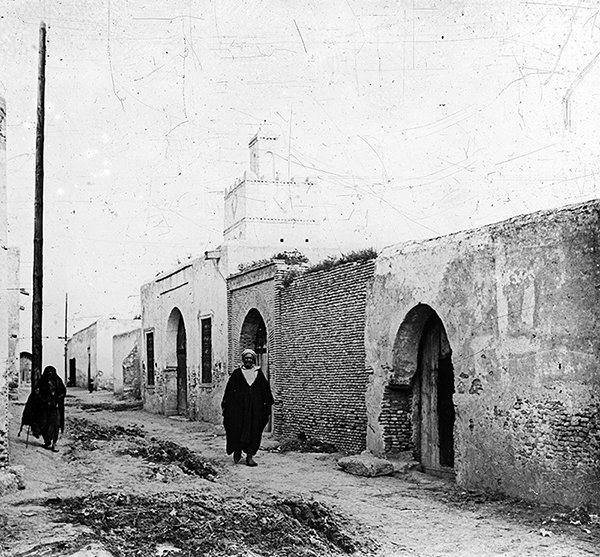
You are invited to the launch of The Painters of the City: North Africa 1880-1920. This exhibition has been curated by Professor William Gallois, and explores a mystery which also constitutes a unique moment in the history of art.
In the last years of the 19th century and the first decades of the 20th century, new forms of painting emerged on and around buildings in cities and towns across north Africa. They were identifiably related to existing cultural forms – especially tattoos , textiles and jewellery – but their sudden appearance in the form of murals and frescoes was unprecedented.
The launch of the exhibition is on 9 May at 18:00 in The Street Gallery.
Come along for drinks and nibbles! All are welcome.
For more information about the exhibition, please click here.
If you have any questions or enquiries, please email William Gallois at w.gallois@exeter.ac.uk.
|
|
| Job title: Postdoctoral Research Associate
Job reference: P67255 Date posted: 25/04/2019 Application closing date:23/05/2019 Location: Exeter Salary: The starting salary will be from £29,515 to £34,189 on Grade E, depending on qualifications and experiencePackageGenerous holiday allowances, flexible working, pension scheme and relocation package (if applicable). Job category/type: Academic Job description College of Humanities This fixed term, full time post is available from 1st July 2019 to 23rd January2020 Summary of the role The College wishes to recruit a Postdoctoral Research Associate to support the work of Dr. Rebecca Williams. This Academy of Medical Sciences funded post will work on the project ‘Population Control and the Emergency in India: The Shah Commission Regained.’ The post will include archival research in national and regional archives in India; completion of oral history interviews; preparation of literature reviews; assisting with the preparation of grant applications; assisting with the preparation of a journal special issue, and completion of other tasks as required to support the project About you The successful applicant will be able to present information on research progress and outcomes, communicate complex information, orally, in writing and electronically and prepare proposals and applications to external bodies. Applicants will possess a relevant PhD (or be nearing completion) or possess an equivalent qualification/experience in a related field of study and be able to demonstrate sufficient knowledge in the discipline and of research methods and techniques to work within established research programs. Applicants will have knowledge of modern Indian history, and be able to conduct research in national and regional archives in India, conduct oral history interviews, prepare literature reviews, assist with the preparation of grant applications, and conduct administrative tasks as necessary for the project. You can view the Job Description and Person Specification document here. For further information please contact Dr. Rebecca Williams, e-mail R.Williams2@ex.ac.uk or telephone (01392) 723153 What we can offer you
|
Marc-William Palen
History Department, University of Exeter
Follow on Twitter @MWPalen
Lina del Castillo
University of Texas at Austin
Cross-posted from Not Even Past
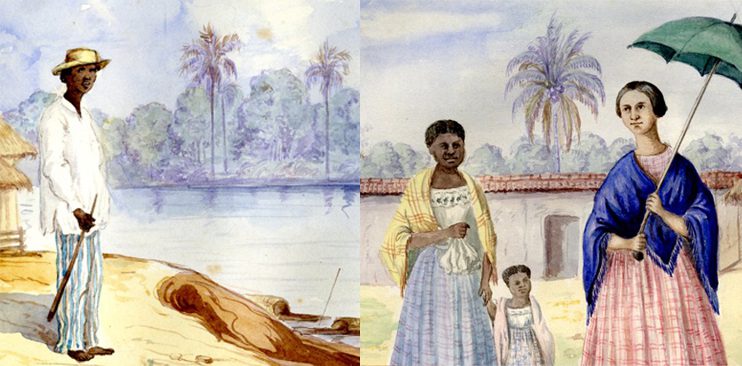
The powerful myth of ‘American exceptionalism’ would have us think that the United States alone offered the world universal ideals of democracy, self-determination, and shared prosperity. However, if we open our eyes beyond canonical nineteenth-century writers such as Alexis de Tocqueville, an alternate story emerges. The long-ignored yet staggering number of works by publicists, historians, geographers, novelists, economists, and jurists from Caracas, Bogotá, Santiago de Chile, Buenos Aires, Mexico, Quito, and Lima begin to reveal the remarkable dimensions of modern republican experiments in Spanish America.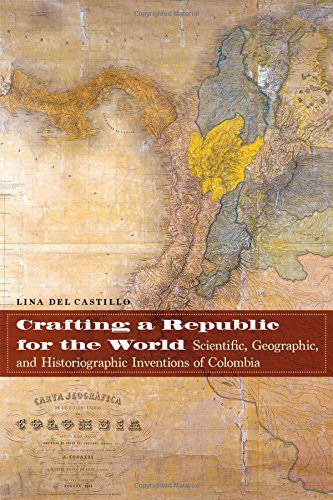 Early republican experiments in Spanish America occurred at a time when there were no models to follow. While republicans in Europe battled monarchists and the clerical old regime, while they increasingly imagined their republics as colonial empires of racial inferiors, and while republicans like Thomas Jefferson and James Madison in the United States built their republic on white supremacy and industrialized slavery in cotton plantations, a generation of Spanish American sociologists, economists, anthropologists, and political philosophers became the world’s republican vanguard.
Continue reading “Crafting a Republic for the World in 19th-Cent. Colombia”
You are warmly invited to attend the fourth annual lecture of the Centre for Imperial and Global History, which will be delivered by Prof. Elizabeth Buettner of the University of Amsterdam. Her lecture will be entitled ‘Colonialism: A Shared EUropean History and Legacy’.
When/where: It will take place on Thursday 16 May at 5pm in the Queen’s Building, Margaret Rooms 2 & 3.
Attendance is free but please do register on Eventbrite.
 Prof. Buettner’s research centres on British imperial, social, and cultural history since the late nineteenth century along with other European nations’ histories of late colonialism, decolonisation and their domestic ramifications. In the coming years she looks forward to expanding upon previous research on postcolonial South Asian migration and cultures in diaspora, placing South Asians in Britain within wider transnational contexts. Prof. Buettner received her BA from Barnard College of Columbia University and her MA and PhD from the University of Michigan at Ann Arbor. She has taught in England at the University of York since 2000 and in 2012-2013 held a senior research fellowship at the Freiburg Institute for Advanced Studies in Germany in conjunction with a British Academy mid-career fellowship. Buettner’s publications include Empire Families: Britons and Late Imperial India (Oxford University Press, 2004) together with articles in the Journal of Modern History, History & Memory, Scottish Historical Review, Annales de Démographie Historique, Ab Imperio, Food and History, and a number of edited collections.
ABSTRACT
Brexit-era Britain saw discussions of Europe and Britain’s imperial past explode in political and public culture, with some leading figures in the ‘leave’ campaign notoriously going so far as to look forward to an ‘Empire 2.0’ of enhanced global engagements once Britain became freed from continental shackles. Yet imperial histories, heritage, and legacies are anything but a uniquely British ‘island story’. This talk builds upon selected themes addressed in my book Europe after Empire: Decolonization, Society, and Culture (Cambridge University Press, 2016), where I considered Britain as well as French, Belgian, Dutch, and Portuguese histories of coming to terms with the end of empire at home with a special emphasis on migration, multicultural societies, and memories of empire in postcolonial Western Europe. It connects topics that have received most attention among scholars who focus on Western European national cases with a newer but growing body of work that positions colonialism and empire as decisive aspects of European history across the continent, extending to Nordic countries as well as Central and Eastern Europe. Making the ‘imperial turn’ not only characteristic of specific nations but rather a shared European history entails taking a ‘continental turn’, one that allows fresh approaches to Europe’s overseas and continental empires past and illuminates the still understudied colonial history and heritage of today’s European Union.


You must be logged in to post a comment.