This Week’s Top Picks in Imperial & Global History

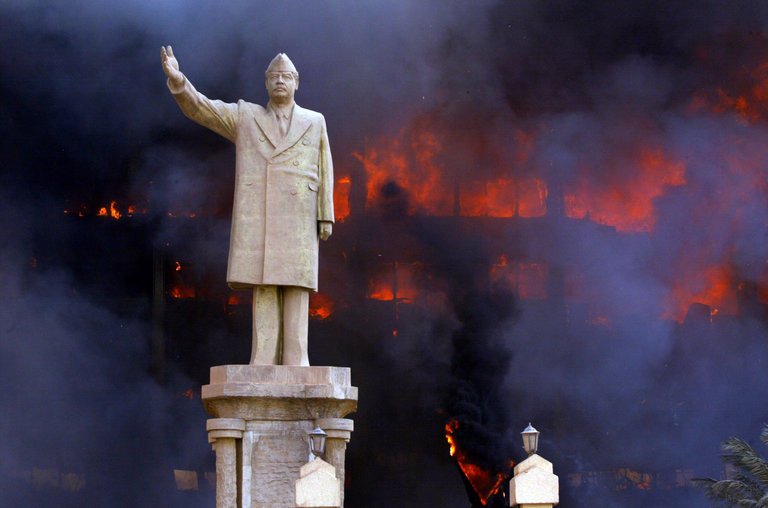
A statue of Saddam Hussein in front of the burning National Olympic Committee in Baghdad in 2003. Credit Tyler Hicks/The New York Times

Marc-William Palen
History Department, University of Exeter
Follow on Twitter @MWPalen

With a special Iraq War edition, here are this week’s top picks in imperial and global history. Continue reading “This Week’s Top Picks in Imperial & Global History”

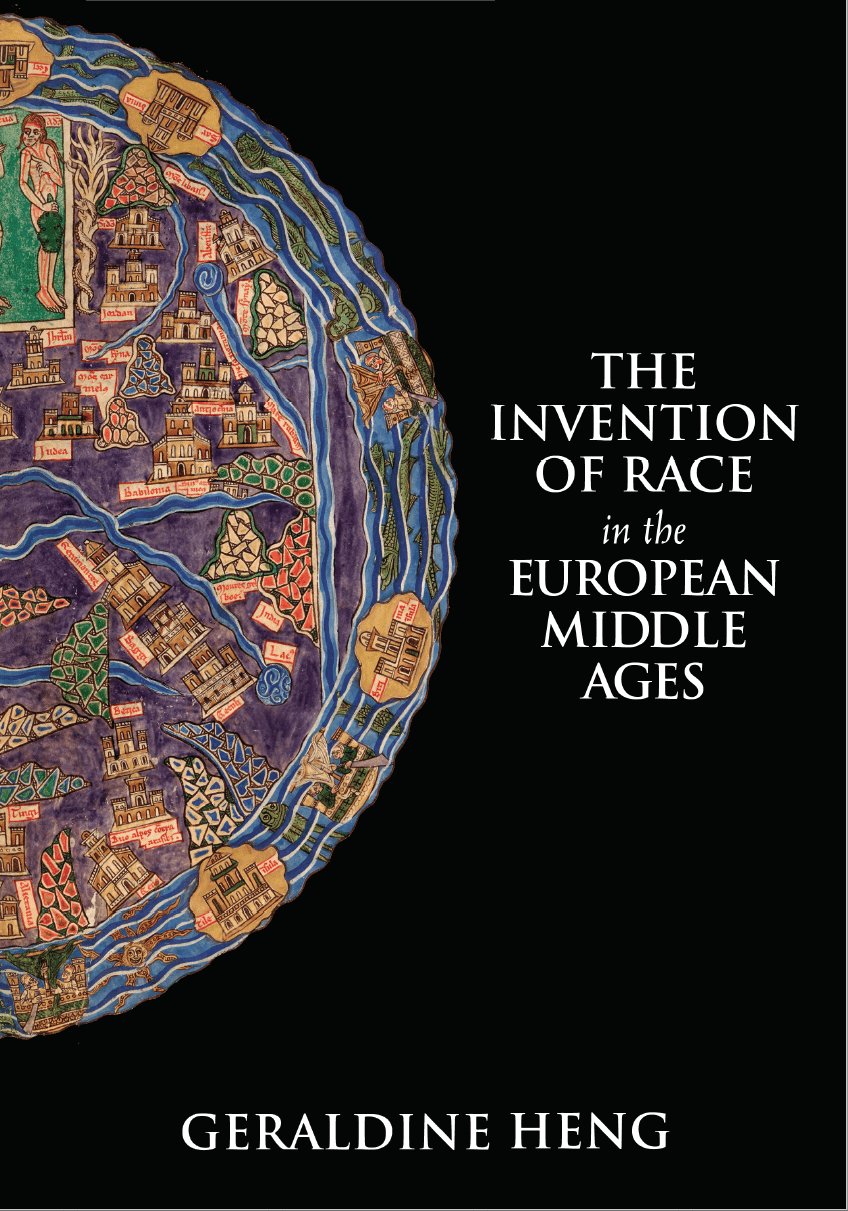
Did Race and Racism Exist in the Middle Ages?

Geraldine Heng
University of Texas at Austin

Cross-posted from Not Even Past

For generations, race studies scholars—historians and literary critics alike—believed that race and its pernicious spawn racism were modern-day phenomena only. This is because race was originally defined in biological terms, and believed to be determined by skin color, physiognomy, and genetic inheritance. The more astute, however, came to realize race could also be a matter of cultural classification, as Ann Stoler’s study of the colonial Dutch East Indies makes plain:

Race could never be a matter of physiology alone. Cultural competency in Dutch customs, a sense of ‘belonging’ in a Dutch cultural milieu…disaffiliation with things Javanese…domestic arrangements, parenting styles, and moral environment…were crucial to defining…who was to be considered European.*

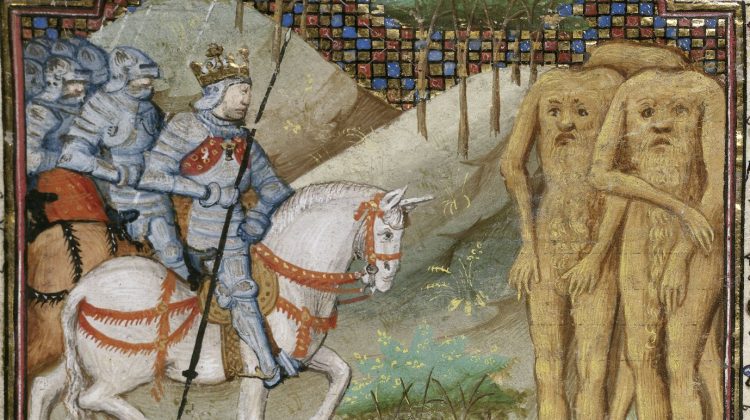
Yet even after we recognized that people could be racialized through cultural and social criteria—that race could be a social construction—the European Middle Ages was still seen as outside the history of race (I speak only of the European Middle Ages because I’m a euromedievalist—it’s up to others to discuss race in Islamic, Jewish, Asian, African, and American premodernities).

This meant that the atrocities of the medieval period—roughly 500-1500 CE—such as the periodic extermination of Jews in Europe, the demand that they mark their bodies and the bodies of their children with a large visible badge, the herding of Jews into specific towns in England, and the vilification of Jews for putatively possessing a fetid stench, a male menses, subhuman and bestial characteristics, and a congenital need to ingest the blood of Christian children whom they tortured and crucified to death — all these and more were considered to be just premodern “prejudice” and not acts of racism. Continue reading “Did Race and Racism Exist in the Middle Ages?”

Empire by Imitation?

“The next thing to do,” Puck, 1898.

Marc-William Palen
History Department, University of Exeter
Follow on Twitter @MWPalen

US Economic Imperialism within a British World System

Historians have been busy chipping away at the myth of the exceptional American Empire, usually with an eye towards the British Empire. Most comparative studies of the two empires, however, focus on the pre-1945 British Empire and the post-1945 American Empire.[i] Why this tendency to avoid contemporaneous studies of the two empires? Perhaps because such a study would yield more differences than it would similarities, particularly when examining the imperial trade policies of the two empires from the mid-nineteenth to mid-twentieth century.

For those imperial histories that have attempted such a side-by-side comparison, the so-called Open Door Empire of the United States is depicted as having copied the free-trade imperial policies of its estranged motherland by the turn of the century; these imitative policies reached new Anglo-Saxonist heights following US colonial acquisitions in the Caribbean and the Pacific from the Spanish Empire in 1898, followed closely by the fin-de-siècle establishment of the Anglo-American ‘Great Rapprochement’.[ii]

Gallagher and Robinson’s 1953 ‘imperialism of free trade’ thesis—which explored the informal British Empire that arose following Britain’s unilateral adoption (and at times coercive international implementation) of free-trade policies from the late 1840s to the early 1930s—has played a particularly crucial theoretical role in shaping the historiography of the American Empire. In The Tragedy of American Diplomacy (1959), William Appleman Williams provided the first iteration of the imitative open-door imperial thesis, wherein he explicitly used the ‘imperialism of free trade’ theory in order to uncover an American informal empire. ‘The Open Door Policy’, Williams asserted, ‘was America’s version of the liberal policy of informal empire or free-trade imperialism’.[iii] The influence of Williams’s provocative thesis led to the creation of the most influential school of US imperial history—the ‘Wisconsin School’—which would continue in its quest to unearth American open-door or free-trade imperialism for decades to come.[iv] As a result, the contrasting ways in which the American Empire grew in the shadow of the British Empire have largely remained hidden. Continue reading “Empire by Imitation?”

Old Man in A Hurry

Richard Toye
Director, Centre for Imperial & Global History

Felix Klos, Churchill’s Last Stand: The Struggle to Unite Europe (I.B.Tauris, 2017)

Marco Duranti, The Conservative Human Rights Revolution: European Identity, Transnational Politics, and the Origins of the European Convention (Oxford University Press, 2017)

In the run-up to 2016 Brexit referendum, advocates of staying in the EU made significant efforts to invoke the memory of Winston Churchill. Remainers pointed to the fact that, in Zurich in 1946, he had urged the creation of ‘a kind of United States of Europe’. They seemed to regard him as something of a trump card – if Britain’s iconic wartime leader had been one of the fathers of the EU, who would dare to be against? However, as a persuasive tool, it never quite seemed to work. On the one hand, Leavers could legitimately point out that Churchill had said that Great Britain should be one of the ‘the friends and sponsors of the new Europe’, not one of its actual members. On the other hand, the message was just not quite simple enough; against the ingrained, popular bulldog image, it was tough to sell Churchill as a complex figure who was prepared to make concessions on British sovereignty in the interests of future peace.

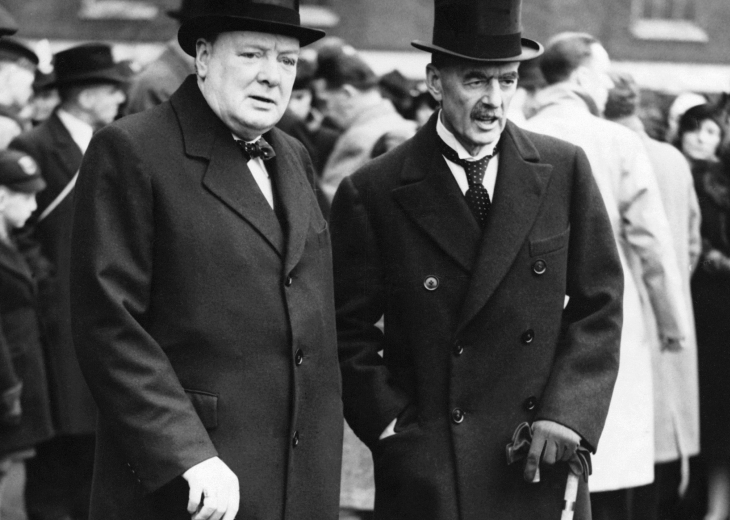
It also didn’t help that Churchill’s pro-European campaign took place during a period of his life – the 1945-51 Opposition years – that few members of the public know much about. Popular memory of Churchill focuses to some extent on the 1930s but above all on the war years, and the summer of 1940 in particular. In fact, then, the referendum campaign’s most rhetorically effective invocation of Churchill was made by David Cameron during his appearance on Question Time. He did not attempt to argue that Churchill would have favoured membership of the EU as such, but rather – in response to an audience member who described him (Cameron) as a Twenty First Century Neville Chamberlain – he deployed a more emotionally powerful response:

At my office I sit two yards away from cabinet room where Winston Churchill decided in May to fight on against Hitler. The best and greatest decision perhaps anyone has made in our country. He didn’t want to be alone. He wanted to be fighting with the French, the Poles and the others. But he didn’t quit. He didn’t quit on democracy, he didn’t quit on freedom.

We want to fight for those things today. You can’t win if you’re not in the room.

Moreover, when one actually looks at the details of Churchill’s position on Europe, it’s not clear that he fits neatly into either the Leave or the Remain narrative. The two books under review, both excellent in their different ways, illustrate the point. Continue reading “Old Man in A Hurry”

This Week’s Top Picks in Imperial & Global History

east india
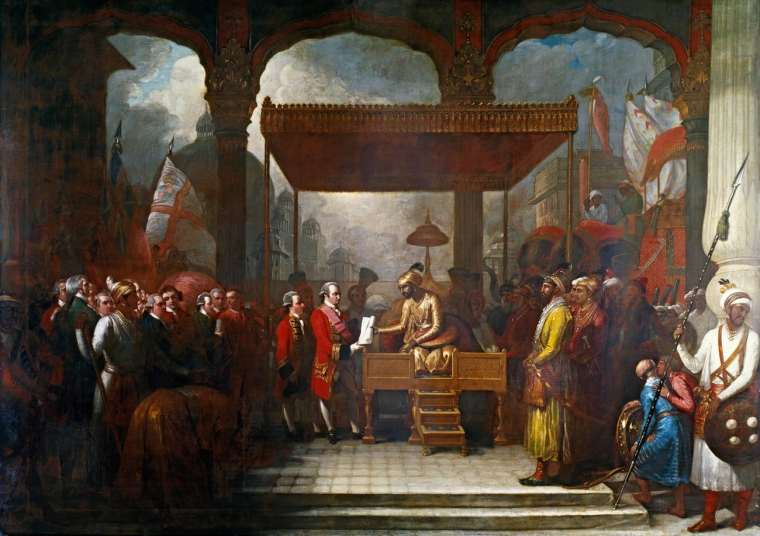
The Mughal emperor Shah Alam hands a scroll to Robert Clive, the governor of Bengal, which transferred tax collecting rights in Bengal, Bihar and Orissa to the East India Company. Illustration: Benjamin West (1738–1820)/British Library

Marc-William Palen
History Department, University of Exeter
Follow on Twitter @MWPalen

From when the Ottoman Empire scrambled for Africa to how to stop current and future wars, here are this week’s top picks in imperial and global history.

Continue reading “This Week’s Top Picks in Imperial & Global History”

This Week’s Top Picks in Imperial & Global History

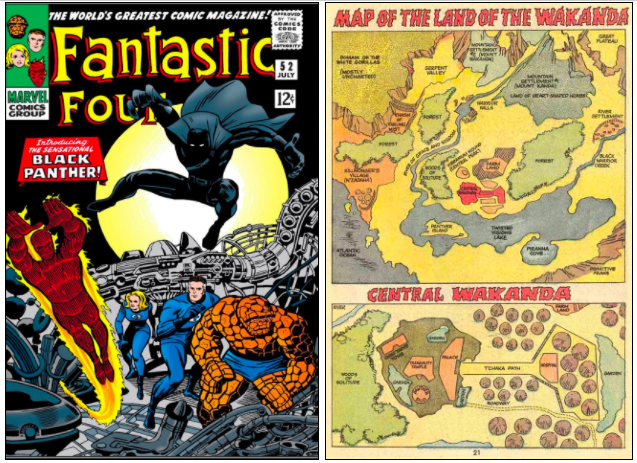
The debut of Black Panther in Fantastic Four #52 (left), and a map of the fictional land of Wakanda from Jungle Action #6 (right).

Marc-William Palen
History Department, University of Exeter
Follow on Twitter @MWPalen

From the link between Communism and Pan-Africanism to dancing in wartime, here are this week’s top picks in imperial and global history.

Continue reading “This Week’s Top Picks in Imperial & Global History”

‘Trade wars are good’? 3 past conflicts tell a very different story

File 20180304 65547 1uhc991.jpg?ixlib=rb 1.1
These German steel coils may soon become more expensive for U.S. manufacturers.
AP Photo/Martin Meissner

Marc-William Palen, University of Exeter

President Donald Trump renewed fears of a global trade war after he vowed to slap steep tariffs on foreign aluminum and steel.

The tariffs haven’t even been formally proposed, yet other countries are already threatening countermeasures. The European Union, for example, promised to impose tariffs on iconic American products like Harley-Davidsons, Kentucky bourbon and blue jeans, while China, Australia and Canada all promised a response.

Brushing all that aside, the president tweeted that “trade wars are good.”

https://platform.twitter.com/widgets.js

But what exactly is a trade war and what are its consequences?

As a historian of trade, I thought it would be worth recalling some illuminating examples, each of which led to disastrous results. Continue reading “‘Trade wars are good’? 3 past conflicts tell a very different story”

This Week’s Top Picks in Imperial & Global History

Lecture on Farmers’ Problems, sponsored by Japan Farmers’ Union; poster design by Yanase Masamu (1900-1945), 1920s. Source.

Marc-William Palen
History Department, University of Exeter
Follow on Twitter @MWPalen

From jazz as a Cold War secret weapon to how the suffragettes influenced Mahatma Gandhi, here are this week’s top picks in imperial and global history. Continue reading “This Week’s Top Picks in Imperial & Global History”

Eisenhower and the Cold War

Jeremy Black
University of Exeter

Cross-posted from FPRI’s The American Review of Books, Blogs, and Bull

Successful presidents do not need to come through the political process, but whatever their background, they need to be able to lead intelligently and to make sense of and mould the coalitions of interest—both domestic and international—that provide the opportunity to ensure the implementation of policy. One of the most impressive non-politician presidents was Dwight Eisenhower, the Republican president elected in 1952 and re-elected in 1956. A self-styled moderate conservative, Eisenhower provided an effective hard-edged moderation.

Eisenhower benefited from, and helped to mould, the conservative ethos of the 1950s. His re-election in 1956 with a margin of nine million votes displayed widespread satisfaction with the economic boom and social conservatism of those years. There was an upsurge in religiosity as church membership and attendance rose, and Eisenhower encouraged the addition of “under God” to the Pledge of Allegiance and “In God We Trust” on the currency. At the same time, Eisenhower left the New Deal intact and crucially extended it to incorporate African-Americans, even using federal forces to enforce the integration of Central High School in Little Rock, Arkansas.

The Eisenhower years were to be the background to modern America. In many respects, the new social and political currents of the 1960s were a reaction to this conservatism. Yet, to an extent that exponents of the “Sixties” prefer to forget, many of the developments of the 1950s had a lasting impact, notably the growing suburbanisation and car culture, the growing significance of the South and, far more, the West, and the willingness of government to challenge institutional Southern racism. Continue reading “Eisenhower and the Cold War”

This Week’s Top Picks in Imperial & Global History

Marc-William Palen
History Department, University of Exeter
Follow on Twitter @MWPalen

From the rise of illiberal hegemony to exploring the global history of science, here are this week’s top picks in imperial and global history. Continue reading “This Week’s Top Picks in Imperial & Global History”

Why Historians Can Be Valuable Members of the Humanitarian Family

ICRC in Geneva

Cédric Cotter
Law and Policy researcher, ICRC

Cross-posted from Humanitarianism & Human Rights

When I was a young student in history and philosophy at the University of Geneva, I had never thought that one day I may work for the International Committee of the Red Cross (ICRC). Yet it happened. While I was preparing my Masters thesis, the protection division at the ICRC was looking for a young historian to carry out a research in their archives. I got hired for a one-year traineeship contract, which was extended by two shorter terms within the relations with the arms carriers unit and at the archives division. This experience was a turning point in my career. As a consequence, I decided to write my PhD dissertation on the history of the ICRC, which was part of a research project dedicated to Switzerland during the First World War. I analyzed the interactions between humanitarian action and neutrality at that time.

In July 2015, during my research, I got the chance to participate in the very first Global Humanitarian Research Academy. This academy played a very positive role for me, as it was an occasion to meet other researchers working on the history of humanitarian action. Our various talks and debates made me think about other practices and ways of studying the past of humanitarian organizations. We shared different perspectives, some close and some more distant from mine, however all of them very interesting and challenging. It also gave me the opportunity to posit my hypotheses and research results to more advanced scholars. They gave good advice that I then used during the writing process of my dissertation. Meeting others PhD students was useful in terms of networking, of course. Beyond that, the excellent atmosphere created during the academy allowed us to maintain amicable contacts, as well. Still today, I regularly exchange with my fellows. At the end, this experience was really rewarding. Continue reading “Why Historians Can Be Valuable Members of the Humanitarian Family”

This Week’s Top Picks in Imperial & Global History

Marc-William Palen
History Department, University of Exeter
Follow on Twitter @MWPalen

From neoliberalism’s populist bastards to the rise of China and the fall of the ‘free trade’ myth, here are this week’s top picks in imperial and global history. Continue reading “This Week’s Top Picks in Imperial & Global History”

The Cold War’s World History and Imperial Histories of the US and the World

Hyde Park Protesters, October 1962, during the Cuban Missile Crisis

John Munro
St. Mary’s University[1]

The gap between the Cold War’s history and its new historiography spanned only about a decade and a half. The Cold War concluded during the George H.W. Bush presidency, but for the field we now call “the US and the world,” the Cold War paradigm reached its terminus, if we have to be specific, in 2005. That year saw the publication of two books that together marked a milestone in how scholars would write about the Cold War. John Lewis Gaddis’ The Cold War: A New History told its story through engaging prose and a top-down approach that gave pride of place to Washington and Moscow as the centers of a bifurcated world. For its part, Odd Arne Westad’s The Global Cold War: Third World Interventions and the Making of Our Times offered a triangular model in which empires of liberty and of justice interacted with Third World revolutionaries who led campaigns for decolonization that shifted into high gear after World War II. Gaddis’ survey represented a culmination of the traditional two-camps schema which tended to reflect self-understandings of the US government but which, after Westad’s concurrent synthesis, could no longer stand without qualification, without reference to the colonial dimension of the Cold War itself. In this sense, 2005 was a before-and-after historiographical event.

The classic Cold War concept, in which the governing and formal decolonization of Western Europe’s empires was one thing, and the rivalry between the superpowers something altogether else, has become diminished, but not because of one book alone. Various social movements have rejected the tenets of the Cold War at different times, and as far back as 1972, historians Joyce and Gabriel Kolko argued that “The so-called Cold War…was far less the confrontation of the United States with Russia than America’s expansion into the entire world.”[2] In 2000, Matthew Connelly called attention to the distortions accompanying attempts to have postwar history fitted to the constraints of the Cold War paradigm. The “Cold War lens,” as Connelly memorably called it, had obscured racial and religious realities. As more scholars began to push the weight of culture, decolonization, gender, public opinion, and more against the Cold War paradigm’s once stable conceptual walls, the foundations faltered. And since Westad’s 2005 landmark, a notable tendency has developed across the disciplines in which scholars – notably Mark Philip Bradley, Jodi Kim, Heonik Kwon, and the authors (including Westad) contributing to Joel Isaac and Duncan Bell’s volume on the Cold War idea – have further troubled the notion that what followed World War II is best understood by focusing on how the leaders of the US and USSR saw the world.[3]

It’s also worth noting that the recent literature’s rough division between works that sit more comfortably within the Cold War paradigm and those that prompt a rethinking of its foundations does not map neatly onto the difference between local and globally-oriented studies. Melvin Leffler’s 2008 transnational history of US-Soviet relations and Samuel Zipp’s New-York focused book on urban renewal of 2010 both fit within Cold War studies, for example, while Masuda Hajimu’s global reinterpretation of the Korean War and Yuliya Komska’s cultural genealogy of the West German-Czech borderlands (both published in 2015) render suspect what we thought we knew about the Cold War.[4] All four books are excellent, and it would be unhelpful to make a “without paradigm good, within paradigm bad” argument across wide swaths of insightful scholarship. The point is, rather, to note that The Cold War: A World History arrives at what Federico Romero calls a historiographical crossroads, on a conceptual terrain conspicuously remapped since the publication of The Global Cold War. Continue reading “The Cold War’s World History and Imperial Histories of the US and the World”

The politics of buying British: From the Great Depression to Brexit

Sydney empire shopping week poster, 1928

David Thackeray
University of Exeter

Since the Brexit vote the ‘Anglosphere’ has featured prominently in debates about the UK’s future trade strategy. It may seem odd that the CANZUK countries (Canada, Australia and New Zealand) have featured so prominently in these discussions. After all, combined together these countries accounted for less than four percent of UK exports in 2017. While Brexiteers may talk wistfully of reviving trade with these ‘old friends’, their efforts build on a problematic historical legacy.

In the 1920s and 1930s various efforts were made to encourage consumers to support trade between ‘British’ countries, based on ties of race. This was only one of a range of attempts to promote ethnically-based trade communities. For example, rival Buy Indian and Buy Chinese movements connected diaspora populations across the British Empire. At much the same time, Marcus Garvey’s Universal Negro Improvement Association promoted the idea of ‘buying black’, a cause which was subsequently adopted by the National Association for the Advancement of Colored People in the United States.

The practice of running empire shopping weeks was started by the British Women’s Patriotic League in 1923, and subsequently endorsed in the UK by the government-sponsored Empire Marketing Board. Shoppers were encouraged to exercise a voluntary preference for national and imperial goods. The shopping week movement extended into Australia in 1925, and reached Canada and South Africa in 1928. However, the language of empire shopping varied significantly between countries. Within the UK and Australia there was much focus on promoting links across the ‘British’ race at home and overseas. However, the question of the ‘British’ character of empire shopping proved more controversial in Canada, with its large French-speaking Québecois population, and in South Africa, where Afrikaners outnumbered the descendants of British settlers. Continue reading “The politics of buying British: From the Great Depression to Brexit”

This Week’s Top Picks in Imperial & Global History

Marc-William Palen
History Department, University of Exeter
Follow on Twitter @MWPalen

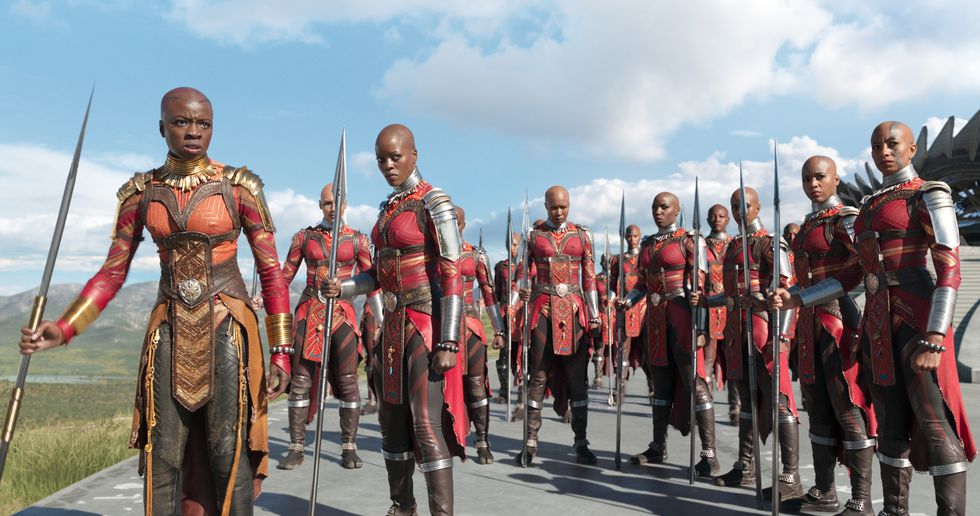
From how empire operates to the Black Panther’s anti-colonial Pan-Africanism, here are this week’s top picks in imperial and global history.

Continue reading “This Week’s Top Picks in Imperial & Global History”