CFP – The Munich Crisis and the People: International, Transnational and Comparative Perspectives

Call for Papers

The Munich Crisis and the People: International, Transnational and Comparative Perspectives 
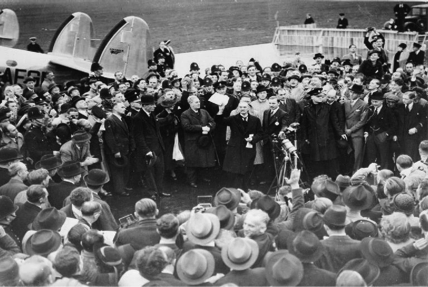
Humanities Research Institute (HRI), University of Sheffield, 29-30 June 2018

Recent events in international politics have highlighted the intricate interconnectedness between diplomatic crises and public opinion, notably public expressions of emotion. As the 80th anniversary of the Munich Crisis approaches, this conference will revisit this ‘model’ crisis and its aftermath, exploring both its lessons and its contemporary resonance. Few diplomatic incidents, before or since, have aroused such public excitement as the events of September 1938 and yet the ‘public’, the ‘people’, the ‘material’, and the ‘popular’ have hitherto been marginalised within a historiography that remains dominated by traditional ‘high’ politics perspectives, often reiterating the ‘Guilty Men’ orthodoxy. Recent incursions into the debate have made progress by experimenting with different methodologies, conceptual frameworks, and a greater plurality of sources, yet there has been a noticeable stagnation in original research. A re-evaluation is long overdue, and this conference will tap into the potential that rests in cross-disciplinary approaches and comparative frameworks. Indeed, the most neglected aspects of the crisis – despite the abundance of sources – are the social, cultural, material, and emotional, as well as public opinion. The conference will also internationalise the original ‘Munich moment’, as existing studies are overwhelmingly Anglo- and Western-centric. Continue reading “CFP – The Munich Crisis and the People: International, Transnational and Comparative Perspectives”

Report – Global Humanitarianism Research Academy (GHRA) 2017

The 3rd Global Humanitarianism Research Academy at the Leibniz Institute of European History in Mainz, and the Archives of International Committee of the Red Cross in Geneva

GHRA 2017 at the Leibniz Institute of European History Mainz

Cross-posted from Humanitarianism & Human Rights

The GHRA 2017 took place from July 10 to 21, 2017 at the Leibniz Institute of European History in Mainz and the Archives of International Committee of the Red Cross in Geneva. It was organized by FABIAN KLOSE (Leibniz Institute of European History Mainz), JOHANNES PAULMANN (Leibniz Institute of European History Mainz), and ANDREW THOMPSON(University of Exeter) in cooperation with the International Committee of the Red Cross and with support by the German Historical Institute London.

The GHRA 2017 had thirteen fellows (nine PhD candidates, four Postdocs) selected in a highly competitive application process. They came from Armenia, Belgium, Brazil, Canada, Cuba, Germany, Ireland, Morocco, South Africa, the United Kingdom, and the USA.  They represented a range of disciplinary approaches from International History, Politics, International Relations, and International Law. The Research Academy was joined by ESTHER MÖLLER (Leibniz Institute of European History) as well as JEAN-LUC BLONDEL (formerly of the ICRC) and MARC-WILLIAM PALEN (University of Exeter).

First Week: On Day One, recent research and fundamental concepts of global humanitarianism and human rights were critically reviewed. Participants discussed crucial texts on the historiography of humanitarianism and human rights. Themes included the historical emergence of humanitarianism since the eighteenth century and the troubled relationship between humanitarianism, human rights, and humanitarian intervention. Further, twentieth century conjunctures of humanitarian aid and the colonial entanglements of human rights were discussed. Finally, recent scholarship on the genealogies of the politics of humanitarian protection and human rights since the 1970s was assessed, also with a view on the challenges for the 21st century. Continue reading “Report – Global Humanitarianism Research Academy (GHRA) 2017”

This Week’s Top Picks in Imperial & Global History

Marc-William Palen
History Department, University of Exeter
Follow on Twitter @MWPalen

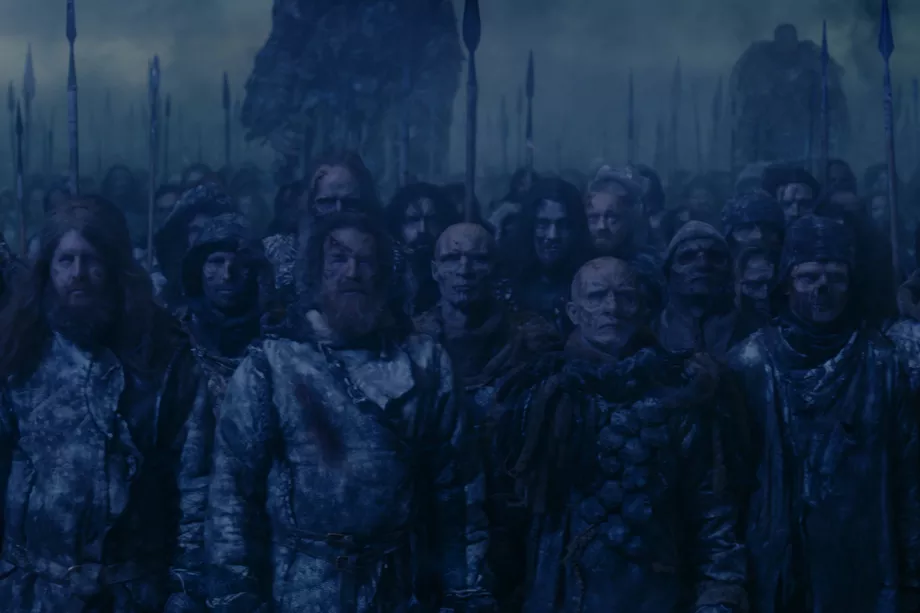
From the political science of Game of Thrones to North Vietnam’s anti-war movement, here are this week’s top picks in imperial and global history. Continue reading “This Week’s Top Picks in Imperial & Global History”

White supremacists are on the march, but the KKK’s Invisible Empire is history

Klan newspaper of the 1970s.

Kristofer Allerfeldt
University of Exeter

When Donald Trump repeatedly equated the far-right activists who marched in Charlottesville, Virginia with the anti-fascist counter-protesters, the media’s reaction was swift and clear. The next covers of both the New Yorker and The Economist featured cartoons of Trump and a Ku Klux Klan hood. In one, the president guides a ship of state with a sail shaped like a hood; in the other, he shouts into a megaphone designed to look like the infamous white headpiece.

To many commentators, the Klan costume is now the perfect visual sleight with which to decry Trump’s cack-handed false equivalence. After all, hoods and burning crosses are the most potent icons of American white supremacy, an easy shorthand for racism and bigotry. But despite the scenes of extrovert white supremacists on the march with burning torches in Charlottesville, something important has changed: today, there is essentially no such thing as “the Klan”. Continue reading “White supremacists are on the march, but the KKK’s Invisible Empire is history”

The Geopolitics of the American Revolution

War

Jeremy Black
University of Exeter

Cross-posted from the American Review of Books, Blogs, and Bull

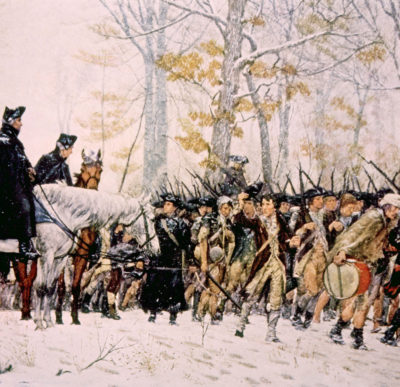
The image is clear, the message obvious. Across a sun-kissed meadow, dappled with shade, lines of British soldiers, resplendent in red, move slowly forward, while brave American Patriots crouch behind trees and stone walls ready to blast these idiots to pieces. Frequently repeated on page and screen, the image has one central message: one side, the American, represented the future in warfare, and one side, the American, was bound to prevail. Thus, the war is readily located in both political and military terms. In each, it apparently represents the triumph of modernity and the start of a new age: of democracy and popular warfare. The linkage of military service and political rights therefore proved a potent contribution. Before these popular, national forces, the ancien régime, the old order, with its mercenaries, professionals, and, at sea, unmotivated conscripts, was bound to crumble, and its troops were doomed to lose. Thus, the political location of the struggle, in terms of the defining struggle for freedom, apparently helps locate the conflict as the start of modern warfare, while, considering the war in the latter light, helps fix our understanding of the political dimension. Definition in terms of modernity and modernization also explains success, as most people assume that the future is bound to prevail over the past.

In making the war an apparently foregone conclusion, this approach has several misleading consequences. First, it allows most historians of the period to devote insufficient attention to the fighting and, instead, to focus on traditional (constitution-framing) and modish (gender et al) topics, neglecting the central point about the importance of war in American history: no victory, no independence, no constitution, no newish society. Second, making the British defeat inevitable gravely underrates the Patriot (not American, as not all Americans fought the British) achievement. Third, making British defeat inevitable removes the sense of uncertainty in which contemporaries made choices. Continue reading “The Geopolitics of the American Revolution”

This Week’s Top Picks in Imperial & Global History

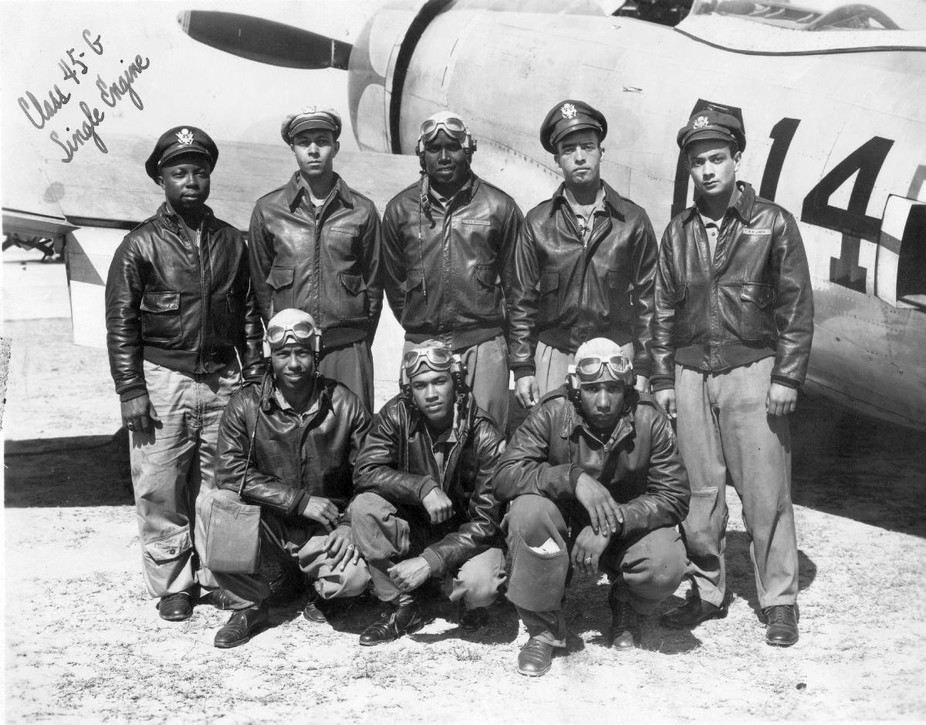
Tuskegee Airmen and P-47. San Diego Air & Space Museum Archives

Marc-William Palen
History Department, University of Exeter
Follow on Twitter @MWPalen

From “global” Boston to who’s to blame for partition, here are this week’s top picks in imperial and global history. Continue reading “This Week’s Top Picks in Imperial & Global History”

Marriage by Force?: Contestation over Consent and Coercion in Africa

Rhian Keyse
History Department, University of Exeter

Book Review: Marriage by Force?: Contestation over Consent and Coercion in Africa by Annie Bunting, Benjamin N. Lawrance, and Richard L. Roberts (eds.)

Cross-posted from Africa at LSE

Rhian Keyse recommends this book as essential reading for scholars and practitioners engaging in work to analyse and intervene in gender-based violence on the African continent and elsewhere.

Forced marriage in sub-Saharan Africa is a source of much international debate, especially with recent legal and policy attention to the role of such practices in conflict situations. Well-reported instances such as the abduction of the ‘Chibok girls’ from their school in north-eastern Nigeria in 2014have prompted considerable attention from the popular media and policy advocates alike. Yet, as Annie Bunting, Benjamin Lawrance and Richard Roberts argue in the introduction to Marriage by Force?, ‘the spectacular hides the mundane’, and popular debates tend to oversimplify the complex range of practices referred to as ‘forced marriage’ (p.2). Based on a 2013 conference at the Rochester Institute of Technology, this book brings together anthropologists, legal scholars, historians, and practitioners, to begin to correct these reductive common narratives. Continue reading “Marriage by Force?: Contestation over Consent and Coercion in Africa”

Call for Applications: Postdoctoral Research Associate

Job title: Postdoctoral Research Associate

Job reference: P57933

Date posted: 16/08/2017

Application closing date: 14/09/2017

Location: Exeter

Salary: The starting salary will be from GBP 28,936 within the Grade E band (GBP 26,495 – GBP 33,518), depending on qualifications and experience.PackageGenerous holiday allowances, flexible working, pension scheme and relocation package (if applicable).

Job category/type: Academic

Job description

College of Humanities

This part time post is available from 1st November 2017 on a fixed term basis for 1 year.

The post
The College wishes to recruit a Postdoctoral Research Associate to support the work of Dr. Rebecca Williams. This part time (60% FTE) Academy of Medical Sciences funded post is available from 1st November 2017 to 31st October 2018. The successful applicant will work on the project ‘Population Control and the Emergency in India: The Shah Commission Regained.’ Continue reading “Call for Applications: Postdoctoral Research Associate”

This Week’s Top Picks in Imperial & Global History

1-pm2DjnSVGGPodYMQQ9eTcg
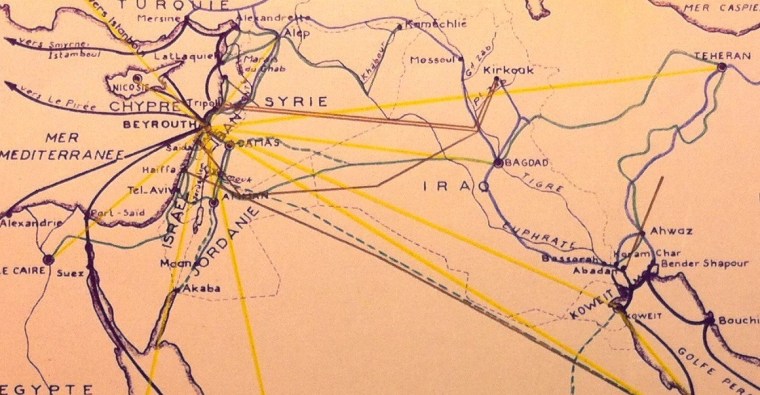
Beirut air connections, 1950s. French Foreign Ministry Archives, La Courneuve

Marc-William Palen
History Department, University of Exeter
Follow on Twitter @MWPalen

From James Baldwin’s Istanbul to the co-dependency of empires, here are this week’s top picks in imperial and global history. Continue reading “This Week’s Top Picks in Imperial & Global History”

No dogs, no Indians: 70 years after partition, the legacy of British colonialism endures

File 20170815 28964 1kf0u6k

Gajendra Singh, University of Exeter

The 70th anniversary of the end of Britain’s Empire in India and the birth of the post-colonial states of India and Pakistan have led to a renewed interest in the portrayal of this distant and under-explored past in British arts and the media.

It does not always make for good history. In the stories told on film, radio and television – from the film Viceroy’s House, to BBC One’s My Family, Partition and Me: India 1947 and Radio 4’s Partition Voices – complexity and context are downplayed in favour of “British” stories of colonialism, anti-colonial movements and partition violence.

Signs like this could be found all over colonial India.
Gautam Trivedi, CC BY-SA

History is to be communicated through genealogies of the great and the good – of news correspondents, movie directors and radio presenters introducing the audience to their unknown and often unremarkable forebears. The social histories touched upon are never fully communicable because of the desire to avoid reflecting upon the wider political and cultural contexts in which these individuals lived and breathed. Continue reading “No dogs, no Indians: 70 years after partition, the legacy of British colonialism endures”

Do the Indonesians count? Calculating the number of Indonesian victims during the Dutch-Indonesian decolonization war, 1945-1949

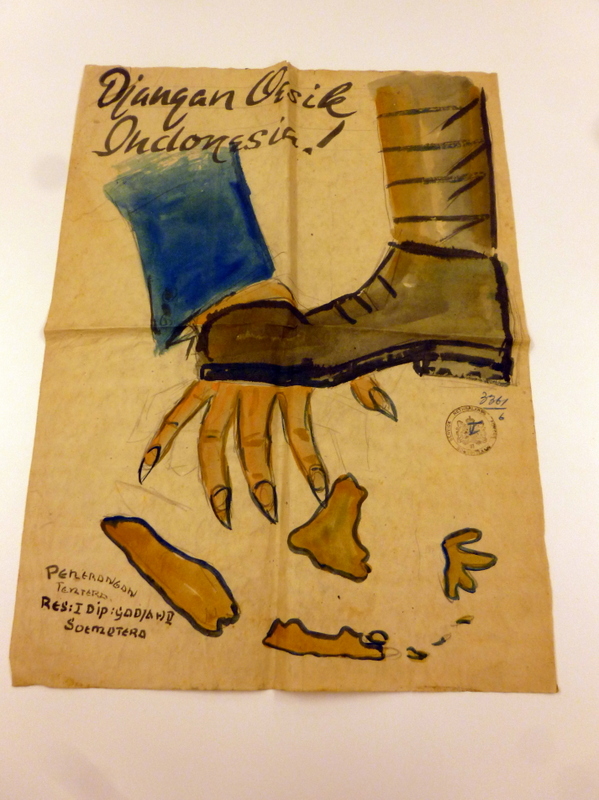
Unknown artist, Indonesian propaganda poster, Sumatra May 1947. From the archive of the NEFIS (Dutch intelligence service), courtesy of Nationaal Archief

Christiaan Harinck, Nico van Horn, and Bart Luttikhuis

Seventy years after the fact, the decolonization war in Indonesia still does not occupy an appropriate position in Dutch public memory. The absence of Indonesian victims in Dutch memory culture makes this painfully obvious: until now, no one has ever even attempted to calculate the Indonesian death toll of this war. Christiaan Harinck, Nico van Horn, and Bart Luttikhuis provide a first attempt, counting 97,421 Indonesian casualties in Dutch military sources – most likely the lower limit rather than a final estimate of the actual death toll.

The Indonesian decolonization war of 1945-1949 has re-entered Dutch public consciousness in recent years. For many decades, the war had only a very cursory presence in Dutch public memory – even though it is one of the largest military operations the country was ever involved in. But in the wake of a number of successful court cases in which Indonesian victims (aided by Dutch activists) forced the Dutch state to pay compensation, Dutch media and politicians over the last decade have gradually started talking about this war again. This has culminated (for now) in the announcement of an extensive government-funded research project. The war in Indonesia is also starting to make more frequent appearances in Dutch popular culture, with the novel Tolk van Java by Alfred Birney recently winning the prestigious Libris prize, and an action movie by popular director Jim Taihuttu announced, which is to be set in the context of the brutal Dutch counterinsurgency campaign in South Sulawesi.

Among all this new interest for the war in Indonesia, the principal focus has been the extent to which Dutch forces committed atrocities against Indonesian civilians and combatants. That atrocities such as summary executions, torture, widespread arson, etc., were a structural part of Dutch military practice has been well documented. But surprisingly, despite all this attention upon Dutch atrocities, the Indonesian victims remain hidden. Dutch historiography and Dutch public memory continue to enjoy a highly Eurocentric view on the war in Indonesia. More than ever before, the black chapters of Dutch history can now be discussed. But still, the public debate is highly inward-looking. The main interest is in ‘our’ atrocities in the colonies, in ‘our’ guilt and what ‘we’ should now do about it. Meanwhile the other, the Indonesian, is still no more than an extra on the stage of Dutch history, lacking a face or and autonomous historical agency. Nowhere is this absence of Indonesian faces more obvious than in the absence of Indonesian victims from Dutch memory culture. We haven’t even had a reliable estimate of Indonesian casualties during the decolonization war – until now. Continue reading “Do the Indonesians count? Calculating the number of Indonesian victims during the Dutch-Indonesian decolonization war, 1945-1949”

This Week’s Top Picks in Imperial & Global History

Mihkel Ram Tamm (centre), Estonian philosopher and expert on Sanskrit, yoga and meditation, became a guru for many hippies in Soviet Estonia and elsewhere in the USSR. This photo appears in the documentary film Soviet Hippies, directed by Terje Toomistu. Photo: Courtesy of Vladimir Wiedemann.

Marc-William Palen
History Department, University of Exeter
Follow on Twitter @MWPalen

From Soviet hippies to living through the terror of partition, here are this week’s top picks in imperial and global history.


Continue reading “This Week’s Top Picks in Imperial & Global History”

This Week’s Top Picks in Imperial & Global History

e16eed641b98a7c8bed8b7259cef9e5d
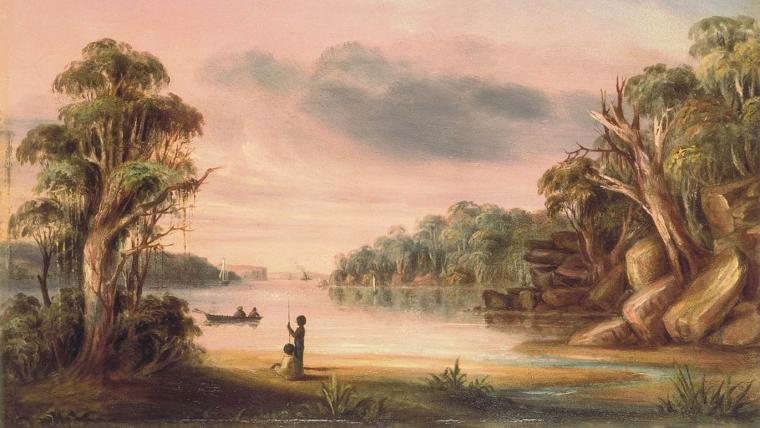
Cover detail from Paul Irish’s Hidden in Plain View: The Aboriginal People of Coastal Sydney.

Marc-William Palen
History Department, University of Exeter
Follow on Twitter @MWPalen

From resisting the pride of the British Empire to the day Nixon began his comeback, here are this week’s top picks in imperial and global history. Continue reading “This Week’s Top Picks in Imperial & Global History”

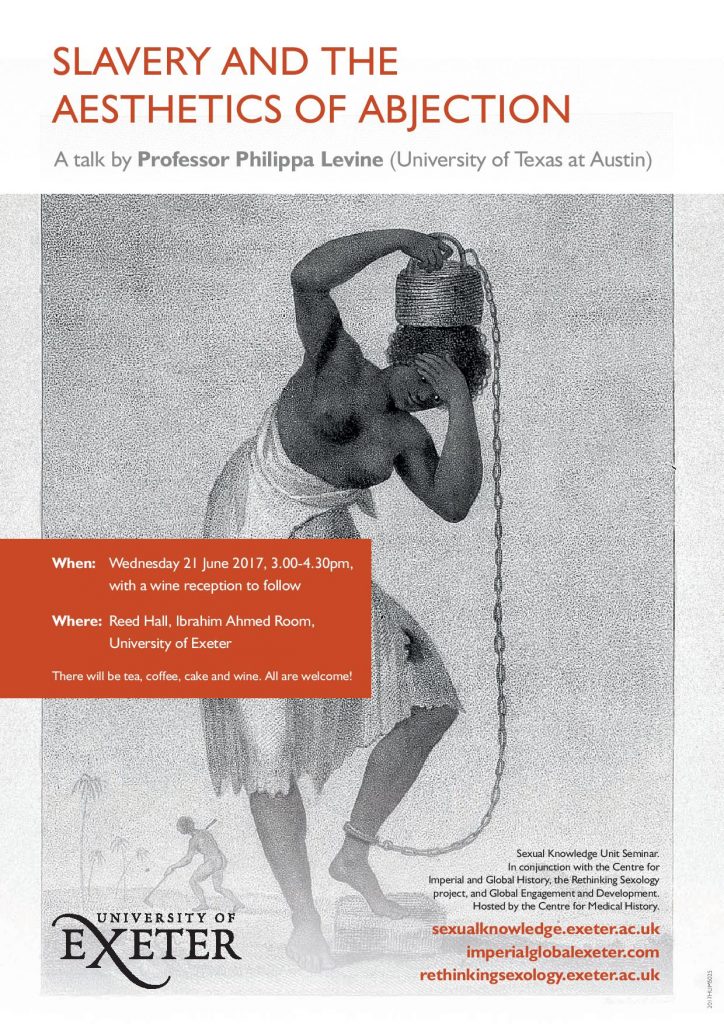
Podcast – Slavery and the Aesthetics of Abjection – Philippa Levine

Jennifer Grove and Kate Fisher
University of Exeter

Last month we were joined at Exeter by Professor Philippa Levine from the University of Texas at Austin who spoke to us on “Slavery and the Aesthetics of Abjection”. This was a seminar organised by the Centre for Imperial and Global History  and the Sexual Knowledge Unit, with support from Global Engagement and Development.

Philippa, who is currently the Walter Prescott Webb Chair of History and Ideas at UT Austin, will be known to many for her wide-ranging work on the nineteenth and twentieth century history of imperialism, gender, sexuality, prostitution, medicine, eugenics and the professionalization of the study of the past. Her new project which she discussed with us is exploring the eighteenth and nineteenth century history of nakedness. In this paper she focused on nakedness in images of slaves and slavery, drawing particularly on the visual record of enslavement. For Levine such images draw on what she terms an aesthetics of ‘abjection’, and she charted the various visual markers of marginality and loss. Continue reading “Podcast – Slavery and the Aesthetics of Abjection – Philippa Levine”

This Week’s Top Picks in Imperial & Global History

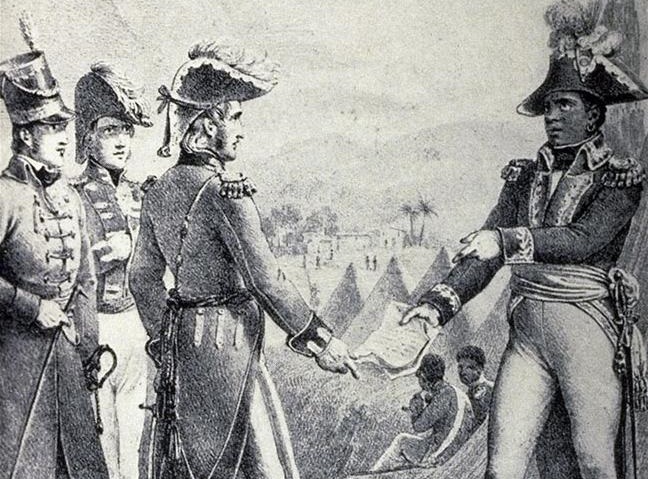
Toussaint L’Ouverture meeting General Thomas Maitland, Saint-Domingue, 1790s.

Marc-William Palen
History Department, University of Exeter
Follow on Twitter @MWPalen

From finding Toussaint L’Ouverture in Tennessee to the hidden story of 2,000 Afro-Caribbean soldiers imprisoned in a medieval castle, here are this week’s top picks in imperial and global history. Continue reading “This Week’s Top Picks in Imperial & Global History”