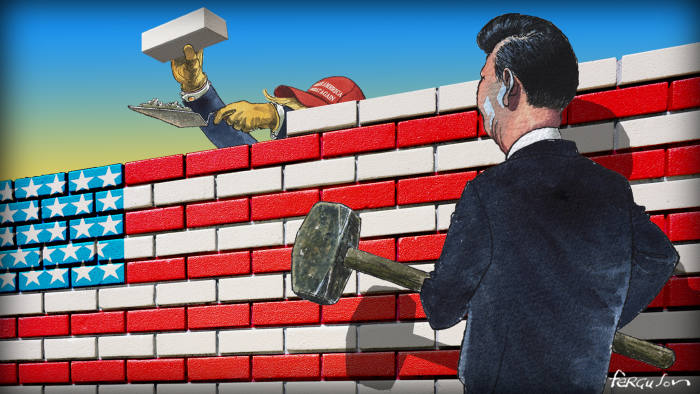
From historicizing Trump’s immigration ban to the not-so-special Anglo-American relationship, here are this week’s top picks in imperial and global history.
[For full review and citation, see: Nicole M. Phelps, “Re-thinking ‘Open-Door Imperialism,'” Diplomatic History 41 (Jan. 2017): 211-214.]
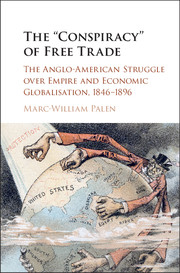
Still basing your Gilded Age foreign policy lecture—perhaps reduced now to just a PowerPoint slide—on the quest for markets a la William Appleman Williams’s The Tragedy of American Diplomacy and Walter LaFeber’s The New Empire?1 Marc-William Palen convincingly argues that it is time for a change. According to Palen, lumping all the Gilded Age administrations from Grant to McKinley into proponents of an undifferentiated “Open Door imperialism” misses essential differences between the Democratic Grover Cleveland administrations and those of the Republicans and, more importantly, falsely paints free traders as imperialists and obscures the protectionist, closed door bent of the actual imperialists. By focusing our attention on the debate over tariffs waged by Cobdenite free traders and Listian economic nationalists—protectionists—from the early days of the Republican Party through McKinley’s election in 1896, Palen offers important contributions to our understanding of imperialism, the development of American political parties, and Anglo-American relations. In so doing, he smooths out the story of nineteenth-century U.S. foreign policy, which often skips abruptly from the end of the Civil War to the start of the Spanish-American War. Continue reading “Re-thinking “Open-Door Imperialism””→
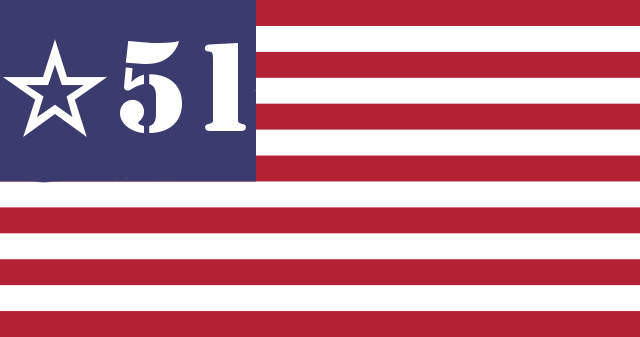
Puerto Rico has a new governor, Ricardo Rosselló – and he’s committed to making Puerto Rico the 51st US state.
Stemming from Rosselló’s election on a pro-statehood platform, the Puerto Rican Senate has now approved a bill that calls for holding a referendum on June 11, where citizens will be given a stark choice to either (1) become the 51st US state or (2) declare independence.
Governor Rosselló quickly gave the referendum bill his support in anti-colonial language: “Colonialism is not an option for Puerto Rico. It’s a civil rights issue … The time will come in which the United States has to respond to the demands of 3.5 million citizens seeking an absolute democracy.”
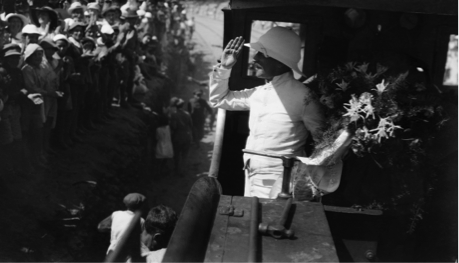
Sir Herbert Samuel inaugurating the Jaffa-Jerusalem railway, 5 Oct 1920 (Prints and photographs division of the Library of Congress, Washington, D.C.)
Charlotte Kelsted University of Exeter
Speaking before the UN General Assembly last year, Palestinian President Mahmoud Abbas requested that the British government offer an apology for its 1917 Balfour Declaration supporting a Jewish homeland in Palestine. ‘We ask Great Britain, as we approach 100 years since this infamous declaration, to draw the necessary lessons and to bear its historic, legal, political, material and moral responsibility for the consequences of this declaration, including an apology to the Palestinian people for the catastrophes, misery and injustice this declaration created and to act to rectify these disasters and remedy its consequences, including by the recognition of the state of Palestine,’ Abbas said. ‘This is the least Great Britain can do.’
Fernando J. Padilla University of Exeter/University of Bristol
CALL FOR PAPERS
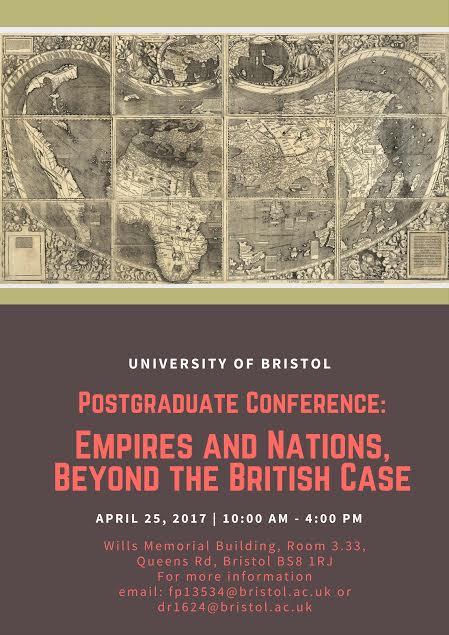
CONFERENCE “EMPIRES AND NATIONS, BEYOND THE BRITISH CASE”
UNIVERSITY OF BRISTOL
25th April 2017
This one-day postgraduate conference “Empires and Nations: Beyond the British Case” will be held on 25th April 2017 at the University of Bristol’s Wills Memorial Building. It aims to provide a friendly and constructive environment for scholarly debate. The conference is open to MA, MPhil, and PhD researchers.
The goal of the conference is to bring together postgraduate researchers working on any topic related to the main theme of imperialism, preferably beyond the British case. Due to the logical dominance of the British imperial past within the broader field of Imperial, Colonial, Postcolonial, and Global History studies in the UK, the aim of this conference is precisely to focus on other imperial and postcolonial experiences, European as well as non-European, of the 19th and 20th centuries. By focusing the conference on cases other than the British, we aim to foster debate with a broader and more inclusive approach to the complex imperial past and colonial legacies of modern societies. Thus, we strongly encourage the participation of researchers looking at European as well as non-European imperial experiences. Continue reading “Call For Papers: Empires and Nations, Beyond the British Case”→
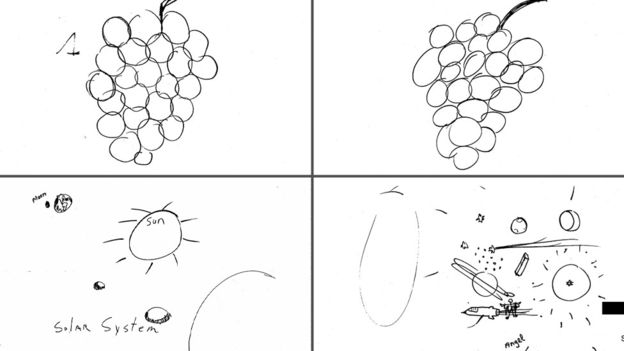
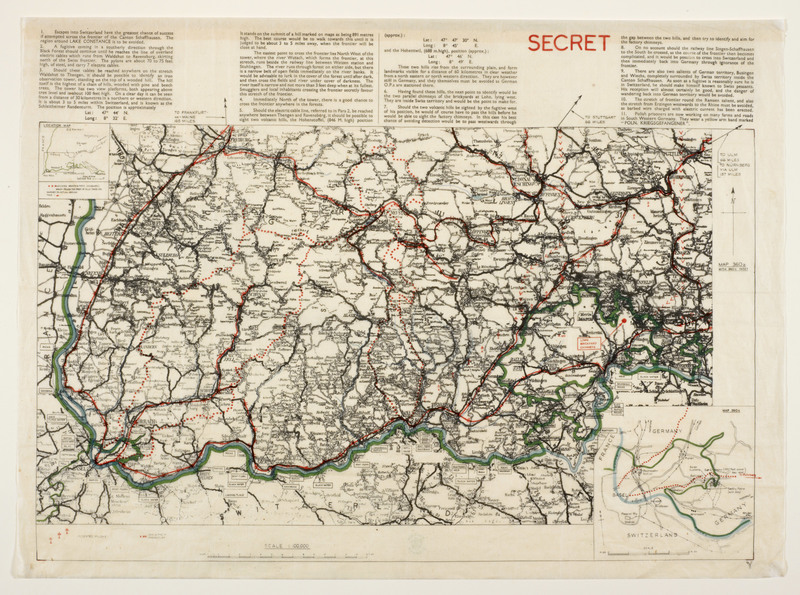
One set of newly accessible documents from the CIA details results of psychic tests on Uri Geller, where he attempted to copy drawings made by researchers from within a sealed room.
The University of Exeter is a Russell Group university that combines world-class research with very high levels of student satisfaction. Exeter has over 21,000 students from more than 130 different countries and is in the top 1% of universities in the world with 98% of its research rated as being of international quality. Our research focuses on some of the most fundamental issues facing humankind today.
The post of Lecturer in Global and Imperial History will contribute to extending the research profile of History at Exeter, particularly in areas related or complementary to the transnational history of imperialism, globalization, and decolonization since 1750. This full time post is available from 1st September 2017 to 31st August 2020 in the College Humanities on a fixed term basis. Continue reading “We’re Hiring! Lecturer in Global and Imperial History”→
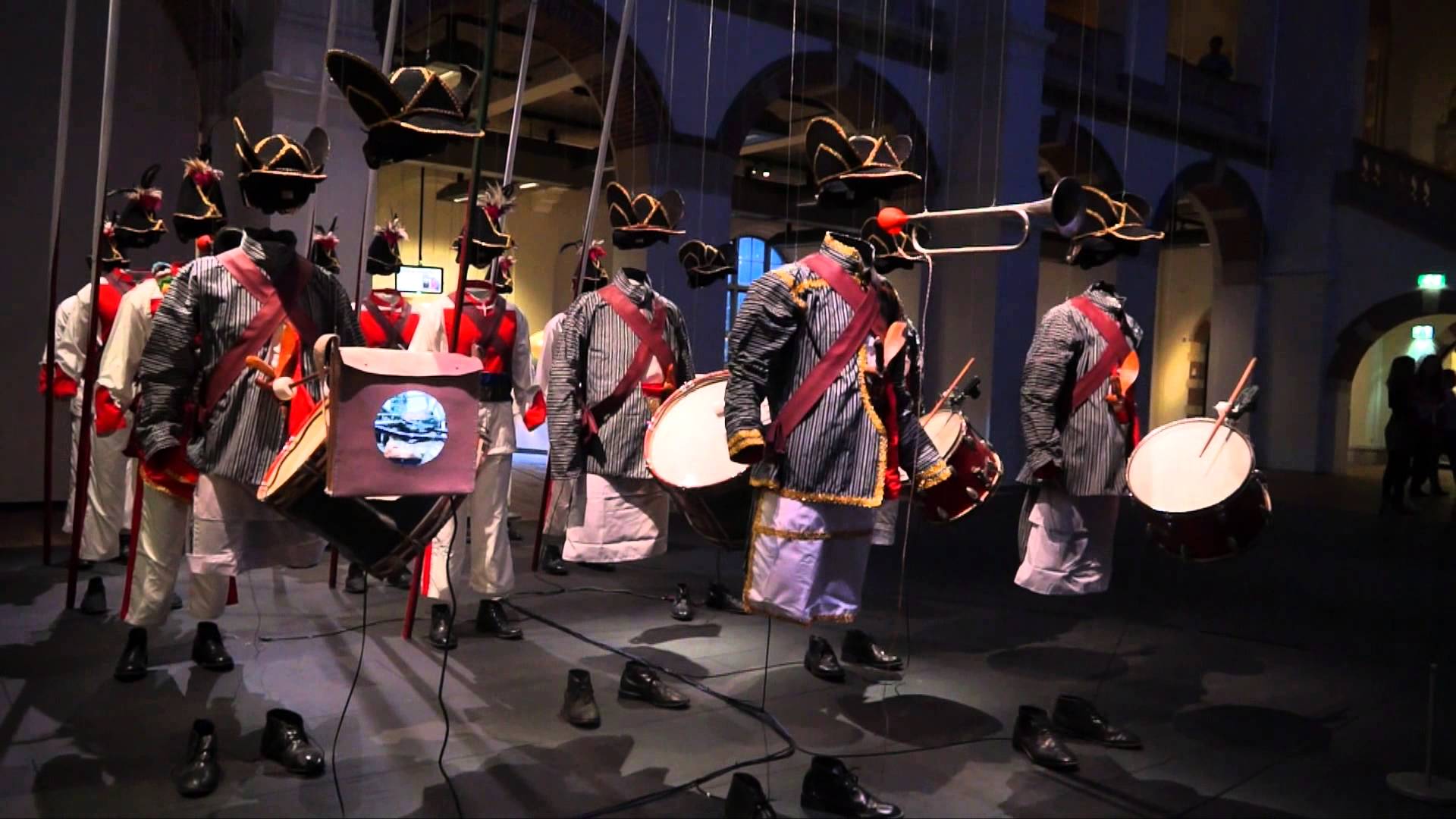
“Java, War of Ghosts” by Jompet Kuswidananto, 2009. Collection of Leo Sih, installation at Tropenmuseum “Grand Parade” (2014-15).
Sadiah Boonstra and Caroline Drieënhuizen
Before the holidays we read Paul Doolan’s response to our post with great interest. We appreciate the time and effort Mr Doolan took to reply to our post as we think a fruitful debate will progress knowledge. With this writing we give a final reaction to Mr Doolan and if it is not for knowledge progression, it will at least get Dr Sadiah Boonstra’s name spelled correctly.
In his response Doolan claims that our critique was based on a misreading and that he was referring to a specific period of time, namely 1945-1949, but that we “prefer to talk about something else”. However, in our view this period cannot be separated from the larger framework of colonialism as political, social, cultural and economic structures of domination. And this is exactly what Dutch historians and others have been trying to deconstruct over the past decades as set out in our previous response. We therefore uphold our argument against Doolan’s representation of a Dutch historical “guild” based in Leiden. Instead of calling on “outsiders”, as Doolan suggests, we favor collaborative methods to uncover the depth, multilayeredness and reach of colonialism. Continue reading “Rewriting Dutch colonial histories – Final response”→
I’ve just arrived in warm, sunny Denver for the 2017 American Historical Association Meeting, and now face the difficult decision concerning which sessions to attend. So I thought it might it might be helpful to compile the sessions relating to imperial and global history, to make my decision (and possibly yours) a bit easier. The list is based on titles only, so please feel free to include in the comments section any pertinent sessions that I may have missed. Continue reading “Imperial & Global History Sessions at #AHA17”→
Berny Sèbe (University of Birmingham, UK) in association with Matt Stanard (Berry College, USA) Co-organizers, The End of Empire conference, University of Birmingham
a
I am delighted to announce the following two events which might be of interest to readers of the Imperial and Global Forum:
a
– A roundtable on “Franco-British Studies: Experience and Methods” which I have organised to take place at the Maison française d’Oxford on 10 January 2017, with seven British and French scholars reflecting upon the benefits of cross-cultural comparisons between France and Britain. Please see information below for more information.
a
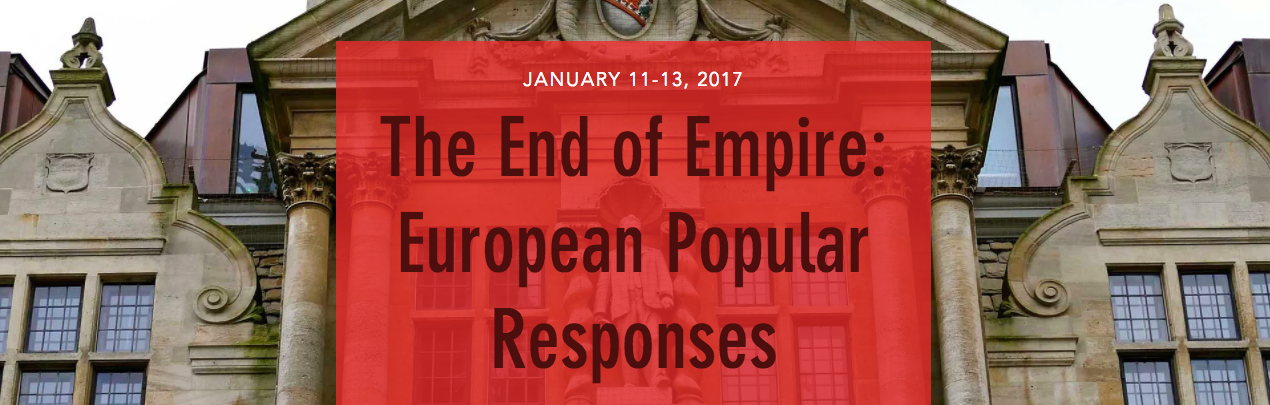
– The international conference The End of Empire: European Popular Responses, 11-13 January 2017, co-organised by myself and Matt Stanard (Berry College, USA) with support from the Past & Present Society, the University of Birmingham, the Maison française d’Oxford and Berry College. More than twenty five international scholars will reflect together upon the cultural consequences of decolonisation on European societies, with Elizabeth Buettner, Richard Drayton, Charles Forsdick, John MacKenzie and Stuart Ward delivering plenary sessions, and Wm Roger Louis providing the concluding remarks.
Editor’s Note: In the weeks leading up to the new year, please help us celebrate 2016 at the Imperial & Global Forum by checking out the past year’s 10 most popular posts.
In late 1946 the Historians’ Group – made up of historians, friends, and members of the Communist Party – started regularly meeting in Marx’s House in London, pictured here.
Gil Shohat Humboldt University Berlin
In today’s history cosmos, terms such as ‘History from Below’, ‘People’s History’ and ‘Social History’ belong to the essential canon of most academics and students. Thus, it is important to remember how these terms found their way into historiography before they were considered legitimate. Members of the Communist Party Historians’ Group in the UK laid the cornerstone for a new paradigm in historiography, today largely referred to as Social History, in the late 1940s and early 1950s. But exactly how did these historians perceive their own role as academic insurgents in the heart of ‘Whig history’ and what were the problems facing them as historians and members of the Communist Party of Great Britain (CPGB)?
In late 1946 a group of historians, friends, and members of the Communist Party started regularly meeting in Marx’s House in London. By means of discussion papers, presentations, and conferences it was sought to alter the way the British people perceived their own history. Eventually, so was the audacious hope, a ‘history from below’ would empower the common people to emancipate themselves from the confining and patronising ‘high history’ of British monarchs, prime ministers and great thinkers, yielding the deeply entrenched notion of Britain as a nation of constant evolution, not revolution. [continue reading]


 Imperial & Global Forum
You must be logged in to post a comment.