Top Ten of 2016 – #10 – Leopold Must Fall

Editor’s Note: In the weeks leading up to the new year, please help us celebrate 2016 at the Imperial & Global Forum by checking out the past year’s 10 most popular posts.

10. Leopold Must Fall

cullen1
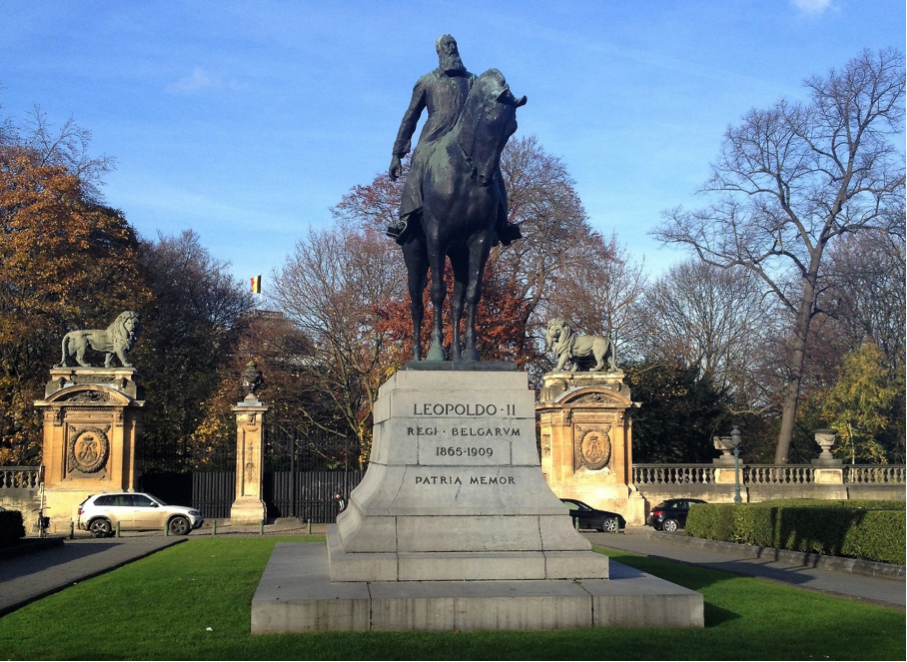
Statue of Leopold II in central Brussels. Photo credit: Daniel Cullen.

Daniel Cullen

Overshadowed by Oxford’s ongoing Rhodes statue controversy, in late April a motion was debated by student representatives at Queen Mary, University of London, calling for the removal of plaques commemorating the 1887 visit of King Leopold II of Belgium. Presenting the motion, the university’s Pan-African Society referred to atrocities committed during Leopold’s rule of the Congo Free State and argued that the presence of the “deeply offensive relics” was “glorifying and uncritical”. The group proposed that the plaques be relocated and recontextualised, “preferably in a space dedicated to the memorialization of the crimes of genocide, colonialism and imperialism”.

Transnational protestors across the world are presently demanding critical reflection on the legacies of prominent imperial figures and the “decolonisation” of higher education institutions, addressing wider issues of institutional racism, from Oxford to Princeton. This protest movement began in 2015 when students demonstrated against statues of Cecil Rhodes in Cape Town, before protests spread internationally, taking up the hashtag #RhodesMustFall. [continue reading]

This Week’s Top Picks in Imperial & Global History

30884891035_8389e0ce05_o

Marc-William Palen
History Department, University of Exeter
Follow on Twitter @MWPalen

From uncovering secret Cold War wiretaps to why the Nazis studied US race laws for inspiration, here are this week’s top picks in imperial and global history. Continue reading “This Week’s Top Picks in Imperial & Global History”

Oxford Research Encyclopedia of American History – Open Access (Free)

screen-shot-2016-12-14-at-07-48-09

Marc-William Palen
History Department, University of Exeter
Follow on Twitter @MWPalen

The new Oxford Research Encyclopedia of American History has begun publishing its peer-reviewed entries open access, meaning they are free to download. This is a remarkable free online resource, with a wide scope of content, from pre-contact history to contemporary US foreign policy, et al., the United States and non-alignment (Robert Rakove), 20th-century foreign economic policy (Daniel Sargent), human rights and foreign policy (Sarah Snyder), and nuclear arms control (Jonathan Hunt). The entries are extensive, and also include up-to-date bibliographical essays and primary source lists. I highly recommend exploring the content. My own contribution, “U.S. Foreign Trade Policy from the Revolution to World War I,” is among them. Here is the summary:

Economic nationalism tended to dominate U.S. foreign trade policy throughout the long 19th century, from the end of the American Revolution to the beginning of World War I, owing to a pervasive American sense of economic and geopolitical insecurity and American fear of hostile powers, especially the British but also the French and Spanish and even the Barbary States. Following the U.S. Civil War, leading U.S. protectionist politicians sought to curtail European trade policies and to create a U.S.-dominated customs union in the Western Hemisphere. American proponents of trade liberalization increasingly found themselves outnumbered in the halls of Congress, as the “American System” of economic nationalism grew in popularity alongside the perceived need for foreign markets. Protectionist advocates in the United States viewed the American System as a panacea that not only promised to provide the federal government with revenue but also to artificially insulate American infant industries from undue foreign market competition through high protective tariffs and subsidies, and to retaliate against real and perceived threats to U.S. trade.

Throughout this period, the United States itself underwent a great struggle over foreign trade policy. By the late 19th century, the era’s boom-and-bust global economic system led to a growing perception that the United States needed more access to foreign markets as an outlet for the country’s surplus goods and capital. But whether the United States would obtain foreign market access through free trade or through protectionism led to a great debate over the proper course of U.S. foreign trade policy. By the time that the United States acquired a colonial empire from the Spanish in 1898, this same debate over U.S. foreign trade policy had effectively merged into debates over the course of U.S. imperial expansion. The country’s more expansionist-minded economic nationalists came out on top. The overwhelming 1896 victory of William McKinley—the Republican party’s “Napoleon of Protection”—marked the beginning of substantial expansion of U.S. foreign trade through a mixture of protectionism and imperialism in the years leading up to World War I.

Response: Rewriting Dutch Colonial Histories

Paul Doolan
Zurich International School and the University of Konstanz

I sincerely appreciate that Saadia Boonstra and Caroline Drieёnhuizen took the time and effort to offer a reply to my article. However, their critique was based on a misreading. Perhaps it was the obscurity of my prose, or maybe it was the title (not of my choosing) “Decolonizing Dutch History” that led to a misunderstanding.

Their opening sentence already indicates a misreading. They claim that I “criticized Dutch historians for their failure to decolonize Dutch and colonial history”. But that was not the point I wished to make. I wrote that my concern was “in particular, the nature of Dutch warmaking during the final years of the Asian colony, 1945-1949.” In other words, my subject was the history of decolonization, not the decolonization of history. There is a difference.

The point that I made in a nutshell is this – for many decades Dutch historians have inadequately investigated the decolonization of Indonesia (1945-1949). In my article of 80 lines, 60 lines focus directly on the decolonization of Indonesia. In their response of 38 lines just four focus on this topic. My claim is that if you mention the subject of decolonization, many Dutch historians of colonialism prefer to start talking about something else. I think Boonstra and Drieёnhuizen inadvertently have proven my point. Continue reading “Response: Rewriting Dutch Colonial Histories”

Reminder: Call for Application GHRA 2017 open until December 31, 2016

Fabian Klose, Johannes Paulmann, and Andrew Thompson would like to remind that the Call for Applications for the third Global Humanitarianism Research Academy (GHRA) 2017 is still open, with a deadline of 31 December 2016.

plakat%20cfa%20global%20humanitarianism%202017

Global Humanitarianism | Research Academy

International Research Academy on the History of Global Humanitarianism Continue reading “Reminder: Call for Application GHRA 2017 open until December 31, 2016”

Confronting Change: Globalization, Migration and Precarious Labour in the Age of Brexit

precarious2

Gareth Curless
University of Exeter

On Wednesday 11 January 2017, the University of Exeter and the TUC’s European Union and International Relations Department will host a public conference at Congress House, London. To register for this event please visit the Eventbrite page for the conference. The event is free to attend and all are welcome but space is limited.

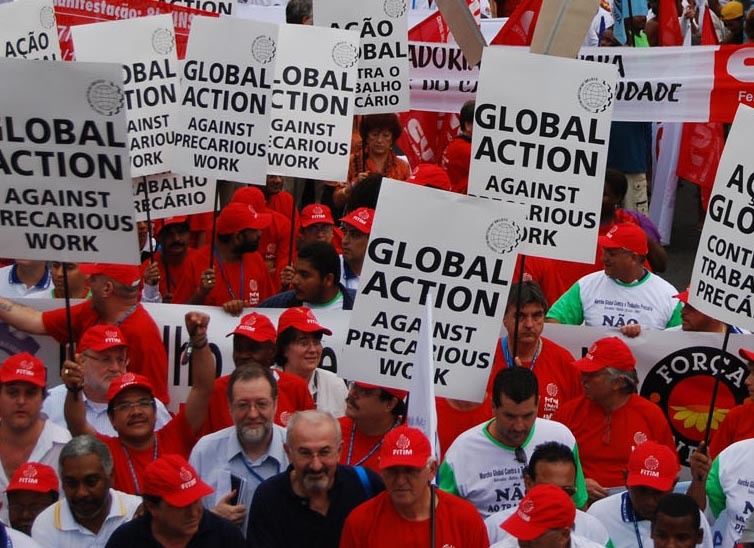
The EU referendum has brought to the fore debates concerning the effects of globalization, migration and casual or ‘precarious’ labour in twenty-first century Britain. These issues are not limited to the U.K., however. Over the course of the past three decades the dominance of neo-liberal economics, and the associated processes of privatisation and de-regulation, have contributed to widening inequality and a decline in formal sector employment across the globe. For organised labour movements these pressures have brought ever greater challenges, as trade unions have fought to resist the erosion of hard won labour rights and protect the living standards of their members. On these issues trade unions have won some notable victories but it is clear that further challenges lie ahead.

precarious

Indeed, for all neo-liberalism’s dominance over the past thirty years, the world finds itself at a crossroads. The 2008 financial crash; the debt and migration crises within Europe; the election of Donald Trump and rise of protectionism in the United States; and Brexit have all served to shake the foundations of the established global order. In turn, these events have led to a polarised debate between those who favour a renewed push for ever-greater levels of global inter-dependence and those that advocate a return to economic nationalism. For trade unions the challenge is not to allow this uncertainty to accelerate recent changes within the labour market, particularly with regard to the exploitation of migrants and undercutting of existing workforces, the rise of precarious labour and the imposition of stricter trade union laws. Instead trade unions should continue their active role in shaping debates about the deleterious effects of casualization and the infringement of labour rights by both states and employers.

The aim of this one day conference is to bring together academics, policymakers and trade union activists to reflect on the impact of globalization, migration and precarious labour and to consider the role of trade unions in the age of Brexit. The workshop will investigate the following questions: Continue reading “Confronting Change: Globalization, Migration and Precarious Labour in the Age of Brexit”

Rewriting Dutch Colonial Histories

tm-h-796

Sadiah Boonstra and Caroline Drieënhuizen

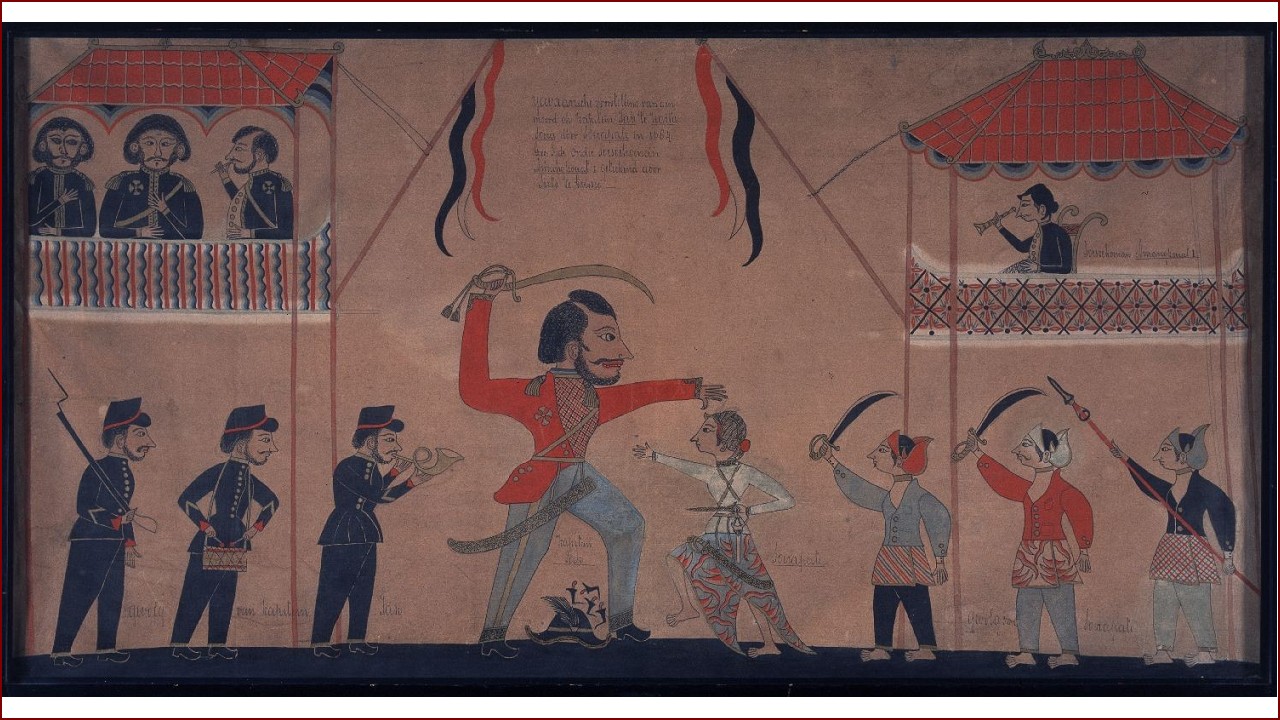
Paul Doolan (Zürich International School / University of Konstanz) recently criticized Dutch historians for their failure to decolonize Dutch and colonial history, and suggested the contribution of what he calls ‘outsiders’ as a solution. In doing so, however, he overlooks the fact that there are and have been many initiatives to rewrite Dutch colonial history. We propose instead that approach, method, and the writing of multiple histories are of much greater importance in decolonizing Dutch history.

Critical research on colonial history in the Netherlands

Doolan’s main observation is the existence of what he calls a ‘Guild of Historians’, consisting of mainly white males based in Leiden, which has resulted in a neglect of attention for the dark sides of Dutch colonial history. He sees that the ‘guild’s power’ has started to wane only recently following historical work by ‘outsiders’ like Rémy Limpach, who shows in his recent publication that the Dutch war crimes in colonial Indonesia were widespread, structural and fully supported by the legal, political, and military leadership. Continue reading “Rewriting Dutch Colonial Histories”

This Week’s Top Picks in Imperial & Global History

Photo illustration by Maurizio Cattelan and Pierpaolo Ferrari. Map: Rand McNally.

Marc-William Palen
History Department, University of Exeter
Follow on Twitter @MWPalen

From the End of the Anglo-American Order to Europe’s dark colonial history, here are this week’s top picks in imperial and global history.

Continue reading “This Week’s Top Picks in Imperial & Global History”

Zeiler on Palen, The “Conspiracy” of Free Trade

Thomas Zeiler
University of Colorado, Boulder

Thomas Zeiler is Professor of Diplomatic History at the University of Colorado Boulder. He has authored numerous books on U.S. diplomacy and globalization, including American Trade and Power (1992), Free Trade, Free World: The Advent of GATT (1999), Dean Rusk (2000), Globalization and the American Century (2003), and Unconditional Defeat: Japan, America, and the End of World War II (2004).

Cross-posted from E-International Relations

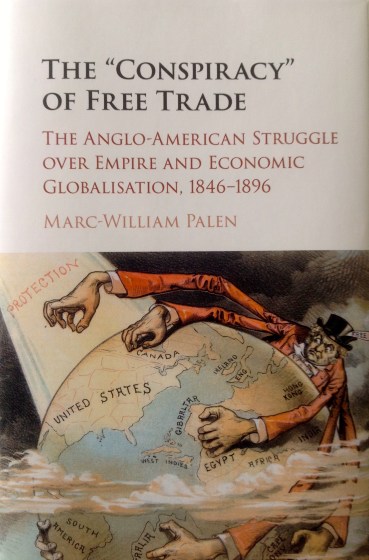
The “Conspiracy” of Free Trade: The Anglo-American Struggle Over Empire and Economic Globalisation, 1846-1896. By Marc-William Palen. Cambridge University Press, 2016

conspiracy of free trade coverIn the 2016 U.S. presidential election campaign, Bernie Sanders and Donald Trump made trade great again. That is, they reminded us that international trade policy, and particularly the American foreign commercial agenda, is as relevant today as it was in the nineteenth century, the last half of which is the era of focus for historian Marc-William Palen. The timing is striking. China has replaced European nations as competitors, and monetary manipulation and dumping rather than tariffs are the bete noires today. Yet contemporary protectionists are a throwback to expressions of economic nationalism last heard by a majority of politicians in the decades following the American Civil War. Protectionism guided American trade policies until the Great Depression, when freer (though still cautious) commercial relations traded places with the nationalism that had shaped the United States for its first century and a half.

The “Conspiracy” of Free Trade (the conspiracy a claim by American protectionists based in the Republican Party that British free traders were secretly trying to hinder U.S. prosperity at home and expansion abroad) is a corrective to decades of historiography that laissez-faire doctrine guided the Gilded Age. On the contrary, Palen’s sophisticated look into Anglo-American dialogue and domestic political maneuverings show that “ideological conflict between free traders and economic nationalists laid the imperial path for Anglo-American economic globalization” (xvi). His archival research is solid, though far surpassed by the extensive treatment of periodical and secondary sources; Palen has mined seemingly every commentary on the half century he covers. The author also lays out a simple binary of ideological visions – Cobdenite cosmopolitanism (the free traders) and a Listian nationalism (the protectionists) – that effectively expands the grand debate over the tariff into an even grander one over imperialism (and, in today’s terms, globalization). Continue reading “Zeiler on Palen, The “Conspiracy” of Free Trade”

PhD Funding in World, Global, Colonial, and Imperial History

exeter logo

Considering a PhD in the interconnected fields of World, Global, Colonial, and Imperial History? The University of Exeter is pleased to offer a variety of funding opportunities.

Exeter’s History Department is ranked top 5 in The Times and The Sunday Times Good University Guide 2017, top 10 in all major UK university league tables for the subject, top 50 in worldwide rankings for History (QS World University Rankings 2016), and 8th in the UK for world-leading research.

U of exeter image (1)The University of Exeter has two research centres in the broad field of world history: the Centre of Imperial and Global History (led by Professor Richard Toye), and the Centre for War, State and Society (led by Professor Martin Thomas). Both offer internationally-recognised supervision with geographical coverage from 30 staff across African, Asian (including Chinese), North American, Latin American, Eastern & Central European history from early-modern to contemporary eras. We also have close links with the Institute for Arab and Islamic Studies Centre for coverage of Middle Eastern history. Both Centres have strong inter-disciplinary links across the humanities and social sciences. The Centres have particular research interests in:

  • Globalisation’s past and present
  • Comparative empires and transnationalism
  • Humanitarianism, development and human rights
  • Law and colonialism
  • Political economy and the imperial state
  • Europe, decolonisation and the legacies of empire
  • Colonial warfare and counterinsurgency
  • Gender, race, and empire

If you are seeking PhD funding in the fields of World/Global/Colonial/Imperial History, please think about applying for the following funding opportunities at the University of Exeter. Continue reading “PhD Funding in World, Global, Colonial, and Imperial History”

This Week’s Top Picks in Imperial & Global History

billy-lynn

Marc-William Palen
History Department, University of Exeter
Follow on Twitter @MWPalen

From what is good about globalization to the unnatural history of progress, here are this week’s top picks in imperial and global history. Continue reading “This Week’s Top Picks in Imperial & Global History”

The Contradictions of White Nationalism in a Global Age: Lessons from Early 20th Century Melbourne

[Shows Little Bourke Street between William and Queen Streets] : from the tower of Dr Fitzgerald's residence Lonsdale Street West / John No-one, photographer. [Melbourne]: Crown Lands and Survey 1869
[Shows Little Bourke Street between William and Queen Streets] : from the tower of Dr Fitzgerald’s residence Lonsdale Street West / John No-one, photographer. [Melbourne]: Crown Lands and Survey 1869

Nadia Rhook
La Trobe University

Trump’s election is an equivocal ‘victory for white supremacy’, and justified cause for fear to circulate among people of Colour living in Anglo-dominated nations.[1] Yet history has seen other global upsurges in nationalist white supremacism, other times when fear and hope have made strange but productive bedfellows.

The 19th Century was the trans-imperial ‘age of mobility’. And it saw Melbourne become home to heterogeneous populations. By the time the Australian colonies united as a ‘white nation’ in 1901, a long history of migration connected Melbourne with global locales, from Punjab to Karachi, Canton to Hong Kong, Leicester to Oslo.[2]

Not only did Chinese migrants spread from southern provinces of Canton across the Pacific Rim, but so too did Indians, Afghans and Syrians migrate across borders internal to what is today known as South Asia. This included those highly permeable borders that demarcated Syria (part of the Ottoman Empire), the Emirate of Afghanistan (a buffer between the Russian and British Empires) and India (part of the British Empire). Many also ended up in Melbourne, the capital city of the Australian colony of Victoria. Continue reading “The Contradictions of White Nationalism in a Global Age: Lessons from Early 20th Century Melbourne”

This Week’s Top Picks in Imperial & Global History

umbrella-wind

Marc-William Palen
History Department, University of Exeter
Follow on Twitter @MWPalen

From thinking historically to the end of the end of history, here are this week’s top picks in imperial and global history. Continue reading “This Week’s Top Picks in Imperial & Global History”

Decolonizing Dutch History

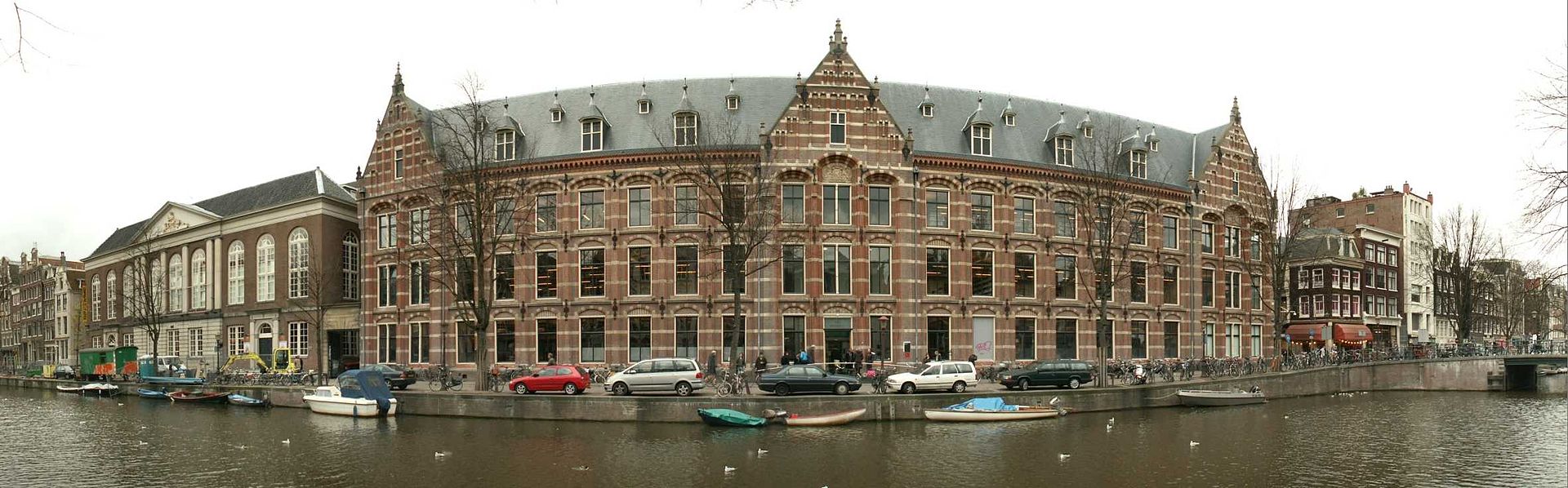
The Bushuis: Formerly the headquarters of the Dutch East India Company in Amsterdam. Today this building belongs to the Humanities Department of University of Amsterdam.
The Bushuis: Formerly the headquarters of the Dutch East India Company in Amsterdam.
Today this building belongs to the Humanities Department of University of Amsterdam.

Paul Doolan
Zurich International School and the University of Konstanz

Last month the academic year commenced at the University of Amsterdam (UvA) with speakers celebrating diversity and internationalism. Ironically, the audience in the auditorium was almost entirely white. In Amsterdam the majority of school age children come from migrant backgrounds, yet the university has an overwhelmingly white faculty that lectures to an overwhelmingly white student body. Most remarkable is the widely held attitude that this is not a problem.

As a historian interested in the roots of Eurocentrism and the legacies of imperialism, I would suggest that such an attitude is linked to the failure in teaching imperial history in the Netherlands. Through eight decades since the eviction of the Dutch from Indonesia, Dutch historians have consistently abdicated their responsibility by refusing to properly teach the public about the nature of Dutch rule in the former Dutch East Indies and, in particular, the nature of Dutch warmaking during the final years of the Asian colony, 1945-1949. Continue reading “Decolonizing Dutch History”

This Week’s Top Picks in Imperial & Global History

James Gillray’s 1805 cartoon, The Plumb Pudding in Danger, depicts prime minister William Pitt and Napoleon Bonaparte carving up the world Photograph: Rischgitz/Getty Images

Marc-William Palen
History Department, University of Exeter
Follow on Twitter @MWPalen

From the great unraveling of the world order to the myth of western civilization, here are this week’s top picks in imperial and global history.

Continue reading “This Week’s Top Picks in Imperial & Global History”