In today’s world, news is everywhere: news communicated by the press, by other media bodies, and increasingly by anyone who wants to share something with the world via Facebook or Twitter, or via a blog like this one! In this new series of podcasts, based around our Third Year undergraduate module on News, Media, and Communication (HIH 3617) Exeter academics will examine how different societies transmit and receive information. The relationship between oral, visual, and written modes of communication, and the impact of technological advances upon news and the media will be examined, as will debates about the role of the media within societies.
What was the relationship between news, media, and state power; and between money, power, and the press? How did the media influence the conduct of war? What impact did the invention of printing, or of television, have on the communication of news, and how did the new technologies interact with social and cultural assumptions to shape what was considered to be ‘news’?
In this video, Professor Jeremy Black and Professor Richard Toye discuss the role of the local and regional press in Britain.
This one-day conference will combine academic papers with a seminar session at which serving and former Embassy staff will be invited to present their testimonies and perspectives. The intention is to present a summary of the conference findings to the FCO to help inform future thinking in this area. The event will be held at the British Academy, 9 June 2016.
Embassies have long been integral to international diplomacy, their staff instrumental to inter-governmental dialogue, strategic partnerships, trading relationships and cultural exchange. But Embassies are also discrete political spaces. Notionally sovereign territory ‘immune’ from local jurisdiction, in moments of crisis Embassies have often been targets of protest and sites of confrontation. Embassies in Crisis will revisit flashpoints in the lives of Embassies overseas. Approaching Embassies as distinct communities with their own micro-histories, this conference seeks to explore each of these aspects in the lives of Embassies and the people who run them. Papers are welcomed that discuss instances of international confrontation or mass demonstration, past and present, that placed particular Embassies in the global spotlight. Continue reading “Call For Papers: Embassies in Crisis”→
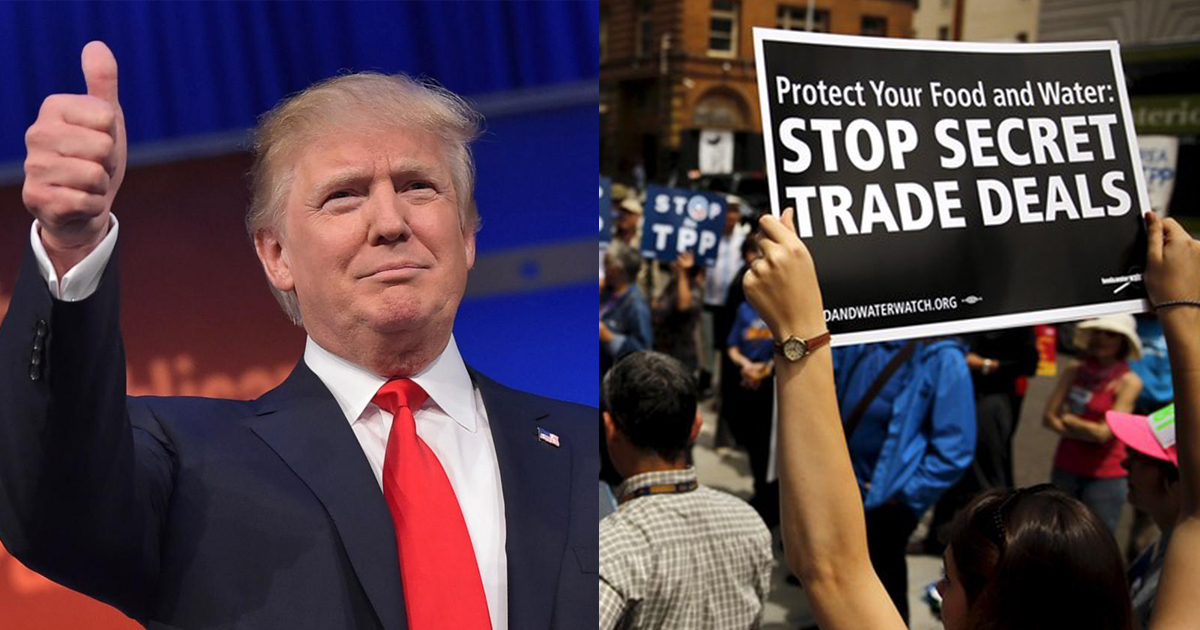
As Donald Trump continues his quest for the Republican nomination, free trade agreements remain in his crosshairs.
The billionaire has been making waves by opposing American free trade initiatives like the massive Trans-Pacific Partnership (TPP) – just signed earlier this month by ministers of the 12 Pacific Rim member nations – and even the 21-year-old North American Free Trade Agreement (NAFTA). As Trump put it in November, right now “free trade’s no good” for the United States.
It may sound strange for the leading GOP candidate for president to be bad-mouthing free trade, but this is a protectionist sentiment that more and more Republicans appear to be warming up to.
Historically, black men and women in the United States frequently linked national and geopolitical concerns. Recognizing that the condition of black people in the United States was “but a local phase of a world problem,” black activists articulated global visions of freedom and employed a range of strategies intent on shaping foreign policies and influencing world events.
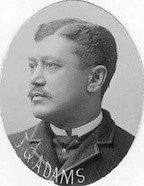
John Q. Adams
During the early twentieth century, John Q. Adams, an African American journalist, called on people of African descent to link their experiences and concerns with those of people of color in other parts of the globe. Born in Louisville, Kentucky in 1848, Adams moved to St. Paul, Minnesota in 1886, where he became associate editor, and subsequent owner, of the Appeal newspaper. The paper’s debut coincided with key historical developments of the period including the hardening of U.S. Jim Crow segregation laws, the rising tide of anti-immigration sentiment, and the rapid growth of American imperial expansion overseas.
Amidst the sociopolitical upheavals of the early twentieth century, Adams utilized the Appeal as a public platform from which to denounce global white supremacy and advocate for the liberation of people of color. These ideas gained increasing currency during World War I, a watershed moment in the history of black internationalist politics. The millions of black people who served the War effort—in the United States and in colonial territories in Africa, Latin America, and the Caribbean—demanded the immediate end of discrimination, racism, colonialism, and imperialism. Continue reading ““End the Autocracy of Color”: African Americans and Global Visions of Freedom”→
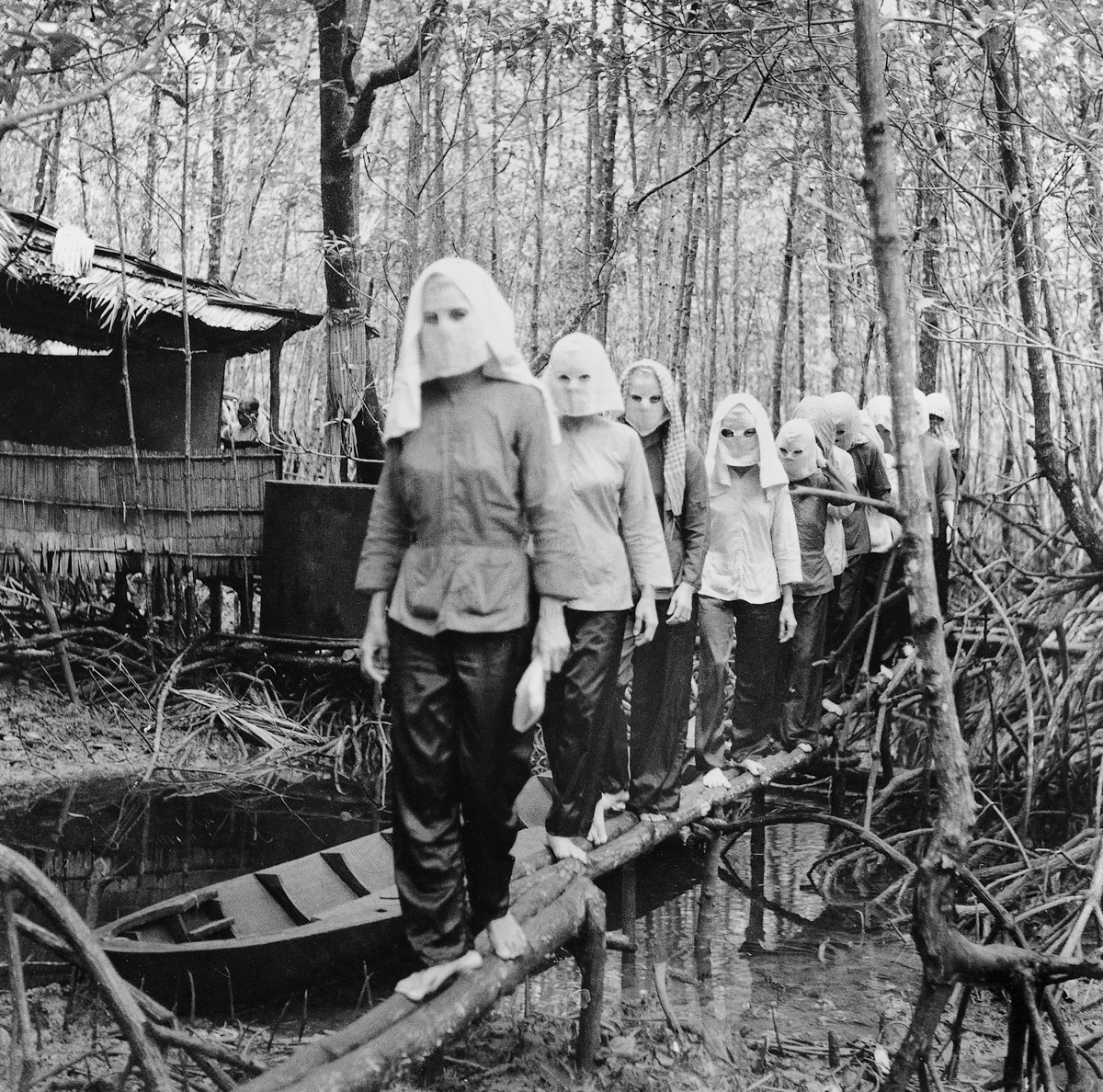
Activists meet in the Nam Can forest, wearing masks to hide their identities from one another in case of capture and interrogation. IMAGE: VO ANH KHANH/ANOTHER VIETNAM/NATIONAL GEOGRAPHIC BOOKS
Where: Centre for Southeast European Studies, University of Graz, and the University of Exeter
For more than forty years, Yugoslavia was one of the most internationalist and outward looking of all socialist countries in Europe, playing leading roles in various trans-national initiatives – principally as central participant within the Non-Aligned Movement – that sought to remake existing geopolitical hierarchies and rethink international relations. Both moral and pragmatic motives often overlapped in its efforts to enhance cooperation between developing nations, propagate peaceful coexistence in a divided world and pioneer a specific non-orthodox form of socialism.
We live surrounded by things. A typical German owns 10,000 objects. In Los Angeles, a middle-class garage often no longer houses a car but several hundred boxes of stuff. The United Kingdom in 2013 was home to 6 billion items of clothing, roughly a hundred per adult; a quarter of these never leave the wardrobe. Of course, people always had things, and used them not only to survive but for ritual, display and fun. But the possessions in a pre-modern village or an indigenous tribe pale when placed next to the growing mountain of things in advanced societies like ours. Continue reading “Empire of Things”→
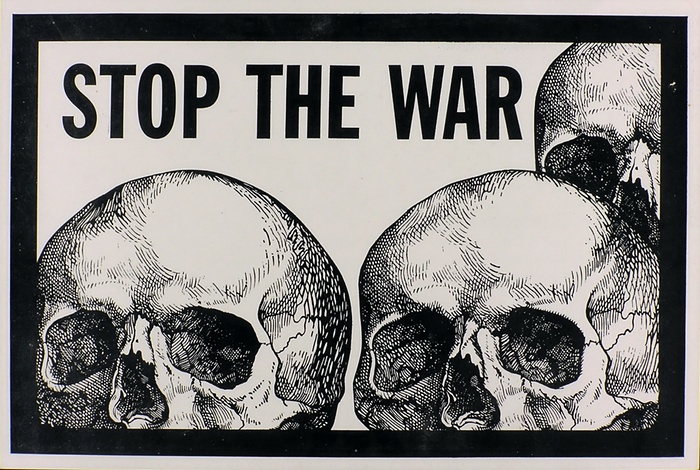
One of 150 surviving prints of the anti-Vietnam war artworks made at University of California, Berkeley, are to be shown in a new exhibition at Shapero Modern, London, as featured on the Guardian.
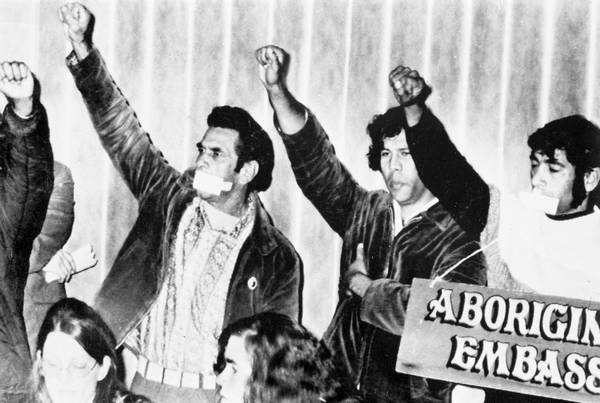
The Black Power salute given by Aboriginal activists Chicka Dixon, Paul Coe, and Bob McLeod in 1972. Source: Audio Visual Archive, Australian Institute of Aboriginal and Torres Strait Islander Studies, Canberra. Courtesy of the National Museum Australia website.
Recently, an upturn in indigenous struggles in Australia have seen the legacies of colonialism and genocide forced back onto the national radar. Protests against the closure of indigenous communities, the continued forced removal of Aboriginal children by welfare agencies, and the birth of youth-led groups like Warriors of the Aboriginal Resistance (WAR) are but a few examples of this. Instead of the sanitised government-sponsored campaign to ‘Recognise’ indigenous peoples in the Australian constitution, many of these activists are looking back to the global struggles of the 1960s and 1970s for their political inspiration. Continue reading ““Malcolm X Exploded in My Mind”: The Transnational Imagination of Australian Indigenous Activists”→
Tonio Andrade, a professor at Emory University, has written a well-researched, balanced, and comparative history of military innovation in Asia and the West in which he challenges the traditional notion—set forth most compellingly by Victor Davis Hanson in Carnage and Culture and Niall Ferguson in Civilization—that Western culture largely explains Western global predominance in the post-medieval world.
Although Andrade frames the book around the invention of gunpowder by the Chinese and its subsequent employment in warfare by both Chinese and Western powers, his principal focus is to explain why in certain historical time periods Chinese and Western military innovation surged or remained static, and more specifically why there developed a “Great Military Divergence” between China and Western powers during the mid-18th century into the 19th century. The key factor, he concludes, is not culture but the Toynbeean phenomenon of “challenge and response”. Continue reading “The Gunpowder Age: China, Military Innovation, and the Rise of the West in World History”→
Anon., ‘Inside the revolutionary committee. Final scene’ (c.1794). An idealized version of local events during the Thermidorian Reaction against the Terror. The inner circle around the table are members of a local ‘revolutionary committee’, disheveled, drunk and (in one case) foreign.
In this centre interview, Professor Richard Toye and Dr. Alex Fairfax-Cholmeley (University of Exeter) discuss the French Revolution, print culture, and the Terror.
Q1. [Toye] You’re currently working on print culture during the French revolutionary era. It’s well known that this was a period that saw an extraordinary explosion in the publication of pamphlets and newspapers. But who was producing them, and why?
[Fairfax-Cholmeley] It is true that the Revolution saw a remarkable rise in the quantity and variety (but not necessarily the quality!) of printed material available to the French population. In the late 1780s, a creaking system of censorship broke up completely in the face of the huge excitement generated by the call for the first Estates-General (the French equivalent of Parliament) since 1614. From 1789 onwards, many Revolutionaries would draw a close association between freedom of the press and the wider political and social liberties the Revolution was supposed to be securing. The printing press therefore always had a certain revolutionary cachet that encouraged its use – especially in Paris.
Who exactly was producing pamphlets, newspapers and other printed material (broadsides, petitions, plays…the list is endless) clearly varies a great deal. The Revolutionary press attracted ambitious members of the political elite, for obvious reasons, but overall production involved a much broader constituency. For example, part of my PhD research focused on the use of print by victims of repression during the Terror of 1793-1794 as a tactic to extricate themselves from any number of sticky situations, and also to restore their revolutionary standing afterwards. Just as the Terror targeted men and women from right across the social spectrum, so the petitions, legal briefs, letters and other material printed in response were not just authored by a narrow elite. My current British Academy postdoctoral fellowship was partly inspired by this research. I am investigating the activities of surviving victims of the Terror in the next phase of the French Revolution (1794-1799), including their use of print to mount public campaigns against those they alleged to have been their former oppressors. You also see those accused of being former Terrorists printing their own defences in return. Continue reading “Centre Interview: Fairfax-Cholmeley on the French Revolution, Print Culture, and the Terror”→
For scholars of the the British Empire and the British World, the Centre for Imperial & Global History would like to draw your attention to our good friends at the British Scholar Society.
The British Scholar Society is a global organization of historians and political scientists examining Britain’s interactions with the wider world from the seventeenth century to the present day. Aiming to better understand Britain’s place in global history, the society seeks to foster international intellectual exchange about this theme.
Their interest is not limited to Britain’s political relations with other countries, but includes the economic, social and cultural aspects of its international relationships as well. One important focus is the study of the British Empire and the Commonwealth of Nations. Among the activities of The British Scholar Society are
the organization of an annual scholarly conference (The ‘Britain and the World Conference’), held alternately in Britain and the USA
the publication of a book series with Palgrave Macmillan
the running of a website (britishscholar.org), providing regular updates about the society’s activities, recent publications in the field of British, imperial and global history, book reviews, essays on Britain’s international history, and much more
the organization of a lecture series in Britain and continental Europe






 Imperial & Global Forum
You must be logged in to post a comment.