British Historians and British Identity

Anthony Leon Brundage and Richard Alfred Cosgrove. British Historians and National Identity, From Hume to Churchill. London: Pickering and Chatto, 2014. 272 pp. £60.00 (hard back), ISBN 978-1-84893-539-6; £24 (eBook).

Reviewed by Rachel Chin
History Department, University of Exeter
Follow on Twitter @chinra4
british historians and national identityIn the last two decades, historical studies focussing on themes of memory creation, mythmaking and national identity have burgeoned.[1] Authors Anthony Brundage and Richard A. Cosgrove, in their 2014 book British Historians and National Identity, attempt to link a series of single-authored multi-volume histories to the creation of particular themes within British identity. The central thesis of the work is that British national identity was never, and is not today, a static concept: “Central to the manner that English people think of themselves was (and is) their history: real, imagined or invented; all categories of identity are rooted in some century or era of the English story”[8]. By focussing upon British history specifically, Brundage and Cosgrove have been able to narrow the scope of their ambitious work to the development of an historical framework in which historians themselves advanced and influenced the exceptional island story.

This particular study is unique in that it links the work of a series of historians, from David Hume to Sir Winston Churchill, with the goal of demonstrating how “history (and historians) provide the collective memory for the nation.” [248] Fascination with the idea of identity construction, particular within a British, or more often, specifically English framework, has previously been taken up by a number of scholars. Linda Colley’s Britons: Forging the Nation (2009) represents particularly well the extent to which British identity was constructed around or indeed, against the idea of an enemy ‘other’: namely, the French.[2] Likewise, as is evident with Anglo-French scholar Robert Tombs’ recent publication The English and Their History (2015), this is a topic that continues to draw intellectual scrutiny.[3] Engagement with memory creation and identity within the context of war and conflict remain popular areas of research, with Samuel Hynes and Mark Connelly, in the last decade or so, analysing the process of selection through which shared memory and personal narratives become collective.[4] Jonathan Rose’s The Literary Churchill (2014) and David Reynolds’ In Command of History: Churchill Fighting and Writing the Second World War (2004) in turn take a specialised and extremely personal approach in working to shed light upon how one political actor and historian understood and interpreted their own achievements.[5] Continue reading “British Historians and British Identity”
This Week’s Top Picks in Imperial & Global History

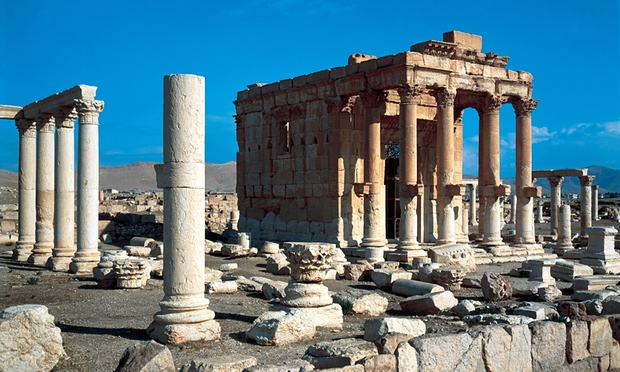
The Roman ruins in Palmyra. Photograph: G Dagli Orti/De Agostini/Getty

Marc-William Palen
History Department, University of Exeter
Follow on Twitter @MWPalen

From the centenary of the “humanitarian occupation” of Haiti to internationalizing the ruins of Palmyra, here are this week’s top picks in imperial and global history. Continue reading “This Week’s Top Picks in Imperial & Global History”

Global Humanitarianism Research Academy 2015 – Week 2

Cross-posted from Humanitarianism & Human Rights

After the first week of academic training at the Leibniz Institute of European History in Mainz, the Global Humanitarianism Research Academy (GHRA) 2015 travelled for a week of research training and discussion with ICRC members to the Archives of the International Committee of the Red Cross in Geneva.

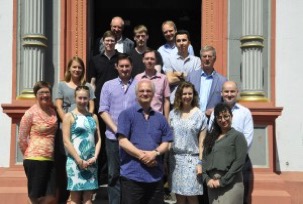
DSCN5071GHRA participants in the ICRC Archives

The First Day at Geneva started with an introduction to the public archives and library resources by ICRC staff. Jean-Luc Blondel, former Delegate, Head of Division, and currently Adviser to the Department of Communication and Information Management welcomed the group. Daniel Palmieri, the Historical Research Officer at the ICRC, and Fabrizio Bensi, Archivist, explained the development of the holdings, particularly of the recently opened records from 1966-1975. The Librarian Veronique Ziegenhagen introduced the library with its encompassing publications on International Humanitarian Law, Human Rights, Humanitarian Action, international conflicts and crises. The ICRC also possesses a superb collection of photographs and films which Fania Khan Mohammad, Photo archivist, and Marina Meier, Film archivist explained. Continue reading “Global Humanitarianism Research Academy 2015 – Week 2”

The Colonial Origins of the Greek Bailout

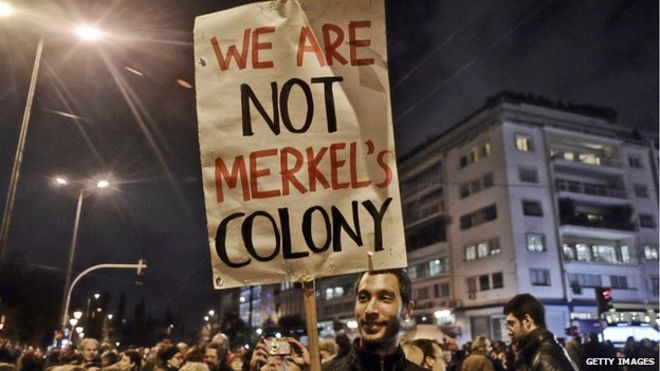
not merkel's colony

Jamie Martin
Harvard University
Follow on Twitter @jamiemartin2

When news broke two weeks ago of the harsh terms of a new bailout for Greece, many questioned whether the country still qualified as a sovereign state. “Debt colony,” a term long used by Syriza and its supporters, was suddenly everywhere in the press. Even the Financial Times used the language of empire: “a bailout on the terms set out in Brussels,” as a 13 July editorial put it, “risks turning the relationship with Greece into one akin to that between a colonial overlord and its vassal.”

Suggestions like these have invited historical comparison. One parallel that’s been mentioned is that of Egypt during the late nineteenth century. In 1876, as a heavily indebted Egypt approached bankruptcy, the Khedive Ismail Pasha agreed to the creation of an international commission, staffed by Europeans, with oversight of the Egyptian budget and control over certain sources of public revenue. This arrangement, designed to ensure the timely servicing of foreign debts, opened a new and extended period of intensified European intervention in Egypt – the Caisse de la Dette Publique was not abolished until 1940.

In the case of Greece, the comparison to nineteenth-century Egypt carries polemical weight largely as metaphor: Eurozone leaders should not treat Greece as if it were a semi-colonial territory. But there’s more at work here than just metaphor – at least historically speaking. As recent works in international history have demonstrated, there are important, and often obscured, continuities between the institutions and practices of European imperialism and the systems of global governance created or expanded in the second half of the twentieth century.[1] Continue reading “The Colonial Origins of the Greek Bailout”

This Week’s Top Picks in Imperial & Global History

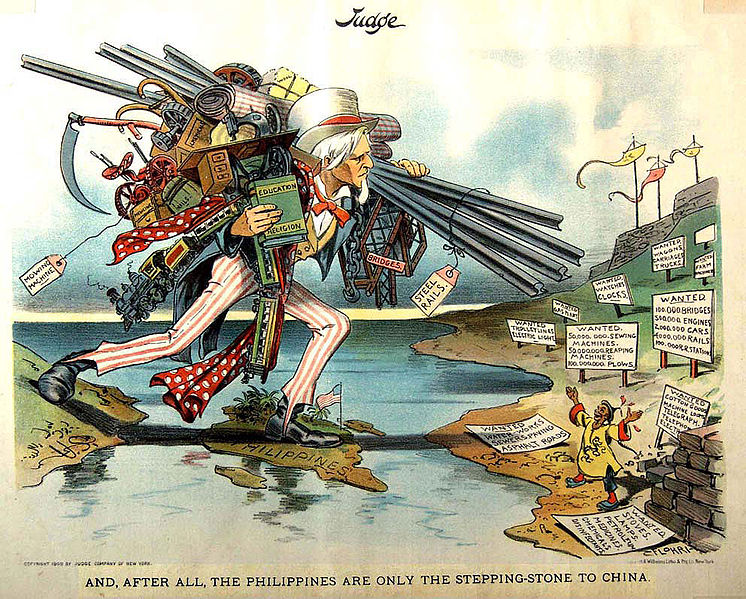
UncleSamStepingStoneToChina_0

Marc-William Palen
History Department, University of Exeter
Follow on Twitter @MWPalen

From 21st-century US filibustering in Africa to how to make a country disappear, here are this week’s top picks in imperial and global history. Continue reading “This Week’s Top Picks in Imperial & Global History”

Global Humanitarianism Research Academy 2015 – Week 1

Andrew Thompson

Cross-posted from Humanitarianism & Human Rights

After the first part the Global Humanitarianism Research Academy (GHRA) 2015 at the Leibniz Institute of European History in Mainz the next week of academic training will take place at the Archives of International Committee of the Red Cross in Geneva.

Participants of the GHRA 2015

On Day One recent research and fundamental concepts of global humanitarianism were critically reviewed. Participants discussed crucial texts on the historiography of humanitarianism and human rights. Themes included the historical emergence of humanitarianism since the eighteenth century and the troubled relationship between humanitarianism, human rights, and humanitarian intervention. Further, twentieth century conjunctures of humanitarian aid and the colonial entanglements of human rights were discussed. Finally, recent scholarship on the genealogies of the politics of humanitarian protection and human rights since the 1970s was assessed, also with a view on the challenges for the 21st century. Continue reading “Global Humanitarianism Research Academy 2015 – Week 1”

This Week’s Top Picks in Imperial & Global History

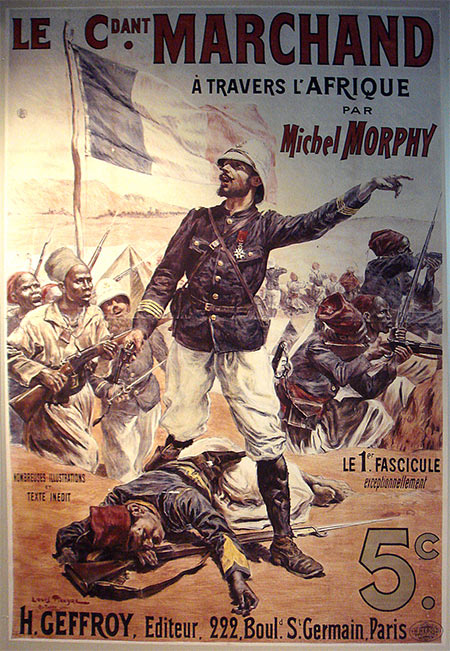
marchand Contemporary illustration of Major Marchand's trek across Africa. - See more at- http-::www.historytoday.com:sarah-searight:steaming-through-africa#sthash.hftqWHHQ.dpuf

Marc-William Palen
History Department, University of Exeter
Follow on Twitter @MWPalen

From revealing the sheer scale of British slave ownership to America’s colonial fiscal crisis, here are this week’s top picks in imperial and global history. Continue reading “This Week’s Top Picks in Imperial & Global History”

Call For Papers – Colonialism, War & Photography

       Call for Papers for an Interdisciplinary Workshop as part of the research project

Cultural Exchange in Times of Global Conflict: Colonials, Neutrals and Belligerents during the First World War

Colonialism, War & Photography

London – 17 September 2015

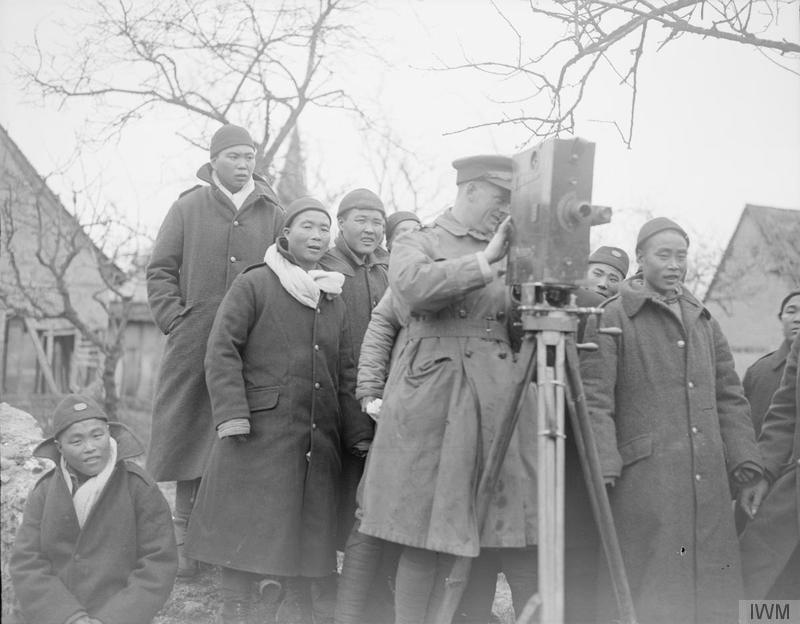
If the First World War is usually defined as the military clash of empires, it can also be reconceptualised as a turning point in the history of cultural encounters. Between 1914 and 1918, more than four million non-white men were drafted mostly as soldiers or labourers into the Allied armies: they served in different parts of the world – from Europe and Africa to Mesopotamia, the Middle East and China – resulting in an unprecedented range of cultural encounters. The war was also a turning point in the history of photographic documentation as such moments and processes were recorded in hundreds of thousands of photographs by fellow soldiers, official photographers, amateurs, civilians and the press. In the absence of written records, these photographs are some of our most important – and hitherto largely neglected – sources of the lives of these men: in trenches, fields, billets, hospitals, towns, markets, POW camps. But how do we ‘read’ these photographs?

Second-Lieutenant Frank Bassill, British official cameraman, with a Moy & Bastie camera and members of the Chinese Labour Corps (IWM Q 10260).

Using the First World War as a focal point, this interdisciplinary one-day workshop aims to examine the complex intersections between war, colonialism and photography. What is the use and influence of (colonial) photography on the practice of history? What is the relationship between its formal and historical aspects? How are the photographs themselves involved in the processes of cultural contact that they record and how do they negotiate structures of power? Continue reading “Call For Papers – Colonialism, War & Photography”

The Trans-Pacific Partnership: Imperial Preference Reborn?

TPP Death Star

Peter E. Hamilton
University of Texas at Austin 

Empires are in motion in the Pacific. While China continues to assert its military muscle in the East and South China Seas, it is simultaneously ramping up a “soft power” offensive through the new Asian Infrastructure Investment Bank (AIIB). This Chinese-led institution represents the opening salvo in a sustained effort to decenter US-dominated institutions such as the World Bank from exclusive leadership over global capitalism. Indeed, China is also adding momentum to its proposed Free Trade Area of Asia Pacific (FTAAP), a free trade zone that would include many US allies but not the United States. Increasingly sensitive about this competitor, the United States is now rushing to reinforce the imperial perimeter that it has held across most of Asia’s coastline since the end of World War II.

As a result, on June 24 the US Congress granted the Obama administration what is called “fast track” or trade promotion authority to complete negotiations on the Trans-Pacific Partnership (TPP). This vast free trade agreement will cover the United States and eleven of its principal Pacific partners—together nearly 40 percent of the global economy. From Japan, Canada, and Mexico to Chile, Malaysia, and Vietnam, each potential signatory is either a key US ally or very invested in maintaining US leadership in the Pacific.

China’s absence is glaring. Moreover, while fast-track authority makes the TPP far more likely by prohibiting death by Congressional amendment, this practical step also underscores that the administration and Congress (primarily Republicans) both view this deal through a strategic lens and its potential to cement non-Chinese relationships. The actual details are seen as far less important and have been largely entrusted to multinationals’ lobbyists. When these complex and now highly secretive terms debut, Congress and the public will likely be railroaded into their wholesale acceptance. The TPP thus offers a new iteration of the United States’ and other empires’ longstanding use of market access to cement informal control over allies and client states. Continue reading “The Trans-Pacific Partnership: Imperial Preference Reborn?”

This Week’s Top Picks in Imperial & Global History

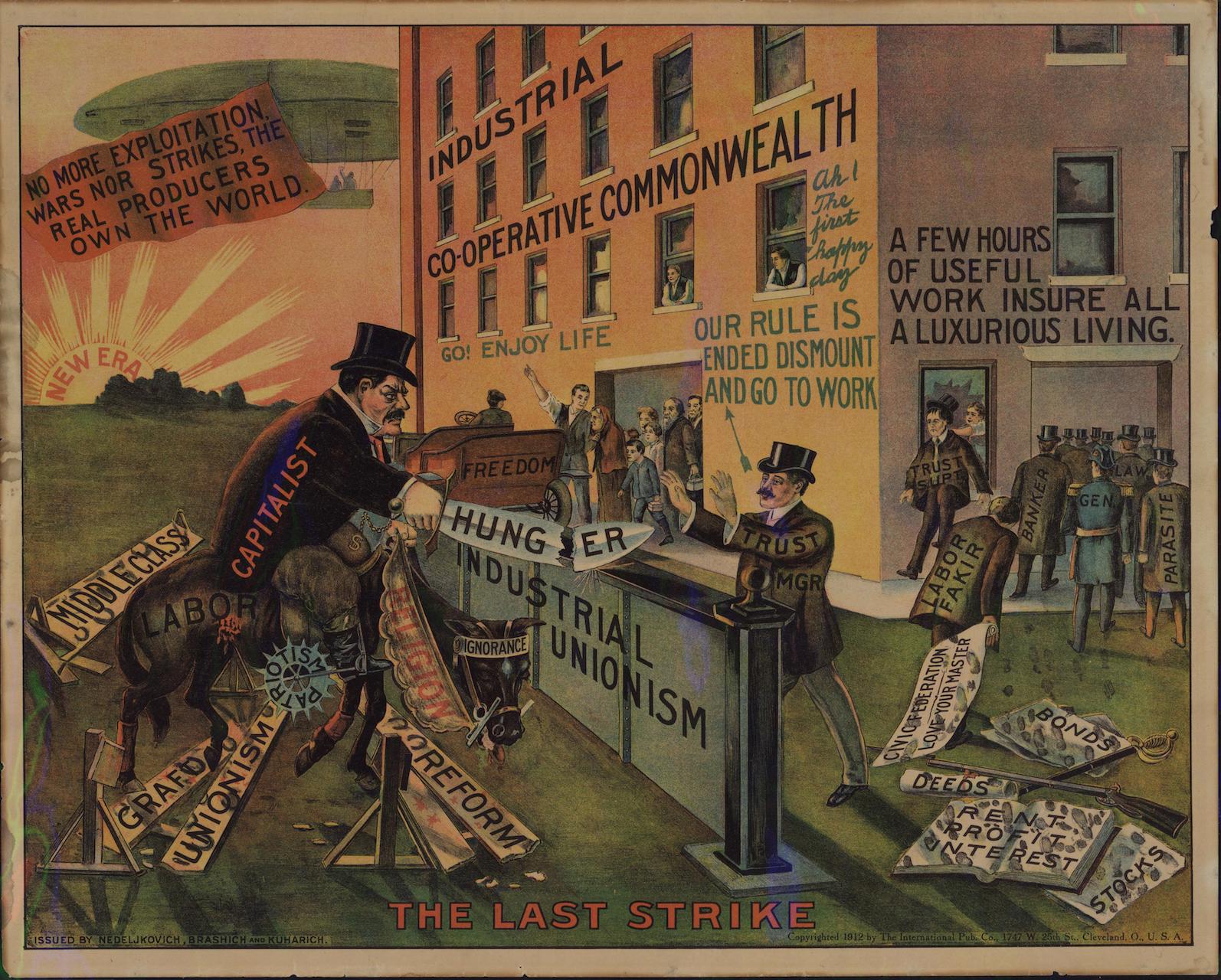
“The Last Strike” (1912), Nedeljkovich, Brashich, and Kuharich / IWW, Cleveland (courtesy of Labadie Collection, University of Michigan)

Marc-William Palen
History Department, University of Exeter
Follow on Twitter @MWPalen

From newly digitized archives of radicalism to how the Confederate flag came to Cuba, Vietnam, and Iraq, here are this week’s top picks in imperial and global history.

Continue reading “This Week’s Top Picks in Imperial & Global History”

Charleston Shooting Exposes America’s Pro-Apartheid Cold War Past

Storm-Flags

R. Joseph Parrott
University of Texas at Austin
Fellow, Miller Center, University of Virginia
Follow on Twitter @RJParrott_

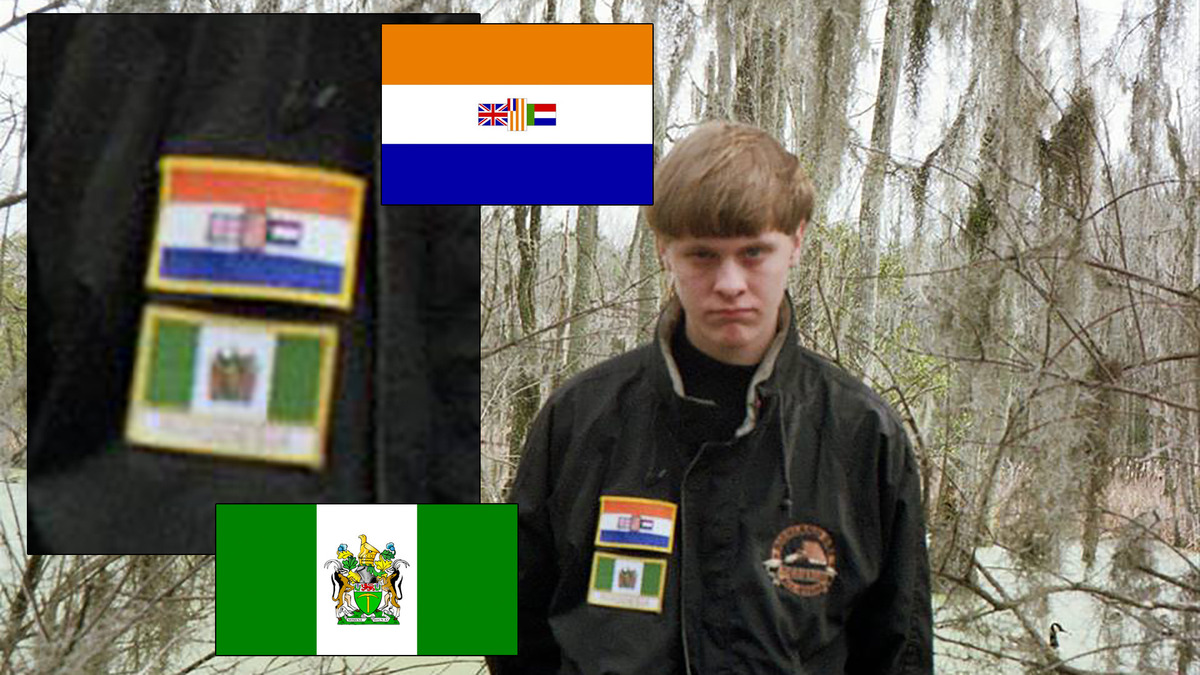
In the wake of the shooting at the Emanuel African Methodist Episcopal Church in Charleston, the United States has undergone a deep soul searching. Images of the confessed shooter posing with the Confederate Battle Flag have launched a long-overdue national debate about the meaning of Confederate imagery. But they have quickly overshadowed the shooter’s use of two other symbols: the defunct standards of Rhodesia (Zimbabwe) and apartheid South Africa.

Though not nearly as ubiquitous as the “stars and bars,” these totems symbolize an international segregationist philosophy of white superiority. While historians have rightly focused on the transnational dimensions of decolonization and the civil rights movement, there was also a smaller, if no less global, reaction against these trends. Both South Africa and Rhodesia actively cultivated alliances with reactionary white populations abroad, building support in the United States, particularly in the area of the old Confederacy. The Charleston shooting therefore serves as a violent reminder that American racism today is not only a regional issue – it has also been shaped by a decades-long global opposition to human and civil rights. Continue reading “Charleston Shooting Exposes America’s Pro-Apartheid Cold War Past”

Britain, France, and their Roads From Empire: A New Talking Empire Podcast

fight or flight thomasMartin Thomas’s path-breaking book Fight or Flight: Britain, France, and their Roads from Empire tells how the world’s two largest colonial empires disintegrated dramatically after the Second World War. Although shattered by war, in 1945 Britain and France still controlled the world’s two largest colonial empires, with imperial territories stretched over four continents. And they appeared determined to keep them: the roll-call of British and French politicians, soldiers, settlers and writers who promised in word and print at this time to defend their colonial possessions at all costs is a long one. Yet, within twenty years both empires had almost completely disappeared.

The collapse was cataclysmic. Peaceable ‘transfers of power’ were eclipsed by episodes of territorial partition and mass violence whose bitter aftermath still lingers. Hundreds of millions across four continents were caught up in the biggest reconfiguration of the international system ever seen.

In this new Talking Empire podcast Professor Thomas talks about the book with Professor Richard Toye.

This Week’s Top Picks in Imperial & Global History

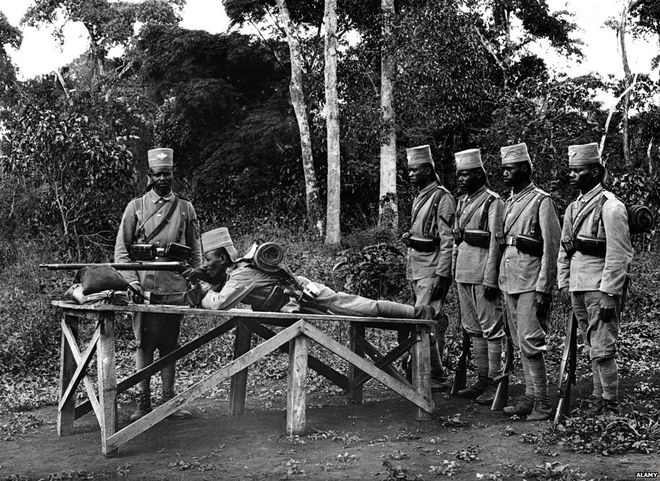
Photo of Askaris (local soldiers) during shooting practice in German East Africa (now Tanzania)

Marc-William Palen
History Department, University of Exeter
Follow on Twitter @MWPalen

From the Mã Lai Origins of the Viet to the global war on blackness, here are this week’s top picks in imperial and global history. Continue reading “This Week’s Top Picks in Imperial & Global History”

Anticolonialism, Antifascism, and Imperial History

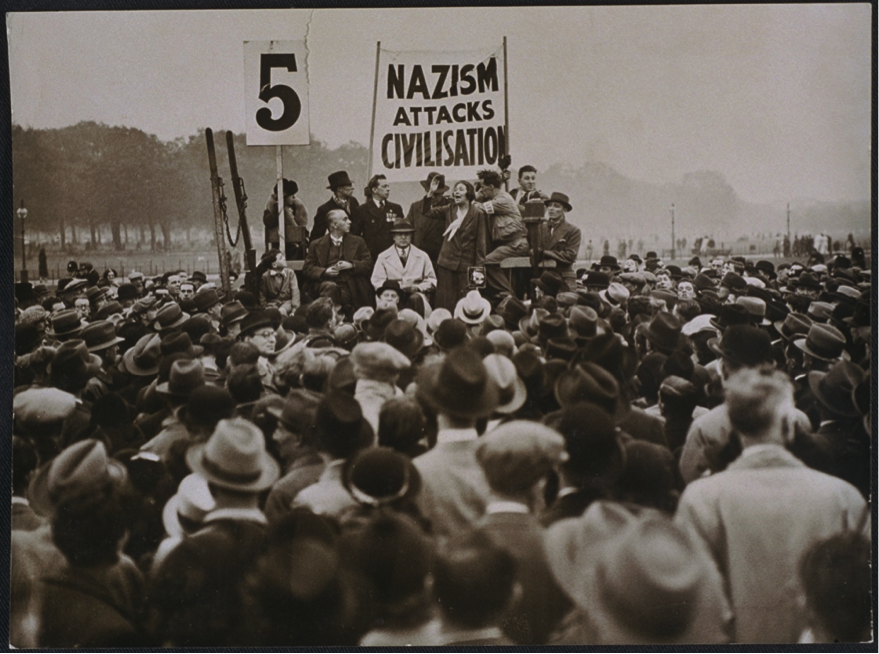
 Antifascist demonstrators in London, October 1935. Photo: National Media Museum/SSPL
Antifascist demonstrators in London, October 1935. Photo: National Media Museum/SSPL.

John Munro
Saint Mary’s University[1]

There’s a lot to be said for emphasizing the structuring role of colonialism and anticolonialism across the twentieth century. To contextualize the world wars, the Cold War, and contemporary global capitalism as embedded in a larger set of imperial continuities is to offer an indispensable corrective to the overemphasis of 1945 as epistemic break; the embellishment of US history as an empire-free zone; or the exaggeration of the distance between imperialism and free trade. Fredrik Petersson’s astute Versailles-to-Bandung emplotment of transnational anticolonial activism is thus a very compelling one, especially when read alongside several concurring periodizations.[2] But how we might conceive of antifascism in this empire-centered genealogy requires further attention. Whether antifascism was itself an anticolonialism, in other words, matters much for how we make sense of the twentieth century. Continue reading “Anticolonialism, Antifascism, and Imperial History”

Call for Papers: New Directions in Imperial Labour History

1452

Call for Papers: New Directions in Imperial Labour History

Gareth Curless and Yann Beliard

The European Labour History Network is hosting its first conference at the University of Turin from 14-16 December 2015. The aim of the conference is to connect historians working in the sub-fields associated with Labour History, one of which is imperial labour history. CIGH’s Gareth Curless and Yann Beliard, Université Sorbonne Nouvelle, are responsible for co-ordinating the Imperial Labour History Group. As part of the conference, Gareth and Yann will be organising a workshop on the subject of imperial labour history. The objective of the workshop is to consider imperial labour history within the wider context of imperial historiography, investigating how labour historians can contribute to ‘new imperial history’, as well as emerging trends resulting from the ‘global’ or ‘transnational turn’. The Call for Papers can be found below and the organisers would welcome contributions from not just historians but also political scientists and social movement theorists:

The ‘cultural turn’ has revitalised the study of imperialism, moving imperial history away from its traditional focus on administrative and diplomatic elites, conquest and administration, and the geo-politics of empire, to subjects such as race, gender, and sexuality. Few studies, however, have focused on the concepts of class and labour. Such neglect is unsurprising but it is detrimental both to the study of empire and to the exploration of how imperialism affected metropolitan societies. Continue reading “Call for Papers: New Directions in Imperial Labour History”