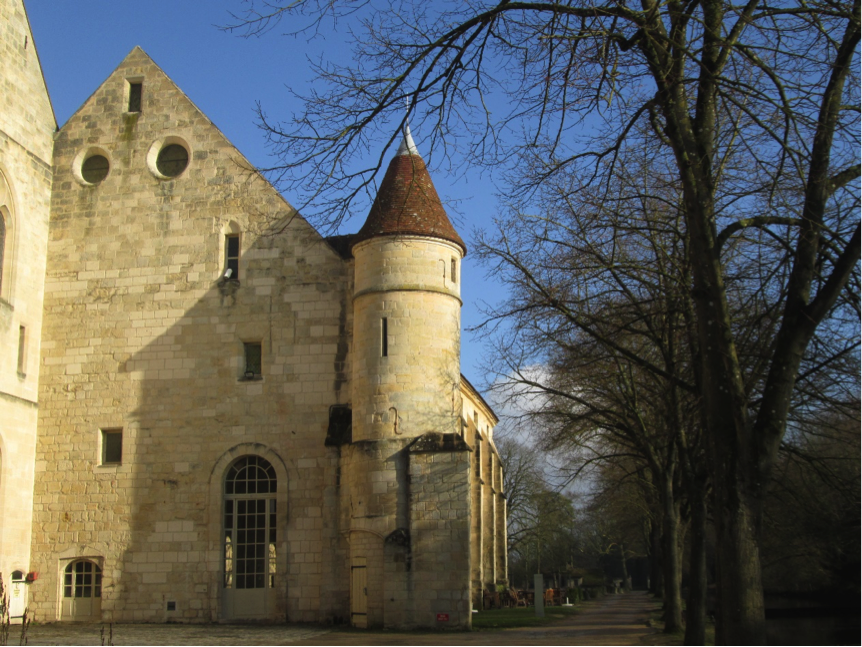
Last month I had the pleasure of participating in a joint workshop staged by the AHRC Care for the Future and Labex: Passes Dans le Present research clusters at the Royaumont Foundation near Paris. The two days showcased a range of projects assessing how study of the past can inform contemporary and future policy-making and cultural debates- from the use of colonial heroes in modern Africa, to how digitisation is reshaping understanding of museums, and the links between modern and historical anti-slavery movements.
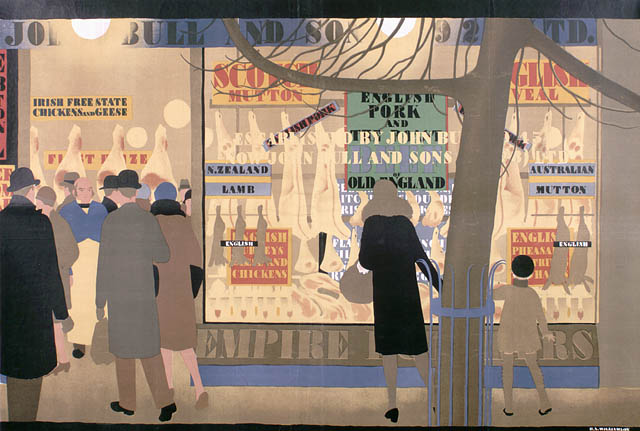
My own focus was on the challenges facing film archives and how this affects the future of imperial history. For the historian of imperial trade networks – film provides a fascinating, and in many ways under-used resource. Continue reading “Film Archives and the Future of Imperial History”→
Our free online course Empire: The Controversies of Imperialism has now been running two weeks; between them, the participants have already made thousands of comments, often arguing their respective points of view quite vigorously. One persistent theme of debate is the degree to which it is possible to pass judgements on the actions of people in the past, who were operating on the basis of standards that are different from those held today. This is an important and difficult issue for historians in general, although the contentious topic of ‘Empire’ seems to throw it into particular relief. Everyone can agree that we shouldn’t reach assessments that are anachronistic; it is much harder to reach agreement on what constitutes anachronism. Continue reading “On Empire and Anachronism”→
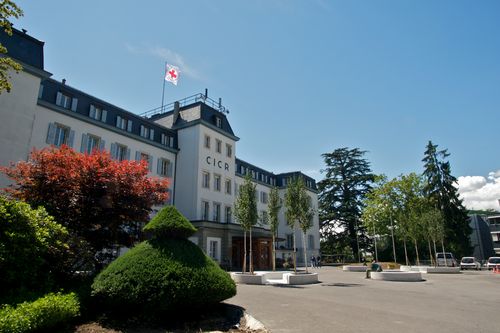
Internal records from the ICRC’s archives concerning the conflicts of the 1960s and 1970s shed light on a decisive era for humanitarian action.
In a small room in the basement of ICRC headquarters in Geneva, Switzerland, historian Andrew Thompson methodically pours through folders full of documents — typewritten mission reports, confidential telegrams and hand-written letters — never before seen by people outside the ICRC.
“It is a process of discovery,” says Thompson, a professor of history at Exeter University in the United Kingdom. “There is a sense of expectation and anticipation not knowing what is going to be there. For a historian, it’s a bit like opening a birthday present, or like going into a candy shop.”
The ‘candy shop’ in this case is the ICRC archives, where Thompson is exploring 40- to 50-year-old records to be released to the public in January 2015 under the ICRC’s policy of making internal documents public in blocks of ten years once 40 years have passed since the events they describe.
Aside from exciting Thompson’s intellectual curiosity, these records offer a deeper understanding of conflicts going on between 1965 and 1975. In particular, they give insight into an area of great interest to Thompson, who took an early look at the records in order to pursue research on the evolution of international humanitarian law and human rights law as they pertain to the treatment of political detainees in non-international conflicts.
“I see the ICRC archive as hugely important for people thinking and writing about the past and present of humanitarian aid and human rights,” he says. “But it’s also much more than that. It’s an archive that allows for studying conflict in all its different dimensions.”
The archives are a treasure trove for historians as they contain first-hand accounts from delegates on the ground, as well as internal and external correspondence, for every major conflict during the period in question. According to Thompson, they offer a perspective not always found in diplomatic or military archives because in addition to political analysis, they show how conflict affects the lives of ordinary people on the ground. Continue reading “History in the Making: An @ICRC Interview with Andrew Thompson”→
· College of Humanities Doctoral Scholarships (up to 12 awards, plus 2 International Scholarships)
· ESRC South West Doctoral Training Consortium (up to 20 1+3 and 3 year awards).
· One Leverhulme ‘1989 after 1989: Rethinking the Fall of State Socialism’ project doctoral award
· One AHRC Globalism Goes Social project doctoral award
History at the University of Exeter has two research centres in the broad field of world history: the Centre for Imperial and Global History (led by Professor Andrew Thompson), and the Centre for War, State and Society (led by Professor Martin Thomas). Both offer internationally-recognised supervision with geographical coverage from 30 staff across African, Asian (including Chinese), Middle Eastern, North American, Latin American, Imperial, and European history from early-modern to contemporary eras, comprising of one of the largest groups of imperial and global historians currently working in the UK. Continue reading “Exeter PhD Funding in Imperial and Global History – Early Feb. Deadlines”→
Professor Nicholas Stargardt, University of Oxford
Centre for the Study of War, State and Society Annual Lecture,
University of Exeter, 18 March 2015, 5pm, Venue to be confirmed
Abstract
The Second World War was a German war like no other. Having started it, the Nazi regime turned the conflict into the most horrific war in European history, resorting to genocidal methods well before building the first gas chambers. Over its course, the Third Reich expended and exhausted all its moral and physical reserves, leading to total defeat in 1945. Yet seventy years on — despite whole libraries of books about the war’s origins, course and atrocities — we still do not know what Germans thought they were fighting for and how they experienced and sustained this war until the bitter end.
German Military in 1945. Photo: Getty Images.
When war broke out in September 1939, it was deeply unpopular in Germany. Yet without the active participation and commitment of the German people, it could not have continued for almost six years. What, then, was the war Germans thought they were fighting? How did the changing course of the conflict — the victories of the Blitzkrieg, the first defeats in the east, the bombing of Germany’s cities — change their views and expectations? And when did Germans first realise that they were fighting a genocidal war?
Drawing on a wealth of first-hand testimony, The German War is the first foray for many decades into how the German people experienced the Second World War. Told from the perspective of those who lived through it — soldiers, schoolteachers and housewives; Nazis, Christians and Jews — its masterful historical narrative sheds fresh and disturbing light on the beliefs, hopes and fears of a people who embarked on, continued and fought to the end a brutal war of conquest and genocide.
Woman Shopping at John Bull and Sons (British Empire Marketing Board, 1928), Library and Archives Canada.
Both projects are united by an interest in connecting historical and contemporary ways of thinking about Britain’s future global economic orientation, and involve a range of activities staged with project partners from the fields of public policy and heritage. Readers can subscribe to get updates on the projects. There will also be a blog to discuss issues connected with the research themes.
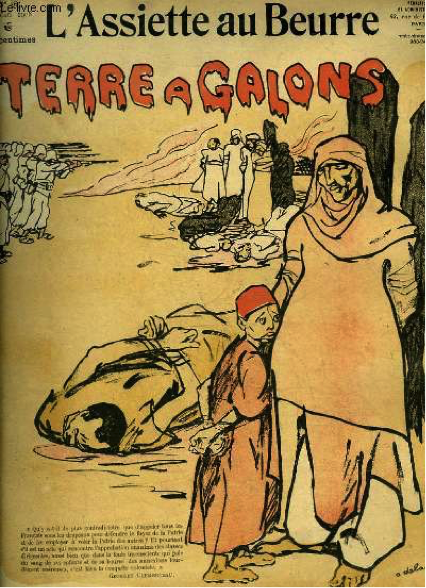
L’Assiette au Beurre, Terre à Galons (“A place to Earn Stripes”), March 14, 1908.
Daniel Foliard Assistant Professor, Paris Ouest-Nanterre la Défense University
In a recent interview, George Wolinski (1934-2015), one of the Charlie Hebdo cartoonists killed in the Paris terrorist attacks on January 7, 2015, had claimed his magazine’s work was the legacy of L’Assiette au Beurre, an innovative satirical weekly published in France between 1901 and 1912.[1]
Both stylistically and politically, the two periodicals, separated by more than a century, could also claim an affiliation with a long French tradition of dissent. Accordingly, although Charlie Hebdo is now known around the globe for its unmediated satire on religions, we should not overlook its position in the longer history of French anti-imperialism. Continue reading “Charlie Hebdo’s Anti-Imperialist Roots”→
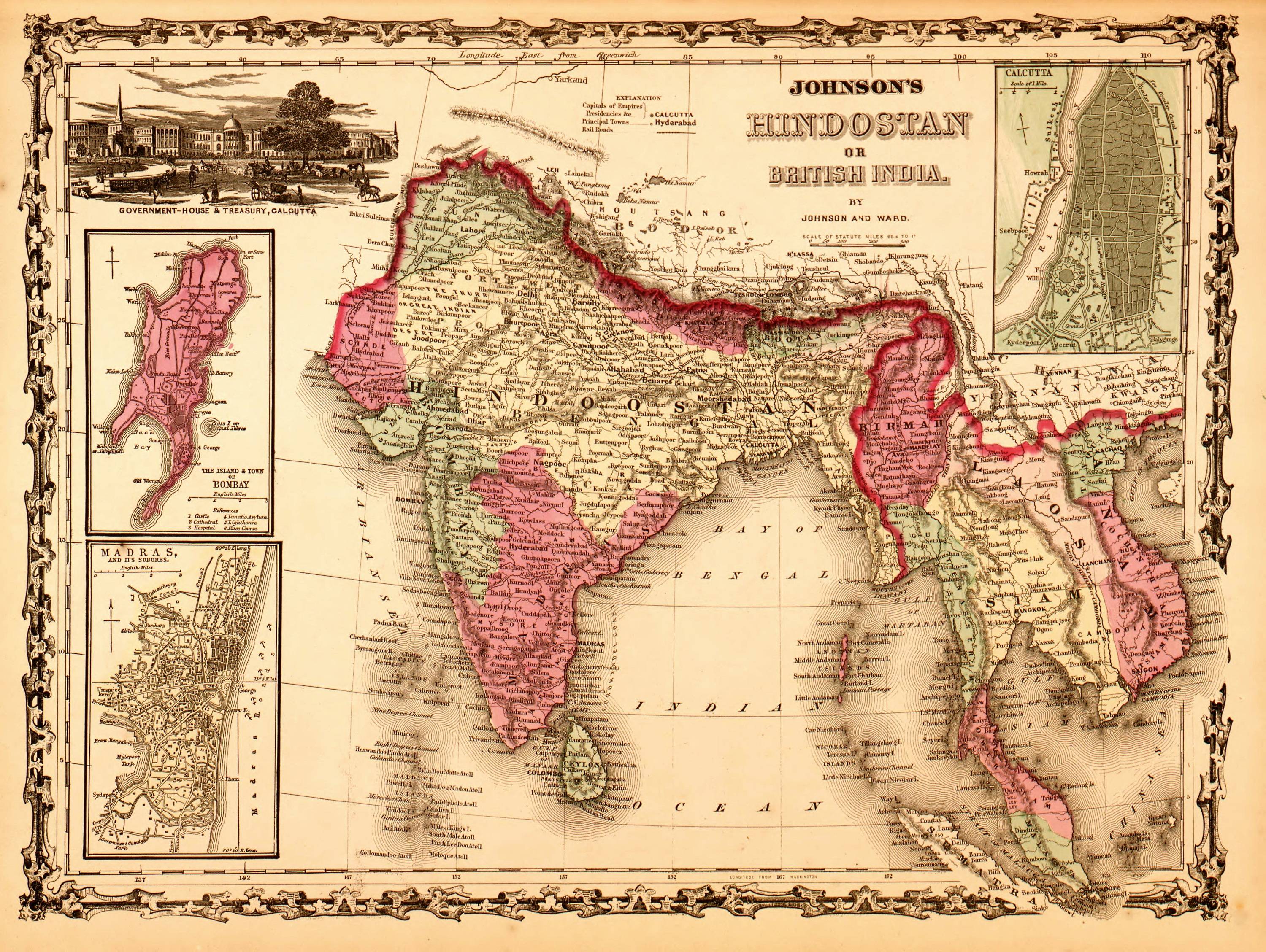
What do the ‘migrated archives’ reveal about British withdrawal from Empire? A One-Day Workshop at the Institute of Commonwealth Studies, University of London
Between April 2012 and November 2013, the Foreign and Commonwealth Office (FCO) transferred to the National Archives thousands of files in eight separate tranches, relating to the administration of former British territories in the final years of colonial rule. The files, which were released under the FCO 141 classification, had been generated by British colonial governments and were returned to the UK at the time of independence. From 1994 they were stored at the government communications centre at Hanslope Park. Their existence was only officially revealed in 2011, against the background of a case brought against the British government by a group of former Mau Mau detainees.
The announcement of the existence of the files led to speculation that they might reveal a ‘secret history’ of decolonization, transforming our understanding of the end of empire. This workshop provides the first opportunity to take stock of the research that has so far been conducted on the files. Have they lived up to expectations, or have they proved to be a disappointment to scholars? To what extent have the documents been censored, and do they suggest that significant amounts of sensitive material are still being retained? Continue reading “CFP: The Hidden History of Decolonization”→
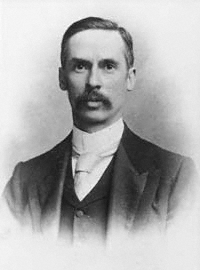
In preparation for our upcoming free course on The Controversies of Empire I’ve been thinking hard about the legacy of J.A. Hobson (1858–1940), one of England’s most famous critics of imperialism.
A clue to Hobson’s thinking can be found in the title of his 1938 autobiography, Confessions of an Economic Heretic. His core idea was that capitalism’s boom-and-bust cycles were caused by over-saving by the richer classes, or, to put it another way, by the forced ‘under-consumption’ of the poorer ones; their lack of spending power, a consequence of the unequal distribution of income, led to the repeated pattern of depression and unemployment.
In contemporary Britain, the subject of Muslim education provokes regular, often ill-informed, media and policy-level questions like “Do Muslim schools fuel extremism?” or “Are they compatible with British values?” Muslim institutions are widely assumed to provide education of inferior quality, and to reinforce social segregation and traditional gender roles. Public funding was first awarded to British Muslim schools in 1997. However, the number of Muslim state schools remains very small: in 2012, just 11 out of more than 6,500 state-maintained faith schools in the United Kingdom were Muslim. As an historian of British imperialism in India whose research focuses on colonial and Muslim education it is hard not to be struck by the parallels between later nineteenth century South Asia and Britain today.
In India, the British government ruled over a population of diverse races, ethnicities and creeds, including a large but ethnically heterogeneous aggregation of Muslims. Colonial officials fretted over the loyalty of their Muslim subjects and assessed the compatibility of Islam with Western-style government and social pluralism. Simultaneously, however, Muslim institutions were brought within the educational system established by the British, while Muslim pupils attended state-managed colleges and schools. Exchanges between Muslim and British parties on the subject of education in colonial India offer a set of lessons for policy-makers and a wider public concerned for (or about) Muslim education today. Continue reading “Muslim Education in Britain: Lessons From Colonial India”→
Editor’s Note: It is hard to believe that the Imperial & Global Forum went live just a year ago. In the weeks leading up to the new year, please help us celebrate by checking out the year’s 10 most popular posts.
Today, Germany’s Mannschaft will face Algeria’s Fennecs at Porto Alegre, after both teams made it through the group stage of the FIFA World Cup. Though it has yet to be played, the match is already being hailed as an historic, even epic, event. Why? Because it represents the first time the Algerian squad has progressed to the final sixteen at a World Cup. Its larger symbolism, however, is rooted in a longstanding Algerian resistance to French colonialism, which underpinned the secret history of Algerian-German football relations. [continue reading]






 Imperial & Global Forum
You must be logged in to post a comment.