Debating the History of Humanitarianism

Human-Rights

Andrew Thompson
Director, Centre for Imperial & Global History
University of Exeter

Humanitarianism developed at the intersection of Decolonization, the Cold War, and new & accelerating forms of Globalization. Decolonisation was about much more than the ending of colonial relationships: what was at stake was the dismantling of an entire global order: an old world of imperial states was replaced by a new world of nation states and this ushered in new patterns of cultural, political and economic relations. In the existential struggle that was the Cold War, the control of overseas territory mattered intensely to each side’s sense of security and power.

Capitalist West and socialist East competed to convince nearly and newly independent African and Asian states to adopt their models of humanitarian and development aid. As a result it became more difficult to distinguish aid given to further state interests from that given according to recipient needs. Globalisation meanwhile expanded the range of voices to which humanitarians had to listen while radically differentiating them. Aid agencies intensified their use of the international media, yet were exposed to greater pressures from their donor states and publics.

Together these 3 geopolitical forces − Decolonization, the Cold War, & Globalization − raised far-reaching questions about the relationship of international organizations and NGOs to state power; the basis upon which humanitarian needs were identified and prioritized; and the interaction of humanitarians with non-state armed groups. Continue reading “Debating the History of Humanitarianism”
Tonight (12pm EST, 5pm GMT) Watch Live Streaming ICRC Debate on the History of Humanitarianism with Director Thompson

ICRC (1)

Cross-posted from the International Committee of the Red Cross, where the debate will be streamed live

This livestreamed public event, to be held on 16 September from 18:00 to 19:30, will gather internationally recognized historians, academics and senior humanitarian practitioners to discuss the doctrine of humanitarian principles in critical historical perspective. It will be the public segment of a two-day historical symposium jointly organized by the UK Arts and Humanities Research Council, theUniversity of Exeter and the ICRC. The event is inscribed in the Research and debate cycle on principles guiding humanitarian action.

The year 2015 represents a major anniversary for the Red Cross Red Crescent Movement: 50 years ago, its “Fundamental Principles” have been proclaimed at its XXth International Conference  in Vienna. The aim of this conference is to reflect on how these principles have influenced – and been influenced by − the broader humanitarian sector. What can be learnt about the Principles from the rich history of the Red Cross and Red Crescent Movement and the wider humanitarian sector, that may in turn provide insights into current realities and act as a guide for the future?

The panelists will discuss the relevance, influence and challenges of the humanitarian principles in three different historical periods: (1) From the Birth of Humanitarianism to the World Wars (c. 1860-1945), (2) Decolonisation and the Cold War (1945-1989) and (3) The Era of “Liberal Interventionism” (1990’s-today). Continue reading “Tonight (12pm EST, 5pm GMT) Watch Live Streaming ICRC Debate on the History of Humanitarianism with Director Thompson”

Britain, France, and their Roads From Empire: A New Talking Empire Podcast

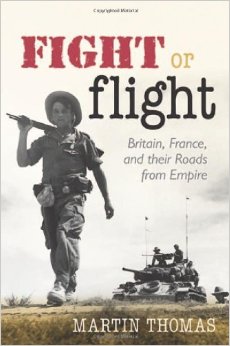
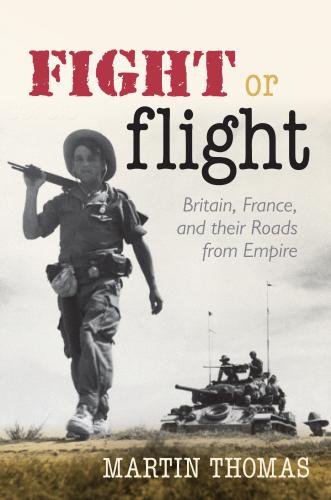
fight or flight thomasMartin Thomas’s path-breaking book Fight or Flight: Britain, France, and their Roads from Empire tells how the world’s two largest colonial empires disintegrated dramatically after the Second World War. Although shattered by war, in 1945 Britain and France still controlled the world’s two largest colonial empires, with imperial territories stretched over four continents. And they appeared determined to keep them: the roll-call of British and French politicians, soldiers, settlers and writers who promised in word and print at this time to defend their colonial possessions at all costs is a long one. Yet, within twenty years both empires had almost completely disappeared.

The collapse was cataclysmic. Peaceable ‘transfers of power’ were eclipsed by episodes of territorial partition and mass violence whose bitter aftermath still lingers. Hundreds of millions across four continents were caught up in the biggest reconfiguration of the international system ever seen.

In this new Talking Empire podcast Professor Thomas talks about the book with Professor Richard Toye.

This Week’s Top Picks in Imperial & Global History

NZ_flag1

Marc-William Palen
History Department, University of Exeter
Follow on Twitter @MWPalen

From the hidden history of African decolonization to erasing New Zealand’s indigene symbols, here are this week’s top picks in imperial and global history. Continue reading “This Week’s Top Picks in Imperial & Global History”

Roundtable Review of Martin Thomas’s ‘Fight or Flight’

Thomas Fight or Flight

Roundtable Review, cross-posted from H-Diplo

Martin Thomas.  Fight or Flight: Britain, France, and their Roads from EmpireOxford:  Oxford University Press, 2014.  ISBN:  978-0-19-969827-1 (hardback, £25.00).

URL:  http://www.tiny.cc/Roundtable-XVI-20

Contents

Introduction by Christopher Goscha, Université du Québec à Montréal

One thought alone preoccupies the submerged mind of Empire: how not to end, how not to die, how to prolong its era. By day it pursues its enemies. It is cunning and ruthless, it sends its bloodhounds everywhere. By night it feeds on images of disaster: the sack of cites, the rape of populations, pyramids of bones, acres of desolation.

-J.M. Coetzee, Waiting for the Barbarians[1]

In his Nobel prize-winning novel, Waiting for the Barbarians, J.M. Coetzee masterfully describes how the agents and members of empire struggle incessantly against the imperial state’s demise by creating a constant state of fear against barbarian attack. It is not enough to rule. The imperial state needs an enemy. It then marches the army into the borderlands to attack the nomads before they can descend upon the empire. The deployment of the army, the use of torture, and the suspension of rule of law are necessary evils. The preservation of civilization and of the white race depends on it. Empire simply cannot fathom its own end. And yet, throughout his novel, Coetzee has his borderland administrator remind us that all empires must one day perish. Imperial time, the Magistrate whispers ever so seditiously in our unsuspecting ears, is not universal: “We have been here more than a hundred years, we have reclaimed land from the desert and built irrigation works and planted fields and built solid homes and put a wall around our town, but they still think of us as visitors, transients.” Driven almost mad by the failed military campaign against the barbarians he has come to admire, the Magistrate finally admits that he “wanted to live outside the history that Empire imposes on its subjects, even its lost subjects. I never wished it for the barbarians that they should have the history of Empire laid upon them.”[2] Our tortured colonial administrator had dared to imagine decolonization from the inside.

In the comparative study under review here, Fight or Flight, the talented and prolific British historian Martin Thomas provides an in-depth account of how and why the French and the British tried to hold on to their empires against all odds but in the end had to let go. Sometimes, Thomas tells us, the colonizers chose to cut their losses and get out in order to focus on other parts of the empire. It was a question of preservation. On other occasions, Thomas counters, they went to war to hold on to their prize possessions. In both cases, it –what we now call decolonization – was a messy, complicated, unpredictable, and terribly bloody business. There was no roadmap for ending empires because, at least in the immediate wake of World War II, neither the French nor the British decision-makers could fathom that imperial time was perhaps not universal.[3]

Nor could they imagine that the ‘barbarians’ were thinking of historical time in different terms and were willing to fight to force that change upon their colonizers. While Thomas’s comparison turns on the French and British imperial endgames, he successfully weaves in the stories of the Africans and Asians. For many colonial nationalists, Thomas reminds us, decolonization did not magically begin in the wake of World War II; but emerged in many colonial minds as the only response to failed reformist promises. Nicholas White is right to suggest that Thomas is on to something big by suggesting that the colonial crisis that coalesced in the 1930s was as important as anything that came after ‘1945.’ Some chose communism, like Ho Chi Minh, the future father of Vietnam, and Thomas shows how that pre-WWII communist connection would differentiate the French war of decolonization in Indochina from other ‘fight experiences’ in French Algeria and British Malaya. Continue reading “Roundtable Review of Martin Thomas’s ‘Fight or Flight’”

Prelude to Bandung: The Interwar Origins of Anti-Colonialism

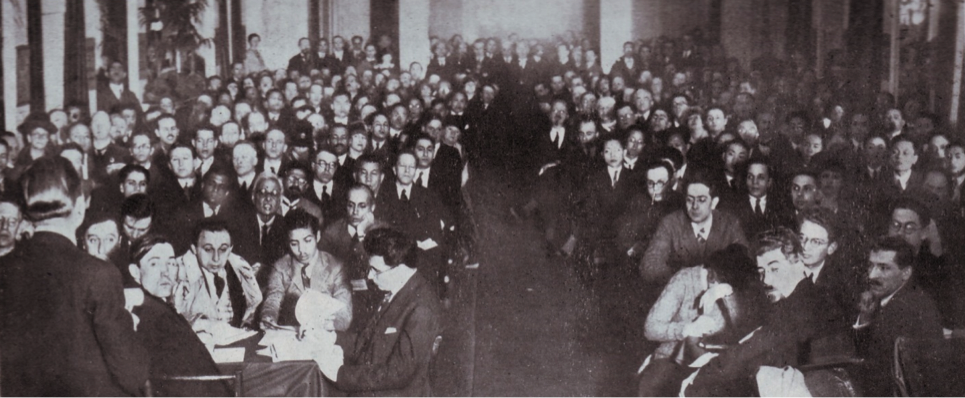
The Gathering of Visionary Anti-Imperialism. Plenary Meeting, Brussels Congress 1927. Source: Louis Gibarti (Hrsg.), Das Flammenzeichen vom Palais Egmont, Neuer Deutscher Verlag, Berlin (1927)

Fredrik Petersson
Åbo Akademi University
Russian State University for the Humanities (RGGU), Moscow

In 1927, the “First International Congress against Imperialism and Colonialism” convened in Brussels at Palais d’Egmont. The event celebrated the establishment of the League against Imperialism, and as the congress reached its crescendo, Willi Münzenberg, the German communist and General Secretary of International Arbeiterhilfe (IAH), declared that this was “neither the end, nor the beginning of a new powerful movement”.[1] Nearly 28 years later, amid the aftermath of the brutality of the Second World War, Münzenberg’s anti-colonial vision was revitalized at the Afro-Asian conference in Bandung, Indonesia.

In the 1955 Bandung Conference’s opening address, Achmed Sukarno, the Indonesian president, declared to the leaders of the twenty-nine countries in attendance: “I recognise that we are gathered here today as a result of sacrifices. . . . I recall in this connection the Conference of the ‘League against Imperialism and Colonialism’ which was held in Brussels almost thirty years ago.”[2] Separated by many decades and vast distance, these two events illustrate why a global history of transnational anti-colonial movements in the 20th century cannot be fixed around a particular moment in time and space – rather, it is a history enacted in radical spaces in a changing world. Continue reading “Prelude to Bandung: The Interwar Origins of Anti-Colonialism”

Defying Decolonization: Anticolonial Nationalism and the Greek-Cypriot Liberation Movement

Brian Drohan
U.S. Military Academy-West Point

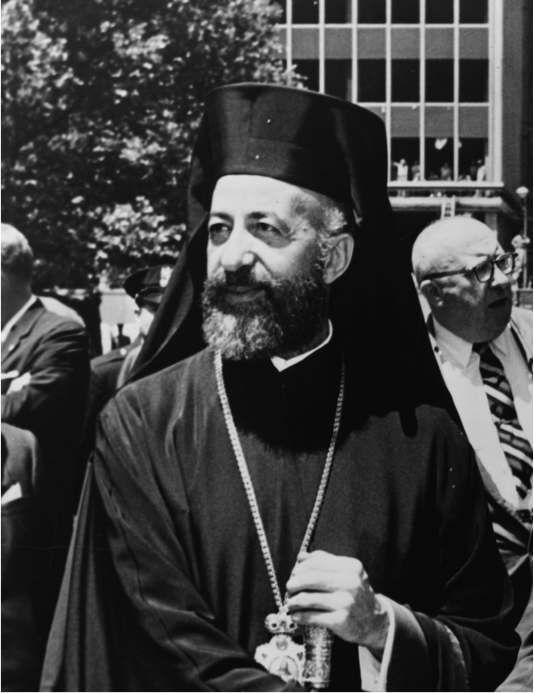
In April 1955, Archbishop Makarios III—head of the Greek Orthodox Church of Cyprus—arrived at the airport in Bandung, Indonesia to little fanfare. The real excitement, in the form of the first Asian-African Conference, was already underway. Representatives from twenty-nine newly independent African and Asian states attended the Bandung Conference. Many of the major personalities of what would later become known as the “Third World” and the Non-Aligned Movement—such as India’s Jawaharlal Nehru and Egyptian President Gamal Adbel Nasser—dominated the proceedings. Attendees straddled both sides of the Cold War divide, and tensions between the political Left and Right emerged as a key topic of discussion at the conference. The other major point of discussion was colonialism. It was this topic that most concerned Archbishop Makarios.[1]

Archbishop Makarios III of Cyprus

But Makarios was not from the “Third World,” nor did he represent a newly independent state. He was the only European leader to attend the conference and Cyprus was the only colony represented. Besides, Makarios and his fellow Greek-Cypriot anticolonial nationalists did not seek independence at all, but rather the union of Cyprus with Greece—an idea called enosis. This desire for enosis drew significant support from the conservative yet politically-active Greek Orthodox clergy, which colonial officials viewed as an unlikely group of revolutionaries. As one scholar has noted, “that such a political movement was led by an Archbishop, and backed by priests, was viewed in many British circles . . . as little short of weird.”[2]

Makarios’s presence at Bandung and the enosis movement challenge historians to reconsider the standard assumption that anticolonial nationalism was an Asian and African phenomenon in which the ultimate goal was the creation of independent states. Continue reading “Defying Decolonization: Anticolonial Nationalism and the Greek-Cypriot Liberation Movement”

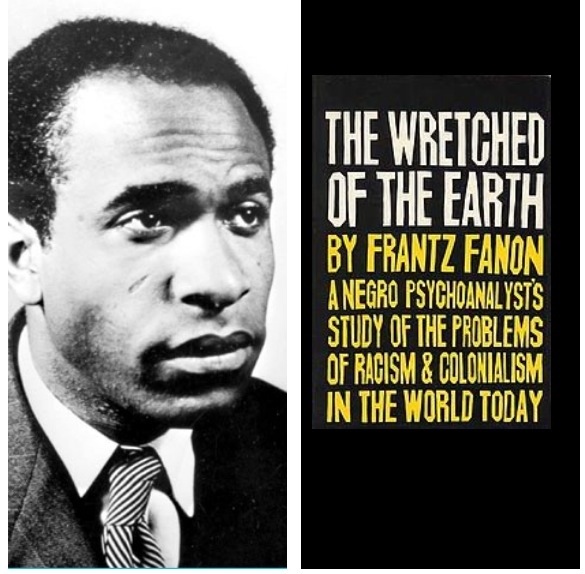
What’s So Shocking about the Wretched of the Earth?

fanon wretched of the earth

Richard Toye
History Department, University of Exeter

Follow on Twitter @RichardToye

Frantz Fanon (1925-1961) was a psychiatrist, intellectual and revolutionary. Born in the French Caribbean colony of Martinique, Fanon spent significant periods of his life in France and, crucially, Algeria. There he became an active member of the Front de Libération Nationale that fought, with ultimate success, against French rule. His most famous work The Wretched of the Earth, published shortly before his death from leukaemia, is a classic of decolonization literature. As Jean-Paul Sartre put it in his preface:  Continue reading “What’s So Shocking about the Wretched of the Earth?”

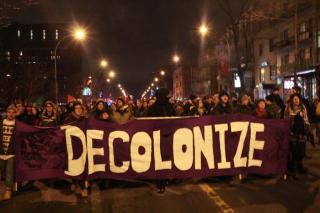
Decolonization, Revolution, and the EGO

decolonize

Fabian Klose
Cross-posted from Humanitarianism and Human Rights
Follow on Twitter @FabianMKlose

The age of decolonization is of crucial importance for our understanding of today’s world. By dissolving colonial rule around the world, this process led to the emergence of new sovereign states, thereby permanently changing international relations and international law.

The third phase of decolonization is the one most closely associated with the term “decolonization” today – and which refers to the end of European colonial rule after 1945. The process of the dissolution of the European overseas empires had a profound effect on the course of international history during the 20th century. This process occurred relatively quickly given that colonial rule had existed in some cases for a number of centuries. Only after just 30 years, from 1945 to 1975, all the colonial empires had disappeared from the global map.

Continue reading “Decolonization, Revolution, and the EGO”

The Secret History Behind Today’s Algeria-Germany #WorldCup Match

The Algerian team in 1982

Mathilde von Bülow
Lecturer in International and Imperial history, University of Nottingham

Today, Germany’s Mannschaft will face Algeria’s Fennecs at Porto Alegre, after both teams made it through the group stage of the FIFA World Cup. Though it has yet to be played, the match is already being hailed as an historic, even epic, event. Why? Because it represents the first time the Algerian squad has progressed to the final sixteen at a World Cup. Its larger symbolism, however, is rooted in a longstanding Algerian resistance to French colonialism, which underpinned the secret history of Algerian-German football relations. Continue reading “The Secret History Behind Today’s Algeria-Germany #WorldCup Match”

Rhetoric of Massacre and Reprisal in Algeria’s War of Independence

Martin Thomas
Director, Centre for War, State, and Society
University of Exeter

There has long been agreement among historians of Algeria’s violent decolonization that particular massacres and, more particularly, the retributions they provoked, decisively altered the nature of the conflict. Massacre, it is averred, changed the cultural codes, the military rules, and the permissible limits to mass violence within Algeria’s population and between French security forces and local insurgents.

Why this should be the case remains harder to explain. The demonstrative horror of mass killing intentionally shrinks the middle ground. It destroys the prospects for compromise, denying political and personal space to the otherwise non-committal. Meant to polarize, its violence signifies the ultimate rhetoric of shock. Little wonder that historians of Algeria’s war concur that massacres served as decisive conflict escalators, whether strategically, symbolically, or both. Continue reading “Rhetoric of Massacre and Reprisal in Algeria’s War of Independence”

Dutch Imperial Past Returns to Haunt the Netherlands

Paul Doolan
University of Zurich and Zurich International School

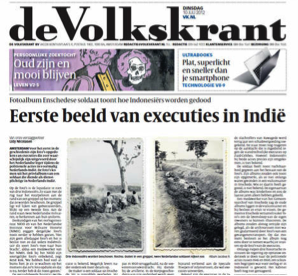
Photos in De Volkskrant July, 10 2012
Photos in De Volkskrant, 10 July 2012.

In July 2012 a Dutch national newspaper, de Volkskrant, published two photos on its front page showing Dutch soldiers brutally shooting and killing unarmed victims in a mass grave. The images were shocking to a nation that prides itself as being upright and humanitarian. Never mind that the photos were nearly 70 years old. Found in a rubbish tip, they were, in fact, the first ever photos to be published of Dutch soldiers killing Indonesians during a war of decolonization that is still euphemistically referred to as a “Police Action.”

Why did it take so long for such images to reach the public? Continue reading “Dutch Imperial Past Returns to Haunt the Netherlands”

Prelude to Intervention: French Wars in Africa, Part I

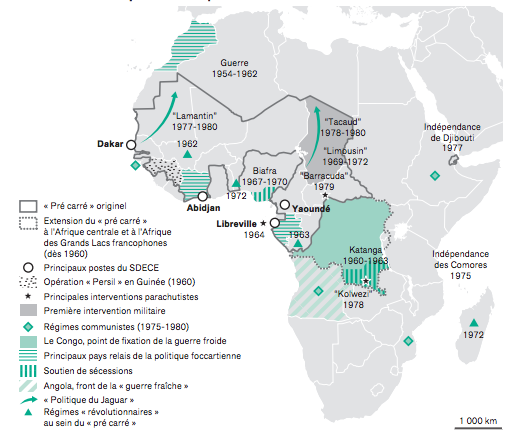
Map: "French geopolitics in Africa and Foccart's legacy" (1960-1991), from Bat's article in Afrique Contemporaine.
Map: “French geopolitics in Africa and Foccart’s legacy” (1960-1991), from Bat’s article in Afrique Contemporaine.

Jean-Pierre Bat
Research Associate, Centre for War, State and Society
Author of Le syndrome Foccart (2012)

In the first of his two-part Forum essay, Dr. Bat illuminates the distinct colonial and post-colonial history that helps explain current French military policy in Africa (1950s-present).

Today, the French Parliament will vote on the country’s present military engagement in the Central African Républic (CAR). Why? Because it remains a (poorly understood) constitutional requirement that any French military intervention overseas be approved by the National Assembly after every four months. Moreover, even if President Nicholas Sarkozy and his successor, François Hollande, have sought to republicanize France’s wars in Africa – dressing them in the clothes of democratic legitimacy and UN approval – the locations and priorities underpinning those interventions speak to a post-colonial inheritance dating back to the 1950s and the era of ‘Mr. Africa’, Jacques Foccart. Continue reading “Prelude to Intervention: French Wars in Africa, Part I”

Debating Human Rights and Decolonization

human rights logoFabian Klose
Leibniz Institute of European History, Mainz
Editor,
Humanitarianism & Human Rights

What was the role that universal human rights played in the process of decolonization? What links can we identify between both phenomena as they gained real momentum after 1945?

For too long historical research has neglected this issue. Only a few books on the historiography of the human rights idea linked the dissolution of European colonial empires with the debates on universal fundamental rights. Particular mention should be made here of the work by Paul Gordon Lauren (The Evolution of International Human Rights. Visions Seen, Philadelphia 1998) and Brian Simpson (Human Rights and the End of Empire. Britain and Genesis of the European Convention, Oxford 2001), who both addressed for the first time the important connections between human rights discourse and the end of colonial rule. Continue reading “Debating Human Rights and Decolonization”

France in Africa – Imperialist Humanitarian?

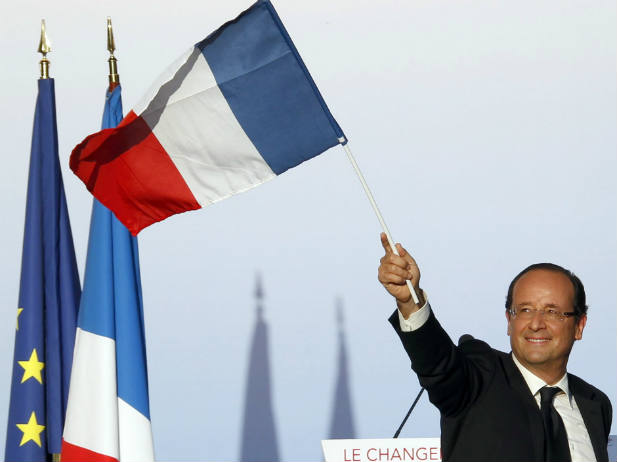
Francois Hollande, Socialist Party president-elect of France, waves to supporters in Toulouse. (Regis Duvignau/courtesy Reuters)
Francois Hollande waves to supporters in Toulouse. (Regis Duvignau/courtesy Reuters)

Martin Thomas
Director, Centre for the Study of War, State and Society, University of Exeter

As the UN warns of an impending humanitarian disaster in the Central African Republic (CAR), what should we make of France’s recent back-to-back interventions in sub-Saharan Africa? Is there an echo in this of the clientalist politics pursued by France in Africa in the years after formal decolonization? Continue reading “France in Africa – Imperialist Humanitarian?”