
Mitchel Stuffers
Assistant Editor at CIGH Exeter & PhD Candidate in History, University of Exeter
From El Niño’s continued aftermath on contemporary wildlife to a rare encounter with a Brazil native people, here are this week’s top picks in imperial and global history.
Southeast Asia’s primates still bear El Niño fire scars years on
Sean Mowbray
Eco-Business
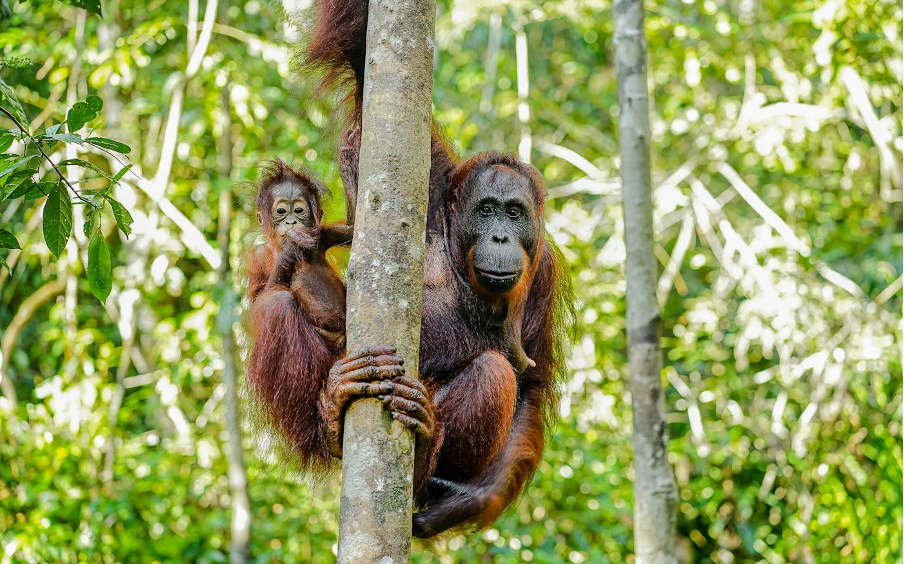
As Indonesia’s El Niño-driven fires spark a race to save endangered orangutans and other wildlife, a recent review paper, published in the journal Oryx, is raising concerns about both the short- and long-term impacts on primates of such climatic events in Southeast Asia.
“Primates might survive a fire, but that doesn’t necessarily tell us whether they’re going to have enough food or suitable habitat, or what’s happening with their health and ability to reproduce in the months and years ahead,” said Elizabeth Barrow, lead author of the paper and conservation research director at the Gunung Palung Orangutan Conservation Program (GPOCP), Indonesia. With 94 per cent of Southeast Asia’s primates threatened with extinction, the impact of El Niño is a poorly understood but significant threat to populations, according to the researchers. [Continue reading]
Denmark’s oldest citizen ever was a ‘prominent’ Nazi Party member, historian says
Andy Belt
Washington Times
Washington Times
Kirsten Schwalbe, Denmark’s oldest person ever at 112 years and 218 days, has been found to have links to the country’s Nazi Party. In 1941, Ms. Schwalbe joined the Danish National Socialist Workers Party during World War II and later became the acting leader in her local town from August 1943 to July 1944.
Last month, she told Danish news outlet TV Midtvest that she “barely” knew what it was because she had “never been interested in politics.” Her late husband also held roles in the Danish Nazi Party, which allied with Adolf Hitler’s Third Reich during the party’s occupation of Denmark. Danish historian Claus Bundgaard Christensen, who examined the documents about Ms. Schwalbe, said, “She was more than an ordinary member of the rank and file,” adding that the 112-year-old was a “prominent” Nazi presence at the time. [Continue reading]
Hundreds protest against Nathan Cofnas talk on DEI at Oriel College in Oxford
Miatta Mbriwa & Anandita Abraham
Guardian
Guardian
Hundreds of protesters filled the cobbled streets around Oriel College, Oxford, to voice their opposition to an appearance by Nathan Cofnas, the self-described “race realist”. The event organised by the university’s Reform UK student society – billed as “An evening with Nathan Cofnas: is DEI undermining higher education?” – went ahead on Tuesday evening despite opposition from students, college staff and local politicians concerned that his appearance would create a hostile environment.
Oriel, which allowed the Reform society to use a lecture theatre, declined to cancel the booking, saying it had a “statutory duty” to allow the blogger and academic to appear. [Continue reading]
World’s top court finds Myanmar guilty of genocide against Rohingya
Editorial Team
UN News: Global Perspective Human Stories
At the end of a three-hour ruling at the International Court of Justice (ICJ) in The Hague, President Yuji Iwasawa of Japan also declared that Myanmar had failed to prevent and punish genocide, after detailing how Myanmar’s military had perpetrated “extreme violence” against mainly Muslim Rohingya communities in Rakhine state.
UN Secretary-General António Guterres welcomed the judgment as a “powerful recognition of the Rohingya victims of genocide. It is a demonstration of international justice and a reaffirmation that impunity for such horrific acts must not stand.” The UN chief stressed that ending impunity in Myanmar and ensuring accountability remained essential to national reconciliation and added that the judgment “will be studied carefully within the United Nations. International law, including the Genocide Convention, must be respected by all.” [Continue reading]
Rare images of isolated Indigenous group in Brazil highlight threats
Brendan O’Boyle
Reuters
Rare images of an isolated group of Indigenous people emerging from a remote part of Brazil’s Amazon rainforest have underscored the threats facing them from loggers, hunters and ranchers, advocates said on Tuesday. Survival International, a UK-based Indigenous peoples’ rights group, shared images on Tuesday of what it said was a “historic encounter” a day earlier in a region of Brazil’s northeastern Maranhão state between a government team and about 20 uncontacted Awá Indigenous people, who asked for food.
The rights organization defines uncontacted groups as Indigenous peoples who avoid contact with outsiders and have no permanent relationship with them even while being aware of the outside world. “There hasn’t been a similar approach like this with the Awá in recent history, certainly for some decades,” said Survival International, adding the people may have asked for food due to pressure from outsiders entering their territory. [Continue reading]


You must be logged in to post a comment.