
Marc-William Palen
History Department, University of Exeter
Follow on Twitter @MWPalen
Marc-William Palen
History Department, University of Exeter
Follow on Twitter @MWPalen

This is the penultimate post of our five-week roundtable on science fiction and imperial history, co-edited by Marc-William Palen and Rachel Herrmann. You can read our call for posts here, and the other posts in the series here, here, here, here, here, here, and here. We look forward to hearing your thoughts!
“No starship may interfere with the normal development of any alien life or society.”
— Prime Directive (United Federation of Planets General Order 1)
“The Prime Directive is not just a set of rules; it is a philosophy…and a very correct one. History has proven again and again that whenever mankind interferes with a less developed civilization, no matter how well intentioned that interference may be, the results are invariably disastrous.” – Capt. Jean-Luc Picard
The Victorian political philosopher John Stuart Mill (1806-1973) and Star Trek’s far-future United Federation of Planets (the Federation) differ substantially on the colonial question. In particular, Mill the Victorian liberal imperialist thought that it was the duty of the British to help “civilize” less developed states through colonialism. Within his stages of civilization, Mill regarded underdeveloped states like India to be backwards and in need of benign British despotism, which was “a legitimate mode of government in dealing with barbarians, provided the end be their improvement, and the means justified by actually effecting that end.”[1]
Although Star Trek‘s Federation may share some similar Victorian-era ideas about imperial power structures and civilizational stages, by contrast it has strict rules about not attempting to “civilize” or colonize “backward” societies. It is enshrined in their Prime Directive, which was first introduced in the Original Series (1966-69) as a none-too-subtle anti-imperial rebuke of the US war in Vietnam.[2]
However, despite their glaring differences on colonialism as civilizing mission, J. S. Mill and the Federation do see eye-to-eye when deciding whether it is morally justifiable to intervene in foreign conflicts. Continue reading “J. S. Mill, the Prime Directive, and the Theory of Moral Intervention”
This is the newest post in our fourth week of our roundtable on science fiction and imperial history, co-edited by Marc-William Palen and Rachel Herrmann. You can read our call for posts here, and the other posts in the series here, here, here, here, here, and here. Posts will run twice a week until the second week in July. We look forward to hearing your thoughts!
Nick Pullen
McGill University
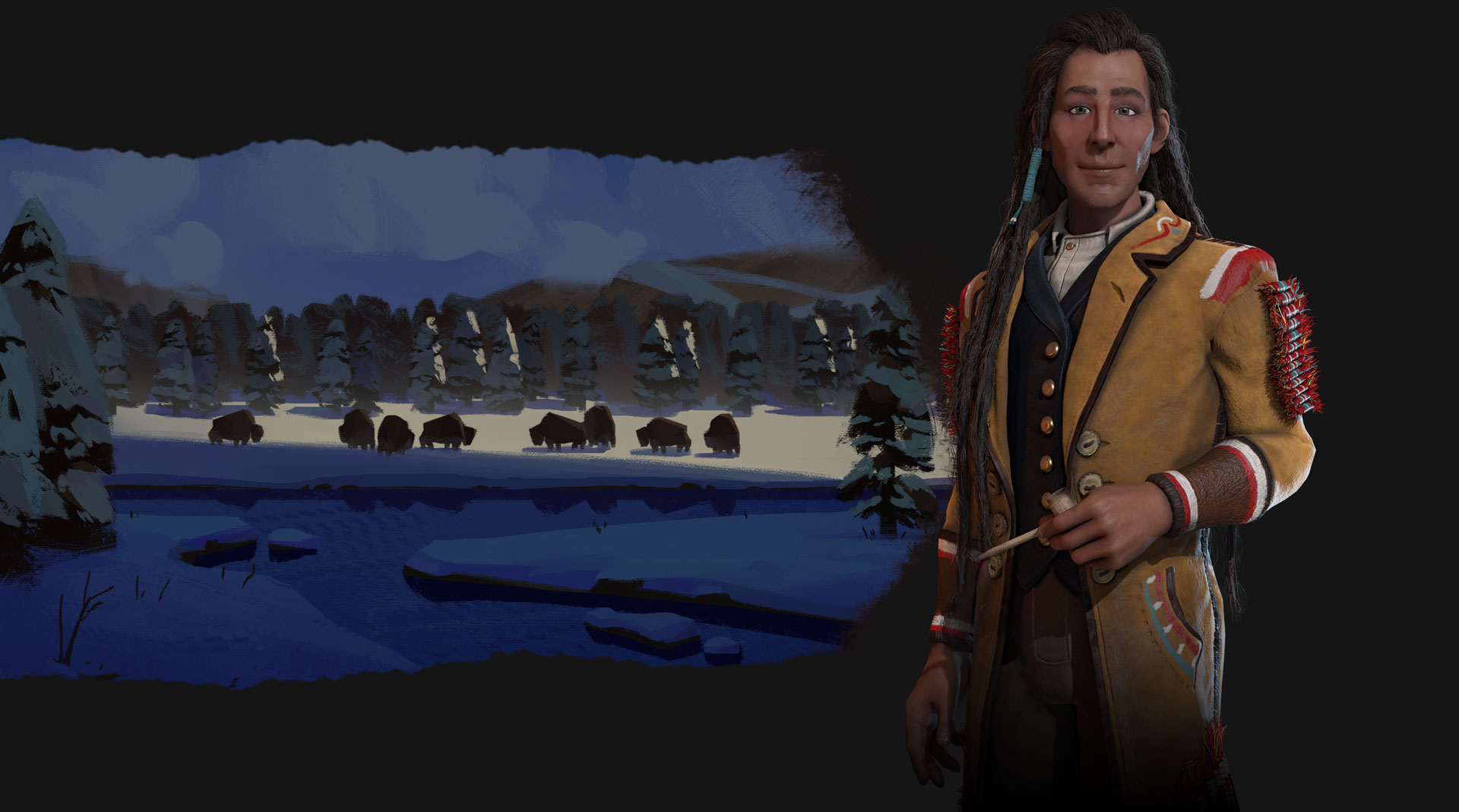
If you were to tell the children and adults who first bought copies of legendary PC game designer Sid Meier’s Civilization in 1991 that they would still be playing some version of this classic game of imperial expansion almost thirty years later, they probably wouldn’t have believed you. Yet the record-breaking franchise, now in its sixth iteration, has continued to ensnare generations of PC gamers with its epic sweep, imaginative scope, and highly addictive turn-based gameplay that allows you to take an ancient empire to conquer the world—and then colonize the stars.
Yet Civilization’s staying-power also sits uncomfortably with an incipient opposition from those opposed to its imperial overtones, and provides a fascinating window into the persistent, underlying colonial assumptions of modern-day society. Continue reading “Colonialism is Fun? Sid Meier’s Civilization and the Gamification of Imperialism”
Marc-William Palen
History Department, University of Exeter
Follow on Twitter @MWPalen
 This is the newest post in our third week of our roundtable on science fiction and imperial history, co-edited by Marc-William Palen and Rachel Herrmann. You can read our call for posts here, and the other posts in the series here, here, here, here, and here. Posts will run twice a week until the second week in July. We look forward to hearing your thoughts!
Rachel B. Herrmann
Cardiff University
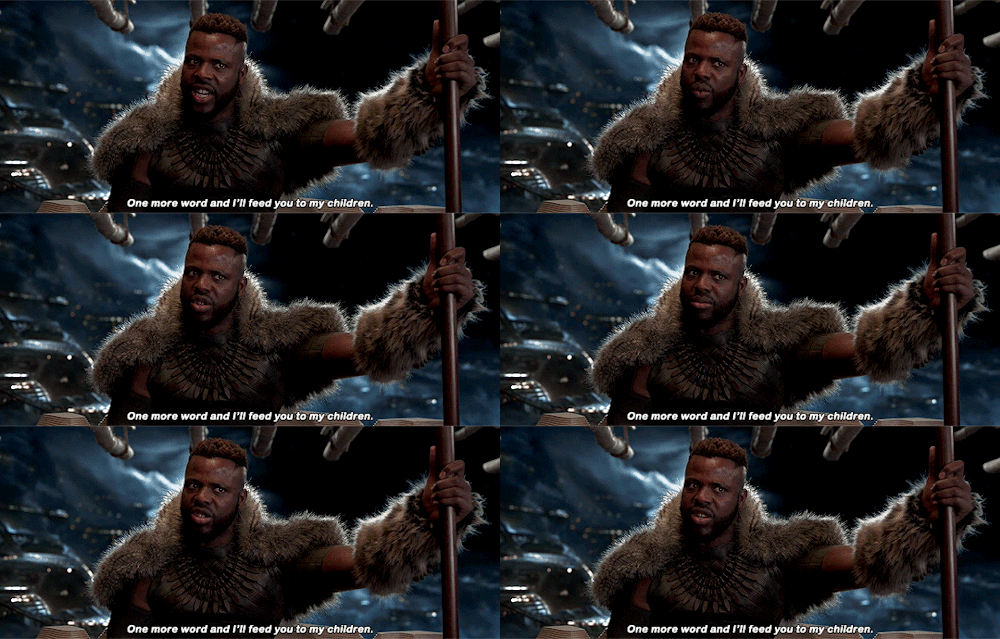
At a crucial point in the 2018 Marvel blockbuster Black Panther, geopolitical relationships are in flux. (Warning: spoilers) Erik Killmonger, the film’s main antagonist, has defeated King T’Challa (Black Panther). Left for dead, he is secretly taken to the Jabari stronghold in the mountains. T’Challa’s mother Ramonda, Queen Mother of Wakanda, his sister Shuri, Nakia, T’Challa’s ex and War Dog, and Everett Ross, a white CIA operative, have fled from Killmonger’s oppressive new reign and seek aid from M’Baku, leader of the Jabari. Once there, Ross attempts to speak to M’Baku to inquire about next steps. He is immediately silenced as the Jabari start barking at him. “You cannot talk,” says M’baku. “One more word and I’ll feed you to my children.” There is a tense silence, before M’baku breaks out laughing. “I am kidding; we are vegetarians.”[1]
BEST SCENE IN BLACK PANTHER.
“one more word & I’ll feed you to my children.”“I’m kidding, we’re vegetarians.” pic.twitter.com/8ILM6WcoeU
— ash. (@sergeantashley) May 5, 2018
https://platform.twitter.com/widgets.js
The threat of cannibalism works here on three levels in this Afrofuturist movie that blurs the line between the genres of science fiction and superhero films.[2]
First, it ensures Ross’s silence. Later in the scene, a revived T’Challa will ask M’Baku for the support of his army, which M’Baku refuses. This opening meeting, then, is a diplomatic negotiation between two men, one of whom once headed a four-alliance pact and the leader of the fifth tribe that refused to enter that alliance (and who later challenged T’Challa’s right to rule). Ross represents the white colonizer, whose intervention is inappropriate and irrelevant.
Second and relatedly, this scene works to reminder viewers that the character of T’Challa was imagined by white artists Stan Lee and Jack Kirby; as Sheena Howard argues, “white people created this character . . . gatekeeping our Black imagination and negotiating our sense of escapism from the real world.”[3] The moment suggests that behind the Black Panther cannon is a long history that has been mediated by white writers and artists for white consumers.
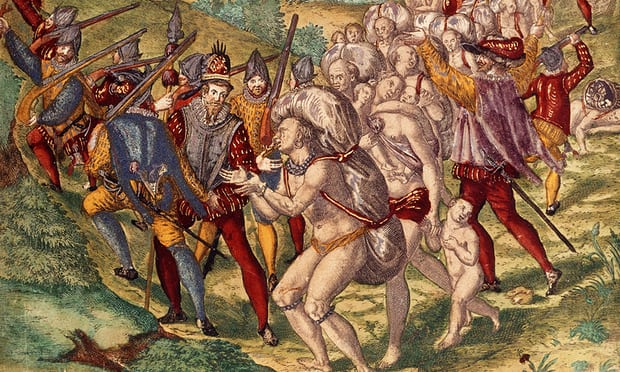
Third and most important here, the threat of cannibalism invokes the history of slavery and imperialism that undergird the history and rationale for Wakanda’s place as an isolationist country in the era during and after the transatlantic slave trade. Continue reading “The Threat of Cannibalism and Wakanda’s Place in the World”
This is the newest post kicking off the third week of our roundtable on science fiction and imperial history, co-edited by Marc-William Palen and Rachel Herrmann. You can read our call for posts here, and the other posts in the series here, here, here, and here. Posts will run twice a week until the second week in July. We look forward to hearing your thoughts!
Toby Harper
Arizona State University
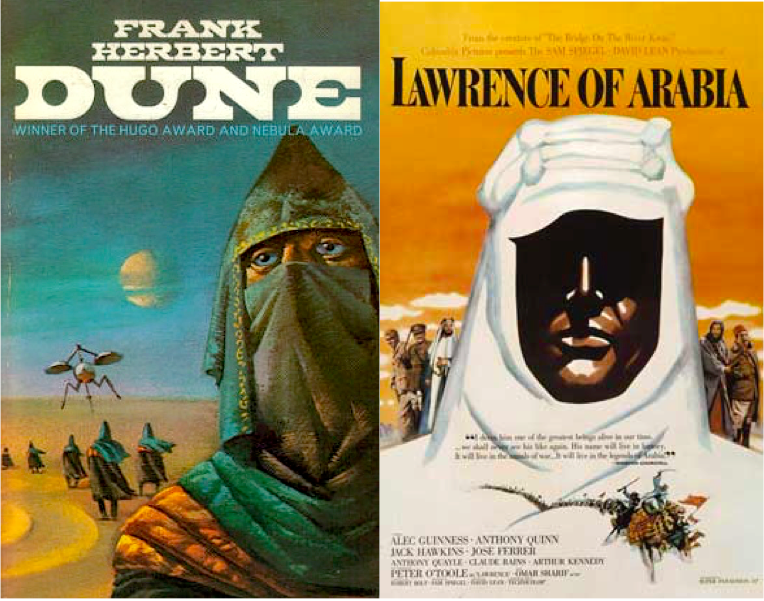
During the day in the mid-2000s I took classes in imperial history. On Friday and Saturday nights I descended to the basement of the student center at the University of Auckland to take part in an intense, desperate, and sometimes violent feud with five friends over control of the planet of Arrakis through Avalon Hill’s legendary strategy board game, Dune.
The board game was released in 1979, the same year as Edward Said’s Orientalism. These sessions extended long into the night (the game can take ten hours to complete) and both tested and forged friendships as we schemed with, tricked, and betrayed each other. At the time, I didn’t consider any connection between my history classes (or even discussions about Said with the same friends) and these nocturnal contests. In hindsight, though, the source material for the game, Frank Herbert’s 1965 novel, Dune, built on nineteenth- and twentieth-century imperial fantasies of knowledge, control, and power.[1]
On the surface, the novel Dune fulfills a popular imperialist fantasy by granting its main character mastery over native “others” whose superstition and history makes them comprehensible and exploitable. However, it is also a book of schemes, assassination, betrayal, hidden motives, and unexpected consequences. Like the novel’s main antagonists, this fantasy ends stabbed and poisoned on the floor of a broken palace. In certain ways, Herbert’s embrace and subversion of orientalist tropes around knowledge even anticipated modern critiques of empire. Continue reading ““Going Native” with Dune’s Paul Atreides”

This post is the third in a roundtable co-edited by Marc-William Palen and Rachel Herrmann on science fiction and imperial history. You can read our call for posts here, and the other posts in the series here, here, and here. Posts will run twice a week until the second week in July. We look forward to hearing your thoughts!
Ahmed R. Memon
University of Kent
Star trek Discovery—the new instalment to the Star Trek universe—only confirms what enthusiasts of the series have long said: that it is a science fiction show with unmistakable allusions to an international vision of a peaceful, cooperative world reflecting the liberal internationalism of the post-Second-World-War global legal order.[1]
The Charter of the United Federation of Planets is in fact based on the international vision of global order entrenched in the United Nations charter.[2] The text of the Federation’s charter was merely a rewording of the United Nations, wherein Earth-centric terms such as “people,” “human,” and “international community” have been replaced by inclusive and expansive “life forms,” “planetary communities,” and “sentient beings.” The main body of the text in the Federation charter even reproduces important phrases from the United Nations charter such as “to save succeeding generations from the scourge of war,” “promote cooperation, maintain peace and security” based on values of “universal peace, liberty and equal rights,” “obligation to treaties,” and the “social progress and better standards to life.”
Yet despite these obvious allusions to the United Nations, the imperial history of the League of Nations is an even more apt historical parallel to Star Trek’s United Federation of Planets (the Federation). In understanding the ideological discourses of the League of Nations, we can thus see how the Federation is a far-future model of early-twentieth-century imperial internationalism. Continue reading “Star Trek’s United Federation of Planets: a far-future League of Nations?”

This post is the third in a roundtable co-edited by Marc-William Palen and Rachel Herrmann on science fiction and imperial history. You can read our call for posts here, and the other posts in the series here and here. Posts will run twice a week until the second week in July. We look forward to hearing your thoughts!
Tris Kerslake
Central Queensland University
For as long as the concept has existed, the struggle for empire has been seen as the most masculine of endeavours; strategic conflict, war and bloodshed on an industrial scale was not, apparently, for the ladies.
Of course, this attitude originated in the patriarchal headspace that considered women to be most useful as producers and nurturers of the next generation of soldiers, rather than as soldiers in their own right.
This mindset has never really been shaken off and wanders on even today in the realm of science fiction (SF), despite the best efforts of Black Widow in the latest DC marvel escapade (Infinity War, 2018). Publishers routinely advise women SF/Fantasy authors such as K. A. Stewart (Second Olympus, 2015), Rob Thurman (Everwar, 2016), and K. J. Taylor (The Last Guard, 2016) to avoid adopting a feminine authorial name as male readers tend not to read female writers of SF.
This is a shame for several reasons, not least of which being that any male readers who think this way are missing out on some of the best pulse-thumping action involving the violent ending of worlds, the annihilation of aggressive alien species and the unleashing of unspeakable doomsday weapons.
Imperialism flourishes in all its forms in SF and the spread of empire has formed the crux of stories written by the most respected names in the SF genre, not all of them men. To illustrate this point, I shall examine, in brief, a unique imperial concept from each of three past and much-lauded SF authors, all of whom shared the XX chromosome: Ursula K. Le Guin (1929-2018), Anne McCaffrey (1926-2011), and Julian May (1931-2017). Continue reading “Deadlier than the male: The imperial designs of Le Guin, McCaffrey, and May”
Josh Hockley-Still
University of Exeter
The Windrush scandal and the subsequent resignation of yet another Cabinet Minister, Amber Rudd, means that Theresa May’s continued occupancy of No. 10 Downing Street appears ever more insecure. Her political obituary has already been written on multiple occasions, and yet she continues to survive.
Has there ever been a British Prime Minister who has displayed such resilience when their odds of political survival looked so bleak?
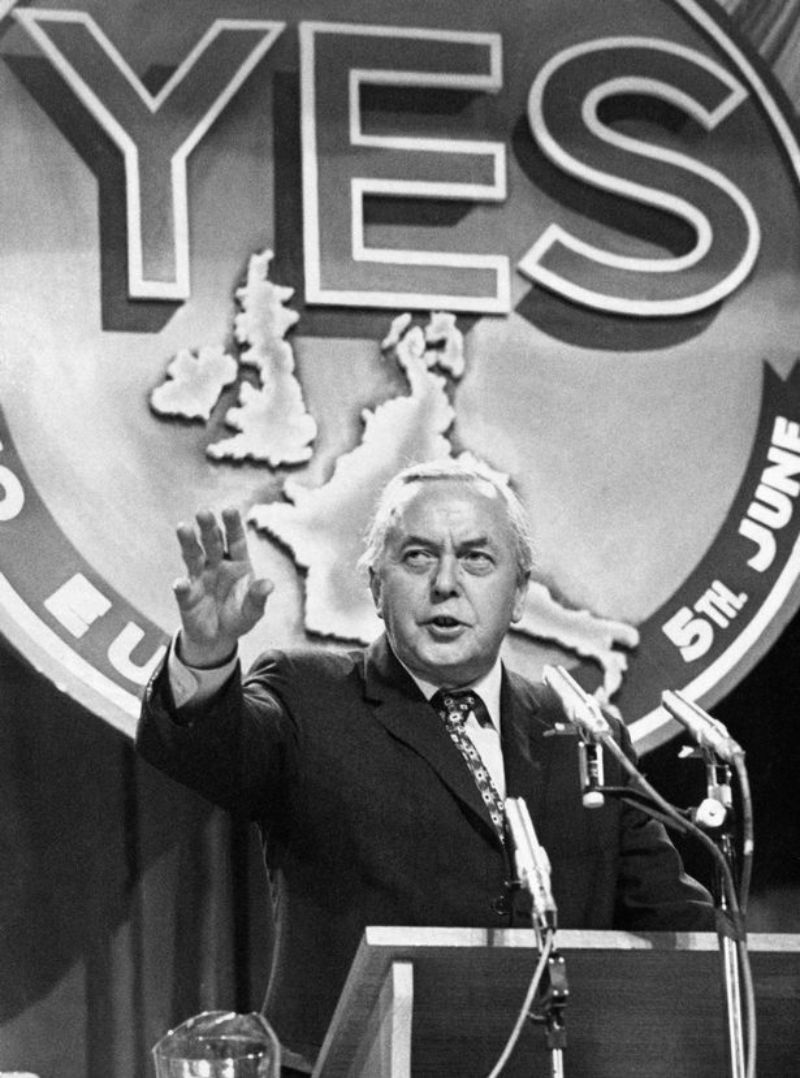
Yes. His name is Harold Wilson.
These days Wilson is more commonly compared to David Cameron, as in 2016 when Cameron attempted without success to follow Wilson’s playbook on how to win a European referendum. However, in political style and temperament Wilson has far more in common with May than Cameron.
So what are the similarities between Wilson and May, and what does this mean for British politics? Continue reading “Is Theresa May the Next Harold Wilson?”
Marc-William Palen
History Department, University of Exeter
Follow on Twitter @MWPalen
This post is the second in a roundtable co-edited by Marc-William Palen and Rachel Herrmann on science fiction and imperial history. You can read our call for posts here, and the first post in the series here. Posts will run twice a week until the second week in July. We look forward to hearing your thoughts!
E. Leigh McKagen
Virginia Tech
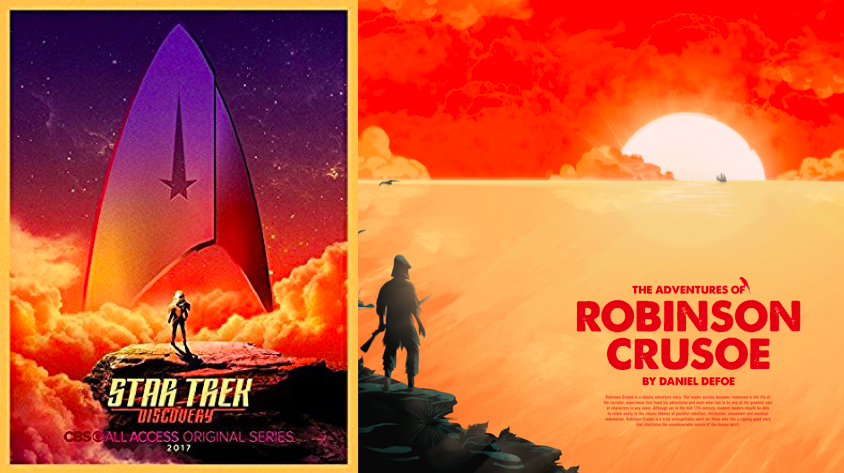
All iterations of the classic American science fiction television show Star Trek present space as a place for exploration and discovery accessible as the result of superior technology. Through the codependence on adventure and technology, Star Trek reinforces an empire that exists without features of conquest seen in much historical imperialism. The narrative of empire in Star Trek is rooted in historical imperial power relations that continue into the present, and are projected far into the future. I would suggest that the links between adventure narratives, technology, empire, and Star Trek demonstrate how one of the most popular American SF TV shows reinforces and perpetuates imperial power structures through the emphasis on discovery and exploration.
Star Trek was created by Gene Roddenberry in 1966, and the original series details the adventures of Captain Kirk (William Shatner) and his crew aboard the USS Enterprise. After three years on the air, the show sparked a movie franchise and was later revised on television with Captain Picard (Patrick Stewart) at the helm of the Enterprise in The Next Generation (1987-1994). Although Roddenberry passed away in 1991, the series has continued in various iterations, including Deep Space Nine (1993-1999), Voyager (1995-2001), Enterprise (2001-2005), and most recently, a series of rebooted films and Discovery (2017-present).
Despite the many versions of the story, the show remains true to Roddenberry’s original interest in exploration and adventure, as outlined in the opening credits of TOS and TNG: “To explore strange new worlds. To seek out new life, and new civilizations. To boldly go where no one has gone before!”[1] This goal of exploration links the Star Trek universe to the genre of adventure narratives, which Martin Green traces to the publication of Daniel Defoe’s classic Robinson Crusoe in 1719.[2] In Dreams of Adventure, Deeds of Empire (1980), Green links the origin of the novel with adventure narratives and the spread of English imperialism, beginning with the 1707 union of England and Scotland.[3] Predating Edward Said’s notable exploration of the “imagination of empire” woven into British novels of the eighteenth and nineteenth centuries, Green argues that “adventure is the energizing myth of empire.”[4] Specifically, Green explores a capitalist adventure narrative that strengthens the expansion of the British Empire in a subtle manner through a civilizing mission disguised through adventure and discovery. Building on narratives that predate official British imperialism, Victorian and Edwardian adventure novels popularized and reinforced the sense of excitement and discovery utilized by English explorers as a vital component to imperial expansion in the traditional “Age of Imperialism.” Continue reading ““To boldly go!”: Adventure and Empire in Star Trek”
From June 21-23, 2018, the Centre for Imperial & Global History is hosting the Britain & the World Conference at Reed Hall. Professor Martin Thomas (University of Exeter) is giving the keynote, and Professor Audrey Horning (William and Mary) the plenary. Please find the programme below.
Wednesday Icebreaker: 7:30- @ The Imperial
8:45- 10:15am
Chair: Ben Holmes, University of Exeter, UK
“‘Where Britain’s power is felt mankind should feel her mercy too’: The ‘mercy’ of
empire in the long nineteenth century,” James Gregory, University of Plymouth, UK
“Reforming the poor, a charitable enterprise of colonization? Protestant missions in
Ireland in the nineteenth century,” Karina Bénazech Wendling, EPHE-PSL University
Paris and GSRL-CNRS, France
“Bringing Light to the Heart of Darkness: Transnational Human Rights and the Congo
Reform Association,” Dean Clay, Liverpool John Moores University, UK
Chair: Lisa Berry-Waite, University of Exeter, UK
“Consolidating Power and Advancing Causes: Annie Besant’s Strategic Mobility across the Empire,” Catherine E. Hoyser, University of Saint Joseph, US
“Travelling the Empire and Crafting Careers: Maud MacCarthy and an Imperial Network of Art at the turn of the 20th century,” Louise Blakeney Williams, Central Connecticut State University, US
“Translating (Im)Mobilities in Migrations: Cases of Indian Travelling Ayahs in Britain (1890-1940),” Arunima Datta, National University of Singapore, Singapore
Chair: Daniel Steinbach, University of Exeter, UK
“‘What Shall Become of the Orphaned Congregations?’: The Expulsion of German Missionaries from British India during the First World War,” Sharon Arnoult, Midwestern State University, US
“‘The crimson trail of Britain across the world’: German representations of British Imperialism around the First World War,” Mads Bomholt Nielsen, University of Copenhagen, Denmark
“R. W. Seton-Watson and the Yugoslavs, 1906-1921: The Limits and Contradictions of British Liberal Internationalism?,” Samuel Foster, University of East Anglia, UK
Chair: Marc-William Palen, University of Exeter, UK
“The economics of Edwardian imperial preference: what can New Zealand reveal?,”
Brian Varian, Swansea University, UK
“Forging imperial bonds in the pursuit of global unity: ‘Abdu’l-Bahá and the British government in Palestine,” Diane Robinson-Dunn, University of Detroit Mercy, US
“From Ottawa to Geneva: The British World of trade and the League of Nations,
c.1918-39,” David Thackeray, University of Exeter, UK
Chair: Richard Toye, University of Exeter, UK
“The World and Britain: The British Empire as Model for American and German imperialism,” Julio Decker, University of Bristol, UK
“The classical world, the civic space, and the concept of civilisation in British international thought, 1919-39,” Liam Stowell, University of Manchester, UK
Continue reading “Conference Programme – Britain & the World (June 21-23, University of Exeter)”
This post is the first in a roundtable co-edited by Marc-William Palen and Rachel Herrmann on science fiction and imperial history. You can read our call for posts here. Posts will run twice a week between now and the second week in July. We look forward to hearing your thoughts on these posts!
Joel Barnes
University of Melbourne
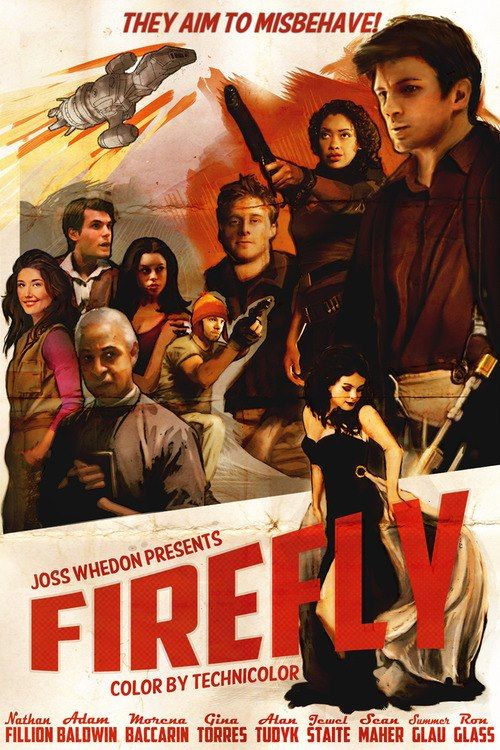
Five hundred years in the future, humanity has left earth and expanded into a new solar system. New planets have been terraformed and colonised. Life at the centre of this system is luxurious, sophisticated, civilised. On the outer fringes, existence is more precarious, eking out a living a more dangerous game. This is the world of Joss Whedon’s regrettably short-lived television series Firefly (2002) and its feature film follow-up Serenity (2005). Both follow the rag-tag crew of the spaceship Serenity, led by captain Mal Reynolds (Nathan Fillion), as they struggle to make ends meet by means legal and otherwise on the rough outer edges of this fictional universe, known in the show’s jargon as “the Verse.”
The Verse is cast in the mode of not one but two genres—the space opera and the western—that dramatise life on the frontier, and much of its humour and interest lies in the productive tension between their respective visions of that setting. According to Whedon, Firefly’s genesis lay in his reading of The Killer Angels (1974), Michael Shaara’s historical novel about the Battle of Gettysburg. He afterwards became “obsessed with the idea of life on the frontier, and that of course [made him] think of the Millennium Falcon.”[1] In imagining the space opera as an adapted western that shifted nineteenth-century imperial tropes into an extraterrestrial future, Whedon was merely making explicit long-standing undercurrents within the genre. (Gene Roddenberry’s working title for Star Trek—a constant intertextual counterpoint in Firefly—had been Wagon Train to the Stars.[2] Its trademark incantation of “space, the final frontier” was not incidental.) Continue reading “Colonising the Verse: Genre, Imperialism and Frontier Violence in Firefly and Serenity“
Cross-posted from Humanitarianism and Human Rights
In about a month the fourth Global Humanitarianism Research Academy (GHRA) will meet for one week of academic training at the University of Exeter before continuing with archival research at the ICRC Archives in Geneva. The Research Academy addresses early career researchers who are working in the related fields of humanitarianism, international humanitarian law, peace and conflict studies as well as human rights covering the period from the 18th to the 20th century. It supports scholarship on the ideas and practices of humanitarianism in the context of international, imperial and global history thus advancing our understanding of global governance in humanitarian crises of the present.

The GHRA received a huge amount of applications from an extremely talented group of scholars from more than twenty-one different countries around the world. The selection committee considered each proposal carefully and has selected these participants for the GHRA 2018: Continue reading “Fourth GHRA, 09-20 July 2018”

 Imperial & Global Forum
You must be logged in to post a comment.