Imagining Britain’s economic future, c.1800-1975

David Thackeray, Richard Toye, and Andrew Thompson
University of Exeter

This book considers how Britain has imagined its economic role in the wider world and how British ideas have influenced global debates about market relationships between the start of the nineteenth century and the UK’s first European referendum. In doing so, the authors explore the interplay between the high political thought of theorists, the activities of officials and businesspeople, and the everyday experience of the wider public. Across the contributions to this book there is a consideration of the competing factors which affected market decisions and the processes of ‘economic imagination’.

The economist Joseph Schumpeter put the concept of imagination at the heart of the entrepreneurial process. It was this quality which, above all, businesspeople required if they were to succeed: ‘the capacity of seeing things in a way which proves afterwards to be true, even though it cannot be established [as such] at the time’.[1] He saw that economies are, in a sense, imaginative constructs – making calculations about and placing faith in the future and its possibilities are key qualities of investors and entrepreneurs.

Schumpeter’s work on the entrepreneurial imagination was an important influence in the development of Ronald Robinson and John Gallagher’s concept of the ‘official mind’, which they saw as the key driving force behind British imperial expansion in the nineteenth century. As they noted in Africa and the Victorians, London policy-makers ‘were usually dealing with countries they had never seen, with questions apprehended intellectually from reports and recommendations on paper….it was the idea and analysis of African situations in Whitehall, and not the realities in Africa as such which moved Victorian statesmen to act or not to act’.[2]

The question of how changing levels of information available to economic actors has affected the role of imagination in decision making in the modern world is an important one. As international business scholars have acknowledged, economic imagination is ultimately shaped by the interpretation of past experience, access to information about markets (which can sometimes be faulty), and hopes placed in the future. Perceptions of distance between markets are ultimately culturally constructed. The ‘physic distance’ between markets perceived by businesspeople, policy makers, and consumers may not correspond to actual measurable differences in institutions, preferences, and values as economic actors may exaggerate or underestimate the cultural distance between two countries involved in a transaction.[3]

The 2016 EU referendum provides a good example of how public debates about an imagined economic future can radically reshape public policy. Continue reading “Imagining Britain’s economic future, c.1800-1975”
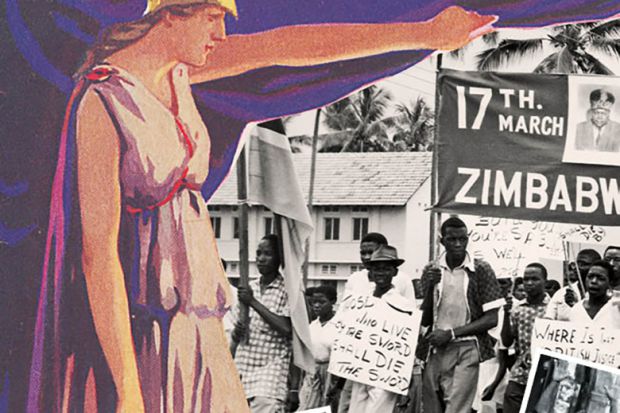
This Week’s Top Picks in Imperial & Global History

Marc-William Palen
History Department, University of Exeter
Follow on Twitter @MWPalen

From why educators struggle with the legacy of empire to the casual colonialism of Laura Croft and Indiana Jones, here are this week’s top picks in imperial and global history. Continue reading “This Week’s Top Picks in Imperial & Global History”

Global Neoliberalisms: Lost and Found in Translation

BRITISH ACADEMY, 10–11 Carlton House Terrace, London SW1Y 5AH. Charing Cross / Piccadilly Circus Tube.

 This conference addresses questions about neoliberalism’s intellectual (and other) origins, and why it came to play such a powerful role across the globe. It will develop and extend new work which seeks to understand the rise of multiple neoliberalisms as ideology and practice.

FIND OUT MORE britishacademy.ac.uk/conferences

All welcome. Registration fee payable.

THURSDAY 7th JUNE

REGISTRATION, 8.45-9.15

INTRODUCTION 9.15-9.30 James Mark, Richard Toye, Tobias Rupprecht, Ljubica Spaskovska

9.30-11 CIRCULATIONS: THE COLD WAR AND AFTER

Chair: James Mark (Exeter)

Vanessa Ogle (UC Berkeley), Diplomat Capitalists, Spooks, and the spread of Free-Market Capitalism: Revisiting the Global Cold War, 1960s-1970s

Quinn Slobodian (Harvard/ Wellesley), White Supremacy and the Neoliberals: South Africa as Laboratory and Limit Case

REFRESHMENTS

11.15- 12.45 CIRCULATIONS: THE COLD WAR AND AFTER (2)

Tobias Rupprecht (Exeter), Pinochet in Prague: Latin American Neoliberalism and (Post-) Socialist Eastern Europe  

Richard Toye (Exeter) and Daisuke Ikemoto (Meiji Gakuin University), Contesting ‘economic miracles’: neoliberal exchange and resistance in the UK and Japan

LUNCH 12.45-1.45

1.45 – 3.15 LABOUR, GENDER AND NEOLIBERALISM

Chair: Matthew Eagleton-Pierce (SOAS)

 Pál Nyíri  (Amsterdam), “Culture talk,” spectres of socialism and neoliberal management techniques in a Chinese-run factory in Hungary

Artemy Kalinovsky (Amsterdam), Abandoning the Factory: Gender, Ethnicity, and the Soviet Central Asian Entrepreneur

REFRESHMENTS

3.30- 5.00 LABOUR, GENDER AND NEOLIBERALISM (2)

Pun Ngai (Hong Kong University), Neoliberalism in Crisis: Producing new subjects of Migrant Labour in China

Bernhard Rieger (Leiden), Making Homo Oeconomicus? Unemployment Policy Since the Sixties in Transatlantic Context

FRIDAY 8th JUNE

9-10.30 INTERNATIONAL INSTITUTIONS: BETWEEN THE GLOBAL AND THE LOCAL

Chair: Ljubica Spaskovska (Exeter)

Alexander Kentikelenis (Oxford), The Making of Global Neoliberalism: The IMF, Structural Adjustment, and the Clandestine Politics of International Institutional Change

Jennifer Bair (Virginia), The Long 1970s: NIEO, Neoliberalism and the Right to Development

10.30 – 10.45 REFRSHMENTS

10.45- 12.15  INTERNATIONAL INSTITUTIONS: BETWEEN THE GLOBAL AND THE LOCAL (2)

Stephanie Decker (Aston Business School), The World Bank in Ghana, 1970-1985 – Neoliberalism and institutional voids

Jörg Wiegratz (Leeds), Embedding the neoliberal moral order: The political economy of moral change in Uganda

LUNCH 12.15-1.15

1.15-2.45 SOCIALISM/ POSTSOCIALISM AND THE RISE OF NEOLIBERALISM

Chair : Artemy Kalinovsky (Amsterdam)

Johanna Bockman (George Mason), Recovering the Socialisms in Neoliberalism: Anti-Colonial Banking, Anti-Capitalist Markets, and Revolutionary Structural Adjustment

Julian Gewirtz (Harvard Kennedy School), The Transnational Roots of China’s Socialist Market Economy

REFRESHMENTS 2.45 -3.00

3.00 – 4.30 SOCIALISM/ POSTSOCIALISM AND THE RISE OF NEOLIBERALISM (2)

Susan Bayly (Cambridge), Neoliberalisms in Asian global dialogue: The perspective from late-socialist Vietnam

David Priestland (Oxford), Embedding Neoliberalism: Politics, Markets and Morality in the Czech Republic and Russia

4.30 -5.00 CONCLUDING DISCUSSION

This Week’s Top Picks in Imperial & Global History

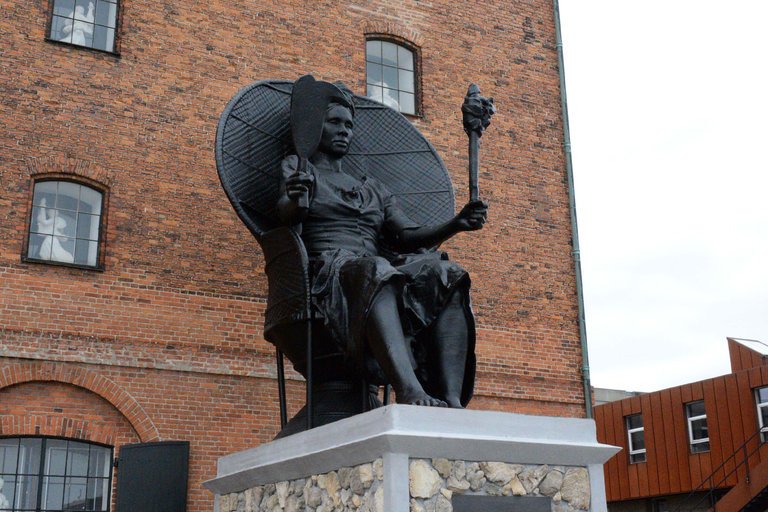
The statue of Mary Thomas called “I Am Queen Mary” is the first public monument to a black woman in Denmark, according to the artists. Credit Nick Furbo

Marc-William Palen
History Department, University of Exeter
Follow on Twitter @MWPalen

From Denmark’s memorializing of a Caribbean ‘rebel queen’ to the Left’s embrace of empire, here are this week’s top picks in imperial and global history. Continue reading “This Week’s Top Picks in Imperial & Global History”

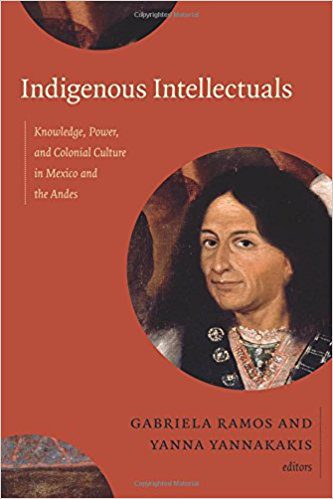
Indigenous Intellectuals: Knowledge, Power, and Colonial Culture in Mexico and the Andes

Abisai Pérez Zamarripa
University of Texas at Austin

Cross-posted from Not Even Past

This collective book is about the role of Indian thinkers as actors who preserved pre-Columbian knowledge within the new social order and recreated it to enforce or contest Spanish imperial rule. The book editors integrated several essays of top historians that explain how indigenous intellectuals in the colonial Andes and Mexico were important for the success of both the Spanish authorities and Indian elites in reaching political power and legitimacy.

Together, the book’s articles offers a comparative perspective of colonial Mexico and Peru focusing on the indigenous scholars’ lives, productions, and epistemological networks. This comparative analysis shows that knowledge production was more culturally and linguistically diverse in Mexico than in the Andes. On the one hand, Spanish prevailed on the Quechua as the principal written medium. This meant the indigenous people of the Andes had to learn a new foreign language to achieve social mobility and the Spanish government could centralize more rapidly its political power in the Andean region. On the other hand, in colonial Peru, Spanish rule gradually marginalized the Inca quipu system –records expressed with numerical terms while in colonial Mexico the Mesoamerican pictographic writing tradition –codex with images and words that recorded all kind of information– rapidly adapted the Castilian alphabet scripture. This exemplifies how the Spaniards were reluctant to utilize the numerical system of the Inca people while they accepted the continuity of the Mesoamerican tradition of communicating whole ideas by combining images and words. In her contribution, Gabriela Ramos suggests that the former centralized power of the Inca empire limited knowledge to very few hands, while in Mexico the fragmented structure of the Aztec empire allowed a linguistic diversity that survived Spanish colonization. Ramos explains how the indigenous language, Quechua, became the lingua franca in colonial Cusco and Lima. The standardization of one language allowed the Spaniards to exert control more effectively, but also allowed natives to use the legal culture to their own benefit. Continue reading “Indigenous Intellectuals: Knowledge, Power, and Colonial Culture in Mexico and the Andes”

Dr Olivette Otele to Give @ExeterCIGH Annual Lecture – Afro-European Experiences: From the Third Century to the Third Millennium

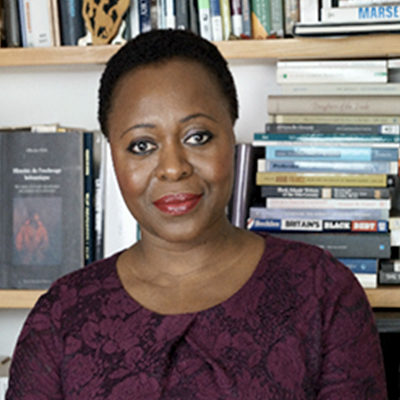
Olivette-OteleThe Centre for Imperial & Global History is delighted to announce that Dr Olivette Otele (Reader in History, Bath Spa University) will deliver the 2018 CIGH Annual Lecture on Friday, May 4. She will be speaking on
Afro-European Experiences: From the Third Century to the Third Millennium

This public lecture will look into Afro-European identities by studying their histories, from Saint Maurice, an Egyptian who became the leader of a legendary Roman legion in the 3rd century, to 21st century migrants. Its aim is to understand how the notion of ‘exceptionalism’ has contributed to remembering and then forgetting the long history of African/European human encounters. Mainly used in the fields of cultural studies, sociology and arts, the term ‘African diaspora’ has more recently been replaced by ‘Afro-European’ or ‘Afropean’. African or Afro-descent destinies and creativity have led to newly-coined terms such as ‘Afrocentrism’, ‘Afropessimism’ and ‘Afrophobia’, to name but a few. These are laudable attempts to grasp intricate notions in a small number of words. However, as they refer to contemporary post-war encounters between people of African and European descents, they play into the notion of newly born identities. As this lecture will show, there is a much longer history of Afro-European experiences which are both fascinating in their own right and can contribute to present-day understanding.

The lecture is free and will be followed by a drinks reception.

Click here to register.

Further Particulars:

DATE AND TIME
Fri 4 May 2018
17:00 – 19:00 BST
Add to Calendar

LOCATION
Bateman Lecture Theatre, Building One
21 St German’s Rd
University of Exeter
Exeter
EX4 6TG
View Map

This Week’s Top Picks in Imperial & Global History

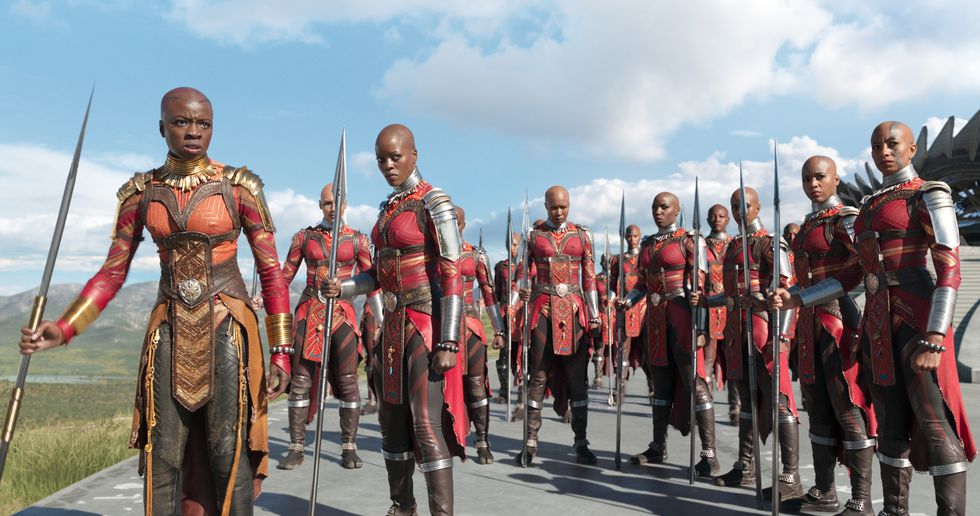
(Photo: Matt Kennedy/Disney/Marvel Studios)

Marc-William Palen
History Department, University of Exeter
Follow on Twitter @MWPalen

From imperial history wars to Wakanda and black feminist political imagination, here are this week’s top picks in imperial and global history. Continue reading “This Week’s Top Picks in Imperial & Global History”

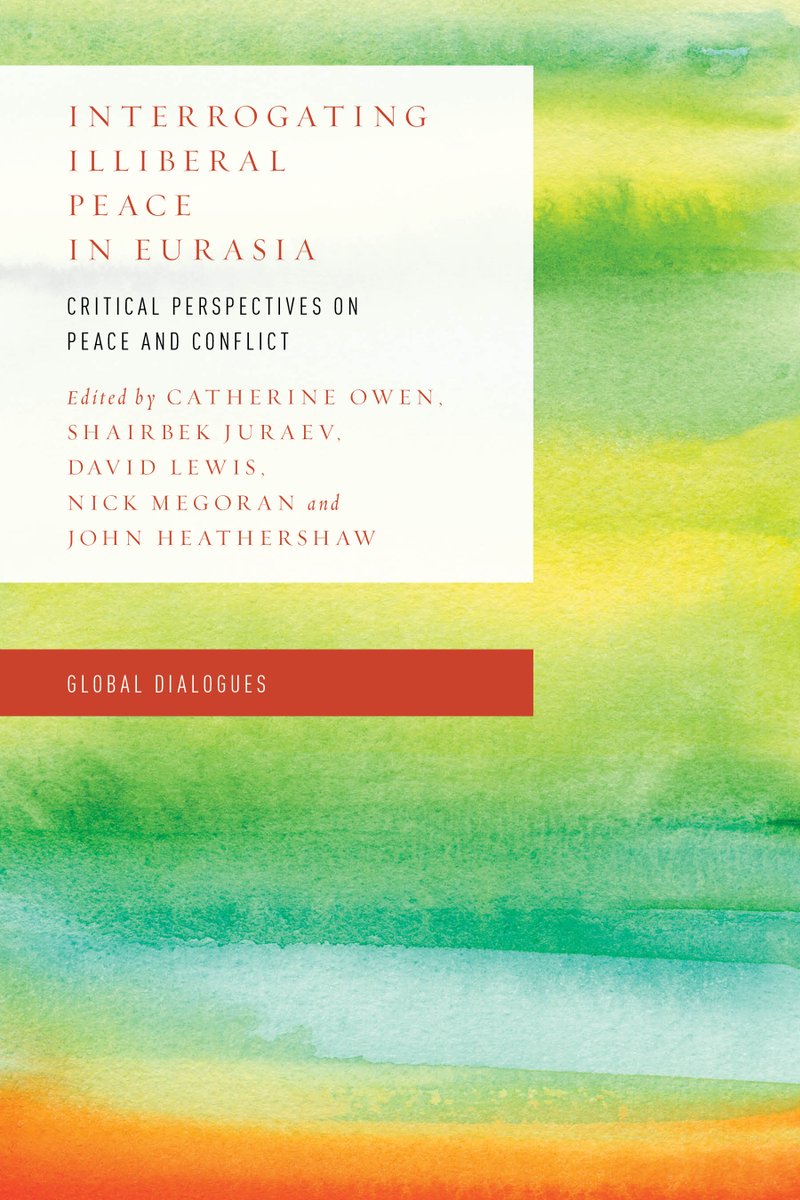
Histories and Memories of Empire and ‘Illiberal Peace’ in Eurasia

Catherine Owen, Shairbek Juraev, Nick Megoran, David Lewis and John Heathershaw
University of Exeter

The significant decline in the level of engagement between Western countries and the countries of Eurasia is well documented. In the last five years, we have seen the withdrawal of US troops from Afghanistan and the closure of its last regional military base in Kyrgyzstan; a sharp decrease in trade between the EU and Tajikistan, Kyrgyzstan and Kazakhstan; and the closure or downgrading of the offices of the Organization for Security and Co-operation in Europe (OSCE) in Azerbaijan, Kazakhstan and Kyrgyzstan respectively. The global influence of Western forms of governance – democracy, human rights and the rule of law – are at an all-time low and, with the countries of Europe and North America increasingly looking inward and illiberal, this downward trend looks to continue.

What impact does all this have on how we understand the way conflicts are managed and resolved in Eurasia? What principles – if any – ‘replace’ liberal ideas of getting to the root causes of the conflict, ensuring that all parties have the chance to air their grievances, facilitating internationally brokered peace agreements in ‘neutral’ third countries, and reconstructing domestic institutions along democratic and free market lines? And how do regional authoritarian heavyweights and (former) imperial powers, namely Russia and China, seek to influence the outcomes of conflicts in neighbouring states? Indeed, how novel are these developments given the historical constitution of global politics by imperial and illiberal modes of power? Continue reading “Histories and Memories of Empire and ‘Illiberal Peace’ in Eurasia”

This Week’s Top Picks in Imperial & Global History

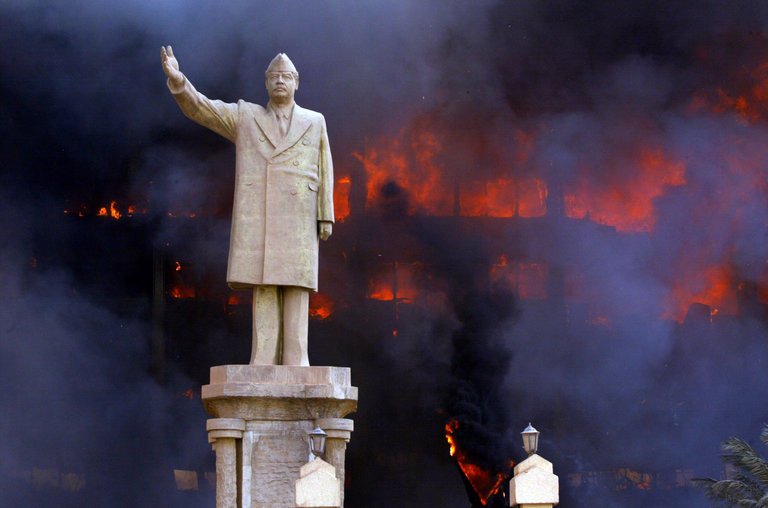
A statue of Saddam Hussein in front of the burning National Olympic Committee in Baghdad in 2003. Credit Tyler Hicks/The New York Times

Marc-William Palen
History Department, University of Exeter
Follow on Twitter @MWPalen

With a special Iraq War edition, here are this week’s top picks in imperial and global history. Continue reading “This Week’s Top Picks in Imperial & Global History”

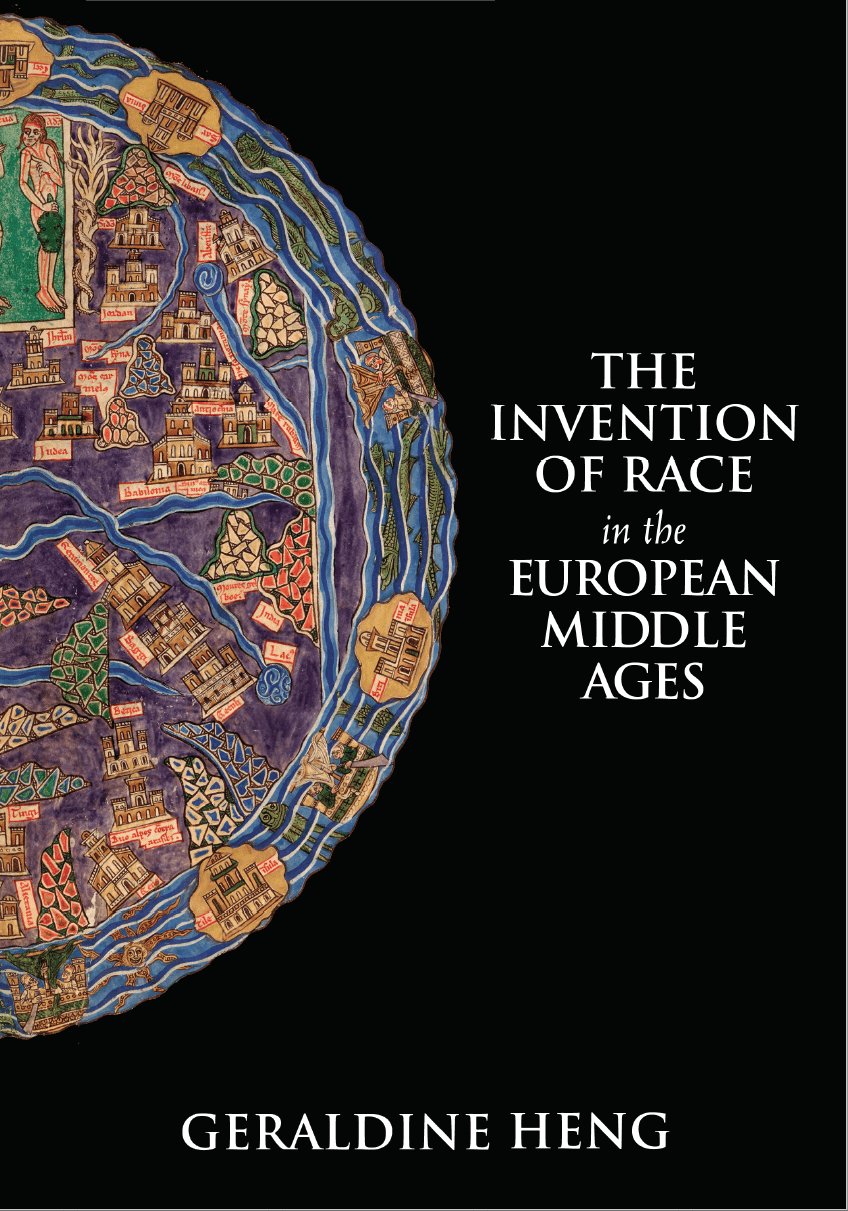
Did Race and Racism Exist in the Middle Ages?

Geraldine Heng
University of Texas at Austin

Cross-posted from Not Even Past

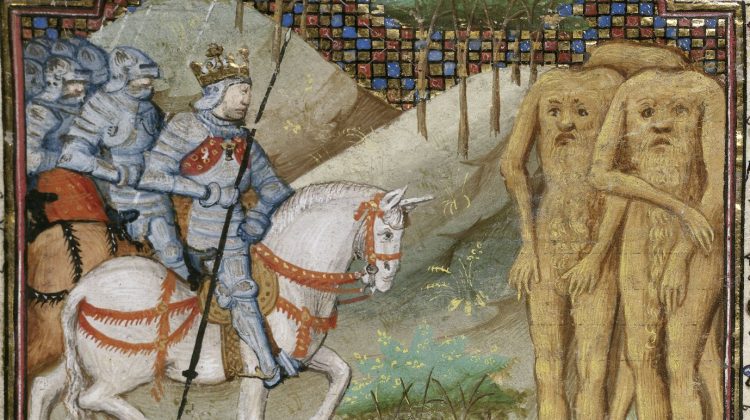
For generations, race studies scholars—historians and literary critics alike—believed that race and its pernicious spawn racism were modern-day phenomena only. This is because race was originally defined in biological terms, and believed to be determined by skin color, physiognomy, and genetic inheritance. The more astute, however, came to realize race could also be a matter of cultural classification, as Ann Stoler’s study of the colonial Dutch East Indies makes plain:

Race could never be a matter of physiology alone. Cultural competency in Dutch customs, a sense of ‘belonging’ in a Dutch cultural milieu…disaffiliation with things Javanese…domestic arrangements, parenting styles, and moral environment…were crucial to defining…who was to be considered European.*

Yet even after we recognized that people could be racialized through cultural and social criteria—that race could be a social construction—the European Middle Ages was still seen as outside the history of race (I speak only of the European Middle Ages because I’m a euromedievalist—it’s up to others to discuss race in Islamic, Jewish, Asian, African, and American premodernities).

This meant that the atrocities of the medieval period—roughly 500-1500 CE—such as the periodic extermination of Jews in Europe, the demand that they mark their bodies and the bodies of their children with a large visible badge, the herding of Jews into specific towns in England, and the vilification of Jews for putatively possessing a fetid stench, a male menses, subhuman and bestial characteristics, and a congenital need to ingest the blood of Christian children whom they tortured and crucified to death — all these and more were considered to be just premodern “prejudice” and not acts of racism. Continue reading “Did Race and Racism Exist in the Middle Ages?”

Empire by Imitation?

“The next thing to do,” Puck, 1898.

Marc-William Palen
History Department, University of Exeter
Follow on Twitter @MWPalen

US Economic Imperialism within a British World System

Historians have been busy chipping away at the myth of the exceptional American Empire, usually with an eye towards the British Empire. Most comparative studies of the two empires, however, focus on the pre-1945 British Empire and the post-1945 American Empire.[i] Why this tendency to avoid contemporaneous studies of the two empires? Perhaps because such a study would yield more differences than it would similarities, particularly when examining the imperial trade policies of the two empires from the mid-nineteenth to mid-twentieth century.

For those imperial histories that have attempted such a side-by-side comparison, the so-called Open Door Empire of the United States is depicted as having copied the free-trade imperial policies of its estranged motherland by the turn of the century; these imitative policies reached new Anglo-Saxonist heights following US colonial acquisitions in the Caribbean and the Pacific from the Spanish Empire in 1898, followed closely by the fin-de-siècle establishment of the Anglo-American ‘Great Rapprochement’.[ii]

Gallagher and Robinson’s 1953 ‘imperialism of free trade’ thesis—which explored the informal British Empire that arose following Britain’s unilateral adoption (and at times coercive international implementation) of free-trade policies from the late 1840s to the early 1930s—has played a particularly crucial theoretical role in shaping the historiography of the American Empire. In The Tragedy of American Diplomacy (1959), William Appleman Williams provided the first iteration of the imitative open-door imperial thesis, wherein he explicitly used the ‘imperialism of free trade’ theory in order to uncover an American informal empire. ‘The Open Door Policy’, Williams asserted, ‘was America’s version of the liberal policy of informal empire or free-trade imperialism’.[iii] The influence of Williams’s provocative thesis led to the creation of the most influential school of US imperial history—the ‘Wisconsin School’—which would continue in its quest to unearth American open-door or free-trade imperialism for decades to come.[iv] As a result, the contrasting ways in which the American Empire grew in the shadow of the British Empire have largely remained hidden. Continue reading “Empire by Imitation?”

Old Man in A Hurry

Richard Toye
Director, Centre for Imperial & Global History

Felix Klos, Churchill’s Last Stand: The Struggle to Unite Europe (I.B.Tauris, 2017)

Marco Duranti, The Conservative Human Rights Revolution: European Identity, Transnational Politics, and the Origins of the European Convention (Oxford University Press, 2017)

In the run-up to 2016 Brexit referendum, advocates of staying in the EU made significant efforts to invoke the memory of Winston Churchill. Remainers pointed to the fact that, in Zurich in 1946, he had urged the creation of ‘a kind of United States of Europe’. They seemed to regard him as something of a trump card – if Britain’s iconic wartime leader had been one of the fathers of the EU, who would dare to be against? However, as a persuasive tool, it never quite seemed to work. On the one hand, Leavers could legitimately point out that Churchill had said that Great Britain should be one of the ‘the friends and sponsors of the new Europe’, not one of its actual members. On the other hand, the message was just not quite simple enough; against the ingrained, popular bulldog image, it was tough to sell Churchill as a complex figure who was prepared to make concessions on British sovereignty in the interests of future peace.

It also didn’t help that Churchill’s pro-European campaign took place during a period of his life – the 1945-51 Opposition years – that few members of the public know much about. Popular memory of Churchill focuses to some extent on the 1930s but above all on the war years, and the summer of 1940 in particular. In fact, then, the referendum campaign’s most rhetorically effective invocation of Churchill was made by David Cameron during his appearance on Question Time. He did not attempt to argue that Churchill would have favoured membership of the EU as such, but rather – in response to an audience member who described him (Cameron) as a Twenty First Century Neville Chamberlain – he deployed a more emotionally powerful response:

At my office I sit two yards away from cabinet room where Winston Churchill decided in May to fight on against Hitler. The best and greatest decision perhaps anyone has made in our country. He didn’t want to be alone. He wanted to be fighting with the French, the Poles and the others. But he didn’t quit. He didn’t quit on democracy, he didn’t quit on freedom.

We want to fight for those things today. You can’t win if you’re not in the room.

Moreover, when one actually looks at the details of Churchill’s position on Europe, it’s not clear that he fits neatly into either the Leave or the Remain narrative. The two books under review, both excellent in their different ways, illustrate the point. Continue reading “Old Man in A Hurry”

This Week’s Top Picks in Imperial & Global History

east india
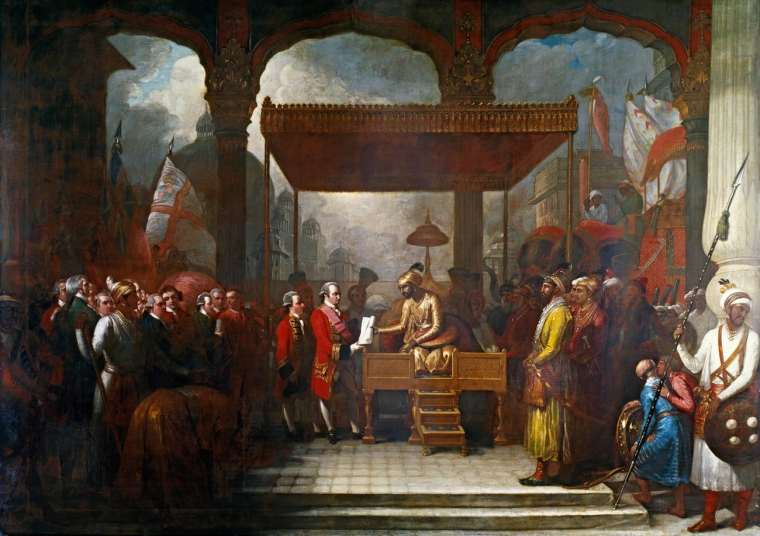
The Mughal emperor Shah Alam hands a scroll to Robert Clive, the governor of Bengal, which transferred tax collecting rights in Bengal, Bihar and Orissa to the East India Company. Illustration: Benjamin West (1738–1820)/British Library

Marc-William Palen
History Department, University of Exeter
Follow on Twitter @MWPalen

From when the Ottoman Empire scrambled for Africa to how to stop current and future wars, here are this week’s top picks in imperial and global history.

Continue reading “This Week’s Top Picks in Imperial & Global History”

This Week’s Top Picks in Imperial & Global History

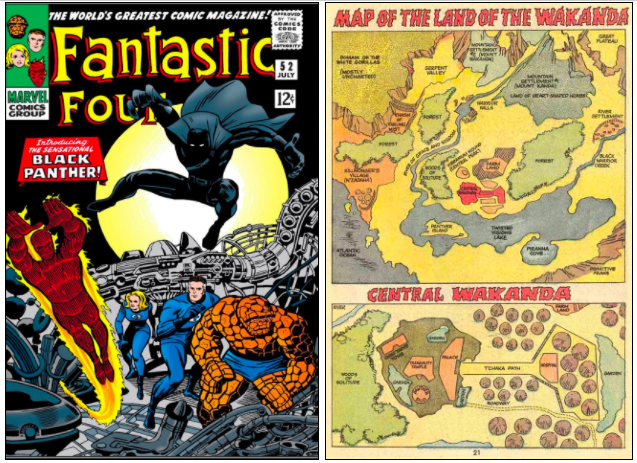
The debut of Black Panther in Fantastic Four #52 (left), and a map of the fictional land of Wakanda from Jungle Action #6 (right).

Marc-William Palen
History Department, University of Exeter
Follow on Twitter @MWPalen

From the link between Communism and Pan-Africanism to dancing in wartime, here are this week’s top picks in imperial and global history.

Continue reading “This Week’s Top Picks in Imperial & Global History”

‘Trade wars are good’? 3 past conflicts tell a very different story

File 20180304 65547 1uhc991.jpg?ixlib=rb 1.1
These German steel coils may soon become more expensive for U.S. manufacturers.
AP Photo/Martin Meissner

Marc-William Palen, University of Exeter

President Donald Trump renewed fears of a global trade war after he vowed to slap steep tariffs on foreign aluminum and steel.

The tariffs haven’t even been formally proposed, yet other countries are already threatening countermeasures. The European Union, for example, promised to impose tariffs on iconic American products like Harley-Davidsons, Kentucky bourbon and blue jeans, while China, Australia and Canada all promised a response.

Brushing all that aside, the president tweeted that “trade wars are good.”

https://platform.twitter.com/widgets.js

But what exactly is a trade war and what are its consequences?

As a historian of trade, I thought it would be worth recalling some illuminating examples, each of which led to disastrous results. Continue reading “‘Trade wars are good’? 3 past conflicts tell a very different story”