Cocktails, curry and afternoon tea: inside the 1930s London conference that brought Gandhi to Buckingham Palace

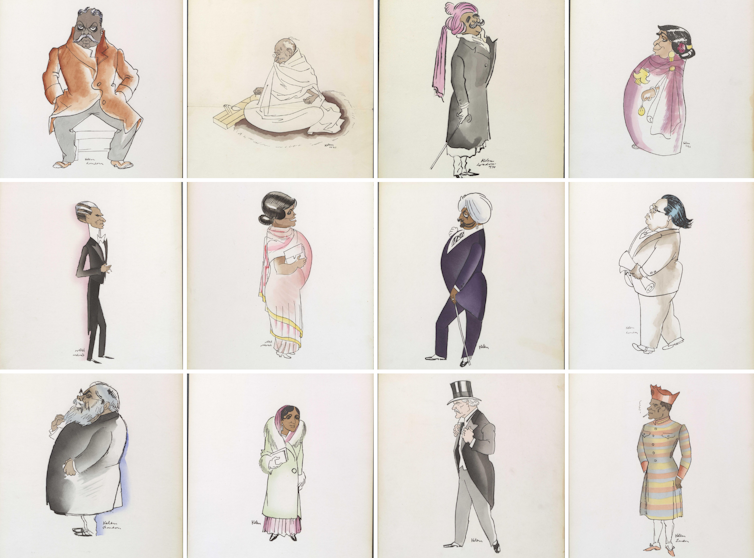
Conference attendees, from top left: Sir Syed Sultan Ahmed, Mahatma Gandhi, Sir Ganga Singh, Maharaja of Bikaner, Sarojini Naidu, Muhammad Ali Jinnah, Radhabai Subbarayan, Bhupinder Singh, Maharaja of Patiala, Dr Bhimrao Ramji Ambedkar, Dr BS Moonje, Jahan Ara Shahnawaz, J Ramsay MacDonald, Sir Jai Singh Prabhakar, Maharaja of Alwar.Indian Round Table Conference,1930-31; Derso and Kelen Collection, MC205, Public Policy Papers, Department of Special Collections, Princeton University Library

Stephen Legg, University of Nottingham

It was the talk of the town. From afternoon teas at Buckingham Palace to lunches, dinners and drinks provided by London’s political hostesses. Between 1930 and 1932, India’s social and political leaders headed to London to negotiate the constitutional future of India in the British empire.

The Round Table Conference is mostly remembered for Gandhi’s unsuccessful participation in the second session – where he failed to reconcile competing Hindu and Muslim demands. But this was only one small part of a conference of over 100 delegates.

Its three long sessions (two months, then three, then one) were captured by the world’s news media. UK prime minister Ramsay MacDonald’s concluding address from St James’s Palace
was filmed and broadcast in cinemas worldwide, as was the positive reaction of Indian delegates.

This was part of the retaliation against Gandhi’s civil disobedience movement of nonviolence and noncooperation against the British government.

Indian nationalists had been growing increasingly impatient for greater self-government in the 1920s. Divisions were rising between religious groups and politicians across the Indian empire.

To break the deadlock the British Labour government agreed to host an experiment in the new art of modern, international conferencing – turned to imperial ends.

Continue reading “Cocktails, curry and afternoon tea: inside the 1930s London conference that brought Gandhi to Buckingham Palace”

PhD Scholarships for Black British Researchers at the University of Exeter

University of Exeter PhD Scholarships for Black British Researchers in the Faculty of Humanities, Arts and Social Sciences. Ref: 4727

About the award

Faculty of Humanities, Arts and Social Sciences.

This programme offering 4-year fully-funded PhD studentships to support Black British researchers has been established by philanthropic donations from University of Exeter alumni – you can read more about the donors here

About the scholarship scheme

The aim of these scholarships is to help improve access and participation in PhD study for talented Black British students.  Each studentship offers a comprehensive funding and support package designed to enable students to succeed in their PhD programme and beyond, including:

• 4 years of stipend funding at the UKRI rate (currently £17,668 for 2022/23)
• Funding for tuition fees the Home fee rate
• A research training support grant (to cover project costs; ranging from £2,000 minimum up to maximum of £10,000 for higher cost projects)
• The opportunity to undertake a placement of up to 6 months (in total) during the 4-year PhD programme (with access to additional funding of up to £2,500 to support placement costs).
• Access to mentoring support (specific to this studentship scheme)

Studentships can be held on a full-time or a part-time basis (part-time awards will be made on a pro-rate basis).  Students on this scheme are expected to register on campus-based PhD programmes (i.e. distance learning is not supported).

Continue reading “PhD Scholarships for Black British Researchers at the University of Exeter”

This Week’s Top Picks in Imperial & Global History

The son of Robert “Whitey” Fuller, director of publicity for Dartmouth athletics, and other children playing football, Dartmouth, 1946. Bettmann/Getty Images

Marc-William Palen
History Department, University of Exeter
Follow on Twitter @MWPalen

From the purposeful violence of Cold War football to new perspecives during the Indonesian Independence War, here are this week’s top picks in imperial and global history.

Continue reading “This Week’s Top Picks in Imperial & Global History”

Parliamentary Empire, British Democracy and settler colonialism: a new Talking Empire podcast


Professor Richard Toye interviews Professor David Thackeray, also of the University of Exeter and the centre of Imperial Global History. David is principal investigator on a project funded by the Leverhulme Trust, which is called ‘Parliamentary Empire, British Democracy and settler colonialism, 1867 to 1939’.

This Week’s Top Picks in Imperial & Global History

Marc-William Palen
History Department, University of Exeter
Follow on Twitter @MWPalen

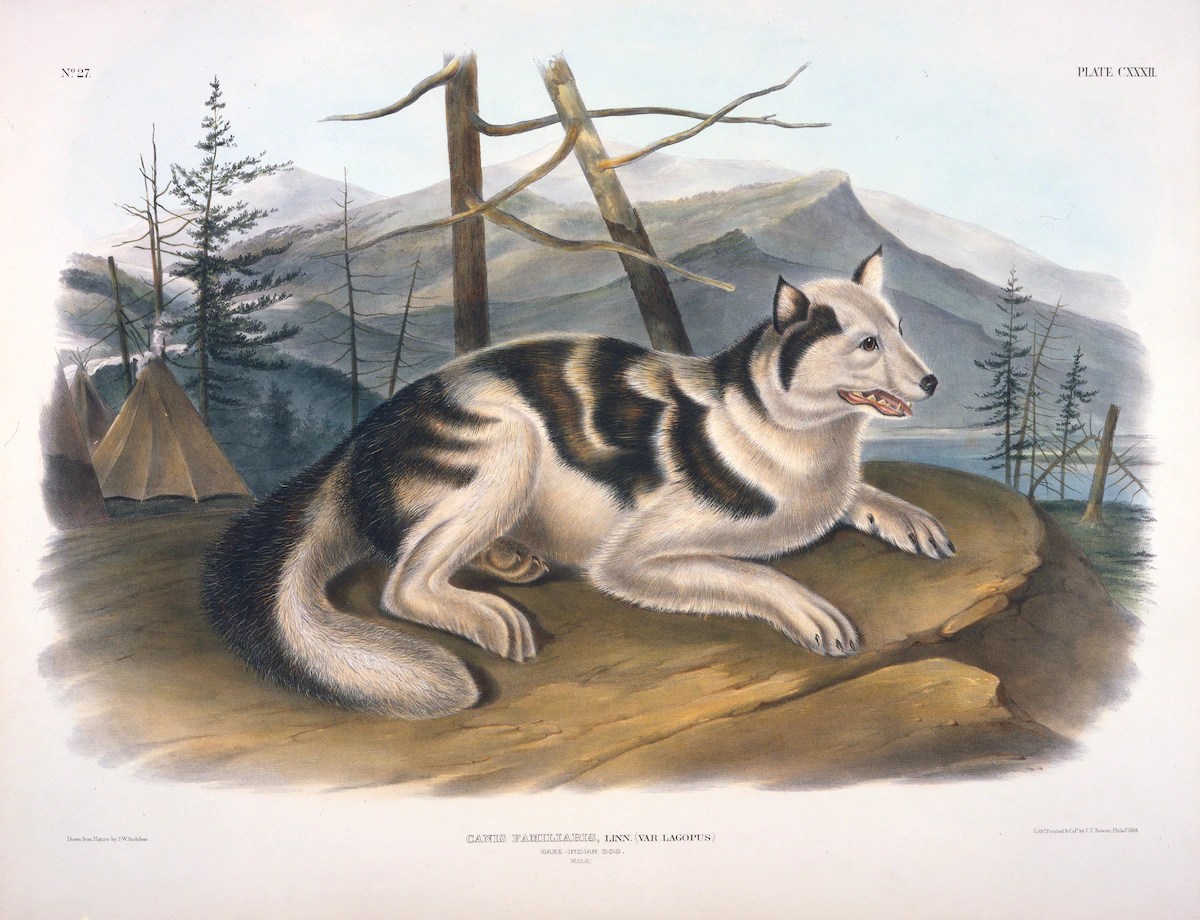
“Hare Indian Dog” by John Woodhouse Audubon, from The Viviparous Quadrupeds of North America (1845-1848). (Whitney Western Art Museum 14.88.2, Buffalo Bill Center of the West, Cody, Wyo.)

From Mexico’s lead role in the NIEO to Mexico’s nuclear arms control leadership, here are this week’s top picks in imperial and global history.

Continue reading “This Week’s Top Picks in Imperial & Global History”

Entangled empires and the future of imperial intellectual history

­

Vichy propaganda representing Britain’s wartime imperial reach.

Alex Middleton
University of Oxford

The immediate future of modern imperial history seems certain to involve more books about the entanglements between empires. Writing on the seams that connected nineteenth- and twentieth-century empires with one another has gathered rapidly in momentum over the last decade, and conferences on the overlaps between imperial projects continue to proliferate.[1] So we can anticipate hearing considerably more about the flurry of new and rediscovered ‘hyphenated imperialisms’ which have been used to frame some of this work, pre-eminently ‘inter-imperialism’, ‘trans-imperialism’, ‘co-imperialism’, and ‘sub-imperialism’.[2] More such prefixes will doubtless emerge, and each will present slightly different conceptual and methodological challenges for the various imperial-historical sub-disciplines. This post outlines some possible future priorities for imperial intellectual history – the study of more developed ideas about the expansion, management, nature, and history of empires – as historians search for ways to organise ‘entangled’ histories of imperial thought.[3]

Continue reading “Entangled empires and the future of imperial intellectual history”

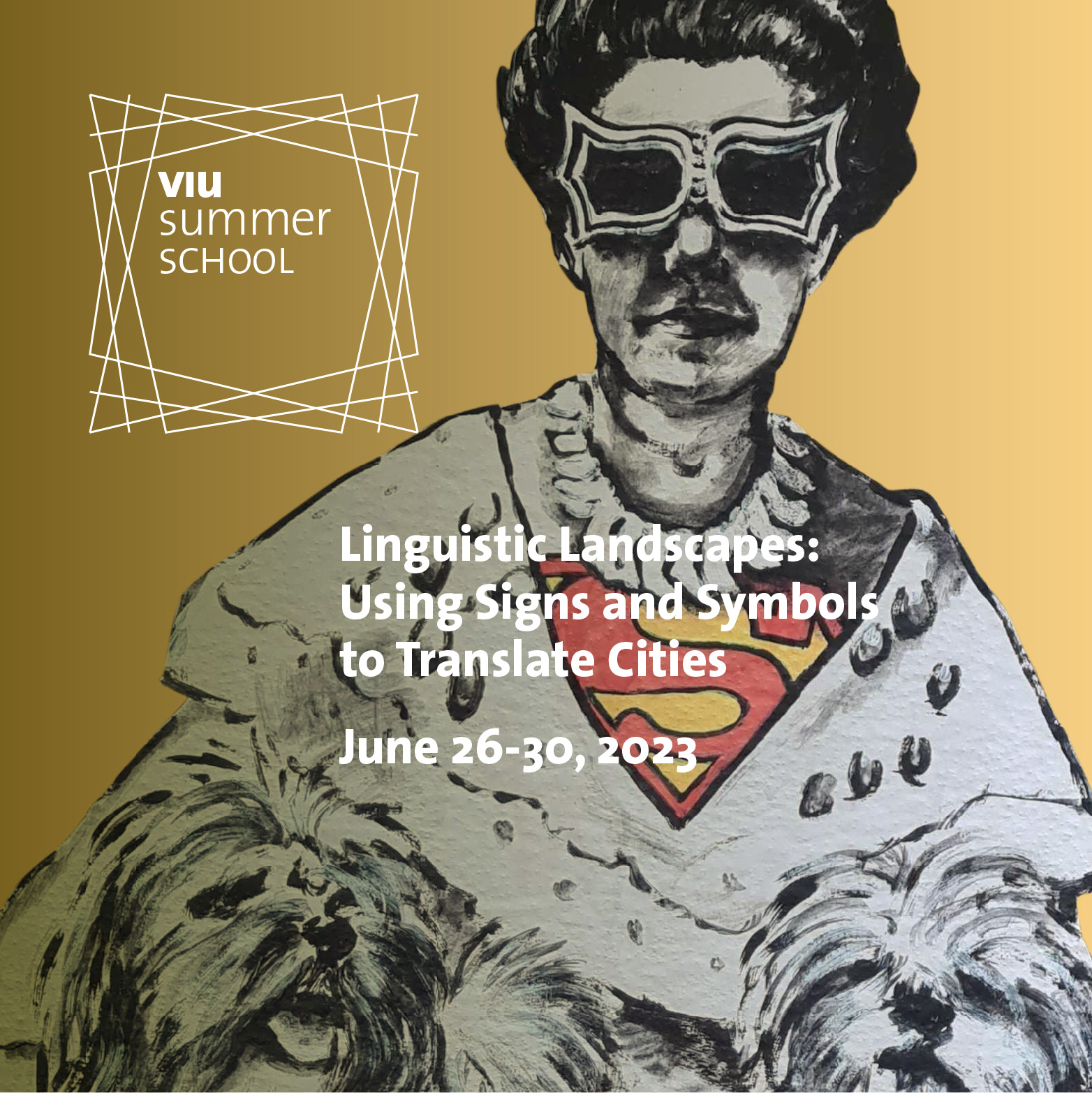
Linguistic Landscapes: Using Signs and Symbols to Translate Cities

June 26-30, 2023

Call for applications: December 1, 2022 – February 28, 2023 via the VIU website

This course focuses on the growing interdisciplinary field of Linguistic Landscapes (LL), which traditionally analyses “language of public road signs, advertising billboards, street names, place names, commercial shop signs, and public signs on government buildings”, usually as they occur in urban spaces. More recently, LL research has evolved beyond studying only verbal signs into the realm of semiotics, thus extending the analytical scope into the multimodal domain of images, sounds, drawings, movements, visuals, graffiti, tattoos, colours, smells as well as people. 

Students will be informed about multiple aspects of modern LL research including an overview of different types of signs, their formal features as well as their functions.

Faculty
Kurt Feyaerts, KU Leuven
Claire Holleran, University of Exeter
Eliana Maestri, University of Exeter
Michela Maguolo, Iuav University of Venice
Luca Pes, Venice International University
Paul Sambre, KU Leuven
Richard Toye, University of Exeter

Continue reading “Linguistic Landscapes: Using Signs and Symbols to Translate Cities”

Masterclass – PhD proposal and funding 101

Are you considering a Phd? In this Eventbrite masterclass the experts disclose the secrets to a successful PhD proposal. Learn to apply like a pro!

When: Tue, 6 December 2022, 15:00 – 16:30 GMT

Where: Online

Learn how to write a PhD proposal, and apply for funding with this online masterclass.

Our experts will discuss the main funding schemes available and offer advice on how to decide your next move. They will also cover the ideal PhD proposal structure and key things to include.

There will be workshop segments and plenty of time for questions, and PGR involvement on the panel too.

Hosted by the Archaeology and History department at the University of Exeter, we invite all those (of any discipline) who are interested in the PhD application process. We look forward to seeing you there!

Please reserve a spot – the link will be emailed to you prior to the event.

If you have any questions, email James Davey at J.Davey3@exeter.ac.uk or your prospective supervisor.

Click here to reserve a free spot

World population has reached 8 billion – India’s history reminds us why population control is still a bad idea

Family Planning imagery on an Indian postage stamp, 1967. Attribution: Post of India, GODL-India, via Wikimedia Commons.

Rebecca Williams
University of Exeter

World population has probably now reached 8 billion. For many, this will be a cause for alarm rather than celebration. However, Natalia Kanem, the Executive Director of the UN Population Fund (UNFPA) has rightly cautioned against ‘population alarmism’ and warned against population control measures, saying these have historically been ‘ineffective and even dangerous.’ Some commentators call for calm on the basis that past and present projections of runaway population growth leading directly to mass famine and other catastrophes have been overblown. A brief look back at the history of India’s experience of population control reminds us why population alarmism and population control can be so harmful.

Continue reading “World population has reached 8 billion – India’s history reminds us why population control is still a bad idea”

Waking up a sleepy world: U.S. Textbook Narratives of Imperialism

Stephen Jackson
University of Sioux Falls

For the past century, the World History course has been one of the most important ways that secondary students in the United States formally learn about imperialism. Fascinatingly, World History thrived in American high schools long before it emerged as an organized subfield at the university level.[1]

In my new book The Patchwork of World History in Texas High Schools: Unpacking Eurocentrism, Imperialism, and Nationalism in the Curriculum 1921-2021, I argue that American students have been exposed to largely triumphalist narratives of empire. While textbooks readily admit that imperialism was difficult for non-Western peoples, they overwhelmingly associate imperialism with the arrival of modernity and progress, a narrative trope reminiscent of J.M. Blaut’s concept of Eurocentric diffusionism.[2] Over time textbooks have become more nuanced, and the criticisms of empire have mounted, but this core idea of imperialism as a catalyst for progress and development remains standard fare in American classrooms today.

Continue reading “Waking up a sleepy world: U.S. Textbook Narratives of Imperialism”

This Week’s Top Picks in Imperial & Global History

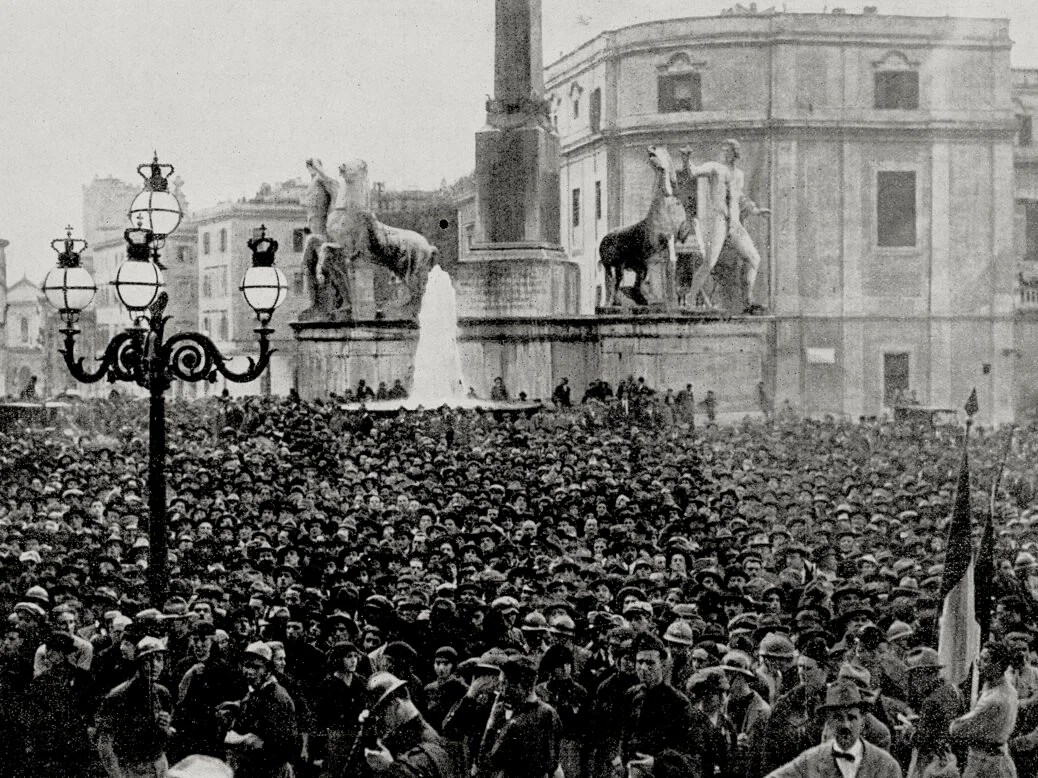
Piazza del Quirinale during the 1922 March on Rome putting Mussolini in power. Photo by De Agostini Picture Library/Getty Images.

Marc-William Palen
History Department, University of Exeter

From fascism’s liberal admirers to how a defender of American Empire became a dissenter, here are this week’s top picks in imperial and global history.

Continue reading “This Week’s Top Picks in Imperial & Global History”

This Week’s Top Picks in Imperial & Global History

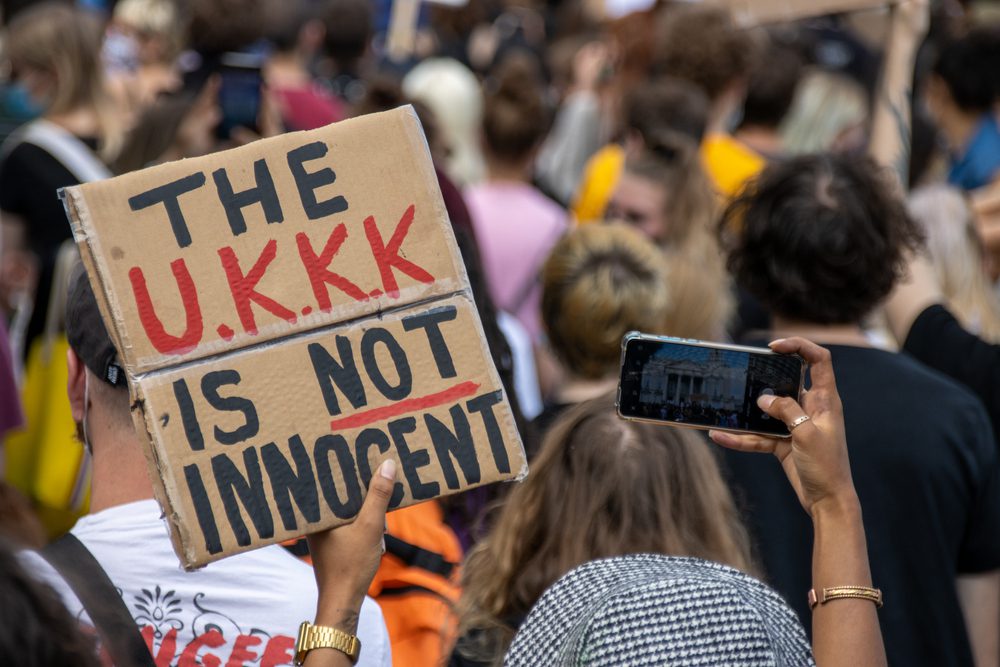
Black lives matter protesters in the Leeds City Centre (Shutterstock), Leeds UK, 14 June 2020

Marc-William Palen
History Department, University of Exeter
Follow on Twitter @MWPalen

From the sovereign individual in Downing Street to Queen Elizabeth, colonization, and global perceptions, here are this week’s top picks in imperial and global history.

Continue reading “This Week’s Top Picks in Imperial & Global History”

This Week’s Top Picks in Imperial & Global History

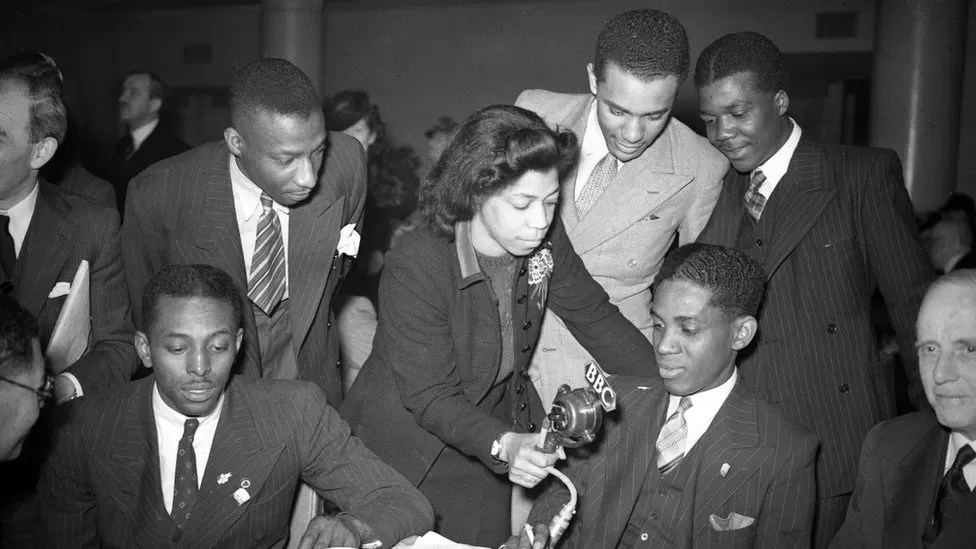
Una Marson recording at a reception for Jamaican technicians working in factories in Britain

Marc-William Palen
History Department, University of Exeter
Follow on Twitter @MWPalen

From the nature of J. A. Hobson’s racism to dispelling the myths of Swiss colonialism, here are this week’s top picks in imperial and global history.

Continue reading “This Week’s Top Picks in Imperial & Global History”

This Week’s Top Picks in Imperial & Global History

Marc-William Palen
History Department, University of Exeter
Follow on Twitter @MWPalen

From the foods that ‘changed’ the world to the politics of money, here are this week’s top picks in imperial and global history.

Continue reading “This Week’s Top Picks in Imperial & Global History”

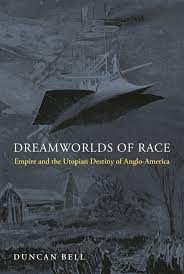
H-Diplo Roundtable XXIV-4: Duncan Bell,  Dreamworlds of Race

Duncan Bell.  Dreamworlds of Race: Empire and the Utopian Destiny of Anglo-America.  Princeton: Princeton University Press, 2020.  ISBN:  9780691194011 (hardcover, 2020).

Cross-posted from H-Diplo / 23 September 2022 | https://hdiplo.org/to/RT24-4

Introduction by Georgios Giannakopoulos, City, University of London, and Marc-William Palen, University of Exeter

Duncan Bell’s Dreamworlds of Race is a timely intervention in the field of imperial and international thought. In many ways this book continues Bell’s earlier studies on the Anglo-American discourses of imperial federation and on the theoretical underpinnings of liberal imperial ideology. It completes a trilogy dissecting what the author calls “the metropolitan settler imaginary” (3).[1] Utopian ideas about racial unity were a key feature of the Anglo-American metropolitan settler imaginary of the late nineteenth and early twentieth centuries. Bell dissects this timely pattern of thinking by focusing on individual and varied case-studies that include industrialists (Andrew Carnegie), imperialists (Cecil Rhodes), journalists (W.T. Stead) and, finally, utopian writers (H.G. Wells). But Dreamworlds of Race is also about much more. Bell takes on the late Victorian genre of science fiction and argues for its importance in propagating ideas of racial utopianism. He is also interested in how racial utopias of an Anglo-American union—a peaceful Anglo-American imperial order, or Anglotopia—framed wider debates on war, peace, and citizenship. While Amanda Behm, Sam Klug, Ryoko Nakano, and Neil Suchak provide wide-ranging reviews of Bell’s book, all agree that Dreamworlds of Race is a timely and compelling intervention.

Amanda Behm situates Bell’s work in dialogue with the work of James Belich, Marilyn Lake, and Henry Reynolds.[1] She applauds the critical eye that Dreamworlds of Race casts on Anglo-American visions of international order, and the history of Anglo-American relations more widely. Behm focuses particularly on Bell’s reading of H.G. Wells and traces an ambiguity that frames the book revolving around the function of racial thinking in Wells’s thought.  Sam Klug discusses Bell’s discussion on citizenship and patriotism. Klug applauds Bell’s dissection of racialized forms of citizenship proposed by those invested in the political project of Anglo-American union. He argues that Bell could have integrated more systematically in his analysis the political “challenges to the authority and coherence of whiteness” and as an example he mentions the American debates on immigration. Ryoko Nakano analyses the book’s analysis on late twentieth century neo-Victorian fiction and the discussion of “Afro-modern perspectives.” Nakano argues that an exploration of alternative non-western utopian imaginaries linked with the ideologies of Pan-Islamism and Pan-Asianism could be a fruitful way of expanding and developing further some of Bell’s key insights on the making of racialized anti-imperial imaginaries. Neil Suchak, finally, highlights Bell’s complex analysis of the problem of peace and the links between peace theories and racialized Anglo-Saxon utopias. He argues that “the integration of this racialized and utopian definition of peace into the study of the wider scene of peace activism warrants further scholarship.”

In his substantive response, Bell addresses the points of all of the reviewers. He agrees with their suggestions for further exploration, including the American South, the American Revolution, the American Civil War, pan-Asianism, pan-Islamism, and utopian “dream” language. Bell also expands upon the racialized contradictions that Behm observes within the work of Wells. Bell agrees with Klug that more work could be done on the connections between Anglo-Saxonism, immigration, and white supremacy, while highlighting where Dreamworlds does engage with these issues. Bell next acknowledges Nakano’s points about further developing pan-isms (e.g., Pan-Asianism, Pan-Africanism) to incorporate spatial imaginaries beyond the “West-centric world order.” He concludes by responding to Suchak, including his suggestion that Bell perhaps underplayed the resonance of his book’s findings for interdisciplinary peace studies, such as democratic peace theory, the women’s peace movement, and international arbitration. The richness of this roundtable discussion illustrates the importance of Bell’s book, as well as how it opens the door for further investigation.

Participants:

Duncan Bell is Professor of Political Thought and International Relations at the University of Cambridge, and a Fellow of Christ’s College. He is Co-Director of the Cambridge Centre for Political Thought. His research focuses on visions of world order in Britain and the United States during the nineteenth and twentieth centuries. Dreamworlds of Race (Princeton, 2020) is his most recent book. His current work explores how the future of humanity has been imagined – by philosophers, scientists, and fiction writers – since the late nineteenth century.

Georgios Giannakopoulos is Lecturer in Modern History at City University of London and a visiting research fellow at King’s College, London. His publications include “Britain, European Civilization and the Idea of Liberty,” in the edited special issue History of European Ideas 46/5 (2020), “A World Safe for Empires? A.J. Toynbee and Internationalization of Self-Determination in the East (1912-1922), Global Intellectual History 6:4 (2021). He is currently completing a monograph on British international thought and imperial order in southeastern Europe (1870-1930) with Manchester University Press.  

Marc-William Palen is a historian at the University of Exeter. His publications include “Empire by Imitation? US Economic Imperialism in a British World System,” in Martin Thomas and Andrew Thompson, eds., The Oxford Handbook of the Ends of Empire (Oxford, 2018) and The “Conspiracy” of Free Trade: The Anglo-American Struggle over Empire and Economic Globalisation, 1846-1896 (Cambridge, 2016). His current book project with Princeton University Press explores the left-wing fight for globalism, anti-imperialism, and peace since the mid-nineteenth century.

Amanda Behm is Lecturer in Modern History at the University of York. Her first book, Imperial History and the Global Politics of Exclusion: Britain, 1880-1940, appeared with Palgrave Macmillan in 2018. She is working on two current projects: “Parliamentary Empire: British Democracy and Settler Colonialism, c.1867-1939” (organized with Professor David Thackeray at the University of Exeter), and a study of British visions of the North American Pacific Coast after 1846 as they shaped imperial culture and politics.

Sam Klug is an incoming postdoctoral fellow at the Fox Center for Humanistic Inquiry at Emory University. He is working on a monograph provisionally titled “The Internal Colony: Black Internationalism, Development, and the Politics of Colonial Comparison in the United States.” His work has appeared in Journal of the History of International LawModern Intellectual History, and the volume Globalizing the U.S. Presidency: Postcolonial Views of John F. Kennedy (Bloomsbury, 2020).

Ryoko Nakano is Professor of International Relations in the Faculty of Law at Kanazawa University, Japan. For more than a decade, she has engaged in the study of Japanese political thought in pre- and post-war eras and has published extensively on Yanaihara Tadao (1893-1961), the chair of colonial studies at Tokyo Imperial University. Her areas of interests comprise memory of war, identity politics, and the role of ideas in international relations. Nakano has served as a guest editor for International Journal of Asian Studies, and her recent work explores UNESCO, cultural heritage, and memory politics in East Asia.

Neil Suchak is a D.Phil. Student at the University Oxford where he researches the imperial dimensions of the nineteenth century American peace movement.

Continue reading “H-Diplo Roundtable XXIV-4: Duncan Bell,  Dreamworlds of Race”