This Week’s Top Picks in Imperial & Global History

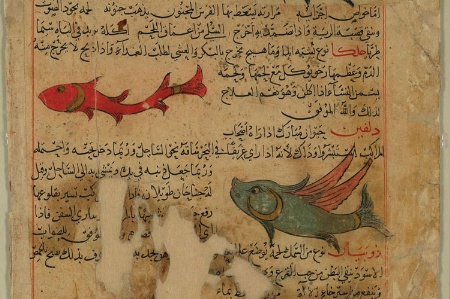
A dolphin and fish from ‘The London Qazwīnī’, courtesy of British Library and Qatar Foundation.
A dolphin and fish from ‘The London Qazwīnī’, courtesy of the British Library and the Qatar Foundation.

Marc-William Palen
History Department, University of Exeter
Follow on Twitter @MWPalen

From a new Persian Gulf digital history project to why politicians need historians, here are this week’s top picks in imperial and global history. Continue reading “This Week’s Top Picks in Imperial & Global History”

What We’ve Learned From the Crash – Review of ‘The Shifts and the Shocks’, by Martin Wolf

Richard Toye
History Department, University of Exeter

Follow on Twitter @RichardToye

Cross-posted from the Guardian

shifts_758504zMartin Wolf’s new volume on the causes and consequences of the world financial crisis comes with generous advance praise from, among others, Mervyn King, Larry Summers and Ben Bernanke. That, you might think, is a bit like a manual on maritime safety with jacket blurbs from the crew of the Titanic. But there is not much comfort for the these men within the book’s pages. Bernanke, in particular, gets it in the neck: “even two months before the crisis broke, the chairman of the Federal Reserve had next to no idea what was about to hit him, his institution and the global economy. To be blunt, he was almost clueless.” It seems he’s not too careful about reading the books he endorses, either.

That is a pity, because this is a work that repays close attention. Continue reading “What We’ve Learned From the Crash – Review of ‘The Shifts and the Shocks’, by Martin Wolf”

Call for Applications: Global Humanitarianism Research Academy

Academy CFA

Call for Applications:

Global Humanitarianism | Research Academy

International Research Academy on the History of Global Humanitarianism

Academy Leaders:     

Fabian Klose (Leibniz Institute of European History Mainz)

Johannes Paulmann (Leibniz Institute of European History Mainz)

Andrew Thompson (University of Exeter)

In co-operation with the International Committee of the Red Cross (Geneva)

and with support by the German Historical Institute London

Venues:                             Leibniz Institute of European History Mainz and Archives of the International Committee of Red Cross Geneva

Date:                                   13-24 July 2015

Deadline:                          31 December 2014

Information on:  http://hhr.hypotheses.org/ & https://imperialglobalexeter.com/

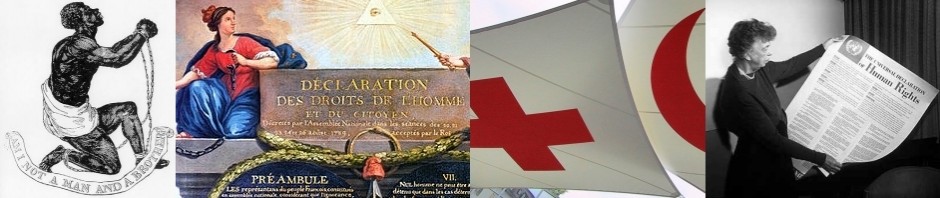
The international Global Humanitarianism | Research Academy (GHRA) offers research training to advanced PhD candidates and early postdocs. It combines academic sessions at the Leibniz Institute of European History in Mainz and the Imperial and Global History Centre at the University of Exeter with archival sessions at the Archives of the International Committee of the Red Cross in Geneva. The Research Academy addresses early career researchers who are working in the related fields of humanitarianism, international humanitarian law, peace and conflict studies as well as human rights covering the period from the 18th to the 20th century. It supports scholarship on the ideas and practices of humanitarianism in the context of international, imperial and global history thus advancing our understanding of global governance in humanitarian crises of the present. Continue reading “Call for Applications: Global Humanitarianism Research Academy”

This Week’s Top Picks in Imperial & Global History

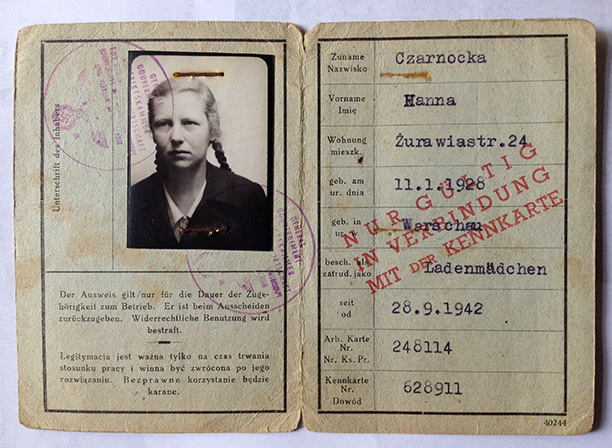
Hanna Czarnocka's German-issued identity papers. History Today.
Hanna Czarnocka’s German-issued identity papers. From History Today.

Marc-William Palen
History Department, University of Exeter
Follow on Twitter @MWPalen

From freedom-fighting children of World War Two, to the interwar origins of Aids, here are this week’s top picks in imperial and global history. Continue reading “This Week’s Top Picks in Imperial & Global History”

Registration Open: Connected Histories of Decolonisation Workshop

Joanna Warson
University of Portsmouth
Follow on Twitter @Joanna_Warson

Senate House, London, 13-14 November 2014
Institute of Commonwealth Studies, University of Portsmouth, and King’s College

The recent rise of global history has prompted much reflection amongst imperial historians about the interconnections and cross-influences that existed between and amongst past empires, stretching across vast spatial and chronological frameworks. Taking as its starting point this new trend in historical research, this workshop will explore the connections, entanglements and transnational links between different twentieth century decolonisation processes. In particular, this study day seeks to bring to light the ways in which people, ideas and practices, from both the global North and South, crossed national and colonial borders, and how these connections, in turn, impacted upon on the decline of European colonialism. By going beyond a narrow, nation-state perspective, this workshop aims to break down boundaries in the history of decolonisation, challenging, for example, the divides between the British, French and Portuguese empires, but also, more widely, binaries such as colonial/ post-colonial, metropole/ periphery, coloniser/ colonised.

 To download the registration form, please click here.

To view the program, click here.

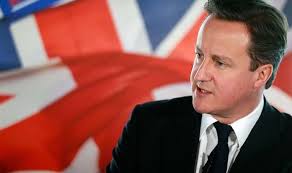
Turning Right, Talking Left: David Cameron’s ‘Four Nations’ Conference Speech and the Ghosts of Tory Leaders Past

cameron

Richard Toye
History Department, University of Exeter

Follow on Twitter @RichardToye

Cross-posted from Four Nations History blog

In a special post, the University of Exeter’s Professor Richard Toye reacts to David Cameron’s speech to the 2014 Conservative party conference and reflects on the Prime Minister’s vision of the United Kingdom. 

David Cameron’s speech to the Conservative party conference started with a line that will make it of direct interest to the readers of this blog:

‘I am so proud to stand here today as Prime Minister of four nations in one United Kingdom.’

Confessing that the Scottish referendum had given him sleepless nights, Cameron boasted that the British people have now been confirmed as ‘one people in one union’. The explicit Unionist message naturally places him in a long Conservative tradition. And whereas much of the instant reaction focussed on the promise of tax cuts, reading the full speech leads to interesting reflections on the extent to which today’s Conservative Party follows in the rhetorical footsteps of its past leaders. Continue reading “Turning Right, Talking Left: David Cameron’s ‘Four Nations’ Conference Speech and the Ghosts of Tory Leaders Past”

Introducing: The Global Humanitarianism Research Academy

Fabian Klose (IEG Mainz), Johannes Paulmann (IEG Mainz), and Andrew Thompson (University of Exeter)

ICRC

ExeterIEG

We are happy to announce that, in cooperation with the International Committee of the Red Cross (Geneva), we are starting the Global Humanitarianism Research Academy (GHRA) in July 2015.

This international Research Academy will offer research training to a group of advanced international PhD candidates and early postdoctoral scholars selected by the steering committee. It will combine academic sessions at the Leibniz Institute of European History in Mainz and the Imperial and Global History Centre at the University of Exeter with archival sessions at the Archives of the International Committee of the Red Cross in Geneva. The Research Academy is open to early career researchers who are working in the related fields of humanitarianism,humanitarian law, peace and conflict studies as well as human rights covering the period from the 18th to the 20th centuries. It supports scholarship on the ideas and practices of humanitarianism in the context of international, imperial and global history thus advancing our understanding of global governance in humanitarian crises of the present.

The official Call for Applications will be soon published here onhttp://hhr.hypotheses.org/ and on https://imperialglobalexeter.com/, so if you are interested in applying keep following our blogs!

Exchanging Notes: Colonialism and Medicine in India and South Africa

Image courtesy of Wellcome Trust.

Nandini Chatterjee
History Department, University of Exeter

Review of Poonam Bala ed. Medicine and Colonialism: Historical Perspectives in India and South AfricaLondon: Pickering and Chatto, 2014. Empires in Perspective Series. 240 pp. £60 (hardback) ISBN 13: 9781848934658; £24 (e-book) 9781781440872.

medicine and colonialism bookThe recent surge of interest in imperial history has been cross-fertilised by work on a number of other themes, such as knowledge formation, law and governance and trans-national connections. This collected volume of essays very usefully brings together a number of these trends to bear upon the crucial area of colonial medicine. Self-consciously aiming to be a comparative work and taking material from India and South Africa, it takes its cue from earlier works that aimed to ‘de-centre’ the metropolis-periphery model of conceptualising empire and colonialism.[1] While re-asserting the centrality of medical knowledge and practices to colonial rule, and the importance of the bodies of the colonised as sites for the exercise of colonial power, the book aims to move beyond a model of hegemony, domination and control. Instead, as the introductory essay outlines, the book’s trans-national methodology is intended to highlight ‘policies of European adaptation and resistance to initiatives of the colonized’ and the ‘transfer of ideas and knowledge in mutual engagements.’

Continue reading “Exchanging Notes: Colonialism and Medicine in India and South Africa”

Could Imperial History Help US Foreign Policy Makers?

monopolists 1

Marc-William Palen
History Department, University of Exeter
Follow on Twitter @MWPalen

Cross-posted from History & Policy

Amid the early decades of the twentieth century, critics of Western imperialism such as economist Joseph Schumpeter and sociologist Thorstein Veblen may have been correct to connect aristocratic tendencies with imperial expansion. And political scientist Louis Hartz may also have been correct when he proclaimed in The Liberal Tradition in America (1953) that, unlike Europe, the United States had no aristocracy. However, Hartz’s analysis will provide little comfort to the vast majority of the American public, who find their more pacific views are not reflected in US foreign policy making. Continue reading “Could Imperial History Help US Foreign Policy Makers?”

This Week’s Top Picks in Imperial & Global History

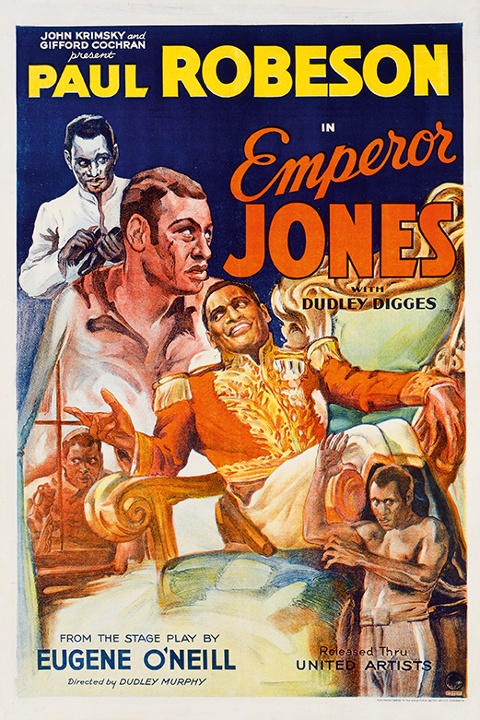
Emperor Jones (1933)  The poster for the film would, Kisch says, ‘have cost a lot of time and money to produce’. It featured a painterly style. By contrast, the posters for independent films would often use only two colours and be made in a few hours. Photograph: The Separate Cinema Archive
Emperor Jones (1933)
Photograph: The Separate Cinema Archive

Marc-William Palen
History Department, University of Exeter
Follow on Twitter @MWPalen

From connecting US football and decolonization to new histories of black cinema, here are this week’s top picks in imperial and global history. Continue reading “This Week’s Top Picks in Imperial & Global History”

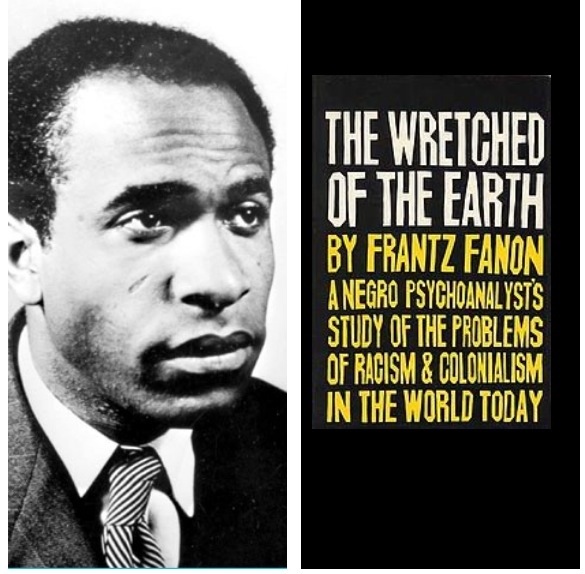
What’s So Shocking about the Wretched of the Earth?

fanon wretched of the earth

Richard Toye
History Department, University of Exeter

Follow on Twitter @RichardToye

Frantz Fanon (1925-1961) was a psychiatrist, intellectual and revolutionary. Born in the French Caribbean colony of Martinique, Fanon spent significant periods of his life in France and, crucially, Algeria. There he became an active member of the Front de Libération Nationale that fought, with ultimate success, against French rule. His most famous work The Wretched of the Earth, published shortly before his death from leukaemia, is a classic of decolonization literature. As Jean-Paul Sartre put it in his preface:  Continue reading “What’s So Shocking about the Wretched of the Earth?”

The First World War and the US State Dept.

Cross-posted from the Office of the Historian (US Dept. of State)

Dept. of State*To mark the centenary of the First World War, the Office of the Historian and U.S. Embassy France have carried out a study into the role of the U.S. diplomatic corps stationed in France during 1914–1918. In contrast to the well known record of U.S. actions after it entered the war in April 1917, the stories of U.S. diplomats, consuls, and their family members—particularly during the early months of the crisis (August-December 1914)—were long forgotten, overshadowed by subsequent events of the tumultuous twentieth century. By researching U.S. Government and Government of France records, memoirs, personal papers, and newspaper archives, this study presents a fascinating account of how actions spearheaded by U.S. diplomats—and American citizens—significantly strengthened Franco-American relations in unique, unparalleled ways.

The Office of the Historian has released this electronic preview edition Continue reading “The First World War and the US State Dept.”

Lloyd George’s Greatest War Speech, 100 Years On

Lloyd George

Richard Toye
History Department, University of Exeter

Follow on Twitter @RichardToye

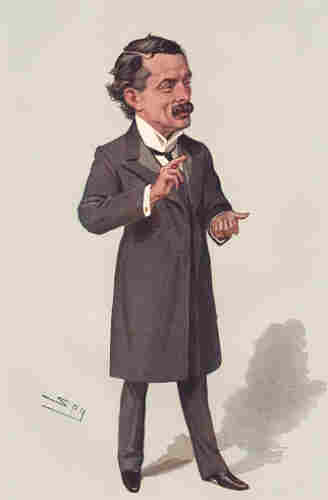
Today (19 September) is the centenary of David Lloyd George’s speech at the Queen’s Hall in the West End of London. As we digest the news that Scotland’s voters have rejected independence, it is interesting to reflect on the role that a different form of Celtic nationalism played in shaping the rhetoric of the Great War.

In the first autumn of the war, Lloyd George’s carefully cultivated public character was almost perfectly pitched. Continue reading “Lloyd George’s Greatest War Speech, 100 Years On”

This Week’s Top Picks in Imperial & Global History

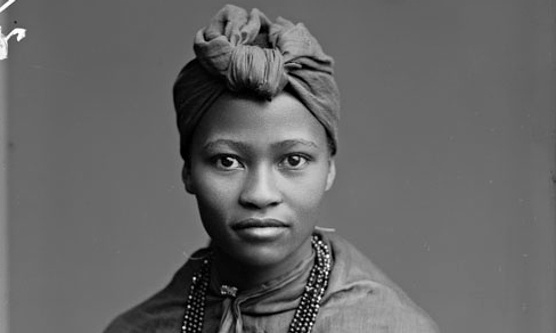
Member, African Choir, London Stereoscopic Company, 1891. Photograph: Courtesy of © Hulton Archive/Getty Images

Marc-William Palen
History Department, University of Exeter
Follow on Twitter @MWPalen

From uncovering portraits of black Victorians to Star Trek‘s colonial past, here are this week’s top picks in imperial and global history. Continue reading “This Week’s Top Picks in Imperial & Global History”

At the ‘Crossroads of Empire’

JCPC exhibition context

Piers Ford

Cross-posted from the Arts & Humanities Research Council.

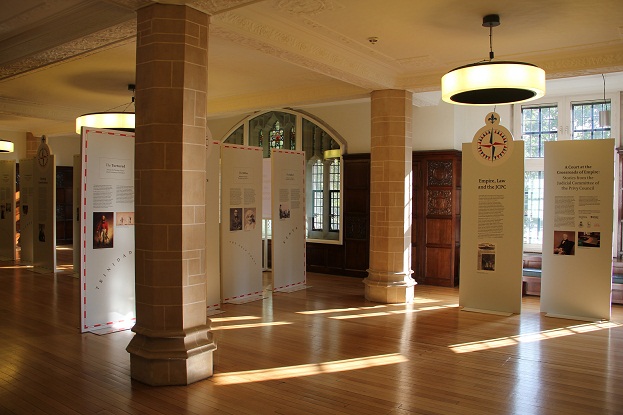
The London exhibit on law and the British Empire, spearheaded by the Centre’s own Dr. Nandini Chatterjee, has had more than 25,000 visitors so far, and is open to the public until September 26th.

[…] The exhibition – A Court at the Crossroads of Empire: Stories from the JCPC – opened for a two-month run at the beginning of August 2014. Curated by a team of academics related to the “Subjects of Law” network, led by Charlotte, Nandini, and Dr Stacey Hynd (also from the University of Exeter), it traced the JCPC’s evolution from its foundation in 1833 to the emergence of the Commonwealth in the 1950s, largely through the stories of individuals whose cases often had a direct impact on commerce and legal practice, as well as the appellant’s own future – for better or, as it occasionally turned out, worse. Continue reading “At the ‘Crossroads of Empire’”