Remembering the Home Front of the First World War

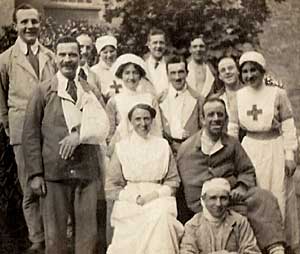
Nurses and wounded soldiers also VA Hospital No 3 circa 1917.
Nurses and wounded soldiers at Exeter’s City Hospital (VA Hospital No 3) circa 1917. Exeter was the first of the provincial towns to take in refugees. Photo borrowed from the great website Exeter Memories.

Richard Batten

The commemoration of the Western Front should not wholly overshadow the wide-ranging activities of the men, women, and children of the British Home Front. Devon’s local tendency toward charity over service reflects the unusual autonomy of its citizens as they attempted to navigate the different challenges of the war.

The recent politicised controversies surrounding the centenary of the First World War reveal the strong emotions and the common misperceptions that the conflict continues to evoke. Presently, the deliberations about the commemoration of the Great War also remain primarily focused on how and why Britain went to war: who started what, the failings of military strategists, and the gruelling experience of British soldiers. This is reflected in the staggering amount of books about the Great War that have been published to coincide with and capitalise upon the conflict’s centenary. Yet Margaret Macmillan rightly points out that whilst the passions evoked in the debate on the First World War ‘may make for a good spectacle’, it does not do ‘what history should – and that is help us to understand the past in all its complexity’. Yet, amid these heated debates of how the First World War should be remembered in Britain, there has been little discussion and reflection of the complex wartime experiences of individuals that fell outside the requirements of military service: the women, children and men unable to serve in the military who instead participated in various forms of economic and social self-mobilisation. Continue reading “Remembering the Home Front of the First World War”

America’s Absentminded Empire

Just one of a variety of designs for the flag, if Puerto Rico becomes a state.  For other, wilder designs, see http://fusion.net/american_dream/story/10-wildest-proposed-51-star-american-flags-puerto-22512
Just one of a variety of designs for the American flag, if Puerto Rico should become the 51st state. Click here for other, wilder designs.

Marc-William Palen

In November 2012, a slim majority of Puerto Ricans voted in favor of U.S. statehood. And within the last week, Dr. José M. Saldaña, former president of the University of Puerto Rico, and former mayor of San Juan, Hernán Padilla, each once again raised the call for Puerto Rican statehood. Yet modern-day remnants of the American Empire continue to trouble US relations with Puerto Rico, which still holds a semi-colonial American status. To give the issue some much-needed historical perspective, what follows is a revised version of an article that previously appeared in the History News Network and the Australian newspaper.

Burn your outdated American flags; make room for the fifty-first star on the star-spangled banner.

For the first time in Puerto Rico’s more than hundred-year history as an American territory, on Election Day in November 2012, a slim majority voted in favor of U.S. statehood in a non-binding referendum that now goes to the U.S. Congress.

Puerto Ricans had been given a similar option three times before — in 1967, 1993, and 1998 — but with opposite results.

Why this apparent about face?

Because of a weakening economy, a decreasing population, and because “the current relationship simply does not create the number of jobs that we need,” says Puerto Rican Secretary of State Kenneth McClintock.

As it stands, 58 percent of Puerto Ricans now live in the mainland United States. Puerto Rico’s four-million residents — the 42 percent remaining on the island — are American citizens but can’t vote in American elections. Such has been the status quo since 1917.

But all this could change if Puerto Rico becomes the fifty-first state of the Union.

Whatever the outcome, this historic moment deserves due attention. Instead, aside from a brief flurry of superficial analysis, the implications of Puerto Rico’s self-determinative vote have gone largely ignored.

We might easily blame American political ADD for such a short attention span. More uncomfortably, such an imperial absence of mind is also a garish reminder of how much Puerto Rico’s complicated, century-long, semi-colonial status has become an accepted part of the American subconscious. Continue reading “America’s Absentminded Empire”

New Exeter History Network for Early Career Imperial & Global Researchers

Gareth Curless

Membership in the Network is open to any postgraduate and early career researcher interested in the field of Imperial & Global History, broadly defined.

The Imperial and Global History Network is an exciting new resource for early career researchers and posgraduates at the University of Exeter.

The aim of the Network is to connect postgraduate and early career researchers working in the field of Imperial and Global history, providing an inter-disciplinary forum for the discussion of research questions and methodologies, archival research and fieldwork, and funding applications and career development. The Network is hosted by the Centre for Imperial and Global History at the University of Exeter and membership is open to any postgraduate and early career researcher interested in the field. If you’re interested in joining the Network or you would like to find out more information please contact one of the convenors: Dr Gareth Curless and Dr Stacey Hynd. Continue reading “New Exeter History Network for Early Career Imperial & Global Researchers”

Nearly 100 PhD Awards Available, Including in the Study of Imperial & Global History

Stacey Hynd

Dear Colleagues and Prospective Students,

If you are seeking PhD funding in the fields of World/Global/Colonial/Imperial History, please may I draw your attention to the following funding opportunities at the University of Exeter.

  • AHRC Doctoral Training Partnership South West and Wales Consortium (SWWC) [up to 50 awards available, deadline 21 February, with an Open Day on 22 January]
  • ESRC South West Doctoral Training Centre +3 and 1+3 Studentships [25 Awards, deadline 13 February]
  • ESRC South West Doctoral Training Centre +3 and 1+3 Studentships in Security, Conflict and Justice [2 awards, deadline 13 February]
  • College of Humanities Graduate School Doctoral Awards [12 awards available, deadline 2 February].

For more details see

http://www.exeter.ac.uk/postgraduate/money/studentships/?subject=19 Continue reading “Nearly 100 PhD Awards Available, Including in the Study of Imperial & Global History”

France in Africa – Imperialist Humanitarian?

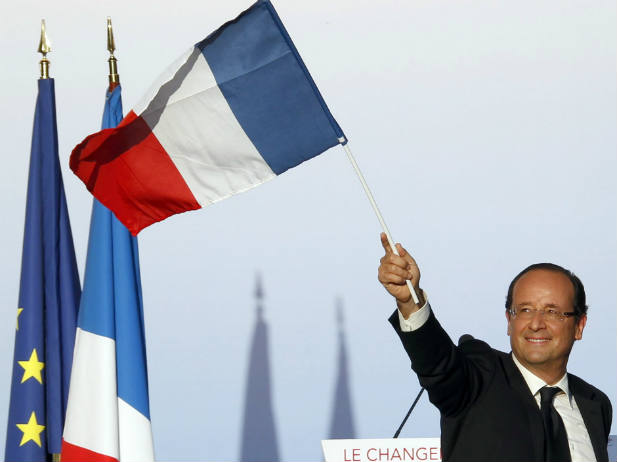
Francois Hollande, Socialist Party president-elect of France, waves to supporters in Toulouse. (Regis Duvignau/courtesy Reuters)
Francois Hollande waves to supporters in Toulouse. (Regis Duvignau/courtesy Reuters)

Martin Thomas
Director, Centre for the Study of War, State and Society, University of Exeter

As the UN warns of an impending humanitarian disaster in the Central African Republic (CAR), what should we make of France’s recent back-to-back interventions in sub-Saharan Africa? Is there an echo in this of the clientalist politics pursued by France in Africa in the years after formal decolonization? Continue reading “France in Africa – Imperialist Humanitarian?”

Teaching ’12 Years a Slave’ and other Top Picks in Imperial & Global History

greatbooksDebating the origins of the First World War will have to wait a few days. Why? Because this week was a big one for other imperial and global news, from teaching the history of slavery to the end of globalization. Here are some of the Forum’s top picks of the week. Continue reading “Teaching ’12 Years a Slave’ and other Top Picks in Imperial & Global History”

Considering a History PhD at Exeter? Registration Open till Monday for the PhD funding Open Day

Want to do a PhD in history at the University of Exeter?

There is still time.

Prospective applicants who are eligible for funding can register for our Open Day in Bristol on Wednesday 22 January 2014. The aim of the Open Day is for you to learn more about the research opportunities and supervisory expertise offered in the SWW DTP. The deadline for registering is 12.00 midday Monday 13 January 2014. Continue reading “Considering a History PhD at Exeter? Registration Open till Monday for the PhD funding Open Day”

Fighting the Myths of the First World War

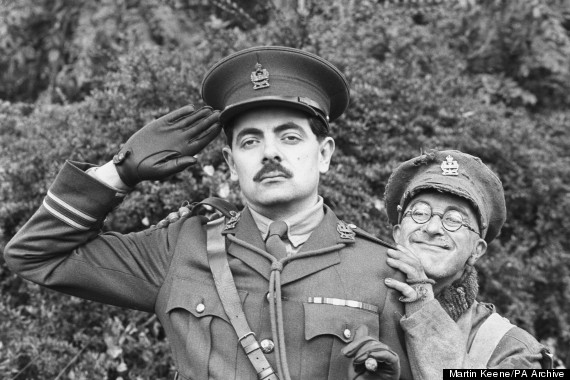
Television - BBC - Blackadder Goes Forth - Rowan Atkinson and Tony Robinson - London
Rowan Atkinson as Cpt. Edmund Blackadder (left). Tony Robinson as Private Baldrick (right).

Marc-William Palen

Did you miss this weekend’s intellectual battle over the myths of the First World War? Here are the highlights.

Round 1, Gove v. Evans

Late last week, Education Secretary Michael Gove fired off the year’s opening salvo in the pages of the Daily Mail in ‘Why Does the Left Insist on Belittling True British Heroes?’ As the title suggests (and now with support from Stephen Pollard in the Express and UKIP’s Nigel Farage in the Independent), Gove attempts to situate the debate as a Left v. Right political issue (for which Professor Gary Sheffield has taken him to task). Continue reading “Fighting the Myths of the First World War”

This Week’s Top Picks in Imperial & Global History

LawBooksNeed some distractions for the new year? Here are some of the most noteworthy recommended reads of the week from the Imperial & Global Forum. Continue reading “This Week’s Top Picks in Imperial & Global History”

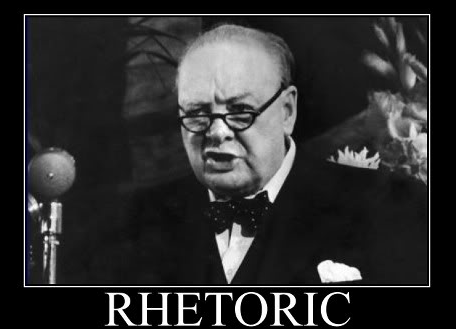
Tracing Churchill’s Rhetoric on Imperial Trade

Screen Shot 2013-12-15 at 8.52.43 AMRichard Toye

Churchill and the Culture of Imperial Political Economy

Winston Churchill is not famed for his views on economics. Yet they formed an important aspect of his outlook.  Continue reading “Tracing Churchill’s Rhetoric on Imperial Trade”

Top Christmas Picks in Imperial & Global History

christmasbooksNeed some fun reading on imperial and global history over the holiday break? Here are some of the Imperial & Global Forum‘s top recommendations: Continue reading “Top Christmas Picks in Imperial & Global History”

South Africa’s Long Walk: Political Dissent and the Spirit of Resistance at the Mandela Memorial

A section of the crowd boos President Jacob Zuma during the memorial service for former president Nelson Mandela. Picture: Nelius Rademan/Foto24
President Jacob Zuma received boos from some of the crowd attending the memorial service for Nelson Mandela. Picture: Nelius Rademan/Foto24

Emily Bridger

The crowd’s booing of Zuma at the memorial service embodied Mandela’s oppositional legacy.

Following Nelson Mandela’s passing early this month, international media and public interest in South Africa has abounded. From the fake sign language interpreter at the memorial to President Obama’s embarrassing ‘selfie’ taken during the service, journalists have had plenty of scandals to sink their teeth into. In particular, the crowd’s booing of current South African president Jacob Zuma during last Tuesday’s memorial has struck a particular chord with journalists, twitter users, and politicians alike. Continue reading “South Africa’s Long Walk: Political Dissent and the Spirit of Resistance at the Mandela Memorial”

Boycotting Apartheid: the Global Politics of ‘Fair Trade’

Free Nelson MandelaDavid Thackeray

As  a  child  there  were  few  experiences  I  looked  forward  to  more  than  a  trip  up  to  London  with  my  father  to  visit  Hamleys  toy  store  in  the  run-up  to  Christmas.  Rather  unusually  perhaps,  these  visits  to  the  capital  were  also  occasionally  marked  by  a  stop  at  South  Africa  House  to  see  the  Anti-Apartheid  picket  of  the  embassy,  organised  to  call  for  the  release  of  ANC  leader  Nelson  Mandela.  We  had  moved  to  the  UK  from  New  Zealand  a  few  years  beforehand,  and  Dad  would  always  use  such  occasions  to  regale  me  with  proud  memories  of  the  protests  which  greeted  South  Africa’s  notorious  rugby  tour  in  1981.  When  the  Springboks  came  to  our  home  city  of  Hamilton,  a  key  centre  of  Maori  culture,  crowd  protests  led  to  the  abandonment  of  a  test  against  the  All  Blacks.  Another  game  became  a  farce  when  flour  bombs  and  leaflets  were  scattered  over  the  pitch  from  a  light  aeroplane. Continue reading “Boycotting Apartheid: the Global Politics of ‘Fair Trade’”

Human Rights and ‘Neoliberalism’

Samuel Moyn

Samuel Moyn
James Bryce Professor of European Legal History, Columbia University

Cross-posted from Humanitarianism and Human Rights
9/12/13

Much ink has now been spilled on the historical origins of human rights. That debate will continue no doubt. I have surveyed the wreckage in a recent review essay (in English here, but for some similar thoughts auf Deutsch see here) but there is no doubt that problems large and small remain to resolve.

One of the biggest is how to formulate the historical relationship between humanitarianism and human rights. In my view, the best thing to say is that the former is old and the latter (conceptualized as the quest for an international regime pursued by transnational movements) is new, though humanitarianism certainly did create many   norms originally framed outside an individualist or rights-based paradigm that contemporary movements have now put in one. Continue reading “Human Rights and ‘Neoliberalism’”

Over 1 Million Historical Images Made Available by British Library

Marc-William Palen

[London, 1857] Image taken from page 464 of 'The eventful voyage of H.M. Discovery Ship “Resolute” to the Arctic Regions in search of Sir J. Franklin. ... To which is added an account of her being fallen in with by an American Whaler after her abandonment ... and of her [from the British Library Images Collection]
[London, 1857] Image taken from page 464 of ‘The eventful voyage of H.M. Discovery Ship “Resolute” to the Arctic Regions in search of Sir J. Franklin. … To which is added an account of her being fallen in with by an American Whaler after her abandonment … and of her [courtesy of the British Library]

Need some new visual resources for next term’s imperial or global history class? The British Library has now made available over 1 million images dating from the 17th to the 19th century. Continue reading “Over 1 Million Historical Images Made Available by British Library”