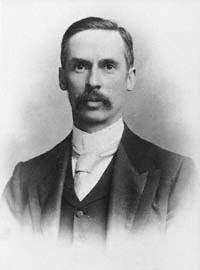
V. I. Lenin penned and published his influential pamphlet, Imperialism: The Highest Stage of Capitalism, in the midst of the First World War. Building upon Marxist contemporaries like Hilferding and Bukharin as well as non-Marxist theorists like J. A. Hobson, Lenin’s pamphlet would quickly come to embody the orthodox Marxist critique concerning the relationship between modern capitalism and imperialism. In this Talking Empire podcast, Dr Marc-William Palen discusses Lenin’s Imperialism and its legacy with Professor Richard Toye.
Tag: Richard Toye
J. A. Hobson and Imperialism – A New Talking Empire Podcast
In 1902, journalist John A. Hobson published Imperialism: A Study. The book was among the first to connect the rise of finance capital with the growth of imperial expansion after 1870. Hobson’s theory would fast number among the most influential critiques of imperialism. Although Hobson himself was not a Marxist (he was a classical liberal), his theory would play a key role in shaping subsequent Marxist theories of imperialism, most notably that of V. I. Lenin.
In this Talking Empire podcast, Centre Director Richard Toye discusses Hobson’s Imperialism with Dr. Marc-William Palen.
Free Course: ‘Empire – the Controversies of British Imperialism’
Exeter’s Centre for Imperial and Global History is once again launching its free online course, which starts this week.
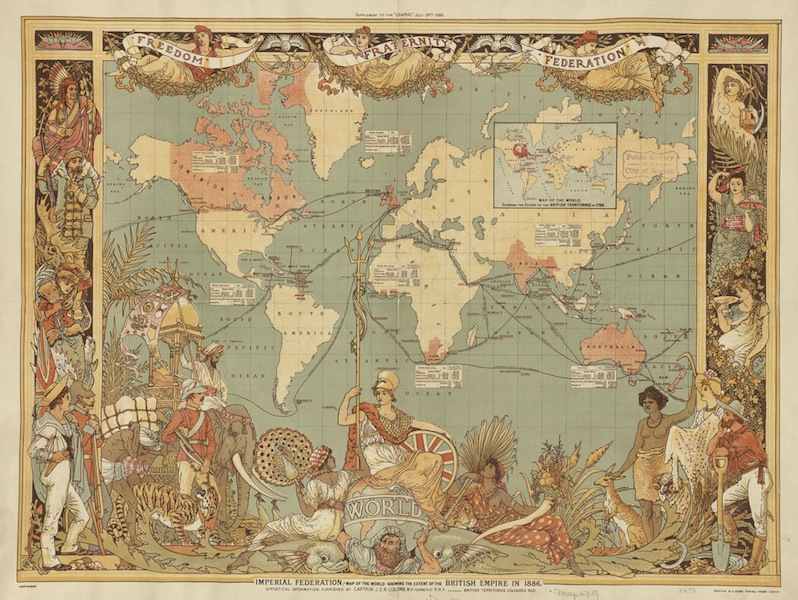
The British Empire was the largest empire ever seen. It ruled over a quarter of the world’s population and paved the way for today’s global economy. But British imperialism isn’t without controversy, and it continues to cause enormous disagreement among historians today. This free online course will help you understand why.
Over six weeks, we’ll explore the British Empire through six themes – money, violence, race, religion, gender and sex, and propaganda. You’ll get to hear the stories of the fascinating individuals who contributed to both its rise and fall. Continue reading “Free Course: ‘Empire – the Controversies of British Imperialism’”
Revisiting Churchill’s “Iron Curtain” Speech 70 Years After
Richard Toye
History Department, University of Exeter
Follow on Twitter @RichardToye
The 5th of March marks the seventieth anniversary of Winston Churchill’s speech in Fulton, Missouri, in which he declared that an ‘iron curtain’ had descended across Europe. Delivered in the presence of US President Harry Truman, who had been instrumental in securing the former Prime Minister his invitation to speak, the address is well known as a landmark in the onset of the Cold War. Yet it is rarely considered in its full historical context. For the speech – formally entitled ‘The Sinews of Peace’ – was not merely a criticism of Russia. It was the means by which Churchill publicly enunciated his vision for a new world order. Continue reading “Revisiting Churchill’s “Iron Curtain” Speech 70 Years After”
What Was Distinctive About the Eighteenth-Century Local Press?
Richard Toye
History Department, University of Exeter
Follow on Twitter @RichardToye
In today’s world, news is everywhere: news communicated by the press, by other media bodies, and increasingly by anyone who wants to share something with the world via Facebook or Twitter, or via a blog like this one! In this new series of podcasts, based around our Third Year undergraduate module on News, Media, and Communication (HIH 3617) Exeter academics will examine how different societies transmit and receive information. The relationship between oral, visual, and written modes of communication, and the impact of technological advances upon news and the media will be examined, as will debates about the role of the media within societies.
What was the relationship between news, media, and state power; and between money, power, and the press? How did the media influence the conduct of war? What impact did the invention of printing, or of television, have on the communication of news, and how did the new technologies interact with social and cultural assumptions to shape what was considered to be ‘news’?
In this video, Professor Jeremy Black and Professor Richard Toye discuss the role of the local and regional press in Britain.
Call For Papers: Embassies in Crisis

Embassies in Crisis
British Academy, 9 June 2016
Call for Papers
This one-day conference will combine academic papers with a seminar session at which serving and former Embassy staff will be invited to present their testimonies and perspectives. The intention is to present a summary of the conference findings to the FCO to help inform future thinking in this area. The event will be held at the British Academy, 9 June 2016.
Embassies have long been integral to international diplomacy, their staff instrumental to inter-governmental dialogue, strategic partnerships, trading relationships and cultural exchange. But Embassies are also discrete political spaces. Notionally sovereign territory ‘immune’ from local jurisdiction, in moments of crisis Embassies have often been targets of protest and sites of confrontation. Embassies in Crisis will revisit flashpoints in the lives of Embassies overseas. Approaching Embassies as distinct communities with their own micro-histories, this conference seeks to explore each of these aspects in the lives of Embassies and the people who run them. Papers are welcomed that discuss instances of international confrontation or mass demonstration, past and present, that placed particular Embassies in the global spotlight. Continue reading “Call For Papers: Embassies in Crisis”
Centre Interview: Fairfax-Cholmeley on the French Revolution, Print Culture, and the Terror

In this centre interview, Professor Richard Toye and Dr. Alex Fairfax-Cholmeley (University of Exeter) discuss the French Revolution, print culture, and the Terror.
Q1. [Toye] You’re currently working on print culture during the French revolutionary era. It’s well known that this was a period that saw an extraordinary explosion in the publication of pamphlets and newspapers. But who was producing them, and why?
[Fairfax-Cholmeley] It is true that the Revolution saw a remarkable rise in the quantity and variety (but not necessarily the quality!) of printed material available to the French population. In the late 1780s, a creaking system of censorship broke up completely in the face of the huge excitement generated by the call for the first Estates-General (the French equivalent of Parliament) since 1614. From 1789 onwards, many Revolutionaries would draw a close association between freedom of the press and the wider political and social liberties the Revolution was supposed to be securing. The printing press therefore always had a certain revolutionary cachet that encouraged its use – especially in Paris.
Who exactly was producing pamphlets, newspapers and other printed material (broadsides, petitions, plays…the list is endless) clearly varies a great deal. The Revolutionary press attracted ambitious members of the political elite, for obvious reasons, but overall production involved a much broader constituency. For example, part of my PhD research focused on the use of print by victims of repression during the Terror of 1793-1794 as a tactic to extricate themselves from any number of sticky situations, and also to restore their revolutionary standing afterwards. Just as the Terror targeted men and women from right across the social spectrum, so the petitions, legal briefs, letters and other material printed in response were not just authored by a narrow elite. My current British Academy postdoctoral fellowship was partly inspired by this research. I am investigating the activities of surviving victims of the Terror in the next phase of the French Revolution (1794-1799), including their use of print to mount public campaigns against those they alleged to have been their former oppressors. You also see those accused of being former Terrorists printing their own defences in return. Continue reading “Centre Interview: Fairfax-Cholmeley on the French Revolution, Print Culture, and the Terror”
3. On Empire and Anachronism
Editor’s Note: In the weeks leading up to the new year, please help us celebrate 2015 at the Imperial & Global Forum by checking out the past year’s 10 most popular posts.
3. On Empire and Anachronism
RICHARD TOYE
HISTORY DEPARTMENT, UNIVERSITY OF EXETER
FOLLOW ON TWITTER @RICHARDTOYE
Our free online course Empire: The Controversies of Imperialism has now been running two weeks; between them, the participants have already made thousands of comments, often arguing their respective points of view quite vigorously. One persistent theme of debate is the degree to which it is possible to pass judgements on the actions of people in the past, who were operating on the basis of standards that are different from those held today. This is an important and difficult issue for historians in general, although the contentious topic of ‘Empire’ seems to throw it into particular relief. Everyone can agree that we shouldn’t reach assessments that are anachronistic; it is much harder to reach agreement on what constitutes anachronism. [continue reading]
Innovative @ExeterCIGH Course Receives Commendation from Royal Historical Society
Cross-posted from University of Exeter College of Humanities Research News
An online course run by leading historians at the University of Exeter has received a commendation from the Royal Historical Society (RHS) for excellence in the field of public history.
The course, Empire: The Controversies of British Imperialism has been officially commended by the RHS as part of the Public History Prize; the first national prize for public history in the UK.
The commendation, given in the web and digital category, recognises the work being undertaken within the University’s Department of History to engage people with the past in innovative ways using a wide variety of resources to entice new audiences to history in all its forms. Continue reading “Innovative @ExeterCIGH Course Receives Commendation from Royal Historical Society”
First Steps Towards the Ph.D.
Earlier this month, experts from the University of Exeter shared their guidance and answered questions about how to develop a successful Ph.D. application in the Humanities. The video (below) is now available for viewing by anyone considering postgraduate study in the Humanities.
Themes covered in this video include:
- How do I know if a Ph.D. is for me? What are the qualities required and what career paths can it lead to?
- What is distinctive about a UK Ph.D. in contrast with postgraduate study in other countries, and how does the supervision system operate?
- What are the keys to a successful research proposal, and how do expectations differ across disciplines?
- How can I identify a university with a strong research culture, and how should I go about locating and contacting prospective supervisors?
- Once I have embarked on a Ph.D., what kinds of training and career guidance can I expect to receive?
Developing a Postgraduate Research Career in the Humanities – FREE Webinar
Are you thinking of beginning a postgraduate research career, but uncertain of how to begin? On 11 November at 16.00 GMT experts from the University of Exeter will be sharing their guidance and answering your questions about how to develop a successful Ph.D. application in the Humanities.
Themes to be covered include:
- How do I know if a Ph.D. is for me? What are the qualities required and what career paths can it lead to?
- What is distinctive about a UK Ph.D. in contrast with postgraduate study in other countries, and how does the supervision system operate?
- What are the keys to a successful research proposal, and how do expectations differ across disciplines?
- How can I identify a university with a strong research culture, and how should I go about locating and contacting prospective supervisors?
- Once I have embarked on a Ph.D., what kinds of training and career guidance can I expect to receive?
Continue reading “Developing a Postgraduate Research Career in the Humanities – FREE Webinar”
Applying for Graduate Study in Imperial & Global History at Exeter
The Centre for Imperial and Global History offers internationally-recognised supervision with geographical coverage from 30 staff across African, Asian (including Chinese), Middle Eastern, North American, Latin American, European, Imperial, and Global history from early-modern to contemporary eras. We have strong inter-disciplinary links with colleagues across the humanities and social sciences at Exeter, particularly with the Centre for War, State and Society and the Institute of Arab and Islamic Studies. The Centre has particular research interests in:
- Globalisation’s past and present
- Comparative empires and transnationalism
- Humanitarianism, development and human rights
- Law and colonialism
- Political economy and the imperial state
- Europe, decolonisation and the legacies of empire
- The impact of armed conflict on society
- Colonial warfare and counterinsurgency
Continue reading “Applying for Graduate Study in Imperial & Global History at Exeter”
Imagining Markets: Conceptions of Empire/Commonwealth, Europe and China in Britain’s economic future since the 1870s
2nd workshop, London, September 2015- report
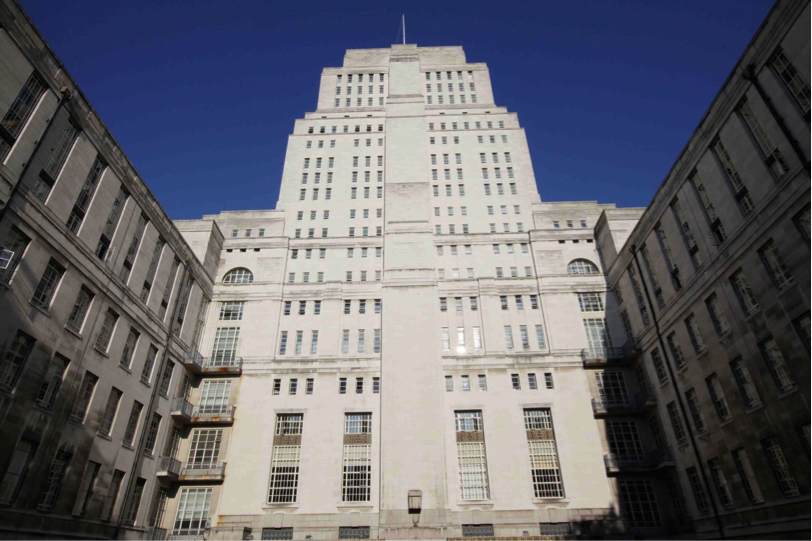
Senate House has featured in many guises from being the supposed model for the Ministry of Truth in George Orwell’s 1984 to Bertie Wooster’s New York apartment block in the TV adaptation of Jeeves and Wooster. This month it played host to the second of three academic workshops connected to the AHRC Imagining Markets network led by David Thackeray, Andrew Thompson and Richard Toye from the University of Exeter. You can read more about the project at www.imaginingmarkets.com.
We began by discussing how the idea of economic imagination can shape our understandings of political economy, and how this cultural idea has various facets (imaginings of economic utopias/ dystopias; entrepreneurship; the imagining of status and aspiration). Papers focused on how a variety of actors shaped ideas of the economic future and interconnected through networks at the level of government and the ‘official mind’; business groups; cultural organisations; advertisers; and civil society. Continue reading “Imagining Markets: Conceptions of Empire/Commonwealth, Europe and China in Britain’s economic future since the 1870s”
Digital Research Tips for Dissertations in Imperial & Global History
![Image from Journal of a Residence in the Burmhan Empire, and more particularly at the Court of Amarapoorah [Edited by H. C. M. Cox.], p. 328. Courtesy of the British Library.](https://imperialglobalexeter.com/wp-content/uploads/2015/09/image-from-journal-of-a-residence-in-the-burmhan-empire-and-more-particularly-at-the-court-of-amarapoorah-edited-by-h-c-m-cox-p-328-courtesy-of-the-british-library.jpg?w=760)
Marc-William Palen
History Department, University of Exeter
Follow on Twitter @MWPalen
It is that time of year again. The semester begins; students scramble to find digital archives for research papers; supervisors seek to steer them in the right direction. In contrast to a decade ago, online archival options are now overwhelming. To help wade through the sea of digital archives, over the past couple of years we have offered some suggestions for digital research in imperial and global history, included below. Any other new digital archives that those researching topics in imperial and global history might find useful?
Continue reading “Digital Research Tips for Dissertations in Imperial & Global History”
What was the Role of Scientific and Technical Intelligence During World War II?

Richard Toye
History Department, University of Exeter
Follow on Twitter @RichardToye
Intelligence is an aspect of World War II that has long held a fascination for historians and the public alike. Very naturally, much interest has focussed on the role of the Security Services and the role of Bletchley Park in cracking the Enigma Code – witness, for example, the success of the recent film about Alan Turing, The Imitation Game. Continue reading “What was the Role of Scientific and Technical Intelligence During World War II?”


You must be logged in to post a comment.