Mark Carney’s “rupture” of the international order is actually a transition – but to what?

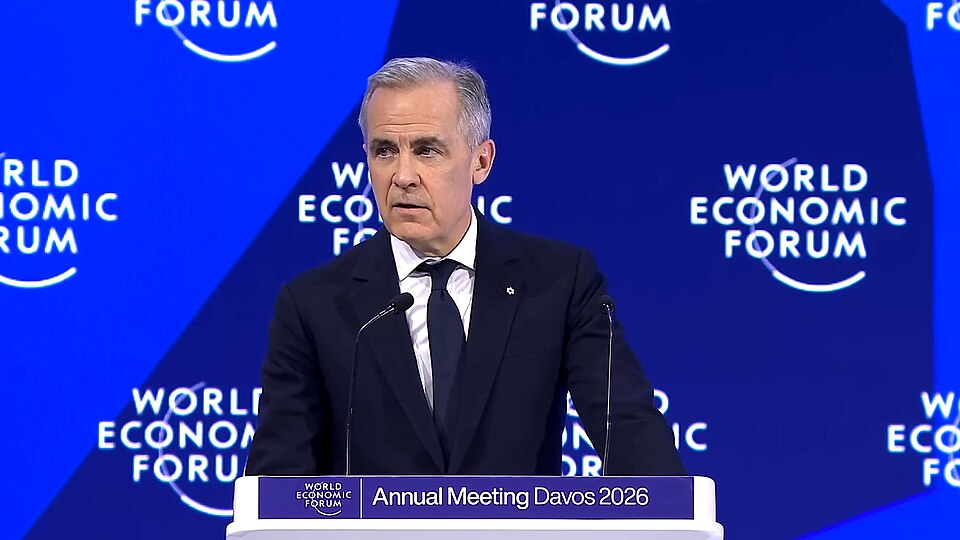
Carney delivering the address at the World Economic Forum, 20 Jan. 2026.

Dr Lori Lee Oates
Memorial University

On January 20 of this year, Canadian Prime Minister Mark Carney gave a speech at the World Economic Forum in Davos, in which he claimed that, “we are in the midst  of a rupture. Not a transition.” This speech is said to have “sent shockwaves through the international community” by New York Times journalist and podcaster Ezra Klein. Carney was arguably the first member of the western alliance to seriously acknowledge the current problems with the hegemony of the United States in present day geopolitics. However, what Carney calls a rupture is arguably just the latest stage in a larger transition that scholars have been warning about for at least the last decade.[1]

This transition, scholars would argue, is rooted in weaknesses that have long existed in the geopolitical order. Some of these problems were embedded in the systems that emerged at the end of the Second World War, and some are part of the colonial systems that built the modern world. For example, historian Jamie Martin has effectively argued in The Meddlers (2022) that the international financial systems such as the World Bank and International Monetary Fund have infringed on the sovereignty of many states that have required their services, and that this is rooted in approaches that were developed in the early twentieth century. The problems with these systems have become more obvious and exacerbated in recent decades. Furthermore, this geopolitical order has become ever more dysfunctional, and the problems are far broader than the increasingly dangerous U.S. hegemony that Carney described in Davos.

In the now-famous speech Carney argued that “we knew that the story of the rules-based international order was partially false. That the strongest would exempt themselves when convenient.” He maintained that states have been going along to ensure their safety, as integration becomes an increasing threat in the contemporary period. He called on middle powers to act in concert so that together we can build an order that is once again based on values, rather than bowing to U.S. hegemony. Certainly, Carney has pursued new transnational relationships since the Davos speech with European powers, China, and now India. However, his short time as Canadian Prime Minister has also been marked by ignoring breaks with international law on the part of the U.S. He has even actively supported them at times.

Since coming to office on March 14, 2025, Carney’s foreign policy seems quite at odds with the values-based order of middle powers he proposed. He has notably been silent about, and even at times supported, U.S. imperial actions. His government said nothing as the U.S. bombed speed boats in international waters. When the U.S.  kidnapped the president of Venezuela, Carney called this “welcome news” on January 6, 2026, at a media availability in Paris. Carney was again silent as the United States sanctioned a Canadian judge of the International Criminal Court over an investigation into Israel’s war against Gaza. Most recently, he offered Canadian support for the U.S. attack on Iran. However, his Foreign Affairs Minister Anita Anaud has since said that Canada “will not be participating in the war.”

Commentators, including some scholars, often make the mistake of focusing on Donald Trump and Carney, as the powerful national leaders who are driving geopolitics. However, as global and imperial historians we should be aware that the forces of geopolitics do not change direction overnight and events that seem like ruptures are often decades in the making. Such occurrences are moved forward by the ever-changing structures of globalization and the shifts in both local and global relationships that are often driven by technological change. There are many smaller transitions that lead up a truly global shift.

Continue reading “Mark Carney’s “rupture” of the international order is actually a transition – but to what?”
What would Winston Churchill make of war with Iran?

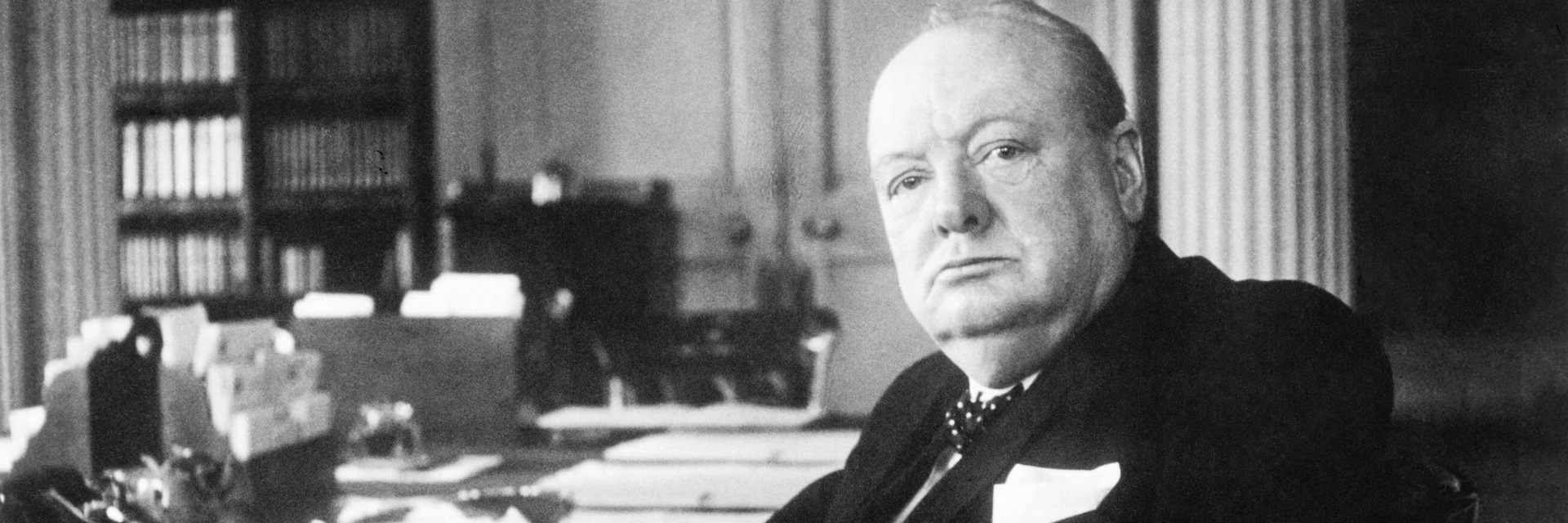
Donald Trump has said Keir Starmer is no Winston Churchill. Alamy/piemags/archive/military

Richard Toye, University of Exeter

When Donald Trump criticised Keir Starmer for failing to sufficiently support American and Israeli operations against Iran, he did so with a historical flourish. “This is not Winston Churchill that we’re dealing with,” he complained.

The implication was clear: Churchill would have stood shoulder to shoulder with Washington in a confrontation with Tehran. The remark invites an obvious question: what would Churchill have made of war with Iran?

The answer is not as straightforward as Trump’s comparison suggests. Churchill’s record shows a mixture of hawkish rhetoric, strategic caution and a constant concern with maintaining Anglo-American unity. Far from embodying a simple instinct for confrontation, he tended to see war and diplomacy as inextricably linked.

Continue reading “What would Winston Churchill make of war with Iran?”

Richard Toye on the Iraq War 20 years on

Professor Richard Toye (University of Exeter) weighs in on the 20th anniversary of the invasion of Iraq for International Affairs and TRT World.

Symposium: The Iraq war 20 years on

Oula Kadhum, Louise Fawcett, Richard Toye, Aysegül Kibaroglu, and Ramazan Caner Sayan
International Affairs

20 years on from the start of the Iraq war, the conflict continues to cast a long shadow. In this blogpost we bring together contributors to International Affairs to discuss the war’s impact on contemporary international relations. From its lasting effects on the Iraqi diaspora and Iraq’s water system to the long-term shifts it triggered in the wider politics of the Middle East and British foreign policy, the authors of this symposium outline some of the many ways in which the Iraq war still shapes international politics. [continue reading]

Continue reading “Richard Toye on the Iraq War 20 years on”

Republican Imperialism vs. Puerto Rican Democracy – A Long History

51st-state

Marc-William Palen
History Department, University of Exeter
Follow on Twitter @MWPalen

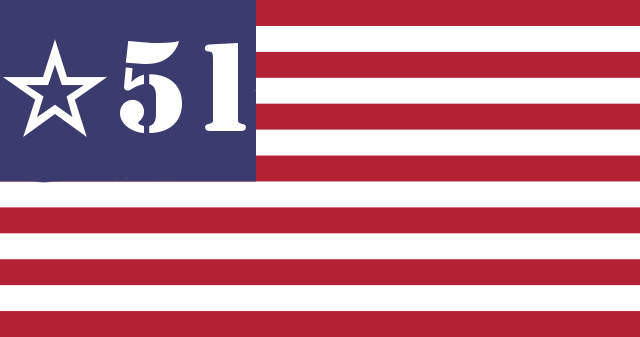
Puerto Rico has a new governor, Ricardo Rosselló – and he’s committed to making Puerto Rico the 51st US state.

Stemming from Rosselló’s election on a pro-statehood platform, the Puerto Rican Senate has now approved a bill that calls for holding a referendum on June 11, where citizens will be given a stark choice to either (1) become the 51st US state or (2) declare independence.

Governor Rosselló quickly gave the referendum bill his support in anti-colonial language:  “Colonialism is not an option for Puerto Rico. It’s a civil rights issue … The time will come in which the United States has to respond to the demands of 3.5 million citizens seeking an absolute democracy.”

Puerto Rico held a similar vote in 2012, when a slim majority voted in favor of statehood. But nothing happened. Why not? Because a Republican-controlled Congress stood in the way of Puerto Rican democracy: 21st-century American imperialism on display. Continue reading “Republican Imperialism vs. Puerto Rican Democracy – A Long History”

‘Filipino Muslims under US Colonial Rule’ – An @ExeterCIGH Talk by Dr. Karine Walther

Filipino Muslims under US Colonial Rule

A Centre Talk by

Dr. Karine V. Walther
Georgetown University School of Foreign Service in Qatar 

Abstract: When the United States annexed the Philippine Islands in 1898 after their victory over Spain during the Spanish-American War, they made over 300,000 Filipino Muslims— as well as over 6 million Catholics and 200,000 animists— American colonial subjects. Although Filipino Muslims, or Moros as they were called by the Spanish, and later, the Americans, constituted only a small percentage of the population, they controlled a third of the territory annexed by the United States in 1898. During their colonial governance of the Islands, the intellectual and spiritual roots driving American imperial rule over Filipino Muslims were entrenched in—and relied upon— orientalist tropes that cast Muslims as uncivilized or barbaric and, importantly, incapable of self-government. What was unique about this moment, however, was that contrary to previous American interactions with Muslims around the world, this marked the first time the United States would rule over Muslim subjects as part of its own empire. This talk will analyze how American colonial officials applied their perceptions of Islam to the governance of what they described as their new “Mohammedan wards” in the Philippines.

When: Friday, 11 December at 3.30

Where: Forum Seminar Room 5, University of Exeter, Streatham Campus

Sacred WaltherThis talk is taken from her wider book study, Sacred Interests: The United States and the Islamic World, 1821-1921 (University of North Carolina Press, 2015).
US-Cuba Embargo Goes Beyond the Cold War

embargo cuba

Marc-William Palen
History Department, University of Exeter
Follow on Twitter @MWPalen

Cross-posted from History Today Magazine

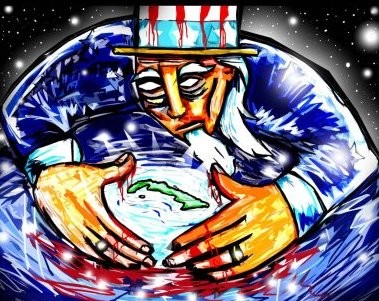
President Obama’s decision to reopen the US embassy in Havana and to begin easing commercial and travel restrictions continues to be regarded by supporters as the highpoint of Obama’s foreign policy agenda to date. But the move has its fair share of detractors, too. To understand the predominantly Republican opposition to trade liberalization with Cuba, we must look beyond the Cold War. We must look further back into America’s imperial past.

More Than a Cold War Hangover

The Democratic leadership has explained Obama’s sizeable shift in US policy toward Cuba. ‘We will end an outdated approach that for decades has failed to advance our interests’, Obama stated. ‘Neither the American nor the Cuban people are well-served by a rigid policy that is rooted in events that took place before most of us were born.’ Nancy Pelosi similarly noted that ‘we must acknowledge our policy towards Cuba is a relic of a bygone era that weakens our leadership in the Americas and has not advanced freedom and prosperity in Cuba.’

Obama and Pelosi should look much farther back than the 1961 Cuban Embargo. The unequal US-Cuban power relationship stretches back to the turn of the 20th century.

Americans may have largely forgotten the first 60 years of US interventions in Cuban affairs – from the late 19th century to the mid-20th – but Cuban memories are longer. When Fidel Castro took power in 1959, his justification for doing so was not in stark cold-war anti-capitalistic terms. Rather, he harkened back to an earlier era of US-Cuban relations and to Cuba’s right to international freedom of trade. In a January 1959 speech, he warned that American diminution of Cuban sovereignty, stretching back to the late 19th century, would no longer be tolerated, and in front of the United Nations in 1960, Castro denounced American economic nationalist policies toward Cuba, declaring that it was an inalienable right that Cuba be allowed to freely ‘sell what it produces’ and to see its exports increase: ‘Only egotistical interests can oppose the universal interest in trade and commercial exchange.’ So when the Eisenhower administration showed itself indisposed toward normalizing US-Cuban relations, Castro turned instead to the other major geopolitical player, the Soviet Union, ‘to sell our products’.

In January 1961, stemming in part from the Cuban-Soviet trade agreement, the United States put in place the now infamous trade embargo against Cuba and severed diplomatic relations. The embargo has since stunted Cuban political and economic growth, and has accordingly served as an easy scapegoat for Fidel and his brother Raúl by allowing them to blame the United States for any and all economic woes befalling Cuba.

Even a cursory look at US trade policies toward other communist states shows how the US embargo against Cuba was – and remains – far more than a Cold War hangover. Continue reading “US-Cuba Embargo Goes Beyond the Cold War”