
This is the fifth and final blog post created by students of the 2026 ‘Linguistic Landscapes‘ Summer School at Venice International University, in conjunction with the University of Exeter and KU Leuven.
A. Maya
Our field research took place in the Santa Maria Maggiore neighborhood, located in the sestiere of Santa Croce. The data presented here were collected during our fieldwork on the historical island of Venice between 29 June and 3 July 2026. When analyzing the map of our assigned area, we noticed that it is situated between two important and highly frequented locations in Venice: Piazzale Roma, the city’s main bus terminal, and San Basilio, where several university buildings are located (Fig. 1). This observation led us to reflect on the function of the area for both visitors and residents and to ask whether the neighborhood primarily serves as a transit space connecting these two busy points of the city.
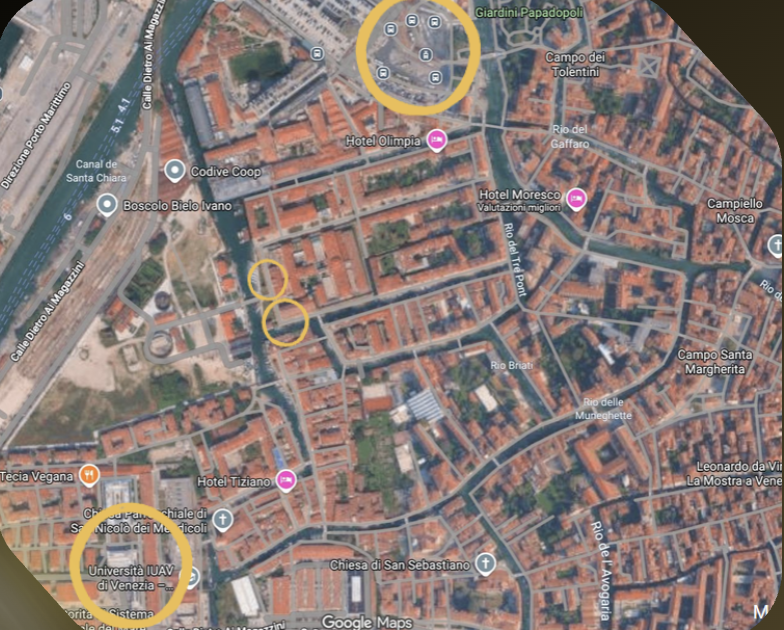
Figure 1. Map of the area Santa Maria Maggiore (retrieved from Google Maps on July 2, 2026)
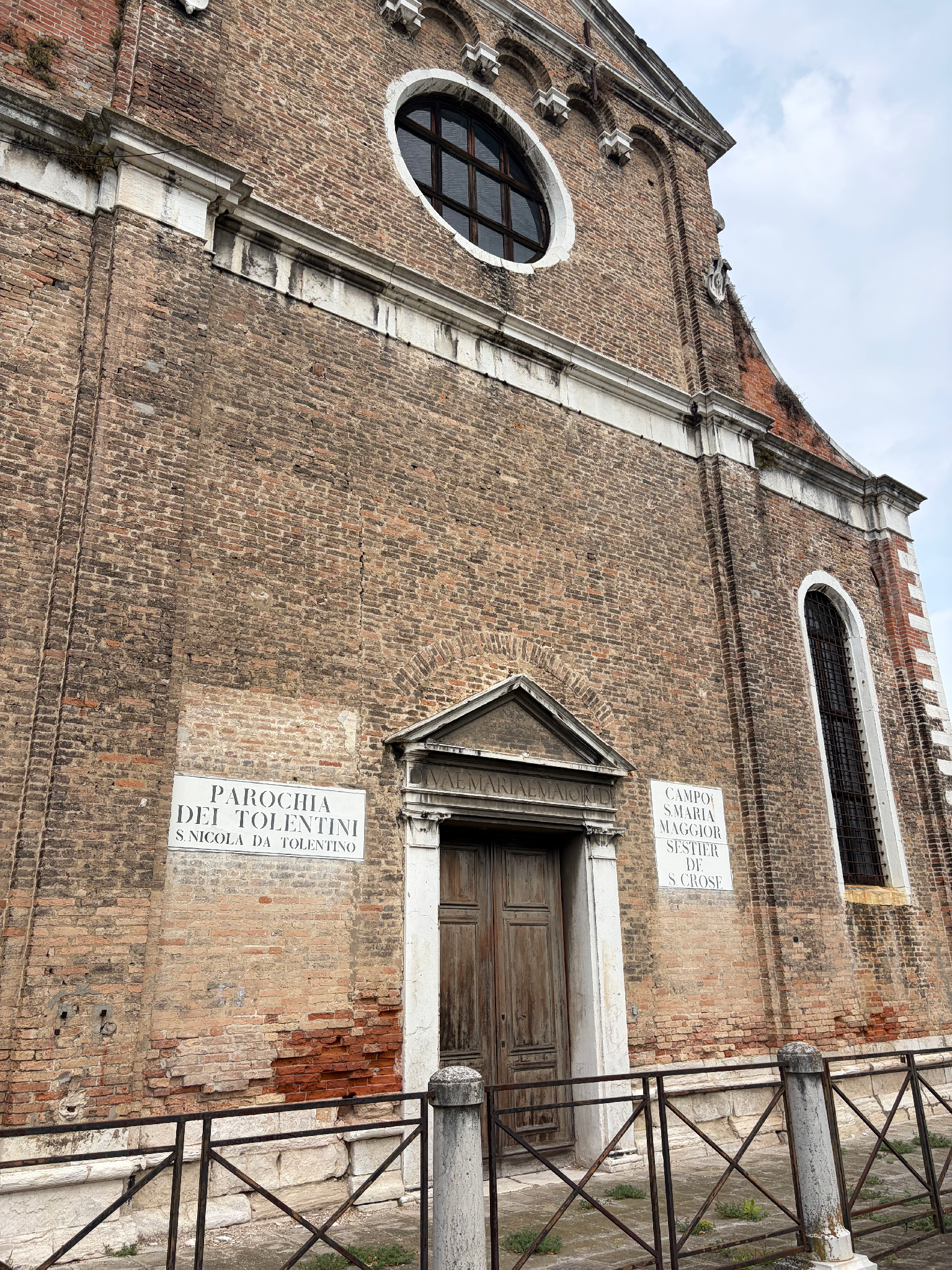
Figure 2. Ex-church of Santa Maria
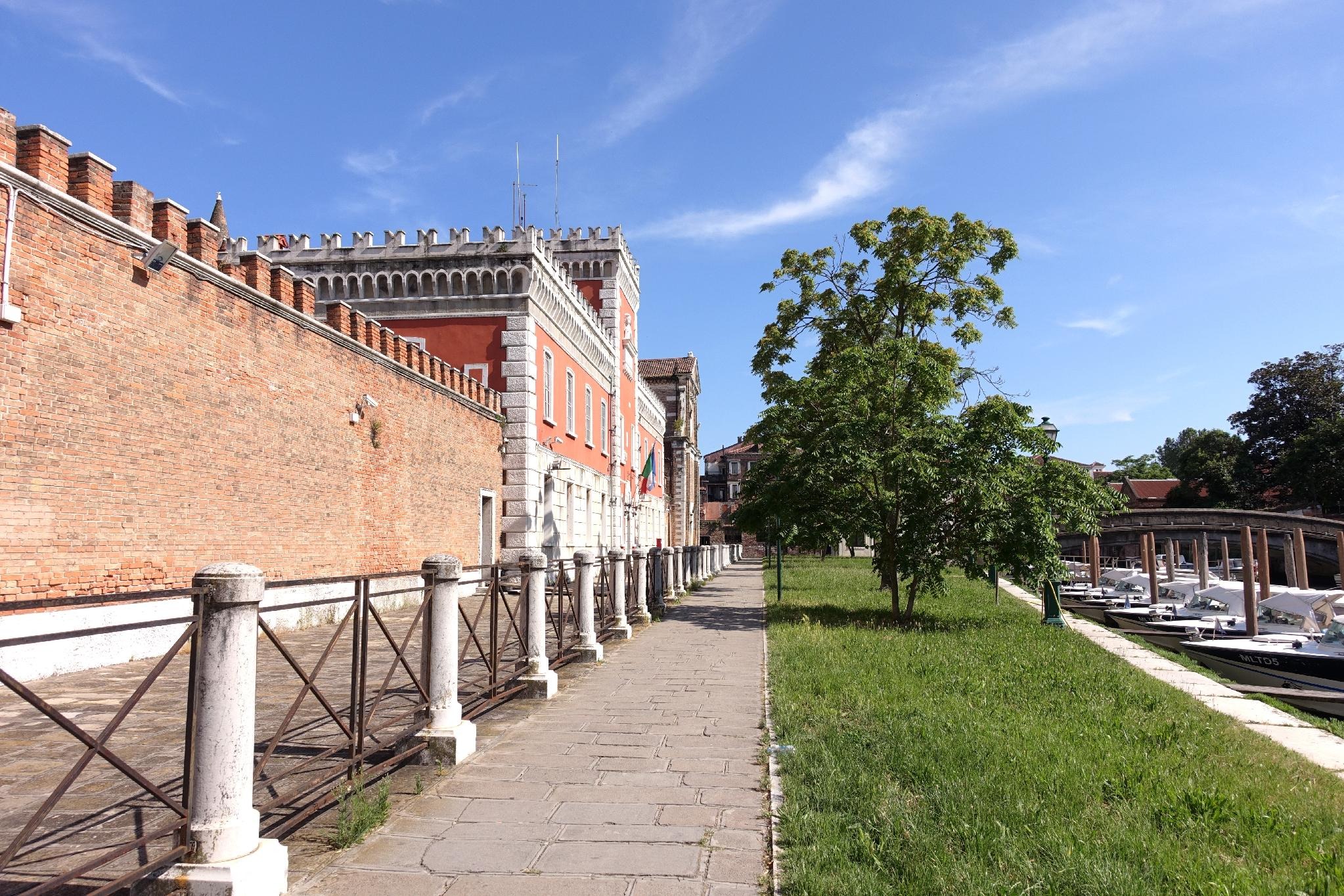
Figure 3. Entrance of the Prison
To better understand the function of the assigned zone, we analyzed the urban elements that characterize the neighborhood. Our research is based on Kevin Lynch’s concepts of landmarks and edges, adapted to the particular urban morphology of Venice. We concluded that the canals, functioning as circulation routes, also act as edges that define the limits of the pedestrian area. Whereas the principal landmarks of the zone are the former Church of Santa Maria Maggiore (Fig. 2) and the Casa Circondariale (Fig. 3). As Lynch argues, a landmark does not have to be monumental, rather, its recognizability and spatial significance determine its role within the urban image. In this case, the prison functions as a powerful visual and symbolic landmark that strongly shapes the perception of the neighbourhood.
The Dichotomy of the Zone
As previously mentioned, the location of the neighborhood between two highly frequented areas makes it primarily a passageway for those moving across the island. Students from IUAV University and Ca’ Foscari University, for example, typically arrive at Santa Lucia railway station or Piazzale Roma before walking through Santa Maria Maggiore to reach the university campuses in San Basilio and Santa Marta. This movement creates a striking contrast between two different spatial atmospheres within the neighborhood. On one hand, the Fondamenta Pagan is lively and crowded, serving as one of the main pedestrian routes to the bus station. On the other hand, the narrow calli surrounding the prison are quiet, isolated, and almost detached from the constant flow of people. This coexistence of movement and stillness gives the area its distinctive character.
The contrast is also reflected in the linguistic landscape. The signs found along Fondamenta Pagan and Fondamenta dei Treponti are predominantly commercial, consisting of advertisements designed to attract tourists into restaurants and shops through colorful graphics and bright or neon colors (Fig. 4). By contrast, signs located closer to the prison are predominantly top-down signs that communicate authority, for example prohibiting pedestrians from approaching the prison walls or regulating movement around the building (Fig. 5).
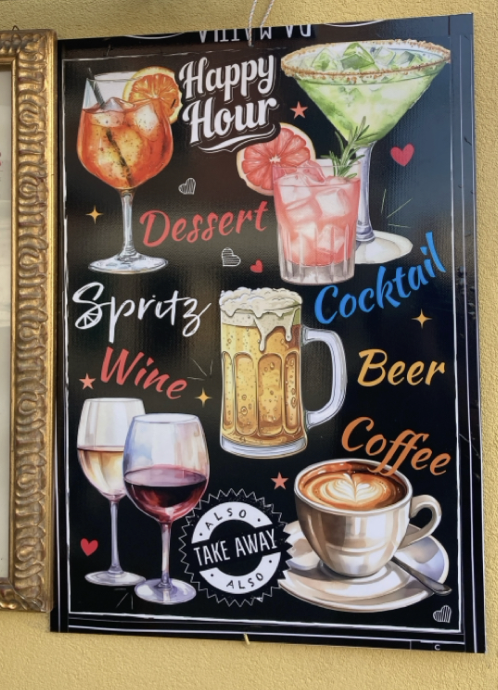
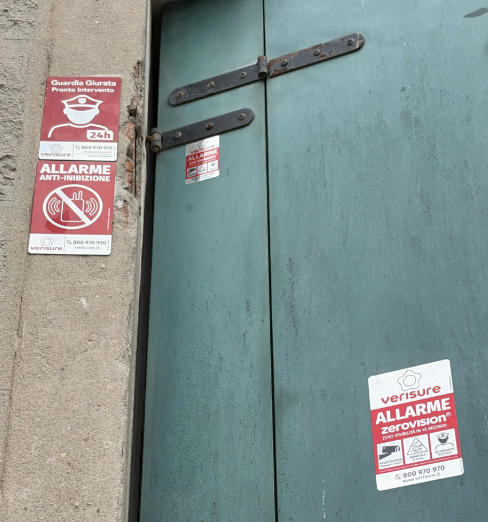
Figure 5. Security signs found on windows in areas close to the prison (July 1, 2026)
close to the prison (July 1, 2026)
Interactions
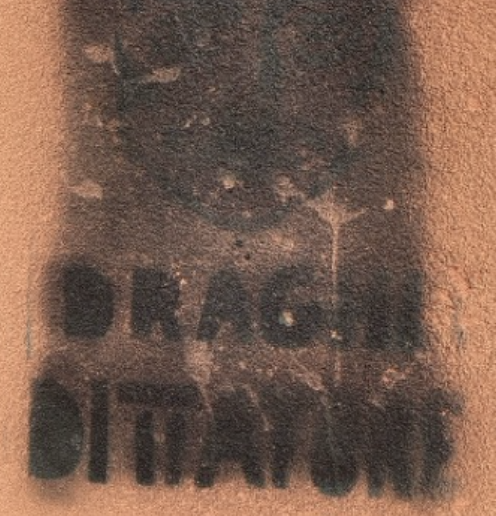
During our fieldwork in Santa Maria Maggiore, we documented numerous examples of political graffiti, particularly in areas closer to the university campuses. What especially attracted our attention was the interactive character of these linguistic landscape elements. One example was graffiti reading “Draghi dittatore”, accompanied by a portrait of the former Italian Prime Minister Mario Draghi. However, both the text and the image had been sprayed over demonstrating how public messages are continually modified and contested. (Fig. 6)
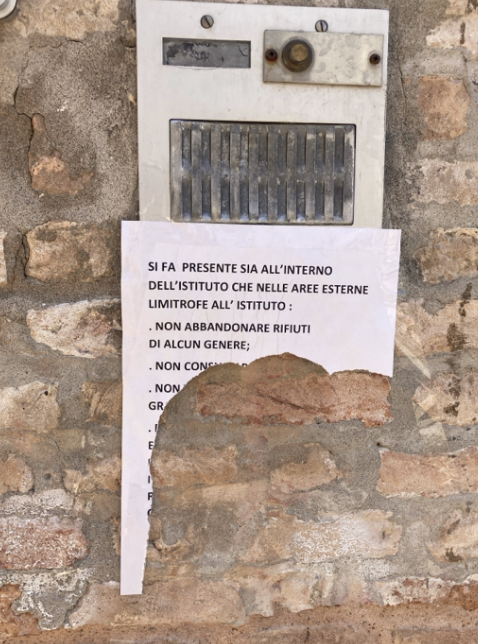
Figure 7. A list of rules hanged at the entrance of an institution
Another example consisted of a bottom-up sign: a printed notice attached to the entrance of a residential building listing rules for residents and visitors, such as not leaving rubbish outside the building. As our photograph shows, the notice had been partially torn away, making the remainder of the text unreadable. (Fig. 7)
These observations led us to consider the relationship between language and the environment as fundamentally intertwined. As Elana Shohamy and Durk Gorter argue, language displayed in public spaces is not only produced by people but is also continuously interpreted, negotiated, and transformed by those who encounter it. Public signage therefore becomes part of an ongoing social interaction rather than a fixed form of communication. The torn notice further illustrates the narrative potential of linguistic landscapes. It suggests continuing interactions between those who produced the sign, those who ignored it, and those who deliberately removed or altered it. The missing section becomes part of the narrative, encouraging viewers to imagine what has disappeared and why. In this sense, linguistic landscapes function as a form of communication between anonymous voices, creating opportunities for public dialogue within shared urban space.
Multilingualism
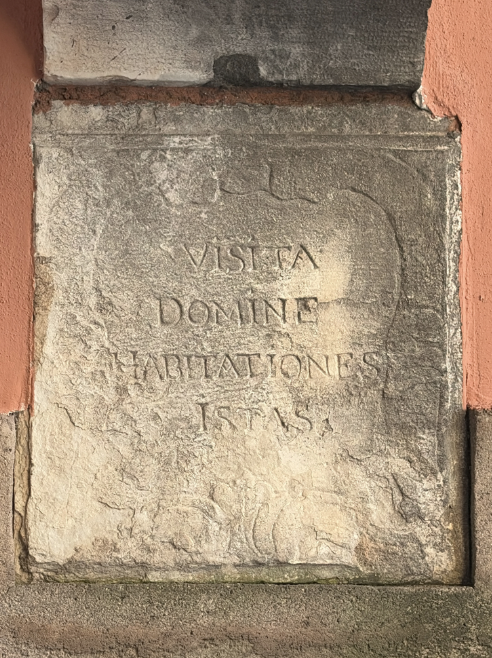
Figure 8. A latin inscription found on a pillar on the street. (July 1, 2026)
Venice is profoundly shaped by mass tourism, making the city an open-air exhibition of multiple languages. Consequently, the choice of which language to use, or not to use, in public space becomes an important object of analysis. The multilingual linguistic landscapes documented during our fieldwork illustrate the different ways in which languages coexist and fulfill distinct social functions.
The first example is a Latin inscription (Fig 8) located in a relatively hidden calle, reading: “Visita, Domine, habitationes istas” (“Visit, O Lord, these dwellings.”) Unlike signs intended for everyday communication, this inscription serves a symbolic and historical function. It preserves the religious and cultural heritage of the place while reflecting the historical importance of Latin. Since Latin is no longer a language of everyday communication, its presence represents tradition, authority, and continuity with the past rather than practical information for contemporary passers-by. The inscription therefore contributes to what can be understood as a heterotopic temporal space, where Venice brings together different historical periods, values, and social functions within the same physical environment.
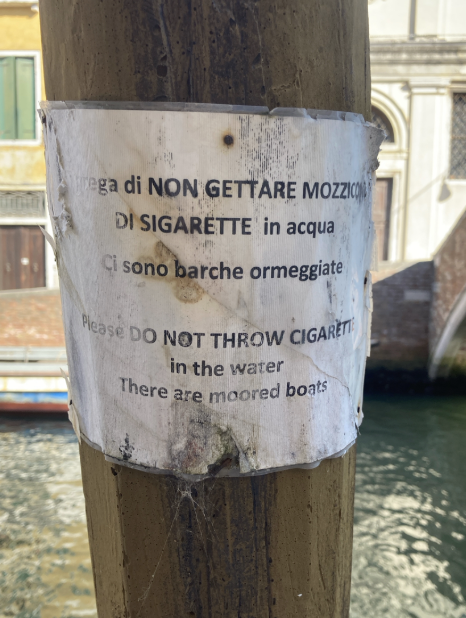
A second example is a bottom-up sign written in both Italian and English asking people not to throw cigarette butts into the canal (Fig. 9). The sign appears to have been produced by local residents rather than by an official authority. The bilingual choice is significant: Italian addresses local residents, while English extends the message to tourists and international visitors. Bottom-up signs in Venice frequently employ English as a strategy for communicating with the city’s large tourist population. In doing so, they contribute to the deterritorialization of the local linguistic landscape, where Italian is no longer the sole or dominant language of public communication.
The final two examples are political graffiti. One, written in Spanish, states “Mis amigos me cuidan, no la policía” (“My friends take care of me, not the police”) (Fig. 11), while another, written in Arabic, reads “Free Palestine.” (Fig. 10) The use of these languages suggests that the messages are directed towards specific linguistic or migrant communities while simultaneously expressing identity and belonging within Venice’s multicultural public space. An interesting pattern emerges from these examples regarding the relationship between language choice and the scale of political expression. Global political slogans such as “Free Palestine” or ACAB frequently appear in minority or international languages, whereas issues related to local politics are more often expressed in Italian. An example is the graffiti “Lippiello dimettiti”, calling for the resignation of the rector of Ca’ Foscari University (Fig. 12). These linguistic choices demonstrate how speakers strategically use language to position themselves socially and politically within Venice’s multilingual urban environment.
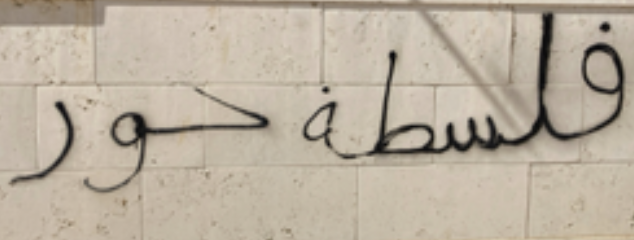
Figure 10. Political graffiti written in arabic that says “Free Palestine” (July 1, 2026)
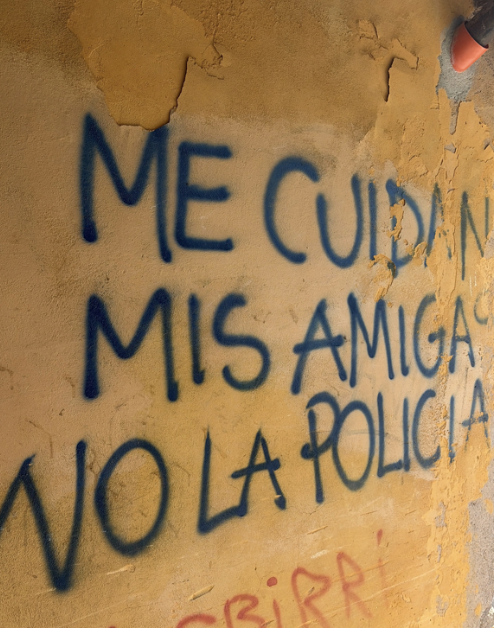
Figure 11. Political graffiti written in spanish close to the university zone (July 1, 2026)
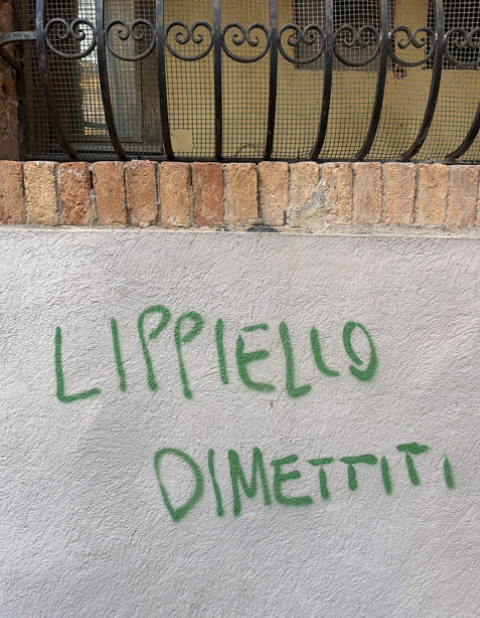
Figure 12. Graffiti on a wall near the university area directed at Tiziana Lippiello, Rector of Ca’ Foscari University of Venice. (July 1, 2026)
References
Lynch, K. (1960). The image of the city. MIT Press.
Scollon, R., & Scollon, S. W. (2003). Discourse in Place Language in the Material World. London Routledge.
Shohamy, E. & Ben-Rafael, E. & Barni, Monica. (2010). Linguistic landscape in the city.
Tufi, Stefania. (2017). Liminality, heterotopic sites, and the linguistic landscape: The case of Venice. Linguistic Landscape.


You must be logged in to post a comment.