

Mitchel Stuffers
Assistant Editor at CIGH Exeter & PhD Candidate in History, University of Exeter
Blog of the Centre for Imperial and Global History at the University of Exeter
Mitchel Stuffers
Assistant Editor at CIGH Exeter & PhD Candidate in History, University of Exeter
Deadline 5 May 2026
Dr Ljubica Spaskovska University of Exeter – Faculty of Humanities, Arts and Social Sciences
Milan Grba, the British Library
The University of Exeter and the British Library are pleased to announce the availability of a fully funded Collaborative Doctoral Studentship from 1 October 2026 under the AHRC Collaborative Doctoral Partnership Scheme.
The project Cold War Socialism, Non-Alignment and Anti-Colonialism in the Yugoslav Press, 1961-1979 proposes an innovative investigation into Yugoslavia’s multifaceted role during the Cold War, specifically its involvement with the Non-Aligned Movement and anti-colonial efforts.
This project will be jointly supervised Dr Ljubica Spaskovska and Professor James Mark at the University of Exeter and by Milan Grba and Savka Andic at the British Library. The student will spend time with both the University of Exeter and the British Library and will become part of the wider cohort of AHRC CDP funded PhD students across the UK.
The University of Exeter and the British Library are keen to encourage applications from a diverse range of people, from different backgrounds and career stages, and particularly welcome applications from Global Majority students and those currently underrepresented in doctoral student cohorts.
The Research Project
The project centres on Yugoslavia’s global role in the Cold War, emphasizing its advocacy of non-alignment, anti-colonialism, and support for newly independent nations and liberation movements. The project will draw upon the recently digitised and largely unexamined Joint Translation Service (JTS) bulletins, a sole archive housed at the British Library. The project’s core purpose is to apply advanced digital methods and interdisciplinary research to the Joint Translation Service Archive, uncovering fresh insights into Cold War socialism and anti-colonialism from a Yugoslav perspective, and aiming to understand how Yugoslavia, a founding Non-Aligned Movement member, forged a ‘third way’. The student will be engaged in creating a fully digitally searchable Joint Translation Service resource, deriving new datasets, and helping to establish a global network of Non-Aligned Movement-related archives with a view to creating a digital repository. The successful applicant would be able to build upon this and develop their own specific approach and themes. In addition to the focus on the JTS archive, applicants could potentially bring this material into dialogue with other archives and primary materials.
Continue reading “Funded PhD Studentship: ‘Cold War Socialism, Non-Alignment and Anti-Colonialism in the Yugoslav Press, 1961 – 1979’”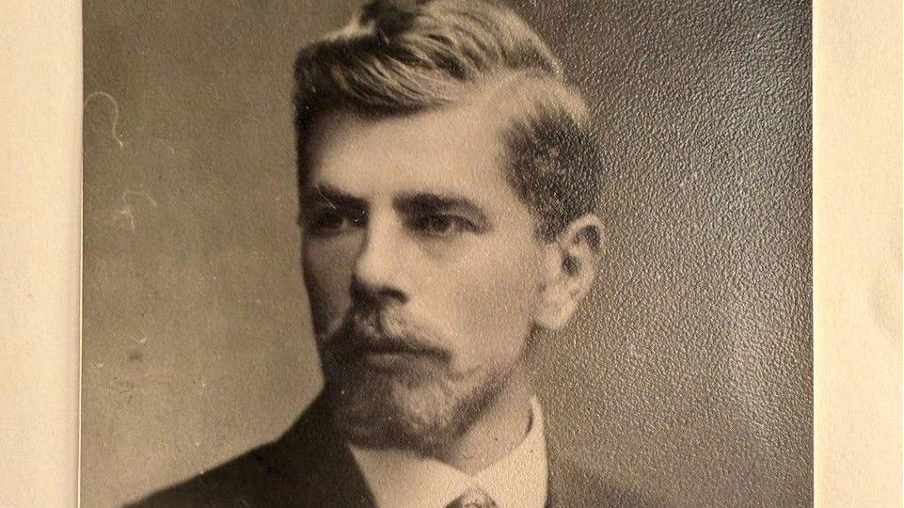
Mitchel Stuffers
Assistant Editor at CIGH Exeter & PhD Candidate in History, University of Exeter
Mitchel Stuffers
Assistant Editor at CIGH Exeter & PhD Candidate in History, University of Exeter

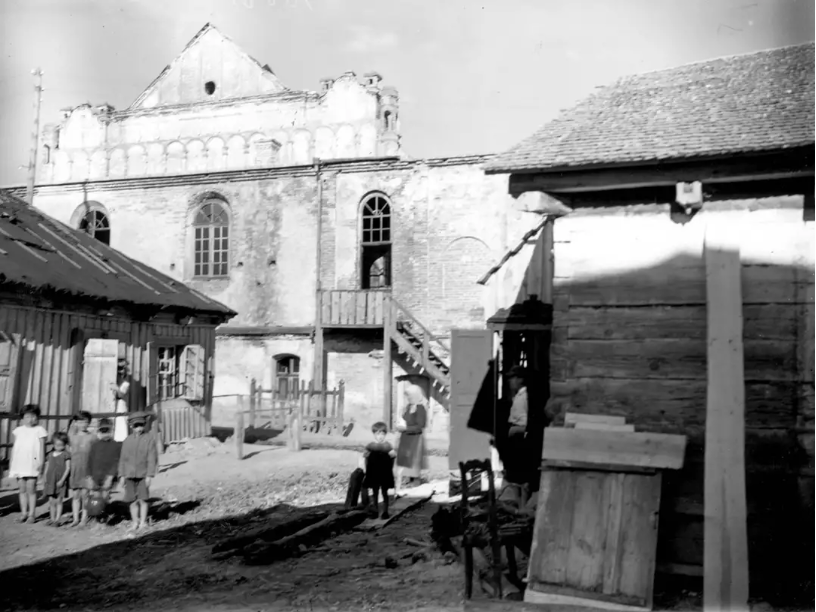
Webinar: Publishing in academic journals
Practical advice and discussion for historians of political history
Thursday 7 May 2026 – 11:00-12:00 CEST
The International Association for Political History (APH) invites you to join our online webinar on publishing in academic journals taking place on Thursday May 7, 11:00-12:00 CEST.
How do you navigate the current journal landscape as a political historian? What are editors looking for, and how can you position your article for a successful submission? How do peer review, revisions, and editorial decisions really work in practice?
These questions will be addressed by experienced scholars and journal editors, along with practical do’s and don’ts of journal publishing. They look forward to sharing their insights and answering your questions in an open discussion.
Participation is free of charge, but registration is mandatory. Please complete this form to receive the link.
Programme webinar
Presentations:
Mitchel Stuffers
Assistant Editor at CIGH Exeter & PhD Candidate in History, University of Exeter
Shagnick Bhattacharya
University of Exeter
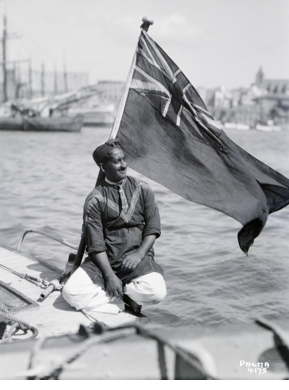
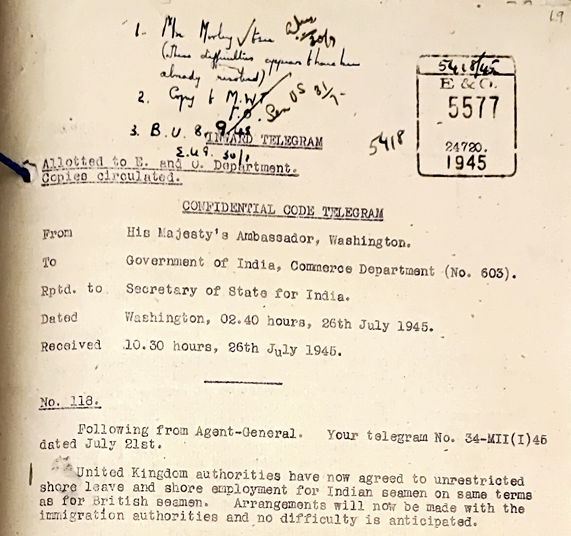
In July 1945, as the Second World War was almost at its end, a British intelligence asset stationed in the United States—codenamed ‘Agent General Washington’[1]—sent a report back home about Indian seafarers in Los Angeles. Among other things, the British Secretary of State for India was informed about how amidst (strikingly like today’s) American immigration department’s raids on local farms searching for illegal immigrants, Paramount Pictures had ‘donated’ US$3,000 to the British Ambassador in Washington in return for using Indian seamen as blacklegs for their upcoming film Calcutta.[2] Indian sailors were essentially being used as strike-breakers against a considerable strike by Hollywood workers, and in this situation had found themselves to have the ‘blessing of American authorities’ in them being unprecedentedly granted unrestricted shore leave in America.[3]
Thus, while the Hollywood Strike Strategy Committee in Los Angeles ‘protested strongly’ against the measure, by the end of that month UK authorities had reached an agreement with their US counterparts regarding indefinite shore leave and employment rights for Indian seamen in America ‘on same terms as for British seamen.’[4] This episode, remarkable as it was, was not an isolated incident of a group of labourers being used as a politically and diplomatically influential bargaining chip by sovereign states, as Natarajan’s latest monograph, Coolie Migrants, Indian Diplomacy, has demonstrated in the case of post-independence Indian diplomacy and indentured labourers in the Caribbean.[5]
These incidents reveal an interesting pattern within the established global socio-legal order of the time. Yet, this incident of the British state using Indian seamen as a foreign policy tool does seriously bring into question the rhetoric of becoming ‘an island of strangers’—making us realise how Britain’s past multicultural entanglements intricately correspond to its current geopolitical strengths. What Sanghera describes as ‘imperial amnesia’ can therefore be a significant hindrance when it comes to making informed policy decisions at both the domestic and diplomatic fronts.[6]
Just before the war broke out in Europe, in February 1939, proposals were being discussed in the US House of Representatives to restrict the employment of Indian seamen on North Atlantic shipping routes going through American ports.[7] In Democratic Congressman William Sirovich’s words when he tabled an investigation in the House into the working conditions of Indian seamen, they were ‘peculiarly liable to become physically unfit’ in colder climatic conditions, having a ‘lack of stamina to withstand disease,’ and were given only seventy-two cubic feet of crew space per person.[8] Oddly, all of these considerations appear to just have vanished into thin air in 1945—and, as established before, not in the least because American authorities had suddenly become immigrant-friendly. Things were, in fact, arguably no different over the several decades prior. One just has to look at, for example, the Komagata Maru incident of 1914, in which almost all the Indian passengers aboard a Japanese steamship were denied entry into Canada—despite being British subjects—to see how typical legalised hypocrisies functioned through enforced social hierarchies in a world where the mobility of colonial subjects was otherwise severely limited by the imperial state.[9]
And yet, the reason all this matters for contemporary policymaking is what such larger anomalies from the past reveal about how structural spaces of exploitation, and/or strategic instrumentalisation, themselves allow effective spaces for subaltern agency to function. Rather than visualising exploitation and subversion from contesting against, and undermining each other, what if we reconceptualised both as mutually coexisting and inhabiting the same structural spaces? This also then raises an important question for scholars of postcolonial theory: have we been listening at the right places to be able to hear the subaltern speak?
Continue reading “Agency Within Exploitative Systems: Historical Insights Into Power and Policymaking”
Mitchel Stuffers
Assistant Editor at CIGH Exeter & PhD Candidate in History, University of Exeter
Mitchel Stuffers
Assistant Editor at CIGH Exeter & PhD Candidate in History, University of Exeter
Dr Lori Lee Oates
Memorial University
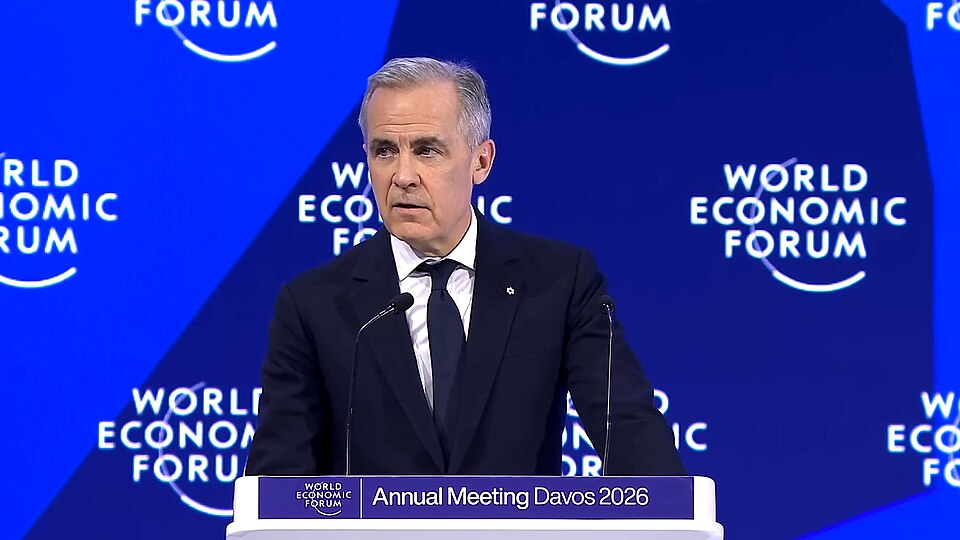
On January 20 of this year, Canadian Prime Minister Mark Carney gave a speech at the World Economic Forum in Davos, in which he claimed that, “we are in the midst of a rupture. Not a transition.” This speech is said to have “sent shockwaves through the international community” by New York Times journalist and podcaster Ezra Klein. Carney was arguably the first member of the western alliance to seriously acknowledge the current problems with the hegemony of the United States in present day geopolitics. However, what Carney calls a rupture is arguably just the latest stage in a larger transition that scholars have been warning about for at least the last decade.[1]
This transition, scholars would argue, is rooted in weaknesses that have long existed in the geopolitical order. Some of these problems were embedded in the systems that emerged at the end of the Second World War, and some are part of the colonial systems that built the modern world. For example, historian Jamie Martin has effectively argued in The Meddlers (2022) that the international financial systems such as the World Bank and International Monetary Fund have infringed on the sovereignty of many states that have required their services, and that this is rooted in approaches that were developed in the early twentieth century. The problems with these systems have become more obvious and exacerbated in recent decades. Furthermore, this geopolitical order has become ever more dysfunctional, and the problems are far broader than the increasingly dangerous U.S. hegemony that Carney described in Davos.
In the now-famous speech Carney argued that “we knew that the story of the rules-based international order was partially false. That the strongest would exempt themselves when convenient.” He maintained that states have been going along to ensure their safety, as integration becomes an increasing threat in the contemporary period. He called on middle powers to act in concert so that together we can build an order that is once again based on values, rather than bowing to U.S. hegemony. Certainly, Carney has pursued new transnational relationships since the Davos speech with European powers, China, and now India. However, his short time as Canadian Prime Minister has also been marked by ignoring breaks with international law on the part of the U.S. He has even actively supported them at times.
Since coming to office on March 14, 2025, Carney’s foreign policy seems quite at odds with the values-based order of middle powers he proposed. He has notably been silent about, and even at times supported, U.S. imperial actions. His government said nothing as the U.S. bombed speed boats in international waters. When the U.S. kidnapped the president of Venezuela, Carney called this “welcome news” on January 6, 2026, at a media availability in Paris. Carney was again silent as the United States sanctioned a Canadian judge of the International Criminal Court over an investigation into Israel’s war against Gaza. Most recently, he offered Canadian support for the U.S. attack on Iran. However, his Foreign Affairs Minister Anita Anaud has since said that Canada “will not be participating in the war.”
Commentators, including some scholars, often make the mistake of focusing on Donald Trump and Carney, as the powerful national leaders who are driving geopolitics. However, as global and imperial historians we should be aware that the forces of geopolitics do not change direction overnight and events that seem like ruptures are often decades in the making. Such occurrences are moved forward by the ever-changing structures of globalization and the shifts in both local and global relationships that are often driven by technological change. There are many smaller transitions that lead up a truly global shift.
Continue reading “Mark Carney’s “rupture” of the international order is actually a transition – but to what?”
Mitchel Stuffers
Assistant Editor at CIGH Exeter & PhD Candidate in History, University of Exeter
Mitchel Stuffers
Assistant Editor at CIGH Exeter & PhD Candidate in History, University of Exeter
Mitchel Stuffers
Assistant Editor at CIGH Exeter & PhD Candidate in History, University of Exeter
Richard Toye, University of Exeter
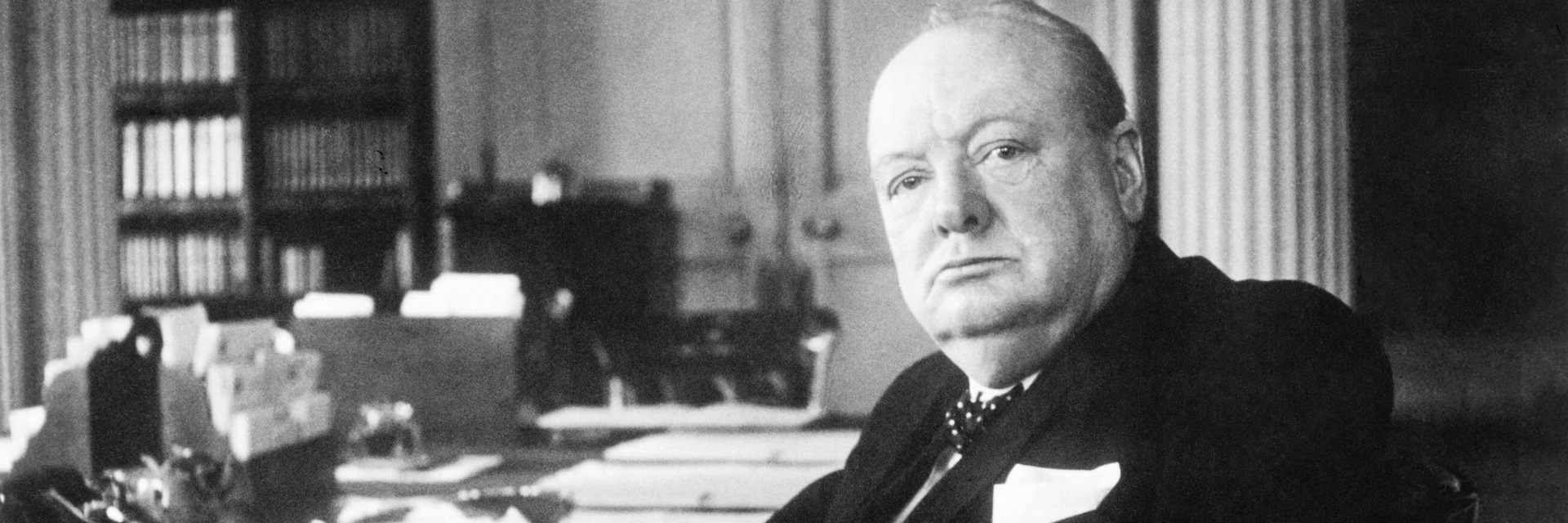
When Donald Trump criticised Keir Starmer for failing to sufficiently support American and Israeli operations against Iran, he did so with a historical flourish. “This is not Winston Churchill that we’re dealing with,” he complained.
The implication was clear: Churchill would have stood shoulder to shoulder with Washington in a confrontation with Tehran. The remark invites an obvious question: what would Churchill have made of war with Iran?
The answer is not as straightforward as Trump’s comparison suggests. Churchill’s record shows a mixture of hawkish rhetoric, strategic caution and a constant concern with maintaining Anglo-American unity. Far from embodying a simple instinct for confrontation, he tended to see war and diplomacy as inextricably linked.
Continue reading “What would Winston Churchill make of war with Iran?”
Mitchel Stuffers
Assistant Editor at CIGH Exeter & PhD Candidate in History, University of Exeter
 Imperial & Global Forum
You must be logged in to post a comment.