Yellow Peril: The Rise of an Imperial Scare

Tom Harper
University of Surrey

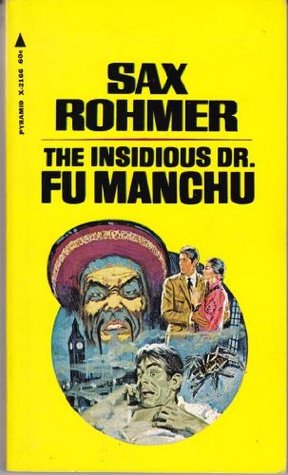
The Yellow Peril – symbolised by British author Sax Rohmer’s Chinese mastermind Fu Manchu, the self-described ‘Yellow Peril incarnate in one man’ (1913) –  is possibly the most influential paradigm informing the image of China and East Asia in Western popular consciousness [1]. This image depicts China as an implacable oriental opponent of the Western world, a uniform mass with little or no individuality and prone to extreme cruelty. While the perception of the China threat, such as fears over a full blown Sino-American trade war or fears over Chinese ‘student spies’, might appear to be a more recent development, it actually follows a path long trod in the European imperial imaginarium and perpetuated through American strategies in Asia during the 20th century [2]. These same policies have played an important role in influencing and proliferating the Yellow Peril paradigm. Continue reading “Yellow Peril: The Rise of an Imperial Scare”
This Week’s Top Picks in Imperial & Global History

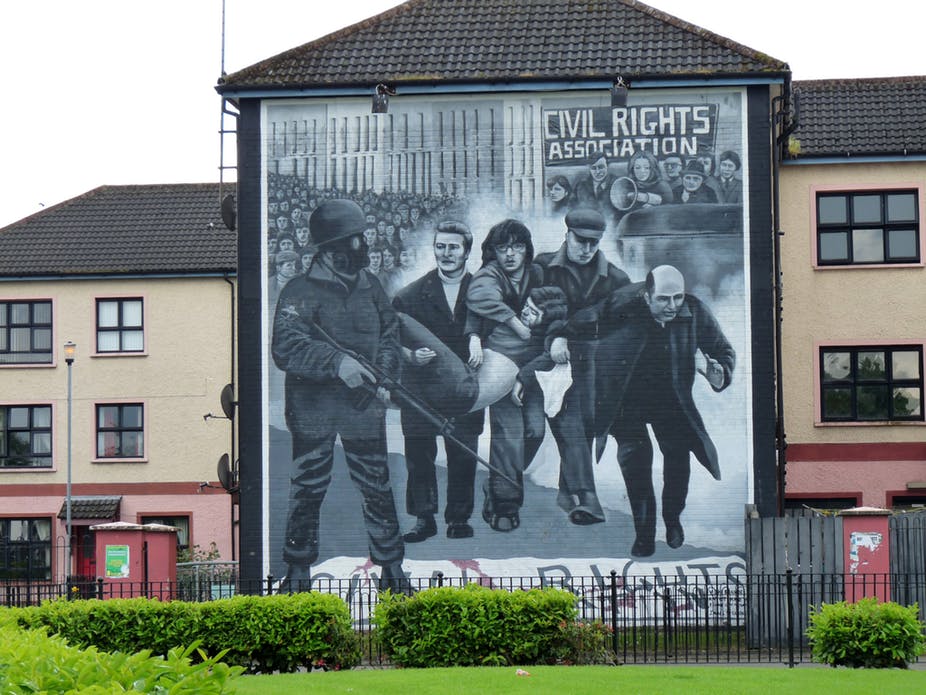
A mural in Bogside in Derry/Londonderry near the site of the events of Bloody Sunday. murielle29/flickr, CC BY-SA

Marc-William Palen
History Department, University of Exeter
Follow on Twitter @MWPalen

From England’s unreadiness for self-government to the continuing divisiveness of Bloody Sunday, here are this week’s top picks in imperial and global history.

Continue reading “This Week’s Top Picks in Imperial & Global History”

Keynote Lecture by Paul Kennedy – The Second World War at Sea, from Top to Bottom: A Braudelian Look at the Allied Victory

Centre for Maritime Historical Studies Keynote Lecture

Professor Paul Kennedy, CBE (Yale University)

‘The Second World War at Sea, from Top to Bottom: A Braudelian Look at the Allied Victory’

When: Wednesday 20 March, 2019, 1700-1830

Where: Amory C417 (University of Exeter, Streatham Campus)

All Welcome

Paul Kennedy is one of Britain’s leading historians. Perhaps best known for his seminal publication The Rise and Fall of the Great Powers, his earlier work focused on the history of the Royal Navy and the wider contexts in which it operated. Paul’s book The Rise and Fall of British Naval Mastery, published in 1976, examined the diverse elements that contributed to a nation’s exercise of naval power, including geopolitics, economics and logistics. This was a landmark publication, and one of the first academic works dealing with naval history to intervene in and enlighten wider historiographical debates; it was recently re-issued with a new introduction to coincide with the 40th anniversary of its publication. Paul continues to write and publish on the intersections between naval history, international relations and grand strategy. Paul was made a CBE in 2001, elected a Fellow of the British Academy in 2003, and was awarded the Caird Medal in 2005 for his contributions to naval history.  

This Week’s Top Picks in Imperial & Global History

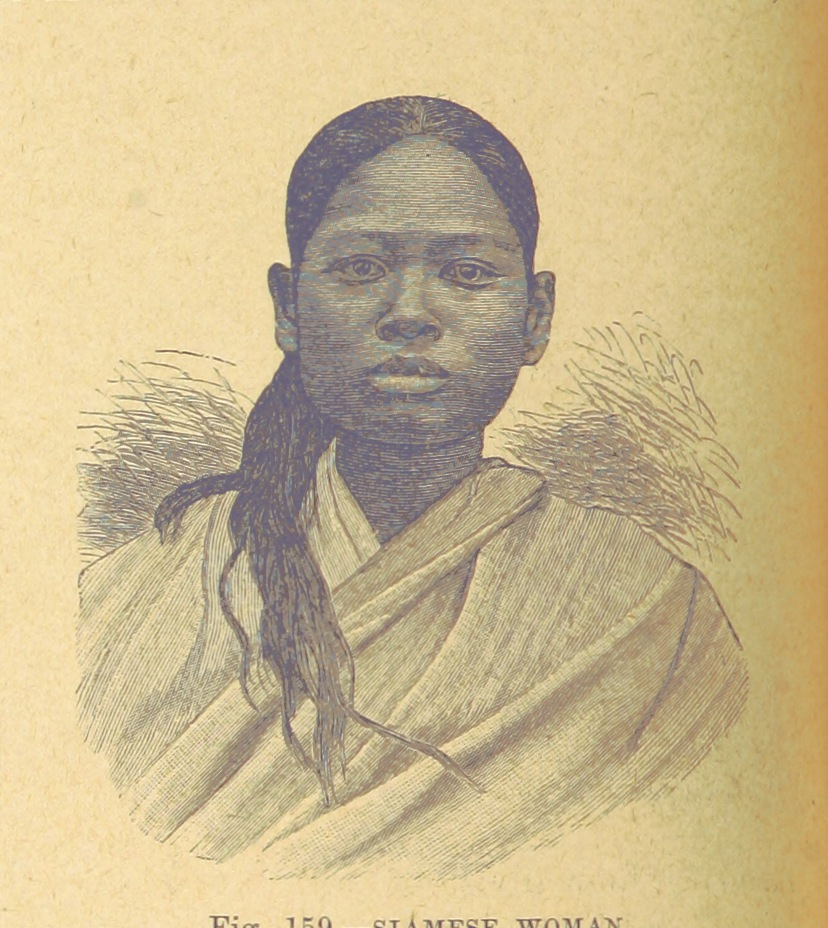
Image taken from page 186 of ‘[Our Earth and its Story: a popular treatise on physical geography. Edited by R. Brown. With … coloured plates and maps, etc.]’ London, 1899. Courtesy of the British Library’s ‘Women of the World‘ digitization project.
Marc-William Palen
History Department, University of Exeter
Follow on Twitter @MWPalen

From the lost internationalism of Wendell Willkie to a history of authoritarian time changes, here are this week’s top picks in imperial and global history. Continue reading “This Week’s Top Picks in Imperial & Global History”

Whitehouse on Foster, ‘African Catholic Decolonization and the Transformation of the Church’

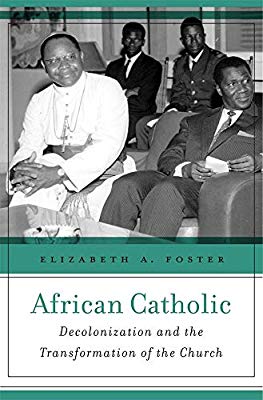
Elizabeth A. Foster. African Catholic Decolonization and the Transformation of the Church. Cambridge, Massachusetts and London: Harvard University Press, 2019. 369 pp. £32.95 (hardcover), ISBN 9780674987661.

Reviewed by David Whitehouse (University of Exeter)

On July 1, 1888, Charles Lavigerie, founder of the White Fathers Catholic missionary order, gave a speech to a packed Saint-Sulpice Church in Paris in which he denounced the evils of slavery in Africa. The event was a public relations triumph, with African children who had been repurchased from slavery being paraded by the Fathers, clad in white burnouses with red fezzes on their heads, on the church steps. In the late nineteenth century as in the 1950s, slavery was used by the Catholic Church to galvanize public opinion and to raise funds. Lavigerie was not an isolated forerunner of post-war Catholic radicalism. He trained a generation of missionaries to enter the field as convinced anti-slavery activists, as well as supporting a series of military operations against slavery in Africa, with varying degrees of success. And yet until now Catholic missionaries have usually been relegated by historians to the status of obedient cogs in colonial state machines. Elizabeth Foster’s new book offers a major challenge by showing how missionary leaders like Lavigerie and his successors had aims that were often in clear conflict with those of the colonial state – a conflict between French Catholic missionaries and the colonial powers that resurfaced in a big way after the Second World War. Continue reading “Whitehouse on Foster, ‘African Catholic Decolonization and the Transformation of the Church’”

Job Klaxon! Lecturer in History of the Gulf and the Arabian Peninsula

University of Exeter – College of social Sciences and International Studies

Location: Exeter
Salary: £35,211 to £39,609 depending on qualifications and experience, Grade F
Hours: Full Time
Contract Type: Permanent
Placed On: 7th March 2019
Closes: 3rd April 2019
Job Ref: R12795
We are a Russell Group university boasting a vibrant academic community with over 21,000 students.  Ranked in the top 1% of universities in the world, 98% of our research is rated as being of international quality and focuses on some of the most fundamental issues facing the world today. We encourage proactive engagement with community partners, industry and business to enhance the impact of research and education and improve the employability of our students.
We therefore particularly welcome applications from academic staff with strong connections and funded projects with community partners and business and as well as those who are involved in projects which develop impact.

Continue reading “Job Klaxon! Lecturer in History of the Gulf and the Arabian Peninsula”

This Week’s Top Picks in Imperial & Global History

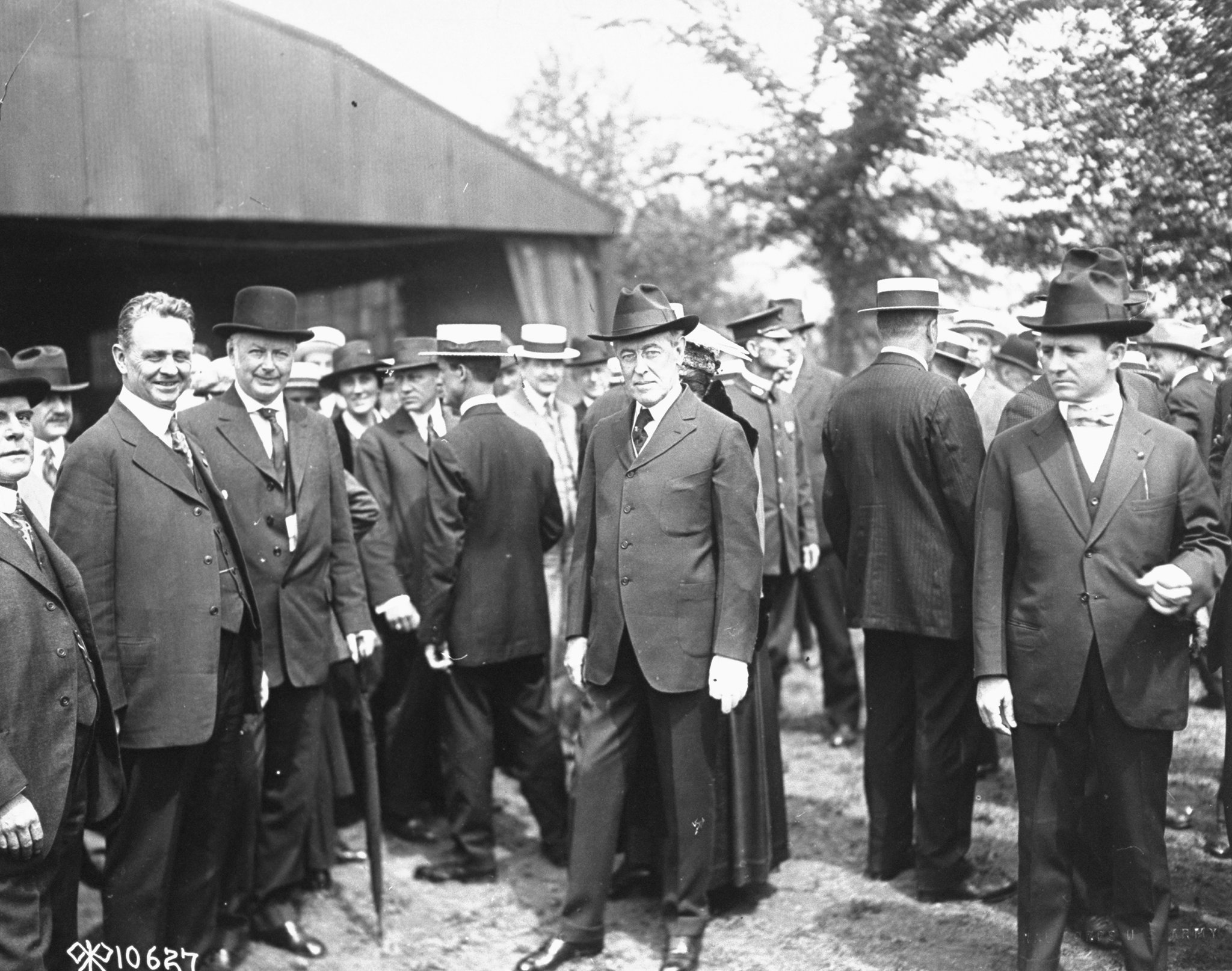
Woodrow Wilson, center, in Europe for business relating to the Paris Peace Conference of 1919. Credit: The LIFE Picture Collection/Getty Images.

Marc-William Palen
History Department, University of Exeter
Follow on Twitter @MWPalen

From the death of the Wilsonian Moment to the Liberal International Order and its discontents, here are this week’s top picks in imperial and global history. Continue reading “This Week’s Top Picks in Imperial & Global History”

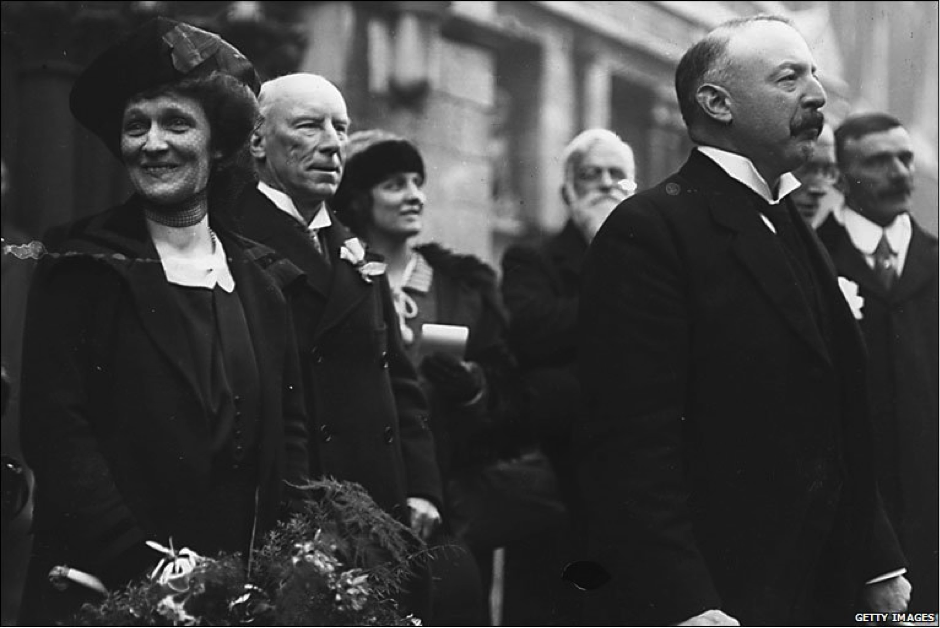
An American Woman in the British House of Commons

The poll declaration for Plymouth Sutton in 1919 (source: Getty Images)

‘Born in Virginia, elected to be in the British House of Commons, I had a sense of gratitude and obligation to the two branches of the Anglo-Saxon peoples’[1]

Lisa Berry-Waite
University of Exeter

This year marks the centenary of Nancy Astor’s election to British Parliament, becoming the first woman MP to take her seat in the House of Commons. The landmark occasion is being commemorated with the Astor 100 campaign to celebrate Astor’s achievements and legacy, as well as to shine a spotlight on women in politics today. Astor’s political career spanned almost three decades; looking back at her career in 1956, she referred to herself as an ‘ardent feminist’ and continuously campaigned on women’s issues.[2]

Known for her wit and outspoken nature, Astor was elected as MP for Plymouth Sutton in a by-election in 1919 for the Conservative Party. She was persuaded to stand by her husband Waldorf Astor, who previously held the seat, when he was elevated to the House of Lords following the death of his father. Nancy Astor the pioneering politician has attracted attention from historians and the media alike, but few discuss in detail her American nationality and the influence it had on her British life and politics. Continue reading “An American Woman in the British House of Commons”

This Week’s Top Picks in Imperial & Global History

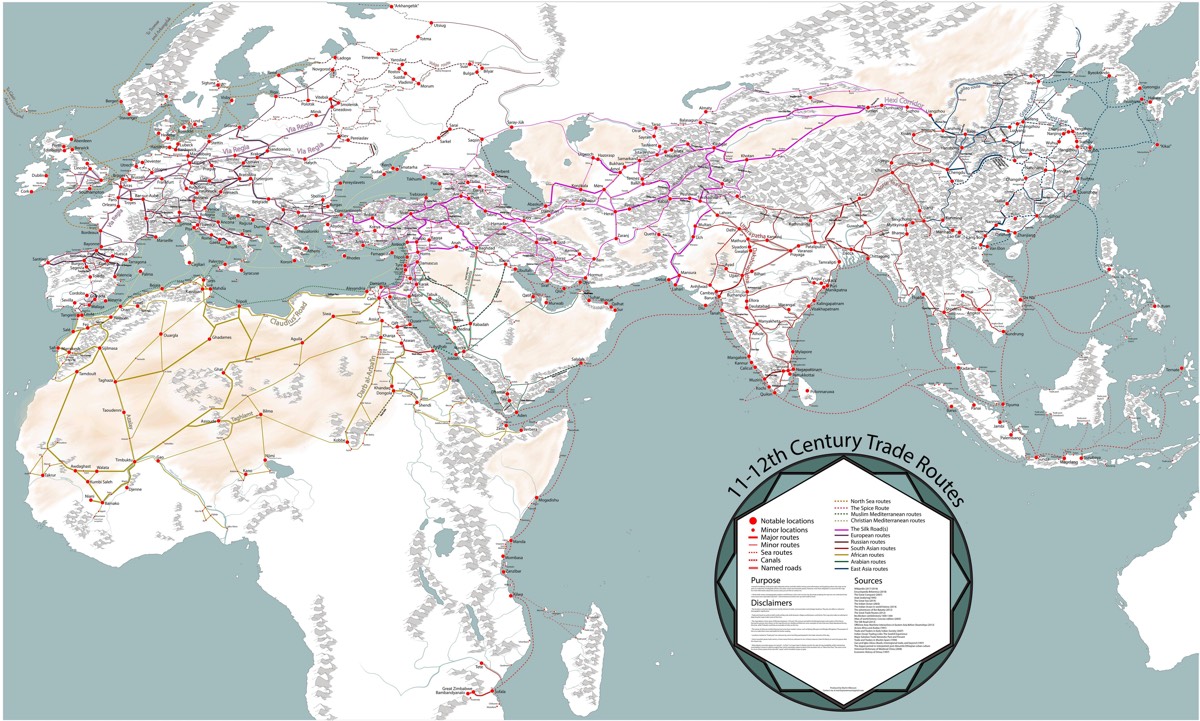
Martin Jan Månsson has created an incredibly detailed map of trade route networks in Europe, Asia, and Africa in the 11th and 12th centuries.

Marc-William Palen
History Department, University of Exeter
Follow on Twitter @MWPalen

From exposing the Ukrainian famine to the bird poop of American imperialism, here are this week’s top picks in imperial and global history. Continue reading “This Week’s Top Picks in Imperial & Global History”

New Job! Lecturer in Modern/Contemporary British History at @exeterclio

Job title: Lecturer in Modern/Contemporary British History (Education and Research)

Job reference: P65129

Date posted:19/02/2019

Application closing date:19/03/2019

Location: Exeter

Salary: The starting salary will be from £35,211 up to £38,609 on Grade (F), depending on qualifications and experience.

Package: Generous holiday allowances, flexible working, pension scheme and relocation package (if applicable).

Job category/type: Academic

Job description

College of Humanities

The University of Exeter is a Russell Group university in the top 200 of universities worldwide.We combine world-class teaching with world-class research, and have achieved a Gold rating in the Teaching Excellence Framework Award 2017. We have over 22,000 students and 4600 staff from 180 different countries and have been rated the WhatUni2017 International Student Choice. Our research focuses on some of the most fundamental issues facing humankind today, with 98% of our research rated as being of international quality in the 2014 Research Excellence Framework. We encourage proactive engagement with industry, business and community partners to enhance the impact of research and education and improve the employability of our students.

College of Humanities

The role

The post of Lecturer in Modern/Contemporary British History will contribute to extending the research profile of British History at Exeter, particularly in areas related to race and ethnicity.

The post will include the delivery of teaching in post-1900 History. In particular, it will involve teaching a selection of undergraduate modules in this area, including Understanding the Modern World. Continue reading “New Job! Lecturer in Modern/Contemporary British History at @exeterclio”

This Week’s Top Picks in Imperial & Global History

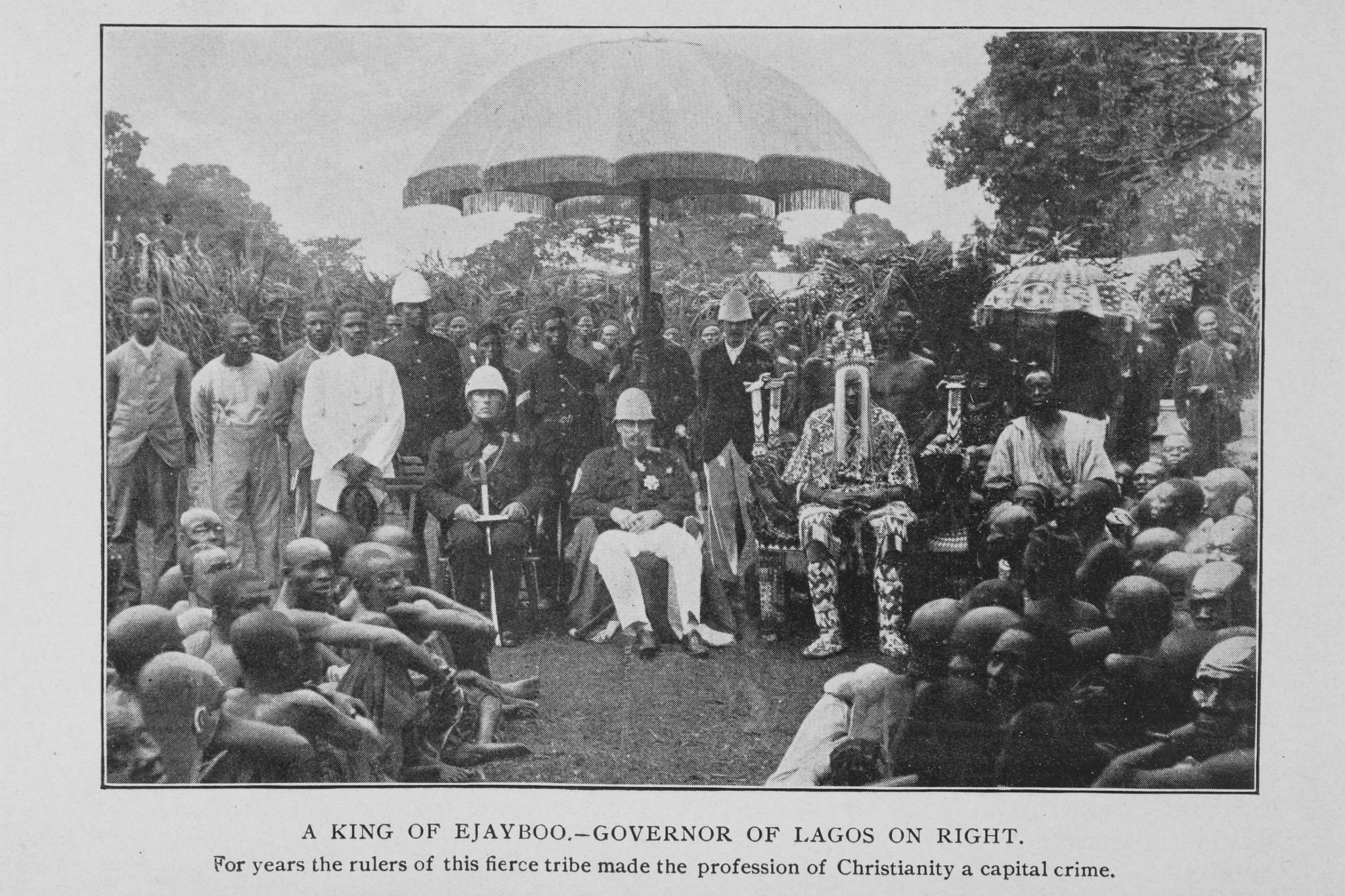
From the Rev. R.H. Stone’s memoir ‘‘In Afric’s Forest and Jungle: Or Six Years Among the Yorubans,’’ 1899.CreditCreditFrom the Schomburg Center for Research in Black Culture, the New York Public Library

Marc-William Palen
History Department, University of Exeter
Follow on Twitter @MWPalen

From the camera as a weapon of imperialism to whitewashing the Boer War, here are this week’s top picks in imperial and global history. Continue reading “This Week’s Top Picks in Imperial & Global History”

Challenging the notion of a ‘humanitarian tradition’


Thomas Brückner

These days, when we compare discourses of humanitarian assistance, it is astonishing how many states use the formula of a ‘humanitarian tradition’ to describe past actions and indeed influence current debates (see examples with critical discussions from Britain and from Switzerland). Wo liegt die Humanitäre Schweiz ? Eine Spurensuche in 10 Episoden accordingly conducts research into the history of the concept in Switzerland during the 19th and 20th century. Continue reading “Challenging the notion of a ‘humanitarian tradition’”

This Week’s Top Picks in Imperial & Global History

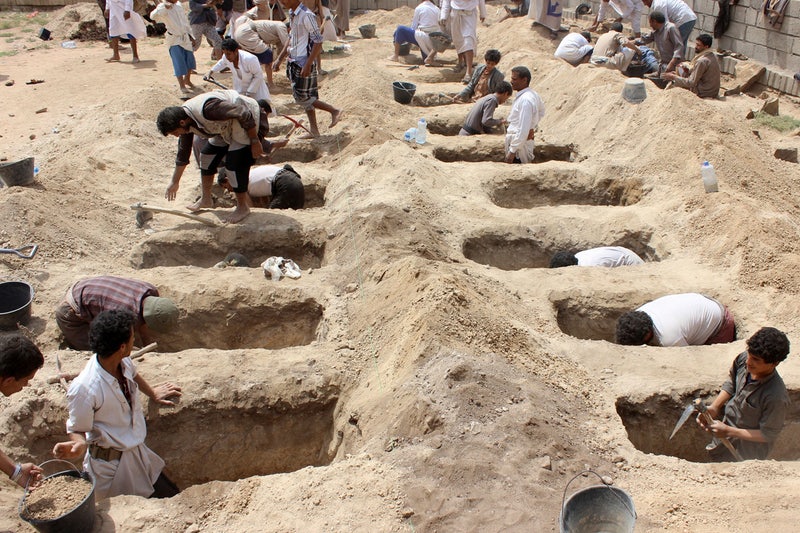
Graves for Yemeni children killed by a Saudi-led coalition air strike (Stringer/AFP/Getty Images)

Marc-William Palen
History Department, University of Exeter
Follow on Twitter @MWPalen

From curing America’s war addiction to when Jamaica led the postcolonial fight against exploitation, here are this week’s top picks in imperial and global history. Continue reading “This Week’s Top Picks in Imperial & Global History”

Inside the Kingdom of Hayti, ‘the Wakanda of the Western Hemisphere’

File 20190118 100264 1ee8g4q.jpg?ixlib=rb 1.1
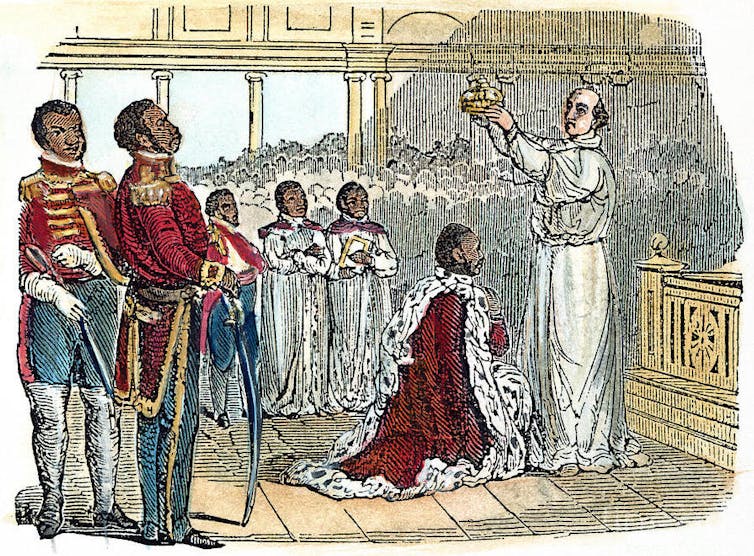
    An 1811 wood engraving depicts the coronation of King Henry. Fine Art America

Marlene Daut, University of Virginia

Marvel’s blockbuster Black Panther, which recently became the first superhero drama to be nominated for a Best Picture Academy Award, takes place in the secret African Kingdom of Wakanda. The Black Panther, also known as T’Challa, rules over this imaginary empire – a refuge from the colonialists and capitalists who have historically impoverished the real continent of Africa.

But fans of the box-office hit might not realize that they don’t need to look to the make-believe world of the Black Panther to find a modern-day black kingdom that aspired to be a safe haven from racism and inequality.

The fictional kingdom has a real-life corollary in the historic Kingdom of Hayti, which existed as a sort of Wakanda of the Western Hemisphere from 1811 to 1820.

The Haitian Revolution led to the creation of the first free black state in the Americas. But the world was hardly expecting a former enslaved man named Henry Christophe to make himself the king of it.

Media accounts from the era, some of which I’ve collected in a digital archive, serve as a window into a brief period of time when the kingdom stood as a beacon of black freedom in a world of slavery. Yet, like Wakanda, the Kingdom of Hayti wasn’t a utopia for everyone. Continue reading “Inside the Kingdom of Hayti, ‘the Wakanda of the Western Hemisphere’”

January 1919: the Irish Republic, the League of Nations and a new world order

File 20190124 196215 1rg3dcv.jpg?ixlib=rb 1.1
                                                       Dáil Éireann (August 1921)

Darragh Gannon, Queen’s University Belfast

A century ago, on January 25, 1919, delegates to the Paris Peace Conference formally agreed on the establishment of a League of Nations, US President Woodrow Wilson’s attempt to create a new international order following the World War I.

Four days earlier, on January 21, Dáil Éireann, Ireland’s national parliament, had met for the first time. Its assembly in Dublin’s Mansion House was politically set to “Paris time”. Proclaiming an Irish Republic, the revolutionary parliament issued a Declaration of Independence from British rule in French, Irish, and English. It also sent A Message to the Free Nations of the World, and delegates to the Paris peace conference. It read:

Ireland today reasserts her historic nationhood confidently before the new world emerging from the War.

Neither the Irish Republic, nor its representatives would be admitted at Versailles. But international recognition of the Irish Republic, under the principles of the “new world order” established in Paris – self-determination, liberal democracy and internationalist development – would become a key battle ground in the Irish war of independence. A century on, it remains a key battle ground of historical debate – where, in this “new world order”, was the Irish Republic won and lost? Continue reading “January 1919: the Irish Republic, the League of Nations and a new world order”