
Marc-William Palen
History Department, University of Exeter
Follow on Twitter @MWPalen
Marc-William Palen
History Department, University of Exeter
Follow on Twitter @MWPalen
Marc-William Palen
History Department, University of Exeter
Follow on Twitter @MWPalen
Cross-posted from the Conversation
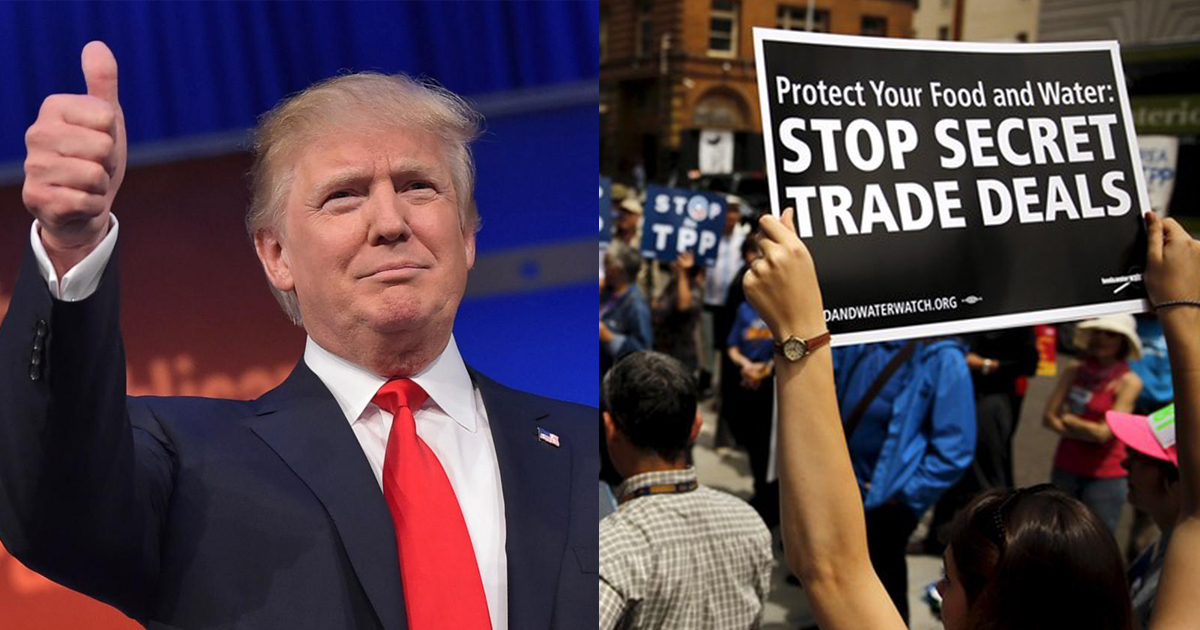
As Donald Trump continues his quest for the Republican nomination, free trade agreements remain in his crosshairs.
The billionaire has been making waves by opposing American free trade initiatives like the massive Trans-Pacific Partnership (TPP) – just signed earlier this month by ministers of the 12 Pacific Rim member nations – and even the 21-year-old North American Free Trade Agreement (NAFTA). As Trump put it in November, right now “free trade’s no good” for the United States.
It may sound strange for the leading GOP candidate for president to be bad-mouthing free trade, but this is a protectionist sentiment that more and more Republicans appear to be warming up to.
It’s also a protectionist sentiment that’s drawn from the party’s paranoid past, as I’ve explored in my new book on Anglo-American trade. Continue reading “Trump’s anti-trade tirades recall GOP’s protectionist past”
Keisha N. Blain*
University of Iowa
Historically, black men and women in the United States frequently linked national and geopolitical concerns. Recognizing that the condition of black people in the United States was “but a local phase of a world problem,” black activists articulated global visions of freedom and employed a range of strategies intent on shaping foreign policies and influencing world events.
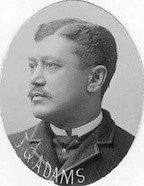
During the early twentieth century, John Q. Adams, an African American journalist, called on people of African descent to link their experiences and concerns with those of people of color in other parts of the globe. Born in Louisville, Kentucky in 1848, Adams moved to St. Paul, Minnesota in 1886, where he became associate editor, and subsequent owner, of the Appeal newspaper. The paper’s debut coincided with key historical developments of the period including the hardening of U.S. Jim Crow segregation laws, the rising tide of anti-immigration sentiment, and the rapid growth of American imperial expansion overseas.
Amidst the sociopolitical upheavals of the early twentieth century, Adams utilized the Appeal as a public platform from which to denounce global white supremacy and advocate for the liberation of people of color. These ideas gained increasing currency during World War I, a watershed moment in the history of black internationalist politics. The millions of black people who served the War effort—in the United States and in colonial territories in Africa, Latin America, and the Caribbean—demanded the immediate end of discrimination, racism, colonialism, and imperialism. Continue reading ““End the Autocracy of Color”: African Americans and Global Visions of Freedom”
Marc-William Palen
History Department, University of Exeter
Follow on Twitter @MWPalen
When: Graz, 30 September – 1 October 2016
Where: Centre for Southeast European Studies, University of Graz, and the University of Exeter
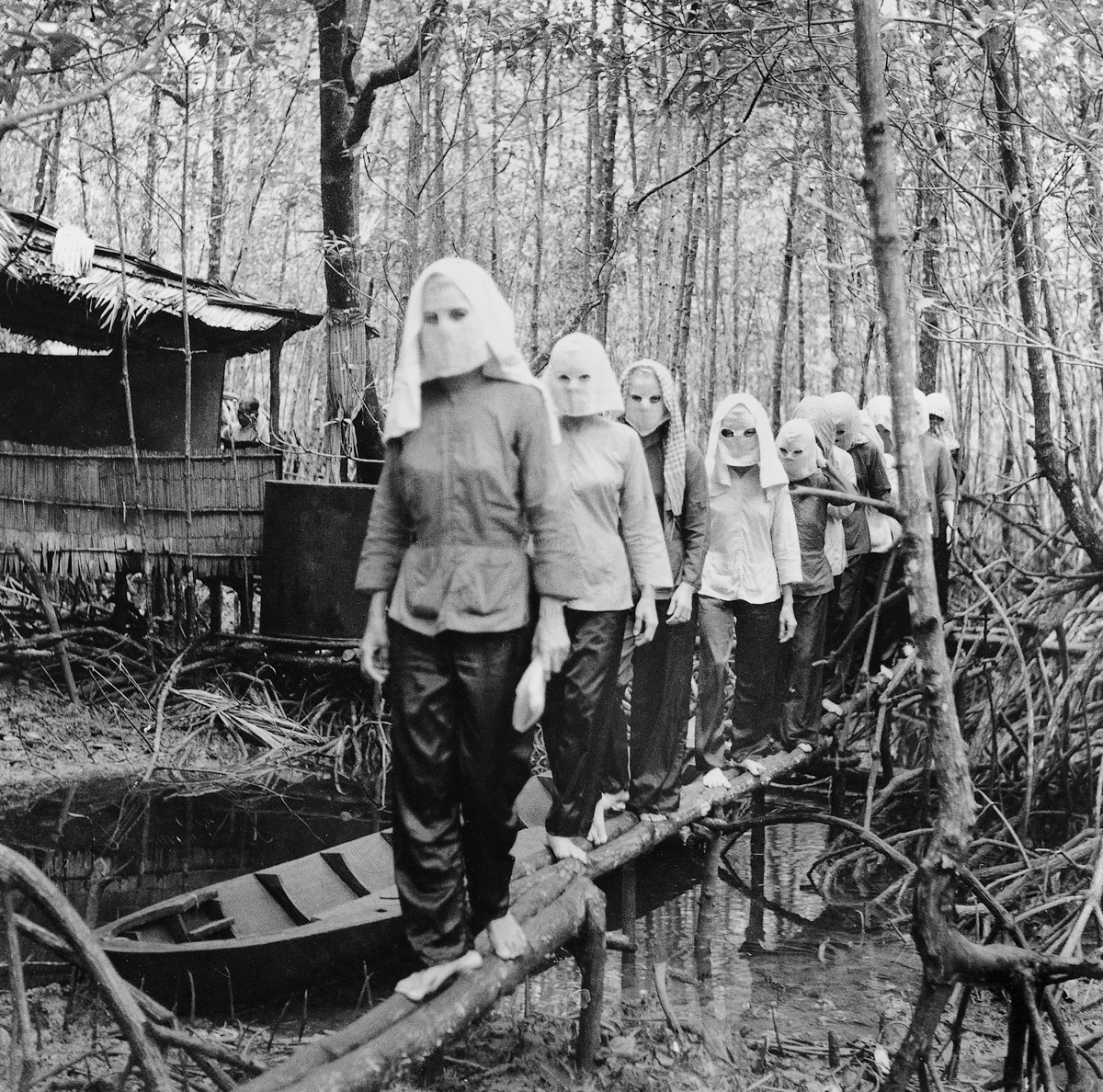
For more than forty years, Yugoslavia was one of the most internationalist and outward looking of all socialist countries in Europe, playing leading roles in various trans-national initiatives – principally as central participant within the Non-Aligned Movement – that sought to remake existing geopolitical hierarchies and rethink international relations. Both moral and pragmatic motives often overlapped in its efforts to enhance cooperation between developing nations, propagate peaceful coexistence in a divided world and pioneer a specific non-orthodox form of socialism.
 Introduction
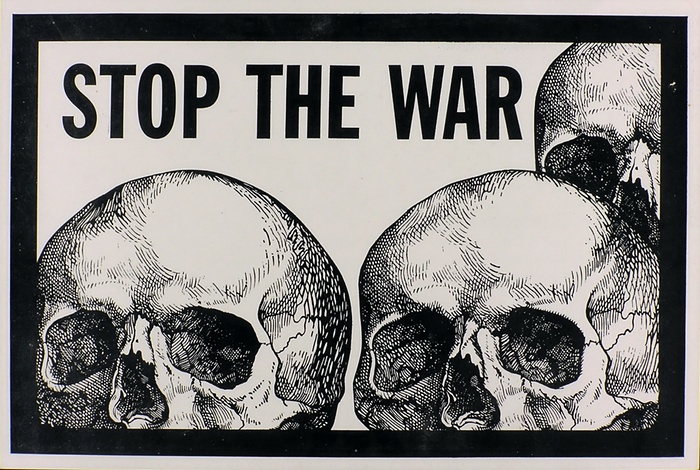
We live surrounded by things. A typical German owns 10,000 objects. In Los Angeles, a middle-class garage often no longer houses a car but several hundred boxes of stuff. The United Kingdom in 2013 was home to 6 billion items of clothing, roughly a hundred per adult; a quarter of these never leave the wardrobe. Of course, people always had things, and used them not only to survive but for ritual, display and fun. But the possessions in a pre-modern village or an indigenous tribe pale when placed next to the growing mountain of things in advanced societies like ours. Continue reading “Empire of Things”
Marc-William Palen
History Department, University of Exeter
Follow on Twitter @MWPalen
Jon Piccini
University of Queensland
Follow on Twitter @JonPiccini
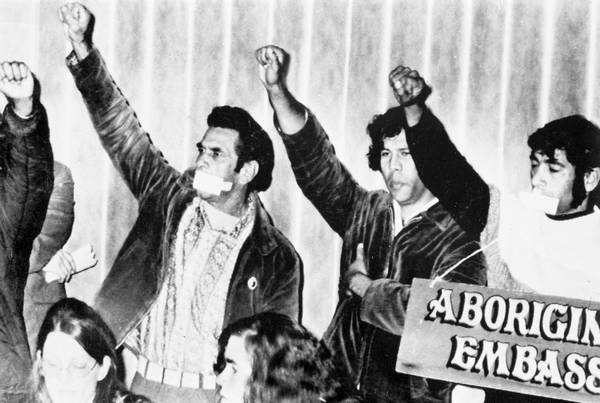
Recently, an upturn in indigenous struggles in Australia have seen the legacies of colonialism and genocide forced back onto the national radar. Protests against the closure of indigenous communities, the continued forced removal of Aboriginal children by welfare agencies, and the birth of youth-led groups like Warriors of the Aboriginal Resistance (WAR) are but a few examples of this. Instead of the sanitised government-sponsored campaign to ‘Recognise’ indigenous peoples in the Australian constitution, many of these activists are looking back to the global struggles of the 1960s and 1970s for their political inspiration. Continue reading ““Malcolm X Exploded in My Mind”: The Transnational Imagination of Australian Indigenous Activists”
Marc-William Palen
History Department, University of Exeter
Follow on Twitter @MWPalen
The Gunpowder Age: China, Military Innovation, and the Rise of the West in World History by Tonio Andrade (Princeton University Press, 2016).
Reviewed by Francis P. Sempa
Cross-posted from Asian Review of Books
 Tonio Andrade, a professor at Emory University, has written a well-researched, balanced, and comparative history of military innovation in Asia and the West in which he challenges the traditional notion—set forth most compellingly by Victor Davis Hanson in Carnage and Culture and Niall Ferguson in Civilization—that Western culture largely explains Western global predominance in the post-medieval world.
Although Andrade frames the book around the invention of gunpowder by the Chinese and its subsequent employment in warfare by both Chinese and Western powers, his principal focus is to explain why in certain historical time periods Chinese and Western military innovation surged or remained static, and more specifically why there developed a “Great Military Divergence” between China and Western powers during the mid-18th century into the 19th century. The key factor, he concludes, is not culture but the Toynbeean phenomenon of “challenge and response”. Continue reading “The Gunpowder Age: China, Military Innovation, and the Rise of the West in World History”

In this centre interview, Professor Richard Toye and Dr. Alex Fairfax-Cholmeley (University of Exeter) discuss the French Revolution, print culture, and the Terror.
Q1. [Toye] You’re currently working on print culture during the French revolutionary era. It’s well known that this was a period that saw an extraordinary explosion in the publication of pamphlets and newspapers. But who was producing them, and why?
[Fairfax-Cholmeley] It is true that the Revolution saw a remarkable rise in the quantity and variety (but not necessarily the quality!) of printed material available to the French population. In the late 1780s, a creaking system of censorship broke up completely in the face of the huge excitement generated by the call for the first Estates-General (the French equivalent of Parliament) since 1614. From 1789 onwards, many Revolutionaries would draw a close association between freedom of the press and the wider political and social liberties the Revolution was supposed to be securing. The printing press therefore always had a certain revolutionary cachet that encouraged its use – especially in Paris.
Who exactly was producing pamphlets, newspapers and other printed material (broadsides, petitions, plays…the list is endless) clearly varies a great deal. The Revolutionary press attracted ambitious members of the political elite, for obvious reasons, but overall production involved a much broader constituency. For example, part of my PhD research focused on the use of print by victims of repression during the Terror of 1793-1794 as a tactic to extricate themselves from any number of sticky situations, and also to restore their revolutionary standing afterwards. Just as the Terror targeted men and women from right across the social spectrum, so the petitions, legal briefs, letters and other material printed in response were not just authored by a narrow elite. My current British Academy postdoctoral fellowship was partly inspired by this research. I am investigating the activities of surviving victims of the Terror in the next phase of the French Revolution (1794-1799), including their use of print to mount public campaigns against those they alleged to have been their former oppressors. You also see those accused of being former Terrorists printing their own defences in return. Continue reading “Centre Interview: Fairfax-Cholmeley on the French Revolution, Print Culture, and the Terror”

Marc-William Palen
History Department, University of Exeter
Follow on Twitter @MWPalen
For scholars of the the British Empire and the British World, the Centre for Imperial & Global History would like to draw your attention to our good friends at the British Scholar Society.
The British Scholar Society is a global organization of historians and political scientists examining Britain’s interactions with the wider world from the seventeenth century to the present day. Aiming to better understand Britain’s place in global history, the society seeks to foster international intellectual exchange about this theme.
Their interest is not limited to Britain’s political relations with other countries, but includes the economic, social and cultural aspects of its international relationships as well. One important focus is the study of the British Empire and the Commonwealth of Nations. Among the activities of The British Scholar Society are
 the publication of the biannual Britain and the World Journal with Edinburgh University Press
Continue reading “Centre Profile: The British Scholar Society (@britishscholar)”
David Thackeray
University of Exeter
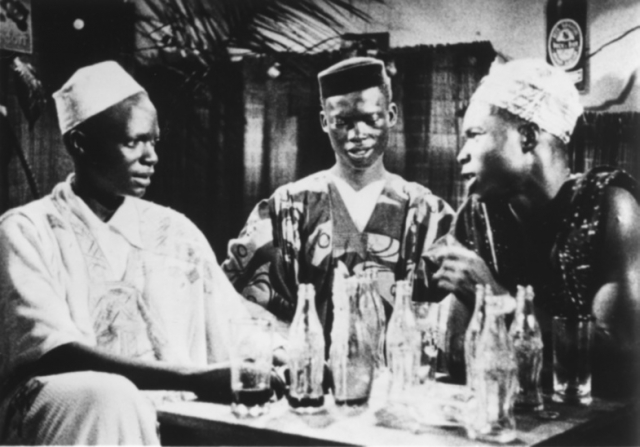
What value do film culture sources have for historians of imperial history and how do we locate them? Readers of this forum (or at least those based in the UK) are likely to be familiar with the AHRC Colonial Film project but many key sources for the study of imperial film remain obscure to those outside film studies circles.
Media History Digital Library is perhaps the most useful resource for considering the culture of world cinema-going in the colonial era. Building on the resources of the Museum of Modern Art in New York and a host of other collections, this site offers a range of film magazines from across the world as well as key pieces of government legislation.
Cinema St. Andrews provides access to various digitised resources, including a full run of the Colonial Film Unit’s magazine Colonial Cinema. Continue reading “Imperial History and Film Culture”

Marc-William Palen
History Department, University of Exeter
Follow on Twitter @MWPalen
 Imperial & Global Forum
You must be logged in to post a comment.