Human Rights, Neoliberalism, and 1989

Robert Brier
Research Associate, German Historical Institute, Warsaw
Cross-posted from Humanitarianism & Human Rights

“1989” has become shorthand both for the triumph of human rights over state-socialist dictatorship and the subsequent implementation of a “neoliberal” reform agenda. Yet the coalescence of these two phenomena in Eastern Europe twenty-five years ago is quite surprising once we focus on the prehistory of 1989. Following the crooked paths that led to the annus mirabilis is thus a great opportunity to assess the transformation of human rights discourses during the 1980s.
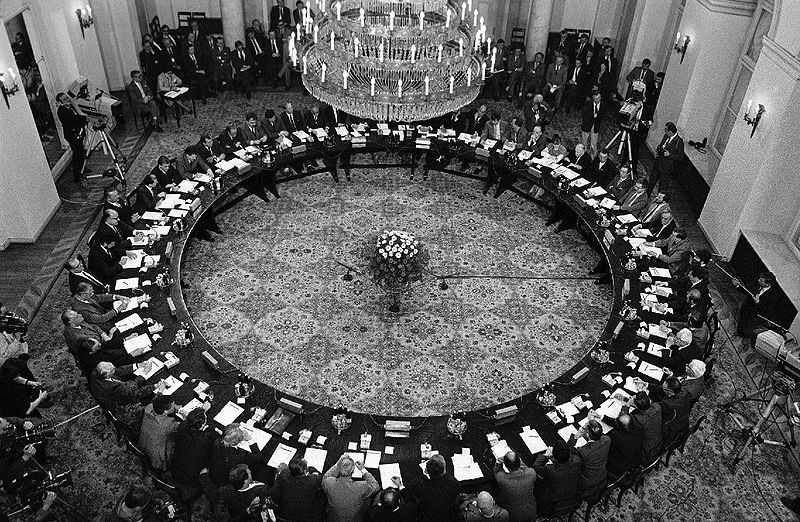
Round Table Talks, Warsaw, Poland, 1989

Twenty five years ago, on 6 February 1989, representatives of Poland’s government and of the illegal democratic opposition began negotiations on political and economic reforms. Inaugurating their meetings at a round table that had been crafted specifically for this occasion, they set events in motion that became a major catalyst for the collapse of the “Soviet bloc.” Continue reading “Human Rights, Neoliberalism, and 1989”
This Week’s Top Picks in Imperial & Global History

Frenchcardgame1
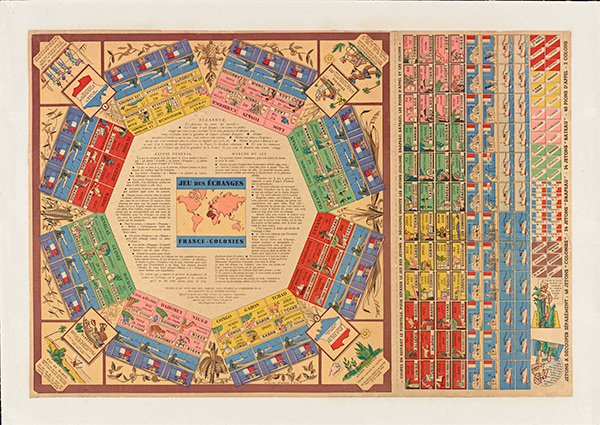
Trading Game: France—Colonies, 1941, O.P.I.M. (Office de publicite et d’impression), Breveté S.G.D.G. Lithograph on linen, 22 7/8 x 32 1/4 in. The Getty Research Institute, 970031.6

Marc-William Palen

From the Getty going free, to card games introducing French children to colonial management, to First World War body armor. Here are the week’s top picks in imperial and global history. Continue reading “This Week’s Top Picks in Imperial & Global History”

Asterix the Gaul – Colonial Freedom Fighter or Neo-Imperialist?

Richard Toye

Asterixcover-asterix_the_gaulWhat might a historian of modern empire uncover within the long-running cartoon book series, Asterix the Gaul? Orientalism, French cultural anxiety about American neo-imperialism, and fears of cultural corruption in the face of the forces of global commercialism, of course.

The new Asterix volume, Asterix and the Picts, is not only the first in the series to be drawn/written without the involvement of either of the original creators, Rene Goscinny and Albert Uderzo; it has also led reviewers to wonder whether it can be seen as commentary on Scottish nationalism. Continue reading “Asterix the Gaul – Colonial Freedom Fighter or Neo-Imperialist?”

Playing Umpire: America and the World

Elizabeth Cobbs Hoffman-1Elizabeth Cobbs Hoffman
Dwight E. Stanford Chair in U.S. Foreign Relations, San Diego State University, & Fellow, Hoover Institution, Stanford University

Why does international turmoil so often raise the question at home and abroad, “What’s the United States going to do about it?” Why not Mexico, Iran, France, or Switzerland?

Observers of today’s world are confronted by the fact that the U.S. exercises an unusual function as the nation with the greatest—yet, nonetheless, very limited—power to determine outcomes in foreign conflicts. This influence raises important questions. Why does any country play such a role, and who appointed the United States? Is America an exploitative empire that holds other nations in thrall, as many revisionists believe, or a benign hegemon that prevents the world from spiraling into violence and poverty, as realists do? And, are these the only two possible answers? Continue reading “Playing Umpire: America and the World”

Imperial Globalization – The Presence of the Past and the Crucible of Empire

Andrew Thompson

Centre Director Andrew Thompson explains that if globalization is not to silence the past, we need to delve back into its history – its imperial history.

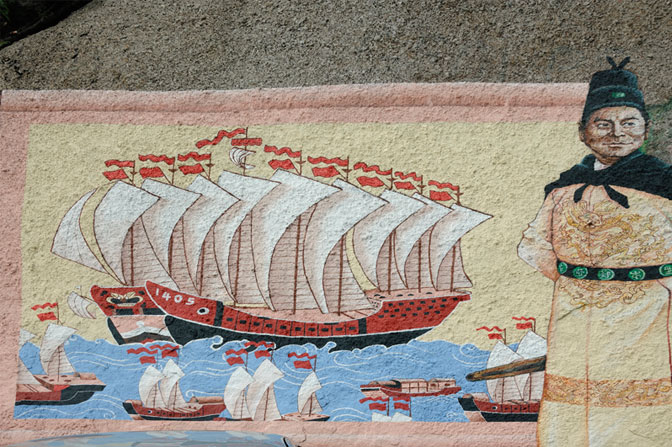
Almost a century before Christopher Columbus 'discovered' the Americas, Admiral Zheng He of the Ming Dynasty undertook voyages across the Indian and the Western Pacific Oceans. Photo credit: © Chris Hellier/Corbis
Admiral Zheng He. Almost a century before Christopher Columbus ‘discovered’ the Americas, Admiral Zheng He of the Ming Dynasty undertook voyages across the Indian and the Western Pacific Oceans. Photo credit: © Chris Hellier/Corbis

‘Globalization’ is among the biggest intellectual challenges facing the humanities and the social sciences today. It is a concept that conveys the sense that we are living in an age of transformation, where change is the only constant, nothing can be taken for granted, and no-one knows what the future might bring. But globalization is also much more than that. To borrow the phrase of the historical sociologist, Mike Savage, it is an ‘epoch description’, something that seeks to define for the current generation the very meaning of social change. By thinking of ourselves as part of a globalized world, we are saying something about how over time our identity has changed. We are locating ourselves in time, differentiating ourselves from our predecessors, signalling a break with what went before. Continue reading “Imperial Globalization – The Presence of the Past and the Crucible of Empire”

This Week’s Top Picks in Imperial & Global History

greatbooksMarc-William Palen

Searching for your weekend dose of imperial and global history? Here are this week’s recommended reads from the Centre for Imperial & Global History: Continue reading “This Week’s Top Picks in Imperial & Global History”

Centre In Focus

With pleasure, we see that the Centre for Imperial & Global History has been made the In Focus Feature story by the University’s Research & KT (@UofE_Research).

Cross-posted from In Focus

Centre in focus

Centre for Imperial and Global History

Understanding how the modern world was shaped by its past is a goal of the University of Exeter’s Centre for Imperial and Global History (CIGH).

Launched in late 2013, the Centre aims to show how much of the world’s history was created by empires, to reposition the histories of those empires in a wider global context, and gain insight into the causes and consequences of globalisation.

It does this through researching topics including the histories of humanitarianism and human rights, law and colonialism, regions in a global context, and the relationship between globalisation’s past and present.   Continue reading “Centre In Focus”

A Decade of ‘Imperial Absent-Mindedness’: A New Talking Empire Podcast

porter absentminded imperialistsRichard Toye

In 2004, Bernard Porter published The Absent-Minded Imperialists: Empire, Society and Culture in Britain. It immediately became a controversial work. Porter later reflected that the book:

was mainly a response to certain scholars (and some others) who, I felt, had hitherto simplified and exaggerated the impact of ‘imperialism’ on Britain in the nineteenth and twentieth centuries, after years in which, except by empire specialists like myself, it had been rather ignored and underplayed. […] the main argument of the book was this: that the ordinary Briton’s relationship to the Empire in the nineteenth and early twentieth centuries was complex and ambivalent, less soaked in or affected by imperialism than these other scholars claimed – to the extent that many English people, at any rate, possibly even a majority, were almost entirely ignorant of it for most of the nineteenth century.[1] Continue reading “A Decade of ‘Imperial Absent-Mindedness’: A New Talking Empire Podcast”

Prelude to Intervention: French Wars in Africa, Part I

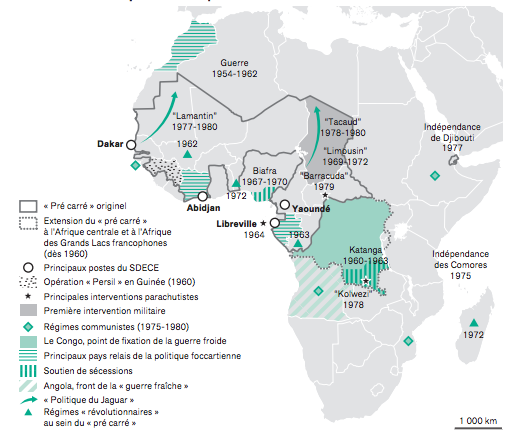
Map: "French geopolitics in Africa and Foccart's legacy" (1960-1991), from Bat's article in Afrique Contemporaine.
Map: “French geopolitics in Africa and Foccart’s legacy” (1960-1991), from Bat’s article in Afrique Contemporaine.

Jean-Pierre Bat
Research Associate, Centre for War, State and Society
Author of Le syndrome Foccart (2012)

In the first of his two-part Forum essay, Dr. Bat illuminates the distinct colonial and post-colonial history that helps explain current French military policy in Africa (1950s-present).

Today, the French Parliament will vote on the country’s present military engagement in the Central African Républic (CAR). Why? Because it remains a (poorly understood) constitutional requirement that any French military intervention overseas be approved by the National Assembly after every four months. Moreover, even if President Nicholas Sarkozy and his successor, François Hollande, have sought to republicanize France’s wars in Africa – dressing them in the clothes of democratic legitimacy and UN approval – the locations and priorities underpinning those interventions speak to a post-colonial inheritance dating back to the 1950s and the era of ‘Mr. Africa’, Jacques Foccart. Continue reading “Prelude to Intervention: French Wars in Africa, Part I”

Does Trade Promote Peace? An Historical and Global Perspective

Global History of Trade and ConflictLucia Coppolaro and Francine McKenzie
Editors of A Global History of Trade and Conflict Since 1500 (Palgrave, 2013)

In the early 17th century, Jan Pieterszoon Coen, the Dutch East India Company’s governor-general in the Indies, explained that trade and war were inseparably linked: ‘we cannot make war without trade nor trade without war’.[1] The utility of war and other violent methods to secure an advantageous commercial position was an extreme view even by the mercantilist standards of the day, but trade and conflict were commonly connected. About one hundred years later, Montesquieu, the Enlightenment political philosopher, reached the radically different conclusion that trade was an instrument of peace; thus in 1748, he wrote ‘Peace is the natural effect of trade’. Continue reading “Does Trade Promote Peace? An Historical and Global Perspective”

This Week’s Top Picks in Imperial and Global History

ScottishpoundMarc-William Palen

Here are some of the Centre’s top reads for the week:

*For those of you who might have somehow missed Nicholas Kristof’s trolling of the ivory tower in the New York Times (‘Professors, We Need You!’), he took academics to task for not engaging enough with the public. Needless to say, it set off a (predictable) firestorm, with responses, among others, Continue reading “This Week’s Top Picks in Imperial and Global History”

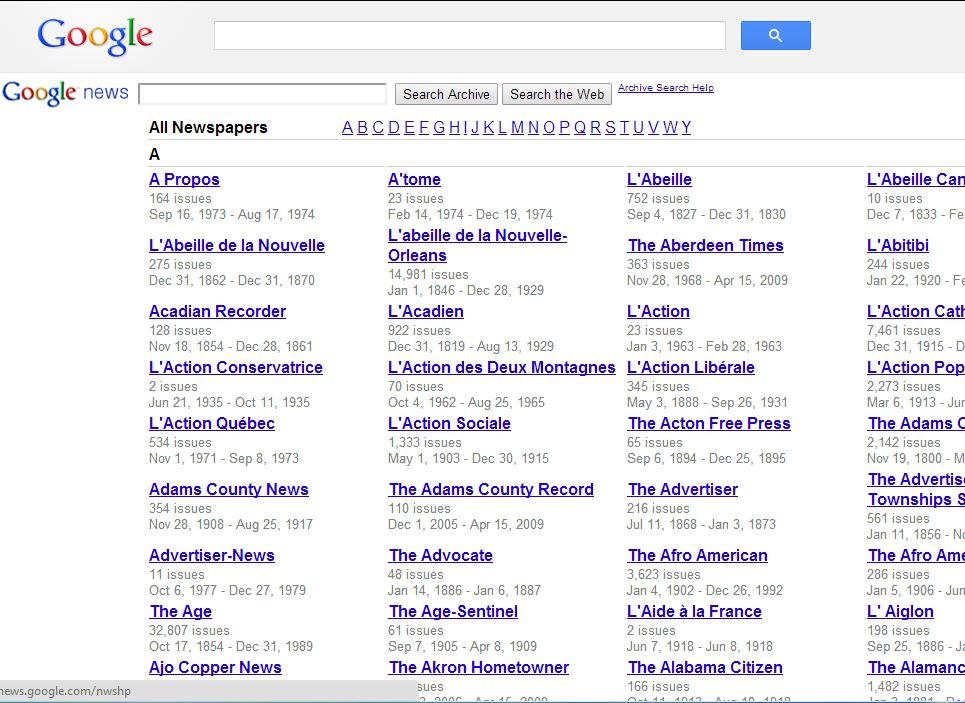
Google Redesigns Historical Newspaper Archive

Google has redesigned its newspaper archive, making it even easier to use for historical research (as noted by Lifehacker). The archive had initially started up in 2008, had a bit of a rocky start, and then was axed in 2011 owing to pressure from newspaper companies.

google newspapers

This revamping of the Google news archive just adds to the seemingly limitless newspaper databases from across the globe that are now available online.

What can a First World War Adventure Novel Tell us About Empire?

buchanjoetext9639stp10Richard Toye

The Guardian recently ran a piece calling for Britons to confront their colonial past by way of now-forgotten empire adventure stories. Professor Richard Toye has done just that, uncovering the imperial side of a stirring adventure tale, The Thirty-Nine Steps (1915).

John Buchan’s 1915 adventure novel The Thirty-Nine Steps, with its dashing hero Richard Hannay, is just a bit of fun – isn’t it? Well, it’s fun all right, but behind it there lays a pretty clear political agenda. Most obviously it’s anti-German, with the plot revolving around a devilish Teutonic plot to steal British military secrets. But there’s also a strong imperial dimension. Continue reading “What can a First World War Adventure Novel Tell us About Empire?”

Debating Human Rights and Decolonization

human rights logoFabian Klose
Leibniz Institute of European History, Mainz
Editor,
Humanitarianism & Human Rights

What was the role that universal human rights played in the process of decolonization? What links can we identify between both phenomena as they gained real momentum after 1945?

For too long historical research has neglected this issue. Only a few books on the historiography of the human rights idea linked the dissolution of European colonial empires with the debates on universal fundamental rights. Particular mention should be made here of the work by Paul Gordon Lauren (The Evolution of International Human Rights. Visions Seen, Philadelphia 1998) and Brian Simpson (Human Rights and the End of Empire. Britain and Genesis of the European Convention, Oxford 2001), who both addressed for the first time the important connections between human rights discourse and the end of colonial rule. Continue reading “Debating Human Rights and Decolonization”

This Week’s Top Picks in Imperial & Global History

Marc-William Palen

There has been a great deal of imperial/global news this week:

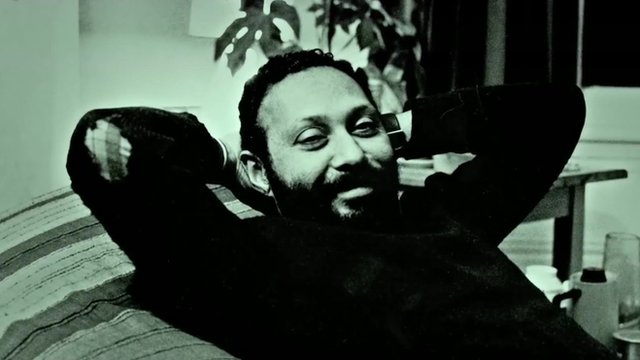
Photo from a BBC News Night interview with Stuart Hall.

*Jamaican-born scholar-activist Stuart Hall passed away at the age of 82. He was the ‘god-father of multiculturalism‘ and a leading cultural theorist. He was also founding editor of the New Left Review and, as the Guardian puts it, he insisted Continue reading “This Week’s Top Picks in Imperial & Global History”