Marc-William Palen
History Department, University of Exeter
Follow on Twitter @MWPalen

Marc-William Palen
History Department, University of Exeter
Follow on Twitter @MWPalen
Cross-posted from Humanitarianism & Human Rights
The Global Humanitarianism Research Academy (GHRA) is currently meeting for the fifth time for one week of academic training at the Leibniz Institute of European History in Mainz before continuing with archival research at the ICRC Archives in Geneva. In this context it is a great pleasure to announce that the GHRA is joined by a new partner, the Chair in International History and Historical Peace and Conflict Studies at the Department of History of the University of Cologne.
The Research Academy addresses early career researchers who are working in the related fields of humanitarianism, international humanitarian law, peace and conflict studies as well as human rights covering the period from the 18th to the 20th century. It supports scholarship on the ideas and practices of humanitarianism in the context of international, imperial and global history thus advancing our understanding of global governance in humanitarian crises of the present.
As in the last four years the GHRA received again a huge amount of applications from an extremely talented group of scholars from more than twenty different countries around the world. The selection committee considered each proposal carefully and has selected these participants for the GHRA 2019: Continue reading “Global Humanitarianism Research Academy 2019 Underway #GHRA2019”

Tom Harper
The rapid economic and military ascent of China has been one of the major geopolitical developments over the past four decades, with the reforms initiated by Deng Xiaoping entering its 40th anniversary this year. This has seen China go from a ramshackle, quasi-feudal empire into one of the Great Powers of the 21st century. [1] What has been the driving force behind this push has been China’s historical experiences, most notably those of the 19th and early 20th centuries, known to the Chinese as the Century of Humiliation (百年国耻), where China lost both its territory and its prestige to the imperial powers of the day. [2] These experiences have also been a tool in China’s relationships with the wider world as well as a unifying force within China, the legacy of which persists in the light of current tensions. Continue reading “How the Century of Humiliation Influences China’s Ambitions Today”

Asma Char
University of Exeter
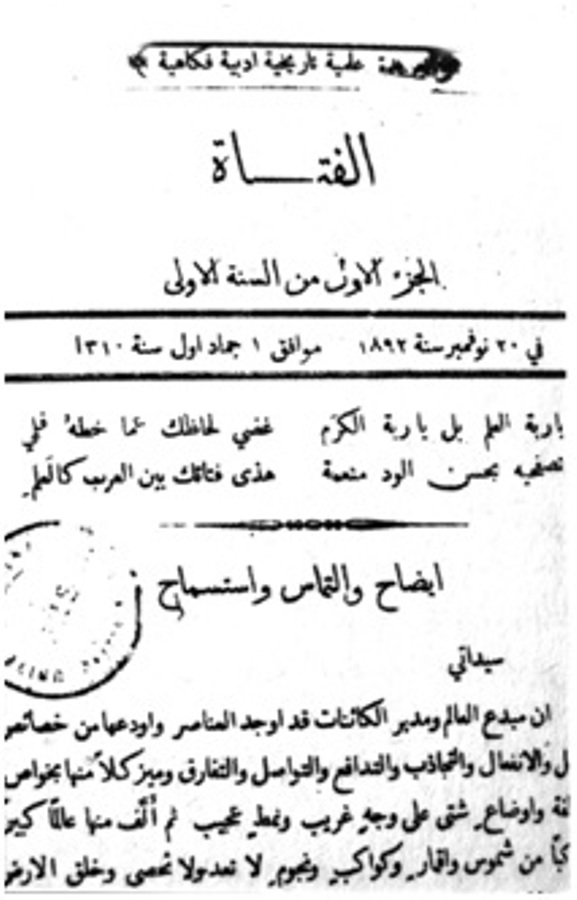
The 1938 and 1944 pan-Arab conferences in Cairo, Egypt, were the events that “cement[ed] Arab feminist consciousness” (Golley, 2004) and the feminist debate was to erupt in the Arab world from the 1950s onwards. Hadidi and Al-Qadi have since investigated pioneering women’s writing in Syria and acknowledge the existence of new-woman characters, but they argue that the phenomenon only appeared in fiction from the 1970s onwards. They write: “[the] new woman is a type of female character almost wholly absent in previous periods; she starts to appear in the novels of the 1970s, which opened up to collective concerns and constructed fictional worlds based on the political and social reality in Syria and the Arab world” (2008, 87). Arab women’s feminist struggle, however, appeared much earlier — within fin-de-siècle Arabic fiction. Continue reading “Tracing the Origins of Early Feminism in the Arab World”

Marc-William Palen
History Department, University of Exeter
Follow on Twitter @MWPalen

Lori Lee Oates
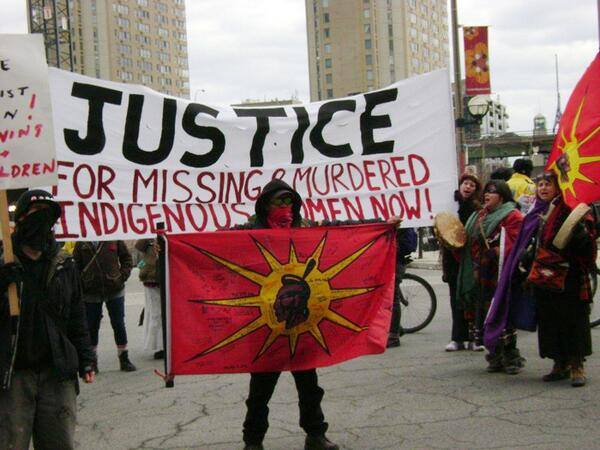
Canada’s treatment of Indigenous persons by white settlers and contemporary government institutions are issues that have increasingly come to the forefront of late. They are at the heart of questions around how we should govern in the modern world. These institutions were not built by Indigenous persons, and Canadians are increasingly recognizing that our government has often contributed to the poor health, safety, and economic outcomes experienced by Indigenous persons.
The Missing and Murdered Indigenous Women and Girls (MMIWG) inquiry in Canada recently sparked a debate over whether Indigenous persons in the country have suffered, and continue to suffer, from genocide. The inquiry came about in response to years of lobbying by Indigenous women, and was the fulfillment of a campaign promise on the part of the Trudeau government. The final report was released on 3 June, entitled Reclaiming Power and Place. Continue reading “When is colonialism a genocide? The case of Indigenous women and girls in Canada”

Renilde Loeckx. Cold War Triangle: How Scientists in East and West Tamed HIV. Leuven: Leuven University Press, 2017. 192 pp. $29.50 (paper), ISBN 978-946270113-7.
Reviewed by Dora Vargha (University of Exeter) Published on H-Diplo (February, 2019) Commissioned by Seth Offenbach (Bronx Community College, The City University of New York)
Cross-posted from H-Diplo
Printable Version: http://www.h-net.org/reviews/showpdf.php?id=53143
Renilde Loeckx’s Cold War Triangle tells the story of an international scientific collaboration across the iron curtain that led to the development of HIV blockbuster drugs such as Viread and Truvada. It is as much a story of Cold War collaboration among scientists, as a story of collaboration between scientific institutions and pharmaceutical companies. In her introduction, Loeckx, a former ambassador of Belgium, sets out to bridge diplomacy and science to tell the story of Antonín Holy and Erik Le Clercq: the collaboration of a Czechoslovak and Belgian scientist with the American pharmaceutical company Gilead Sciences. As Loeckx writes, the book is “about the human face of science, how scientists from three different cultures collaborated to create the complex drugs that saved millions of lives” (p. 15). Continue reading “Cold War Triangle: How Scientists in East and West Tamed HIV”
Marc-William Palen
History Department, University of Exeter
Follow on Twitter @MWPalen
Stuart Mole
University of Exeter
If the first casualty of war is truth, the last act of a tyrannical regime is to attempt to expunge all evidence of its crimes. In 1992, with apartheid’s end in sight, South Africa’s President, FW De Klerk, authorised the destruction by the National Intelligence Agency of 44 tonnes of incriminating material[1]. This was incinerated at night at a location outside Pretoria. Vast amounts of other sensitive records have also disappeared, in what Verne Harris has called a “large-scale and systematic sanitisation of official memory”.[2] But Hennie Van Vuuren and his team of researchers from the not-for-profit organisation ‘Open Secrets’ have been driven by the firm belief that apartheid’s secrets must be exposed, and that truth will out. Over five years of meticulous research they have examined around 2 million documents in over two dozen archives across the world. In South Africa itself, through fifty freedom of information requests, they were able to access recently de-classified papers in eight government departments.
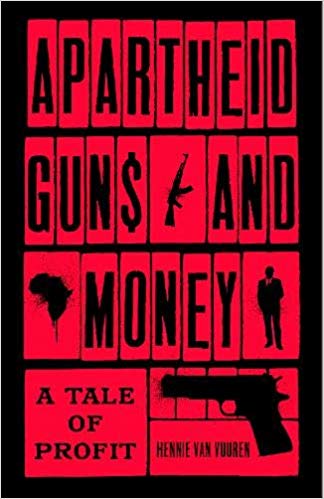
The result is a 600-page blockbuster, now available in the UK (Apartheid, Guns and Money: A Tale of Profit, London C. Hurst & Co 2018). With a focus on the last fifteen years of apartheid, the author argues that the apartheid regime went to increasingly covert and illegal lengths to defend its position in the face of international sanctions and growing unrest in the townships and on its borders. A war economy was built, and around one-third of the state budget was spent on security and the military (though the scale of the expenditure was concealed). Externally, a network of political, business, intelligence and criminal links were constructed in over fifty countries so that South Africa could evade the oil and arms embargo, launder money and circumvent sanctions. Those nations accused of giving succour to the regime are not only those of the West – such as the USA, France and the UK – but, surprisingly, countries such as East Germany, Russia and China who proclaimed their support for the liberation movements. In the case of China, van Vuuren’s remarkable accusation is that while ostensibly backing the Pan-Africanist Congress and, later, the African National Congress, the People’s Republic supplied arms to the South African regime throughout the 1980s (while also continuing to arm its liberation partners). Continue reading “Apartheid’s Secrets and Lies”
Julia Leikin
University of Exeter
Cross-posted from Historical Transactions
In the last weekend of April, as part of the program for Professor Elena Smilianskaia, a visiting fellow at the University of Exeter, Dr Julia Leikin, British Academy Postdoctoral Fellow, organized a trip to the town of Rotherham in South Yorkshire, to find out more about Thomas Howard, the third Earl of Effingham (1746-1791). In this post, Julia Leikin recounts the surprising results of the trip.
Howard is, on the surface, an elusive figure. Despite his military and political stature, and a wide range of eccentricities, Howard did not leave behind a substantial archive for historians to exploit. He does have a short entry on Wikipedia, but there is no biography nor even an entry in the Oxford Dictionary of National Biography to document his military career, his support of the American colonies in the American Revolution, and his short-lived governorship of Jamaica. Neither is he named among Eton College’s notable alumni.
But Thomas Howard is one of the notable figures who appears in my and Prof Smilianskaia’s forthcoming annotated translation of Rear-Admiral John Elphinstone’s Russian Faith, Honour & Courage Displayed in a Faithful Narrative of the Russian Expedition by Sea in the Years 1769 & 1770. Elphinstone offers a rare, first-hand account of the Russian voyage around the continent of Europe to the Eastern Mediterranean and offers a new perspective of his skirmishes with Ottoman forces, including the famous Battle of Çeşme (1770), alongside caustic descriptions of its participants. (This characterization does not extend to Thomas Howard, for whom Elphinstone was full of admiration.) Continue reading “Seeking Thomas Howard in Rotherham: local groundings for a global life”
Marc-William Palen
History Department, University of Exeter
Follow on Twitter @MWPalen
We are delighted to welcome Professor Julia Irwin (University of South Florida), who will be at the University of Exeter on a Visiting International Academic Fellowship on July 4. During her visit, she has kindly offered to give a lecture entitled ‘Confronting Catastrophe: International Disaster Assistance and Twentieth Century U.S. Foreign Relations.’ Her talk is in association with Exeter’s Centre for Imperial and Global History, the Centre for the Study of War, State and Society, and the Centre for Medical History.
When: Thursday, 4 July, 3-4:30pm
Where: Laver LT3 (University of Exeter, Streatham Campus)
Abstract: Prof. Irwin’s talk examines the history and politics of U.S. foreign disaster assistance in the 20th century. More specifically, she considers the ways that the U.S. government, military, and private organizations have historically responded to major natural disasters abroad, and critically analyses the political implications and diplomatic significance of these humanitarian efforts.
Bio: Prof. Irwin is Associate Chair in the History Department at the University of South Florida. Her research focuses on the place of humanitarianism and foreign assistance in 20th century U.S. foreign relations and international history. Her first book, Making the World Safe: The American Red Cross and a Nation’s Humanitarian Awakening (Oxford University Press, 2013), is a history of U.S. relief efforts for foreign civilians in the era of the First World War, exploring both the diplomatic and the cultural significance of humanitarian aid in these years. Her work has appeared in The Journal of American History, The American Historian, Diplomatic History, First World War Studies, The Bulletin of the History of Medicine, The Journal of the Gilded Age and Progressive Era, Moving the Social, History of Education Quarterly, and Nursing History Review. She was also the senior editor of the Oxford Research Encyclopedia in American History (2014-16). She is now writing a second book, Catastrophic Diplomacy: A History of U.S. Responses to Global Natural Disasters, which analyzes how U.S. State Department agencies, branches of the U.S. military, American charities and relief organizations, and the American public have responded to foreign disasters caused by tropical storms, earthquakes, floods, and other natural hazards throughout the twentieth century.

Helen Bones
Western Sydney University
A 1936 obituary for the poet and novelist Arthur H. Adams begins with the words ‘Arthur H Adams has died an Australian’. This statement reflects a primary preoccupation with Adams for critics. Adams’s legacy as a well-respected writer of the early twentieth century and one-time editor of one of Australia’s most influential literary publications, the Bulletin’s ‘Red Page’, is clouded by the ‘problem’ of his multiple allegiances: to New Zealand, to the United Kingdom, to Australia, and to the British Empire. Adams was born and raised in New Zealand, spent time in China and the United Kingdom, and then spent the last 30 years of his life living in Sydney. A poem he wrote at the age of 18 upon moving to Australia for the first time declared: ‘My heart is hot with discontent / I hate this haggard continent’.[1] These lines are often quoted as evidence of his persistent ambivalence to his place of residence. Because the response to Adams has largely revolved around attempts to reconcile him with imagined notions of national constructions (was he a New Zealander or an Australian?), the realities of the interlinked colonial world he inhabited and wrote about have been obscured or ignored. Continue reading “Arthur H. Adams and the problem with settler colonial studies”

Marc-William Palen
History Department, University of Exeter
Follow on Twitter @MWPalen
| Location: | Penryn |
|---|---|
| Salary: | £35,211 up to £39,609 on Grade F, depending on qualifications and experience. |
| Hours: | Full Time |
| Contract Type: | Permanent |
The full time permanent post is available from 1 September 2019 in the College of Humanities, Penryn campus, Cornwall.
Summary of the role/position
We are seeking to appoint a new Lecturer with a particular focus on colonial/post-colonial history. You will have expertise in an aspect of the global history of colonialism/postcolonialism. We particularly encourage applicants whose research or teaching may have a transnational, comparative and non-elite component, preferably with expertise in Asia, Africa or South America. The ability to engage critically with postcolonial heritage contexts may also be an advantage. Continue reading “Job Klaxon: Lecturer in Colonial/Post-Colonial History”
You must be logged in to post a comment.